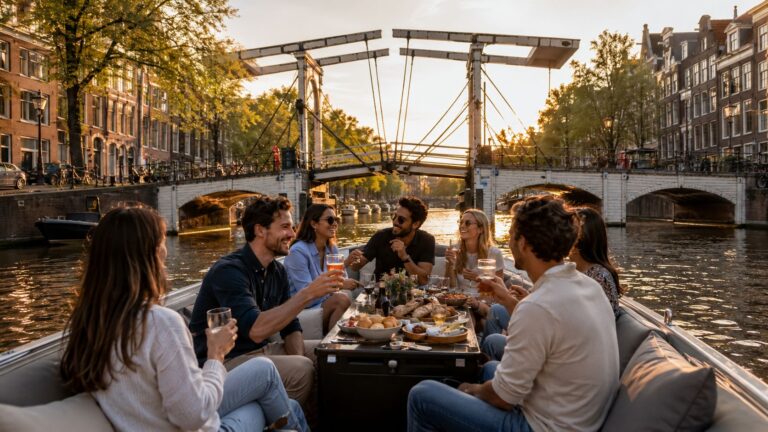
You're standing beside an Amsterdam canal with a group chat full of opinions, one person asking about drinks, another asking whether the boat is private, and nobody entirely sure what happens after boarding. A boat party sounds simple, but the details that shape the night are practical: passenger limits, departure times, music rules, alcohol policy, route restrictions, and whether the skipper is properly separated from the party.
A well-planned canal evening feels effortless because those mechanics have already been handled. The group arrives on time, boards without confusion, settles into the boat, and discovers that the moving cityscape creates its own atmosphere. The wrong format can feel cramped, rushed, noisy, or poorly matched to the group. This guide explains what an Amsterdam boat party involves, which format suits different occasions, and what to confirm before paying.
Table of Contents
- A Friday Evening on the Amsterdam Canals
- What a Boat Party Actually Is in Amsterdam
- Shared Cruise Versus Private Charter
- What to Expect Once You're Onboard
- Amsterdam Canal Rules That Shape Your Night
- Booking Checklist for the Right Format
- Common Assumptions Worth Dropping
- Making the Most of Your Canal Night
A Friday Evening on the Amsterdam Canals
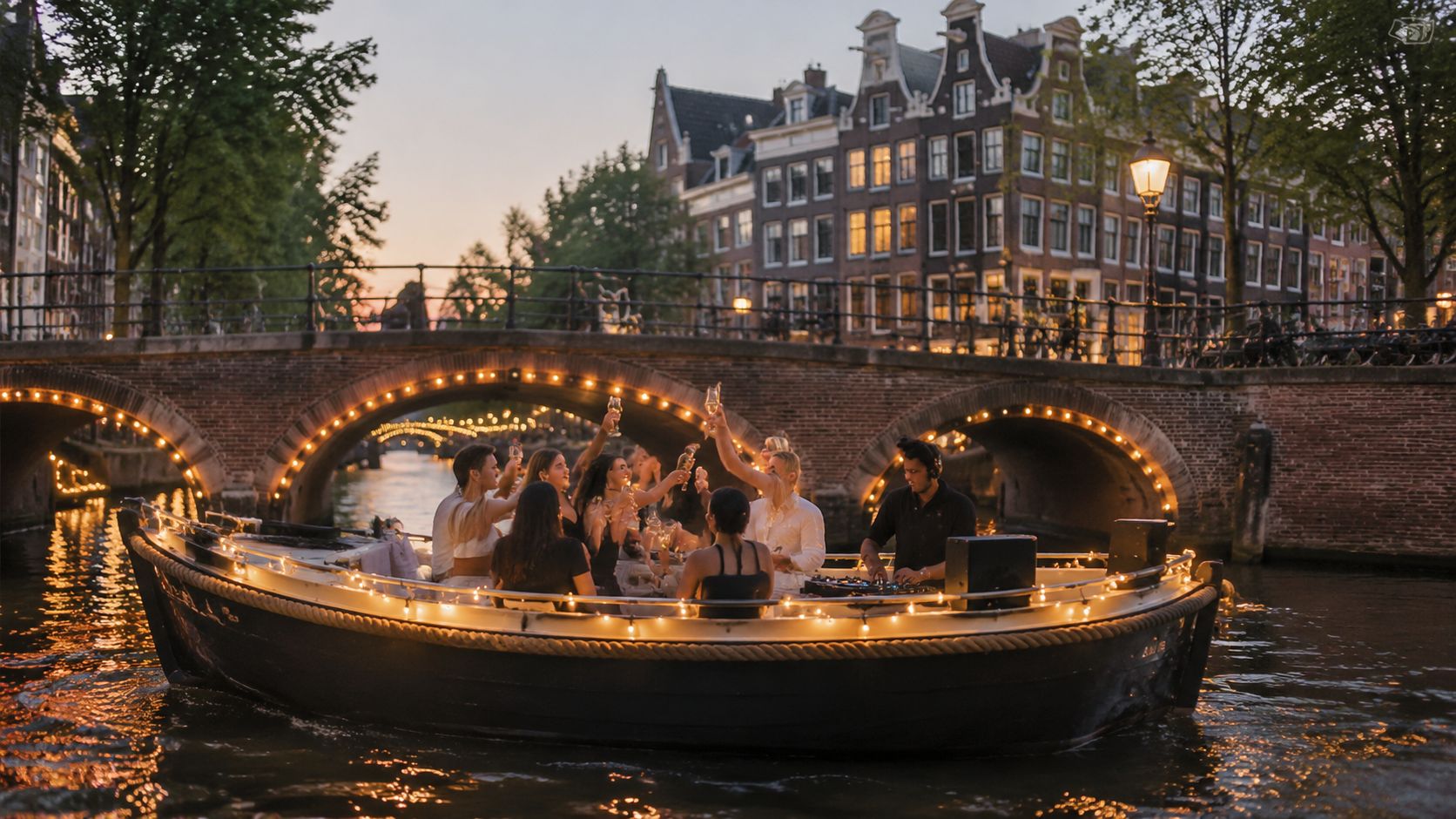
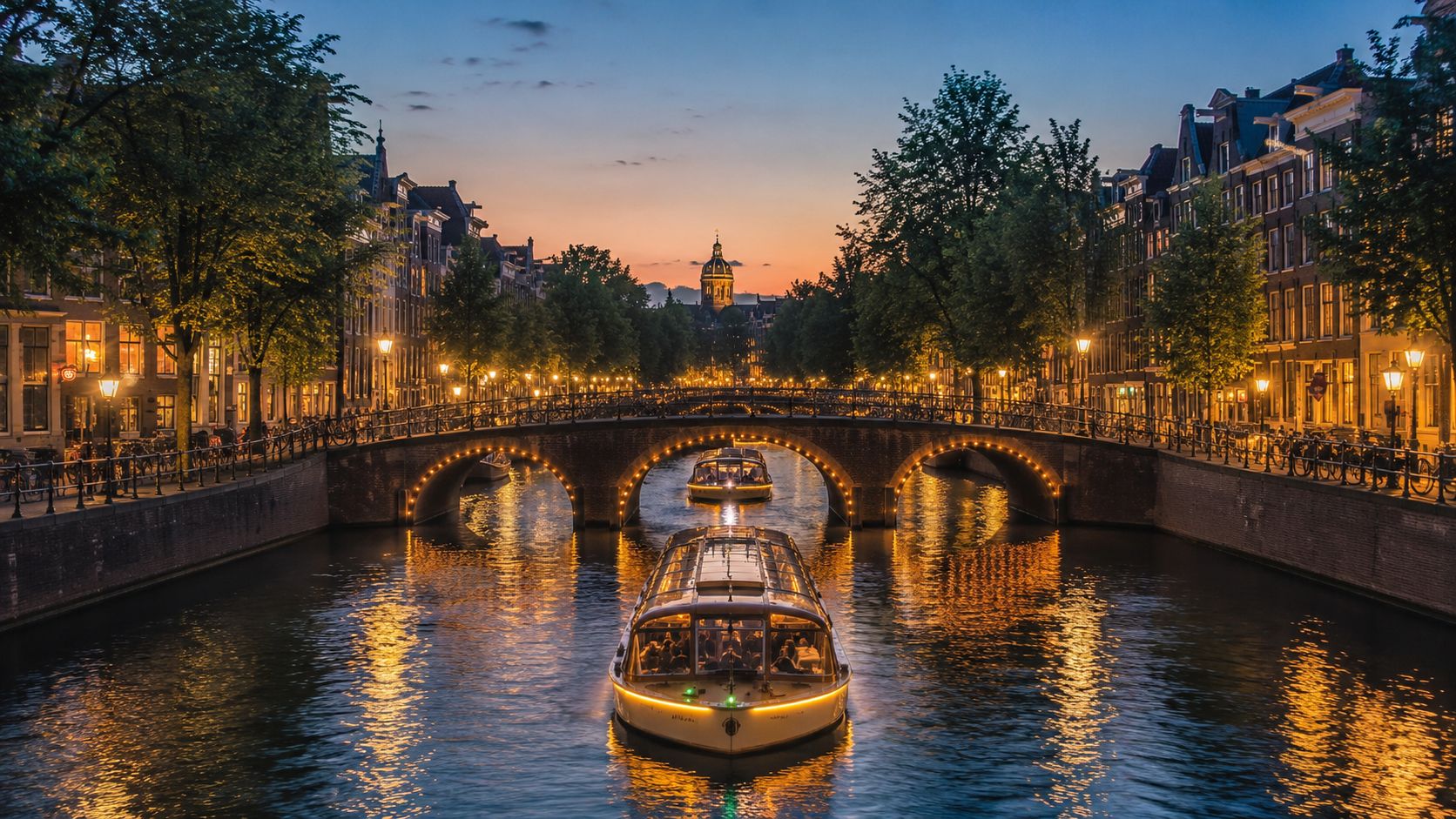
Just after sunset, the canal edge starts to glow. Warm light spills from narrow houses, bicycles thread past the quays, and illuminated boats pass beneath the low bridges of the Herengracht and Prinsengracht. A group waits near the departure point, checking the meeting instructions one more time while the captain prepares the boat.
Boarding is practical rather than theatrical. Shoes tap across the saloon deck, coats are moved out of the way, and the captain stows the lines before checking that everyone is settled. Then the first playlist track begins beneath the warm cabin lighting. It's quieter than a club at first, which gives people time to find seats, open a drink, and work out who has brought the most useful phone charger.
The first part of the route passes the familiar gabled houses and busy central waterways. Glasses clink, conversation builds, and strangers on a shared cruise exchange the polite nod that often becomes a conversation later. The boat's movement keeps the group engaged without demanding constant entertainment.
The city changes from the aft deck
Near Magere Brug, the open aft deck gives a wider view across the water. The bridge lights reflect in broken lines, passing cyclists slow to watch the boat, and the skyline feels more open than it did among the central canal houses. Once the route clears the Centrum ring, the city's volume drops. The music and group remain present, but the surroundings become less crowded and more spacious.
That's the point when many guests stop treating the cruise as transport between bars. The boat has become the evening itself. Amsterdam's canal cruise sector was estimated at about 4 million visitors a year in local industry coverage, while canal cruises carried 2.8 million passengers in 2023, a figure reported as 65% higher than in 2022 (Amsterdam canal cruise industry figures). A boat party sits inside that much larger culture of moving through the city by water.
What a Boat Party Actually Is in Amsterdam
A boat party is a timed canal cruise built around social energy rather than formal sightseeing. The boat usually has a skipper, a drinks arrangement, and music selected to keep conversation and group interaction moving. The exact setup varies by operator and vessel, so the booking page should always confirm the duration, drinks policy, music format, and meeting point.
A standard canal cruise and a party boat share the same waterways and operate under the same core skipper responsibilities. The passenger experience is different, though. A sightseeing cruise prioritizes narration, landmark views, and relatively quiet observation. A party cruise prioritizes drinks, music, conversation, and the feeling of having a moving social venue.
The details that separate the formats
Look for these distinctions before booking:
- Soundtrack: A party boat uses a DJ or curated playlist rather than relying on a guide microphone.
- Drinks: The booking may include a bar, a welcome drink, or a BYO arrangement. “Drinks included” needs clarification before payment.
- Route emphasis: The cruise may favor lively canal stretches and open views over a landmark-by-landmark commentary route.
- Social setup: Shared departures place unrelated travelers together, while private bookings give one group control over the guest list and atmosphere.
- Pace: The boat keeps moving. Guests should expect a hosted water experience, not a floating nightclub that remains beside the same venue all evening.
A shared boat suits solo travelers, couples, and small groups that want an easy social setting. A private charter works better when the group needs control over music, guests, speeches, decorations, or drinks. Neither format is automatically superior. The right choice depends on whether the priority is meeting people, keeping the group together, or creating a controlled event.
For groups collecting photos and videos, a simple shared upload space can prevent the usual problem of everyone leaving with separate, incomplete camera rolls. A service designed to capture every party moment can give guests one place to contribute images after the cruise.
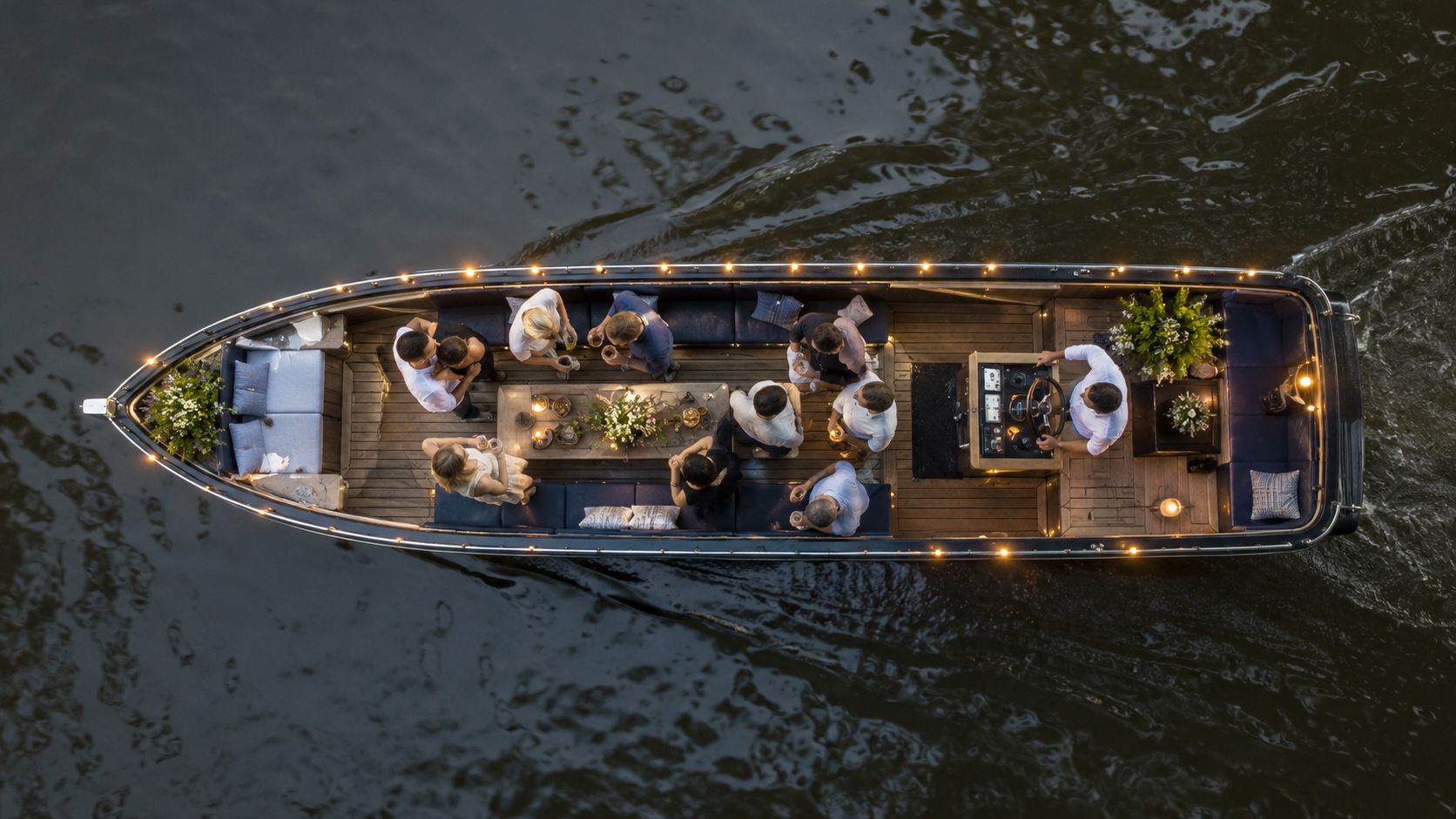
Shared Cruise Versus Private Charter
The shared-versus-private decision becomes clearer when the group separates control from convenience. A shared cruise uses fixed departure times and places the group alongside other travelers. A private charter reserves the vessel for one booking, which gives the organizer more say over the guest list, music, route preferences, and onboard rhythm.
| Consideration | Shared cruise | Private charter |
|---|---|---|
| Group dynamic | Other travelers create a mixed social atmosphere | One group controls the onboard guest list |
| Planning effort | Fixed schedule and simpler booking | More coordination around timing and requirements |
| Pricing logic | Usually priced per passenger, with any drink upgrades confirmed separately | Usually quoted for the boat, with catering and drinks handled according to the booking |
| Best fit | Couples, solo travelers, and small groups | Celebrations, private events, and organized group occasions |
| Atmosphere | Less control, more spontaneous interaction | More control, but the group must create its own momentum |
A shared cruise is often the cleaner choice for two friends arriving in Amsterdam without a detailed itinerary. The fixed sailing time removes planning friction, and the presence of other travelers can make a small group feel part of a larger night. The trade-off is that the music, seating, and social mix aren't designed exclusively around that booking.
A private charter makes more sense when the group needs a single space for a celebration or wants to keep speeches, themed music, or internal conversations away from strangers. It also requires more discipline from the organizer. Someone must confirm the guest list, communicate the meeting point, understand the drinks policy, and make sure the requested format fits the vessel's safe capacity.
The close call for medium-sized groups
A group of eight can reasonably choose either format. Shared is simpler when the travelers want an open social setting and don't need a custom route. Private becomes attractive when the group values privacy, a specific playlist, or a coordinated celebration more than the ease of a fixed public departure.
The same logic applies to corporate teams. A shared cruise can encourage informal interaction with a wider crowd, while a private charter gives a company better control over timing and conversation. For an Amsterdam shared option, the shared booze cruise provides a useful example of the public format, but the booking details should still be checked against the group's actual needs.
What to Expect Once You're Onboard
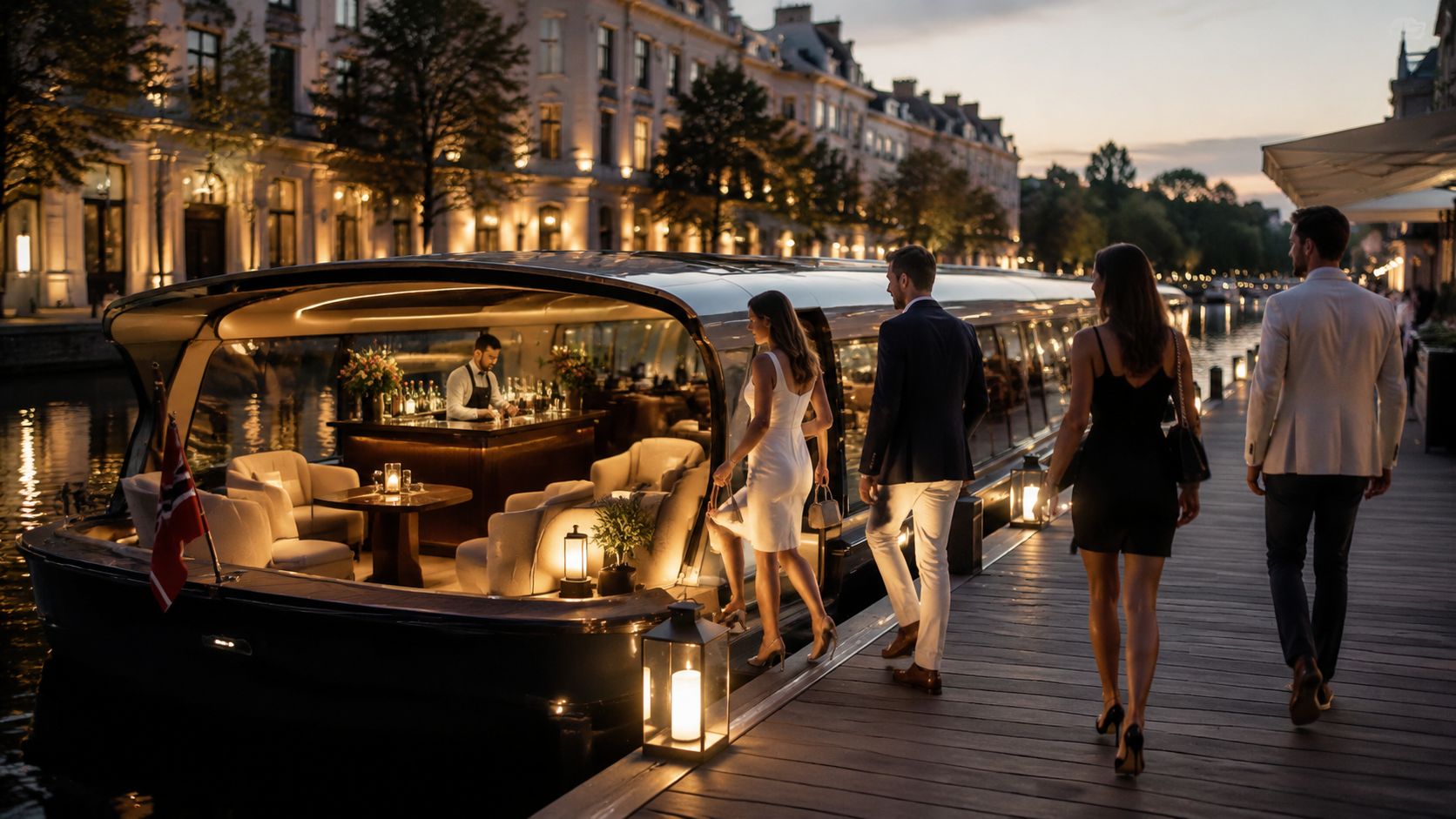
A smooth canal evening starts before the boat moves. Guests should arrive during the operator's stated boarding window, rather than treating the scheduled departure as the arrival time. Staff need time to count passengers, organize seating, secure loose belongings, and close the boarding process without holding the route.
Once everyone is aboard, the atmosphere usually develops in stages. The welcome drink or first service helps guests settle in, while the music remains low enough for introductions and practical announcements. As the boat leaves the dock and moves away from the brighter central quays, the soundtrack can become more prominent and the group's attention shifts toward conversation, views, and photographs.
The rhythm of the cruise
A typical booking may follow a pattern like this:
- Boarding: Guests check in, find their places, and listen for the safety or service briefing.
- Departure: The captain clears the dock while the host begins the first round or confirms how the bar works.
- Cruising: Conversation, music, drinks, and views become the main activity. Routes may pass through central canals, the Jordaan, or quieter stretches near the Amstel.
- Return: Service winds down before docking so guests can finish drinks, collect belongings, and leave without delaying the next movement of the vessel.
Smaller boats often have limited restroom facilities, so guests should ask before boarding rather than assume a full onboard bathroom is available. The same applies to seating, covered areas, open decks, heating, and accessibility. Those details affect comfort more than glossy photographs do.
Routes can change because of weather, bridge openings, congestion, or event permits. A responsible operator doesn't promise an identical path in every condition. The skipper has to prioritize safe navigation and compliance, even when a particular bridge or canal stretch was the group's preferred photo location.
Practical rule: The boat leaves on its operating schedule, not when the group feels ready. Early arrival protects the experience from an avoidable first-minute rush.
Amsterdam Canal Rules That Shape Your Night
A Friday booking can look simple until the operator asks for the final guest count, confirms the skipper, and explains the boat's permit. Those details shape the night as much as the route or drinks package. Amsterdam's municipal guidance sets a pleasure-craft cap of 12 passengers plus the skipper (Amsterdam safe boating guidance). Larger event vessels may fall under different classifications and permissions, so confirm the legal capacity of the specific boat rather than relying on an informal headcount.
The skipper must remain sober while operating the vessel. Amsterdam boating guidance allows passengers to drink onboard, while identifying a commonly cited maximum of 0.5 alcohol for the skipper, with no passenger alcohol limit stated in that guidance (Amsterdam navigation rules). The person steering is therefore separate from the drinking group. That arrangement protects decision-making and gives the crew someone ready to respond if traffic, weather, or a bridge opening changes the plan.
Noise, timing, and route restrictions
Music has practical limits in residential areas. Amplified sound is prohibited when it can be heard 10 metres away from the boat, and vessels longer than 10 metres face route restrictions in parts of the canal network during King's Day (Amsterdam boating update and restrictions). A well-run cruise can still feel lively, but it cannot operate like a street-level club. The host may need to lower the music near homes, bridges, or crowded sections.
Electric propulsion can improve the onboard experience. Electric party boats can operate at roughly 35 to 50 dB, while traditional diesel canal boats are commonly reported at about 70 to 85 dB (electric boat noise in Amsterdam). Quieter engines make conversation easier and reduce disturbance. They do not remove the need for controlled music or considerate guests.
Controls affecting larger recreational boats have also been introduced or discussed, including a reported limit of 550 permits for boats carrying more than 12 people and a proposed night restriction between 11 p.m. and 7 a.m. Before paying, ask who the legal operator is, which capacity applies, whether the vessel is insured and certified for the advertised use, and which permits cover the event. General advice on whether Amsterdam is safe can provide context, but it cannot replace those operator-specific checks.
Booking Checklist for the Right Format
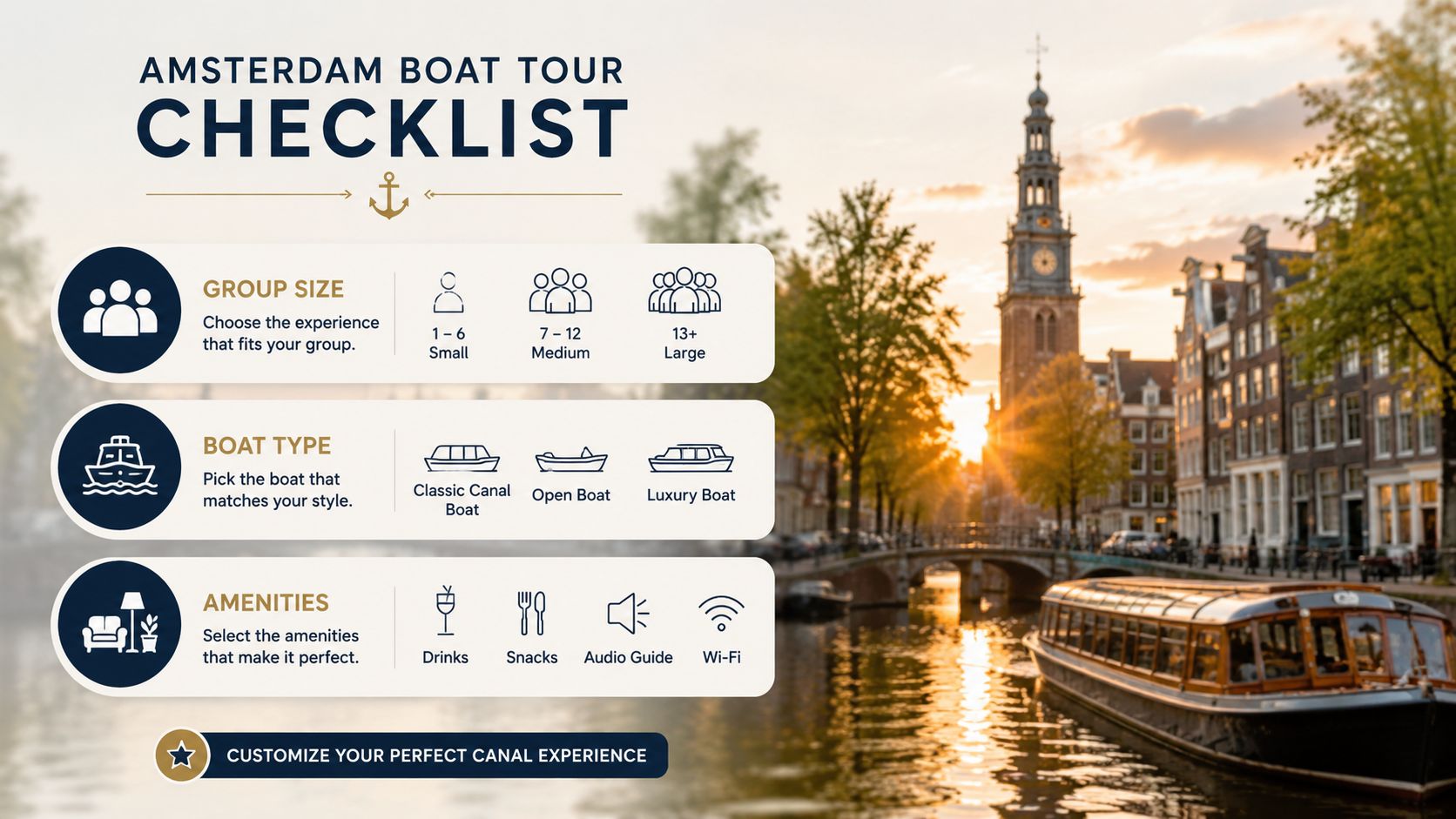
The booking form should answer operational questions before it asks guests to think about themes or playlists. Group size comes first, because a small mixed crowd and a private celebration need different formats. Shared cruises generally suit travelers who are comfortable meeting others, while private charters make more sense when guest control matters.
Ask these questions before paying
- Who is onboard: Confirm whether the booking is shared or private, and whether the advertised capacity refers to guests only or includes the skipper.
- How long does it last: A shorter cruise can suit a packed nightlife itinerary, while an extended booking gives a group more time to settle into the water-based setting. Ask how the duration affects the price and the energy of the evening.
- What drinks are included: Establish whether the package includes a welcome drink, a token-based bar, unlimited service, or no drinks at all. “Open bar” should also clarify the available drinks and service period.
- What happens in bad weather: Ask whether the boat has a covered cabin, whether the route can change, and what cancellation or rescheduling terms apply.
- What happens if plans change: Check the deposit structure, cancellation deadline, and whether the operator requires a final guest count.
- What does the boat provide: Confirm seating, toilets, music equipment, heating, glassware, and any restrictions on food, decorations, or outside drinks.
A standard cruise length works well when the boat is one part of a broader night. A longer private booking can work for a company event or a celebration that needs more time for speeches and group interaction, but extra duration doesn't automatically create more energy. Guests still need space, a comfortable temperature, access to water, and a realistic plan for drinking.
Corporate organizers can also use practical articles on company events when coordinating roles, schedules, and communication. For a private Amsterdam booking, the private booze cruise illustrates the kind of format that gives one group a dedicated vessel, although the precise terms must be confirmed at booking.
Common Assumptions Worth Dropping
The most disappointing boat parties usually fail because the group booked an image rather than an operating format. A boat still has a capacity, a route, a departure schedule, a skipper, and neighbors along the canals. Those mechanics shape the mood more decisively than a promise of unlimited drinks or a loud playlist.
Unlimited doesn't mean uncontrolled
An unlimited package doesn't mean guests receive drinks without service limits, safety judgment, or regard for the boat's movement. Staff still need to manage pouring, glassware, spills, passenger behavior, and the point at which someone is no longer enjoying alcohol responsibly. Drinking quickly can also make motion sickness and poor balance more likely, especially when guests move around a moving deck.
Private doesn't automatically mean better
Private gives the group control, but it also gives the group responsibility for the atmosphere. A small private booking with no host, weak planning, or an unsuitable playlist can feel flatter than a shared cruise where other travelers provide natural energy. Shared boats aren't necessarily cramped or awkward. The social mix can be the reason the night works, particularly for solo travelers and pairs.
Late departures are not a safe assumption
Amsterdam canal nightlife doesn't operate on the same logic as a club timetable. Municipal restrictions and local nuisance controls can limit when recreational boating takes place, while route conditions and residential areas affect the permitted sound level. A group that wants a midnight start should verify availability and legality rather than assume a boat can depart whenever the bars become busy.
Three rules deserve particular attention:
- The boat follows harbor time: Boarding, departure, route changes, and docking happen according to navigation requirements.
- The skipper stays dry: The person operating the vessel must remain sober while underway.
- A curated group can feel fuller than a packed one: Conversation, movement, and clear sightlines often matter more than squeezing in every possible guest.
The strongest party atmosphere comes from a format that matches the group, not from maximum volume or maximum alcohol.
Making the Most of Your Canal Night
The decision is straightforward once the group separates the mood from the marketing. Choose a shared cruise when meeting other travelers and avoiding heavy planning matter most. Choose a private charter when the guest list, music, timing, or event structure needs to remain under one organizer's control.
The departure point deserves as much attention as the boat itself. Pick a meeting place that works with the group's pre-drinks plan, then allow enough time to walk there, find the correct pier, and handle check-in. Guests should arrive early with identification, a charged phone, and the group chat open, because a missing traveler can delay everyone else.
Before payment, confirm the drinks arrangement, music policy, covered seating, restroom setup, route expectations, cancellation terms, and weather plan. Guests should wear practical footwear and bring a light layer for the open deck. Loose items, unstable shoes, and overpacked bags create unnecessary problems in a moving, shared space.
A hosted canal cruise is often the lowest-friction way to arrange a boat party in Amsterdam because the operator coordinates the skipper, route, service setup, and onboard controls. The group still needs to behave responsibly, but it doesn't have to improvise the legal and logistical foundations of the evening.
The best canal nights are planned, not improvised. Once the practical details are settled, the group can stop checking the clock and let the city, music, and water carry the evening.
Ultimate Party Amsterdam offers shared canal booze cruises, private booze cruises, and wider nightlife planning for groups that want the boat party to fit into a complete Amsterdam night. Visit Ultimate Party Amsterdam to compare the available formats and choose the experience that matches the group, timing, and level of privacy required.
🍻
Experience it Yourself
Skip the planning — join Amsterdam's biggest pub crawl and get 6 bars, free drinks and VIP club entry for €20.