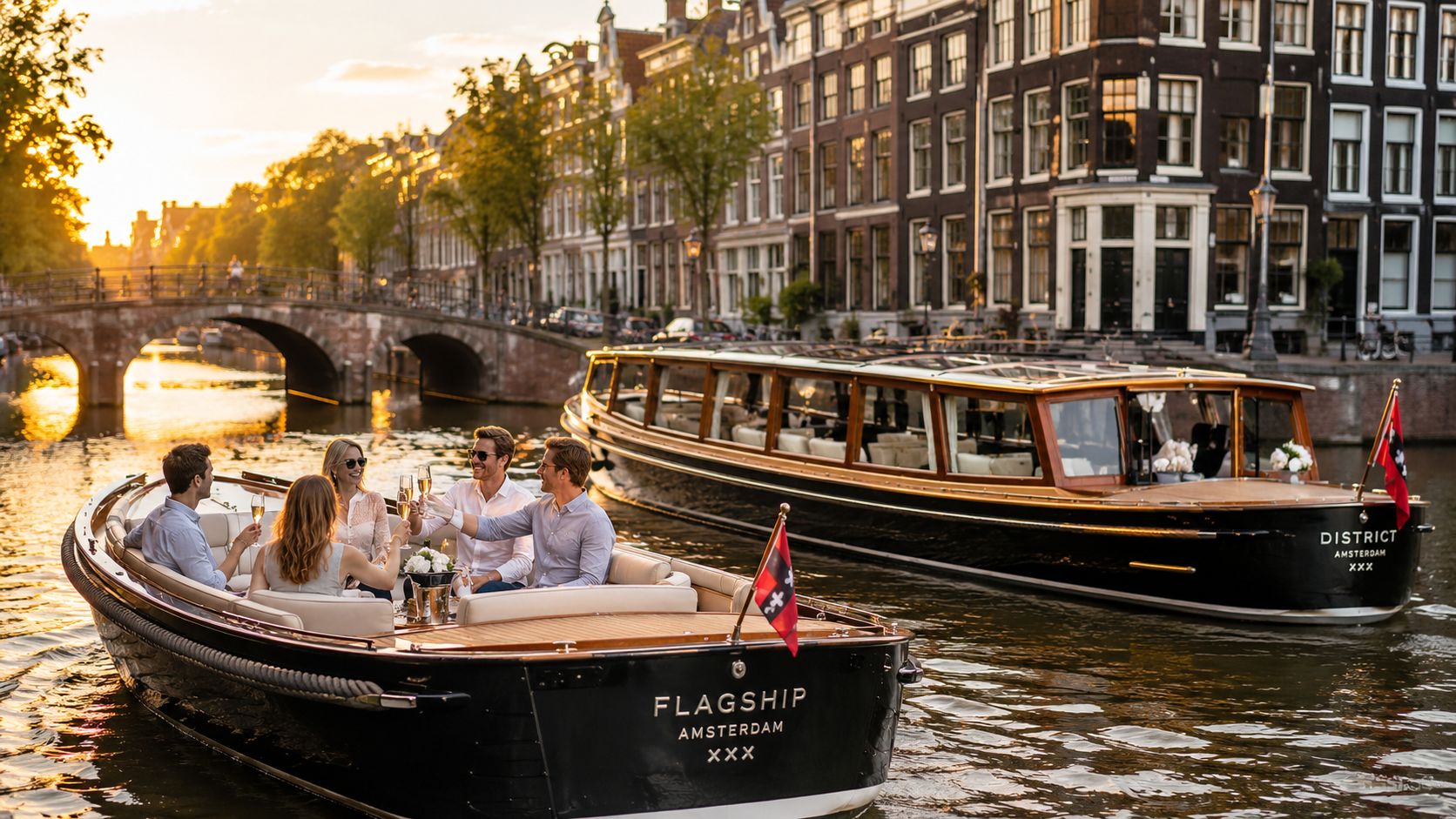
A one-hour luxury canal cruise in Amsterdam usually means budgeting about €14.50 to €20 per person for an entry-level shared premium ride, while a private charter costs several times more. The core decision isn't whether to go luxury, it's whether the group needs private exclusivity or gets more value from a shared premium electric boat.
Amsterdam is the sort of city where people think they can sort the boat later, then end up booking the wrong format for the occasion. The canals are heritage, nightlife transport, sightseeing route, and group venue all at once, so the boat choice matters more here than in most cities. For a planner, the smart question is simple, which cruise fits the group size, accessibility needs, and timing.
| Boat Class | Typical Capacity | Best For | Weather Suitability |
|---|---|---|---|
| Open Sloop | 6–12 | Short summer hops, informal groups, relaxed daytime cruising | Best in dry, mild weather |
| Enclosed Saloon Boat | 20–40 | Year-round comfort, corporate groups, colder evenings | Strong in rain and cold |
| Small Electric Private Charter | 8–30 | Intimate celebrations, flexible route planning, mixed-age groups | Good in most conditions |
| Shared Premium Cruise | 30–70 | Couples, small groups, per-person value, social atmosphere | Solid for most seasons |
Table of Contents
- Why a Luxury Canal Cruise in Amsterdam Feels Different
- The Four Boat Classes You Will Actually Be Offered
- What Electric-Only Canals Mean for Luxury Cruises
- Private Charter Versus Shared Premium Cruise
- Choosing the Right Cruise for Your Occasion
- Accessibility and Group Logistics Most Comparisons Skip
- Booking, Pricing, and Amsterdam Nightlife Timing
- Which Luxury Canal Cruise You Should Book in Amsterdam
Why a Luxury Canal Cruise in Amsterdam Feels Different
Amsterdam's canals are not a decorative extra. The city has more than 100 kilometers of canals, about 90 islands, and around 1,500 bridges, and the canal ring joined the UNESCO World Heritage List on 1 August 2010 (Canals of Amsterdam). That scale is why a boat ride here feels like part of the city's identity, not just a transfer from one viewpoint to another.
What luxury actually means on the water
A proper luxury canal cruise Amsterdam booking is usually defined by five things. First, electric propulsion is the norm in the centre, so the ride is quieter and cleaner. Second, the boat usually has a real hospitality setup, not just seats and a speaker. Third, enclosed saloons give you weather protection, while open boats suit only the right conditions. Fourth, the route is chosen with the skipper's local knowledge in mind. Fifth, the timing is set for golden hour or the evening, when the canals look better and the mood lands properly.
Practical rule: luxury in Amsterdam is not just about what's served on board. It's about how much noise, weather stress, and crowd friction the boat removes.
Compared with standard hop-on-hop-off sightseeing, premium cruises usually feel calmer because the passenger mix is smaller, the layout is better, and the boat can hold a conversation without the whole experience turning into background chatter. That matters even more in the central canals, where the city's speed rules and tight waterways reward slow, precise cruising.
The buyer's real decision is not “luxury or not.” It's whether the group wants a private experience, a shared premium atmosphere, or a format that gets everyone on the water with the least hassle.
The Four Boat Classes You Will Actually Be Offered
The market looks simpler from the outside than it is in practice. Once a planner starts asking for quotes, four boat types tend to come back repeatedly, and each one solves a different problem.
Open sloop and why it works
An open sloop is the lightest option, usually the easiest to enjoy in summer, and often the most informal. It suits small groups who want fresh air, quick boarding, and a relaxed social feel. The downside is obvious, less protection from rain and cold, and fewer comforts if the evening turns rough.
Enclosed saloon boat and why it stays popular
An enclosed saloon boat is the year-round workhorse. It usually handles more guests, offers better shelter, and gives corporate or mixed-age groups a more polished feel. Glazing, heating, and a more structured layout make it the safer choice when the trip needs to stay comfortable regardless of weather.
Small electric private charter and shared premium cruise
A small electric private charter sits between intimacy and flexibility. It works when the group wants control over music, pacing, or stops without moving into the expense of a large event boat. A shared premium cruise is the opposite trade-off, less control, but more efficient pricing and a built-in atmosphere that many couples and small friend groups prefer.
Good booking habit: ask whether the boat is enclosed, whether it has heating, and whether the layout suits standing, seated drinks, or a mix of both before talking about “luxury” at all.
| Amsterdam Canal Cruise | Boat Classes Compared | ||
|---|---|---|---|
| Boat Class | Typical Capacity | Best For | Weather Suitability |
| Open Sloop | 6–12 | Summer social cruising | Weak in wet or cold weather |
| Enclosed Saloon Boat | 20–40 | Corporate groups and all-season comfort | Strong |
| Small Electric Private Charter | 8–30 | Intimate celebrations and custom pacing | Strong |
| Shared Premium Cruise | 30–70 | Value-conscious groups wanting a polished feel | Good |
That table is the fastest way to stop overpaying for the wrong format. If the event is small and social, the open sloop often wins. If the group needs comfort and predictability, the saloon boat usually makes more sense.
What Electric-Only Canals Mean for Luxury Cruises
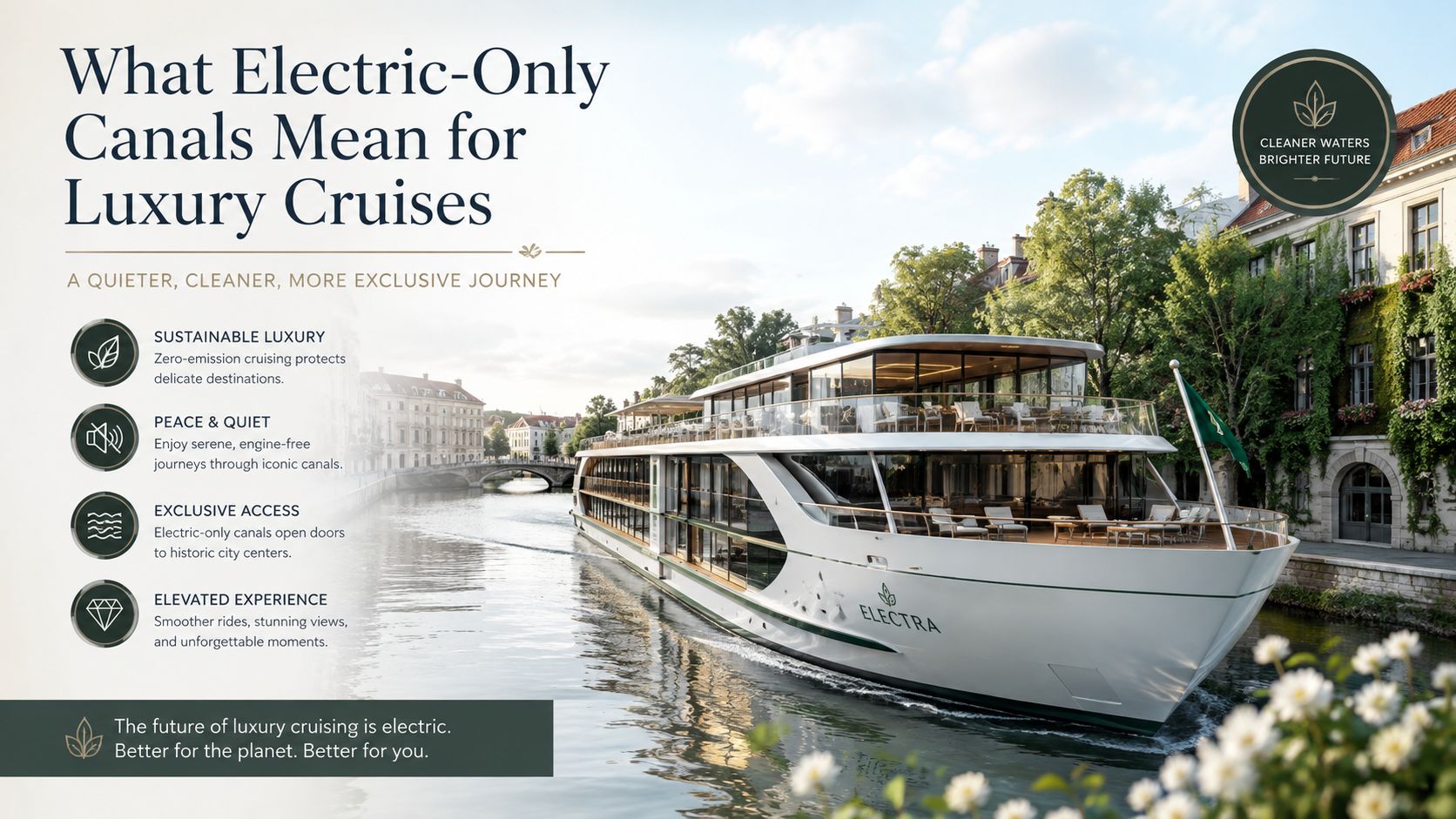
Amsterdam's central canal zone is pushing luxury cruising in one direction, electric or hydrogen-powered boats. The city centre has an emission-free zone for pleasure craft, so electric boats are the practical standard, not a special upgrade (Amsterdam city guidance).
Quiet is now the premium feature
That matters because quiet changes the whole onboard feel. Electric boats cut out the engine rumble, so guests can talk normally and the cruise feels calmer in residential canal areas. Evening cruises benefit even more. When the water is still and the city gets softer, the boat does not have to compete with itself.
For planners, that changes what “luxury” really means in Amsterdam. A polished boat with a loud engine misses the point here. A premium electric vessel feels more expensive because it lets the canal setting do the work.
Amsterdam is also tightening the rules on the water. Official city guidance makes clear that the emission-free zone for pleasure craft is already in place, and travellers should expect the canal fleet to keep moving in that direction. For a luxury booking, that means compliance is part of the product, not a side note.
There are still practical limits. Smaller electric boats need to work within battery range, charging windows affect scheduling, and not every premium operator sets up the same way. Ask how the boat handles the route you want, whether the layout supports seated drinks or standing groups, and whether the vessel stays comfortable once the sun goes down.
A shared premium cruise can make more sense than a private charter when the group wants a good evening on the water without paying for empty seats. A private electric charter still wins for control, but the shared option is often the smarter choice for smaller groups that care more about timing, comfort, and a lively atmosphere than full privacy.
Private Charter Versus Shared Premium Cruise
Private and shared cruises solve different problems, and Amsterdam punishes vague thinking here. The wrong choice is usually obvious after the fact, when a planner realises the boat was either too empty for the money or too crowded for the occasion.
Where private wins
Private charters work when control matters more than per-person efficiency. The group gets the music, the timing, the route pacing, and the social dynamic to itself. That's why private boats fit milestone celebrations, corporate hosting, and groups that need to keep the experience self-contained.
Where shared premium wins
Shared premium cruises are the better call when the goal is a polished ride without paying for privacy the group doesn't really need. They keep the atmosphere lively, avoid the cost jump of exclusivity, and still deliver a boat that feels more considered than a bare sightseeing craft. For couples and small groups, that trade usually makes more sense than chartering an entire boat.
| Private Charter vs Shared Premium Cruise |
| Factor | Private Charter | Shared Premium Cruise |
|---|---|---|
| Who is on board | Only the booking group | Other guests share the boat |
| Route control | High | Limited |
| Music and pacing | Fully flexible | Operator-led |
| Price logic | Better for larger groups or high exclusivity needs | Better for couples and smaller groups |
| Atmosphere | Controlled, private, quieter | Social, lively, lower-stakes |
A practical example helps. A small group booking a private charter for an hour can pay for empty space they don't use. A shared premium cruise can deliver the same canal setting for far less money, with drinks and a social edge already built in.
For a cruise with unlimited drinks in a shared format, see Ultimate Party Amsterdam's shared booze cruise.
Choosing the Right Cruise for Your Occasion
The right choice changes fast once the guest mix changes. A hen party, a board-level offsite, and a family outing can all search for the same keyword, then need completely different boats.
Hen party groups
A group of 10 to 14 celebrating properly is usually better off on a private saloon boat with a playlist, boarding drinks, and a timing slot that flows into dinner or a club later. The cruise should feel like part of the evening, not a separate sightseeing errand. For planning ideas that fit that kind of night, see how to plan the perfect Amsterdam bachelorette party.
Corporate offsites
A 20 to 35 person work group needs structure. A larger private electric saloon makes sense when the plan includes a short introduction, room to stand and talk, and a route past recognisable canal landmarks without forcing the whole group to shout over one another. Once catering and a clean boarding process are involved, the boat stops being entertainment and starts functioning as a meeting venue with a view.
Mixed-mobility family groups
A family with a wheelchair user should stop reading “luxury” as a style term and start reading it as a logistics term. The right boat is the one with low-deck access, a ramp if needed, and a calm route that doesn't turn boarding into a problem. Mixed-mobility groups need the operator to confirm access in writing, not just promise that “it should be fine.”
Best-fit rule: if the occasion depends on control, choose private. If it depends on atmosphere and value, shared premium usually wins.
A lot of content blurs these use cases together. That's a mistake, because a premium canal cruise can be a celebration tool, a team-hosting tool, or a family-access tool, and those are not the same product in practice.
Accessibility and Group Logistics Most Comparisons Skip
The first thing to check is boarding. Many luxury boats sound accessible in marketing copy, but the question is whether the gangway, dock height, and boat layout allow a smooth transfer. For wheelchair users, a flat entry claim means very little unless the operator can explain the exact boarding process and whether crew assistance is included.
The checks that prevent problems
Accessibility is only one piece. Group size affects pricing far more than expected, and the sensible thresholds are usually where the cost per person starts dropping at larger headcounts. Drink policy matters too, because some boats include one welcome drink, while others charge extra for every additional glass. Licensing matters as well, especially when alcohol is part of the booking and the boat needs the right permits and insurance in place.
- Boarding access: Ask for the gangway height, deck step, and whether a ramp is fitted.
- Capacity reality: Don't book a boat sized for the wrong band just because the photo looks nicer.
- Drink rules: Confirm whether drinks are included, capped, or only available as add-ons.
- Permits and insurance: Verify that the operator is licensed for the route and alcohol service.
- Weather cover: If the date lands in colder months, covered seating is the safer call.
The weather point is blunt. Covered saloons are the practical choice when comfort matters, because nobody remembers the “open-air vibe” fondly if everyone spends half the cruise shivering. For a planner, that's not a luxury downgrade, it's basic risk control.
Booking, Pricing, and Amsterdam Nightlife Timing
The easiest mistake is assuming luxury means private by default. In Amsterdam, the smarter move is often to buy the format that fits the evening, then spend the saved budget on the rest of the night.
How the timing should work
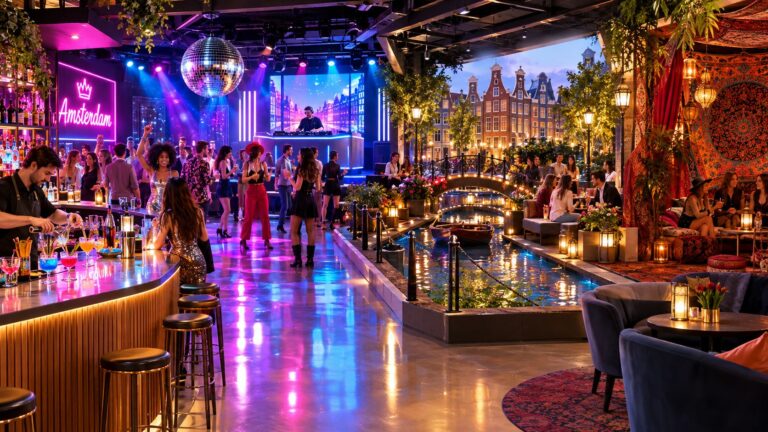
Cruises commonly fit golden hour or the late evening, and that's where Amsterdam's nightlife rhythm matters. Bars often close between 01:00 and 03:00, while parties typically start around 23:00 to 00:00, and many locals do not head out until after midnight. A canal cruise therefore works well as the opening move, the dinner bridge, or the transfer between a meal and a club.
Why the direct booking route is cleaner
Direct booking usually gives more room for menu tweaks, boarding notes, and route preferences. That matters when the cruise has to fit a dinner reservation, a hotel check-in, or a post-cruise nightlife plan. For a private format with the right social setup, Ultimate Party Amsterdam's private booze cruise is the kind of option planners should compare against other direct-booked charters, not against generic sightseeing rides.
The pricing logic is straightforward. Entry-level shared premium rides can stay near the lower end of the one-hour market, while private charters rise quickly once the boat, crew, and exclusivity are locked in. Add sunset timing, catering, or weekend demand, and the premium is usually about flexibility, not just the ride itself.
A cruise is strongest when it replaces dead time. Used well, it can bridge dinner in one district and a club in another without turning the evening into a taxi crawl.
Which Luxury Canal Cruise You Should Book in Amsterdam
The choice comes down to group size, budget ceiling, and whether the occasion needs privacy. Couples and small groups under six usually do best on a shared premium enclosed saloon at sunset. Groups of six to twelve celebrating something personal get more out of a private sloop or small charter with their own playlist. Larger corporate groups, mixed-mobility families, and anyone who cares more about silence than décor should default to an electric private charter.
Book two to four weeks ahead in shoulder season and four to six weeks ahead in summer. If the goal is actual relaxation, skip anything under 75 minutes and give the cruise enough time to feel like an experience rather than a quick loop.
Ultimate Party Amsterdam arranges canal booze cruises, private boat parties, and nightlife planning that fits Amsterdam's late schedule instead of fighting it. For groups that want a canal experience tied to a pub crawl, a private cruise, or a night out plan, visit Ultimate Party Amsterdam and start with the format that matches the group, not the label.
🍻
Experience it Yourself
Skip the planning — join Amsterdam's biggest pub crawl and get 6 bars, free drinks and VIP club entry for €20.