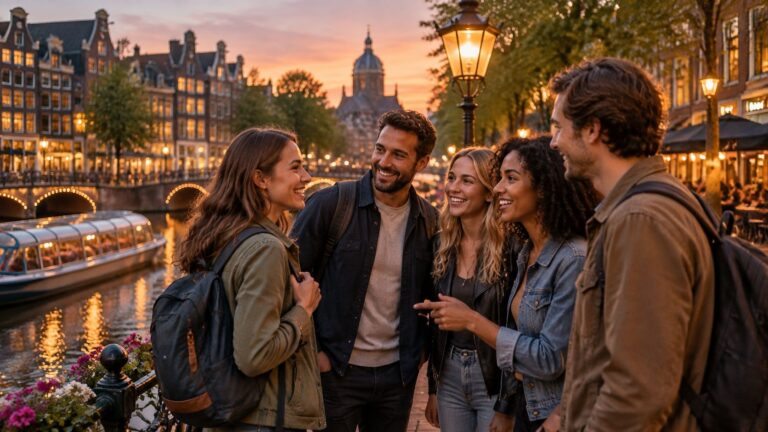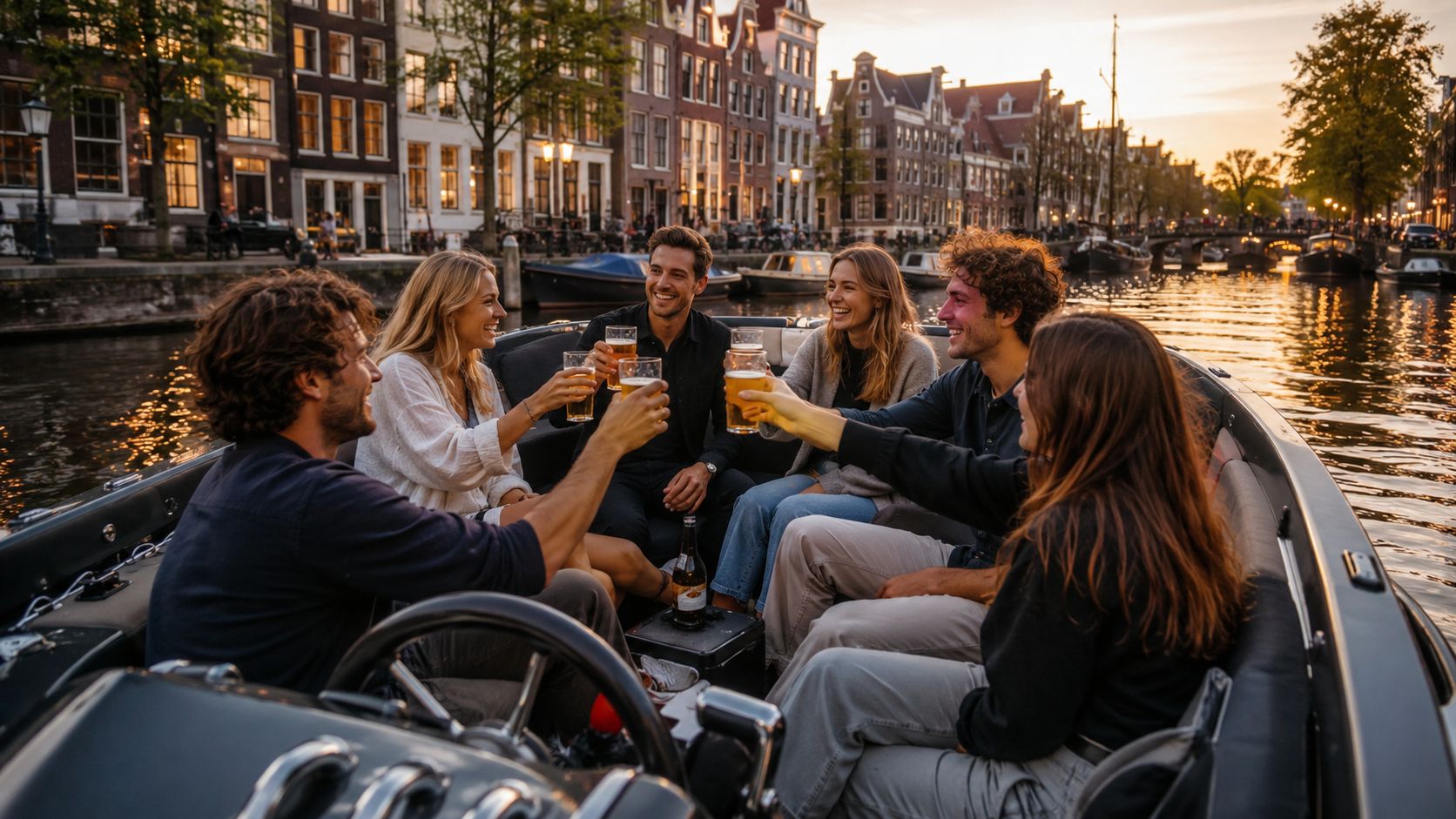
You've just arrived in Amsterdam with a group chat full of plans, a short stay, and the same question coming up: should the group book a standard canal tour, find a private boat, or combine the canals with an evening of drinks? Around Centraal Station and the medieval centre, the choice can feel confusing because the city's waterways are busy, regulated, and built around very different kinds of boats.
A small boat cruise in Amsterdam can solve that problem, but only when the boat, route, drinks policy, and group format match the occasion. A quiet electric boat can feel intimate and comfortable, while a hosted booze cruise creates an easy social setting. Neither option means unlimited party freedom on a public waterway. The best experience starts with understanding how the canals work.
Table of Contents
- Introduction to Small Boat Cruises in Amsterdam
- What Makes a Small Boat Cruise Different
- What Is Typically Included on Board
- Small Boats Versus Large Canal Cruises
- Who Benefits Most From a Small Boat Experience
- Booking Tips Seasonality and Amsterdam Rules to Know
- Final Thoughts on Choosing Your Amsterdam Canal Cruise
Introduction to Small Boat Cruises in Amsterdam
Amsterdam's canal network gives visitors an unusual way to see the historic centre without walking every bridge and street. The canal belt has more than 100 kilometres of waterways, around 1,700 bridges, and roughly 2,500 houseboats, according to this overview of Amsterdam's canals. The canal belt also became a UNESCO World Heritage Site in 2010, which helps explain why a boat ride feels more distinctive than ordinary urban transport.
Demand is already broad. Amsterdam estimates that visitors spend about €1.25 billion each year on fun and entertainment during their stay, while 1.5 million foreign visitors come specifically for Amsterdam nightlife. The same city source says that more than 3 million unique visitors from outside Amsterdam visit the city's nightlife, placing canal-based drinks experiences inside a substantial tourism and nightlife economy rather than a niche activity. These figures come from the city's Amsterdam nightlife vision.
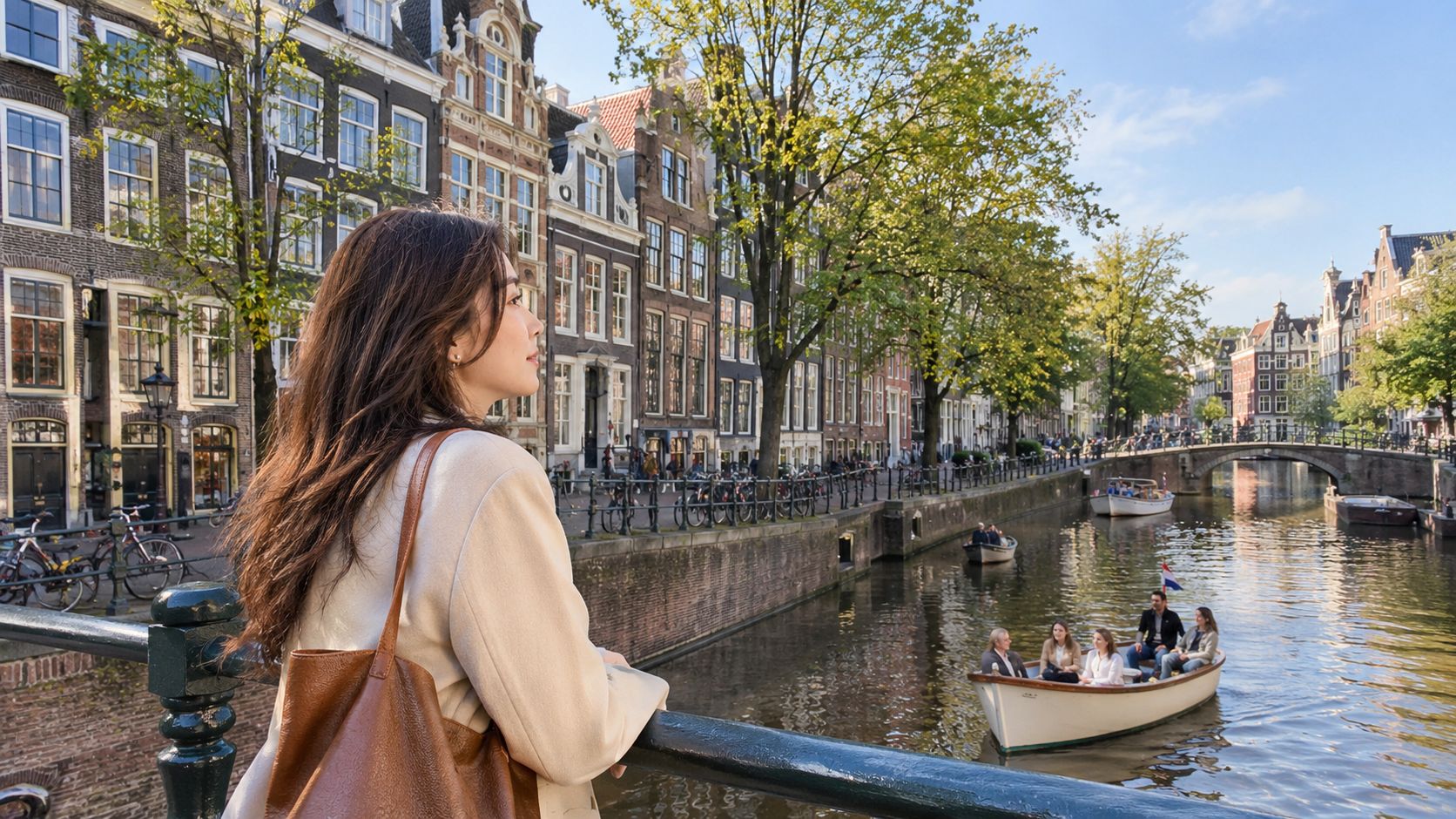
The scale of tourism makes compact departures practical. Local reporting recorded 22.9 million tourist nights in 2024, with 23 million to 24.6 million projected for 2025, as referenced in the city material above. A one-hour cruise fits travellers who have limited time, want a central activity before dinner, or need a simple group plan between daytime sightseeing and nightlife.
Practical rule: A small boat cruise should be treated as a hosted urban experience, not as a private road trip on water.
This guide helps solo travellers, couples, friends, student groups, and celebration groups answer the questions that matter before booking. Is a shared or private boat more suitable? Does the boat operate legally in the centre? What do the drinks, seating, boarding, and music arrangements really mean? Those details shape the experience more than a glossy listing photo.
What Makes a Small Boat Cruise Different
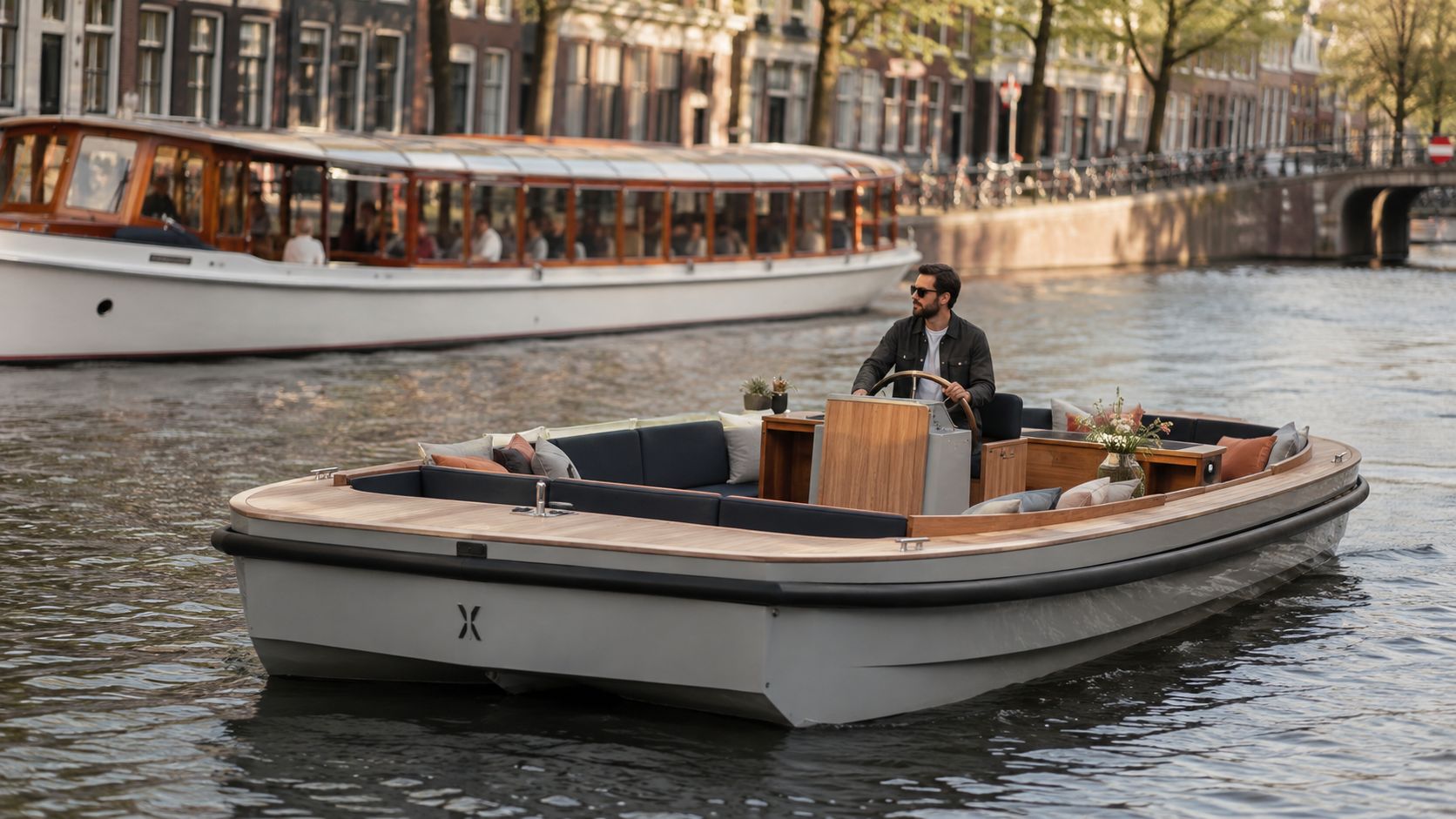
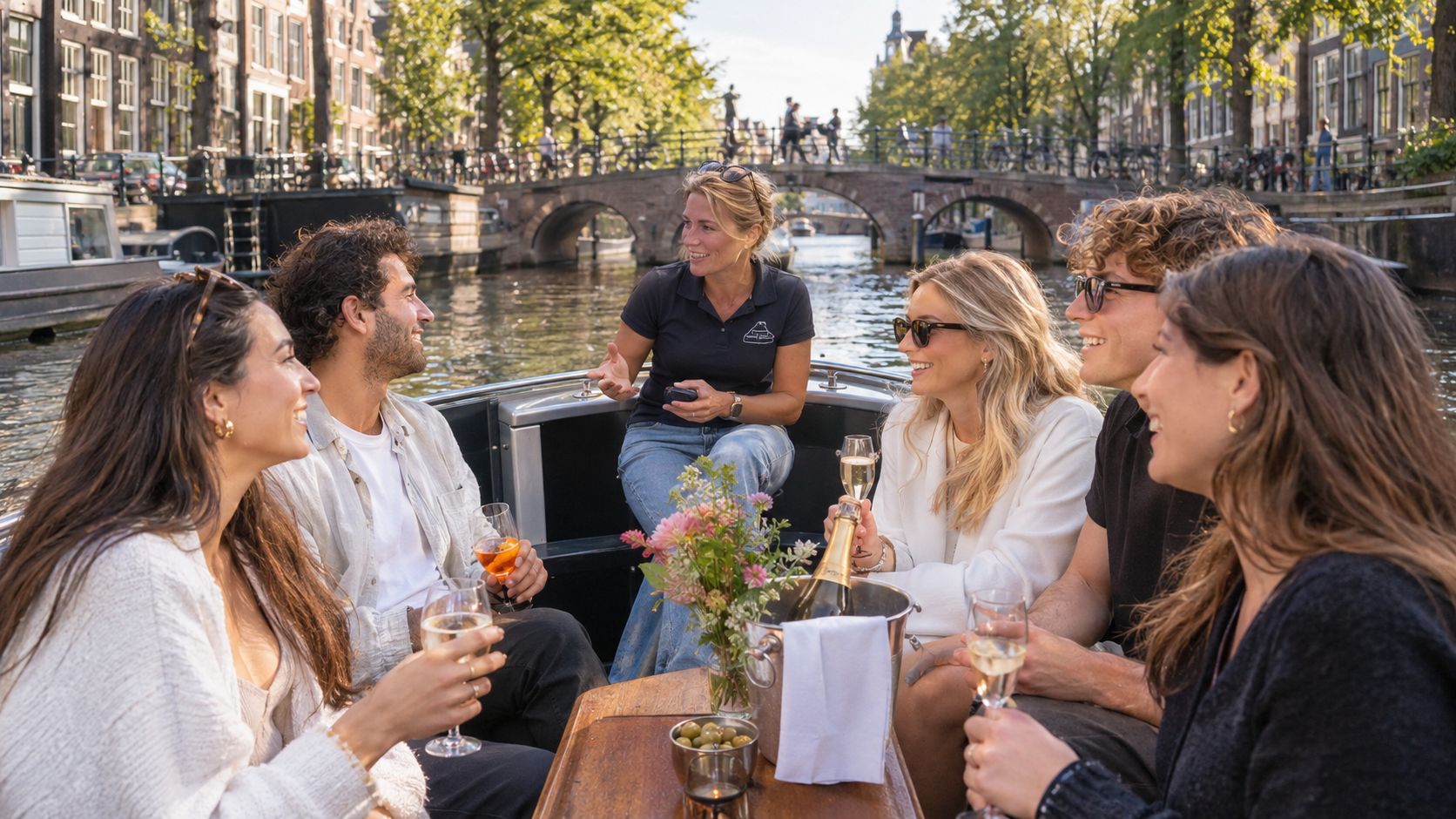
The difference begins with scale. A small boat keeps passengers close to the water, the bridges, the canal houses, and the skipper. Instead of sitting in rows inside a large cabin, passengers usually experience a more compact layout where conversation and direct views matter as much as sightseeing commentary.
A useful comparison is a private living room versus a floating auditorium. A large cruise boat gives passengers a broad, stable viewing platform, often with more shelter and formal commentary. A small boat creates a closer social setting. The skipper's route feels more immediate, and passengers can usually follow the movement of the boat through narrow urban spaces rather than viewing the canal from behind a large window.
Size changes the atmosphere
Amsterdam's canal rules create a clear design constraint. Recreational boats in the canal belt are limited to 12 passengers plus one licensed skipper, and boats 10 metres or longer are barred from many canals, except on specified waterways, according to guidance on the 12-person rule.
That limit affects the mood on board. A group can remain together without being spread across a large deck, and a host can communicate with passengers without relying on a loud public-address system. For a birthday group or a group of friends, that closeness often matters more than having a formal historical narration.
Electric propulsion changes what passengers hear
Electric boats are becoming central to canal cruising because Amsterdam's city-centre pleasure-boat rules now require zero-emission propulsion. Electric, hydrogen, or muscle-powered vessels may enter the zone within and including the Singelgracht from 1 April 2025, as explained by the City of Amsterdam's zero-emission canal guidance.
The benefit is practical as well as environmental. Electric boats are significantly quieter than diesel boats. One source places electric operation at about 40 to 50 decibels, compared with 70 to 85 decibels for traditional diesel boats, as described in this explanation of electric boat noise. Passengers can speak more easily, hear the host, and notice the city rather than listening constantly to engine vibration.
A small boat also changes how weather feels. Open-air seating improves views and photographs, but wind and rain become part of the planning decision. Comfortable clothing, a flexible attitude, and a clear understanding of the boat's cover are more useful than assuming every cruise offers the same shelter.
What Is Typically Included on Board
A listing for a small boat cruise can sound simple, but the practical details deserve careful reading. The phrase “booze cruise” usually describes the drinks arrangement, not a promise that food, hotel transport, loud music, or a particular route comes with the booking.
Ultimate Party Amsterdam's shared and private booze cruise formats are described as 60-minute electric-boat experiences with a professional skipper, a host, and an open Dutch bar. The drinks offering is described as unlimited beer, wine, and soft drinks during the journey. The private Amsterdam booze cruise is the private version of that format, while shared departures are designed for passengers who want a hosted social setting without booking the entire boat.
A useful inclusion checklist
Before paying, a traveller should separate confirmed inclusions from assumptions:
- Cruise duration: A short, one-hour format works well before dinner, a pub crawl, or a later reservation. It also keeps the activity manageable during a busy city break.
- Boat type: An electric boat matters in the centre because propulsion affects compliance, noise, and the feel of the ride.
- On-board host: A host can help passengers settle in, understand the format, and keep the group connected.
- Drinks: An open Dutch bar may cover beer, wine, and soft drinks, but passengers should check the exact listing rather than assume spirits, cocktails, or shots are included.
- Seating: Small boats often use close, social seating. That can be ideal for conversation, although it won't feel like a private lounge unless the booking is private.
- Food: Food shouldn't be assumed. A drinks cruise and a dining cruise are different products.
- Transport: Hotel pickup isn't automatically part of a canal departure. Groups need to allow time to reach the boarding point.
- Entertainment: A host and a social atmosphere don't guarantee amplified music, a DJ, or a specific playlist.
The most common booking mistake is comparing the headline price while ignoring the operating format. A cheaper shared boat may suit solo travellers, while a private charter may make more sense for a group that wants to stay together. Weather cover, cancellation terms, meeting instructions, and the drinks list should all be checked before the booking is final.
Before booking: Ask what the boat provides, where it boards, how long it sails, and which drinks are included. Those four answers prevent most avoidable surprises.
Small Boats Versus Large Canal Cruises
The right choice depends on what passengers want to notice. Large boats suit visitors who value shelter, structured commentary, and a broad sightseeing platform. Small boats suit travellers who care more about proximity, conversation, and a closer connection with the canals.
The difference becomes especially clear when the group has a social purpose. On a large boat, passengers may share the vessel with many other travellers and listen to commentary designed for a general audience. On a small boat, a host can address the group directly, and passengers can interact more naturally with one another.
Small Boat vs Large Boat Canal Cruise Comparison
| Feature | Small Boat Cruise | Large Cruise Boat |
|---|---|---|
| Atmosphere | Intimate, social, and close to the water | More formal, spacious, and sightseeing-focused |
| Group interaction | Easier for a group to talk together | Passengers may be spread across a larger cabin or deck |
| Canal access | Better suited to compact routes and narrower waterways | More dependent on the boat's size and permitted waterways |
| Noise | Electric operation can make conversation easier | Engine and passenger noise can feel more noticeable |
| Host and skipper | More direct contact with the people operating the trip | Commentary may be structured for a larger audience |
| Weather protection | Often more exposed, depending on the boat | Usually offers more shelter and enclosed seating |
| Private control | Private charter provides stronger group cohesion | Large boats generally feel less personal |
| Best match | Friends, couples, solo travellers, and small celebrations | Visitors prioritising shelter and broad sightseeing |
The trade-off matters
A small boat isn't automatically more comfortable in every situation. If the forecast is poor, passengers who dislike exposure may prefer a covered vessel. If a group wants a formal explanation of landmarks, a larger boat may provide a more predictable commentary format.
Large boats also have a practical advantage for travellers who don't need a nightlife atmosphere. They can offer a calmer, more observational ride where passengers focus on the city rather than meeting people or sharing drinks. That format can work well for a first daytime look at Amsterdam.
A small boat becomes more compelling when the group wants the cruise itself to be part of the evening. Electric propulsion, close seating, and an on-board host create a setting where passengers can talk and take in the surroundings without the experience feeling like a lecture. The historic canal belt, with its bridges and canal houses, remains the backdrop, but the social format becomes the main reason to choose the smaller vessel.
For solo travellers, a shared small boat can reduce the awkwardness of joining an activity alone. For a private group, the same compact format can keep everyone involved. The key is not to choose based on boat size alone. The decision should reflect the balance between shelter, commentary, privacy, and social energy.
Who Benefits Most From a Small Boat Experience
A small boat cruise works best when the group wants shared attention. That might mean meeting fellow travellers, keeping a celebration group together, or giving a couple a relaxed way to see the centre from the water. The same boat can serve very different travellers, but the booking format needs to match the social goal.
Solo travellers and backpackers
A shared cruise gives solo travellers a clear activity with a beginning, a host, and a built-in social setting. There's less pressure to organise a route or persuade strangers to join a plan. The canals provide conversation starters, while the host helps the group settle into the experience.
This format also suits travellers who want nightlife without committing to a full evening immediately. A cruise can act as an early social activity, followed by dinner, bars, or a guided pub route. Visitors interested in Dutch beer can also use this guide to the best Amsterdam beers to make more informed choices later in the evening.
Stag, hen, and student groups
Private boats are usually more suitable when a group has one schedule, one host, and one shared mood. A private charter avoids the uncertainty of splitting the group across a public departure or asking everyone to adapt to strangers.
The rules still matter. Amsterdam's waterways are public urban routes, not unrestricted party venues. A group can drink where the booking permits it, but speed limits, right-of-way, amplified music, mooring, and littering restrictions still apply. Groups expecting a floating nightclub may be disappointed if they haven't checked those boundaries.
Couples and city-break friends
Couples often value the quieter pace and close views of bridges and canal houses. Friends on a short visit may prefer the easy photo opportunities and the feeling of doing something recognisably Amsterdam without spending an entire day on it.
A small boat also works for travellers who want atmosphere without a complicated itinerary. Boarding, cruising, and returning to the central area can create a clean block in the day, although the exact meeting point and timing should always be confirmed with the operator.
The poor match is a group that wants complete privacy but books a shared departure, or a group that wants loud music but assumes the canals operate like a private venue. The better choice comes from answering one question first: should the cruise help passengers meet people, or should it keep an existing group together?
Booking Tips Seasonality and Amsterdam Rules to Know
If your group has one free evening in Amsterdam, book the cruise before dinner and nightlife plans fill the timetable. Warm-weather departures attract strong interest, while colder or wetter conditions make covered seating, clothing, and cancellation terms more important. Private boats need earlier planning than shared departures, especially when everyone must board at the same time.
Check the boarding point with the same care as the date. The Red Light District, known as De Wallen, sits in the medieval inner city around the parallel canals Oudezijds Voorburgwal and Oudezijds Achterburgwal, just southeast of Centraal Station, as described in this guide to Amsterdam's Red Light District. A central departure can fit neatly before or after nightlife, but a neighbourhood name is not a meeting instruction. Confirm the street, arrival time, and what to do if the group is late.
Rules shape the experience
Canal traffic works more like a managed city street than an open party route. Independent guidance describes a 6 km/h speed limit, a requirement to keep right, and restrictions involving amplified music, mooring, and littering in this guide to navigation safety and regulations. The skipper may slow near bridges, give way at junctions, or adjust the route around other traffic.
As covered above, the 1 April 2025 zero-emission zone means central boats are generally electric, hydrogen-powered, or manually propelled. Confirm the propulsion type before paying, particularly if quiet cruising and lower engine noise are part of the plan. Older two-stroke outboards are not permitted in Amsterdam waters, as explained in this report on emissions-free private vessels.
Weather planning matters. Ask whether rain changes the departure, whether the operator can provide cover, and whether a route adjustment counts as a cancellation. Also check the drinks arrangement, payment deadline, late-arrival policy, and the exact cancellation window.
Ask before paying: Is the boat electric, where exactly does it board, what happens in poor weather, and what is the cancellation window?
A group building a wider evening plan can compare ways to experience Amsterdam nightlife on a budget before committing to several activities. That simple check helps prevent a pleasant canal departure from competing with dinner, club entry, or the return journey.
Final Thoughts on Choosing Your Amsterdam Canal Cruise
The strongest choice comes from matching the boat to the occasion. A shared small boat suits solo travellers and groups who want a hosted social activity. A private electric charter suits friends, celebration groups, or couples who want more control over the atmosphere. A large cruise boat remains sensible for visitors who prioritise shelter, formal commentary, and a broad sightseeing view.
The 2025 canal rules make electric propulsion a practical booking filter, not just a sustainability message. The sub-10-metre and 12-passenger constraints also explain why small boats feel close and why private groups need to check capacity rather than assume everyone can board. These details affect route access, comfort, and the way the skipper manages the boat.
Noise changes the mood too. Quiet electric cruising makes it easier for passengers to talk and notice the city, while the regulated canal environment means music and behaviour need to remain appropriate for a working urban waterway. A good group plan leaves room for that reality instead of promising a party atmosphere that the canals cannot legally support.
Ultimate Party Amsterdam offers shared and private booze cruise formats built around hosted electric-boat trips, with the private option designed for groups that want a dedicated charter. Travellers should compare the confirmed duration, boarding instructions, drinks arrangement, cancellation terms, and weather policy before booking, then choose the format that fits the group rather than chasing the cheapest headline.
For peak dates, early planning gives groups more control over departure times and private availability. For flexible travellers, a shared cruise can provide a straightforward way to add canals, conversation, and drinks to an Amsterdam itinerary without turning the evening into a complicated project.
Ultimate Party Amsterdam offers hosted shared booze cruises and private electric canal charters for travellers who want drinks and Amsterdam sightseeing in a compact group format. Visit Ultimate Party Amsterdam to explore available cruise options and request practical nightlife or group-planning help.
🍻
Experience it Yourself
Skip the planning — join Amsterdam's biggest pub crawl and get 6 bars, free drinks and VIP club entry for €20.