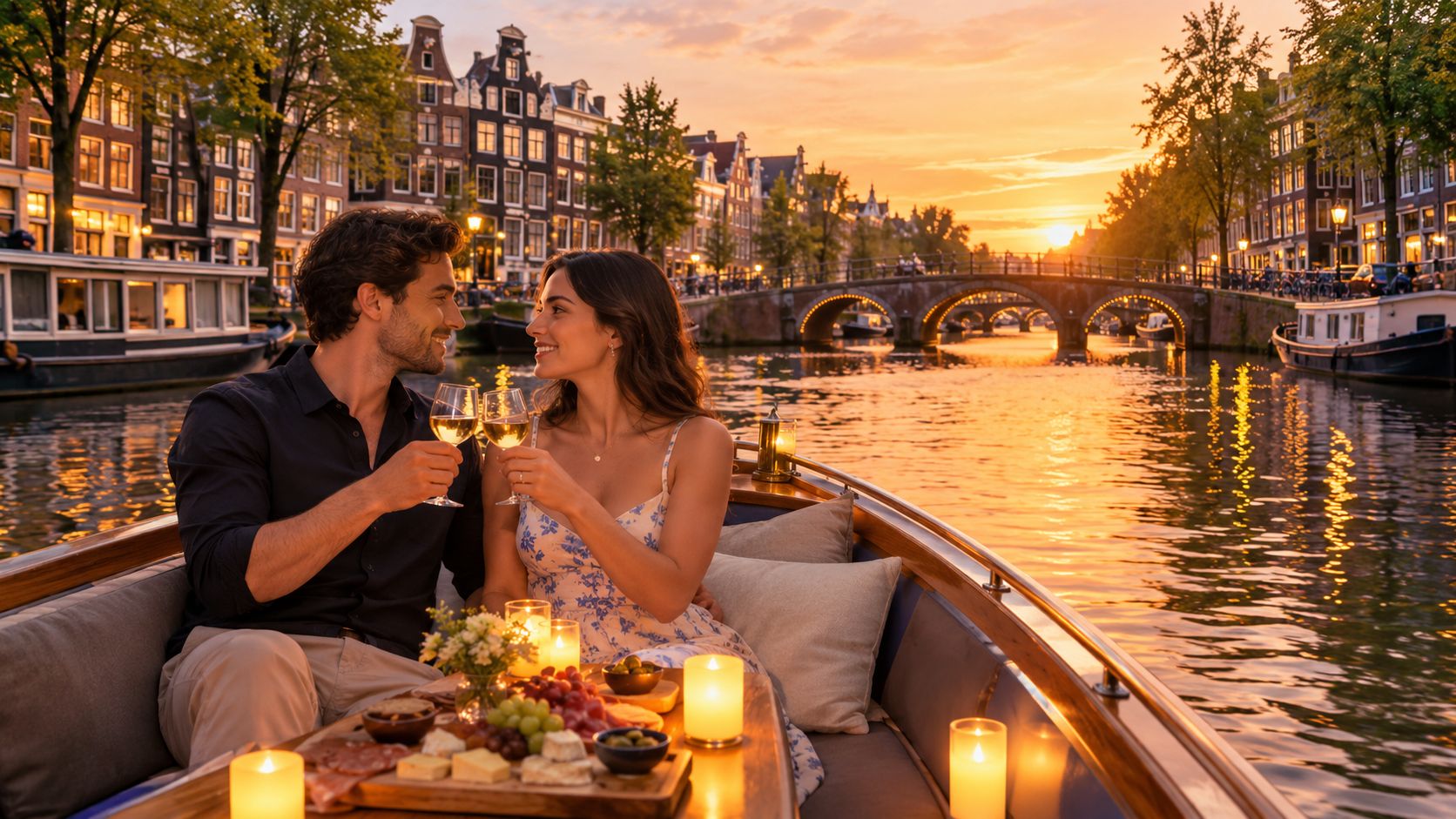
A lovers canal cruise looks simple online, but the couple on the dock usually has a more specific problem to solve. They want a romantic boat, they also want the evening to run smoothly, and they do not want to discover too late that the boat is shared, the playlist is restricted, or the timing does not fit the dinner reservation. In Amsterdam, that planning matters because the canals are not just a pretty backdrop, they are a 165-canal system stretching over 100 km, with the historic belt recognized by UNESCO in 2010, plus more than 1,700 bridges and roughly 2,500 houseboats shaping daily life and the visitor experience (Amsterdam canal overview).
Table of Contents
- What a Lovers Canal Cruise in Amsterdam Actually Looks Like
- Shared Versus Private Canal Cruises for Couples
- Drinks and Food on a Canal Cruise
- Best Time of Day and Time of Year to Go
- Add-Ons That Make a Cruise Feel Like a Real Celebration
- Amsterdam Canal Rules Every Couple Should Know
- Booking Tips for Anniversaries and Proposals
- Common Mistakes and a Quick Pre-Booking Checklist
What a Lovers Canal Cruise in Amsterdam Actually Looks Like
A proper lovers canal cruise in Amsterdam is less about spectacle and more about pacing. The boat usually sits low in the water, moves without noise, and slips through the Prinsengracht, Keizersgracht, and Herengracht without the engine noise and vibration that older visitors remember from the past. Since the city's central canal zone became a zero-emission area for pleasure boats from 1 April 2025, the standard atmosphere has shifted toward electric, hydrogen, or muscle-powered vessels inside the Singelgracht boundary (City of Amsterdam zero-emission canals).
What couples actually notice on board
The experience is built around conversation. Soft lighting, often candle-style or LED, replaces the bright, tour-bus feel many visitors expect, and a captain-guide usually handles the commentary while the boat glides at a measured pace. That slower rhythm matters because couples can hear each other without leaning in over engine hum, which is exactly what makes the format feel romantic instead of merely scenic.
Practical rule: if the boat feels loud before it leaves the dock, it usually won't become intimate once it's moving.
Most lovers cruises are not dinner cruises by default. They tend to run for about an hour to a little longer, with drinks offered as an option rather than a full meal taking over the evening, so the experience stays focused on atmosphere, canal views, and conversation. Typical departure points cluster around Central Station, the Anne Frank House area, and Museumplein-side locations such as the Rijksmuseum, which makes it easy to fold the cruise into a wider night out or a pre-dinner plan (Amsterdam canal cruise guide).
What the setting is really good for
This format works best for couples who want a calm, photogenic hour without the pressure of a full dining service. It is also a strong choice for first-time visitors who want Amsterdam's canal geography to feel immediate, because the boat naturally passes the city's most recognizable water routes instead of forcing a rushed checklist. The best cruises today feel modern, with the old canal belt doing the heavy lifting and the boat staying out of the way.
Shared Versus Private Canal Cruises for Couples
Couples usually choose between two models, and the difference shows up as soon as the boat leaves the dock. Shared cruises are easier to book, friendlier on budget, and social in tone. Private cruises give you more control, more privacy, and a better fit when the occasion carries real emotional weight.
| Feature | Shared Cruise | Private Cruise |
|---|---|---|
| Atmosphere | Social, relaxed, mixed bookings | Exclusive, quieter, more personal |
| Capacity | Shared with other passengers, within the 12-passenger small-boat reality | Entire boat reserved for one couple or group |
| Duration | Usually 60 to 90 minutes | Often 75 to 150 minutes |
| Pricing logic | Charged per person, commonly more accessible | Charged per boat, usually a larger single booking |
| Drinks | Bought onboard or pre-booked packages | More flexible, often suitable for BYO arrangements |
| Best fit | Casual dates, first visits, budget-conscious couples | Proposals, anniversaries, honeymoon evenings, photography |
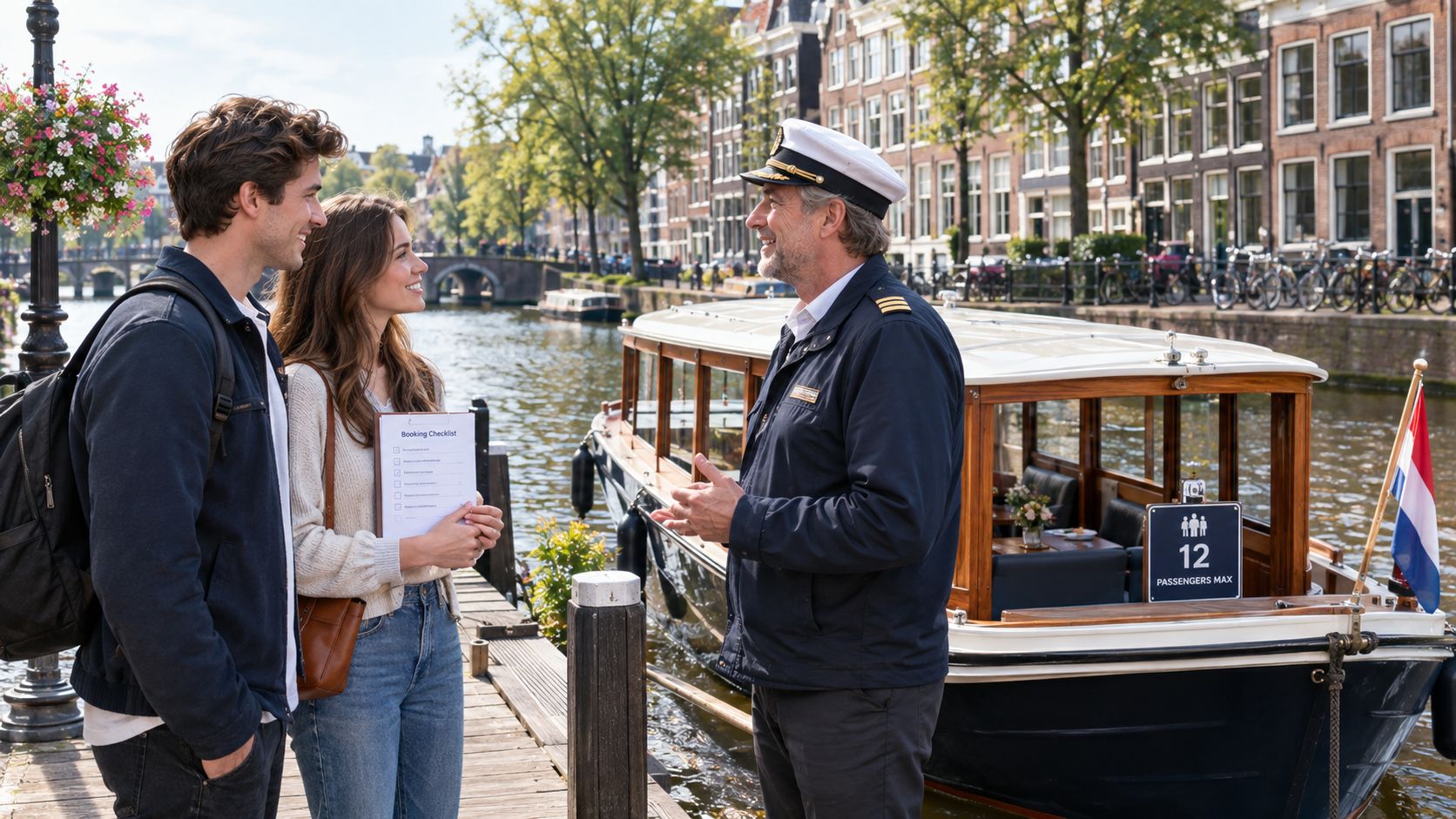
The main legal constraint shapes the whole decision. Amsterdam's boating rules cap many recreational craft at 12 passengers plus one skipper, so “private” means a small-boat experience, not a yacht-sized celebration (Amsterdam boating rules). That cap also explains why larger friend groups often split across vessels instead of forcing one boat to do too much.
Good private cruises feel like a conversation on water. Bad ones feel like a small party that happens to be moving.
What couples notice on board comes down to how they want the night to feel. Shared cruises work well when the goal is a relaxed canal ride with low planning friction and a bit of lively energy around you. Private cruises fit when privacy matters more than price, especially for a proposal, a meaningful anniversary toast, or time with a photographer. Ultimate Party Amsterdam's Private Booze Cruise fits that private-boat format when a couple wants a reserved canal charter instead of a mixed group ride, and the practical advantage is simple, the boat stays entirely on one celebration.
Drinks and Food on a Canal Cruise
A lovers cruise in Amsterdam works best when the food and drink fit the boat, not the other way around. Space is tight, movement is constant, and service has to stay simple if the evening is going to feel relaxed. The most practical setup is an onboard bar with beer, wine, prosecco, soft drinks, and hot chocolate, because that keeps things moving without crowding the deck. On many shared departures, guests either buy drinks on board or pre-book an open bar package, while private charters are the place where BYO becomes more realistic.
What works, and what does not
A full hot dinner sounds appealing, but on a small moving boat it usually gets in the way of the experience. Lighter food works better, especially a cheese or charcuterie board, bitterballen, sushi boxes, or a picnic basket prepared before departure. For a one-hour cruise, drinks alone usually make the most sense. Longer private slots leave room for boards, dessert, and the slower pace couples often want.
Glassware matters more than decoration. Shared cruises usually stick to plastic or polycarbonate for safety, while private charters may allow real glass if the operator permits it. That detail becomes obvious as soon as the boat shifts and someone has to balance a drink in a narrow space.
Worth asking before you book: who serves the drinks, what glassware is used, and whether the boat can realistically handle food without cluttering the deck.
The smartest way to plan the menu is to match it to the length of the cruise. Drinks-only formats keep the focus on the route and the atmosphere, while a longer private charter can handle a small table setting without turning the boat into a floating restaurant. For couples who want the drink side handled with the least fuss, the Shared Booze Cruise format is the natural fit, especially if the goal is to enjoy the view, keep the night easy, and let the bar do the work. If food is the main priority, a pre-cruise stop or a post-cruise dinner reservation usually feels more polished than trying to force a full meal onto the boat.
Best Time of Day and Time of Year to Go
The best time depends on what the couple wants the boat to feel like. Morning cruises are calm and practical, but they rarely deliver a date-night mood. Golden hour is the obvious photographer's choice, sunset is the strongest romantic slot, and after dark gives the canals a quieter, more reflective look, with bridge lights and building reflections doing more of the visual work.
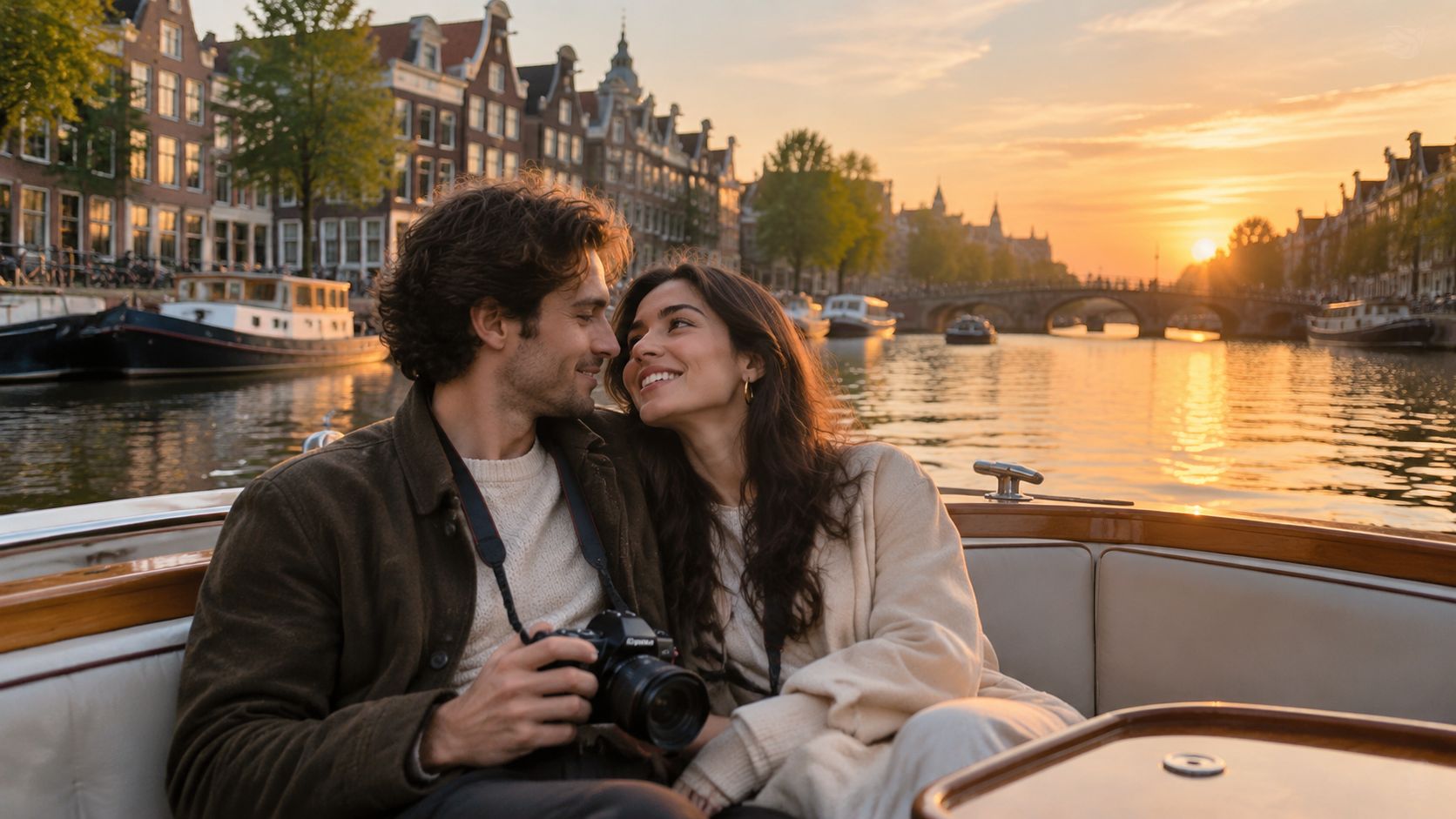
Time of year changes the mood more than most couples expect
Spring and early summer bring longer light and easy pre-dinner timing, which helps when a cruise needs to connect smoothly to a meal. Late summer can feel warmer and more social, but boats are busier and spontaneity becomes harder. Early autumn usually gives a softer, calmer atmosphere, while winter shifts the appeal toward blankets, glass reflections, and a more enclosed sense of intimacy.
Duration matters just as much as the season. A one-hour cruise works as a focused prelude, but a longer private sail makes room for slower conversation, extra drinks, and a more deliberate route. Daylight Saving Time also changes how visible sunset feels, so couples planning a proposal or an anniversary photo moment should check the clock against the exact season instead of assuming the evening light will behave the same way all year.
If the occasion is a proposal, the booking should usually target the most photogenic slot possible and leave room for the boat to pause near a bridge or scenic bend. For an anniversary, a later evening departure often feels more relaxed because the night does not have to carry the pressure of a big reveal. In both cases, the goal is the same, a route that lets the couple feel unhurried while the city does the romantic work.
Add-Ons That Make a Cruise Feel Like a Real Celebration
The best add-ons are the ones that make the evening feel intentional without turning the boat into a set piece. A bottle of prosecco or champagne on ice does that well because it is easy to serve and gives the night a clear celebratory start. A cheese or charcuterie board from a good Dutch affineur adds something substantial without forcing a full dinner format, and a Polaroid or disposable camera gives couples keepsakes that feel more personal than phone shots.
Worth paying for and worth skipping
A few upgrades usually earn their place. Rose petals on cushions feel simple rather than staged. A small Bluetooth speaker works if the couple wants a private playlist, as long as the music stays within the city's sound rules. A handwritten card from the operator also fits well because it adds a human touch without taking much space.
Some extras look better online than they work on board. Floating breakfast trays are awkward on moving water. Drone footage runs into privacy and noise limits. Generic birthday-style decorations can make an anniversary or proposal feel less considered. A photographer on a parallel vessel can be useful for a serious moment, but only if the crew has already agreed on timing.
| Add-On | Approximate Cost | Worth It? | Why |
|---|---|---|---|
| Champagne or prosecco on ice | Varies by operator | Yes | Easy win, low effort, strong celebratory feel |
| Cheese or charcuterie board | Varies by operator | Yes | Fits the boat format and keeps things tidy |
| Polaroid or disposable camera | Small extra | Yes | Creates keepsakes without tech hassle |
| Rose petals on cushions | Small extra | Usually | Works well for anniversaries and proposals |
| Handwritten card | Small extra | Usually | Simple, personal, and discreet |
| Photographer on a parallel boat | Larger extra | Sometimes | Good for proposals, less necessary for casual dates |
| Floating breakfast tray | Varies | Usually not | Spills easily and fights the motion of the boat |
| Drone footage | Varies | No | Privacy and noise concerns make it a poor fit |
For couples planning a proposal, coordination matters more than decoration count. The ring handoff should be discreet, the captain should know the timing, and the toast should be ready before the moment happens. Ultimate Party Amsterdam's Private Booze Cruise is a practical option when the celebration needs that level of coordination, because the setup is built around a reserved boat rather than a mixed-group departure. For food-and-drink planning ideas more broadly, see our guide to food and drink pairings in Amsterdam.
Amsterdam Canal Rules Every Couple Should Know
Amsterdam's canal rules shape the evening whether couples notice them or not. The first thing to plan around is the boat itself. On many private cruises, the layout and permit limits keep groups small, so a romantic booking usually works best when the guest list stays tight. The central canal zone also has a zero-emission policy, so operators need the right kind of boat for that waterway.
The rules that affect the mood most
Noise limits matter more than many booking pages admit. Loud music is restricted, amplified sound is tightly controlled late in the evening, and the skipper has to stay sober, so the drinking part of the night sits with the guests, not the person driving the boat. Alcohol on board can be fine when the operator allows it, but the captain stays in charge and the boat has to stay compliant.
The movement rules also protect the romantic feel. Speed stays low, and no-wake behavior near houseboats keeps the water steady, which helps when you are pouring drinks, taking photos, or trying to keep the moment relaxed. That calm is part of why a lovers cruise usually feels easier than a busy night out on land.
Low bridges create a different kind of check. Some routes require guests to remain seated or watch their height, especially if the boat passes under tighter spans, so a proposal or toast should be planned with that in mind. If you want a standing moment, ask about it before you book, not after the boat has already left the dock.
Confirm the boat type, the emission status, the music policy, and whether the route has standing-height limits near low bridges before the booking is final.
A few practical questions save trouble later. Ask whether the route gives you room for photos, whether any playlist needs approval, and whether the crew can keep a celebration discreet if you are marking an anniversary or proposal. For couples who want to understand the safety expectations behind these rules, the city's Amsterdam safe boating guidance is the clearest place to start, and the City of Amsterdam zero-emission canals page explains the cleaner-boat policy in plain terms.
Booking Tips for Anniversaries and Proposals
Anniversary and proposal bookings go wrong for the same reason, couples assume the boat is the only moving part. The better approach is to treat the cruise as one segment in a wider evening, then align the dock, the route, and the restaurant around it. A departure near Central Station works well for a pre-dinner start, a Prinsengracht pick-up often suits hotel-heavy itineraries, and an Amstel-side departure can feel better for a longer scenic run before a later reservation.
How to keep the surprise under control
The timing of the reveal matters more than the exact cruise length. If one partner waits too long on a dock, the mood starts to feel logistical instead of romantic, so the handoff should be tight and clear. The operator should know whether the couple is stepping straight into dinner afterward, because that determines where the boat should end and whether the last stretch should be quiet or celebratory.
Couples planning proposals should ask a few specific questions in advance. Can the boat stop at a bridge for the knee-down moment? Can the lights be dimmed? Will staff know when to top up glasses, and will they stay discreet when the decisive moment starts? Those details change the feel of the proposal far more than any decorative upgrade.
Coordinating a nearby restaurant also helps the evening land well. The best flow is usually boat first, dinner second, because it avoids rushing the proposal or anniversary toast and gives the couple somewhere warm and familiar to land afterward. For mixed plans, the cruise should end close enough to the table that the handoff feels effortless rather than like a cab ride in formal clothes.
Common Mistakes and a Quick Pre-Booking Checklist
The most common mistake is booking the wrong boat type for the mood. Couples often choose a shared cruise expecting privacy, then realise the boat is doing exactly what it was designed to do, carry multiple bookings in a calm public setting. Another frequent error is booking a one-hour slot for a proposal without checking whether the operator can stop, pause, or create enough dock time for the moment to land properly.
The checklist that prevents expensive surprises
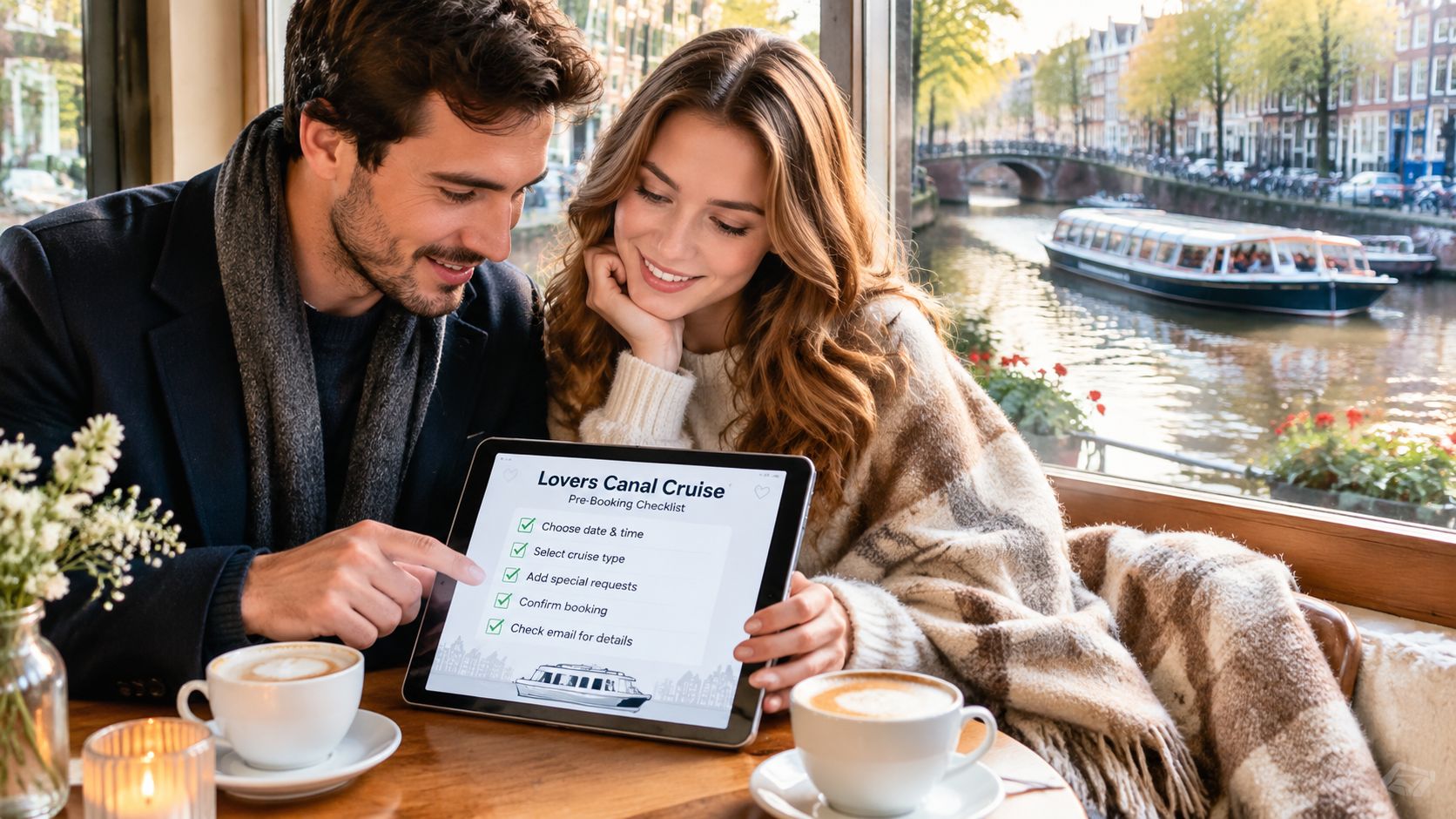
A clear pre-booking email should cover the points that affect the night.
- Weather policy: ask how cancellations or changes work if the forecast turns bad.
- Guest count: confirm the maximum number before inviting friends, because the 12-passenger rule can change the whole plan.
- Catering format: check whether snacks are included, whether BYO is allowed, and what glassware is used.
- Route and mooring point: make sure the boarding and drop-off locations fit the rest of the evening.
- Toilet access: confirm it early, especially for longer private charters.
- Music policy: ask what volume is acceptable and whether a personal playlist needs approval.
- Photo moments: clarify whether the skipper can pause near a bridge or scenic bend.
The final mistake is underestimating boarding time at busy embankments. Amsterdam is busy, docks are compact, and romantic plans can unravel if the couple arrives too late or the celebration group spreads out across the wrong side of the quay. A copied checklist in the booking email keeps the plan practical without stripping away the romance.
Ultimate Party Amsterdam can help with canal-based celebrations when the plan needs a private boat, a shared drinks cruise, or a broader night out to match the cruise with the rest of the evening. For couples who want the logistics handled cleanly, the simplest next step is to visit Ultimate Party Amsterdam and check the cruise and nightlife options that fit the occasion.
🍻
Experience it Yourself
Skip the planning — join Amsterdam's biggest pub crawl and get 6 bars, free drinks and VIP club entry for €20.