You've landed in a European city with one free night, a group chat full of conflicting bar recommendations, and no idea which venues will still welcome a group later in the evening. One person wants music, another wants cheap drinks, and someone else has already spent too long waiting outside a crowded venue. Random bar hopping can work, but it often turns into navigation, queues, split bills, and a group that slowly fragments.
A well-run pub crawl in Europe solves a different problem. It gives travelers a hosted route, a social structure, and a clearer plan for moving through nightlife venues without treating the street itself as one long bar. The format became established across major European resort and city markets because it turns nightlife into an organized group experience. A 2015 academic case study of pub crawls in Sunny Beach, Bulgaria, described the activity as part of a wider European nightlife economy in which millions of young people travel away from home for partying and nightlife tourism, framing the crawl as structured group consumption rather than casual bar hopping (academic case study on pub crawls in Sunny Beach).
Table of Contents
- Introduction to Pub Crawls Across Europe
- How to Choose the Right Pub Crawl Vibe for Your Group
- Notable Pub Crawl Cities and What Each Does Best
- How to Book and Link Multi City Pub Crawls Without Hassle
- Safety Transport and Local Rules Every Crawler Should Know
- Plan Your Best Pub Crawl Europe Experience Starting in Amsterdam
Introduction to Pub Crawls Across Europe
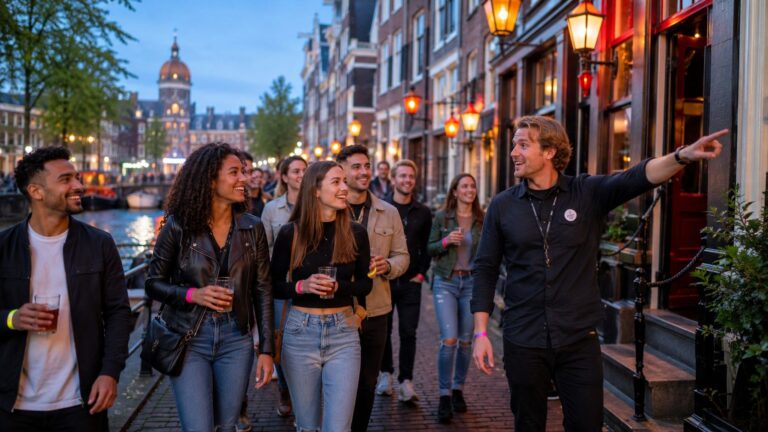
A first night in a European city can go wrong before the first drink arrives. The group may split over music, venue style, or walking distance, while a bar reaches capacity just as everyone gets there. A hosted crawl gives the evening a workable structure: one meeting point, a planned route, and someone responsible for keeping the group together.
The format suits different traveler jobs. Solo travelers often need a straightforward way to meet people. Backpackers may value a social night without researching each neighborhood. Stag and hen groups generally need coordinated movement, while couples and small friend groups may prefer a calmer route with better control over timing. The right crawl starts with the night's purpose, not the city name.
What a hosted crawl actually does
A host adds three practical services that informal bar hopping cannot consistently provide:
- A meeting point: Everyone knows where to begin, even if the first venue is busy or difficult to find.
- A social rhythm: Introductions, games, and movement between stops give strangers reasons to speak and help the group form quickly.
- Local judgment: Hosts can adjust the pace, explain venue expectations, and prevent common mistakes with queues, entry, and timing.
The route also establishes a boundary between enjoying nightlife and carrying it through public space. Guests drink inside venues or on permitted terraces, then travel between stops without treating open containers as part of the journey. Amsterdam makes that distinction especially important. Public-space alcohol rules can be stricter than visitors expect, so a crawl that explains where drinking is permitted is better run than one that leaves guests to guess.
The European focus is supported by continuing academic interest in organized nightlife. A literature review identified 24 United Kingdom publications in its study table and examined multi-city digital drinking research covering 5,305,543 Untappd check-ins over 112 days across 40 cities, including 470,732 check-ins in Europe (pub-crawl literature review). These figures do not select a crawl for you. They show why Europe offers useful variations in venue rules, group formats, and nightlife districts.
Practical rule: Decide what the night must accomplish before choosing a route. Meeting people, celebrating, exploring a district, and enjoying a polished hosted evening require different setups.
A reliable pub crawl in Europe should feel organized without controlling every choice. Check the meeting instructions, inclusions, venue expectations, local alcohol rules, and the plan for getting home. Good hosting removes avoidable friction while leaving the group enough freedom to enjoy the city.
How to Choose the Right Pub Crawl Vibe for Your Group
The wrong crawl can make a good city feel disappointing. A solo traveler who books a loud, high-intensity party route may struggle to have a conversation. A large celebration group that chooses a relaxed sightseeing-focused crawl may spend the night trying to create energy that the format never promised.
The practical choice is to identify the group's traveler job first. The table below gives a fast starting point.
Which Pub Crawl Vibe Fits Your Group
| Traveler Type | Best Vibe | What to Prioritize |
|---|---|---|
| Solo traveler | Social student or backpacker crawl | Host introductions, group interaction, simple meeting point |
| Backpacker group | Social route with varied venues | Accessible pacing, mixed crowd, transparent inclusions |
| Stag or hen group | High-energy party crawl | Coordinated movement, entry arrangements, celebration-friendly hosting |
| Couples and close friends | Hosted neighborhood route | Venue quality, manageable pace, clear route information |
| History-minded visitor | Historical or tourist-led crawl | Local context, district storytelling, less emphasis on club intensity |
| Private or corporate group | Premium hosted experience | Dedicated coordination, tailored timing, transport planning |
A social crawl works best when the group wants conversation as much as drinking. The host's role matters more than flashy venue language. Introductions need to happen early, and the route should give people enough time to settle into the group before moving on.
A high-energy crawl suits travelers who want momentum. It can work well for celebration groups, but the trade-off is obvious. Louder venues, quicker transitions, and a stronger late-night focus may leave quieter guests behind unless the organizer actively keeps the group together.
Compare the trade-offs before booking
Group size changes the night. Larger groups create instant energy, but they also take longer to enter venues, order drinks, and regroup. Smaller groups can move more easily, though solo travelers may find them less socially open if the host doesn't encourage interaction.
Inclusions change the mental load. A package that combines drinks and entry costs can make the evening easier to manage, especially for international groups sharing expenses. It doesn't automatically make the experience better. Travelers should still check what is included, where it applies, and whether the final venue follows different entry rules.
Guiding style affects the atmosphere. Some hosts focus on games and crowd energy. Others emphasize local context and neighborhood movement. Neither approach is universally right. The suitable option depends on whether the group wants a party engine, a social bridge, or a way to understand the district.
A student pub-crawl report found that 80.9% of participants felt involved, 92.8% said they had fun, and 51.7% rated the crawl as “good” (independent pub-crawl report and literature review). The same source identified recurring satisfaction drivers including socialization, safety, guide quality, value and price, and servicescape. The lesson is practical. A lively route can't compensate for a host who loses people, unclear pricing, or venues that don't suit the group.
A celebration group should optimize coordination first, while a solo traveler should optimize social access first.
Before paying, each group should answer three questions:
- Does everyone want the same energy level?
- Does the route explain what guests receive?
- Can the host realistically keep the group connected?
If the answers are clear, city selection becomes much easier.
Notable Pub Crawl Cities and What Each Does Best
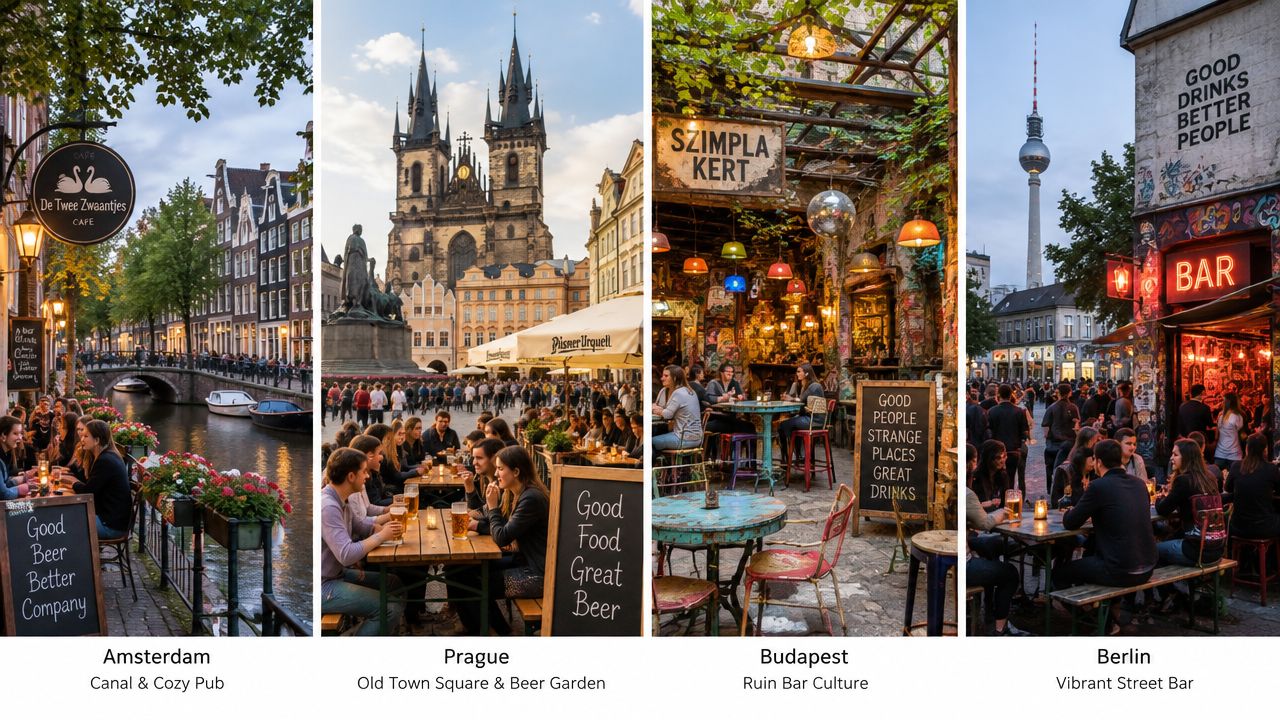
A group arriving in Amsterdam after dinner may want a short, guided route. The same travelers could prefer Berlin's music culture, Prague's dense venue network, or Barcelona's mix of nightlife and sightseeing. Europe has no single pub-crawl formula. Choose the city according to the group's job for the evening, whether that means meeting people, keeping a celebration moving, finding late music, or fitting nightlife into a wider city break.
The European pubs, bars, and coffee shops industry is estimated at €100.6 billion in 2026, with 661,000 businesses and projected annual revenue growth of 3.7%, according to IBISWorld's European pubs, bars and coffee shops industry overview. That scale gives operators plenty of venue options, but it also creates practical problems. Partnerships change, routes lose density, and a promised stop may no longer suit the group on the night.
Amsterdam for hosted district routes
Amsterdam fits travelers who want a recognizable neighborhood and a host managing the evening. The Red Light District offers a compact, well-known setting. Leidseplein brings more dance bars and a stronger club finish. The useful question is not which district sounds more famous. Ask which one matches the group's expected energy, walking tolerance, and preferred type of venue.
Amsterdam also shows why local rules matter across Europe. A short walk between venues does not mean an open drink can travel with the group. Alcohol rules differ inside licensed venues, on terraces, and in public streets. A workable route accounts for the legal setting, not only the distance between stops.
Prague for dense nightlife and policy awareness
Prague suits travelers who want a concentrated evening, although operating conditions can change. The city's nightlife discussions include policy responses to crowding, noise, and safety concerns. The literature review records Prague's 2024 ban on organized nighttime pub crawls between 10 PM and 6 AM, so visitors should confirm current arrangements before relying on an older itinerary. A listed route is only useful if the operator can explain where and when it currently runs.
Berlin for music-led groups
Berlin fits groups that care about music, subculture, and late-night variety. It is less suitable for travelers who want a tightly scripted drinking tour with identical entry at every stop. Door policies can change with the night, the group's presentation, and venue capacity. Local guidance helps reduce wasted time, but no responsible host can promise that every guest will receive the same decision at every door.
Krakow and Budapest for social energy
Krakow and Budapest appeal to travelers seeking lively group nightlife with frequent movement and an easy social atmosphere. Compare the route's shape rather than asking which city is best. A concentrated party route supports a high-energy celebration. A looser evening leaves room for food, rest, and independent exploration.
Barcelona for nightlife within a wider city break
Barcelona works for travelers who want nightlife without making it the whole trip. A group can combine an evening route with daytime sightseeing and a later dinner, provided the plan allows for neighborhood transfers and local venue expectations. Travelers weighing nightlife against other activities can also use this broader guide to top things to do in Europe with when shaping a multi-city itinerary.
Shortlist two or three cities. Start with the group's purpose and atmosphere, then check regulation, route density, district fit, and the operator's current schedule. That process is more reliable than choosing from a generic city ranking.
How to Book and Link Multi City Pub Crawls Without Hassle
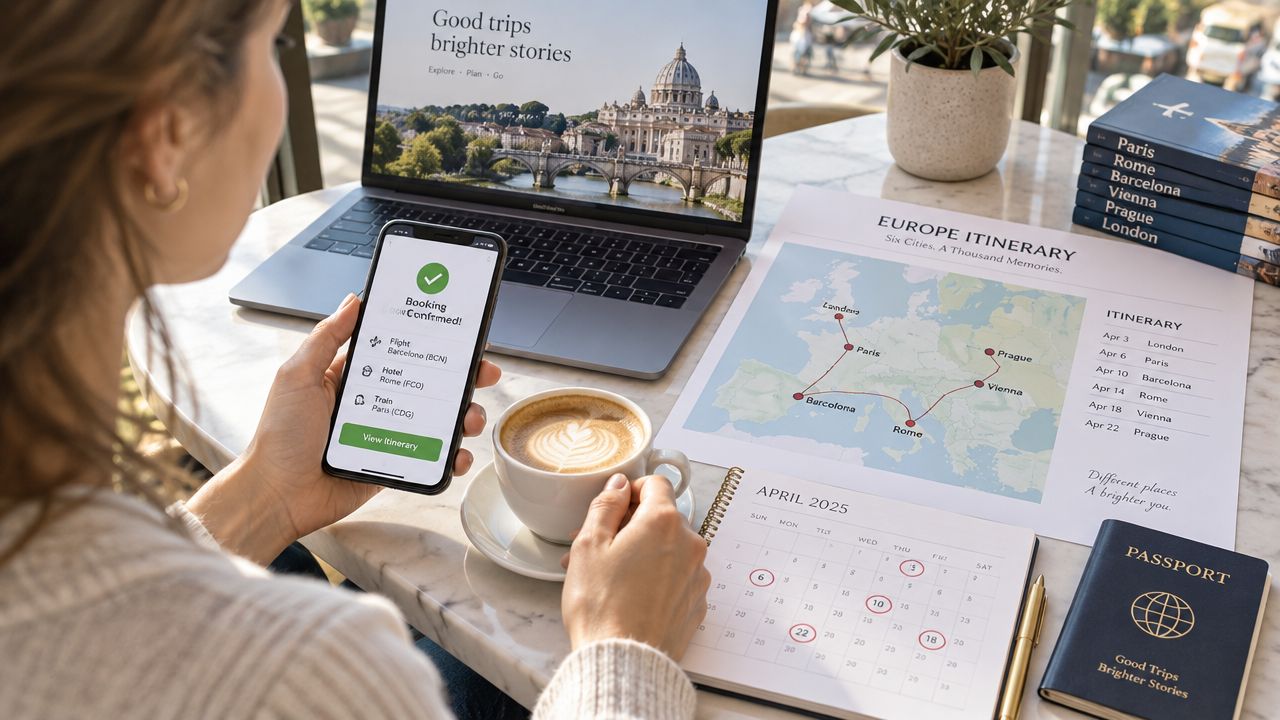
Multi-city nightlife planning fails when travelers book experiences as isolated transactions. A crawl may look perfect on paper, but the route can become exhausting if it lands immediately after a long travel day, requires a cross-town transfer, or leaves no recovery time before the next departure.
The answer is to plan the trip around energy and logistics, not just attractions.
Build the itinerary in a practical order
Choose the anchor city first. The city with the clearest fit for the group should receive the most attention. For travelers using Amsterdam as that base, a two-night plan can separate district experiences instead of forcing different nightlife styles into one evening.
Protect travel days. A late night followed by an early train creates poor value, even if the crawl itself is well organized. A better sequence places the most demanding night after arrival and before a slower morning or flexible daytime schedule.
Check schedules before transport. Nightly operations vary by city, season, weekday, and local policy. Travelers should confirm the meeting point, start time, route, cancellation terms, and any age or identification requirements before purchasing connected experiences.
Consolidate group communication. One booking thread should hold names, dates, meeting details, dietary or accessibility questions, and private-group requests. This is especially useful when a group wants to combine a hosted crawl with a shared or private canal experience in Amsterdam.
Vet the operator, not just the itinerary
A route with many listed stops isn't automatically stronger. The operator needs reliable venue relationships, a route that works on the specific night, and staff who can manage arrivals without turning the evening into a queue-management exercise. The fragmented European venue layout makes partnership quality and route maintenance more important than polished booking copy.
For an Amsterdam example, travelers can review the 2 Night Pub Crawl Pass when they want access to the city's two core hosted crawl formats across separate nights. The useful question isn't whether a pass sounds convenient. It's whether the included nights fit the group's schedule and preferred districts.
Travelers planning several destinations can also use a practical guide to planning multi destination trips before locking in nightlife dates. The same principles apply to crawl planning: leave buffers, confirm transfer times, and avoid stacking fixed commitments so tightly that one delay disrupts the entire trip.
A simple booking checklist
- Confirm availability: Check the exact date and weekday for every city.
- Read the cancellation terms: Make sure the policy suits a changing travel plan.
- Match the route to the group: Don't book a club-heavy itinerary for guests who want conversation.
- Ask about private arrangements: Larger celebrations may need separate coordination rather than a standard shared route.
- Keep proof of booking accessible: Store meeting details where every organizer can find them.
A multi-city crawl plan should feel connected, but not rigid. One strong Amsterdam night, one contrasting city, and enough room for independent discovery usually beats an overpacked schedule.
Safety Transport and Local Rules Every Crawler Should Know
A pub crawl is only enjoyable when everyone understands where the experience is allowed to happen. Amsterdam gives international visitors a useful lesson because the rules distinguish sharply between licensed hospitality spaces and public streets.
The Dutch national rule is straightforward. A person must be 18 to buy alcohol in the Netherlands, according to Dutch guidance on the legal alcohol age. That requirement affects booking eligibility, venue entry, and service checks. Guests should carry valid identification, especially when traveling internationally or joining a group where venues may check age at different points.
Keep drinking inside permitted spaces
Amsterdam's public-space alcohol ban applies to streets and parks, and carrying opened bottles or cans containing alcohol in those areas is also prohibited. The restriction applies day and night, while hospitality terraces are exempt, as explained in Amsterdam's guidance on alcohol in public spaces.
That creates a simple operating rule:
- Drink inside licensed venues: Finish or dispose of drinks before leaving.
- Use permitted terraces: Treat a terrace as part of the hospitality venue, not as permission to roam with alcohol.
- Don't carry open containers: Moving between stops is a transfer, not another drinking venue.
- Follow the host's instructions: Local staff understand the route and the spaces where the group can stop legally.
Independent Amsterdam nightlife guidance also notes that alcohol consumption is prohibited in most public places in the city center and warns that open containers outside authorized settings can lead to a fine. Visitors shouldn't assume that a relaxed crowd means every behavior is permitted.
Street-smart rule: The drink belongs inside the bar or on the permitted terrace. The walk between venues is for walking.
Transport and group discipline
Hosts help with cohesion, but guests still need personal responsibility. Each traveler should know the final meeting point, keep a charged phone, stay with at least one friend, and avoid leaving alone with someone the group doesn't know. After the crawl, use a licensed taxi, public transport, or a prearranged ride, and avoid cycling after drinking.
The most common planning mistake is treating safety as a warning added at the end. It belongs in the booking decision. A clear route, visible host, legal drinking spaces, and a realistic return plan reduce confusion without making the night feel restrictive.
For broader practical guidance, travelers can review whether Amsterdam is safe for a night out before choosing a route and meeting point.
Plan Your Best Pub Crawl Europe Experience Starting in Amsterdam
The strongest pub crawl Europe plan starts with a job, not a destination label. Solo travelers usually need social access and a host who creates introductions. Celebration groups need coordinated movement and clear inclusions. Couples and close friends may prefer a district-led route with enough structure to remove hassle without dictating every moment.
Amsterdam works well as a starting point because its nightlife districts offer distinct experiences within a manageable city setting. Ultimate Party Amsterdam has operated in Amsterdam nightlife since 2005, with hosted crawls in the Red Light District and Leidseplein. Its published crawl information describes nightly operations in the Red Light District, a regular Leidseplein schedule, all-in pricing with drinks and venue cover charges included, and concierge support through email and WhatsApp for group arrangements.
The operator's available formats include a Red Light District crawl, a Leidseplein crawl, a two-night pass connecting both experiences, and shared or private canal booze cruises. For private celebrations, concierge coordination can bring several arrangements into one conversation, but groups should still confirm the exact date, inclusions, timing, and availability before booking.
Amsterdam's legal boundaries also shape the experience. Guests should drink inside venues or on permitted terraces, carry identification, respect the 18+ purchase rule, and plan the journey home before the final stop. A hosted route can make those decisions easier, but it doesn't replace good judgment.
Travelers preparing for a first night can use this practical guide on how to survive a pub crawl in Amsterdam to set expectations around clothing, pacing, belongings, and group behavior. Once the group has chosen its vibe, the next step is simple: compare the available Amsterdam dates, decide whether one district or two suits the itinerary, and ask for help if the group needs a private arrangement.
Ultimate Party Amsterdam offers guided pub crawls through Amsterdam's Red Light District and Leidseplein, alongside shared and private canal booze cruises for groups planning a wider night out. Visit Ultimate Party Amsterdam to check availability, compare crawl options and passes, or contact the team about coordinating a private group experience.
🍻
Experience it Yourself
Skip the planning — join Amsterdam's biggest pub crawl and get 6 bars, free drinks and VIP club entry for €20.