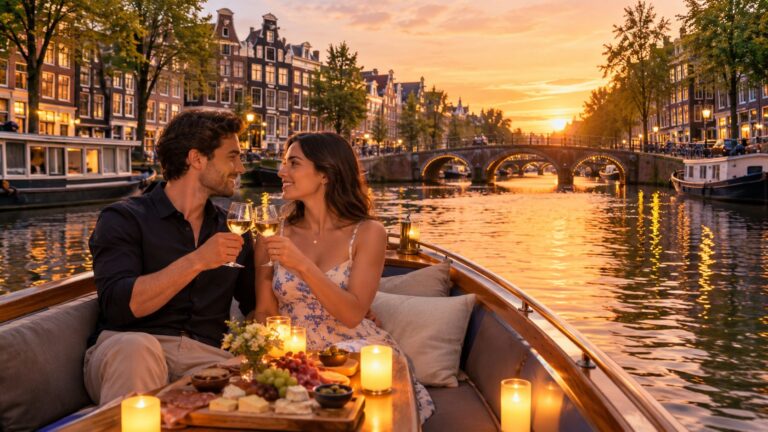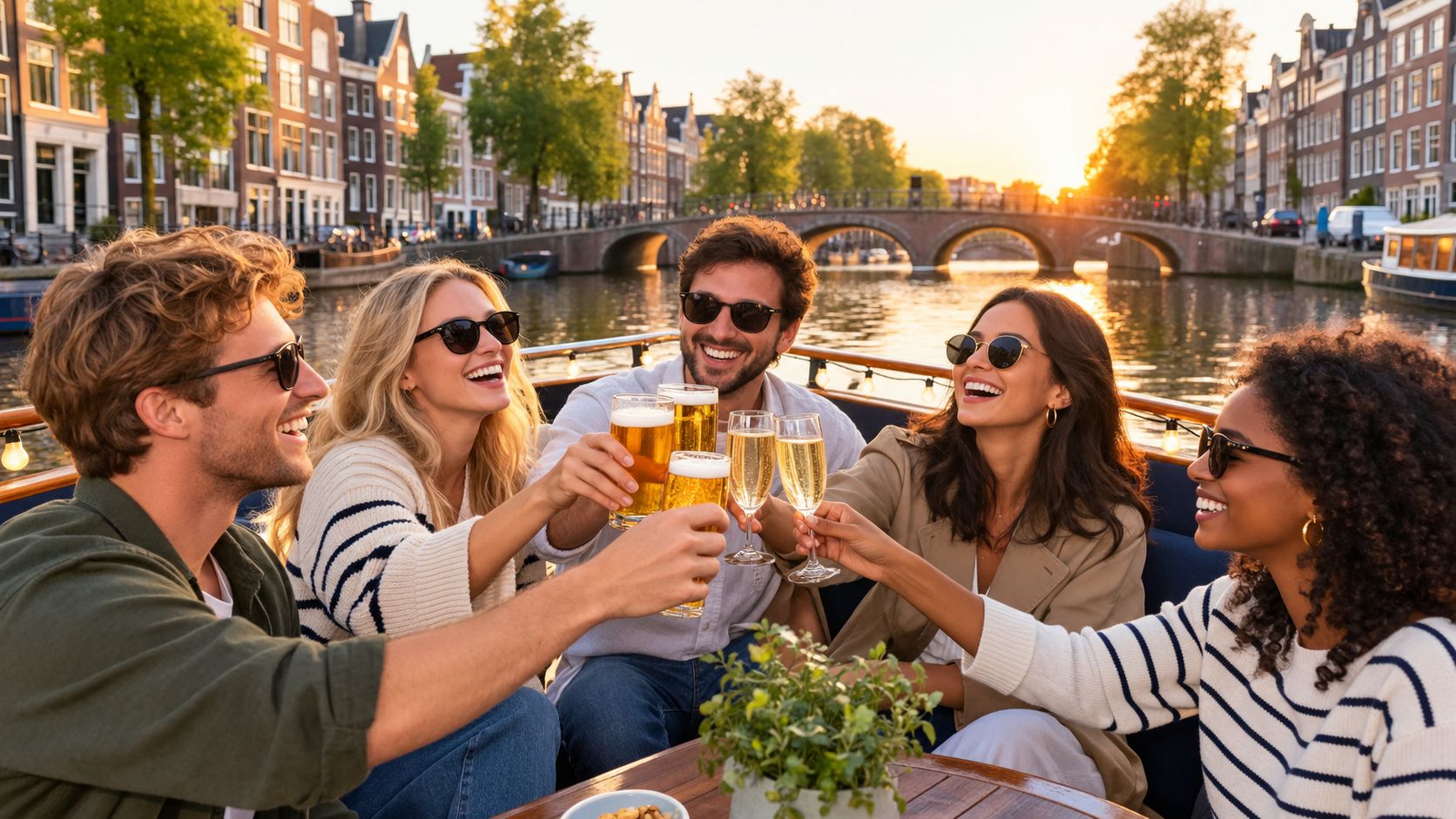
Your group has landed in Amsterdam, the first drinks are planned, and everyone is ready to head into the centre. Then the practical problems begin. One person is still at the hotel, another has the wrong meeting point, the first venue has a queue, and the group discovers that drinking in the street can lead to a fine. A night that looked effortless on paper starts becoming a series of small decisions made under pressure.
That's the reality of planning group events in Amsterdam. The city offers a dense nightlife scene, convenient districts, canal venues, and plenty of formats for stag parties, hen groups, corporate teams, birthdays, and friend trips. But the experience depends less on finding a stylish venue than on controlling movement, timing, entry rules, spending, and communication.
Amsterdam's nightlife economy is substantial. The city has 500+ nightlife venues supporting more than 5,000 jobs, and the value attached to visiting night culture and related events was estimated at over €22 million in 2021 in research presented by Interreg Europe Amsterdam nightlife research and venue distribution. For visitors, that scale creates choice, but it also creates friction. A hosted format works because it turns a loose plan into a controlled sequence.
Table of Contents
- Why Group Nights in Amsterdam Often Go Wrong
- Five Logistics Decisions Before You Book Anything
- Red Light District Versus Leidseplein Crawl Styles
- Choosing a Private Booze Cruise for Groups
- Budgeting Group Events Per Person
- When Self-Guided Exploration Costs More
- Contingency Checklist for Stress-Free Nights
Why Group Nights in Amsterdam Often Go Wrong
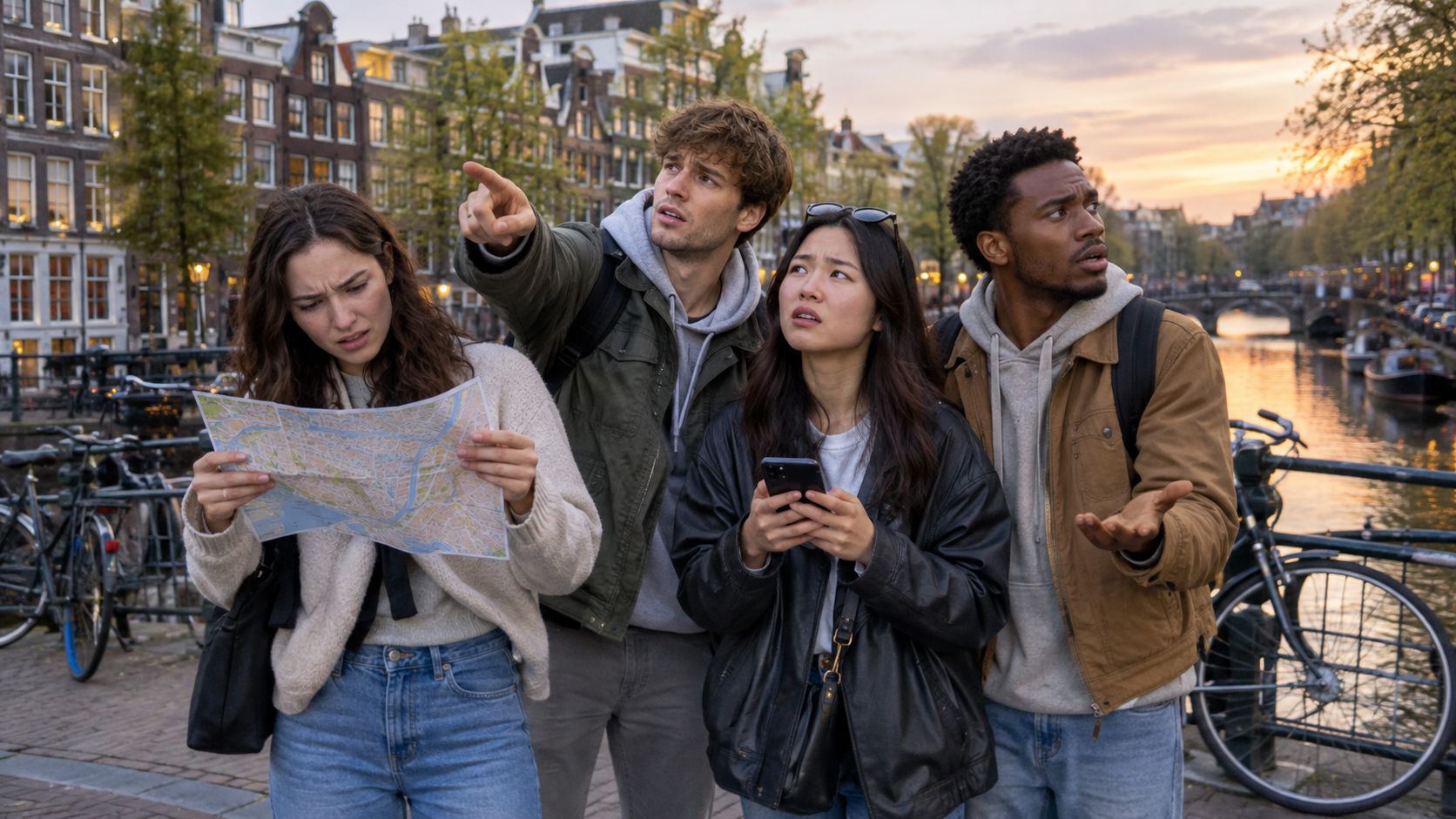
A typical stag party starts confidently. The group agrees to meet near the Red Light District, everyone promises to stay together, and the plan is to choose bars as they go. Within the first hour, the group has divided into smaller clusters. Two people are waiting outside a venue, three have gone ahead, one is looking for a cash machine, and the organiser is trying to work out whether the next bar has room.
The problems compound because central Amsterdam is busy and compact without being simple to traverse at night. A short distance on a map can involve a crowded pavement, a bridge, a queue, or a venue entrance that isn't obvious from the street. If the group keeps stopping to negotiate its next move, the night loses pace.
The cost of an unstructured route
A corporate team often makes a different mistake. The organiser books dinner, then leaves the evening open so attendees can choose their own bars. That sounds flexible, but separate decisions create separate queues, cover charges, and payment disputes. Some people want a club, others want a quiet drink, and the group can end up paying to enter several places without spending enough time in any of them.
A canal cruise can create its own surprise. Guests may assume that any boat described as a party cruise allows them to operate the vessel themselves, but regulated cruises depend on a compliant skipper. On a private group booking, the person at the helm has responsibilities that passengers don't share.
Street drinking is another avoidable problem. Public alcohol consumption is banned in many central streets, and tourism guidance reports fines of around €95 in the Red Light District, while Amsterdam nightlife guidance also notes a street-drinking fine of €100 Amsterdam street-drinking guidance. A group that carries open drinks between venues can turn a relaxed walk into an enforcement issue.
Practical rule: Treat the street as a route between licensed venues, not as part of the drinking area.
The Red Light District itself isn't automatically unsafe, but visitors still need sensible boundaries around crowds, public intoxication, photography restrictions, and street behaviour. Groups should review practical guidance on whether the Red Light District is safe before arriving, then appoint someone who can keep the group moving without turning the night into a series of debates.
Five Logistics Decisions Before You Book Anything
The order of planning matters. Groups often start by comparing venues, then discover that the date, age profile, arrival window, or transport plan makes the preferred option unsuitable. A better approach fixes the operating conditions first and chooses the format second.
1. Lock the date and arrival window
Start with the exact night and the time the group can realistically assemble. A late flight, delayed dinner, or hotel check-in can make a scheduled evening departure difficult, especially when the group has to travel across the city before meeting.
Nightlife plans also work better when the organiser sets one meeting point rather than asking guests to independently. The location should be easy to describe, visible on a shared map, and close enough to the first activity that late arrivals don't disrupt the route.
2. Confirm ages and identification
Dutch bars and clubs require guests to be 18 or older, and legitimate operators check identification at the start of the evening Amsterdam pub crawl entry guidance. Every attendee should carry valid photo ID, not a phone image or a promise that the hotel has a copy.
This decision comes before booking because one underage guest can affect the whole group dynamic. The organiser should communicate the rule clearly, particularly when international travellers have different expectations about venue entry.
3. Choose hosted coordination or self-led exploration
Self-guided bar-hopping gives guests freedom, but the organiser carries the work. Someone must choose venues, check entry rules, monitor queues, keep the group together, handle payments, and decide what happens when a venue is full.
A hosted format transfers route coordination to an on-the-ground team. That doesn't remove personal choice, but it reduces the number of decisions the group has to make while moving through the city. For celebrations and corporate groups, that distinction usually matters more than the difference between two similar-looking venues.
4. Build the real per-person budget
The budget needs to include more than the headline booking price. Add expected drinks, venue covers, taxis if the group splits, dinner transport, and a reserve for changes. A group that compares only ticket prices can still overspend once every person pays separate entry fees and full drink prices.
Matching clothing can help an organiser identify attendees quickly, especially when several groups are gathering in the same district. A practical resource on custom apparel for group events can help with that preparation, but clothing should support the logistics, not replace a clear meeting plan.
5. Decide the fallback before weather or closures intervene
Amsterdam weather can change the comfort of a walking itinerary quickly. The backup should specify where the group meets if plans shift, who contacts the operator, and whether the alternative stays indoors or moves to a properly operated boat.
A cancellation policy also belongs in this decision. Pub crawls arranged through Ultimate Party Amsterdam allow free cancellation up to 24 hours before the experience, according to the supplied business information. The organiser should still check the booking terms for the exact product and date before relying on that buffer.
Red Light District Versus Leidseplein Crawl Styles
These two crawl styles serve different group personalities. The Red Light District route suits groups that want movement, social interaction, and a varied sequence through central nightlife. The Leidseplein route suits guests who want dance bars and a later, more club-focused finish.
The Red Light District format runs through six bars and clubs, with bar games along the route and a VIP club finale. It works well when the group includes solo travellers or first-time visitors who benefit from a host creating introductions and keeping attention on the same activity. The route has more stops, so the host has to manage pace carefully. A group that lingers too long at the first venue can create pressure later.
Leidseplein has a different rhythm. The crawl focuses on the area's leading dance bars, includes free drinks, and ends with VIP entry at the closing club. This suits a group that wants less district-hopping and more time building energy toward a club finish. It isn't interchangeable with the Red Light District option, even though both are hosted nightlife formats.
What changes operationally
Host ratios matter because a large group needs enough support to keep arrivals, venue entry, and movement coordinated. The organiser should ask how hosts are allocated to the booking, where the group starts, how late arrivals are handled, and what happens if a venue reaches capacity.
Final-venue dynamics matter just as much. A crawl can feel successful when the final venue matches the group's mood, but a club-heavy ending won't suit guests who prefer conversation. Corporate groups often need a clear choice here. A dance-focused finish may work for a social team, while a mixed group may prefer a route that keeps the evening varied.
| Crawl Style Comparison | District | Venues | Final Venue | Best For |
|---|---|---|---|---|
| Red Light District crawl | Red Light District | Six bars and clubs, with bar games en route | VIP club finale | Social groups, solo travellers, first-time visitors, and groups wanting variety |
| Leidseplein crawl | Leidseplein | Leading dance bars | Closing club with VIP entry | Groups seeking a later, dance-focused finish |
The supplied business information states that crawl inclusions can include six complimentary drinks or shots, venue cover charges, queue skipping, and drink discounts. Those inclusions should be confirmed against the selected booking rather than assumed across every format.
A good crawl isn't simply a list of bars. It is a timed movement plan with an ending that fits the group.
Choosing a Private Booze Cruise for Groups
A private canal cruise earns its place in a group itinerary when the guests want a controlled setting rather than a sequence of street-level decisions. It keeps the group together, creates a defined start and finish, and gives the organiser one environment to manage during the journey.
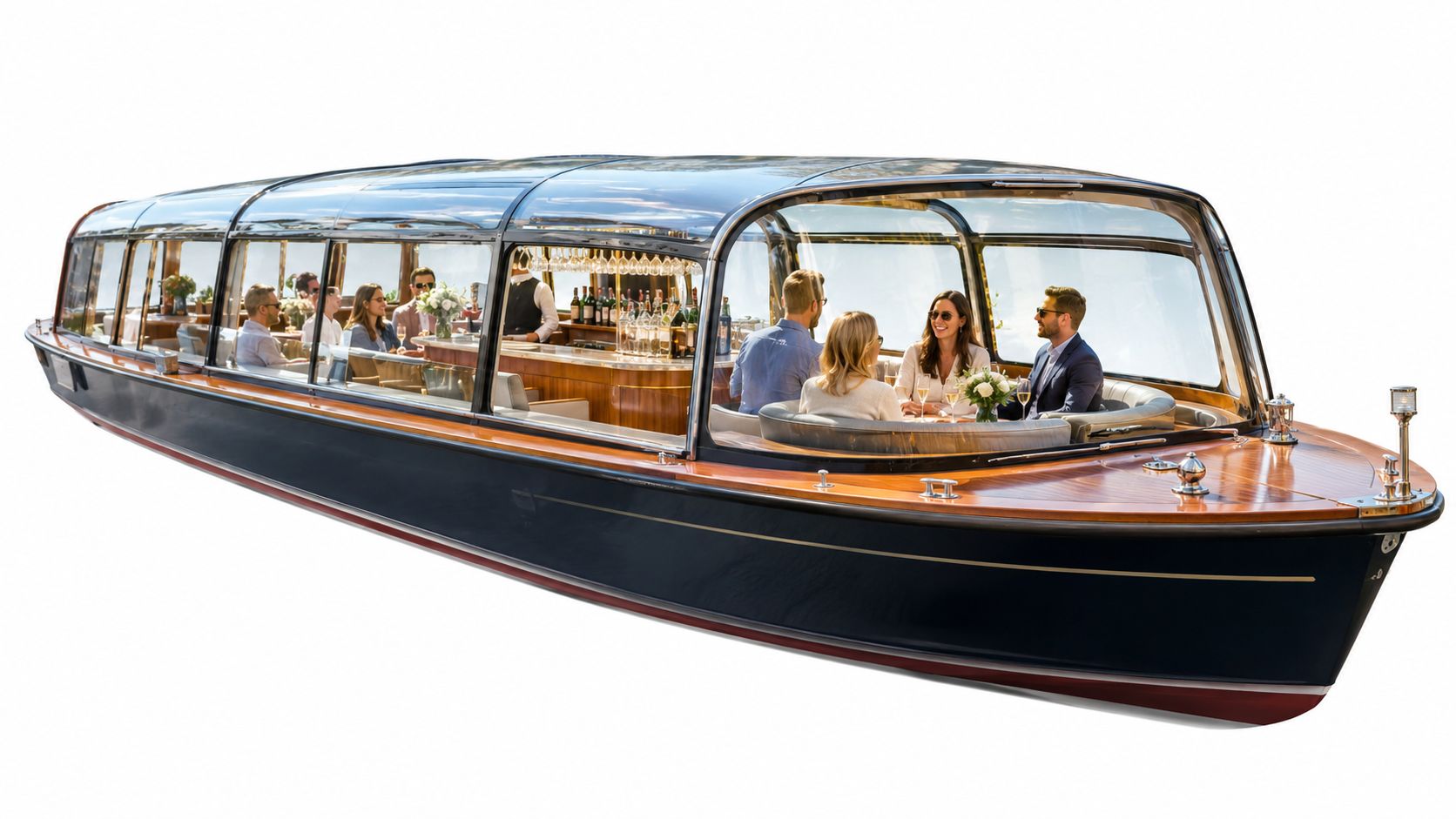
The private format described by Ultimate Party Amsterdam is a 60-minute private canal charter on a luxury electric boat with an open Dutch bar. The supplied business information also describes shared cruises as one-hour journeys with unlimited beer, wine, and soft drinks on a shared electric boat. The private option generally makes more sense for a celebration or team that values privacy and a fixed atmosphere, while a shared cruise can suit smaller groups or travellers who want a lower-commitment social format.
The skipper rule changes the planning model
A canal party is not a self-drive drinking platform. One Amsterdam canal rules guide states that the skipper at the helm is subject to a 0.2‰ blood alcohol limit, while passengers may drink freely Amsterdam canal rules and skipper limits. The practical meaning is straightforward. Guests can enjoy drinks onboard, but the vessel must be operated by a sober, compliant skipper.
This distinction should be explained before booking, particularly for stag groups that assume someone in the party can take the helm. A reputable hosted cruise keeps the operating responsibility with the skipper and the enjoyment responsibility with the passengers.
Match privacy with group economics
The private option becomes more compelling when the group wants control over music, conversation, photographs, or the atmosphere. A private boat also prevents the group from splitting across several venues during the cruise. However, the organiser should compare the total charter cost against the actual attendance, not the original invitation list.
Ask these questions before confirming:
- Attendance: How many guests are definitely coming, and how many remain uncertain?
- Capacity: Does the boat accommodate the confirmed group comfortably?
- Inclusions: Are drinks, the skipper, route, and duration stated clearly in the booking?
- Add-ons: Which extras improve the event, and which add complexity?
- Fallback: What happens if weather or transport delays affect arrival?
The decision flow is simple. Choose a private cruise when privacy and group control justify the charter. Choose a shared cruise when the group is smaller, the budget is tighter, or meeting other travellers is part of the appeal. Choose a different format when the guests mainly want dancing, multiple venues, or a late-night finish.
Groups considering a private charter can review the private booze cruise option and confirm the current terms, capacity, and inclusions before paying.
Budgeting Group Events Per Person
A reliable group-events budget separates fixed hosting costs from discretionary spending. The fixed side covers the experience itself and any included entries or drinks. The discretionary side covers extra drinks, dinner, taxis, tips, and last-minute changes.
Ultimate Party Amsterdam's supplied business information lists crawl inclusions such as six complimentary drinks or shots, venue cover charges, queue skipping, and drink discounts. It also lists a two-night pub crawl pass at a reduced combined price, plus shared and private booze-cruise formats. Because the exact price can vary by date and product, the organiser should use the live booking total rather than an old screenshot or a guessed average.
Use a transparent calculation
The working formula is:
Total per person = fixed booking cost per person + personal discretionary spend
For a group organiser, the useful question isn't only “What does the ticket cost?” It is “Which costs have already been consolidated, and which costs remain open?”
| Example Per-Head Budget Scenarios | Base Price | Includes | Add-On Cost |
|---|---|---|---|
| Standard crawl package | Confirm current booking price | Listed crawl drinks or shots, included venue covers, queue skipping, and drink discounts where stated | Extra drinks, food, taxis, or personal purchases |
| Shared booze cruise | Confirm current booking price | Shared canal journey and stated drink inclusions | Transport to the dock, food, and any separate nightlife activity |
| Private cruise add-on | Confirm charter quote and divide by confirmed attendance | Private canal charter and stated onboard bar arrangement | Transfers, food, decoration, photography, or additional nightlife plans |
The biggest budgeting error is using the invitation count instead of the confirmed attendance count. A private charter divided among fewer guests can change the per-head figure significantly, while a shared option may be more practical when attendance is uncertain.
Protect the booking without losing control
The supplied business information states that pub crawls can be cancelled free of charge up to 24 hours before the experience. That buffer helps groups manage flight delays, changed plans, or a drop in attendance, but it isn't a substitute for checking the exact cancellation wording attached to the booking.
For groups staying longer, the two-night pass can reduce the combined cost compared with booking both crawl nights separately, according to the supplied business information. The organiser should compare the current package total with the individual booking totals before assuming the pass is cheaper for the actual itinerary.
A useful explanation of keeping Amsterdam nightlife costs controlled is available in this guide to Amsterdam nightlife on a budget. The same principle applies to corporate events and celebrations. A clear included-cost list reduces arguments, delays, and surprise spending once the evening starts.
When Self-Guided Exploration Costs More
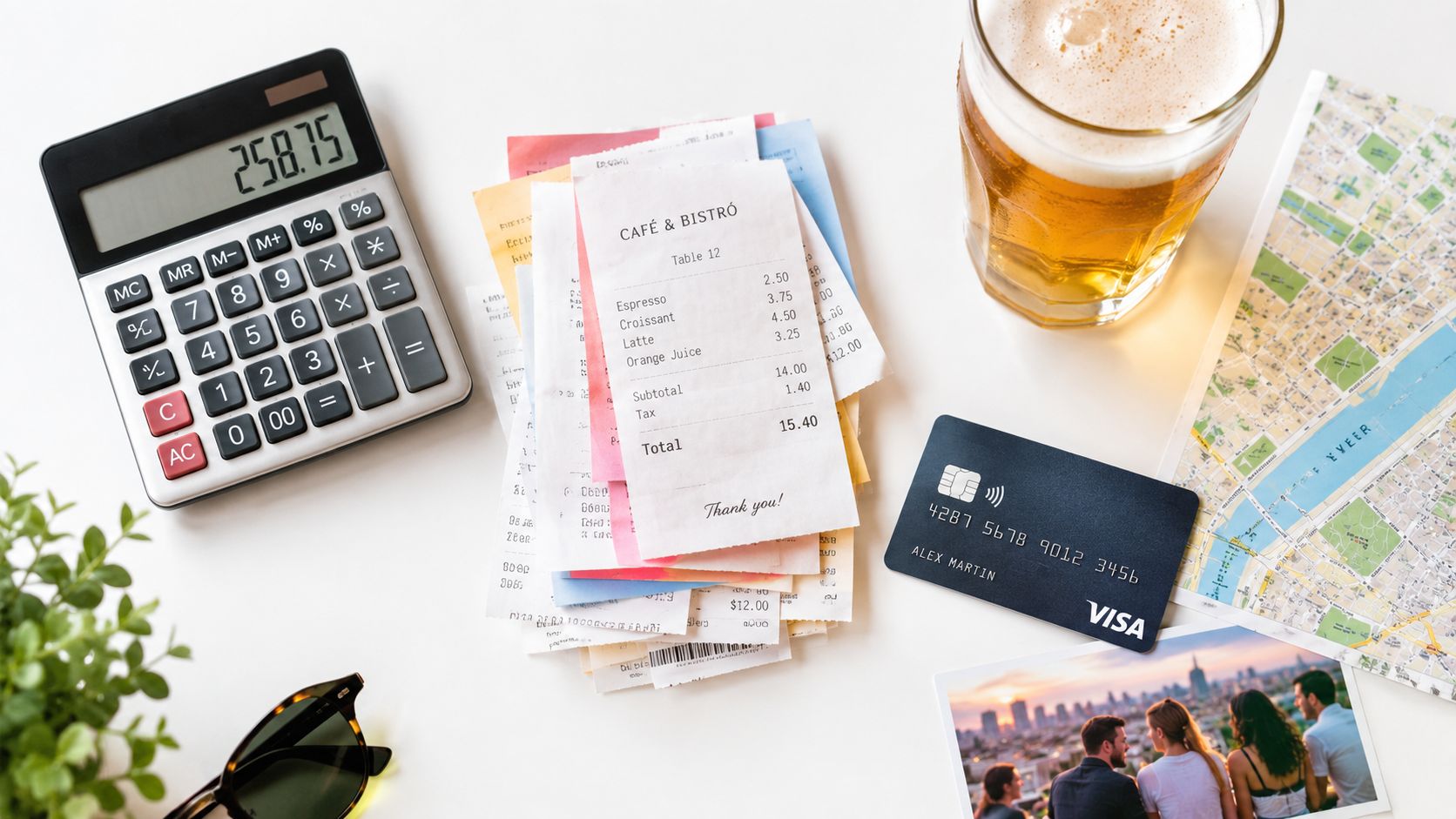
Self-guided exploration looks cheaper because there is no obvious hosting fee. The calculation changes once the group adds separate cover charges, full-price drinks, repeated queues, taxis after people split up, and the cost of fixing mistakes.
A group visiting six separate venues may pay an entry fee at each stop rather than consolidating covers in one package. Even when one venue waives entry, the group can lose time waiting outside another. The organiser then faces a choice between staying in the queue, abandoning the venue, or sending part of the group elsewhere.
Queue time is a financial cost
Queueing doesn't appear on a booking receipt, but it consumes the most limited resource in a short city break, the evening itself. Groups that spend too long outside one venue often compensate by taking taxis, skipping planned stops, or buying drinks quickly at the next location.
A hosted crawl consolidates movement and entry into a planned route. The supplied business information lists queue skipping and included venue cover charges for crawl experiences, but the organiser should verify what applies to the selected date and product. The value lies in reducing repeated decisions, not in removing every possible delay.
The street isn't a free bar
Central Amsterdam has restrictions on public alcohol consumption. Tourism guidance reports fines of around €95 in the Red Light District Amsterdam street-drinking guidance, so carrying open drinks between venues can become an expensive mistake. Groups should drink inside licensed venues or on properly operated boats, then move directly to the next stop.
Self-guided exploration can still work for a small, disciplined group that knows the district, checks venue policies in advance, and accepts that plans may change. It usually works less well for a large celebration where guests have different budgets, energy levels, and expectations.
The cheaper format is the one that keeps the group together without creating a second round of costs.
Contingency Checklist for Stress-Free Nights
Use one shared document and assign one person to keep it current. Each item should be confirmed before the group leaves the hotel.
- Confirm ID: Tell every guest to carry valid photo identification before the first venue.
- Fix the meeting point: Choose one visible location for late arrivals and post it in the group chat.
- Save the operator contact: Store the booking or WhatsApp number so the organiser can resolve changes quickly.
- Set aside taxi money: Keep a fallback fund for weather, lost guests, or a split return journey.
- Check the cancellation terms: Review the exact booking policy before the arrival date, not on the night itself.
- Name a group lead: Give one sober attendee responsibility for headcounts and communication.
- Confirm the final venue plan: Tell everyone where the night ends and where the group regroups afterward.
For larger celebrations or corporate teams, a concierge service can coordinate private crawls, VIP tables, event tickets, restaurant reservations, and transport as one itinerary. That option is useful when the organiser wants a single contact for several moving parts rather than managing every supplier separately.
Ultimate Party Amsterdam organises guided Red Light District and Leidseplein pub crawls, shared and private canal booze cruises, and concierge arrangements for more specific group events. Visit Ultimate Party Amsterdam to compare the available formats and start planning an Amsterdam night built around clear timing, controlled movement, and fewer surprises.
🍻
Experience it Yourself
Skip the planning — join Amsterdam's biggest pub crawl and get 6 bars, free drinks and VIP club entry for €20.