A group arrives in Amsterdam wanting more than a standard club visit. Some guests want a strong dance-floor finish, others prefer conversation, local atmosphere, or a memorable activity before the music gets loud. The planner also needs a concept that can survive changing energy levels, different dress preferences, weather, venue policies, and the practical reality of moving through the city.
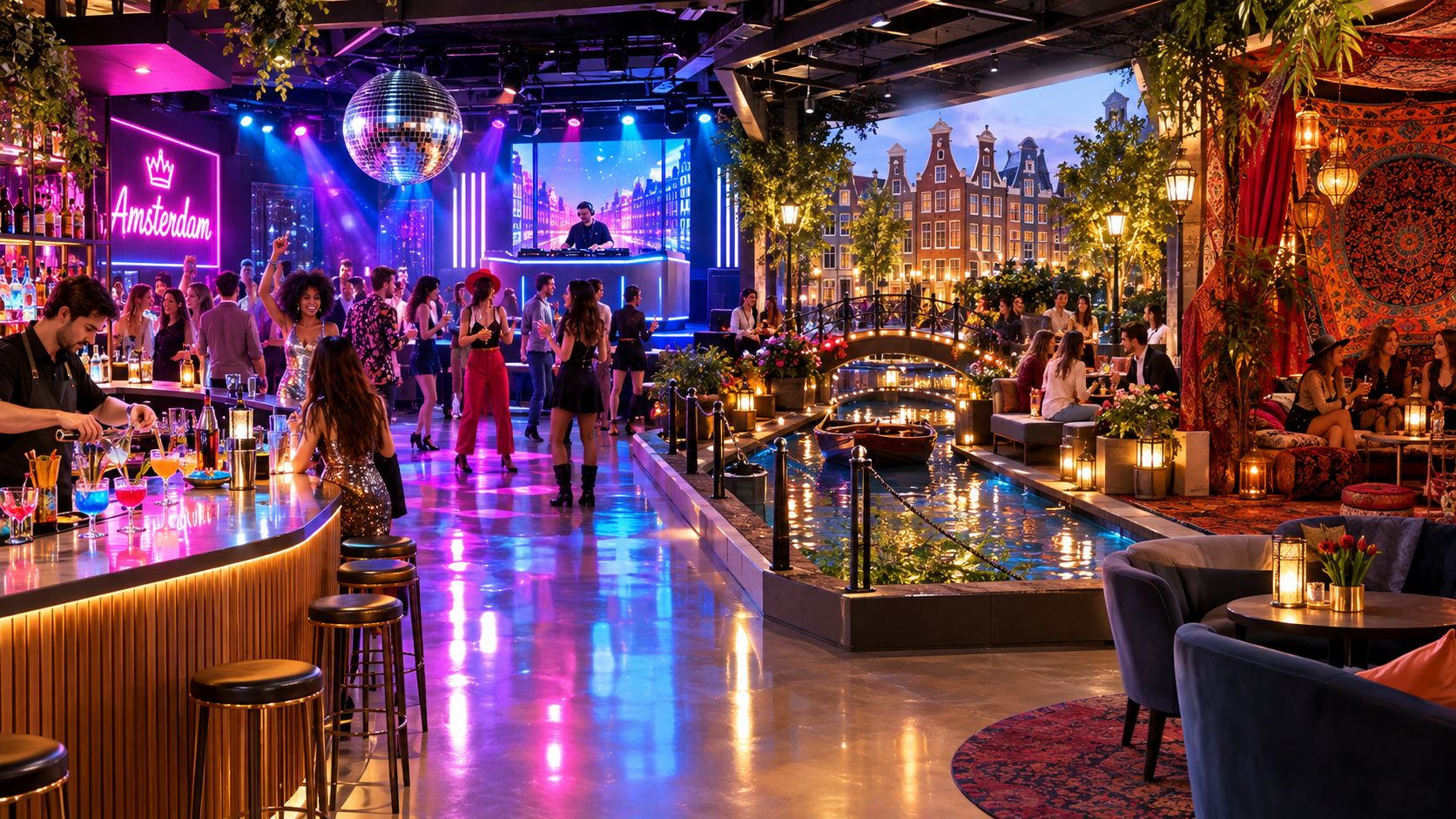
The strongest nightclub ideas for a theme night start with one clear idea and carry it consistently through music, dress, drinks, hosting, entertainment, and logistics. A historical route should feel different from a tournament, while a canal-led party needs a different pace from a late club finale. The theme should guide the guest journey rather than sit on top of an otherwise ordinary night.
Amsterdam offers a useful setting for this approach. Research counted 541 nightlife venues in the city in 2019, with more than half in the centre, alongside approximately 1.5 million nightlife visitors during that year. That research into Amsterdam's night-time economy helps explain why concepts that connect several venues, districts, or activities can work well.
The following ideas cover culture-led, competitive, inclusive, music-focused, premium, canal-based, seasonal, wellness, and audience-specific formats. A hosted pub crawl, shared or private booze cruise, or concierge arrangement can add structure where the concept needs more than a single venue.
Table of Contents
- 1. Red Light District Historical & Cultural Theme
- 2. Competitive Games & Challenges Tournament Theme
- 3. LGBTQ+ Pride & Inclusive Community Theme
- 4. Luxury VIP & Table Service Evolution Theme
- 5. Music Genre Deep-Dive Theme
- 6. Social Impact & Sustainable Nightlife Theme
- 7. Booze Cruise Expansion & Floating Destination Party Theme
- 8. Daytime to Nighttime Transition Theme
- 9. Wellness-Focused Nightlife Integration Theme
- 10. Age-Specific or Demographic-Targeted Theme
- Nightclub Theme Night: 10-Concept Comparison
- Choose the Theme That Fits the Group
1. Red Light District Historical & Cultural Theme
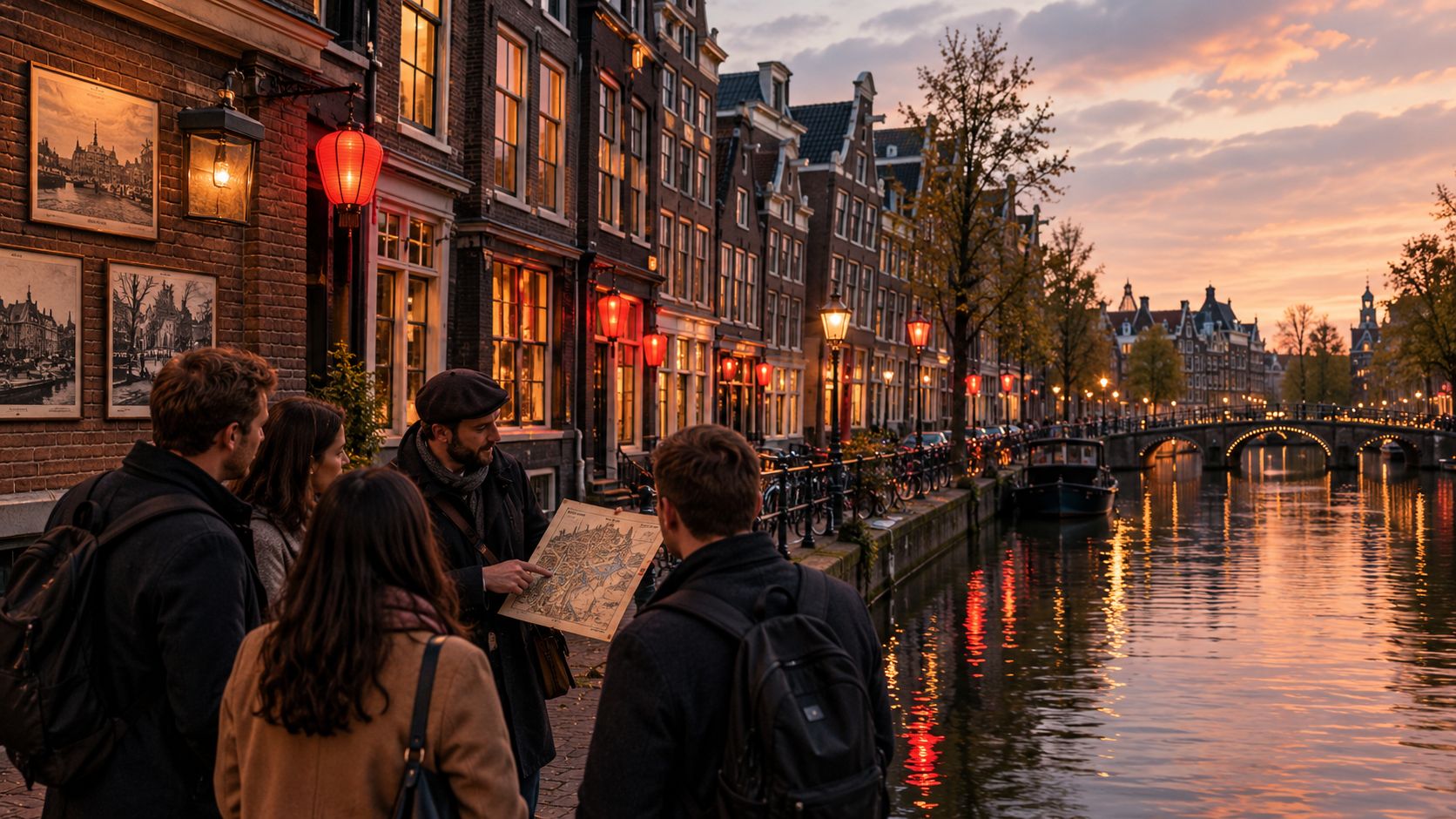
A Red Light District theme night works when the district provides context, not just a backdrop. Narrow streets, canals, historic buildings, and changing uses give the host a clear story to build around before the group reaches a louder venue.
This format suits international groups, couples, solo travellers, and guests who enjoy local atmosphere with their drinks. It is less suitable for anyone expecting a club-only evening, so set that expectation early. Keep the history social and selective. Two or three useful observations at each stop are enough to create interest without turning the night into a lecture.
Build the night as a gradual reveal
A hosted Red Light District pub crawl in Amsterdam can supply the route, with six bars and clubs leading to a VIP club finale. Confirm access, capacity, dress expectations, and timing with each venue before promising the itinerary. A canal cruise can work as an opening chapter, but allow time to disembark and regroup before the first bar.
- Host preparation: Give hosts a short fact sheet and clear boundaries for respectful discussion. Avoid treating residents, workers, or the area as entertainment.
- Route and pacing: Start with a quieter meeting point, keep walking sections short, and leave room for queues or a change of venue. The busiest streets may offer atmosphere but can slow the group.
- Decor and music: Use map cards, warm lighting, and archival-style prompts rather than theatrical props. Begin with laid-back local or jazz-influenced sounds, then shift toward dance music at the finale.
- Drink framing: Use included drinks or shots as social punctuation. Offer non-alcoholic choices and avoid making consumption the measure of participation.
- Entertainment: A brief hosted story, observation challenge, or photo prompt keeps guests involved without interrupting conversation.
Amsterdam's official Night Vision policy materials place nightlife within a wider relationship between hospitality, visitors, transport, and city life. That supports a theme built around curiosity and responsible hosting, with the final club providing the energy payoff.
2. Competitive Games & Challenges Tournament Theme
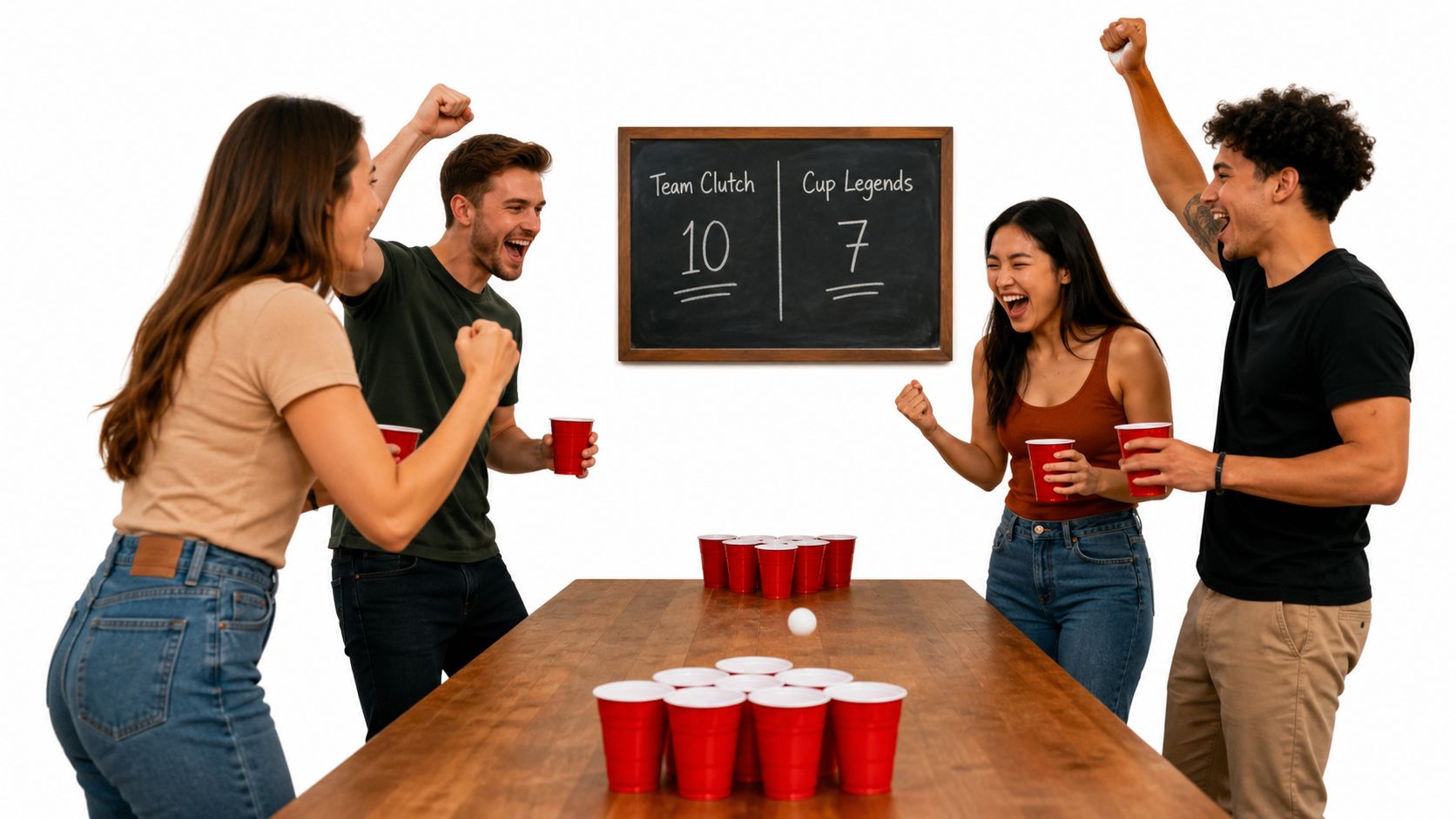
A tournament gives a group a reason to stay engaged between venues. Instead of asking guests to follow a host from bar to bar, the planner creates a playful mission with points, short challenges, and a final result.
This format suits stag and hen parties, student groups, corporate teams, and friends who enjoy a little rivalry. It works less well for guests who dislike public competition or who want an unstructured night. The solution is to make the games optional, quick, and funny rather than turning the evening into an assessment.
Keep the competition moving
Each venue can host one short activity, such as a music quiz, dance-off, team photo challenge, or observation game based on the surroundings. The host should explain the rule once, run the activity quickly, record the result, and move the group onwards before the bar becomes difficult to manage.
Practical rule: The leaderboard should create conversation, not embarrassment. Give recognition for creativity, teamwork, or enthusiasm as well as the final score.
A visible scorecard can make the night feel coherent. It doesn't need expensive prizes. A symbolic title, a group photo, or a final announcement can provide enough closure if the host delivers it with energy.
Venue fit matters more than elaborate equipment. Bars need to be comfortable with a host-led activity, and staff shouldn't have to pause service while a group completes a challenge. Included drinks can act as welcome rewards or participation prompts, but the plan should always include alcohol-free ways to take part. That keeps the format accessible and prevents drinking from becoming the only route to points.
3. LGBTQ+ Pride & Inclusive Community Theme
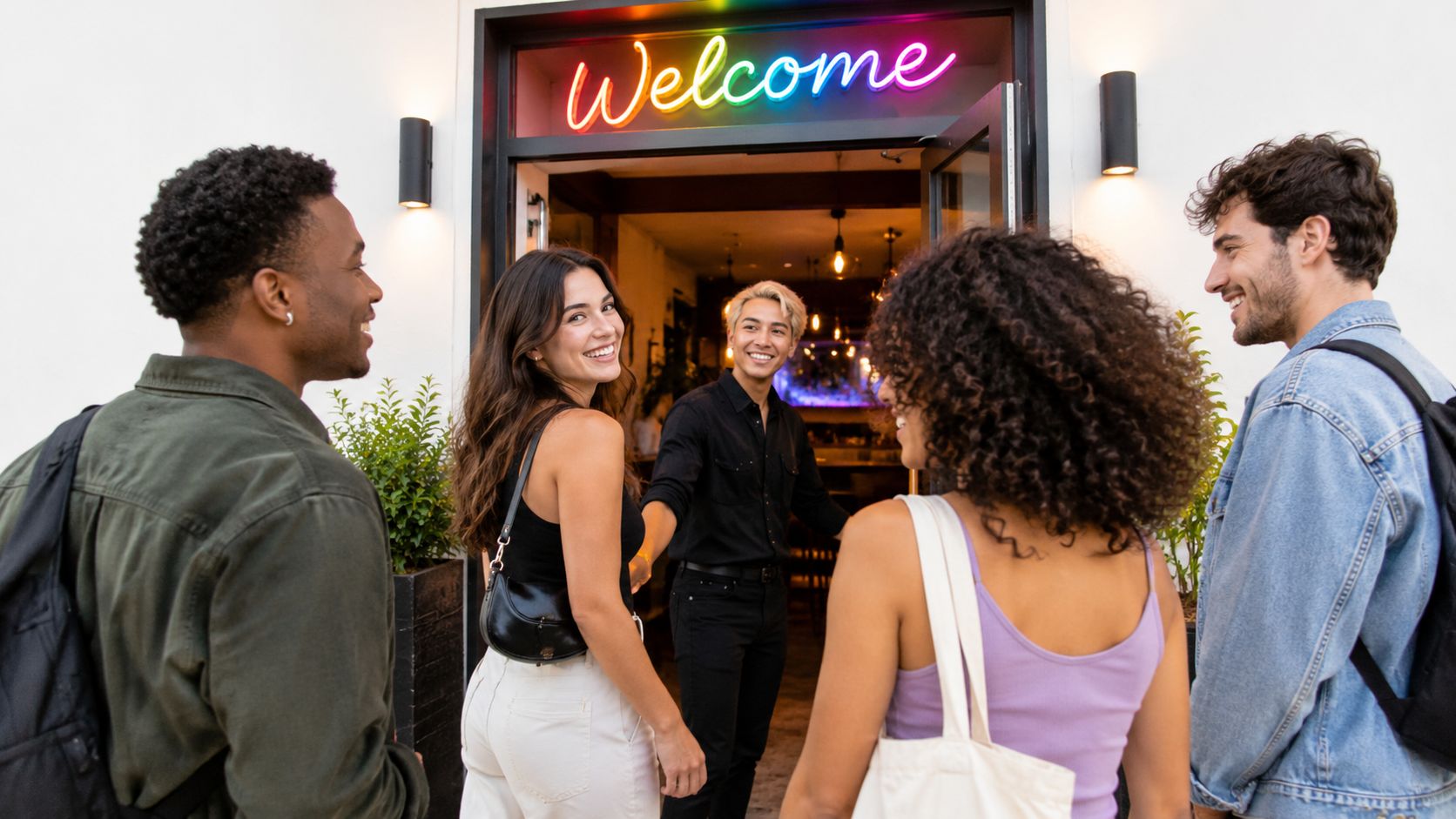
Build this night around welcome, representation, and guest choice, rather than rainbow decoration alone. Amsterdam's queer nightlife history, music, performance, and community spaces can support a celebratory route throughout the year, not only during Pride season.
The format suits LGBTQ+ guests, allies, international visitors, and groups seeking a welcoming social setting. Set expectations before booking: explain the tone, music direction, dress guidance, and whether the programme includes drag, dancing, hosted introductions, or selected venues. Be accurate about representation. Do not suggest community involvement that the organiser has not developed.
Plan the route around trust
A local LGBTQ+ organisation or community partner can review the route, language, music brief, and host preparation. Confirm each venue's atmosphere and policies before publishing. A pub crawl can start with conversation and introductions, then move towards dancing, while a canal cruise works best as an optional early segment before guests need a fixed venue. Cruise capacity, timing, accessibility, and onboard policies require confirmation.
Choose a final stop with genuinely queer-friendly music and celebratory energy, not merely a themed entrance. Use inclusive wording in booking pages, confirmation messages, and host briefings. Photos, dancing, games, and introductions should remain opt-in.
Publish an easy-to-find code of conduct, with a discreet reporting route for harassment or discrimination. Hosts should welcome guests without assumptions about identity, relationships, pronouns, or participation.
The 2025 NYC Office of Nightlife report highlights harm reduction, safer-space practices, harassment and discrimination prevention, and emergency readiness. Apply those principles to Amsterdam planning. The celebratory concept should never blur boundaries, and staff need a clear procedure when a guest feels unsafe.
4. Luxury VIP & Table Service Evolution Theme
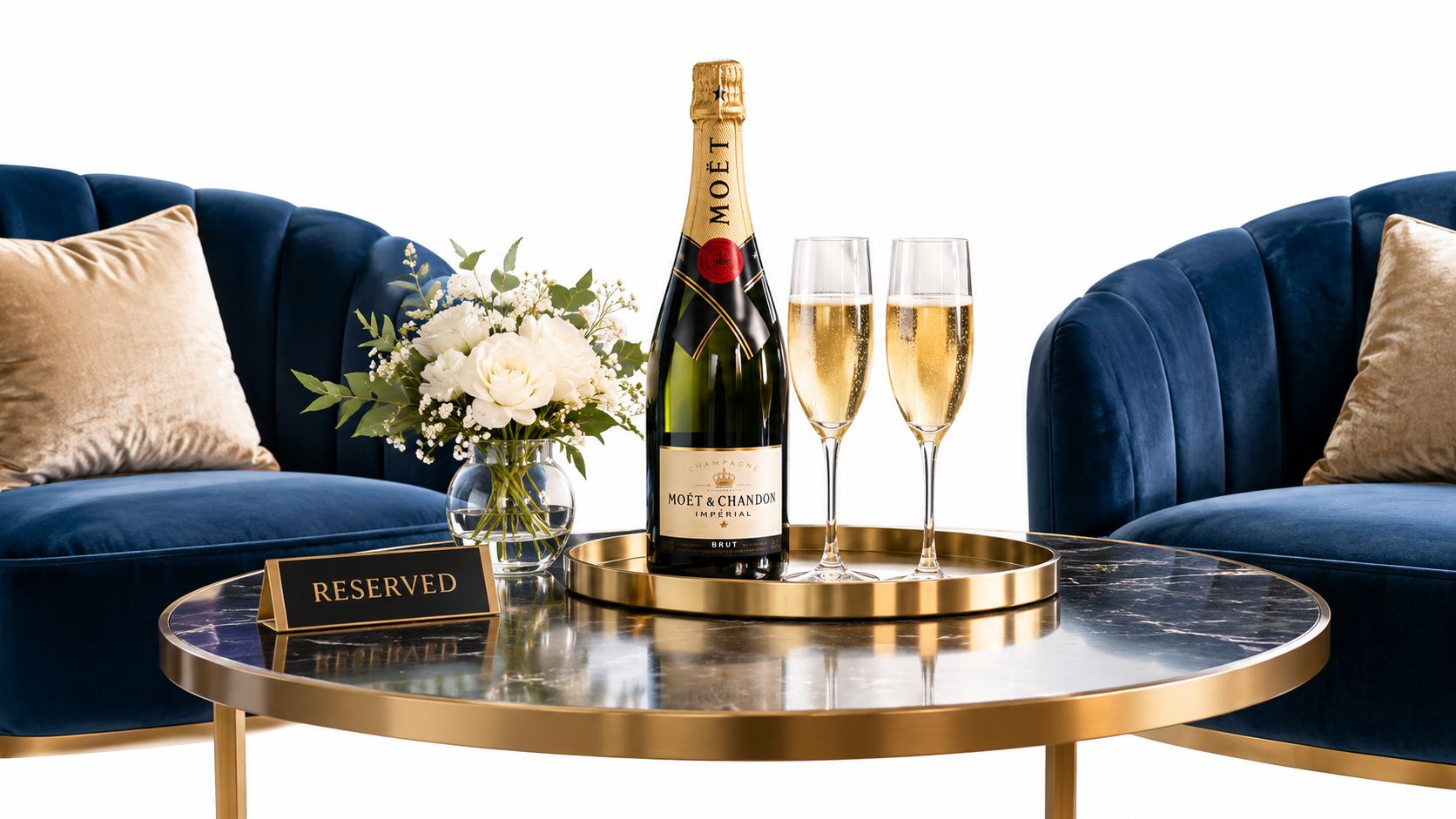
Luxury works best when the night feels deliberately managed from arrival onward. Confirmed tables, coordinated check-ins, defined drink arrangements, and generous time at each venue matter more than expensive wording or oversized decoration.
The format fits milestone celebrations, corporate groups, destination weddings, and travellers seeking a polished night with fewer surprises. It suits groups that value comfort and a clear schedule. Guests who prefer spontaneous venue changes may find table service restrictive, especially when deposits, minimum spends, bottle choices, mixers, dress rules, or entry conditions apply. Confirm every point with the venues before publishing the offer.
Build the evening around venue fit
Start with an elegant cocktail bar where guests can meet without shouting. Continue to a livelier venue with room for music and conversation, then finish at a club with a reserved table and a stronger dance-floor focus. Allow time for arrivals, coat checks, payment questions, and movement between venues. A rushed group loses the sense of care the format is meant to provide.
A pub crawl can still work, but it should use fewer stops and confirmed seating rather than a standard walk-in sequence. A canal cruise is more realistic as an optional opening segment, followed by the fixed dinner or club reservation. Confirm capacity, timing, accessibility, weather arrangements, and onboard drink policies before selling that combination.
Use restrained styling: a coordinated dress palette, printed guest list, polished welcome drink, and consistent host presentation. Music should progress from conversation-friendly selections to a clear club set. Offer non-alcoholic drinks with the same attention as cocktails.
Give guests a concise briefing covering identification, meeting points, dress expectations, deposits, table inclusions, and the night's timing. Entertainment can remain selective, such as a host-led welcome, a live performer, or a planned toast, rather than filling every pause.
Ultimate Party Amsterdam's Nightlife Concierge may suit private arrangements involving tables, event tickets, restaurant reservations, or transport. Treat it as a coordination option, and confirm availability and terms for the chosen date and venues.
5. Music Genre Deep-Dive Theme
A genre-led night works best when the group already shares a musical interest. Techno, deep house, reggae, dancehall, disco, or Latin music can shape the venue choice, DJ brief, dress guidance, drinks, and pace more effectively than decoration alone. The trade-off is audience fit. A narrow brief can divide a mixed group, and “house” may mean different things to different guests. Name the direction clearly, such as deep house, tech house, classic disco, or a defined reggae and dancehall focus.
Start with a venue where guests can arrive, hear one another, and settle into the sound. Move to a room with a stronger version of the chosen genre, then finish where the dance floor and DJ set can carry the night. Avoid holding the group at peak intensity for hours. Confirm the venue's programming, sound limits, closing time, and space for group movement before building the route.
A local DJ or music-focused host adds credibility, particularly when the theme draws from a cultural tradition. Drinks can reference the music's setting or history, while the styling should avoid turning culture into a costume. A focused music brief matters more than novelty cocktail names. Offer familiar options alongside themed serves, including non-alcoholic drinks.
Keep visuals practical. Coloured lighting, projections, and a coordinated dress palette can establish the mood without requiring a costly installation. Entertainment might include a short DJ introduction, a dance demonstration, a live musician, or a host who explains the route's musical progression. Leave space for the music to lead.
For broader context on Amsterdam's night culture, see The Amsterdam nightlife research. The citation need not determine the booking decision. Check each date's confirmed line-up and venue suitability instead.
A hosted pub crawl suits this concept when each stop represents a distinct sound, with fewer venues and enough time to listen rather than just collect drinks. A canal cruise can open the evening with atmosphere and a curated playlist, but it should not be sold as a club substitute unless the boat's sound system, permissions, capacity, and operating rules support that experience.
6. Social Impact & Sustainable Nightlife Theme
A social-impact theme works best for groups that already care about a defined cause, such as a local community organisation, environmental initiative, or safer-nightlife programme. Choose one partner and one clear promise. The event then feels purposeful without asking guests to treat the party like a fundraising meeting.
The organiser must state how the contribution works. Explain whether it comes from ticket revenue, a fixed amount, or another arrangement, then document the transfer and share a short follow-up using only verified information. Amsterdam's night culture is connected to wider civic and economic systems, as outlined in The city's night culture policy. A party can contribute to that system, but only if its commitments are specific.
Build the night around the cause
Partner choice: Select an organisation whose work is relevant to the audience, and confirm what language and branding it approves.
Booking choice: A single venue keeps the message and logistics clear. If the group wants to support several causes, let guests choose before the event, but expect more administration.
Venue practice: Confirm recycling, transport, water, accessibility, noise procedures, and any restrictions on decorations. Reused materials, digital invitations, and low-waste service choices can support the theme without making the room feel austere.
Use warm lighting, projected information, or a coordinated colour palette rather than heavy signage. A short host introduction, a guest speaker, or a brief creative performance can explain the partner's work. Music should suit the audience and keep the night enjoyable. Offer familiar drinks beside themed serves, including non-alcoholic options.
A hosted pub crawl can give each stop a distinct practical action, such as a donation point or partner message, with fewer venues to protect pacing. A canal cruise can open the evening, provided the operator confirms capacity, accessibility, waste handling, sound rules, and the group's ability to hear the host.
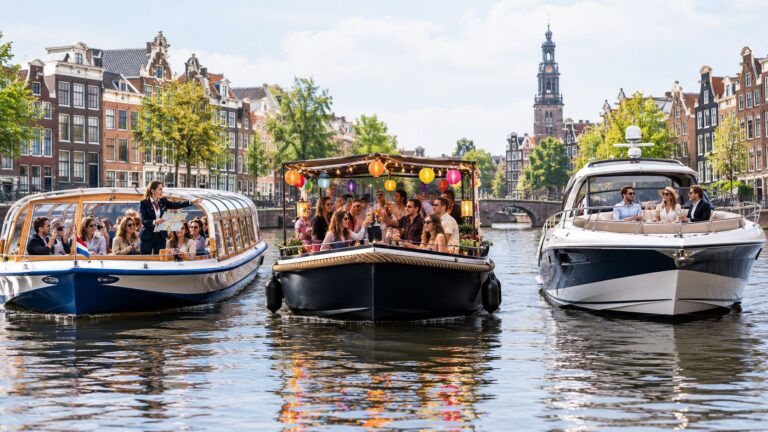
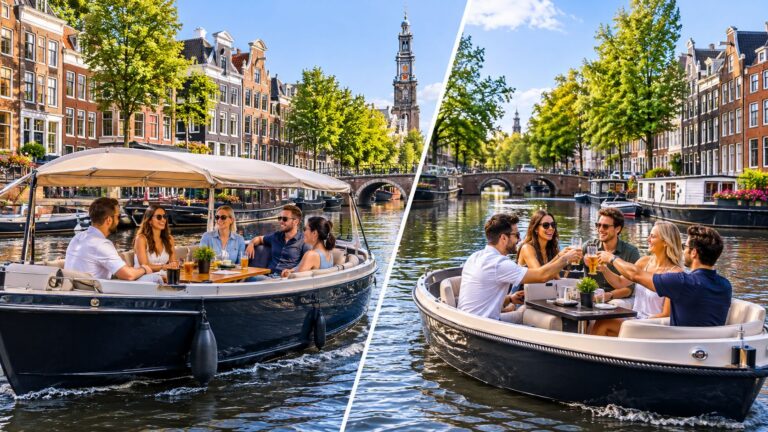
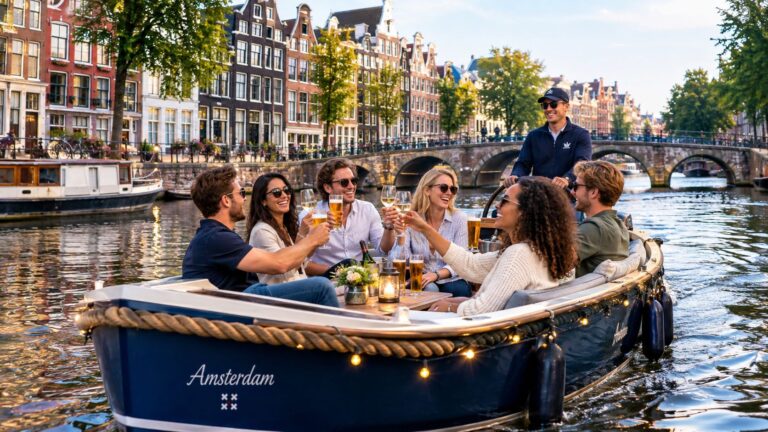
7. Booze Cruise Expansion & Floating Destination Party Theme
A canal-led theme night gives Amsterdam its own visual production. Bridges, façades, reflections, and changing light shape the atmosphere, so the venue does not need to create all the impact indoors. The water also changes the evening's pace. Guests talk, take in the route, and settle into the group before deciding whether to continue at a club.
This format suits birthday groups, friends, corporate teams, couples, and visitors who want a shared experience with a clear destination. It works best when the boat is planned as a main event, not as a transfer between land venues.
Build the route around the boat
A shared Amsterdam booze cruise provides a one-hour canal cruise on a shared electric boat, with unlimited beer, wine, and soft drinks. That gives planners a defined centre for a Dutch orange night, canal disco, sunset gathering, or music-culture theme. Add a pub crawl before or after only if boarding time, walking distances, and guest stamina support it.
Keep one host with the group where possible. Confirm the meeting point and boarding process in advance, then send practical details about weather, seating, toilets, mobility, and motion sensitivity. Sound needs separate confirmation before promising a DJ or live act. A curated playlist may suit the boat better and leave more room for conversation.
If the concept expands beyond an existing licensed operation, check the city's requirements early. Events attracting more than 2,000 visitors require an event permit, while some smaller outdoor events may require notification under specific conditions. The municipality's event-permit guidance covers capacity, traffic, safety planning, toilets, first aid, wastewater, and noise. Those details affect the route and venue choice, not just the paperwork.
8. Daytime to Nighttime Transition Theme
A summer theme can begin with relaxed outdoor energy and finish in a club. The appeal comes from progression. Guests meet while conversation is easy, build anticipation during the sunset period, and reach the dance-focused part of the night when the group already feels connected.
This format works for city-break groups, corporate teams, birthdays, and visitors who want a fuller Amsterdam experience without starting at maximum intensity. It depends heavily on weather, transport time, venue availability, and guest stamina. A plan that schedules too many outdoor stops can leave everyone tired before the main event.
Pace the day around the change in light
The opening should use one or two relaxed settings, such as a waterfront meeting point, terrace, or light social activity. The route can then move towards the evening venues shortly before dusk, with the final stop reserved for the strongest music and most focused atmosphere.
A clear Amsterdam day-to-night experience guide can help planners think through the transition from daytime activities to nightlife without treating the entire day as one continuous drinking session. Food, water, seating, and optional pauses belong in the design.
The backup plan needs to be decided before invitations go out. Indoor alternatives should preserve the same mood rather than just replace the outdoor part with an unplanned bar. Guests also need realistic expectations about footwear, clothing, meeting points, and the point at which the night shifts from casual to club-oriented.
A successful transition feels like one story. It doesn't feel like three unrelated bookings pushed into the same calendar.
The route should end somewhere easy to reach, with transport guidance that accounts for guests who leave early. That flexibility makes the concept more welcoming and protects the final venue from a group arriving exhausted.
9. Wellness-Focused Nightlife Integration Theme
A wellness-led party doesn't need to oppose drinking or turn a night out into a lecture about health. The more practical version is balanced nightlife, with hydration, food, optional mindfulness, active movement, and credible non-alcoholic choices included alongside the social experience.
This can appeal to sober-curious travellers, health-conscious guests, remote-working groups, and anyone who enjoys dancing but dislikes an evening built entirely around alcohol. It also suits groups with mixed preferences because guests can choose their own intensity without being separated from the main event.
Make every element optional
A short breathing exercise at the opening, a quiet interval between venues, a light food stop, or a morning-after recovery suggestion can support the theme without interrupting the party. Hosts should use non-judgmental language. Guests who drink should not be treated as failing the concept, and guests who don't drink shouldn't have to explain themselves.
Every venue should confirm its non-alcoholic options rather than relying on tap water or a single soft drink. The menu should be communicated clearly, especially if the concept promises premium alcohol-free cocktails, food, or wellness activities.
Route choice matters. A canal cruise can provide a calmer opening, while a dance venue can deliver the active part later. A pub crawl can also work if hosts build in pauses and make participation in drinking games optional. The event should never pressure guests to consume alcohol to stay involved.
Personalisation can help, but it should stay proportionate. Event-industry survey data found that 41.7% of respondents identified personalised experiences as one of the largest event difficulties, while 25% raised participant-privacy concerns. The event personalisation research supports collecting only useful, optional preferences, such as music direction, dietary needs, or social intensity, with clear consent and limited retention.
10. Age-Specific or Demographic-Targeted Theme
A student night, an expat meet-up, an LGBTQ+ gathering, a solo-traveller social, and a 40-plus evening should not share the same brief. In Amsterdam, audience fit affects the route, start time, music volume, seating, and expectations. Build around observed preferences rather than stereotypes.
For students, use energetic music, competitive games, bold decor, and simple drinks that keep service moving. Expat events need clear meeting points, easy introductions, and hosts who prevent isolated guests from being left behind. A 40-plus format can start with conversation, table service, and familiar music before shifting towards dancing. An LGBTQ+ event requires community-aware curation, trusted venues, and entertainment that feels specific rather than applying a generic “inclusive” label.
Keep the production adaptable. Confirm age checks, ID requirements, venue access, seating, drink options, and music limits before promoting the night. Decor can signal the audience without turning identity into a costume. Drinks should suit the group's budget and pace, with alcohol-free choices confirmed directly with each venue.
Pilot carefully with one audience concept and collect practical feedback on atmosphere, route length, and entertainment. Set expectations about dress, music, activities, age checks, and venue style before booking. Avoid caricature by using direct feedback and community input. Keep access flexible through social, cultural, visual, and dance elements at different intensities.
A pub crawl works when stops offer distinct roles, such as introductions, games, and dancing. A canal cruise can provide a calmer opening, but confirm capacity, timing, accessibility, and onboard service. A final club should still feel like a celebration, not an obligation to continue.
Night-time economy trend analysis highlights demand for curated events and connection beyond conventional clubbing. A modular route with optional activities, clear information, and quiet moments meets that demand without diluting the party.
Nightclub Theme Night: 10-Concept Comparison
| Theme | Implementation complexity | Resource requirements | Expected outcomes | Ideal use cases | Key advantages |
|---|---|---|---|---|---|
| Red Light District Historical & Cultural Theme | Medium, trained hosts & timed storytelling | Local knowledge hosts, curated visuals, venue permissions | Memorable, educational nights; slower paced visits | Culturally curious travelers, mixed-interest groups, couples | Authenticity; educational depth; conversation-driven experience |
| Competitive Games & Challenges Tournament Theme | Medium-high, game management and pacing | Hosts, game kits, leaderboard system, game-friendly venues | High engagement; shareable moments; clear venue progression | Stag/hen parties, friend groups, team-building | High energy; structured movement; social media friendly |
| LGBTQ+ Pride & Inclusive Community Theme | Medium, partnerships & cultural training | Inclusive hosts, LGBTQ+ venues, community partners | Safe, loyal experiences; strong word-of-mouth | LGBTQ+ travelers, allies, solo visitors from less accepting places | Genuine inclusion; year-round relevance; community loyalty |
| Luxury VIP & Table Service Evolution Theme | High, reservations, coordination across venues | Concierge staff, reserved tables, bottle packages, premium venues | Higher ARPU; smaller, affluent groups; complex logistics | Corporate groups, milestone celebrations, affluent tourists | Higher revenue per guest; VIP differentiation; stronger venue ties |
| Music Genre Deep-Dive Theme (Techno, House, Reggae, etc.) | Medium-high, DJ curation and programming | Genre DJs, specialized venues, visuals, host expertise | Strong fan affinity; repeat bookings; niche appeal | Music enthusiasts, festival-goers, small committed groups | Authentic music focus; community building; partnership potential |
| Social Impact & Sustainable Nightlife Theme | Medium, charity partnerships and reporting | Credible nonprofits, tracking/reporting, venue alignment | Values-driven bookings; positive PR; slightly lower margins | CSR-focused corporates, conscious travelers, Gen Z/Millennials | Differentiation by impact; loyalty and PR benefits |
| Booze Cruise Expansion: Floating Destination Party Theme | High, boat logistics and safety coordination | Boats/crew, DJs, transfers, safety protocols, weather plans | Unique, Instagrammable experiences; limited capacity | Special occasions, tourists seeking canal authenticity | Distinct Amsterdam offering; high perceived value |
| Daytime to Nighttime Transition Theme: Summer Sunset to Club Night | Medium, coordinate day/night venues; seasonal | Outdoor terraces, food partners, backup indoor options | Full-day value; natural pacing; seasonal appeal | Summer visitors, travelers maximizing time, mixed-age groups | Extended experience; sunset transition; flexible join points |
| Wellness-Focused Nightlife Integration Theme: Party with Purpose | Medium, host training and venue buy-in | Non-alc beverage suppliers, wellness partners, trained hosts | Inclusive sober-curious bookings; reduced liability risk | Sober-curious travelers, wellness-focused guests, mixed groups | Differentiation; inclusive environment; health-conscious appeal |
| Age-Specific or Demographic-Targeted Theme | Medium, multiple product variants & targeted marketing | Segmented venue mixes, tailored host training, community partners | Higher satisfaction within segments; targeted conversion | Students, 40+, expats, community groups | Better guest fit; efficient targeted marketing; stronger cohesion |
Choose the Theme That Fits the Group
The best theme starts with the audience, not the decorations. A group of solo travellers may need hosted introductions and an easy route. A stag or hen party may prefer games and a loud finale. A corporate team may need clear timing, food, transport, and a more controlled drink structure. A music-led crowd will care more about the sound direction and final venue than about elaborate props.
The next decision is the shape of the night. A moving route creates variety and social momentum, while a boat-led concept gives the group one shared setting with Amsterdam as the backdrop. A combined format can work, but only when the transfer between water and land is simple. Too many changes create queues, confusion, and fatigue.
Before the event is published or sold, the planner should confirm:
- Music: Check the actual programming, sound limits, DJ arrangements, and genre fit.
- Dress: State whether costumes, formalwear, comfortable shoes, or themed colours are expected.
- Drinks: Confirm included drinks, alcohol-free choices, dietary needs, and whether guests can buy additional items.
- Entertainment: Verify games, performers, photography, DJs, and any equipment with the relevant venue.
- Weather: Prepare an indoor alternative for outdoor, sunset, and canal-led plans.
- Accessibility: Publish route surfaces, stairs, toilets, boarding details, seating, and available assistance.
- Timing: Allow for walking, security, boarding, venue entry, food, and guests who leave early.
- Capacity: Confirm the permitted capacity and whether the format changes the venue's operating requirements.
Amsterdam's sound rules deserve particular attention. Operators hosting live music or a DJ on their premises need a noise-regulation exemption, which can be requested a maximum of twice per year and submitted at least one working day in advance. The municipality's noise-exemption guidance also sets conditions around closed windows and doors, entrance supervision, and special dates such as King's Night and King's Day. A recurring theme night should therefore be checked against the venue's existing permissions rather than assuming that a normal club booking covers every variation.
For hosted multi-venue formats, Ultimate Party Amsterdam's Red Light District and Leidseplein pub crawls offer established route structures, hosted group movement, venue entry arrangements, and included drinks as listed on the relevant booking pages. A shared or private booze cruise suits a canal-led concept, while the Nightlife Concierge can help coordinate private arrangements such as tables, tickets, restaurants, or transport. Current inclusions and availability should be confirmed directly.
The practical next step is simple. The planner should shortlist one concept, map the guest journey from meeting point to final venue, list every operational assumption, and verify each detail before promotion. Then the group can contact Ultimate Party Amsterdam through the verified Amsterdam nightlife website to discuss the current availability and arrangements for a pub crawl, canal cruise, or private nightlife plan.
Ultimate Party Amsterdam offers hosted pub crawls in the Red Light District and Leidseplein, shared and private canal booze cruises, and Nightlife Concierge support for private arrangements. Visit Ultimate Party Amsterdam to match a theme-night concept with the available route, cruise, or group-planning option for the selected Amsterdam date.
🍻
Experience it Yourself
Skip the planning — join Amsterdam's biggest pub crawl and get 6 bars, free drinks and VIP club entry for €20.