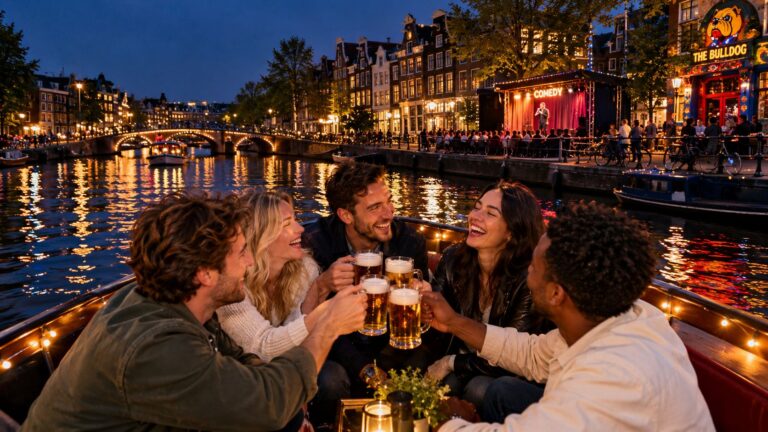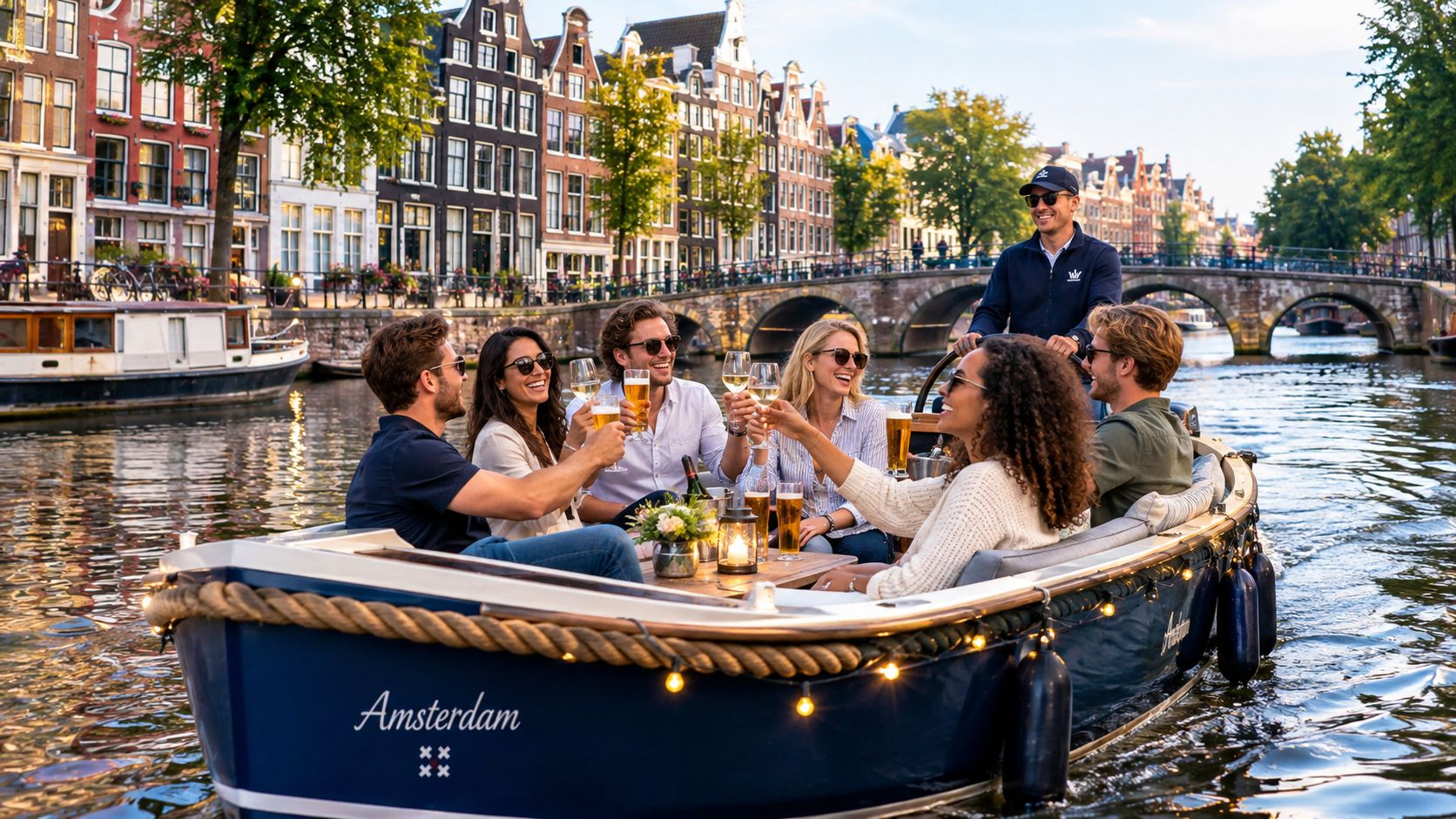
A birthday group lands in Amsterdam, drops bags at the hotel, and opens a chat full of competing plans. One person wants a canal boat before dinner; another thinks it should replace the pub crawl; the organiser is trying to work out whether the group can steer, drink, stay dry, and keep everyone together. That's when Amsterdam canal boats rental stops being a sightseeing choice and becomes a group-planning decision.
For visitors already set on getting out on the water, the question isn't whether a canal cruise looks good in photos. It's which format fits the group, the night, and the practical limits of the boat. A useful overview of local experiences for your trip to Amsterdam can help place a cruise among the city's wider options, but the booking itself comes down to details: capacity, who's responsible for the boat, what drinks are served, and what happens if the weather turns.
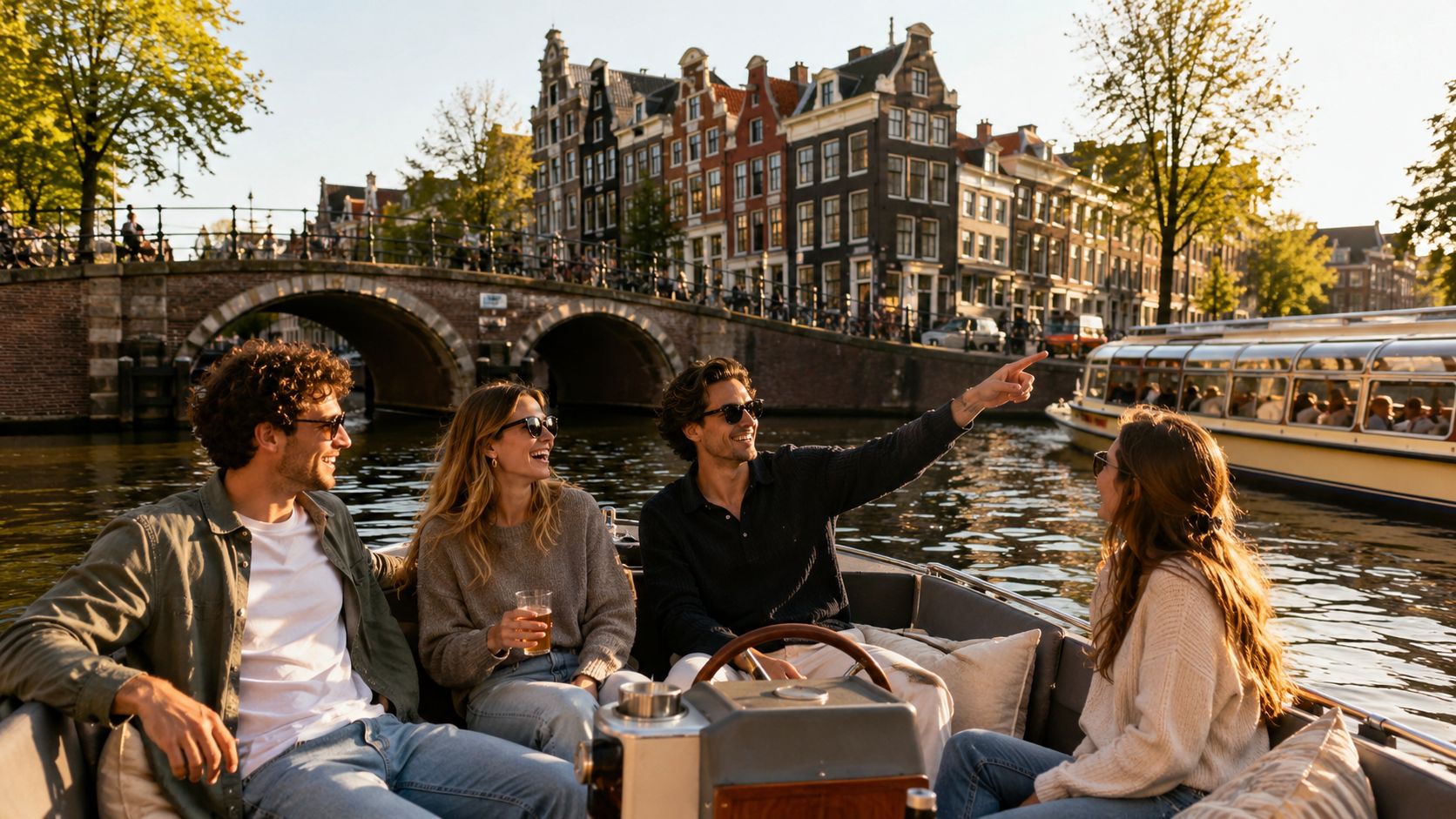
A self-drive boat puts the group in charge of steering and the onboard plan. A shared hosted cruise means joining other passengers while a skipper handles the route. A private charter gives the group its own boat and crew, with the experience shaped around the occasion and the inclusions offered.
Those differences matter more on a celebration night than they do on a casual afternoon. The right fit depends on how many people are coming, how much coordination the organiser wants to handle, and whether the boat is meant to be the main event or one stop in a bigger evening. The advice ahead focuses on the decisions that tend to trip planners up: capacity rules, hosted versus self-drive logistics, drink service, weather, toilets, accessibility, and booking pitfalls.
Table of Contents
- What Canal Boat Rental Actually Means in Amsterdam
- How the Amsterdam Canal Rental Market Is Structured
- Self-Drive Versus Hosted Boats
- Group Size and the Rules That Shape It
- Weather, Toilets and Accessibility
- What a Turnkey Booze Cruise Actually Includes
- Common Booking Mistakes and How to Avoid Them
- Putting It Together for Your Group
What Canal Boat Rental Actually Means in Amsterdam
Amsterdam's canal-boat market isn't one single kind of rental. Planners choose among open sightseeing boats, covered cruisers, small self-drive boats, and private charters, but the useful distinction is what each option asks of the group. Some formats prioritise a relaxed look at the city; others make it easier to celebrate without assigning someone the job of steering, organising drinks, and keeping the group on schedule.
Choose the experience, not just the boat
For a birthday group that wants to socialise while moving through the canals, a hosted cruise keeps the organiser from becoming the boat's unofficial operations manager. The skipper takes responsibility for navigating, while the group can focus on conversation and the occasion. A self-drive rental offers more independence, but the person at the helm has a different job from everyone else.
A private charter is a separate choice again. The group has the boat to itself, which can suit a milestone or a group that wants a shared setting without sharing the passenger space with strangers. A shared cruise is easier when the priority is getting on the water with minimal coordination. Neither is automatically right for every group. The decision depends on how much privacy and control matter, and how much work the organiser wants to carry.
Planner's test: If the person booking also expects to relax with a drink, a self-drive boat may not match the night they're trying to plan.
The canal is best treated as part of the evening's hospitality, not as a transport shortcut. A cruise might sit between dinner and bars, or give a group a focused, shared activity before a night out. It shouldn't be assumed to function like a hop-on, hop-off service or a replacement for every other plan.
Before paying, settle the format, the group size, and the level of service the occasion needs. Then check the practical details that can change the experience: whether the boat is open or covered, whether drinks are included, whether there's a toilet, and what the policy says about poor weather. Those answers are more useful than choosing a boat based on appearance alone.
How the Amsterdam Canal Rental Market Is Structured
Amsterdam's canals are not a blank backdrop for a boat hire. They're a working, historic waterway network where narrow stretches, bridges, junctions, and mooring restrictions shape how every vessel operates. The city's canals extend for approximately 75 kilometres, and more than 3.25 million passengers travel on Amsterdam canal boats each year, according to Amsterdam's city facts and figures. That scale makes boat trips a familiar part of the visitor experience, but it doesn't mean every boat suits every group.
The central canal ring, including the Herengracht, Keizersgracht, Prinsengracht, and Jordaan, was added to the UNESCO World Heritage List in August 2010. The oldest listed canal, Oudezijds Voorburgwal, dates to 1385. The historic setting is a draw, but it also explains why a canal boat isn't a vehicle that can turn or stop wherever the group likes.
Match the format to the group's intention
For sightseeing at an easy pace, a larger open-top boat or covered saloon cruiser gives passengers a hosted ride through the city. Open boats make it easier to feel close to the water and take in the surroundings; covered vessels offer shelter. Groups should check the actual vessel and facilities rather than infer them from a booking label.
For a celebration, planners usually care more about whether the group can socialise comfortably than about seeing every canal. A small self-drive boat offers control over the outing, while a hosted private charter shifts the operational work to a skipper and crew. The trade-off is straightforward: more independence means more responsibility, and a hosted format means the organiser gives up some control in exchange for less to manage.
A boat can also be treated as a standalone social activity, rather than a way to travel between nightlife stops. Routes and docking aren't the same as a land-based itinerary, so don't build a schedule around the idea that the vessel will drop the group wherever the next venue happens to be.
Consider propulsion and atmosphere
Older engine-driven boats and modern electric vessels can feel different on the water. The municipality's 2025 environmental policy requires commercial canal boats to meet zero-local-emission standards, with electric and hydrogen propulsion identified as compliant technologies. Electric propulsion can reduce local air pollution and engine noise, which helps passengers talk and hear a guide on narrow waterways. It doesn't, by itself, guarantee a covered cabin, accessible boarding, or a restroom.
For a group, the practical market map is simple: choose between a sightseeing-led ride, a self-directed outing, and a hosted celebration. Then check the boat's propulsion, capacity, shelter, and onboard facilities before treating the booking as settled.
Self-Drive Versus Hosted Boats
A self-drive boat sounds like the most flexible option until the group decides who'll steer, who'll stay sober, and who'll handle the route through busy canals. A hosted cruise removes those jobs from the group. A private hosted charter adds privacy, but usually requires more coordination around the group's schedule and preferences.
| Format | Steering and effort | Drinks and atmosphere | Best fit |
|---|---|---|---|
| Self-drive small boat | Someone in the group is responsible for handling the vessel and following the rules. | The group manages its own refreshments and has to plan around the person steering. | A small group that values independence and is comfortable taking on the practical work. |
| Shared hosted cruise | A skipper handles navigation, so the organiser has fewer moving parts. | Drinks may be part of the experience, depending on the booking. The boat is shared with other passengers. | Travellers who want an easy way to enjoy the canals without arranging a private boat. |
| Private hosted charter | A skipper and crew take care of the vessel while the group stays together. | The group has the boat to itself; the actual bar or drink service depends on the offer. | Milestones, stag and hen groups, and corporate teams that value private space. |
The self-drive option can be a poor match for a night built around drinks. The designated skipper can't treat the boat like another party venue, and the group has to be confident navigating, staying alert, and managing its own pace. Busy canals aren't the place to discover that nobody wants the helm.
A shared hosted cruise asks less of the organiser. It suits visitors who want to be on the water, enjoy the service included in their booking, and keep the rest of the evening flexible. Ultimate Party Amsterdam's Shared Booze Cruise is one hosted option for groups considering that format.
A private charter makes more sense when the group's privacy matters more than sharing the experience with other passengers. It's the natural choice for a birthday toast, a stag or hen group that wants to stay together, or a work group that needs its own space. The cost and service details vary by booking, so compare what's included rather than assuming that “private” automatically means drinks, music, or a particular route.
For any boat outing, planners can borrow a useful habit from Key West sailing trip planning: decide what the group needs the skipper and vessel to handle before choosing a booking. In Amsterdam, that means being candid about whether the group wants to steer, socialise, or show up and enjoy the ride.
Group Size and the Rules That Shape It
Group size is the first booking variable to settle, not a detail to tidy up later. Amsterdam's 12+ rule, in effect since 23 May 2019, limits pleasure craft to 12 passengers plus a skipper; groups of 12 or more must use a licensed passenger vessel with a skipper, as set out in the city's safe-boating rules. A larger group can't assume that one ordinary self-drive boat will work, or that splitting into smaller boats automatically makes the plan simple.
Consider a stag group of 14. They need to arrange an appropriately licensed passenger vessel or plan separate boats, and the latter means coordinating departure, route, and the group's experience across two vessels. For a celebration where everyone expects to share the same moment, a licensed hosted charter is usually the cleaner format.
Know what the rules mean in practice
Amsterdam imposes a general maximum speed of 6 kilometres per hour on city waterways, with limited waterways allowing 7.5 kilometres per hour. Those limits make the canal a slow-moving experience, not a fast transfer between nightlife stops. Build in time to get to and from the boarding point on foot, and don't schedule the cruise as if it can compensate for a late dinner reservation.
Operators and renters must keep to the right, give way to longer vessels, and avoid places where mooring is prohibited. Pleasure boats longer than 10 metres generally may not be moored in the city unless an exemption applies. Operating a boat while intoxicated isn't allowed, and older two-stroke outboard motors manufactured before 2007 are prohibited within the city.
Practical rule: Decide whether the group needs one shared boat before comparing vessel styles or drink options. The passenger threshold can rule out a format before any other preference matters.
A licensed vessel with a skipper makes the most sense for larger celebrations because it keeps the group together and puts navigation in professional hands. The organiser should still confirm the vessel's licensed capacity and exactly what the booking includes. A boat's appearance, a group's plan to “keep it sensible,” or a reservation split between friends doesn't replace the city's requirements.
Weather, Toilets and Accessibility
A sunny forecast isn't a comfort plan. Published rental policies may allow a trip to be cancelled or ended early during dense fog, continuous rain, thunderstorms, or storms, with compensation potentially limited to unused time; smaller private boats often have no onboard toilet, as noted in published boat-rental policy information. Groups should read the actual terms for their booking and ask what the operator will do if conditions change.
Ask about the vessel, not just the forecast
Start with shelter. An open boat can make the canals feel immediate and lively, but a sudden shower can change the mood quickly. A covered boat offers protection, though the group should confirm how much of the vessel is enclosed and whether passengers can still enjoy the experience comfortably.
Next, ask directly about toilets. If the boat doesn't have one, find out where the nearest land-based restroom is and whether the route allows for a stop. Don't assume a short trip removes the need to plan, especially when the group includes older travellers, families, pregnant passengers, or anyone who may need reliable access to facilities.
Accessibility needs equally specific questions. Is boarding step-free? How high is the step from the quay, and how wide is the entrance? Can a wheelchair, mobility aid, or stroller fit through the entrance and be accommodated aboard? Ask the operator about the actual boat and boarding point, rather than relying on a general statement that the cruise is suitable for groups.
Electric propulsion can reduce local emissions and engine noise, but it doesn't automatically provide shelter, accessible boarding, or onboard facilities. Those are separate features, and the organiser should assess them separately.
Before paying: Get clear answers about cover, boarding, toilets, and the weather policy in writing. If someone in the group has a mobility or health-related need, share it with the operator before booking so the group can judge suitability rather than improvising at the quay.
If weather turns, the group's options depend on the booking terms and the conditions. A plan that assumes every boat will sail as scheduled is fragile. A stronger plan leaves room to adjust the rest of the evening if the operator delays, shortens, or cancels the trip.
What a Turnkey Booze Cruise Actually Includes
A bare-boat rental can look straightforward until the organiser has to coordinate the skipper, drinks, glasses, ice, music, and a meeting point. A hosted booze cruise brings those questions into one booking, but the organiser still needs to verify the details rather than assume every charter includes the same package.
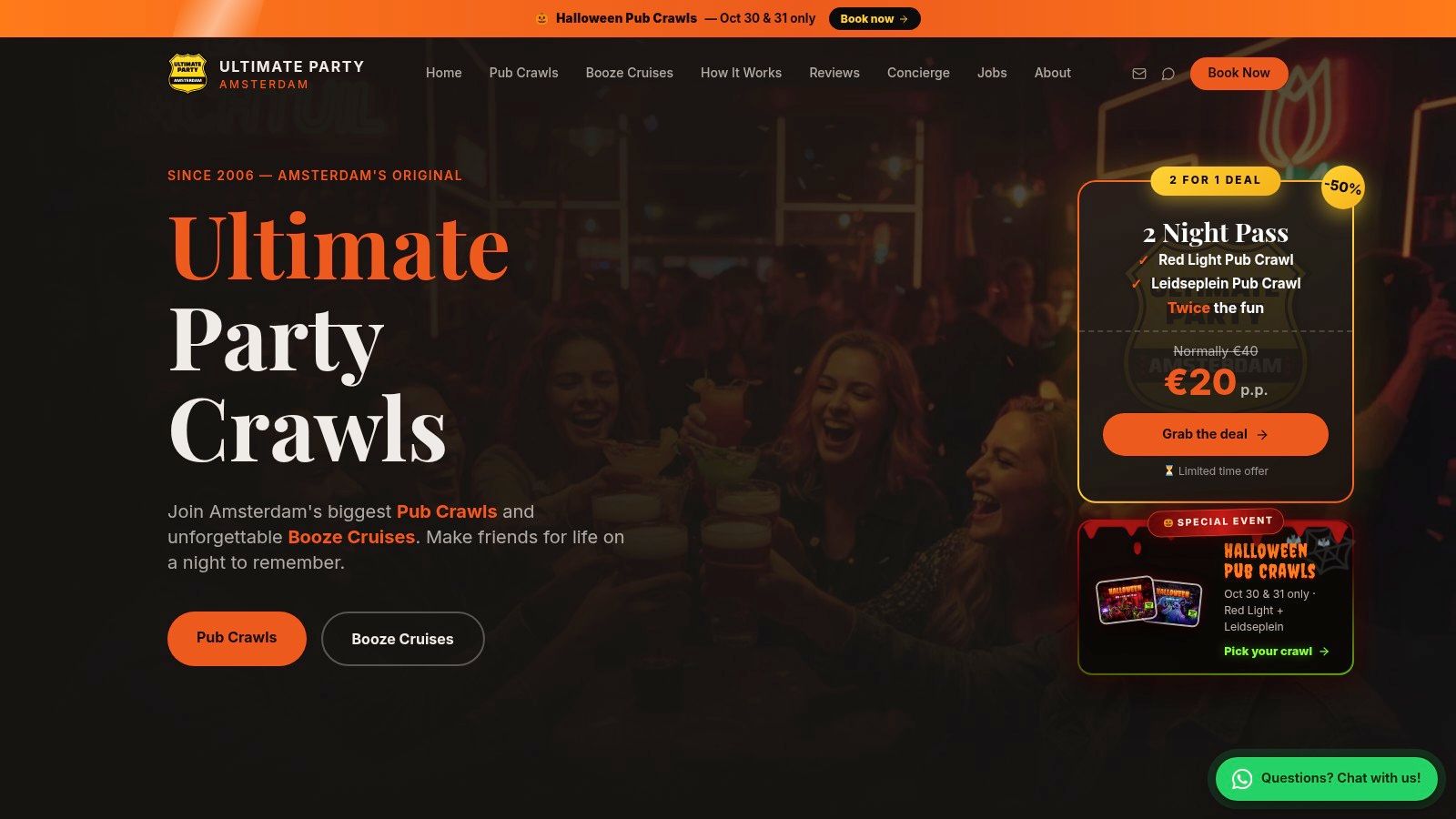
Ultimate Party Amsterdam offers a Shared Booze Cruise, described as a one-hour canal experience on a shared electric boat with unlimited beer, wine, and soft drinks. Its Private Booze Cruise is a 60-minute private canal charter on a luxury electric boat with an open Dutch bar. These formats make the choice clear: share the boat with other passengers or keep it private.
Compare the full experience before booking
The draw of a turnkey option is less about adding luxury and more about reducing separate jobs. With a self-drive rental, the organiser may need to manage the driver, work out what drinks can be brought aboard, arrange supplies, and coordinate the group's arrival. A hosted cruise shifts navigation to the skipper and gives the group a defined boat experience with a stated drink offer.
Electric propulsion also suits a social cruise: lower engine noise helps conversation, especially in the narrow historic waterways. It doesn't guarantee a particular music setup, route, glassware, ice, or boarding location. Those details should be confirmed with the operator, not inferred from the words “booze cruise” or “open bar.”
A private booking can be a better fit for a birthday or group celebration that needs the boat to itself. The Private Booze Cruise is the relevant option to examine if privacy and a private setting are priorities. Check the booking details for what “open Dutch bar” means in practice, including drink selection and service arrangements.
The alternative is to book a self-drive boat and organise drinks and the rest of the evening separately. That can work for a group that wants control and is happy with the responsibilities, but it creates more coordination and doesn't automatically save money. Compare the total experience, not just the boat-hire line: who steers, what's served, where to meet, and how the cruise fits around the rest of the night.
Common Booking Mistakes and How to Avoid Them
The canal shouldn't be asked to replace the whole night. A cruise works better as a shared centrepiece, followed or preceded by dinner, bars, or other plans on land. Groups that expect a boat to function as a floating pub crawl often end up with a vague schedule and no realistic plan for getting to the next stop.
A few avoidable mistakes cause most of the friction:
- Underestimating walking time: Check the boarding point against the hotel, restaurant, or next venue, and leave room to arrive together.
- Choosing self-drive without a sober skipper: Name the responsible driver before booking. If nobody wants that role, choose a hosted format.
- Ignoring capacity rules: Confirm the licensed vessel and passenger arrangement before paying, especially for a large celebration group.
- Booking an open boat without checking shelter: Ask what protection the vessel offers and read the weather terms before committing.
- Building the whole evening around a long cruise: Treat the boat as one defined activity, then plan the rest of the night on land.
The person organising a group shouldn't have to guess how the pieces fit. Ultimate Party Amsterdam's nightlife concierge service can coordinate private arrangements, but groups should confirm the specific scope of any request before relying on it. For a straightforward booking, the checklist is shorter: count the passengers, pick the format, verify the inclusions, check access and weather terms, and confirm the meeting point.
Putting It Together for Your Group
Choose the format by group size, the vessel by weather and accessibility needs, and the booking by how much logistics the organiser wants to carry. A self-drive boat gives the group responsibility as well as freedom; a hosted cruise removes the steering job, while a private charter gives the group its own space.
For celebration planning, the guide to organising an Amsterdam bachelorette party can help fit a canal experience into the wider itinerary. Ultimate Party Amsterdam's shared and private booze cruises give planners two hosted formats to consider. Treat the canals as part of the night, not a separate excursion that has to compete with it.
If the group is weighing a shared cruise against a private charter, compare the drink service, boat format, and practical details before choosing. Visit Ultimate Party Amsterdam to explore its canal booze cruises and plan a water-based part of the night that fits your group.
🍻
Experience it Yourself
Skip the planning — join Amsterdam's biggest pub crawl and get 6 bars, free drinks and VIP club entry for €20.