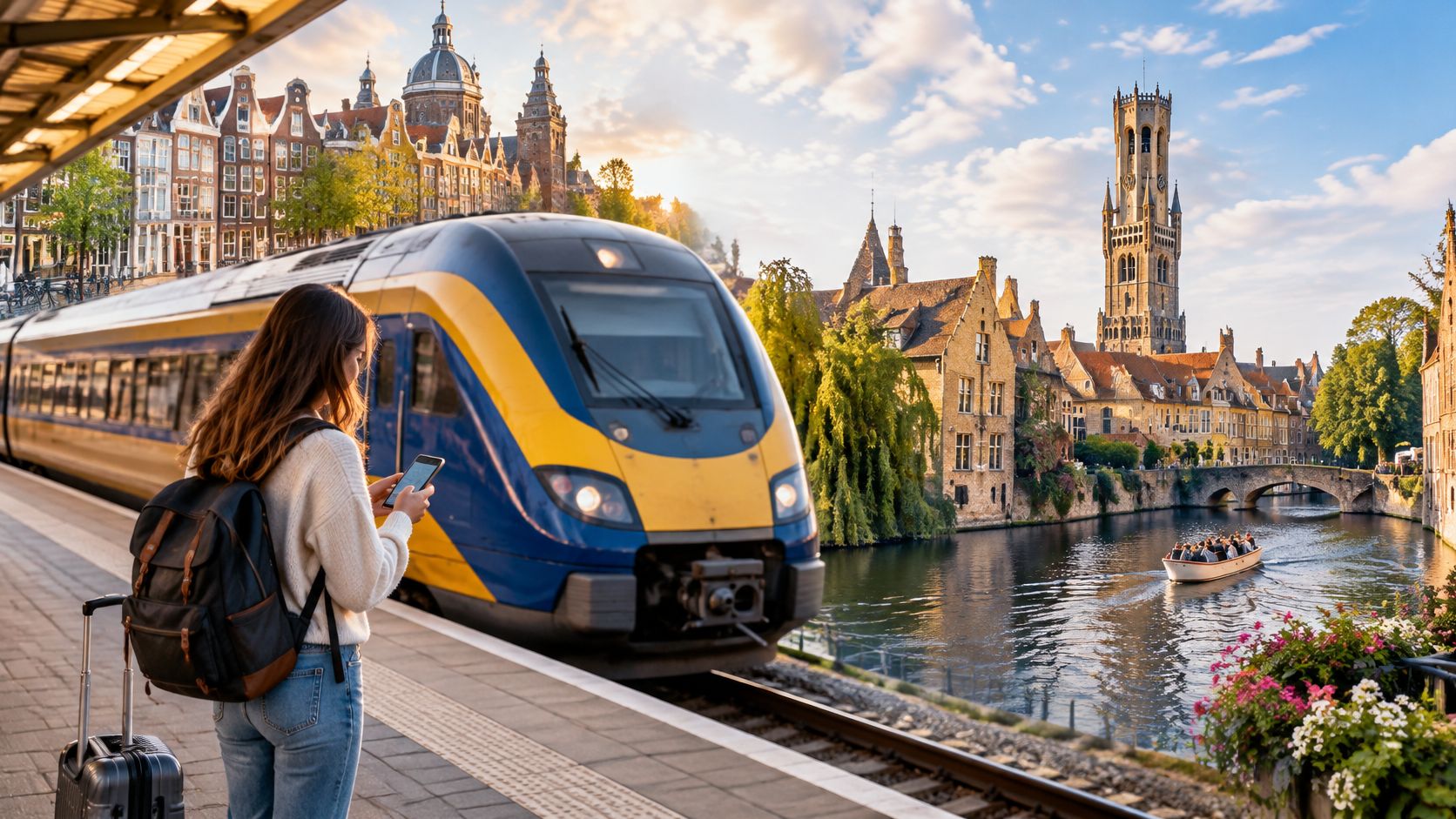
The group chat has settled on Bruges: canals, medieval streets and lunch somewhere that feels different from Amsterdam. Then someone suggests booking a night out back in the city, and nobody has checked the return train.
That's where day trips from Amsterdam to Bruges become complicated. The visit is achievable, but it needs to be treated as a full travel day, not a short sightseeing break with a guaranteed Amsterdam evening attached. The strongest plan starts with the journey home, then fits Bruges around it.
Table of Contents
- Choose Your Transport and Plan Around Real Journey Times
- Build a Time Budget for One Day in Bruges
- Book Tickets and Protect Your Return Train
- Getting Around Bruges on Foot
- Must-See Highlights and How to Beat the Crowds
- Sample Day Plans for One Day in Bruges
- When the Day Goes Wrong and How to Confirm the Return
Choose Your Transport and Plan Around Real Journey Times
Train is the sensible default for a group that wants a manageable independent day. On its reverse-direction Bruges–Amsterdam route page, NS International lists a shortest journey of 2 hours 58 minutes, with two changes, and tickets from €39 one way; the Amsterdam outbound itinerary and fare still need checking against your own travel date.
That figure is station-to-station. The clock starts at your Amsterdam accommodation and stops again at a Bruges café: reaching the right departure station, finding the platform and walking into the old town all draw from the same day that also owes you a return train and, for most groups, an Amsterdam evening.
Transport options compared for one day
| Option | One-way time | Changes | Cost and booking notes |
|---|---|---|---|
| Train via Brussels | 2 h 58 min on the fastest listed itinerary; slower services exist | 2 on that listed itinerary | From EUR 39 one way on the reverse-direction NS International route page |
| Coach to Bruges | Longer than the 2 h 58 rail benchmark once stops and traffic are counted | Direct departures exist; otherwise check the advertised connection | Bargeplein is a coach drop-off near the historic centre; confirm the actual booked stop |
| Car | Motorway time understates the trip; add parking and the walk into the centre | No passenger transfers | Parking sits on the edge of the centre; agree the cost before driving in |
Amsterdam Centraal is not guaranteed just because it is familiar. The departure station printed on the selected ticket controls the morning, and a group gathered on the wrong side of the city burns sightseeing time before Bruges is even reached. The same applies to coaches: the exact boarding point in Amsterdam matters more than the city name in a search result.
A coach earns its place when the fare saving outweighs the lost sightseeing hours. Direct departures remove change-platform risk, but the trade is a longer sit and stricter timing, because there is no next service five minutes later. Not every coach arrives at Bargeplein, and the booked stop decides the walk into town.
Driving suits a group willing to split fuel and parking costs. On top of motorway time, the driver still has to park on the edge of the centre, walk in, and stay fit to drive home. One Bruges beer stop narrows that driver's options, and the whole group rides home on the same decision.
For cross-border mobile access, travellers whose existing plan does not cover Belgium can compare prepaid eSIMs for Belgium through Simsima before departure. Working data earns its place for platform changes and return-train updates more than for posting canal photos.
Decision rule: Train for fewer logistical decisions, coach when the budget takes priority, and car when the group has agreed who drives, where it parks and who stays sober for the run home.
Pick the transport first; the return train is the fixed point the rest of the day bends around.
Build a Time Budget for One Day in Bruges
Transport swallows the biggest block of the day before a single canal gets seen. The practical planning model behind NS International's Amsterdam–Bruges route allows approximately six hours of rail travel, then stretches to a 15–16-hour day once station access, sightseeing and recovery time are counted.
Treat every figure below as a planning allowance; a ticketed itinerary with longer transfers needs a larger budget.
- Reach the departure station early. Platform checks and boarding take time at Amsterdam Centraal, and a group assembling late can lose the whole day at the first hurdle.
- Give the outbound what the timetable demands. A route that looks simple can still involve a transfer, and the booked service sets the real duration.
- Count Bruges time honestly. Scheduled hours in the city shrink once walking between sights, lunch and practical stops come out of them.
- Set the station-bound walking alarm first. The trigger depends on where the group actually is when it goes off, and the walk has to finish early enough to leave a real buffer.
- Protect the return above everything. The journey home plus its station margin keeps the Amsterdam evening intact, whether the plan is a dinner reservation or a night out.
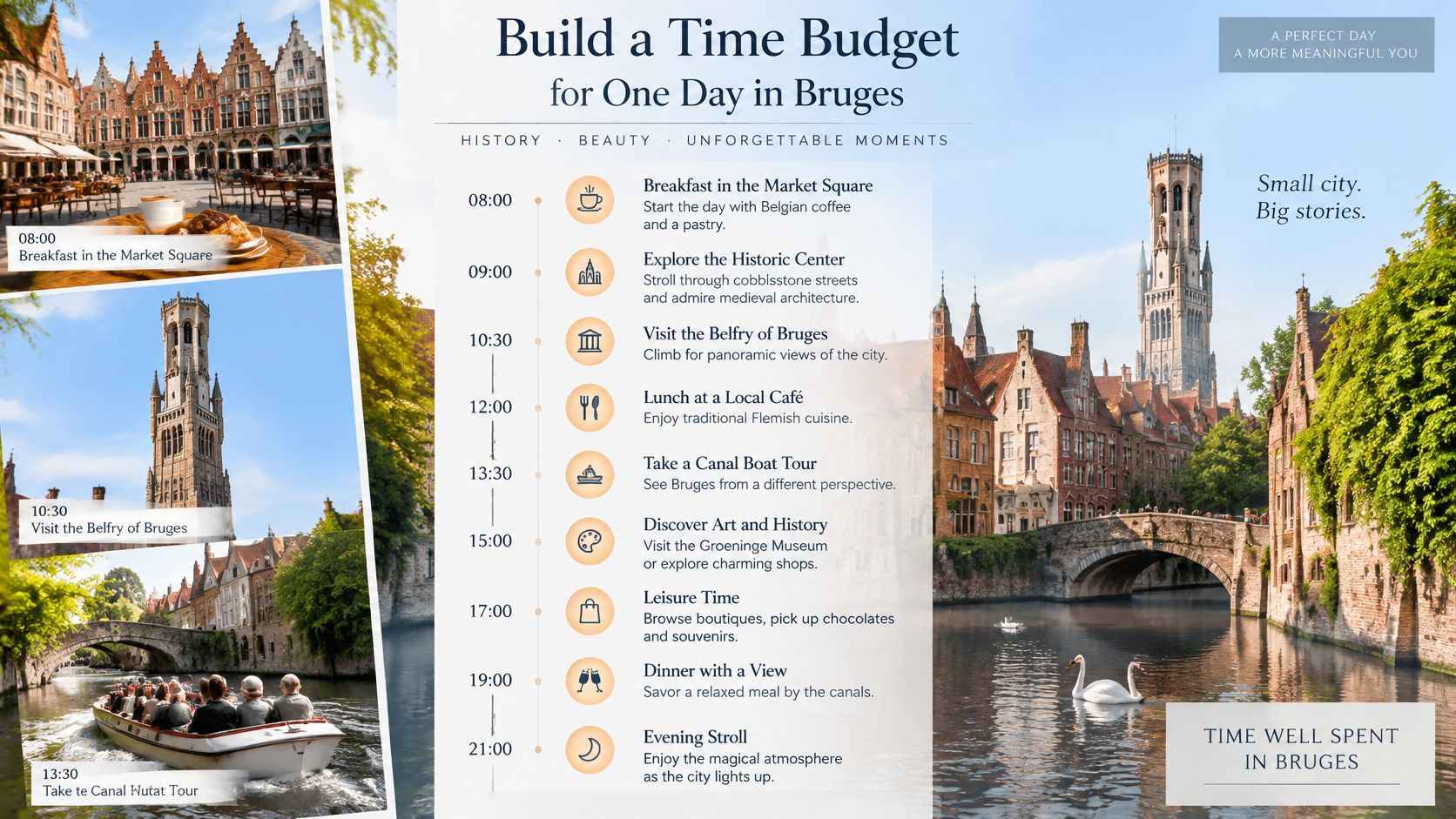
Time blocks for a same-day Amsterdam to Bruges trip
| Time block | Duration | What it protects |
|---|---|---|
| Arrive at Amsterdam Centraal | 20 to 30 min before departure | Boarding and platform check |
| Outbound journey | 3 h 15 min | Train time plus transfers |
| Walk from Brugge station to Market Square | About 20 min | Orientation on arrival |
| Sightseeing in Bruges | 6 to 7 h scheduled, with 5 to 6 h usable | Chosen highlights |
| Walk back to Brugge station | Start 30 to 40 min before the train; earlier when the group is far out | Return connection |
| Return buffer at station | 20 to 30 min | Navigation and boarding |
| Return journey | At least 3 h 15 min | Arrival time in Amsterdam |
The return walk and the station buffer are two separate blocks. A group still near the Markt needs the walk counted and the waiting time counted, so the platform is reached with margin left instead of at departure time.
The common budgeting mistake is counting Bruges time from arrival without working backwards from the train home. Lunch, queues and station access then get treated as though they take no time. Build the day in the other direction: fix the return, set the walking alarm, then fill the middle with whatever fits.
A late outbound arrival eats optional sightseeing first; the departure margin stays fixed. The chosen return should also leave one workable later service, checked against the timetable on the travel date.
Book Tickets and Protect Your Return Train
Check the exact route, date and train before paying. A ticket's flexibility must be read from its conditions, not inferred from the fact that another service runs along the same route. The return deserves particular attention because a missed international connection can affect the whole evening.
Buying through the operator's website or app gives the organiser time to examine conditions before reaching the station. A low outbound fare isn't useful if the only acceptable journey home makes the day impractical.
Connection checks before payment
- Build both directions together. Examine the complete day before purchasing either leg.
- Leave recovery space at major transfers. Where practical, use a planning allowance of 30–45 minutes rather than selecting the tightest connection.
- Read the missed-connection conditions. Check whether a later service requires assistance, a changed reservation or another ticket.
- Recheck on the travel date. Saved booking details don't replace current departure and disruption information.
For broader preparation, including documents and phone readiness, Translate AI's international travel guide is a useful companion to the rail-specific checks.
Group tickets need a shared plan
The organiser should collect passenger details and booking references centrally, then distribute individual tickets where required. Every traveller should have access to the itinerary rather than relying on the organiser's battery lasting all day.
- Share the contingency instructions. Everyone needs to know what happens if the group separates during a transfer.
- Agree a hard turnaround. The departure from central Bruges shouldn't become a group negotiation.
- Save screenshots. Keep journey details accessible offline, while checking live information for platform changes.
Before leaving the hotel, the group should have ID, phone tickets, the travel-date return timetable and a downloaded Bruges map ready. Neither an attractive outbound departure nor confidence about the connections substitutes for those basics.
Getting Around Bruges on Foot
Arrive at Brugge station, not Brugge Sint-Pieters, as advised by Visit Bruges' mobility guide, which places Market Square approximately 20 minutes on foot from the station or Bargeplein and the Beguinage about 5 minutes away. The tourism authority describes the historic centre as compact and recommends walking.
Those are access benchmarks. They don't include stopping for photographs, waiting for friends or exploring the places along the way.
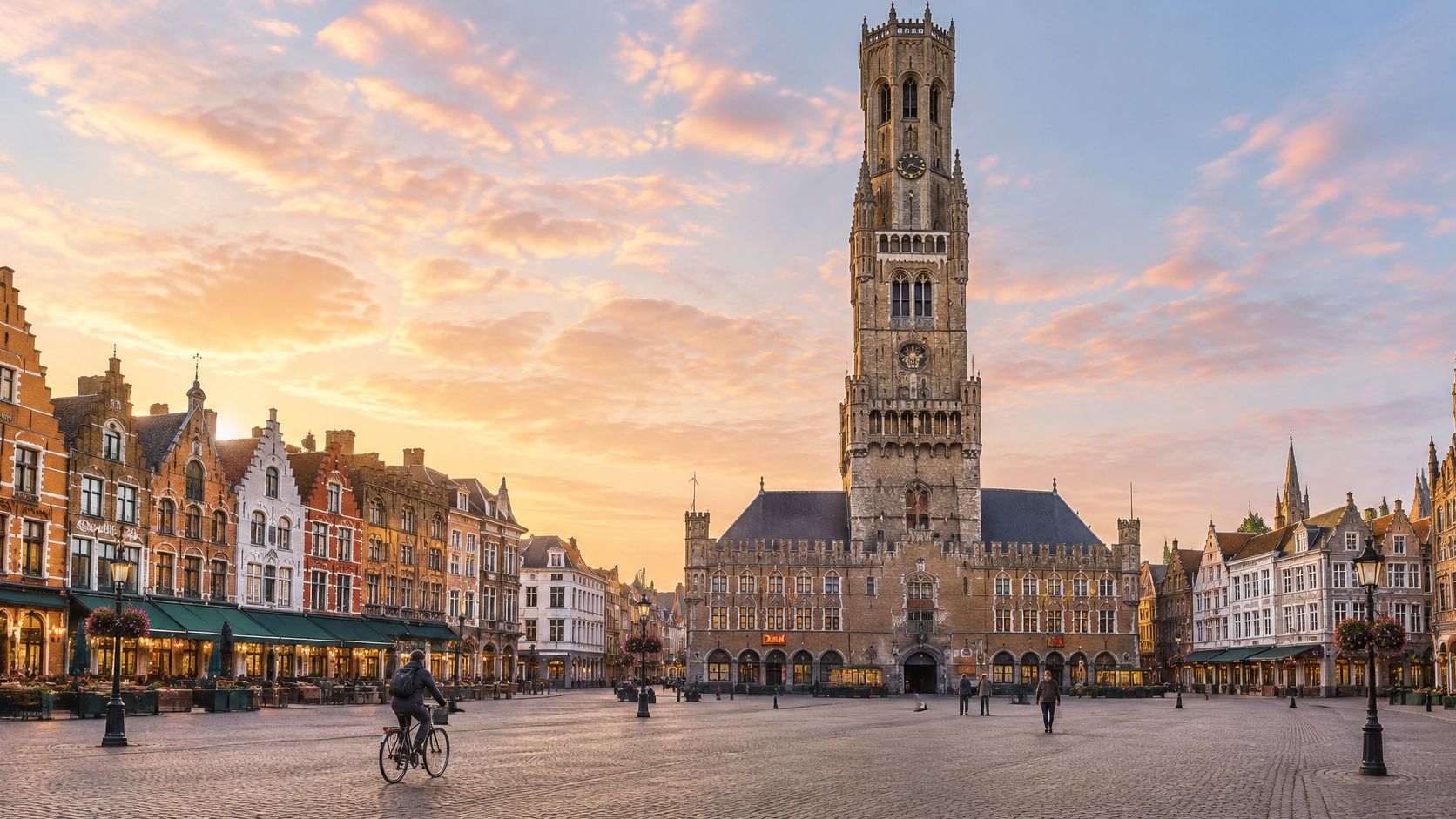
A walking route that avoids unnecessary backtracking
- Orient at the station tourist office. Confirm the route and identify the return entrance before leaving.
- Walk through the Beguinage towards the central heritage area. This makes the approach part of the visit rather than a separate transfer.
- Continue towards the Markt and Burg, then the canal banks. Fit a preselected museum or activity into that route instead of crossing the centre repeatedly.
Comfortable shoes matter on cobblestones, especially for a group whose pace will be set by its slowest walker. A walking itinerary shouldn't assume everyone moves at the organiser's speed.
For groups, a lead-and-sweep arrangement works better than repeatedly stopping to count people. A designated person leads while another stays at the back; both know the meeting point near the Markt.
A meeting point needs a recognisable landmark and an agreed departure time, not simply “somewhere in the square”.
The return walk is transport time, not spare sightseeing time. Distant attractions only belong in the plan when the group can reach them without consuming the margin needed to catch the train.
Must-See Highlights and How to Beat the Crowds
Bruges isn't an undiscovered escape: the City of Bruges and Visit Bruges visitor figures record approximately 8 million day and overnight tourists in the historic centre in 2024. Timing and route choices matter more than building the longest attraction list.
The city's heritage tourism account notes that almost half of day trippers stayed between one and three hours, and that the Beguinage gained UNESCO World Heritage status in 1998. A longer visit offers room to move beyond the compressed square-photo-chocolate routine.
Core Bruges highlights by time needed and best window
The non-operating durations below are suggested itinerary allocations, not official visit lengths.
| Highlight | Time needed | Best window | Notes |
|---|---|---|---|
| Market Square and Belfry | Square visit first; allow a separate slot for a climb | Early morning or late afternoon | Check opening hours and admission availability |
| Beguinage | Suggested allocation of 20 to 30 min | Early morning | UNESCO World Heritage since 1998; respect the quiet courtyard |
| Canal boat trip | About 30 min, no stops | Mid-morning or late afternoon | Five city-centre landing stages |
| Burg square | Suggested allocation of 30 to 45 min | Between booked activities, away from the busiest midday flow | Check current opening times before entering attractions |
| One museum or chocolate stop | Suggested allocation of 45 to 60 min | A prebooked slot or a weather-driven break | Choose one only to protect the buffer |
For the boat, Visit Bruges' official canal-trip information specifies a half-hour journey without stops, departing from five city-centre landing stages, along a route between the Jan van Eyckplein area and the Beguinage. Boarding queues still need room in the schedule.
Choose timing over attraction collecting
Early or later visits can help avoid the most concentrated midday flow, but an Amsterdam departure won't always deliver an early Bruges arrival. The practical response is to adjust the walking order, not rush across the city to recover an imagined perfect itinerary.
Prebooking makes sense for genuinely time-critical admission. Booking every available activity removes the flexibility needed when transport slips or the group wants lunch.
- Leave the central photo circuit. A nearby quieter street can provide a better break than another crowded viewpoint.
- Keep indoor choices selective. A museum and several shopping stops can consume the afternoon without leaving time to enjoy the canals.
- Respect residential space. Doorways and narrow passages aren't places for a group to assemble.
An efficient checklist can produce good photographs without much engagement with Bruges. A canalside walk or unhurried café stop often makes the day feel more complete than squeezing in another admission.
Sample Day Plans for One Day in Bruges
A Bruges day is judged at Brugge station on the way back, so pick the plan by what the group must protect before the station-bound walk: sight order, morning light, or cohesion.
Standard sightseeing day
This suits visitors who want architecture, canals and a proper lunch without turning the afternoon into a checklist. From station orientation, walk through the Beguinage towards Market Square and the Burg, fit the roughly 30-minute boat around real boarding queues, then choose one indoor stop rather than several. Keep lunch on a quieter street so the group returns to the centre fed, not fragmented.
Early-start photo day
Book the first practical outbound train and accept that empty streets are not guaranteed. Put the Beguinage and Markt first while energy and patience are highest. If the light disappoints or the centre fills earlier than expected, keep the boat for later only when boarding and the return timetable still fit comfortably.
A later Bruges arrival means fewer chosen extras, not a later improvised departure.
Group day
A group day holds together through fixed points: a shared lunch, a named meeting place near the Markt and a station-bound departure agreed before anyone goes shopping. Splitting briefly works only when everyone knows where to reunite and when browsing ends. For travellers weighing Bruges against an Amsterdam-focused day and evening, this day-to-night Amsterdam itinerary shows the alternative shape. Combining both cities should not promise the same evening schedule as a day spent entirely in Amsterdam.
Choose the plan by return pressure
| Plan | First Bruges move | Fixed point before the station walk |
|---|---|---|
| Standard sightseeing | Beguinage to Markt and Burg on foot | One indoor stop and an unhurried lunch |
| Early-start photo | Core sights before the strongest midday flow | Boat only if boarding still fits |
| Group day | Shared lunch, then fixed Markt meeting point | Agreed station-bound departure |
Clock times come from the booked trains. The persona changes what gets protected; the return buffer stays protected in every version.
When the Day Goes Wrong and How to Confirm the Return
The most expensive planning mistake can happen before departure: booking a fixed Amsterdam evening around an unconfirmed journey home. A non-refundable activity adds pressure without making the train arrive sooner.
The Amsterdam evening should remain optional until the transport plan is workable. Even then, expected arrival at the station isn't the same as being ready at a nightlife meeting point after food, a hotel stop and local travel.
Cut activities in a useful order
- Late outbound train: Remove the museum or optional shopping stop before shortening lunch into something nobody enjoys.
- Behind schedule in Bruges: Skip the Belfry climb. Keep the boat only when boarding and completion fit comfortably before the station-bound departure.
- Return margin under pressure: Stop sightseeing. The buffer isn't an attraction slot waiting to be used.
- Cancelled or delayed connection: Check the next available rail or coach option before walking elsewhere. Confirm where it leaves and whether the existing ticket covers it.
A fallback should be identified while alternatives still exist. Relying on a single final service leaves little room for disruption, ticket restrictions or a slow group departure.
Evening booking test: The plan should still make sense if the group reaches Amsterdam later than expected and needs food before going out.
Confirm before leaving central Bruges
The organiser should check the full return itinerary, note the last feasible connection and set the walking alarm from the group's current location. Any changed platform, connection or boarding point needs to reach everyone, not just the person holding the booking.
Solo visitors also need to distinguish between a sociable evening and a rigid evening commitment. This guide to meeting people while exploring Amsterdam solo can help shape plans without treating a cross-border return as guaranteed.
A relaxed Bruges visit may suit an overnight stay better. For a same-day trip, the rule is straightforward: plan around the return, not the sights.
Ultimate Party Amsterdam offers hosted pub crawls and canal booze cruises for visitors looking to meet people or keep a group's evening organised. Once the Bruges return is confirmed, visit Ultimate Party Amsterdam to check current experiences and choose a plan with enough time after arrival, or save the night out for a day without cross-border travel.
🍻
Experience it Yourself
Skip the planning — join Amsterdam's biggest pub crawl and get 6 bars, free drinks and VIP club entry for €20.