Amsterdam committed €1 million for 2023–2026 to an agenda of 15 measures supporting night culture, according to the city's night-vision policy. That's a useful starting point for understanding nightlife in Europe: a good night depends on how a city manages its venues, streets and visitors, not just how late the music stops.
For international visitors, the practical question isn't which city parties hardest. It's which district, format and return journey fit the group. A louder city doesn't automatically deliver a better night, especially when half the evening disappears into queues, cross-town walks and negotiations about where to go next.
Table of Contents
- Nightlife Shapes Across Europe
- Plan Each Night Inside One District
- Street Rules That Spoil a Good Night
- Sound Safety and the Ride Home
- Which Nightlife Format Fits Your Group
- Seasonal Peaks From North to South
- Choose a Hosted Amsterdam Night
Nightlife Shapes Across Europe
EU tourist accommodation recorded 3.14 billion nights in 2025, while European travellers accounted for five out of six nights spent by international guests, according to Eurostat's accommodation statistics. Those figures describe tourism, not nightlife attendance, but they establish the scale of cross-border travel behind European city breaks.
Living on the same continent doesn't mean understanding the same street rules or evening rhythm. Visitors who feel comfortable carrying a drink outside at home can arrive with the wrong assumptions elsewhere. A familiar-looking bar district can operate under unfamiliar restrictions.
European Night Shapes by Setting
The settings below are planning patterns, not regional opening-hour guarantees. Actual event calendars, municipal rules and booking conditions still decide what works on a particular trip.
| Setting | Night shape | Peak season | Main constraint | Format that fits |
|---|---|---|---|---|
| Amsterdam and the Low Countries | District bars, clubs and canal boats | Year-round, with spring festival peaks | Local public-drinking restrictions and boat-noise rules, especially relevant in Amsterdam | Hosted crawl within a district, or a licensed boat departure |
| Berlin-style club cities | Long sets after a selective door | Thursday to Sunday as a planning window | Queues, door policy and very late finishes | A single club night with a planned exit |
| Southern capitals | Late dinner, then clubs | Summer, with late-starting club nights | Heat and a late start that clashes with early flights | Clubbing after dinner, rather than an early crawl |
| Britain and Ireland | Pubs, then a club | Weekends and student terms | Earlier last orders in some venues and limited late transport | Short pub route with a booked ride home |
| Mediterranean party coasts | Beach clubs and boat days | June to September as a summer planning window | Seasonal closures and crowds | Daytime boat or beach club, rather than a winter club list |
Madrid, Barcelona and Lisbon can suit a dinner-led evening better than a schedule built around early bar-hopping. Berlin-style club travel calls for patience at the door and a willingness to commit to a room. Neither format suits a group whose main priority is meeting people quickly before an early departure.
Planning principle: Choose the shape of the night before choosing the famous venue.
A short stay benefits from a format with a clear beginning and end. A longer trip leaves room for a specialist music night, an unsuccessful queue or a quieter evening between events. Larger groups also need more agreement in advance, because every spontaneous change requires more people to move.
The useful definition of nightlife in Europe is therefore a cluster of licensed venues, transport connections and local enforcement. The first decision is which setting matches the trip's duration and the people travelling, rather than which destination has the strongest reputation.
Plan Each Night Inside One District
Every night out runs on handovers. Door staff admit the group, bartenders serve it, hosts or friends move it onwards, and transport takes everyone home. When one handover fails, the group ends up standing outside debating the next move while the evening drains away.
The URBACT Paris night-time economy report describes nightlife as an interconnected system supporting hospitality, tourism, transport, security and other services. For visitors, the practical implication is straightforward: a compact route is usually more useful than a collection of attractive venues scattered across a city.
A District-First Route
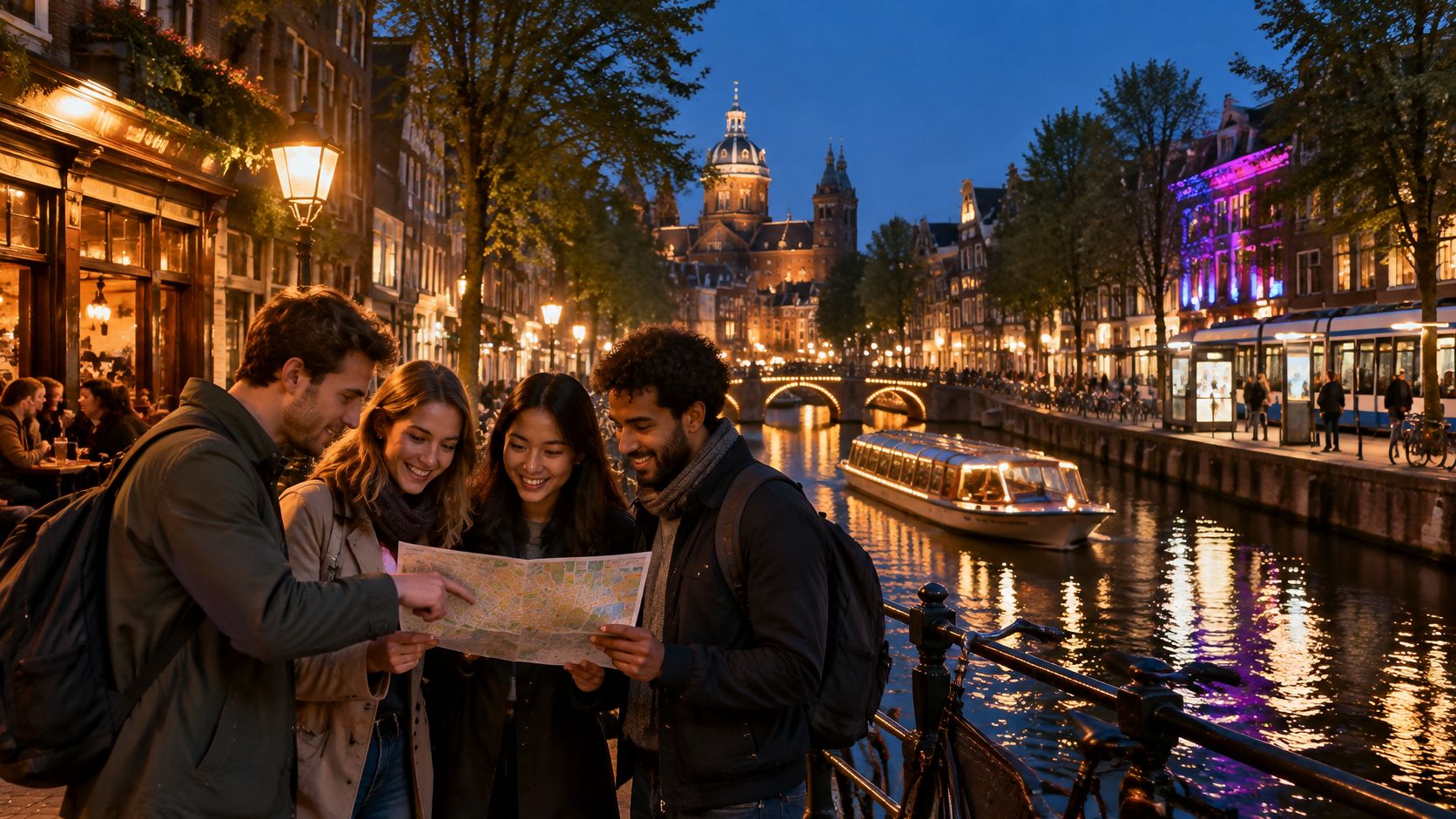
Amsterdam's Red Light District and Leidseplein are separate nightlife clusters, each with its own streets, crowds and rhythm. The Amsterdam nightlife areas guide helps visitors compare their geography before selecting a route.
A cross-city move after midnight introduces more than walking time. Someone needs a toilet, someone stops for food, and someone assumes the next venue will admit the entire group immediately. A route that looked efficient on a map can become an evening spent catching up.
- Choose the district around the group. Music preferences matter, but so do walking tolerance, accommodation location and the earliest person's preferred finish.
- Keep the venue shortlist compact. Select an agreed meeting point that's easy to identify without blocking a doorway or cycle route.
- Match the final stop to the departure. Confirm whether the actual journey uses night transport, a taxi or a prearranged vehicle before the evening starts.
When Hopping Stops Helping
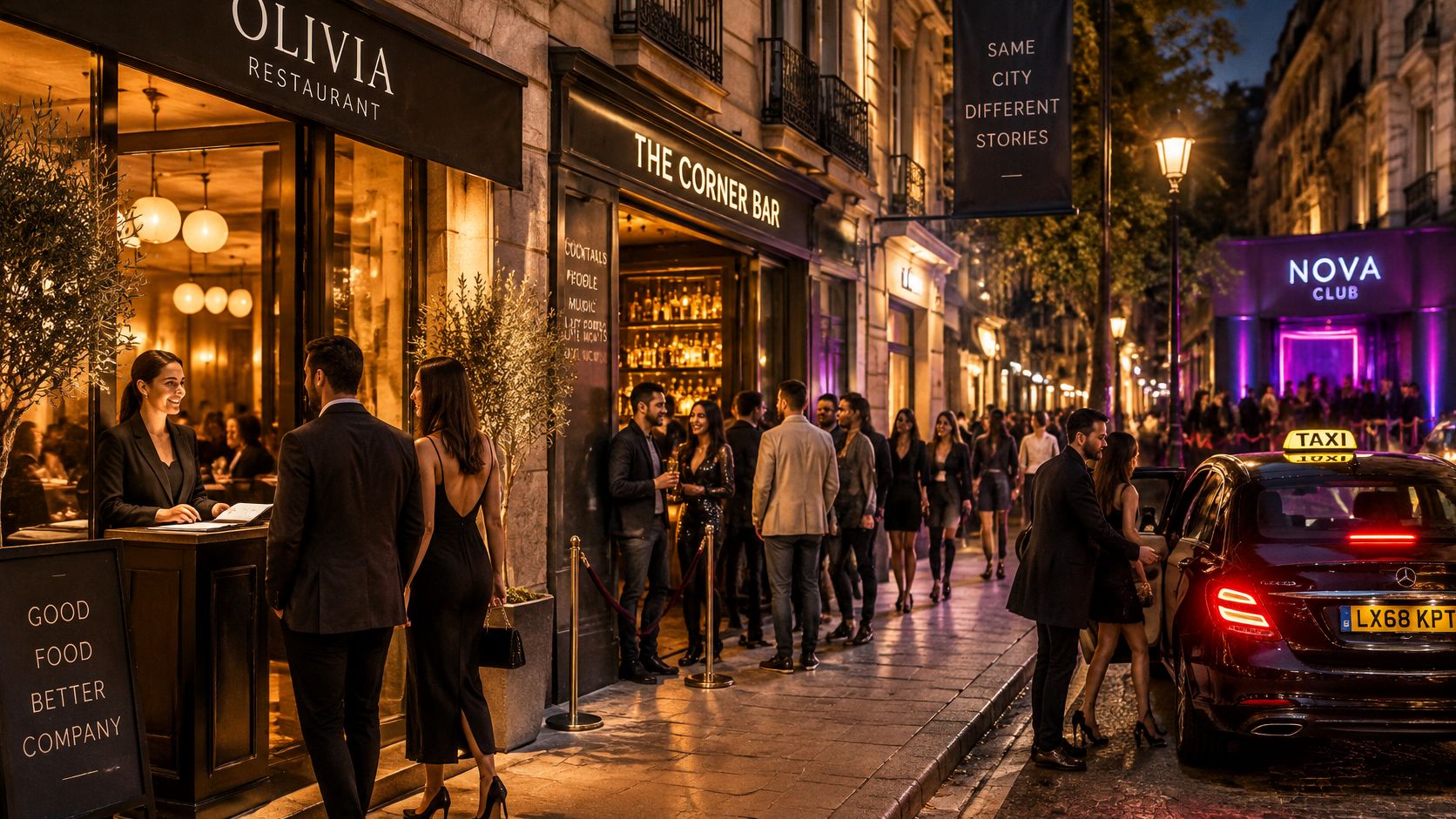
Between two of Amsterdam's main districts, a group loses people in ways a map never shows: a stop for chips, a phone check, a friend who walked ahead and assumed everyone followed. An early cocktail near the accommodation followed by a specialist club across town can still work, provided it runs as a deliberate transfer with an agreed departure rather than an improvised chain of intermediate bars.
The mistake is treating every change of neighbourhood as an extra attraction. Each transfer creates another opportunity for separation, missed messages and a delayed arrival. In cities where clubs and accommodation sit far apart, committing to the destination saves more effort than searching for a cheaper drink elsewhere.
A modest shortlist inside one workable area gives a group more usable evening than an ambitious itinerary nobody wants to complete. The longer the route, the more likely somebody is still looking for the rest of the group when the last venue closes.
Street Rules That Spoil a Good Night
A licence ends at the door. Across Amsterdam's city centre, a drink bought legally inside becomes an offence the moment it reaches the square, bridge or canal edge outside, and patrols enforce that line nightly.
Amsterdam's visitor guidance prohibits drinking alcohol and smoking cannabis in public areas, sets nuisance fines of €100 to €650, and warns that resistance, violence or extreme misconduct can lead to arrest, a criminal record or imprisonment. "Everyone else was doing it" is not a defence the fine accepts.
The Street Isn't Another Bar
A group stops on a canal bridge with cans from a shop, figuring the savings will stretch the night further. The arithmetic fails twice: the spot itself is prohibited, and the group still needs a licensed destination afterwards. Two fewer drinks inside permitted venues cost less than one fine.
Noise needs the same attention between stops. Guests leaving a loud room often keep talking at nightclub volume without noticing that the next stretch of pavement runs past bedroom windows. A residential canal needs quiet after dark, so the conversation waits for the next venue.
A well-run night leaves the pavement available for people who aren't part of the party.
Cities across Europe now treat street behaviour as part of nightlife management rather than isolated complaints. URBACT's account of digital night-time solutions describes cities prioritising safety, mobility, noise management, resident awareness and incident reporting.
Behaviour That Travels Well
- Finish drinks inside. The next stop should be reached without carrying open containers through restricted public space.
- Keep entrances clear. Groups waiting for a friend should move away from the working doorway and leave room for pedestrians.
- Follow the queue. A group booking or friendly conversation with staff doesn't justify pushing past other guests.
- Lower voices during transfers. The conversation can continue without turning the entire walk into part of the entertainment.
- Resolve refusals calmly. A rejected entry is a reason to use the backup plan, not start a confrontation.
Hosted routes reduce hesitation about where to go, and a host's regrouping calls keep a group moving on time. Local rules still apply to every guest on the route, so follow instructions about when and where to move.
Visitors unfamiliar with the city do well to read the Amsterdam safety guide before going out. Immediately before a transfer, the check is simple: a licensed destination, a planned walking route and no open drinks outside.
Sound Safety and the Ride Home
In a 2025 study of nightclub-goer listening behaviour, 73.4% of 749 respondents reported permanent ear symptoms, and researchers concluded that the average patron likely exceeds a safe cumulative noise dose even in venues following a 100 dB LAeq,15min benchmark. That finding makes sound exposure a planning issue, not just a question of musical taste.
Moving from a loud bar into a loud club doesn't reset exposure. A multi-venue evening can feel varied while the ears receive very little recovery time. Comfortable volume and manageable duration deserve as much attention as the final DJ.

Treat Volume as Exposure
Properly fitted hearing protection belongs in a night-out bag before arrival. Buying it only after discomfort starts misses the opportunity to reduce exposure earlier. Standing away from speaker stacks and taking breaks in quieter spaces are sensible additional controls.
A quieter middle stop can improve the whole evening. Friends can talk, check how everyone feels and decide whether the next venue still suits the group. A break shouldn't become pressure to catch up on drinks.
Leaving earlier is also a legitimate choice. There's no universal duration that makes every loud venue safe, and the final stop needn't be compulsory because it appeared on the original plan.
Make Leaving Straightforward
The return journey needs an actual departure point, not just the name of a transport service. In Amsterdam, a daytime tram route shouldn't be assumed to provide the same journey after a club closes. Visitors should check the service running on the intended date and allow time to reach its stop.
- Agree on a leave time. Anyone leaving sooner should be able to say so without having to justify it.
- Share location deliberately. A charged phone and an agreed regrouping place help if friends lose contact.
- Keep the departure coordinated. Avoid leaving someone alone to find an unfamiliar pickup point.
- Save the accommodation address. The full address should be available even if a phone loses its connection.
For travellers whose entry arrangements require insurance, Expat Global Medical's guide to Schengen visa insurance requirements is a useful pre-departure resource. Insurance paperwork and nightlife precautions serve different purposes, and neither replaces checking the actual policy terms.
No venue, host or booked ride removes every risk. A workable departure plan instead gives people an easy way to stop when tired, uncomfortable or ready for bed.
Earplugs, an agreed leave time and a ride that still runs make a practical core kit. The journey home should be the fixed endpoint around which the evening is built.
Which Nightlife Format Fits Your Group
The useful questions aren't just where to party. They're how much spending should be settled beforehand, how much social interaction the group wants, and who needs to function the following morning.
Affordability and mobility can determine participation before anyone chooses a venue. In a 2025 UK survey of 2,001 people aged 18–30, 61% had gone out less frequently over the previous year and 69% said better late-night transport would encourage them to stay out later, according to the International Nightlife Association's account of the NTIA findings. The same account identifies particularly strong feelings of fear, anxiety, uneasiness or being unsafe among women.
Nightlife Formats by Access and Risk
These are format comparisons, not promises about every operator's package. Inclusions, duration and access conditions must be explicit before payment.
| Format | Spending pattern | Social access | Best for | Watch-out |
|---|---|---|---|---|
| Pay-as-you-go clubbing | Cover charge plus separately purchased drinks | Low without an existing social group | Couples and locals who want a particular room | Queues, door refusal and an unclear total |
| Hosted pub crawl | Prepaid route, with drinks and entries only as specified | High potential for meeting an international group | Solo travellers, students and small friend groups | Cumulative noise across venues |
| Shared boat party | Prepaid sailing of a stated duration | Strangers sharing a deck | First-night city breaks | Noise rules, boarding logistics and a fixed finish |
| Private charter | Group buyout of the boat or experience | Closed group | Stag, hen and celebration parties | Unnecessary expense for a small party wanting flexibility |
| Earlier low-alcohol night | Food-led spending with optional drinks | Flexible | Non-drinkers and travellers with early departures | Doesn't provide the late-club atmosphere |
Predictable Doesn't Mean Cheaper
Prepayment helps when it removes repeated negotiations about admission and drinks. It isn't automatically better value, particularly for someone who won't use the stated inclusions. The meaningful comparison is the full evening cost, including transport and anything still payable separately.
A shared boat offers a contained social setting, but boarding and departure times limit flexibility. A private charter gives a celebration group more control over who attends, not permission to ignore noise restrictions.
Group organiser's test: The person coordinating the return journey should have a say before the entertainment is booked.
An alcohol-light evening should be designed positively, with food, conversation or music worth attending for their own sake. It shouldn't leave non-drinkers paying for a package whose main appeal is alcohol.
Accessibility also needs concrete questions: boarding steps, seating, toilets, walking distances and the availability of quieter space. A format fits only when the least comfortable participant can use it without being pushed beyond an agreed budget or tolerance.
Seasonal Peaks From North to South
King's Day is a useful warning: in Amsterdam the busiest nights can be outdoor crowd-management exercises before they are club nights. Cold months push value toward indoor rooms, reliable entry and a short walk back. Warm months open up decks, boats and beach clubs, but they also add weather checks, boarding times and stricter street behaviour.
Northern club cities should be planned around the actual weekday and event listing. A quiet weekday can suit conversation and a compact route, while friends expecting a major weekend programme will read the same calm as a dead night if nobody names it clearly.
Spring Crowds and Summer Water
Around King's Day and other street celebrations, allow for a different kind of evening: packed public space, harder meeting points and earlier demand for food before the night begins. Festival atmosphere does not suspend noise limits, glass rules or the need to keep the group findable.
The Amsterdam summer festivals and events guide helps match dates to an actual programme. Check accommodation and the return route against that event, because the right district at noon can be the wrong district after the headline set ends.
Farther south, beach clubs and boat outings can make a summer trip feel unlike an urban club break. A lively coastal weekend in warm weather is weak evidence that the same programme exists in winter. Current listings matter more than photographs of a packed terrace.
- For exposed activities, check shelter, boarding conditions and weather-related booking terms.
- For student-oriented areas, check term-time activity rather than assuming the same crowd all year.
- For themed evenings, check whether advance tickets or costume conditions affect admission.
- For New Year, confirm both the event arrangements and the holiday transport timetable.
A Short Stay Needs Its Own Itinerary
A Sunday arrival and Tuesday departure leave little slack. Copying a peak Saturday route creates avoidable uncertainty when the club night you built the trip around is not scheduled during the stay. Start from confirmed dates, then choose the district and format that fit those dates.
Autumn themes can add games and costumes without changing the basics of responsible behaviour. Wet weather changes the appeal of an outdoor gathering faster than an indoor-led route, although transfers between bars still require coats, grippy shoes and a regroup point. Pick the evening that is definitely running, keep an indoor fallback within the same district, and let the ride home decide how late the plan should stretch.
Choose a Hosted Amsterdam Night
For a short Amsterdam break, a hosted pub crawl suits solo travellers, students and groups of friends who want a social evening without assembling every stop independently. The structure does the work: a fixed route, a ready-made group and hosts who know which doors open on a given night. Some uncertainty always remains, so the decision should rest on what the format includes.
Ultimate Party Amsterdam has offered Pub Crawls and Booze Cruises since 2006. Each pub crawl visits 5–6 bars and clubs, while the €20 Amsterdam pub crawl offer includes 6 bars, free drinks and VIP club entry. Drink discounts at partner venues keep the rest of the evening cheaper than paying full price at every bar.
Choose the Route, Not Just the City
The Red Light District and Leidseplein crawls deliver two distinct evenings. The Red Light route moves through narrow, crowded streets with games along the way and finishes in a large club; Leidseplein trades alley density for dance bars with free drinks on the way and a VIP finish. Accommodation location and the group's preferred atmosphere should settle the choice, because combining both districts in one night means rushed transfers. A 2 Night Pass covers both crawls across two nights for any stay with at least two free evenings.
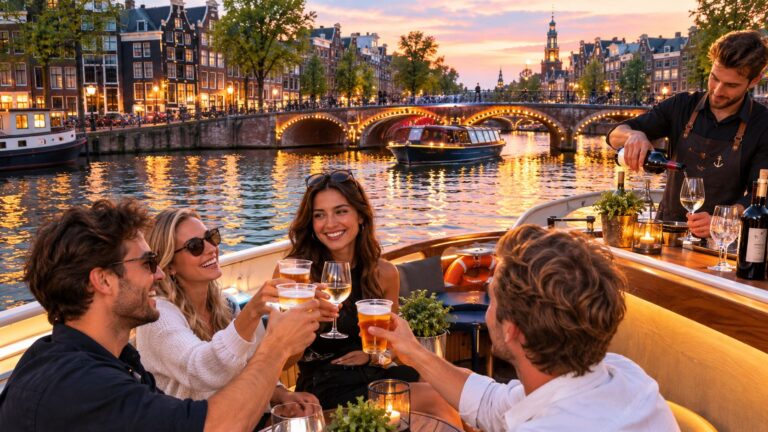
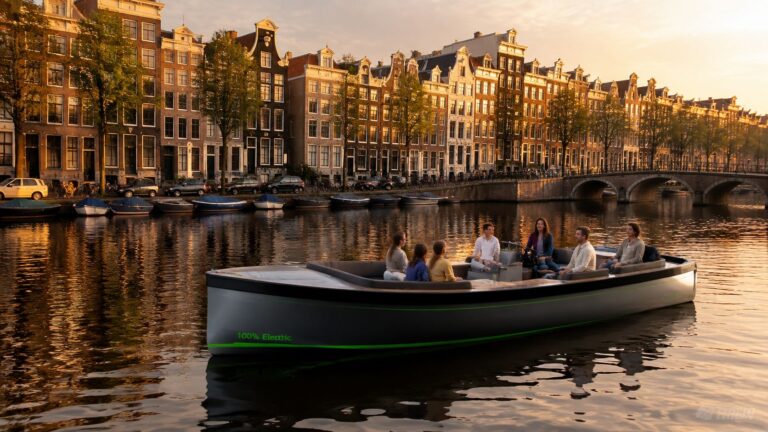
A boat-led start serves a different intention: an hour together on the water with unlimited drinks rather than a sequence of dance floors. Shared cruises mix strangers, while a private charter keeps the group to itself, so celebration groups should settle that preference before booking.
For meeting people, a hosted route gives the evening an immediate social framework, and guests regularly describe leaving with friends from several countries.
For a celebration, the group's preferred level of privacy should decide between a shared cruise and a private charter.
For an early departure, the planned finish must leave enough time for the return journey and rest.
The same pre-transfer check used on the street applies at booking, so settle the way home before paying rather than after the club finale.
Ultimate Party Amsterdam offers hosted pub crawls and canal booze cruises for visitors who want a more structured Amsterdam night. Visit Ultimate Party Amsterdam to compare the available experiences, choose the format that fits the group and confirm the booking details alongside the journey home.
🍻
Experience it Yourself
Skip the planning — join Amsterdam's biggest pub crawl and get 6 bars, free drinks and VIP club entry for €20.