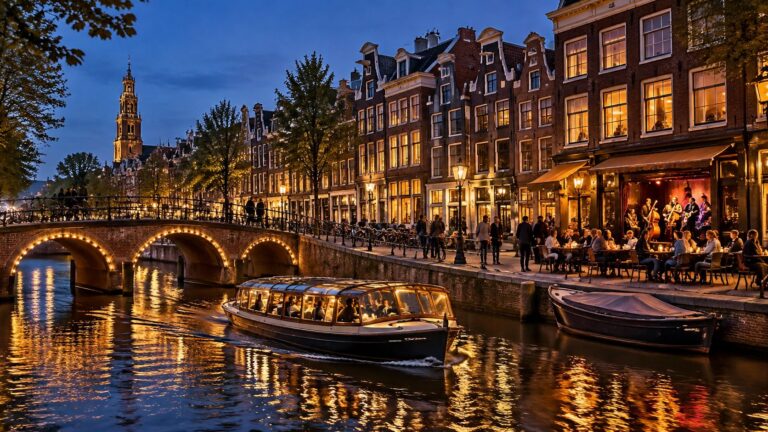
An HR lead sits with a spreadsheet of 22 colleagues flying into Amsterdam for a quarterly offsite, staring at three conflicting Slack threads. Half the team wants a lively night in the center, four engineers prefer something low-key, and finance expects a clear rationale before signing off on the invoice. Planning a corporate team building event in a city famous for nightlife comes with an obvious trap: mistaking a loud evening for a successful one.
The stakes behind that choice are bigger than one night's bar tab. In a 19-country workplace study published by the ADP Research Institute, 83% of workers reported working in teams, and 65% of those team-based workers belonged to more than one team. Employees who identified as part of a team were 2.3 times more likely to be fully engaged than colleagues who didn't, yet worldwide full engagement stood at only 15.9%. Organizations clearly recognize the gap, pushing the global team-building services market to US$1.27 billion in 2024, according to QYResearch data reported by Edgepedia.
Spending money on an Amsterdam outing doesn't automatically close that engagement gap. A sharper standard judges any team event by who participated on equal terms and what changed back at work the following week, while matching each Amsterdam format to its real booking thresholds before anyone puts down a deposit.
Table of Contents
- Corporate Team-Building Options in Amsterdam at a Glance
- Choosing Between Private Crawls, Custom Crawls and Cruises
- Plan Your Team Event and Request a Quote
- Activities That Turn Socialising into Teamwork
- Making Team Nights Inclusive for Every Colleague
- Measuring Whether the Team Event Changed Anything
Corporate Team-Building Options in Amsterdam at a Glance
The table below sets out the main formats to consider for a corporate evening in Amsterdam, alongside the booking limits that should shape the shortlist.
| Format | Best for | Length | Price basis | Group size or booking note |
|---|---|---|---|---|
| Private Red Light District Pub Crawl | Teams wanting a set evening with a party-pro host | 4-5 hours | €30 p.p. | Additional hosts for larger groups |
| Customize Your Own Crawl | Teams choosing their own venue types and timing | Typically 3-6 stops | Personal quote, no fixed price | Request is not a confirmed booking |
| Private Booze Cruise | Teams wanting a private electric boat | 60 minutes | €52 p.p. | Minimum 10 guests, open Dutch bar of unlimited beer, wine and soda |
| Shared Booze Cruise | Teams happy to share a boat with other guests | 1 hour | €33.05 p.p. | Open to solo travelers, couples and groups |
| Nightlife Concierge | Planners wanting one contact for venues, tickets and transport | Arranged on request | Arranged on request | Private bar crawls, VIP tables, event tickets, restaurant reservations and VIP travel services |
Reading Booking Limits Before Headline Prices
Planners who start with the price column often shortlist formats their team cannot book. Group size and timing narrow an Amsterdam shortlist far faster than per-person cost ever does. A nine-person product squad cannot meet the ten-guest floor for the Private Booze Cruise, while a group landing at Schiphol at 7:30 PM will struggle with an early evening kick-off if luggage is still in hand.
The practical trade-off is control versus simplicity. A Private Red Light District Pub Crawl gives a team a set evening with a party-pro host, and pub crawls include 30 minutes of unlimited free shots at kick-off, plus a free drink or shot at every stop. A Customize Your Own Crawl gives planners more say over venue types and timing, but the request is not a confirmed booking. The company party activity ideas in Amsterdam page is useful for teams comparing broader formats before choosing one route.
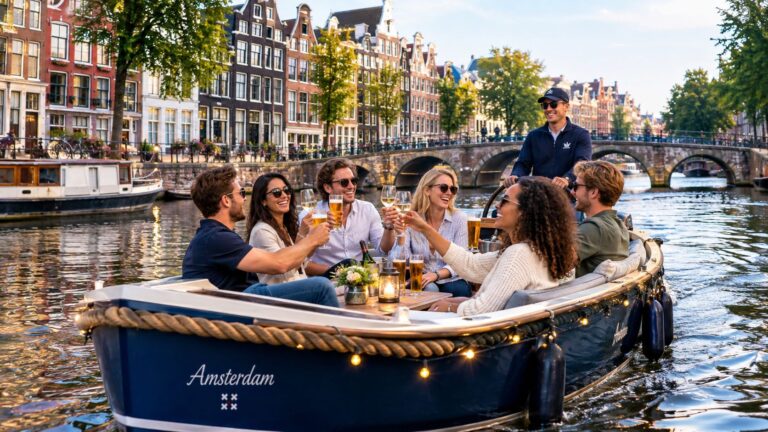
Cruises suit a different decision. The Private Booze Cruise is a fully private luxury electric boat for your own group, with an open Dutch bar of unlimited beer, wine and soda for 60 minutes. The Shared Booze Cruise includes an hour of unlimited beer or wine and is open to solo travelers, couples and groups, so it works better when headcount is uncertain.
Logistics still decide whether the evening feels organised. Teams visiting from multiple offices often want one place to collect event photos without clogging work chat channels, which is where EventUploader for corporate offsites helps planners gather candid moments from daytime workshops and evening outings in one shared space. Judge the format by who can take part and what the team can carry back into work the following week.
Choosing Between Private Crawls, Custom Crawls and Cruises

A 12-person leadership group leaving a workshop at 5:30 PM and a 25-person sales team that wants a late finish are not booking the same night. Judge the format by who is still with the group at the end, and whether that mix is the team you meant to bring. A loud room is a weak signal. The finale can look busy while half the roster has already left.
Private boat, one fixed hour. The Private Booze Cruise is a fully private luxury electric boat with an open Dutch bar of unlimited beer, wine and soda for 60 minutes. Everyone who boards shares one conversation, so you can name the attendees the next morning. That suits a leadership or engineering group that wants to hear each other before dinner. The trade-off is length. Sixty minutes will not show how the team handles venue changes or a split in energy. The charter also has a ten-guest floor, so a smaller squad should pick a format that does not need extra names to look complete.
Private crawl, a moving group. The Private Red Light District Pub Crawl runs 4 to 5 hours, with a start time the group chooses and extra hosts when headcount is large. People talk in smaller clusters between stops, then come back together. I would use it when the question is who stays with the group across the evening. The club ending is the risk. Colleagues who came for conversation often leave before the finale, so the group you see at midnight is smaller and louder than the group that started. Hosts cut down on people getting lost. They do not change that preference.
Custom route, venue control. The custom crawl lets organizers choose from 17 venue categories, including cocktail bars, real Dutch bars, comedy clubs, karaoke, rooftop bars and nightclubs, and set the clock plus the number of stops, typically three to six. The price comes back as a personal quote once the route is checked. That control matters when the roster is mixed. Real Dutch bars and cocktail lounges keep the quieter third in the room longer than a run of high-volume party bars. A karaoke stop or a club can still be the chosen peak, rather than the pace for every hour.
Two Scenarios That Show the Trade-Offs
- A 12-person leadership or engineering group: The workshop ends at 5:30 PM. They need one shared hour, low noise, and a clean handoff to dinner. The private canal cruise puts all twelve in earshot. You can list who took part. You cannot treat the hour as proof that working relationships changed. It only shows they could hold one conversation off a club soundtrack.
- A 25-person sales or cross-office team: They want movement and a late finish, while about half prefer lounges or karaoke to party bars. The private crawl, with extra hosts, keeps a large group from splitting across the street. The custom crawl fits better if the aim is keeping that quieter half through the last stop. Score the booking by the headcount still present at the end.
I would set the venue pace to the quietest third of the team. That third decides whether the outing stays a company event.
Plan Your Team Event and Request a Quote

A corporate outing should start with one practical question: who needs to take part, and what should be different afterwards? Global workplace data from Gallup's State of the Global Workplace puts the engagement issue in sharp focus: only 20% of employees worldwide were engaged at work in 2025, with an estimated global productivity loss of approximately $10 trillion. One night in Amsterdam will not fix that on its own. It can, however, give a new team, a merged department, or a visiting regional group a shared context for working better after the trip.
That distinction matters when leadership asks why the company is paying for a nightlife plan. "We had fun" is easy to say and hard to use. A clear aim, such as helping newly hired remote staff meet colleagues in person or giving quieter specialists a voice outside the office, makes the event easier to defend and easier to judge. It also shapes the booking. A group that needs conversation needs a different format from a group that wants a late finish and movement between venues.
Seven Steps from Goal to Confirmed Booking
Write one plain objective and audit drinking habits. Before choosing venues, confirm the exact headcount and find out privately how many colleagues drink alcohol. If half the room does not drink, a bar-led itinerary should not carry the entire evening on its own. Pair a calmer daytime session or canal ride with an optional late-night stop.
Lock the date and build an arrival buffer. International flights into Schiphol and train delays eat into tight schedules. Private Red Light District crawls can start between 6:00 and 9:00 PM, so leaving a 45-minute buffer after hotel check-in stops the night from opening in a sprint.
Narrow the field to two or three realistic formats. Use headcount minimums, noise levels, and transport distance from the team's hotel to cut anything that does not fit. A private boat suits a group that wants one contained space. A crawl suits a group that wants several venues and a club finish.
Build a line-by-line budget per head. Check what each base price covers so door fees or upgrades do not appear later. For example, 25 colleagues booked on the €30 private crawl come to €750 before extras, so confirm upfront whether the optional €5 per-person unlimited-shots upgrade fits the budget. Planners weighing water-based options can review private boat charter pricing in Amsterdam to see how boat upgrades like snacks or pizza affect the per-head math.
Brief the team on entry rules before travel day. Share the exact meeting point, the 18+ minimum age rule, and the requirement to carry valid physical ID. Build time for a slow door process and tell the group what happens if someone arrives without ID. That is more useful than assuming every colleague will remember a passport after a long travel day.
Send a complete inquiry through the right channel. Standard and private pub crawls can be booked directly online. Custom crawl quotes and Nightlife Concierge arrangements, which cover private bar crawls, VIP tables, event tickets, restaurant reservations, and VIP travel services, run through WhatsApp or email. Include five details in the first message: confirmed headcount, preferred dates, budget per head, the one-sentence event goal, and the share of non-drinkers. Availability checks and the personal quote come back before the schedule is announced internally.
Record the cancellation deadline on the project calendar. Pub crawl bookings include free cancellation up to 24 hours before the start time, giving planners room to reschedule if a flight disruption or sudden client crisis changes the trip.
The One-Sentence Sanity Check
Before sending calendar invites, ask whether every attendee, from the newest junior analyst to the visiting director, can state what the corporate team building event is meant to achieve. If the answer sounds like "just some drinks after meetings," tighten the purpose before spending the budget. A useful purpose gives the format limits, and those limits are what make the event easier to run and easier to judge.
Activities That Turn Socialising into Teamwork
Putting 20 colleagues in a great bar creates conversation, not automatically better teamwork. A systematic review and meta-analysis of controlled teamwork interventions indexed in PubMed Central found statistically significant, medium-sized improvements in both teamwork behaviors and team performance when activities used structured mechanisms rather than pure socializing. Controlled experimental work points the same way: a randomized study on cooperative team video gaming published on PMC found that teams assigned to shared gaming improved scores on a subsequent geocaching task by 49.6% versus 20.3% for control teams (a 29.3-percentage-point gap), and improved on a tower-building task by 72.1% versus 49.5% for controls (a 22.6-point gap), with statistically significant overall treatment effects of 29.2% and 22.5%.
The mechanism behind those gains is behavioral rehearsal. Teams practice coordination under light pressure, see where communication breaks down, and transfer sharper habits back to normal work. Unstructured happy hours rarely trigger that rehearsal because colleagues naturally drift toward the three coworkers they already sit next to.
Five Elements That Build Real Transfer
Planners don't need a corporate retreat center to apply that structure. Five straightforward choices turn a social evening into an actual teamwork exercise:
- Pick two or three observable competencies upfront: Choose concrete behaviors like coordination, crisp information sharing, or rapid decision-making rather than vague labels like "synergy."
- Use interdependent tasks: Design mini-challenges where no single loud voice can solve the prompt alone, forcing quieter specialists to supply missing pieces.
- Rotate leadership at every stage: Assign a different navigator, timekeeper, or decision lead at each stop so senior managers step back and junior staff steer the group.
- Collect quick pre- and post-event ratings: Ask participants or team leads to score the chosen competencies on a simple five-point scale before the event and again the next morning.
- Run a short facilitated debrief: Spend 15 minutes linking what happened during the activity directly to Monday's workflows.
Pairing Structured Tasks with an Amsterdam Night Out
Amsterdam's compact center makes it easy to layer light structure onto a hosted evening. On a host-led pub crawl, the party host manages venue transitions and group games along the route, keeping mixed departments moving together instead of splintering across side streets. Adding simple team rules, such as mixing tables at every second bar or rotating who keeps track of group check-ins, reinforces cooperation without making the night feel like a classroom seminar. For groups wanting deeper trust exercises before stepping into the nightlife portion, structured team building activities that build trust can anchor the afternoon before the evening crawl begins.
Say an eight-person marketing team travels to Amsterdam after a rocky product launch. Before heading out, the team picks coordination and information sharing as its two target habits, logs a two-minute rating in a shared form, and pairs up across content and paid-media roles during the evening's games and route stops. At the final stop (or over coffee the next morning), the manager spends ten minutes asking where handoffs worked cleanly and where instructions got lost. They finish by posting one concrete working habit in their main project thread, such as confirming campaign briefs in writing 24 hours before launch.
Without a debrief and one written habit, even the liveliest Amsterdam night stays a hospitality perk rather than a behavioral shift.
Making Team Nights Inclusive for Every Colleague
“Non-alcoholic options available” answers only one inclusion question. Colleagues also need to know whether they can sit down, hear a conversation, skip a game or leave early without attracting attention.
In a 2025 UK survey of 2,000 employees, 31% said workplace socials didn't fully accommodate neurodiversity; only 65.5% felt events catered well to socially anxious colleagues, 66.1% to introverts and 69.4% to neurodivergent employees, while 22.5% named pubs, bars and parties among their least-preferred formats and 20.1% disliked drinks-and-mingling events, according to the Capital on Tap Social Culture Report.
These concerns deserve attention before booking. A study of 1,149 members across 160 management teams in Small Group Research recorded a 0.56 correlation between team psychological safety and performance, with a stronger relationship when safety perceptions were shared evenly across the group. That association doesn't establish that a night out improves performance. It gives planners a reason to consider whose comfort the format supports, especially when games, public rankings or rounds of shots create pressure to participate.
Practical Inclusion Checklist for Planners
- Run an anonymous pre-event needs survey: Ask about sensory limits, mobility, alcohol preferences, dietary needs and religious observances before choosing the format. Collect needs without requiring colleagues to explain them publicly.
- Keep participation strictly opt-in: Allow attendance at specific segments, such as the cruise or early crawl stops. Make skipping the club finale an ordinary choice, with no explanation required.
- Build in seating and quiet pockets: Ask providers where colleagues can sit or hold a conversation. Confirm the actual boat or route arrangements before promising a quieter experience.
- Guarantee real parity for non-drinkers: Confirm which soft drinks are included and whether alternatives cost extra. Keep games open to colleagues who decline alcohol; an included shot is never an obligation.
- Publish the schedule and noise profile early: Share start times, venue transitions, walking distances and expected volume. Separate confirmed arrangements from details still awaiting the provider's answer.
- Drop forced spotlights: Remove mandatory introductions, public rankings and embarrassing forfeits. Give quieter colleagues room to join conversations without performing for the group.
Questions to Put to Any Nightlife Provider
Get concrete answers before committing to a booking:
- How loud do the partner venues get at the booked hour? Ask about each stop, particularly the final nightclub. A quieter opening venue doesn't describe the whole evening.
- How long will the group be standing? Confirm walking, waiting and seating arrangements. An electric boat alone doesn't establish that every guest's seating or mobility needs are covered.
- Can a colleague leave early without losing their bearings? Ask how stop locations are shared and where someone can leave the route. Agree on this before departure.
- Are soft drinks covered on identical terms? Ultimate Party Amsterdam's Private Booze Cruise includes unlimited beer, wine and soda for 60 minutes. The shared cruise offers unlimited beer or wine, so confirm non-drinkers' arrangements before choosing that format.
Judge inclusion through practical participation: who could join comfortably, choose their level of involvement and leave without pressure. Those choices matter beyond the evening because colleagues still have to work together afterwards.
Measuring Whether the Team Event Changed Anything
Give someone ownership of the follow-up before booking the evening. A thumbs-up poll records enjoyment; assessing collaboration also takes a baseline, a specific working habit and a later check. Organizations with a dedicated employee-experience team were four times more likely to exceed expected ROI in Mercer's 2025 global employee-experience survey. That finding concerns employee experience broadly, so it cannot establish the return from an individual night out.
Keep the evaluation proportionate. The five dynamics outlined in this team-effectiveness overview, psychological safety, dependability, structure and clarity, meaning, and impact, offer useful prompts for a short pulse survey. Use them to structure questions about everyday work. An improved score after Amsterdam is a reason to investigate what helped, rather than proof that the outing caused the change.
A Lightweight Four-Step Evaluation Sequence
- Name one specific team habit before the event: Choose an observable behavior, such as raising project risks early in weekly stand-ups or recording cross-team decisions in a shared channel. Record how consistently it happens beforehand, and assign someone to check it afterwards.
- Send a warm same-night touchpoint and a next-day pulse: Use same-night thank-you message examples to keep the message brief: thank attendees, share the photo link and introduce a two-minute survey. Ask about the five dynamics using the same wording before and after, so responses remain comparable.
- Segment participation data by role and location: Compare attendance among remote staff, newer hires and non-drinking colleagues with headquarters regulars. Look at the spread of responses alongside averages. Enthusiastic managers can otherwise obscure low safety scores elsewhere, and absent colleagues cannot assess an experience they missed.
- Track one 30-day behavioral indicator: Check whether the chosen habit changed. Look for cross-department messages, faster peer reviews or a completed joint task between teams that previously rarely spoke. Keep the indicator tied to the original goal.
A canal evening can still be worthwhile as employee experience without a claimed increase in quarterly output. For distributed teams, include colleagues who could not travel in the continuing working rhythm and assess their experience separately.
Decision rule for next year: Repeat the format when the chosen habit shows visible movement at day 30 and the least-engaged segment participated.
Planning an Amsterdam corporate team building event goes more smoothly when routes, venues and group pacing are settled early. Ultimate Party Amsterdam offers private Red Light District pub crawls, customizable crawls, private and shared canal cruises, and nightlife concierge support. Match the format to likely participation and confirm booking terms before committing. Explore the formats or request a custom quote for your team at Ultimate Party Amsterdam.
🍻
Experience it Yourself
Make it your night — a private pub crawl with your own dedicated party host, 6 stops and 6 free shots for €30 p.p.