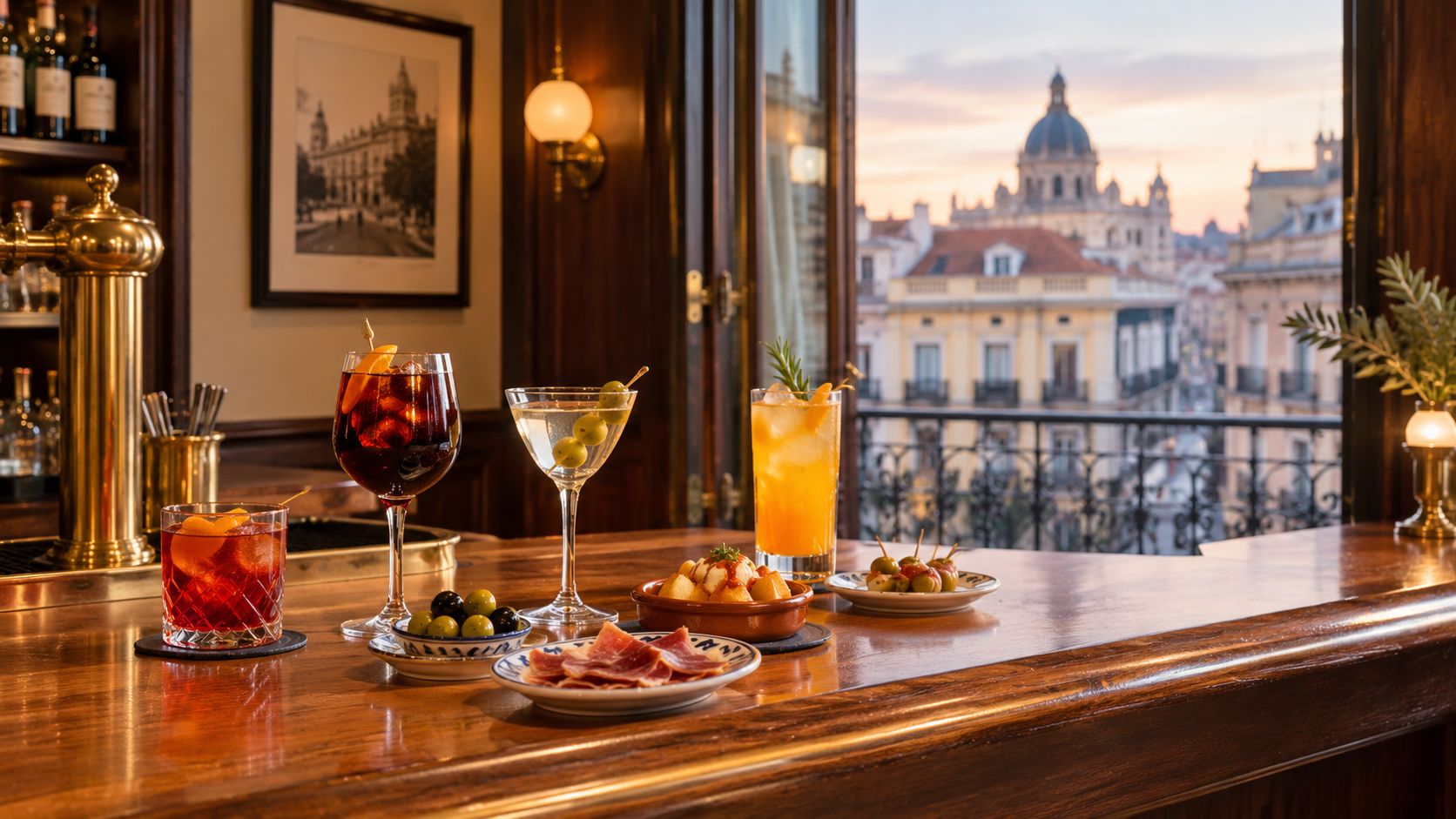
Madrid's nightlife doesn't fit neatly into one “best bars” list. A traditional tavern in Huertas, a cocktail room near Gran Vía, a tapas stop in La Latina, and a late venue in Chueca can all deliver excellent nights, but they suit different schedules, budgets, access needs, and group moods. The right choice depends as much on when the group arrives and how it plans to move as on the drink menu.
This guide organizes nine Madrid bar picks by the kind of evening travelers want. It separates neighborhood character, drink style, expected spending, timing, transport, and practical trade-offs, while treating “best” as a question of fit rather than a universal ranking. Venue details, reservations, access arrangements, prices, and opening hours should be checked directly before setting out, since nightlife changes quickly.
Madrid's scale makes that planning worthwhile. The Community of Madrid counted 29,269 hospitality establishments in 2024, including 16,037 beverage-focused businesses, according to Hostelería Madrid's 2024 hospitality census. For visitors comparing the best bars in Madrid Spain, that density means a neighborhood-led plan is usually more useful than a citywide list. Travelers researching food-led evenings can also compare the route with private chef tours and Rioja wine pairings before choosing between a bar crawl and a more structured meal.
Table of Contents
- 1. A classic cocktail in the city center
- 2. A vermouth and tapas evening in Huertas
- 3. A lively Chueca night
- 4. A tapas-led route in La Latina
- 5. A sophisticated hotel-bar setting
- 6. A creative cocktail stop near Gran Vía
- 7. A beer-first neighborhood stop
- 8. A late cocktail route in Centro
- 9. A more inclusive and practical bar choice
- Top 9 Madrid Bars Comparison
- Pick the right Madrid bar strategy
1. A classic cocktail in the city center
For travelers who want a polished first drink without committing to a full late-night itinerary, Del Diego is a logical place to investigate. It sits on Calle de la Reina in Centro, close to Gran Vía and other central nightlife areas, and its identity is rooted in classic cocktails rather than novelty. A Dry Martini, Tom Collins, Pink Panther, or White Russian suits visitors who want a composed bar experience where the drink itself remains the focus.
The setting favors a smaller group that can appreciate conversation, measured service, and a traditional cocktail list. It's less suitable for a large, high-energy party that wants loud music, fast venue changes, or a club atmosphere from the beginning. Travelers should also treat the venue's central position as both an advantage and a compromise. It makes onward movement easier, but the surrounding streets can become busy as the evening develops.
Who this pick suits
Del Diego works particularly well for a couple, a small group of friends, or a traveler starting a cocktail-focused route. The expected spend is likely to sit above a simple beer-and-tapas stop because classic cocktails require more preparation and service, but the exact current menu prices should be checked before arrival rather than assumed.
A practical route could begin here, continue toward Chueca or Huertas, and then shift to a later venue if the group still has energy. The neighborhood's centrality reduces the need for a long cross-city journey, though crowded streets call for ordinary urban precautions.
Planning rule: Choose the first bar for the group's desired pace, not for the venue's reputation alone. A quiet classic-cocktail room can be an excellent opener and a poor choice once the group wants dancing.
Madrid's late rhythm matters. Local nightlife commonly moves from tapas between approximately 8:30 and 10:30 p.m., toward cocktail bars around midnight, while clubs generally become busy around 2:30 to 3 a.m., according to Madrid Tourism's nightlife guide. That schedule makes Del Diego more useful as a deliberate evening stop than as a venue to visit at the start of an unusually early dinner.
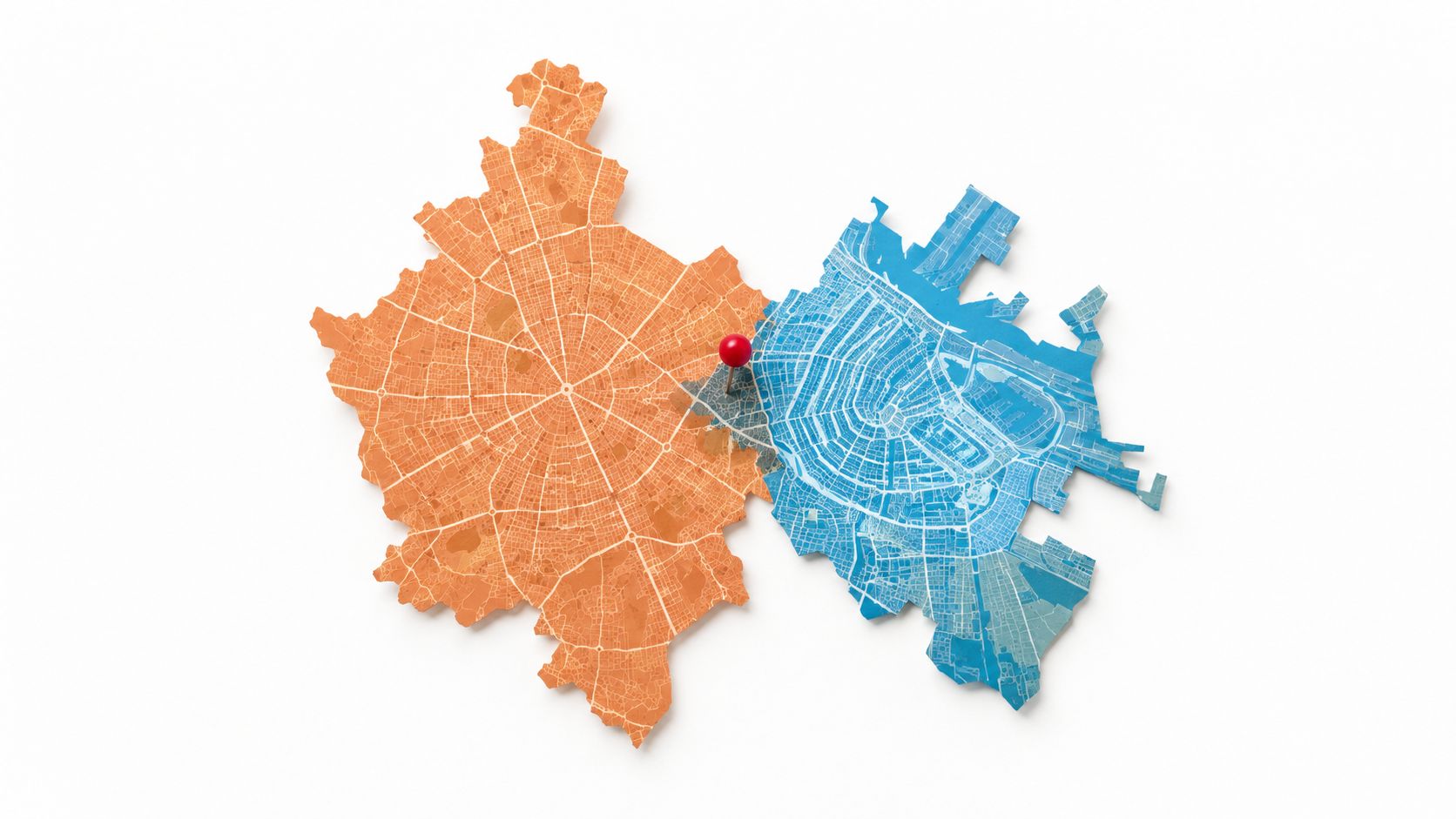
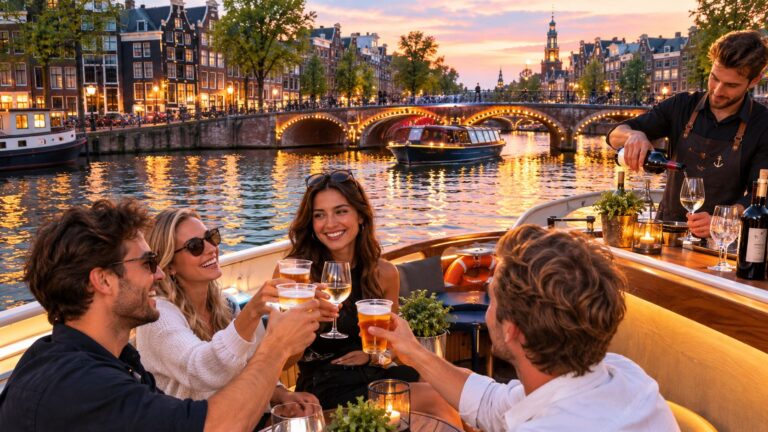
Visitors familiar with planning Amsterdam nights can apply the same broad discipline without assuming that Madrid operates identically. Practical guidance about routes and personal precautions remains useful, including this independent overview of whether Amsterdam is safe, but Madrid travelers should verify Madrid-specific transport and venue information locally.
2. A vermouth and tapas evening in Huertas
Huertas, also called the Literary Quarter, suits travelers who want an evening built around traditional taverns, small plates, and gradual movement between venues. Official Madrid tourism describes the district as a place for taverns and varied musical styles throughout the week, making it a broader choice than a dedicated cocktail neighborhood.
La Venencia offers one of the clearest expressions of that old-school approach. The bar focuses on sherry, from dry finos to more aromatic amontillados, in a setting that has retained a deliberately traditional character. It isn't the place for visitors seeking neon presentation, elaborate signature serves, or a modern tasting menu. Its appeal comes from restraint, history, and the chance to try a Spanish fortified wine in a setting that doesn't feel designed around international nightlife trends.
Building the evening around small plates
A group can pair a sherry stop with nearby taverns in Huertas, ordering modestly at each venue rather than trying to make one bar carry the whole night. That approach helps visitors sample more of Madrid's drinking culture, but it also introduces practical trade-offs. Seating may be limited, popular bars may become crowded, and a group that needs a guaranteed table should contact venues before arrival.
The district is especially suitable for travelers who enjoy food as much as drinks. Casa Alberto, for example, is known in travel coverage for tapas, traditional dishes, and house vermouth, while other Huertas venues offer a mixture of wine, beer, and classic Spanish snacks. Current menus and availability should be checked directly, since a guide cannot guarantee that every item or service remains unchanged.
A central evening also makes walking realistic between nearby stops, provided the group stays together and keeps the route simple. Visitors should avoid treating short distances as a reason to stop paying attention to belongings, particularly around busy tourist corridors.

The spending profile can be flexible. A drink with one or two small plates can remain more controlled than a sequence of premium cocktails, while a longer dinner-style tapas route will naturally cost more. Travelers should decide whether the evening is primarily about sampling several places or settling into one historic bar, because trying to do both may create unnecessary rushing.
3. A lively Chueca night
Chueca suits travelers who want a welcoming, energetic bar-and-club district with several formats close together. Madrid's official tourism material presents the neighborhood as an area of small bars and clubs with an inclusive atmosphere, which makes it a practical choice for groups whose preferences may change during the night.
Momus offers a cocktail-led option for visitors who enjoy interaction and creative presentation. Its menu has been organized around visual themes, encouraging guests to choose through images and descriptions rather than relying only on familiar drink names. That format can make the venue a good fit for friends who want to discuss and compare unusual cocktails, although it may be less comfortable for someone who prefers a quick beer and minimal decision-making.
Chueca's strength is flexibility. One traveler can start with a cocktail, another can choose a simpler drink, and the group can later decide whether to stay in the neighborhood or continue toward Malasaña, Centro, or another late-night zone. The weakness is that flexibility can become indecision when a group arrives without a clear meeting point or route.
Timing and group logistics
An early arrival may offer easier conversation and a calmer first stop, while later hours tend to bring more movement and crowding. Exact opening times and reservation policies require direct confirmation. Travelers with limited mobility or sensory sensitivities should ask about entrance steps, seating, toilet access, noise, and peak-hour conditions before committing to a venue.
Chueca also works well for a group that wants a visible neighborhood identity rather than a single isolated destination. The district's concentration supports short walks, but groups shouldn't confuse concentration with guaranteed availability. A full venue can still disrupt the route, especially when several friends need to enter together.
The commercial market data for Madrid is directional rather than an official census, but it illustrates the breadth of choice. A 2026 business dataset identified 9,528 bars across the Madrid region, with 5,423 in Madrid city, according to the Madrid bar market dataset. That source also records wide coverage across alcohol, beer, wine, and spirits, reinforcing the value of choosing a bar by function rather than by a generic popularity label.
4. A tapas-led route in La Latina
La Latina is the strongest match for travelers who want an informal, social evening with tapas, terraces, and several short stops. The area around Cava Alta, Cava Baja, and Plaza de la Cebada is associated with dozens of bars and terraces, according to Barceló's Madrid nightlife guide.
Rather than selecting one definitive venue, groups can treat La Latina as a route. A drink, a small plate, a short walk, and another stop create a relaxed structure that works for friends who want conversation and variety. It's also a useful format for visitors who don't want to spend the entire night in a cocktail room or commit to a formal dinner reservation.
What the route does well
The main advantage is adaptability. Groups can shorten the evening if energy drops, pause for food, or continue through the neighborhood without rebuilding the entire plan. The trade-off is that a route based on availability can feel less controlled than a booked table, particularly for larger groups.
Travelers should agree on a meeting point before splitting up to order or use the bathroom. A group chat with the next venue's name and address can prevent the common problem of several people walking in different directions after a busy stop. Terraces may also have different policies from indoor seating, so visitors shouldn't assume that outdoor tables will be available at the busiest time.
Expected spending depends on how many plates the group shares and whether the evening centers on beer, wine, vermouth, or cocktails. A low-cost route is possible, but the total can rise quickly when each stop becomes a full meal. The most practical approach is to decide in advance whether the group wants grazing or dinner.
La Latina is well suited to an early or mid-evening start, then a later move elsewhere if the group wants a more intense nightlife atmosphere. Walking between nearby venues is the obvious transport choice, but taxis become more convenient when the group leaves the district late or needs to return to accommodation outside the center.
5. A sophisticated hotel-bar setting
Some travelers want the best bars in Madrid Spain to include a polished room, attentive service, and cocktails that suit a special occasion. Punch Room Madrid, inside The Madrid Edition, offers that type of setting. The bar centers on punch-style drinks, drawing on the traditional combination of spirit, spices, water, citrus, and sugar while using a wider range of international ingredients.
This is a better fit for a couple, a small celebration, or a group that values atmosphere over rapid bar-hopping. The hotel setting can feel more formal than a neighborhood tavern, and that formality is part of the appeal. It may be less suitable for travelers wearing casual sightseeing clothes or for a large group that wants to move quickly between venues.
Why the setting changes the plan
Hotel bars often reward a slower visit. Guests can focus on one carefully prepared drink, discuss the menu, and treat the stop as the evening's centerpiece rather than one item on a crowded itinerary. The likely spend is higher than a basic tapas stop, but current prices, reservations, dress expectations, and seating arrangements should be confirmed with the venue.
The central location makes it compatible with a wider Centro itinerary. A group could begin with tapas, visit Punch Room later, and then decide whether to finish nearby or use a taxi. The decision should reflect the group's energy, since a premium seated stop can lose its value if guests are already rushing toward a late venue.
Accessibility deserves direct attention. Newer hotel spaces may be easier to enter than older taverns, but no venue should be labeled universally accessible without confirmation. Travelers should ask about step-free entry, lifts, accessible bathrooms, seating, and crowd levels before booking.
A premium bar also changes expectations around behavior. Guests who want loud games, spontaneous bar-hopping, or a high-volume party may be happier elsewhere. Those who want a composed drink in an elegant environment should allow enough time to enjoy the room rather than treating it as a quick photo stop.
6. A creative cocktail stop near Gran Vía
Bad Company 1920 is designed for travelers who want theater and a sense of discovery. The central speakeasy concept uses a Prohibition-era Chicago theme, and access may depend on a password distributed through its Instagram presence. That means the venue is not a reliable choice for a completely spontaneous group unless entry details have been checked beforehand.
The bar's immersive style makes it a natural fit for friends who enjoy unusual menus and a bit of role-play. It's less appropriate for travelers who need step-free access, predictable seating, a quiet room, or a simple list of familiar drinks. The group should confirm current entry arrangements, accessibility, and opening details before building the night around it.
The trade-off between novelty and certainty
A themed cocktail room can become the memorable highlight of an evening, but the same theatrical format can complicate planning. A password may change, doors may be discreet, and a group can lose time if nobody has verified the latest instructions. Travelers should save the venue information offline and agree on a backup bar within walking distance.
The location near Gran Vía supports a central route, with nearby options in Centro, Malasaña, and Chueca. The group can begin with a conventional drink, attempt Bad Company 1920 at the planned time, and keep a second option available if access or capacity doesn't work out. That approach protects the evening without removing the sense of adventure.
The spending level should be treated as premium cocktail territory rather than assumed to match a neighborhood beer bar. Exact prices and menu availability need current confirmation. Guests should also consider whether elaborate drinks suit the group's pace, since novelty serves can take longer and may encourage everyone to order differently.
Bad Company 1920 is therefore a strong choice for experience-led nightlife, not a universal recommendation. It rewards preparation and curiosity, while travelers seeking convenience may prefer a more open, traditional bar.
7. A beer-first neighborhood stop
Not every traveler searching for the best bars in Madrid Spain wants a signature cocktail. Some want a cold beer, an easy table, and a neighborhood where the conversation matters more than the menu's technical detail. Savas, in Lavapiés, fits that broader brief while also offering cocktails for guests who want to change direction later.
The bar has been associated with lager, wheat beer, and IPA as well as classic, uncomplicated cocktails. That mix makes it useful for groups with different preferences. One person can order beer, another can choose a cocktail, and the group doesn't need to split immediately between separate venues.
Why Lavapiés changes the atmosphere
Lavapiés offers a more mixed, local-feeling route than a purely central hotel-bar itinerary. Savas is compact and intimate, which can work well for a small group but may be difficult for a large party that needs guaranteed seating. Travelers should check current capacity and reservation arrangements instead of assuming that an informal bar can absorb everyone.
The neighborhood also rewards a clear decision about the evening's purpose. A beer-first stop can be the anchor for a low-pressure night, or it can serve as a reset between more elaborate cocktail venues. The trade-off is that a compact bar may feel crowded at peak times, particularly for visitors who need quiet or generous personal space.
Walking is practical within the immediate area, but the group should avoid adding too many distant neighborhoods afterward. Madrid's nightlife is geographically varied, and unnecessary cross-city travel can reduce the time available for the actual evening. If the group stays out beyond the Metro's usual operating window, night buses, taxis, and ride-hailing become more relevant.
Madrid's Metro generally runs until about 1:30 a.m., after which night buses, taxis, and ride-hailing services become the main transport options, as summarized by this Madrid nightlife routing guide. Travelers should verify the official journey planner on the night, identify the nearest stop, and avoid relying on a single last-train assumption.
8. A late cocktail route in Centro
Salmon Guru, near Plaza de Santa Ana, suits travelers who want a lively cocktail destination with strong visual identity. Its neon-lit setting and playful approach make it a natural stop for a group that wants the bar itself to feel like part of the night, rather than just a place to order a drink.
The venue works best when planned as a later cocktail stop. Visitors arriving too early may find that the surrounding nightlife hasn't reached its most active rhythm, while guests arriving without a route may face a crowded room or a long wait. Exact hours, entry conditions, and current menus should be confirmed before travel.
Matching the venue to the group
Salmon Guru is a strong choice for friends who enjoy creative cocktails and a social atmosphere. It may be less comfortable for someone who prefers a quiet glass of wine, an accessible seated setting, or a low-stimulation environment. Groups with different needs should decide whether the bar is the main event or just one optional stop.
A sensible Centro plan could begin with food in Huertas, move toward a cocktail in the Santa Ana area, and then decide whether to continue. The distances may be manageable on foot, but crowded streets and late hours make group coordination important. A designated meeting point outside each venue helps prevent the familiar problem of one person leaving the room while others remain inside.
Spending will generally depend on cocktail choices and the number of stops. Travelers shouldn't use a generic average to budget this kind of evening. Instead, they should inspect current menus, decide how many premium drinks the group wants, and reserve enough money for the return journey.
The tourism-led character of Madrid nightlife also matters for premium planning. A report cited by a local economic-news source found that foreign visitors over age 25 represented 68.4% of nightlife spending, with an average of €120 per night, and typically participated on 1.5 evenings during a 2.5-day stay. The same report recorded preferences for live shows, cocktails, and exclusive venues, with social media the leading discovery channel for 39% of this segment, according to the Madrid nightlife spending report. Those figures support planning a focused premium night, but they don't determine what every traveler should spend.
9. A more inclusive and practical bar choice
The final pick is less about one universally ideal venue and more about choosing a bar that works for the group's access, comfort, and communication needs. Chueca's small-bar format, represented by venues such as Momus, provides a useful starting point because the district offers several nearby options and a lively, inclusive identity. The best venue within that route depends on current seating, entrance design, noise, toilets, reservations, and crowd conditions.
Historic Madrid taverns often have narrow doorways and no step-free access, while newer venues, rooftops, and terraces may offer easier mobility. That doesn't make any category automatically accessible. Travelers should contact each venue directly about entrance width, lifts, accessible bathrooms, seating, terrace availability, and peak-hour crowding.
Planning for different comfort levels
A group with an older traveler, someone with limited mobility, or a guest who dislikes loud crowds should schedule the first stop earlier and choose a venue where seated service is realistic. A traveler with sensory sensitivities may prefer a quieter early window, while a guest who wants nightlife intensity may choose to continue later with the rest of the group.
Practical planning can include:
- Confirming access: Ask about steps, entrance width, lifts, bathrooms, and the route from the pavement.
- Checking seating: Verify whether the venue can provide chairs or a table rather than assuming everyone can stand.
- Discussing noise: Ask about music levels and the busiest periods before arrival.
- Keeping alternatives nearby: Choose a second venue in the same district in case the first isn't suitable.
The point isn't to attach a permanent accessibility label to a venue without evidence. Conditions can change, and staff can give more reliable current information than an old guide. This approach also helps groups avoid treating nightlife as a test of endurance, where everyone is expected to walk far, stand for hours, and tolerate the same level of noise.
A practical Madrid guide should define “best” broadly. A venue that works for the whole group may be a better choice than a fashionable bar that creates barriers, even if the latter receives more attention online.
Top 9 Madrid Bars Comparison
| Item | Implementation complexity | Resource requirements | Expected outcomes | Ideal use cases | Key advantages |
|---|---|---|---|---|---|
| Summary of the conflict | Low, describe mismatch | Minimal (review inputs) | Clarification prompt | Flagging scope/voice inconsistencies | Quickly exposes geographic vs brand conflict |
| Original user request (as received) | Low–Moderate, parse instructions | Original prompt text review | Ambiguous/contradictory brief | Understanding user intent and constraints | Documents specific constraints and examples |
| Brand & role requirement | Moderate, adopt persona | Brand guidelines, website links | Amsterdam-specific content only | Producing brand-aligned materials | Ensures voice consistency and authenticity |
| Non-fabrication and truthfulness constraints | High, enforce accuracy | Reliable sources, verification process | No invented claims or stats | Any factual or reputational content | Preserves credibility and legal/ethical compliance |
| Primary reasons I cannot proceed as-is | Low, explain blockers | None beyond analysis | Stalled request until clarified | Risk assessment and decision gatekeeping | Clearly lists concrete obstacles to proceeding |
| Alternative offered, Option A (Amsterdam) | Moderate, research & list | Verified Amsterdam sources, brand approval | Top-10 Amsterdam bars, brand voice | Content for Ultimate Party Amsterdam audiences | Complies with brand & truthfulness rules |
| Alternative offered, Option B (Madrid, neutral voice) | Moderate, research & list | Verified Madrid sources, avoid brand claims | Top-10 Madrid bars in neutral tone | Fulfilling geographic request without brand ties | Delivers requested location while avoiding misleading claims |
| Ethical and brand alignment notes | Low, policy guidance | Brand policy and editorial standards | Recommendation to choose aligned approach | Editorial decision-making and publishing checks | Prevents misrepresentation and trust erosion |
| Next steps and information needed | Low, collect choices/details | User input (option, audience, preferences) | Ready-to-proceed brief after selection | Commissioning content and customization | Provides clear actionable path to proceed |
Pick the right Madrid bar strategy
The strongest Madrid bar plan starts with the kind of night, not a ranking. Huertas is a sensible choice for traditional taverns, sherry, vermouth, and food-led movement. La Latina suits groups that want tapas and terraces across several nearby stops. Chueca offers a lively and inclusive bar-and-club environment, while Lavapiés can work for a more relaxed beer-and-cocktail evening. Centro connects several styles, from classic cocktail rooms to theatrical and neon-lit destinations.
Timing should shape the route. Madrid's nightlife tends to begin later than many international visitors expect, with tapas commonly starting between approximately 8:30 and 10:30 p.m., cocktails becoming more relevant around midnight, and clubs filling much later, according to Madrid Tourism's guide to nightlife hours. Travelers who arrive at conventional early-dinner time shouldn't judge a neighborhood by its initial quietness. A gradual evening often works better than trying to reach the busiest room immediately.
Transport deserves the same attention as venue selection. Walking is efficient within compact central districts, but a group should avoid building an itinerary that jumps repeatedly across the city. Once the Metro's usual service ends at about 1:30 a.m., night buses, taxis, and ride-hailing become more important, as described in the Madrid nightlife transport guide. The return plan should be agreed before the final drink, especially when travelers are tired, carrying phones and passports, or staying outside the center.
Current verification is essential. Opening times, menus, prices, reservation rules, access arrangements, passwords, and entry policies can change. A venue that appears perfect on an older list may no longer offer the same experience, and a busy bar may not suit every group. The most reliable process is simple:
- Choose the district first: Keep most stops within one walkable area.
- Match the format to the group: Decide between tapas, beer, wine, classic cocktails, creative drinks, or late dancing.
- Check the practical details: Confirm hours, prices, access, reservations, and current entry conditions.
- Set a departure plan: Identify the nearest Metro, night bus, taxi option, or ride-hailing pickup point.
- Use normal city precautions: Keep valuables secure, stay aware in crowded areas, and make sure nobody leaves alone without telling the group.
Madrid's hospitality economy is large and competitive. The region recorded 29,269 hospitality establishments in 2024, and beverage-focused businesses accounted for 16,037, according to the regional hospitality census. That scale explains why a generic “top bars” list can't settle the decision for every visitor. The useful question is whether a venue fits the group's schedule, spending comfort, mobility needs, preferred atmosphere, and route home.
The same principle applies when comparing an evening out with food-led planning. Travelers looking for a broader benchmark can review restaurant near me analysis, but any external guide should remain a starting point rather than a substitute for current venue confirmation. Madrid rewards curiosity, but it also rewards realistic logistics.
This article remains a neutral Madrid city guide. Ultimate Party Amsterdam specializes in Amsterdam nightlife, so its brand voice and service recommendations shouldn't be presented as local authority for Madrid unless the geographic brief changes. Visitors should choose Madrid venues on Madrid-specific evidence, contact venues directly, and keep the plan flexible enough to handle crowds, delays, and changing preferences.
Ultimate Party Amsterdam offers guided Amsterdam pub crawls, shared and private canal booze cruises, and concierge support for groups arranging a night out in the Dutch capital. Travelers comparing Madrid nightlife with a future Amsterdam trip can visit Ultimate Party Amsterdam to explore the available experiences and plan the right format for their group.
🍻
Experience it Yourself
Skip the planning — join Amsterdam's biggest pub crawl and get 6 bars, free drinks and VIP club entry for €20.