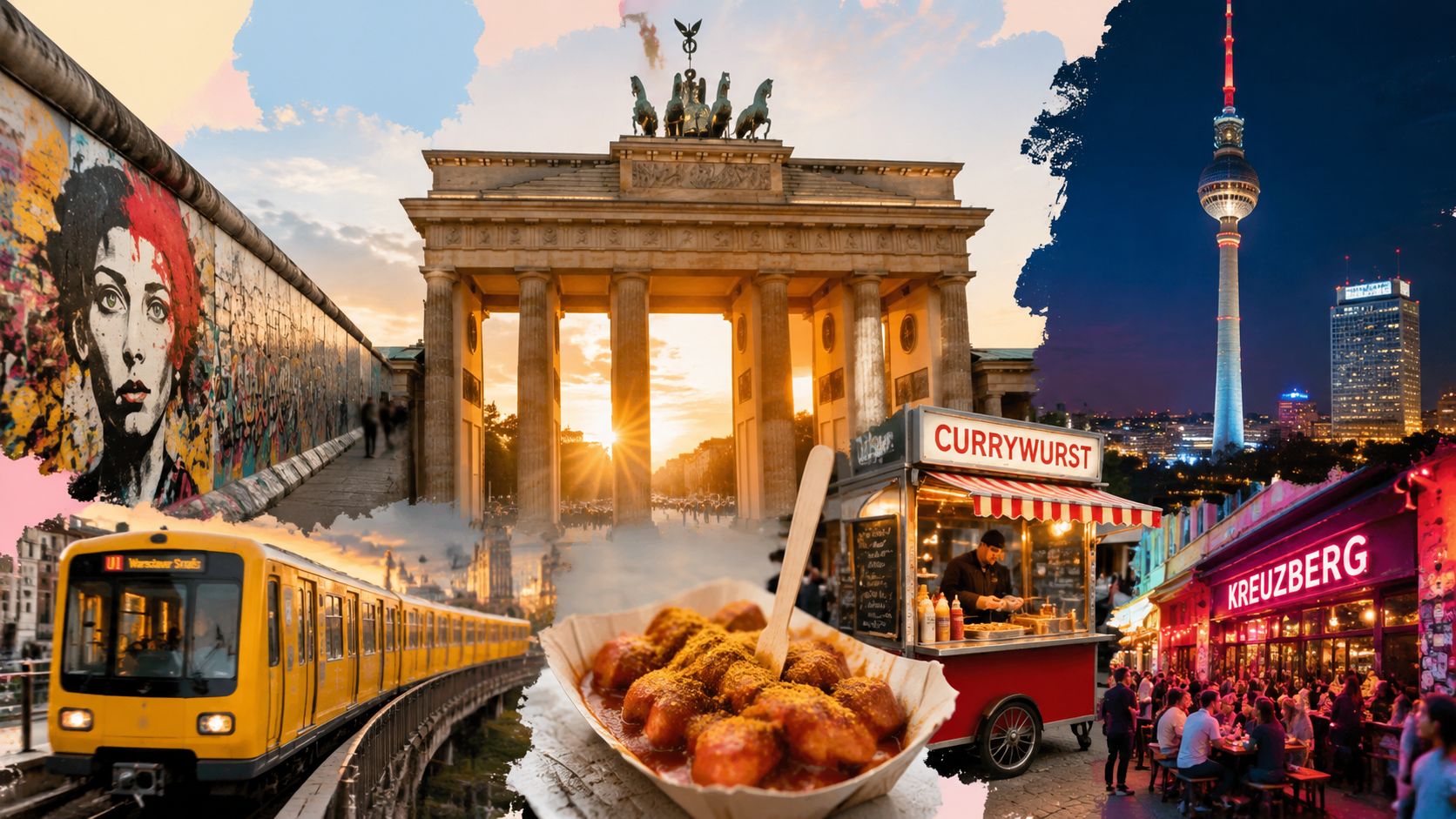
Berlin is often sold as a city of icons, as if the whole place can be understood through the Brandenburg Gate and a quick look at Museum Island. That misses the more interesting version of Berlin, the one that shows up in the city's layers, its reused spaces, its neighborhoods with strong identities, and its nightlife that keeps changing shape. The best interesting things about Berlin aren't just sights, they're contrasts, old borders turned into art, huge public spaces turned loose, and a city center that still feels improvised in places.
That's why a useful Berlin list needs more than a landmark parade. Berlin rewards travelers who pay attention to how people move, eat, gather, and go out, not just where they take photos. For a broader city-break comparison of how destinations can tell their story through contrasts, the luxury Marrakech travel guide makes a useful counterpoint, because it shows how another city can also be read through layers rather than a single skyline.
Table of Contents
- 1. Berlin's scale changes how the city feels
- 2. Division still shapes what people see
- 3. The city's public transport makes late nights easier
- 4. Berlin tourism still shows how international the city feels
- 5. Berlin nightlife is changing, not disappearing
- 6. The city's famous club culture is only part of the picture
- 7. Berlin's street culture is part of its identity
- 8. The city's reuse of space is one of its most Berlin traits
- 9. Berlin's creative reuse extends into nightlife too
- 10. Berlin's appeal is in the contrast, not the checklist
- Top 10 Comparison: Berlin Insights, Options & Constraints
- Choose the City and the Content Direction First
1. Berlin's scale changes how the city feels
Berlin's 891 square kilometers mean a trip from the cafes of Prenzlauer Berg to the industrial clubs of Friedrichshain can feel like crossing between different cities. The city also has a population of 3,677,472 in 2021, and recent estimates on Macrotrends point to steady growth. That size helps explain why Berlin rarely reads as one neat tourist zone.
For visitors, the bigger point is practical. A night in Kreuzberg can feel very different from an afternoon in Mitte or a quieter walk near the water, and the move between them becomes part of the day instead of dead time. Travelers who like places that reveal themselves neighborhood by neighborhood often find Berlin easier to read than cities that concentrate everything in one small core.
Berlin's long growth gives that sprawl a historical edge. A summary on Wikipedia traces the city from about 17,000 inhabitants in 1685 to nearly 1 million by 1880, a shift shaped by migration, industrialization, and capital-city expansion. The result is a city with layers rather than a single center, and that shows up in the streets.
Plan by area, not by isolated attraction. A neighborhood walk usually tells you more than one famous stop.
2. Division still shapes what people see
Berlin's divided past still shows up in the streets, not just in museums. The former Wall line, memorial sites, preserved fragments, and reused spaces keep that history visible without turning it into a tidy story. That is part of why the city can feel more layered than places where conflict has been smoothed over.
The rapid growth that turned Berlin from a Prussian town into a metropolis set the stage for the sharper divisions of the 20th century, and their traces remain in the urban fabric.
What travelers notice on the ground
Visitors often arrive for the major memorials and then notice how division also shapes ordinary movement. Some streets bend because borders once cut through them. Some open spaces feel unusually wide because older uses left them behind. A casual walk can become a reminder that the city still carries its past in daily routes.
That is also what makes Berlin appealing to travelers who like urban history in the open air. A wall fragment, a new apartment block, and a repurposed industrial site can sit in the same walk, letting people compare eras without leaving the neighborhood.
3. The city's public transport makes late nights easier
Berlin's night mobility is unusually helpful for a city with a serious evening culture. The S-Bahn and subway run all night on weekends, Metrotram operates 24 hours, and on weeknights after roughly 1:00 to 1:30 AM the city shifts to night buses while trams continue all night on key lines Berlin public transport at night. For visitors, that changes how ambitious a night out can be.
It means late dinner, bar hopping, or a club visit doesn't automatically turn into a transport problem. In practical terms, that reduces last-mile friction and makes it easier to hop between neighborhoods without committing to a car or expensive ride. For groups, couples, and solo travelers alike, the city becomes more usable after midnight than many other big capitals.
Why this matters for visitors
Berlin's nightlife is spread across the city, so transport isn't a background detail, it's part of the experience. A traveler who wants a long evening can still stitch together different places, while someone who prefers a shorter night can leave without feeling stranded. That flexibility is one reason Berlin's evenings feel broader than a single-club scene.
Berlin's late-night network doesn't just move people, it makes a looser, more exploratory night out possible.
For people who care about social logistics on city breaks, that's a real advantage. It lets visitors mix dinner, drinks, and a late ride home without planning the whole night around one venue.
4. Berlin tourism still shows how international the city feels
Berlin's visitor mix is useful context for anyone trying to understand the city's atmosphere. In 2025, Berlin recorded 29.4 million overnight stays from 12.4 million guests, and 41% of demand came from international travelers. The top origin markets were the United States, the United Kingdom, and the Netherlands visitBerlin.
That doesn't just describe tourist volume, it explains the city's mood. Berlin is used to short-stay visitors who arrive with different expectations, different budgets, and different ideas about what a city break should include. The result is a place where English-language friendliness, fast-moving bookings, and mixed travel styles are part of the normal rhythm.
What that means in practice
For nightlife-linked travel, the international profile matters because the audience is already broad. Travelers who have only a few nights in the city tend to look for low-friction plans they can trust quickly, and Berlin's visitor economy is built to absorb that kind of decision-making. That also helps explain why some experiences work better when they are packaged rather than left to improvisation.
At the same time, the softer market backdrop matters. Tourism numbers are still large, but the city is not operating as if demand is limitless. That creates a more selective atmosphere, especially in evenings where visitors want something easy to book and easy to understand.
5. Berlin nightlife is changing, not disappearing
Berlin's club scene is under strain, but it is still drawing people in. Recent reporting says many clubs are dealing with rising costs and weaker drink sales, while 73% of clubs say alcohol consumption is falling and 57% say guests are staying for shorter periods DW. That points to a nightlife culture that is being reshaped, not replaced.
The paradox is that demand has not gone away. The same reporting notes that 83% of clubs and organizers reported at least 50% occupancy, and about a third were above 75%. Berlin still fills its dance floors, bars, and late-night rooms, even as the business model gets tighter.
The visitor takeaway
For travelers, the useful lesson is simple. Berlin is not locked into one kind of night out anymore. The old idea of an endless club marathon still exists, but shorter evenings, more selective plans, and less alcohol-led spaces are becoming easier to find.
That matters if you are visiting as a couple, in a group, or on a short stay. You can still chase the city's famous nightlife, but you can also choose a lower-pressure evening that fits your energy and schedule.
6. The city's famous club culture is only part of the picture
A visitor who comes to Berlin for techno alone may miss how varied the city feels after dark. The club reputation is real, but it sits alongside bars, live music, late-night meetups, and mixed-use spaces that blur the line between a night out and a local hangout. Berlin has long worked as a city of contrasts, and that shows up in the evening too.
Recent independent commentary points to changing habits among residents. Club interest among Berlin residents fell from 44% in 2019 to 33% in 2025, while monthly bar-or-pub visits dropped from 40% in 2023 to 33% in 2025 IKTF Berlin. That suggests the scene is shifting in how people use it, not fading away.
What this says about the modern night out
Berlin's after-dark appeal now reaches beyond the marathon club model. Daytime raves, sober parties, hybrid venues, and open-air formats all fit into the same city, and they attract different kinds of visitors and locals. For travelers, that means a night out can be shaped around energy level and timing, not just endurance.
The practical result is flexibility. Someone can still go after the famous club culture, while another person can choose something lower-pressure that works better on a short stay or a quieter evening.
7. Berlin's street culture is part of its identity
Berlin makes a strong impression because everyday life feels visibly public. People sit outside, neighborhood corners feel social, and the city's identity often shows up in small rituals rather than grand displays. That is one reason Berlin can feel welcoming to travelers who like cities with texture instead of polish.
The city's food culture is part of that texture, even when visitors only notice it in passing. Berlin's multicultural everyday life helps explain why different neighborhoods can feel like different worlds, with their own rhythms, accents, and eating habits. The interesting part isn't just what's available, it's how casually the city normalizes variety.
A traveler's way to read Berlin
A useful way to explore Berlin is to compare a few blocks at a time. A main road, a side street, and a local square can feel like three separate cities if the day is busy enough. That's especially true when the weather is good and people spill into public space.
For visitors, Berlin often makes more sense at walking speed than at attraction speed.
That's one reason the city stays memorable. It gives away its character through ordinary scenes, not only through headline sights.
8. The city's reuse of space is one of its most Berlin traits
Berlin is especially good at turning former infrastructure into public life. The best-known examples are the spaces that shifted from military, transport, or industrial use into places where people now move, gather, and spend time. That kind of reuse makes the city feel adaptive rather than fixed.
Tempelhofer Feld is the clearest example of that logic, and it has become part of the city's wider identity. People skate, cycle, barbecue, and garden on the runways, and the place remains one of the most unusual open spaces in a European capital. The important point for visitors is that Berlin doesn't always preserve space as a museum object. Sometimes it turns it back into a shared playground.
Why that matters on a short trip
Travelers who like public space tend to remember this kind of Berlin more than the polished postcard version. The city's openness creates room for spontaneous plans, which is valuable for groups and for visitors who don't want every hour booked in advance. It also reflects Berlin's habit of keeping a bit of roughness in the frame.
That roughness is part of the appeal. The city doesn't always try to finish the story, and many visitors like it better for that.
9. Berlin's creative reuse extends into nightlife too
The city's nightlife is at its most interesting when it blurs categories. Berlin doesn't just offer a single type of bar or club, it also makes room for hybrid places where music, art, conversation, and late hours overlap. That's a big reason the night scene still feels adaptable even as habits change.
A traveler who wants the modern Berlin version of an evening out may want less pressure and more variety. That can mean a bar with a dance floor, an event with a local crowd, or a night that moves from dinner to drinks without pretending it has to become a legendary all-nighter. The city's current nightlife makes more sense when it's read as a set of formats, not a single ritual.
A practical way to approach it
The best plan is often to match the night to the group, not the other way around. Some visitors want a loud, late setting. Others want a shorter route with conversation and movement built in. Berlin can handle both, which is why it remains useful to travelers with different expectations.
This flexibility is one of the city's strongest contrasts. The reputation is massive, but the actual experience can be surprisingly adjustable.
10. Berlin's appeal is in the contrast, not the checklist
The most interesting thing about Berlin may be that it refuses to settle into one story. It is a city of division and reuse, of giant scale and neighborhood intimacy, of iconic nightlife and changing habits, of serious history and everyday improvisation. That mix is what makes it stick in people's minds long after the trip ends.
For some travelers, the city's value lies in the landmarks, the Wall history, and the famous club mythology. For others, it's the less obvious details, the late transport, the public spaces, the evolving night scene, and the way whole districts feel like self-contained worlds. Berlin can satisfy both kinds of curiosity, but it's usually better when the visitor doesn't force it into one box.
The smartest way to see Berlin is to let the contrasts stay visible. A preserved fragment beside a modern block, a quiet square beside a busy late-night route, a legendary reputation beside a changing social reality, that's the city doing what it does best. If a trip allows for that kind of reading, Berlin becomes much more than a list of sights.
Top 10 Comparison: Berlin Insights, Options & Constraints
| Item | Implementation complexity | Resource requirements | Expected outcomes | Ideal use cases | Key advantages |
|---|---|---|---|---|---|
| Conflict: City mismatch between brief and business | Low, identify and flag conflict | Clarification from client; editorial decision time | Prevents publishing misleading content | When brief asks to represent a business in the wrong city | Protects authenticity and credibility |
| Explicit content requirements from the brief | Moderate, must follow strict rules while writing | Clear list of constraints; knowledge of client offerings | Compliant, constraint-driven content | Projects with tight brand/instructional rules | Ensures accuracy and reduces risk of false claims |
| Why Berlin vs Amsterdam matters for accuracy | Low, explain and justify city-specific approach | City-specific facts and verification | Clear rationale for refocusing content | When deciding whether to change the content focus | Clarifies scope and prevents inauthentic claims |
| Option 1: Straight "Top 10 Interesting Things About Berlin" | Low–Moderate, standard travel write-up | Reliable Berlin sources; no client service data | Accurate Berlin guide without brand promotion | If client wants Berlin-focused content with no brand ties | Low risk of misrepresentation; useful to general readers |
| Option 2: Refocus on "Top 10 Interesting Things About Amsterdam" (recommended) | Moderate, requires integration of client info | Confirmed list of client services; brand guidelines | Authentic Amsterdam article with relevant service mentions | To promote client in its actual market | Strong brand alignment; natural promotional opportunities |
| Option 3: Berlin vs Amsterdam nightlife comparison | High, needs balanced, fair comparison | Verified facts for both cities; careful editorial oversight | Decision-aiding comparative piece; possible favorable positioning | Audiences choosing between the two cities | Positions client advantageously while informing readers |
| Content constraints and ethical rules I will follow | Low, enforce editorial policy consistently | Confirmation processes for service mentions | Ethically compliant, verifiable content | Any content involving client services or claims | Maintains trust and avoids invented details |
| How I will integrate Ultimate Party Amsterdam (if Option 2 or 3) | Moderate, strategic, factual placement | Confirmed service names, CTAs, client approval | Service mentions that add reader value and remain accurate | When promoting client offerings within relevant sections | Natural, helpful promotion without exaggeration |
| Information I need from you to proceed accurately | N/A, intake requirements rather than a deliverable | Choice of option; definitive service list; tone and brand assets | Enables precise, compliant content creation | Pre-production / project kickoff | Reduces revision cycles and prevents inaccuracies |
| Proposed next steps and estimated timeline | Low, standard project workflow | Selected option and service confirmations; 2–3 business days for draft | Draft article + one revision; optional promo paragraph | When ready to proceed with production | Clear timeline, deliverables, and expectations |
Choose the City and the Content Direction First
The cleanest next step is to decide whether the final piece should stay a Berlin-focused general travel article, shift into an Amsterdam article with authentic Ultimate Party Amsterdam integration, or become a carefully sourced comparison for readers weighing both cities. That choice matters because each direction changes the voice, the structure, and the claims that can be made with confidence.
If the goal is pure destination content, Berlin works best as a standalone guide built around its contrasts, history, neighborhoods, and changing nightlife. If the goal is brand alignment, Amsterdam is the better fit, because Ultimate Party Amsterdam can be represented through its actual nightlife expertise and confirmed offerings. If the goal is to help readers choose between the two cities, a comparison can work well, but it needs a tight factual frame so neither city gets flattened into a stereotype.
The safest approach is to confirm the scope before drafting the final version. That keeps every destination claim accurate, avoids awkward service mentions, and makes sure any link to Ultimate Party Amsterdam appears only where it helps the reader. For a travel brand, that's the difference between a piece that sounds generic and one that feels reliable.
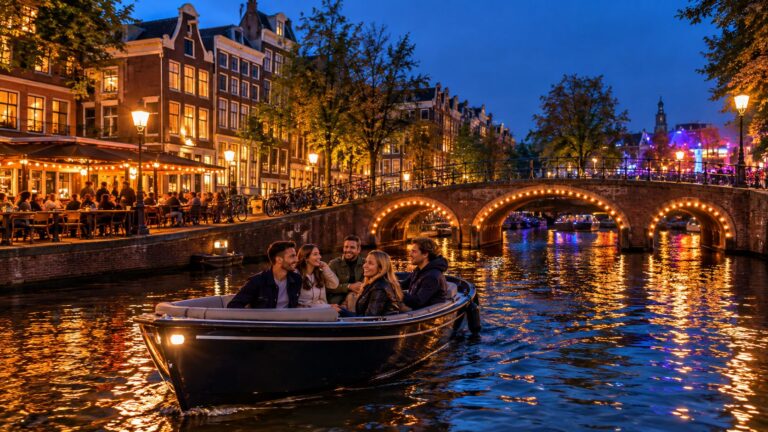
Ultimate Party Amsterdam can help travelers build a night out that feels social, simple, and well planned, whether that means a hosted pub crawl or a canal booze cruise in Amsterdam. For readers comparing city experiences, that kind of practical nightlife planning is often what turns a good trip into an easy one. Visit Ultimate Party Amsterdam to see the Amsterdam experiences that fit your group, your timing, and the kind of night you want.
🍻
Experience it Yourself
Skip the planning — join Amsterdam's biggest pub crawl and get 6 bars, free drinks and VIP club entry for €20.