A good Amsterdam night rarely starts with the perfect photo. It starts with a group spilling out of a bar, a phone already out, someone half-laughing, someone checking the route, and the next stop still buzzing in the distance. The strongest pub crawl photos don't freeze the night into a stiff souvenir, they show the rhythm of it, the bar-to-bar movement, the canal reflections, the crowd energy, and the small moments that tell future visitors what the experience felt like.
That matters in Amsterdam more than in many cities, because the night often moves fast and the settings change quickly, from a hosted crawl in the Red Light District or Leidseplein to a canal boat, then on to a final club room or a late bar terrace. A useful gallery shows more than smiling faces. It shows social proof, venue context, candid connection, and the details people want to know before they book.
It also has to respect the city. Consent, recognizability, late-night privacy, and busy lighting conditions all affect what should be captured and what should stay off social media. The best galleries feel spontaneous, but they're still planned with care. For travellers comparing hosted pub crawls, shared or private booze cruises, and group planning support, that balance is exactly where a specialist operator like Ultimate Party Amsterdam becomes relevant, because the experience and the photo story are tightly linked.
Table of Contents
- 1. Group Toast Shots at the Bar
- 2. Canal-Side Group Photo with Amsterdam Backdrop
- 3. Candid Moment of Laughter Between Group Members
- 4. Venue Entrance Shot with Group Outside
- 5. Dancing or Action Shot Inside the Club
- 6. Before and After Comparison
- 7. Group Selfie with Venue or Water Background
- 8. Signature Drink or Special Moment Detail Shot
- Pub Crawl Photo Styles: 8-Point Comparison
- Build a Gallery That Feels Like the Whole Night
1. Group Toast Shots at the Bar
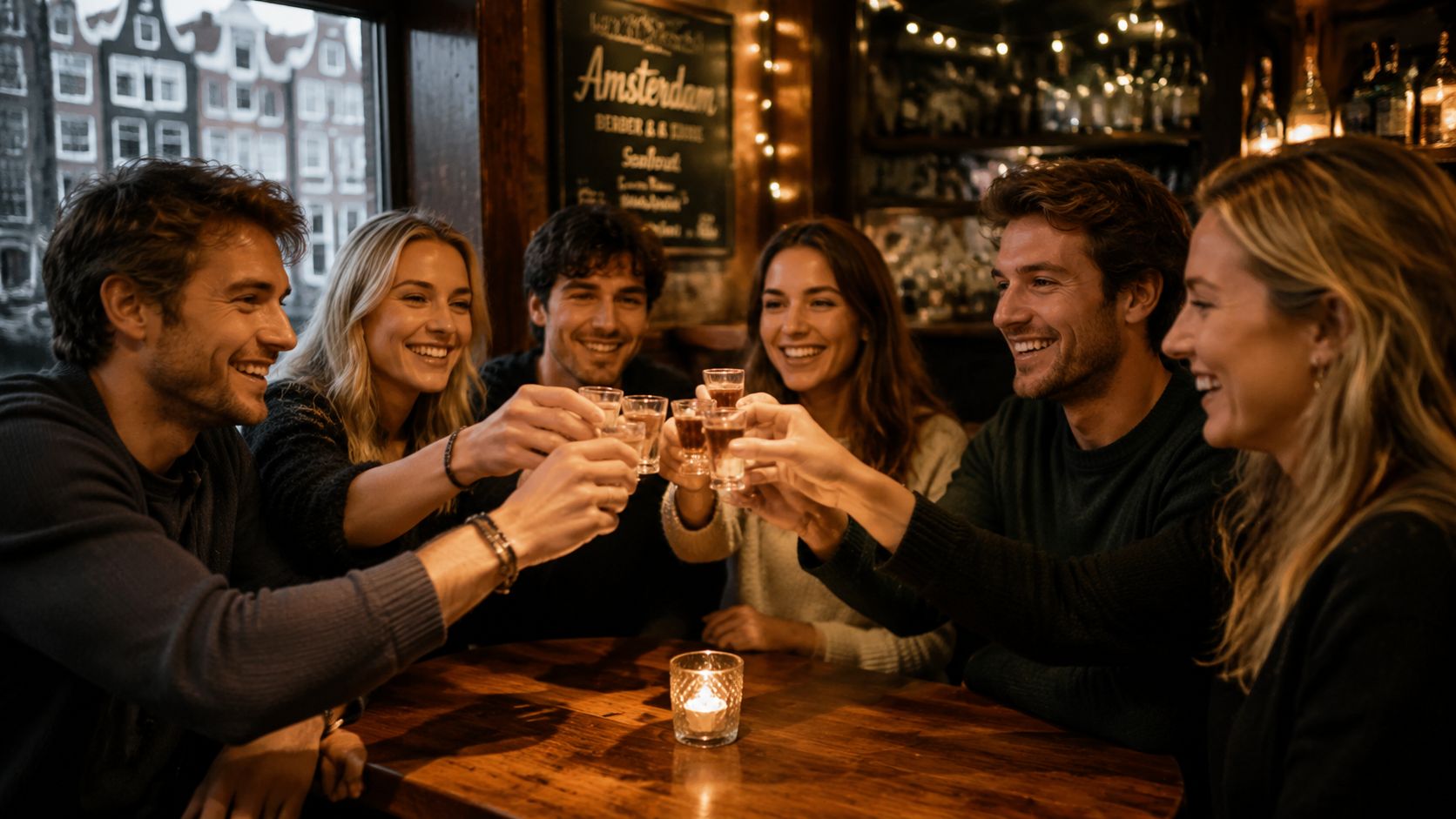
The toast shot is usually the first image that tells the truth about a crawl. It shows the group has arrived, drinks are in hand, and the night has started to become a shared experience rather than a meeting point. In a city where pub crawls have long been a recognisable nightlife format, that moment of lifted glasses works as a compact summary of what the route is for, bringing strangers together through one easy ritual, as historical accounts of the pub crawl format suggest (pub crawl history and origin).
Make the toast look alive, not staged
The best frame lands just before the clink. Faces are visible, glasses are raised, and nobody is frozen in a forced grin. That timing matters because event photography works best with candid emotion, not posed crowd shots, and social images built from real attendee moments tend to travel better than stock-like arrangements, according to practical event-photography guidance (event photo marketing guidance).
A few details make the difference in a crowded Amsterdam bar:
- Hold the camera at eye level. This keeps the group readable and prevents the bar from swallowing the frame.
- Shoot one beat before the toast. Faces still look natural, and the scene feels less rehearsed.
- Ask bar staff for a second of space. A tiny pause can clear the frame without interrupting the night.
- Keep every face visible. Glasses up near the lens can hide the people who matter most.
- Take several frames quickly. Bars move, heads turn, and one image usually lands better than the rest.
For travellers on a crawl that includes a craft-beer stop or a package drink in Leidseplein, this is also the photo that says, “the group is settling in together.” It is social, simple, and easy to understand at a glance. For people planning a route around Amsterdam's most camera-friendly bars, the guide to the city's most Instagrammable bars can help with venue context, but the core rule stays the same. Capture the toast as it happens, not after everyone has started looking around for the next shot.
2. Canal-Side Group Photo with Amsterdam Backdrop
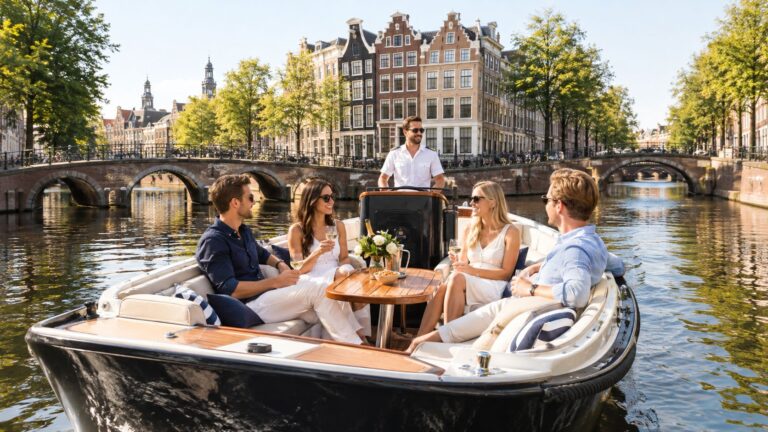
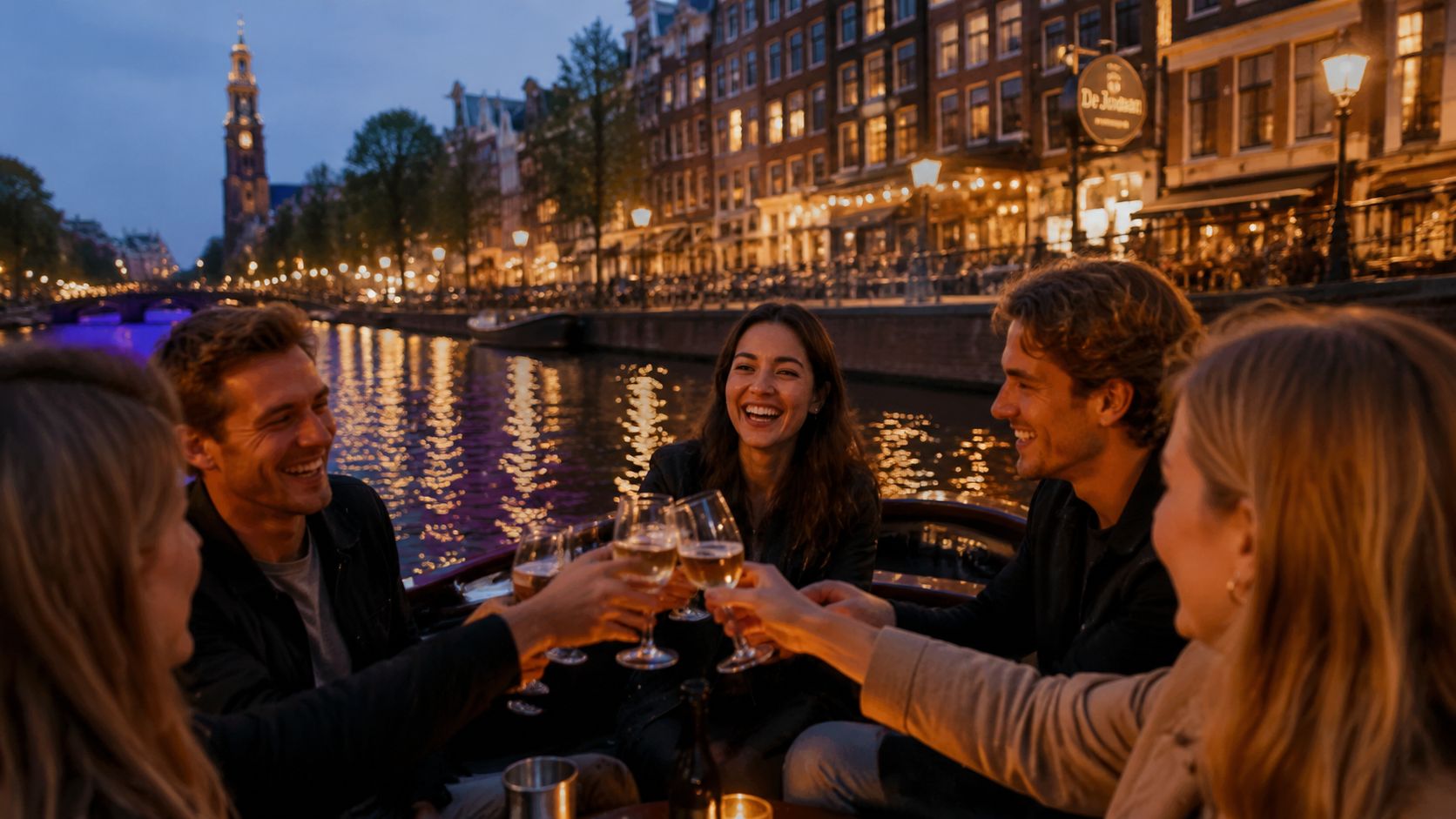
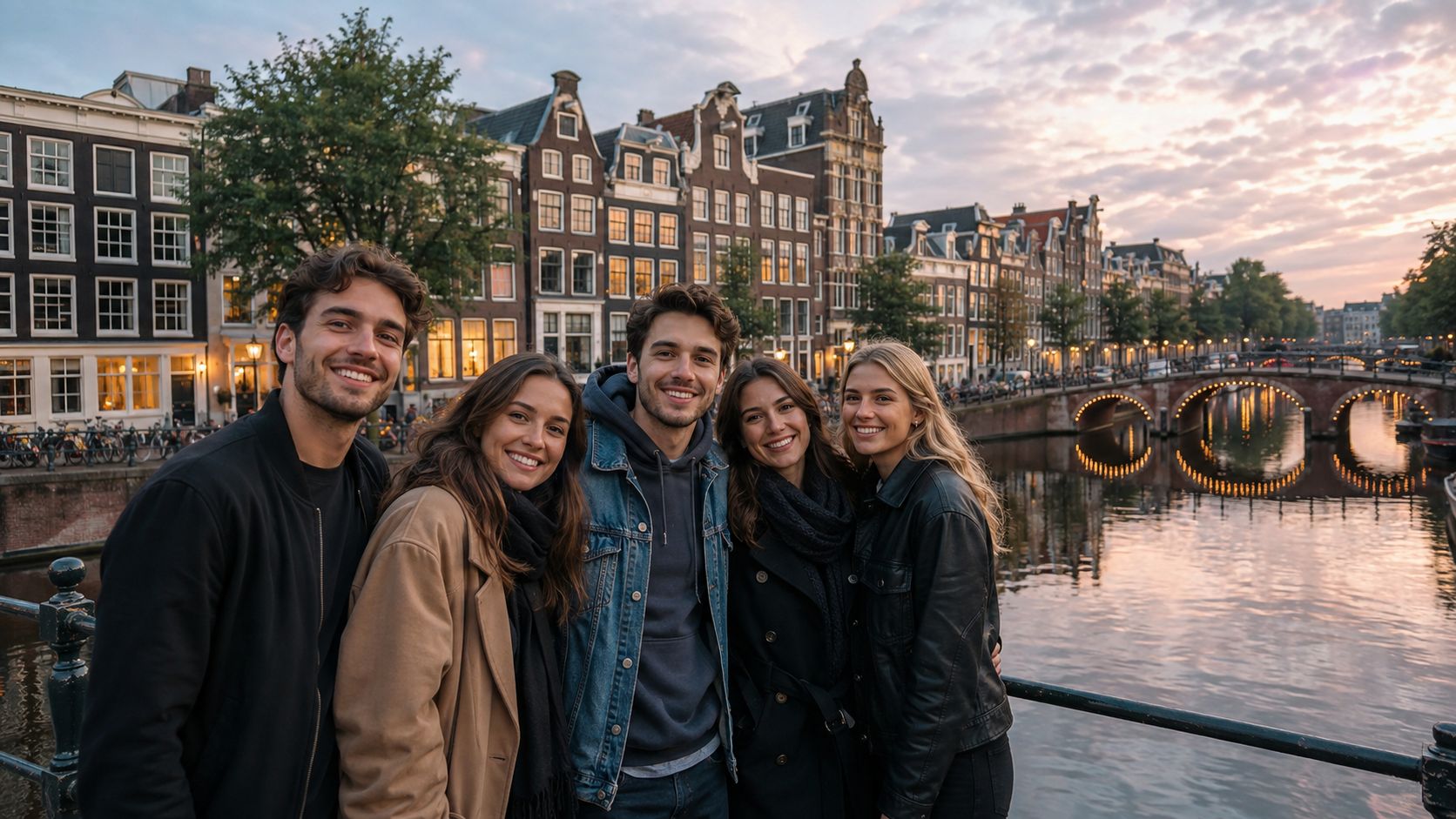
A canal-side group photo does more than show who was on the crawl. It places the night in Amsterdam at a glance, with water, bridges, narrow facades, and reflected light doing part of the storytelling. That matters for pub crawl photos because the background helps a viewer understand the setting before they even read the caption. It also gives boat guests a cleaner way to show that the city itself was part of the experience.
Use Amsterdam's light, not just its landmarks
Evening usually gives this shot its best shape. The water softens harsh edges, the city lights start to pick up, and the group stands out without looking overlit. On land, a bridge or canal crossing can frame the people neatly. On the water, the boat becomes part of the composition instead of disappearing into the background. For guests on the Shared Booze Cruise, that setting naturally supports this kind of frame because the canal scene is already built into the route.
Keep the group connected in the frame, even if you use a wide shot. A selfie stick or small tripod helps when you need everyone visible without crowding the lens. Slightly off-centre framing usually feels more natural than a rigid centre pose, especially if you want room for a bridge line, a stretch of water, or a lit building edge. Watch the light direction closely. If the canal glow sits behind the group, faces can drop into silhouette, so turn people toward the available light before you shoot.
Practical rule: In Amsterdam, the background should identify the city within a second, but the people should still feel like the reason the photo exists.
This image also works as a planning tool. Prospective guests can see how close the water feels, how scenic the route looks, and whether the night reads as social, scenic, or both. A balanced gallery needs that kind of shot alongside bar interiors and candid moments, because it shows the crawl as a full night rather than a string of isolated stops.
3. Candid Moment of Laughter Between Group Members
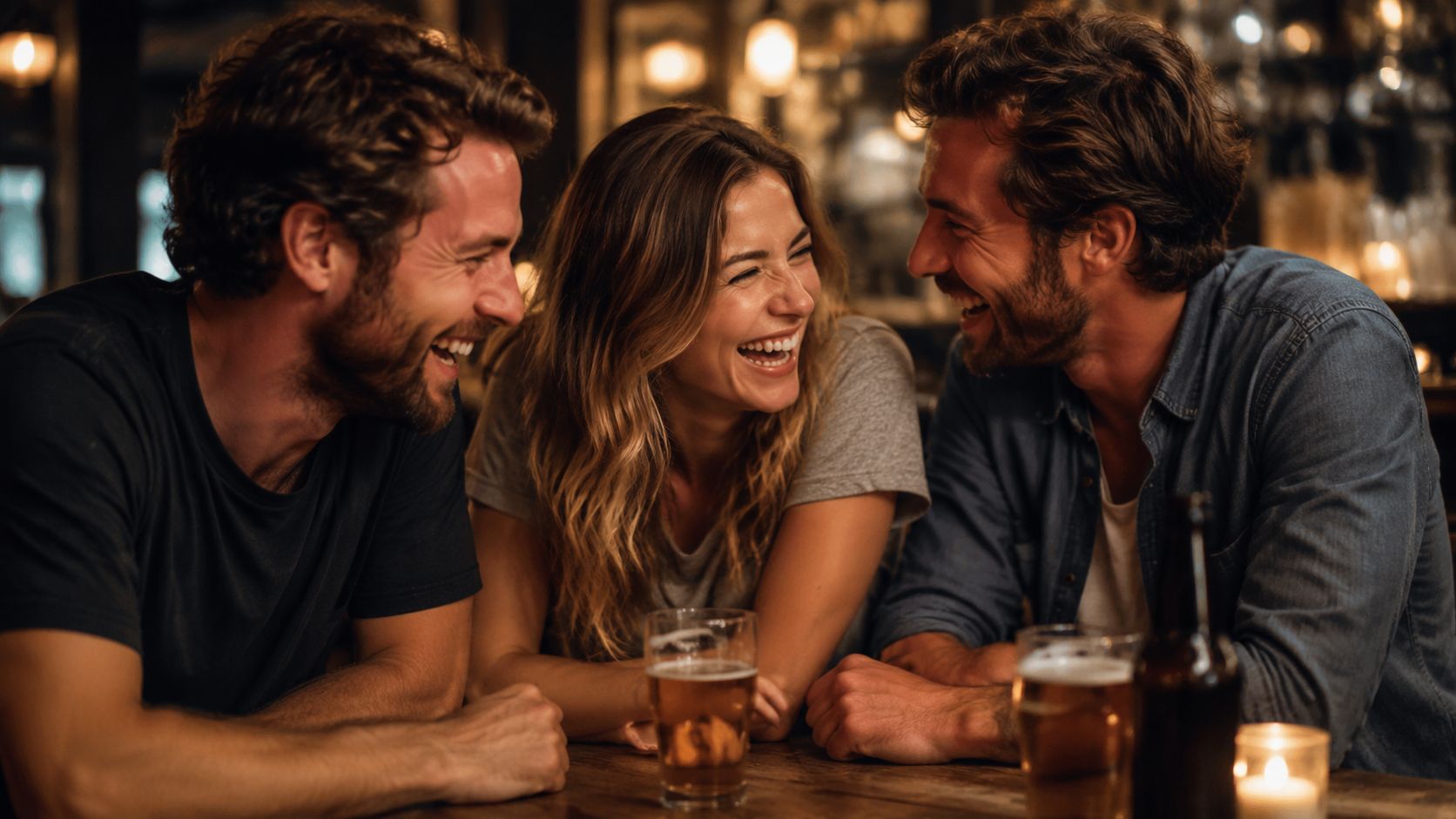
The best nightlife galleries usually contain one photo that nobody planned. It might come from a joke during a bar game, a reaction to a drink arriving, or the moment two strangers in the group finally relax into the same conversation. Those pictures matter because nightlife photographers are increasingly treated as cultural workers who create and circulate images online, and the value of the image comes from showing the social life of the venue, not just the venue itself (nightlife photography and social media labor).
Catch the real reaction, not the performance
A candid frame only works if the people in it forget they're being documented for a second. That's why the camera needs to stay ready between the planned shots. One useful habit is to watch the room for the moments when a group naturally loosens up, then shoot a short burst rather than trying to direct the scene.
This is especially strong on a hosted crawl where bar games or shared challenges break the ice. The image can show what the experience does, which is help people connect fast. That is a different message from a posed group photo. It tells future guests that the night is social, not just decorative.
A few practical moves help without killing the mood:
- Stay slightly outside the action. The photo keeps its candid feel.
- Use continuous shooting. Laughter changes in a split second.
- Don't ask people to repeat the moment. Recreated laughter usually looks flat.
- Watch for shared reactions. The best frames often happen after a punchline, not during it.
- Ask before sharing. That matters most when the group includes people who only met earlier in the night.
For solo travellers especially, this is the kind of image that shows the value of joining a guided pub crawl in Amsterdam. It is not just about venues. It is about the social shortcut that gets people from strangers to a group that looks and feels real on camera. For readers who want more practical advice on meeting people during a crawl, this guide on making friends on a pub crawl fits neatly with this kind of photo story, and the broader logic of candid capture is also reflected in a solid candid photography guide.
4. Venue Entrance Shot with Group Outside
A shot outside the venue does two jobs at once. It shows where the group went, and it marks a transition in the night, arrival, departure, or the shift from one energy level to another. In Amsterdam, where nightlife routes often weave through distinct districts, that kind of photo creates a timeline people can read without explanation.
Let the venue stay visible
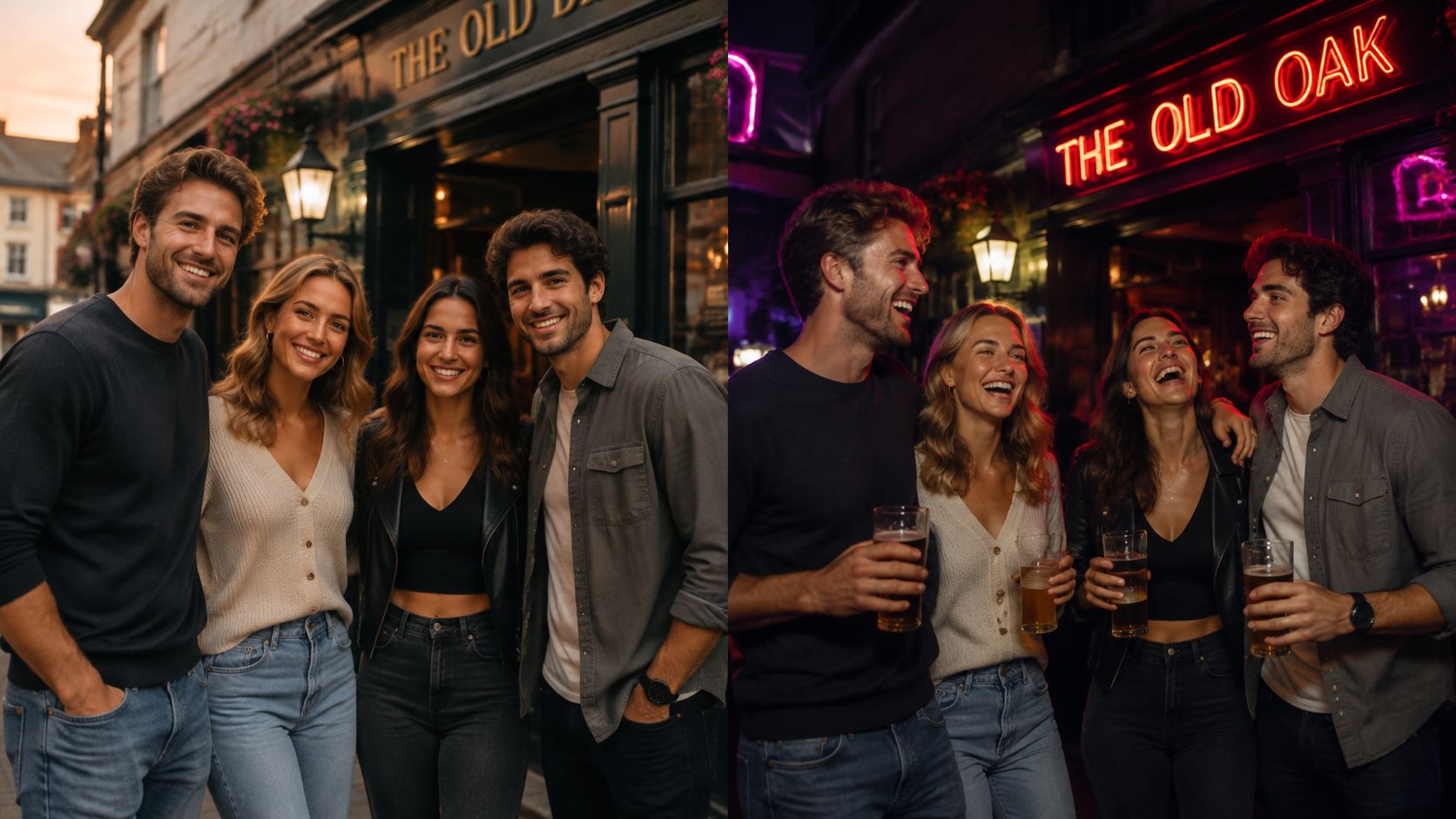
The entrance shot works best when the signage, doorway, or facade can be clearly identified. That makes the image useful later, because viewers can tell whether the stop felt like a street bar, a corner pub, a club entrance, or a dockside meetup point. For a route like the Red Light District Pub Crawl, that context is especially valuable because the district itself is part of the appeal, and the venue frontage helps explain the setting without needing a caption.
The framing should stay natural. Stiff lines of people standing shoulder to shoulder usually look like a group assignment, not a night out. A slight angle, a bit of movement, and some space for the building or street around them usually works better. If the venue has strong lighting, neon, or a distinct doorway, use that instead of trying to overpower it with a flash.
This is also one of the safer moments to shoot in busy Amsterdam nightlife, because the crowd outside often gives you a brief breather from the noise inside. The practical value goes beyond the feed. It helps future travellers understand the route's pacing, the type of places they'll enter, and whether the crawl feels tightly organised or loosely structured.
For nightlife planners, a few entrance shots are enough. Two or three well-chosen venues usually tell the story better than six nearly identical frames. That keeps the gallery readable and avoids turning the night into a venue catalogue.
5. Dancing or Action Shot Inside the Club
The strongest finale photo usually happens when the night stops being about posing and starts being about movement. On a pub crawl, that often means the final club venue, where the group is more relaxed, the music is louder, and the energy is higher than it was earlier in the evening. The challenge is technical, because dim light and movement can ruin a frame fast, but the payoff is a picture that feels honest.
Shoot for motion, then accept a little blur
Low-light club photography is rarely clean. That is normal. Nightlife photography guidance treats faster delivery and mobile-first sharing as increasingly standard, and it also notes that same-night delivery has become the minimum expectation in many settings, with more automated sorting and mobile messaging used to move images quickly (nightlife photo trends and delivery). For club photos, that means the image needs to work with the light that exists, not the light the camera wishes it had.
If the venue has stage lighting, a bright screen, or a clean beam of light cutting through the room, use that moment. Shoot multiple frames, lift the camera slightly above the crowd, and avoid standing flat on the floor if the dance floor is packed. Some blur is acceptable, because it can make the shot feel alive rather than over-produced. The goal is not perfection. It's energy.
A few technical choices help:
- Use night mode when the phone offers it. It usually handles club light better than a standard shot.
- Increase ISO on a camera if available. That keeps the subject readable in the dark.
- Hold the frame steady for a beat. Even a short pause improves sharpness.
- Aim for one clear subject. Too many moving bodies can make the image unreadable.
- Use the lighting effects. Lasers and colour changes can give the image a distinct finale feel.
This is the photo that tells future guests the night didn't end at the bar. It ended in the room where the music took over. For pub crawl packages that include a VIP club finale, that energy is part of the story whether the crowd is small or large. The image should communicate momentum, not just attendance.
6. Before and After Comparison
A before-and-after pair is one of the most useful ways to tell the story of a crawl, because it shows change over time instead of a single frozen moment. The first frame can be neat and fresh, taken at the start of the route, while the final one can show loosened posture, bigger smiles, and a group that clearly travelled through the night together. That contrast makes the evening feel real.
Keep the framing consistent
The trick is not to make the night look fake. It's to keep the structure consistent enough that the difference stands out on its own. Same wall, same dock, same corner outside the venue, similar camera height, similar distance. Then the energy shift becomes the point of the comparison. On a crawl that starts in one district and ends in another, the progression can show how the group moved from early-evening composure to late-night celebration.
For social use, this works well as a carousel or split-image, because the viewer can compare the two states at a glance. It also helps explain the experience to someone who hasn't done a crawl before. One photo shows the beginning. The other shows what the night becomes once the route, drinks, and social momentum have done their work.
The most useful comparison photos are not the ones that look dramatic. They're the ones that make the passage of time easy to read.
A three-image progression can work too, especially for a shared boat, where the start, middle, and end may each happen in noticeably different light and energy. The same logic applies to a pub crawl that begins with quiet introductions and ends on a crowded dance floor. The gallery becomes a narrative, not just a collection.
For groups, this kind of sequence also helps future guests understand what kind of mood to expect. Fresh faces at the start and candid, looser energy at the end say more about the experience than any caption could.
7. Group Selfie with Venue or Water Background
The group selfie is the most practical image in the set because nobody has to wait for an outside photographer. One arm, one angle, one quick frame, and the night is documented. It also works particularly well in Amsterdam because the background can do a lot of visual work, whether that's canal water, a bridge, a lit-up bar entrance, or street signage in a lively district.
Make it inclusive, not cramped
The lens should show faces first, but the background still needs to say Amsterdam. That's where the wide-angle effect helps. A selfie with canal water behind the group or a clearly readable venue sign over someone's shoulder tells the viewer where the image belongs. For cruise nights, that background can be especially strong because the boat and the city combine into one scene.
A useful habit is to keep the phone slightly higher than face level and angled down just enough to reduce distortion. If the lighting is poor, tilt slightly upward rather than forcing the face into shadow. That often improves exposure in bars and on dim canal decks. The shot will feel more authentic if the group accepts a little awkwardness, because nightlife selfies shouldn't look polished to the point of being disconnected from the night.
This format is also the easiest way to include people who aren't comfortable being photographed by a stranger. A group member controls the frame, the timing is quick, and the result feels less intrusive. That makes the selfie an efficient compromise between documentation and spontaneity.
For boat groups, the best version often captures water, lights, and architecture behind the faces. For pub crawl groups, the background should show enough of the venue to be recognisable, but not so much that the people disappear. The balance is simple. Faces first, Amsterdam second, and both in the same shot.
8. Signature Drink or Special Moment Detail Shot
Not every photo needs to be about faces. Some of the most effective pub crawl photos are close-ups that show the drinks, the toast, or the small visual details that make the night feel specific. A glass with a colourful shot, a branded cocktail, or a group's hands around drinks can communicate atmosphere without crowding the frame.
Use the drink as proof of the experience
Detail shots are useful because they show what was served, what the venue looked like, and how the moment felt before the glasses were emptied. For crawls with included drinks, that matters as part of the value story. For cruises with unlimited drinks, it can show the rhythm of service and the celebratory mood of the boat or bar setting.
The visual trick is simple. Backlight the glass if possible, let the venue lighting glow through the liquid, and keep part of a hand, sleeve, or face in the frame so the image doesn't become sterile. A pure product shot can look like a menu image. A detail shot with human context feels like a memory. That distinction is exactly why nightlife imagery gets used in promotion as well as personal sharing.
The same applies to branded glasses or a venue-specific drink presentation. If the drink looks distinctive, the picture becomes a record of place, not just refreshment. That helps future guests understand whether the night included a pub stop, a cocktail moment, or a cruise service.
For travel planning, this kind of image often answers the questions people ask before booking. What did the included drink look like? Was the setting casual or polished? Did the night feel generous or minimal? The detail shot can answer all of that without a caption.
Pub Crawl Photo Styles: 8-Point Comparison
| Photo Type | Implementation Complexity | Resource Requirements | Expected Outcomes | Ideal Use Cases | Key Advantages |
|---|---|---|---|---|---|
| Group Toast Shots at the Bar | Medium, timing and coordination required | Low–Moderate, phone/camera and someone to shoot; decent bar light | Conveys camaraderie and group energy; quality varies with lighting | Pub crawls, stag/hen parties, social media posts | Authentic, immediately communicates fun; highly shareable |
| Canal-Side Group Photo with Amsterdam Backdrop | Medium, location scouting and timing (golden hour) | Moderate, wide-angle lens or phone, tripod/selfie stick, clear spot | Strong location context and scenic, high‑quality visuals | Travel documentation, Instagram, location-based marketing | Instantly recognizable as Amsterdam; elevates visual quality |
| Candid Moment of Laughter Between Group Members | Low setup, high attentiveness, unpredictable capture | Low, camera/phone ready, burst/continuous mode | High authenticity and emotional resonance; technically imperfect | Authentic storytelling, content creators, social shares | Genuine emotion that resonates and drives engagement |
| Venue Entrance Shot with Group Outside | Low, straightforward but time-limited | Low, phone camera; quick stop at venue entrance | Documentary record of venues and itinerary; clear venue ID | Proof of attendance, visual itinerary, travel logs | Shows venue identity and progression; easy to coordinate |
| Dancing or Action Shot Inside the Club | High, low light and motion challenges | Moderate–High, low‑light capable camera/phone, fast shutter or night modes | High‑energy, climactic visuals; risk of blur/noise | Social media highlights, showcasing nightlife climax | Conveys excitement and atmosphere most effectively |
| Before and After Comparison (Beginning vs. End of Night) | Medium, requires planning to match framing | Low, phone/camera and consistent location | Strong narrative arc showing transformation over time | Storytelling, carousels, engagement-focused posts | Tells a complete story; highly engaging and memorable |
| Group Selfie with Venue or Water Background | Very low, easiest and fastest to execute | Very low, smartphone or selfie stick | Intimate, immediate images; background clarity may vary | Quick documentation, Stories, early-group photos | Most accessible and inclusive; fast to capture many shots |
| Signature Drink or Special Moment Detail Shot | Low, simple subject but lighting matters | Low, phone/camera, attention to angle and light | Sensory-focused visuals highlighting amenities; sharp images likely | Marketing amenities, visual variety in feeds, product highlights | Highlights included drinks and venue features; technically easier |
Build a Gallery That Feels Like the Whole Night
The best pub crawl photos don't all compete for attention. They work as a sequence. The first image establishes the people, the second shows Amsterdam itself, the third gives venue context, the fourth captures genuine interaction, the fifth adds movement, and the final frames either close with a detail shot or a reflective end-of-night comparison. That combination makes the gallery feel like a full night rather than a random dump of camera roll leftovers.
The practical priorities stay the same across every frame. Ask before sharing if people are identifiable, especially in smaller or more intimate groups. Keep shooting fast in busy venues, because the value window is short and the best expressions don't wait around. Use varied framing so the gallery doesn't become one long sequence of selfies. And stay realistic about low light, because Amsterdam nights often look better when they're photographed instead of over-corrected.
That privacy point matters more in Amsterdam than many visitors expect. Dutch guidance treats identifiable photos and videos as personal data, and recognisable publishing can require consent under portrait-right and privacy rules (Dutch visual-material guidance). Public filming is generally allowed, but recognisable publication still needs care, and Amsterdam's rules add more nuance at night and in sensitive areas. Public-space filming should be kept to the necessary area, and nighttime shooting should be limited when possible, because Amsterdam's filming protocol says filming between 22.00 and 7.00 should be avoided as much as possible (Amsterdam filming protocol). In the Red Light District, the boundary is even clearer, because photographing or filming sex workers is strictly forbidden, so wide street scenes and architecture are the safer choice, not window shots or intrusive selfies (Red Light District photo guidance).
For groups planning a night that deserves a proper gallery, the most useful move is to plan the route and the photos together. A crawl in the Red Light District, a night around Leidseplein, or a canal boat celebration all create different visual rhythms, and Ultimate Party Amsterdam is set up around those formats through its documented crawl and cruise options. That includes the Red Light District Pub Crawl, the Leidseplein Pub Crawl, the Shared Booze Cruise, and the Private Booze Cruise for groups that want a more controlled setting.
The simplest takeaway is the most useful one. Choose three must-have moments before going out, the toast, the setting, and the candid or end-of-night frame, then leave enough room for the rest of the night to surprise the camera. That is how a gallery stops looking like a photo dump and starts looking like the actual Amsterdam experience.
🍻
Experience it Yourself
Skip the planning — join Amsterdam's biggest pub crawl and get 6 bars, free drinks and VIP club entry for €20.