You've arrived in Stockholm with one clear day left, and the archipelago is calling. The confusing part is deciding what that means: a short cruise that keeps the city in view, a ferry ride to an island, or a full day spent moving between rocky shores and red cottages.
A Stockholm archipelago tour can describe several very different experiences. Some boats offer a scenic introduction without stopping. Others are transport services that let visitors build their own island itinerary. The distance between destinations also changes the value of the day, since a beautiful island can become a poor choice if most available hours disappear on the water.
This guide separates the main formats, explains what happens onboard, and shows how to match routes with time, budget, season, and interest in walking. Visitors looking for wider ideas can also browse this guide to the best Stockholm experiences by a luxury advisor before choosing how much of the city and coast to combine.
Table of Contents
- Introduction to Stockholm Archipelago Tours
- Understanding the Stockholm Archipelago Geography
- Main Types of Stockholm Archipelago Tours Compared
- What to Expect Onboard and on the Islands
- Duration Departure Points and Seasonality Explained
- Sample Itineraries for Different Time Budgets
- Booking Tips Pricing and How to Get the Best Value
Introduction to Stockholm Archipelago Tours
The first decision is simple: does the traveler want to see the archipelago, or spend time on an island? A sightseeing cruise usually answers the first question. Passengers remain onboard, listen to commentary, watch the shoreline change, and return to the city after a few hours. An island excursion answers the second. It adds ferry logistics, time ashore, and a return journey that must fit the day.
That distinction prevents a common disappointment. Someone with only an afternoon may book an outer-island trip because the destination sounds more impressive, then discover that the journey leaves little time for a walk, lunch, or quiet view. Another traveler may expect a cruise to include an island stop, only to find that the boat is designed for continuous sightseeing.
The right question before booking
Rather than asking which tour is “best,” visitors should ask which experience fits the day:
- A short city break: A scenic cruise gives a maritime perspective without taking over the itinerary.
- A balanced half-day: Vaxholm or a nearer destination can add genuine island time without requiring an extreme commitment.
- A nature-focused day: Public ferry travel or a guided island trip makes more sense when walking and exploring matter more than commentary.
- A slower escape: Multi-stop travel requires flexibility, careful timetable checks, and tolerance for changing weather.
The archipelago has enough scale to support all of these choices. It isn't one attraction with one standard route. It's a large coastal area where the same departure point can lead to very different days depending on the destination and season.
A practical plan starts with the available hours, then chooses the furthest destination that still leaves meaningful time ashore. That approach is more reliable than selecting the longest advertised sailing because it appears to offer better coverage.
Understanding the Stockholm Archipelago Geography
A first-time visitor can leave central Stockholm on a boat and still experience very different kinds of day. A short ride reveals the city's maritime edge. A middle-distance trip adds an island stop, while a journey farther east may use most of the available daylight. The archipelago is easiest to plan in three broad travel zones.
The inner archipelago begins close to the capital and suits short cruises or quick ferry outings. The middle zone includes destinations such as Vaxholm and Grinda, where the journey can be combined with a walk, meal, or brief exploration. The outer archipelago extends farther into the Baltic and rewards travelers who can give the excursion most of a day.
These zones are a planning model, not an official boundary system used for every route. Distance affects more than the view. It also changes the need to check connections, seasonal services, daylight, and the time available ashore.
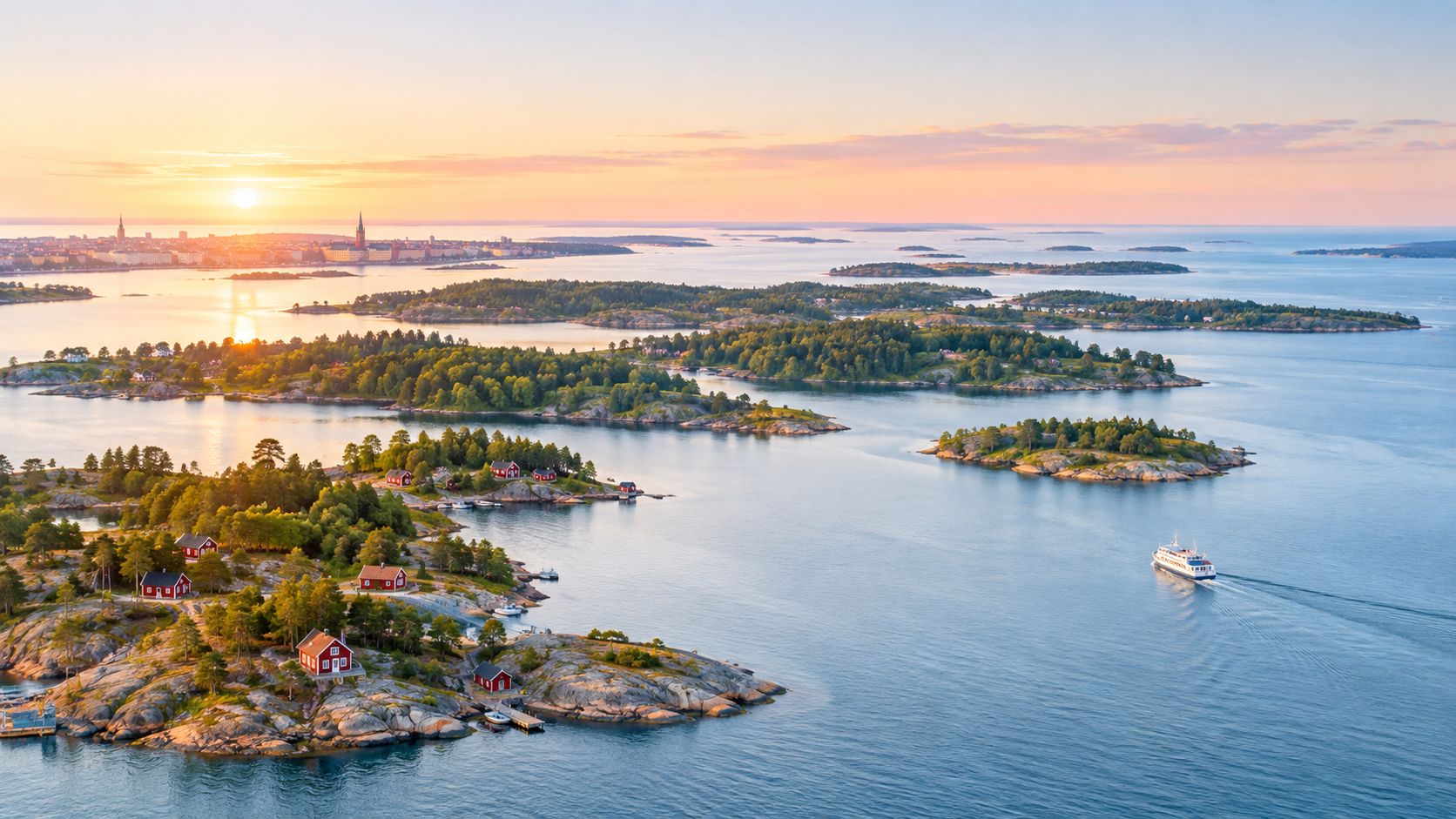
An area shaped by scale
Descriptions of the archipelago vary according to how islands, islets, and skerries are counted. One widely used description places the total at about 30,000 islands, islets, and skerries, stretching roughly 80 kilometers east from Stockholm into the Baltic Sea. Another account describes slightly over 24,000 islands, covering about 1,700 square kilometers, including around 530 square kilometers of land. (National Geographic's Stockholm guide)
The difference reflects geographic definitions rather than conflicting route information. Both descriptions point to the same practical conclusion: a single cruise can show only one part of the region.
The islands are also inhabited, not an empty wilderness reserved for visitors. Roughly 50,000 holiday homes and about 10,000 permanent residences are spread across the area, creating a mix of quiet shoreline, private cottages, working harbours, and established communities.
Why the mental map matters
A close cruise focuses on changing views of Stockholm and entering the island region. A middle-distance trip adds a destination to explore. An outer route becomes transport planning as well as sightseeing, particularly when connections or limited seasonal departures shape the return journey.
Practical rule: Choose the island first, then check the journey. Do not choose a long sailing first and hope the destination fits afterward.
This distinction helps separate a scenic cruise from public ferry travel or an island-hopping outing. A comfortable boat can provide the maritime experience with little planning. Ferries offer a closer view of how residents and second-home owners move through the region, but they require more attention to timetables and connections. Time on the water is part of the product, not a minor detail.
Main Types of Stockholm Archipelago Tours Compared
The main formats serve different purposes. A guided sightseeing cruise is an observation experience. A public ferry trip is flexible transport. A dedicated island excursion adds structure on land, while a ferry-and-footpath route is designed for travelers who want to move slowly and walk between coastal areas.
| Tour Format | Typical Duration | Seasonality | Best For |
|---|---|---|---|
| Guided sightseeing cruise | Short to several hours | Some operate year-round, with more choice in warmer months | First-time visitors wanting views and commentary |
| Public ferry island trip | Flexible, depending on route | Year-round services exist, but schedules and connections vary | Independent travelers prioritizing flexibility |
| Guided island excursion | Half day or full day | Usually more dependent on seasonal routes | Visitors wanting a planned destination and time ashore |
| Ferry-and-footpath trail | Multi-stop or multi-day | Strongly seasonal | Hikers and nature-focused travelers |
Guided sightseeing cruises
These boats generally depart from the city and return to the city without requiring passengers to plan connections. Commentary helps explain the shoreline, architecture, holiday-home culture, and local geography. The format suits couples, solo visitors, and groups with limited time, especially when the priority is sightseeing rather than hiking.
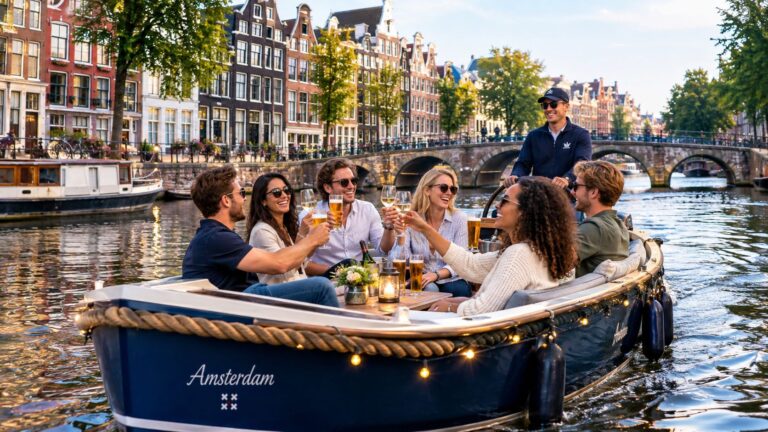
For groups who want a separate boat-based social experience in another city, a private canal format such as this private booze cruise belongs to a different category. It isn't a Stockholm archipelago option, but the comparison highlights an important planning principle: scenic transport, island transport, and private group cruising aren't interchangeable products.
Public ferries and island hopping
Public services give travelers more control. A visitor can decide where to get off, how long to stay, and whether to continue to another island, subject to the timetable. The trade-off is that there may be less onboard explanation, fewer convenient connections, and more responsibility for checking the return route.
Guided island trips and trail travel
A dedicated excursion works well for travelers who want the destination to have a clear shape. A guide can reduce uncertainty around meeting points, walks, and timing. The newer ferry-and-footpath concept suits a different pace, with the journey and the scenery treated as connected parts of the experience rather than a simple ride out and back.
What to Expect Onboard and on the Islands
Boarding usually sets the tone for the day. City-centre sightseeing boats can be larger and more organized, with assigned departure times, indoor seating, open decks, and commentary. Public ferries feel more like transport. Passengers may be commuting, carrying supplies, or traveling to a second home, so the atmosphere is functional rather than theatrical.
Arriving early helps visitors choose a comfortable position, particularly on a busy sailing. A forward or rear-facing area can provide broader views, while a side seat may offer an excellent perspective in one direction but less visibility when the boat turns.
The journey itself
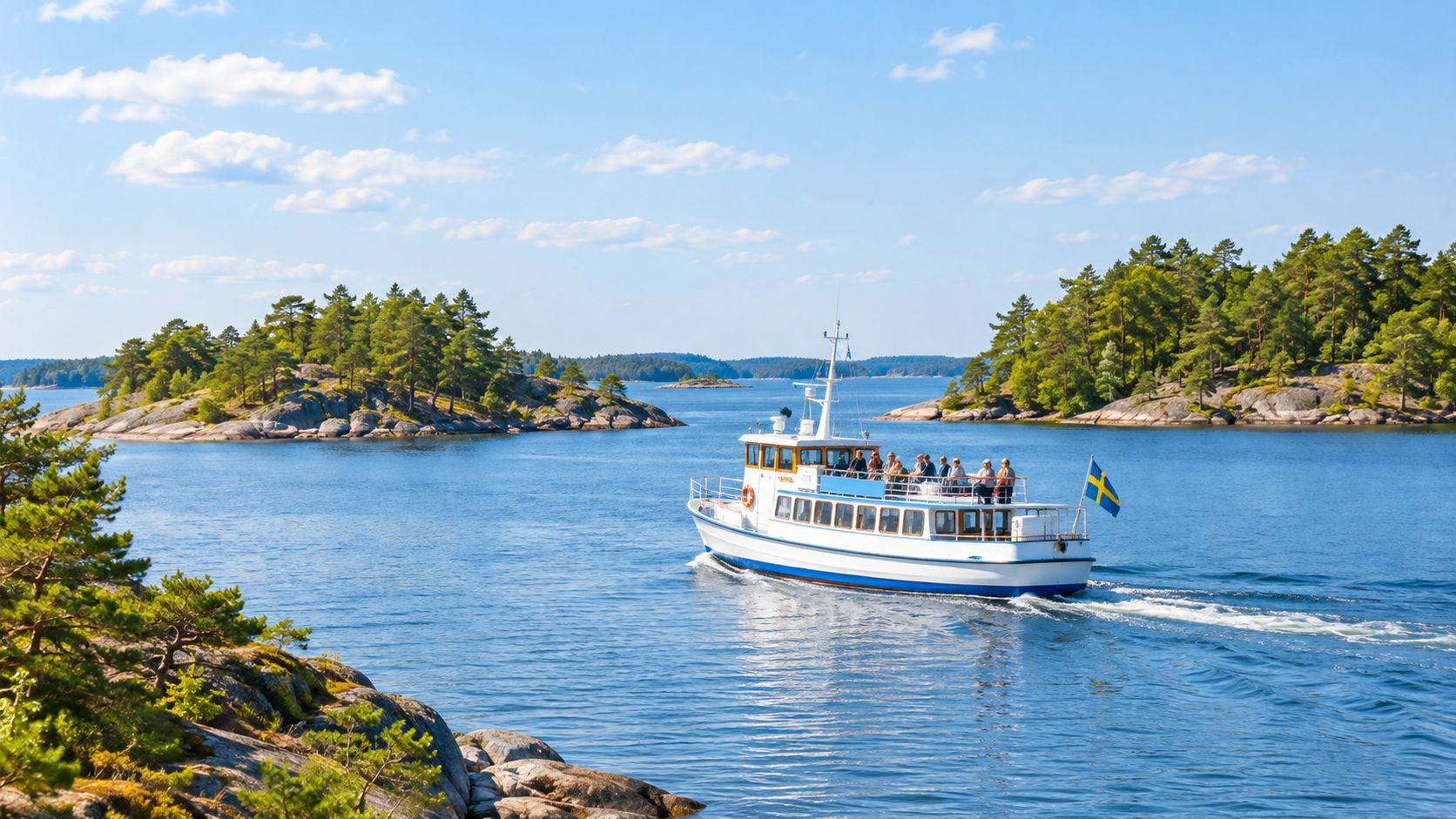
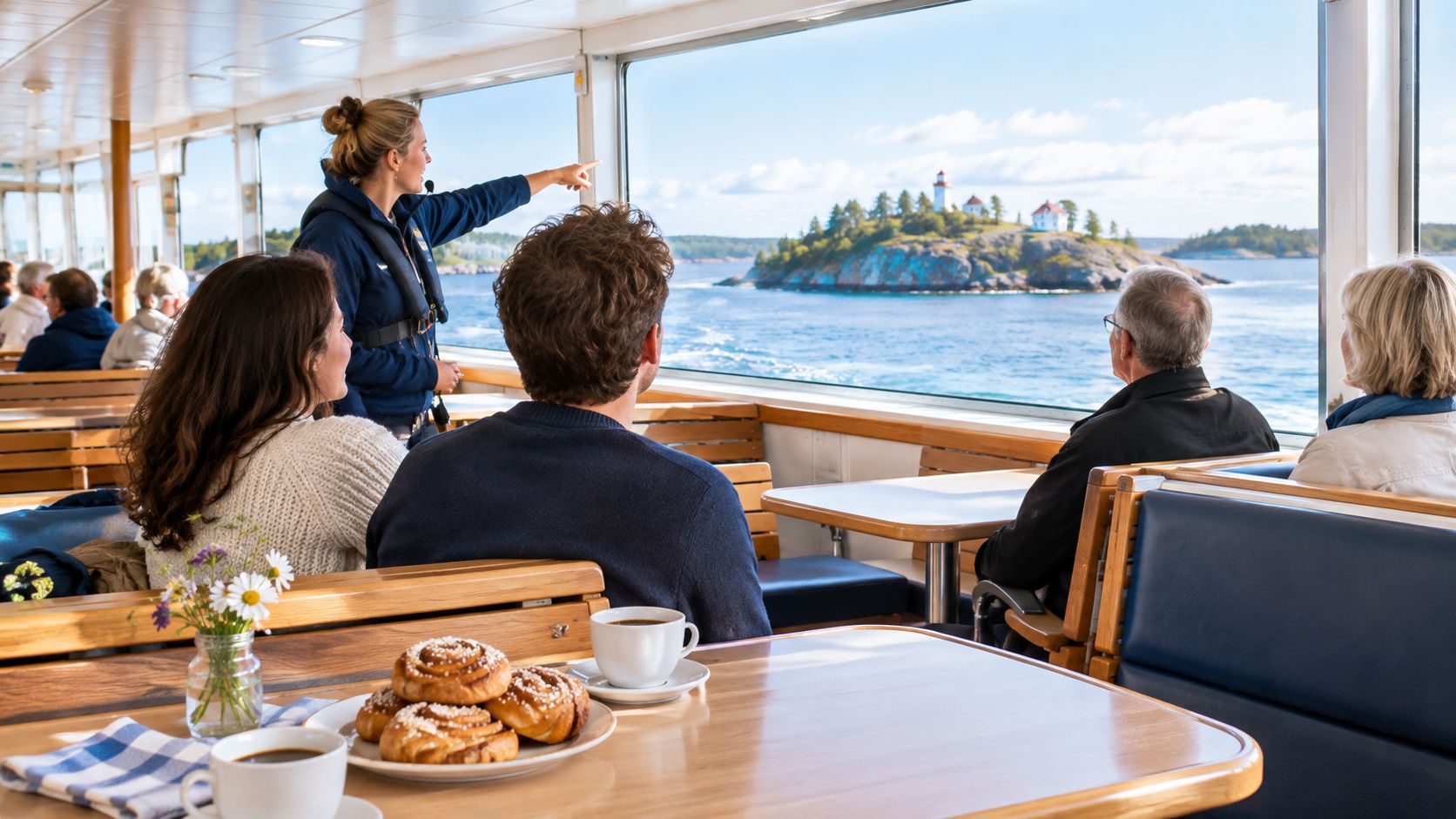
Once the boat leaves the harbour, the experience develops in layers. The first part may show Stockholm's waterfront architecture and urban islands. Farther out, buildings give way to granite shorelines, pine trees, small jetties, and scattered cottages. Commentary, where provided, adds context that visitors might miss by looking at the scenery alone.
Larger sightseeing vessels may offer a café, indoor lounge, toilets, and several viewing areas. Facilities vary by vessel, so the booking description should be treated as the authority. Ferries prioritize movement between stops, which means seating and services can feel more basic.
Dress for the water rather than the pavement. Even on a bright day, wind can make the open deck cold, and conditions may change during the return journey. Layers, a weather-resistant outer layer, comfortable shoes, and a charged phone are sensible basics.
Time ashore changes the experience
A sightseeing cruise may offer excellent views but no island walk. A ferry-based trip can feel less polished while providing the freedom to explore a harbour, follow a path, or pause at a café. On islands such as Vaxholm or Grinda, visitors should avoid planning every minute. A short walk, a meal, and time beside the water often create a better day than rushing between several points.
Solo travelers may value the simplicity of a guided boat, since the route requires little coordination. Couples often prefer a destination with enough free time for an unhurried walk. Groups need to decide whether everyone wants the same pace, since island travel becomes harder when some people want photographs and others want to move quickly.
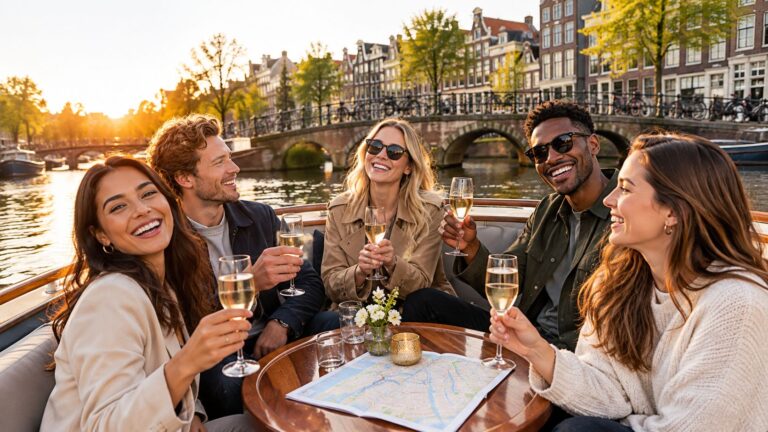
For a social boat experience in Amsterdam, a shared format such as this shared booze cruise follows a different purpose from Stockholm sightseeing. The useful lesson is to identify whether the group wants scenery, transport, or a hosted social atmosphere before comparing bookings.
Duration Departure Points and Seasonality Explained
Travel time is the most important value calculation. Inner islands can be reached in about 25 to 60 minutes, while Vaxholm commonly takes roughly 45 to 60 minutes or about one hour, depending on the service and departure. Grinda generally requires around 1.5 to 2 hours, and Sandhamn in the outer archipelago typically takes about 2.5 to 3 or more hours each way. (Stockholm Tourism's archipelago route guide)
These are planning ranges, not guarantees. A specific sailing may take longer because of stops, vessel type, weather, or the route selected. The key point is the relationship between transit and time ashore.
Matching distance to the day
A short visit to Stockholm rarely benefits from an ambitious outer-island plan unless the archipelago is the central purpose of the day. A destination requiring three or more hours each way can turn a day trip into a long sitting session, with the island itself receiving less attention than expected.
Vaxholm often makes sense for a balanced outing because the journey is substantial enough to feel like a departure from the city without consuming the entire day. Grinda asks for more commitment and works better when the visitor wants nature and walking. Sandhamn and other outer destinations suit travelers who are prepared to dedicate most of the day to the route.
The most distant island isn't automatically the most rewarding choice. The best destination is the one that leaves enough time for the activity that brought the traveler there.
Departure points and service types
Tourist-oriented boats commonly leave from central waterfront departure areas, making them convenient for visitors staying in the city. Public ferry services connect mainland harbours and islands across a much wider network. Waxholmsbolaget operates as part of Stockholm County's public transport system, with services extending from Arholma in the north to Landsort in the south and year-round connections between islands and mainland harbours. (Waxholmsbolaget in English)
Those systems don't offer the same experience. A tourist cruise is easier to understand and usually returns to the starting area. A public ferry can provide authentic island access, but passengers must manage timetables, changes, and the return journey.
Seasonality affects choice
Some Stockholm sightseeing boat services are described as operating daily from late April to late September, while winter service may be reduced or paused. The Djurgården ferry remains available year-round, though at a reduced winter frequency. (Stockholm boat tour information)
Island-hopping is more sensitive to seasonal schedules and route variation. The Archipelago Trail is explicitly a summer route with a fixed 2025 operating window, while recent coverage of Sweden's new trail describes a ferry-and-footpath experience across 20 islands in coverage published for 2026. (Visit Sweden's three-day archipelago journey) Travelers outside the main season should verify every leg rather than assume that a summer itinerary operates unchanged.
Sample Itineraries for Different Time Budgets
A useful itinerary begins with a hard limit. If the traveler has only a few hours, an island stop may create stress. If the archipelago is the main reason for the day, a longer ferry route or walking plan becomes more sensible.
The compact city-close cruise
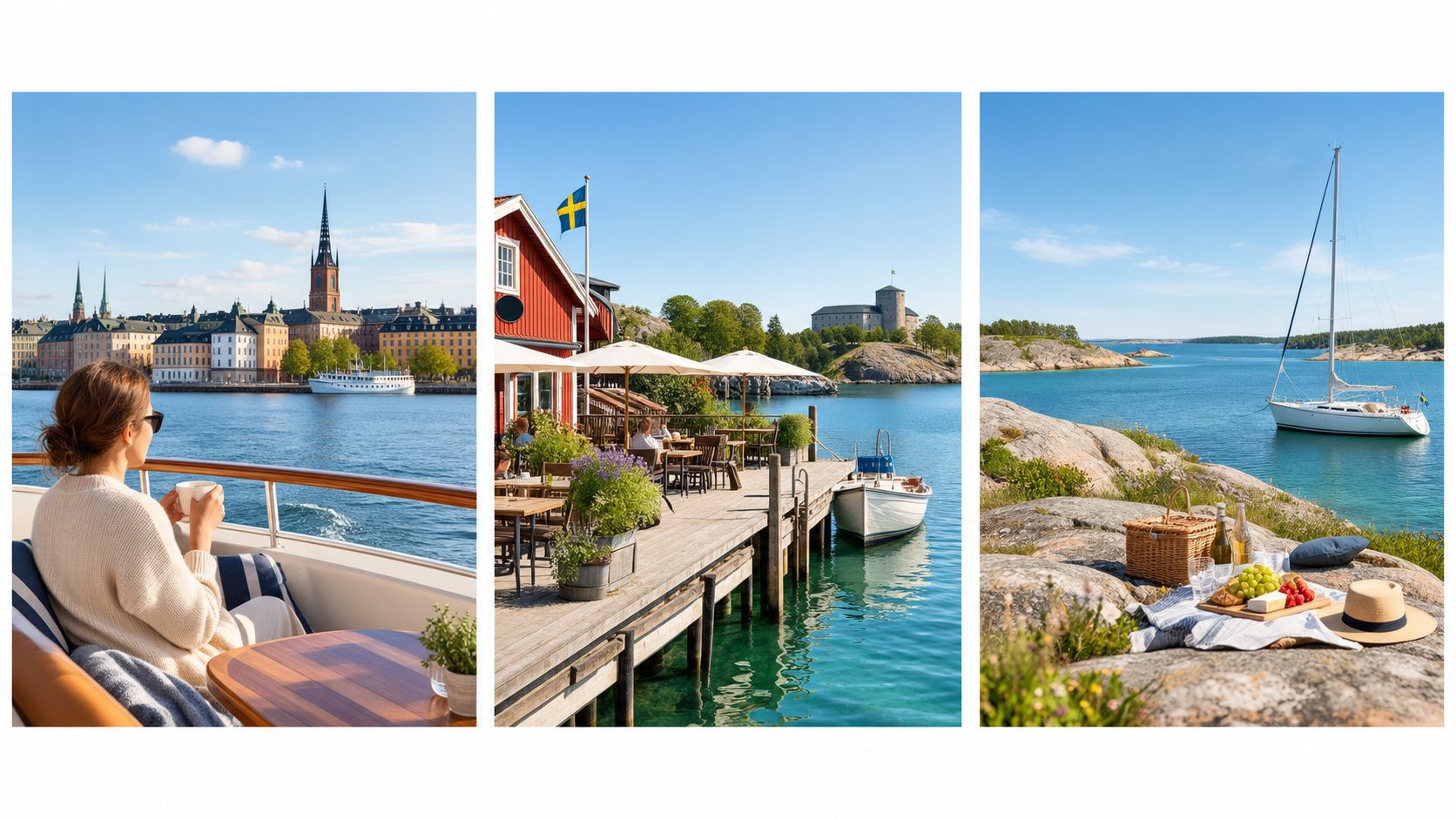
For a 2 to 3 hour window, a guided sightseeing cruise through the inner archipelago is the safest fit. The traveler reaches the waterfront with enough time to board, stays onboard, and returns without relying on a tight island connection.
This plan suits a first visit that also includes museums, Gamla Stan, or an evening booking. Warm layers remain useful even when the city feels mild. A flexible traveler can choose an outdoor seat when the weather is good and move indoors if the wind rises.
The main mistake is expecting a substantial island walk. This itinerary is for scenery, commentary, and a change of perspective, not for ticking off a remote destination.
The balanced Vaxholm or Grinda outing
A half-day or longer allows a destination visit. Vaxholm is the more manageable choice when the group wants a harbour, a walk, and a meal without making the archipelago the only activity. Grinda suits visitors who care more about open terrain and walking, and who accept a longer journey.
The plan should include a return option before departure. Travelers should check whether the chosen service is direct, whether the timetable changes by season, and whether the final sailing leaves enough margin for delays. Comfortable footwear matters more here than on a sightseeing cruise.
Food planning can stay simple. A packed snack provides security, while island cafés offer a reason to slow down if they're open.
The full-day outer route
A nature-focused traveler can reserve most of the day for an outer-archipelago destination or a trail-inspired ferry-and-walking plan. This is the format that most rewards preparation, because multiple legs, operating windows, weather, and daylight all influence the result.
The itinerary should be built in reverse from the required return time. First check the final ferry, then work backward through the outbound connection and planned walk. In shoulder season or winter, a shorter inner route is the sensible alternative if service is limited or conditions deteriorate.
Travelers should pack layers, water, snacks, navigation support, and footwear suitable for uneven paths. Booking ahead is sensible during the busiest summer periods, but timetable verification remains essential even with a reservation.
Booking Tips Pricing and How to Get the Best Value
Price depends on what the traveler is buying. A guided cruise charges for a packaged sightseeing experience. A public ferry charges for transport, with flexibility often coming at the cost of planning effort.
One neutral guide lists one-way island fares at around 90 to 170 SEK and a 5-day Båtluffarkortet pass at around 795 SEK. (Visit Sweden's guide to getting around the archipelago) Those figures should be checked before purchase because fares, validity, and route conditions can change.
Use these decision rules
- Choose a cruise for simplicity: A packaged sailing is easier when the priority is commentary, a fixed return, and minimal timetable management.
- Choose public ferries for flexibility: Independent travel can suit visitors who want to get off, walk, and decide how long to stay.
- Consider a pass for repeated travel: A multi-day pass becomes more relevant when several ferry journeys are planned, not for one short outing.
- Check the departure point: Central Stockholm departures and mainland ferry harbours aren't automatically interchangeable.
- Read the seasonal timetable: A route that works in summer may run less often, or not at all, outside the main operating period.
- Confirm the booking terms: Check what's included, whether food requires separate planning, and how cancellations or timetable changes are handled.
Public ferry systems remain the default way many locals move around the archipelago, while tourist cruises offer a more guided and self-contained experience. That makes the best-value answer different for each traveler. A visitor with limited time may gain more from paying for convenience, while a flexible group may prefer transport fares and a self-built route.
For broader city planning, this guide to experiencing Amsterdam nightlife on a budget follows the same principle: separate the headline experience from the practical costs, timings, and inclusions before committing.
Before booking, travelers should write down the available hours, desired time ashore, acceptable travel time, preferred season, and return deadline. That short checklist usually reveals whether the right choice is a sightseeing cruise, a ferry ticket, or a more ambitious island itinerary.
For visitors continuing to Amsterdam, Ultimate Party Amsterdam offers hosted pub crawls, shared canal booze cruises, private booze cruises, and concierge support for group arrangements. Explore the available experiences through Ultimate Party Amsterdam and choose a format that matches the group's time, social style, and plans for the city.
🍻
Experience it Yourself
Skip the planning — join Amsterdam's biggest pub crawl and get 6 bars, free drinks and VIP club entry for €20.