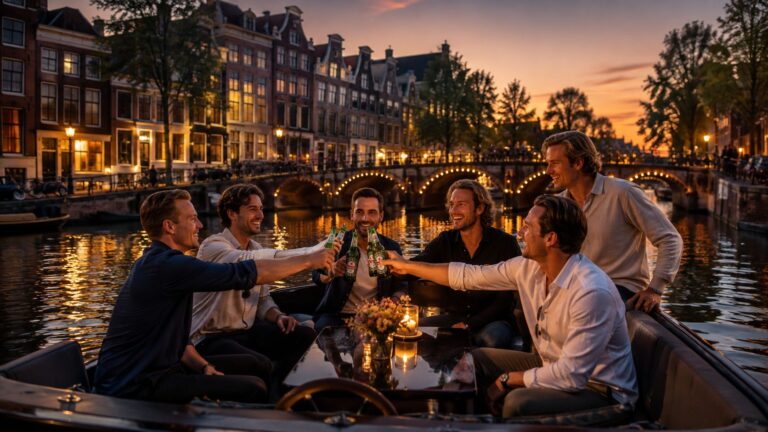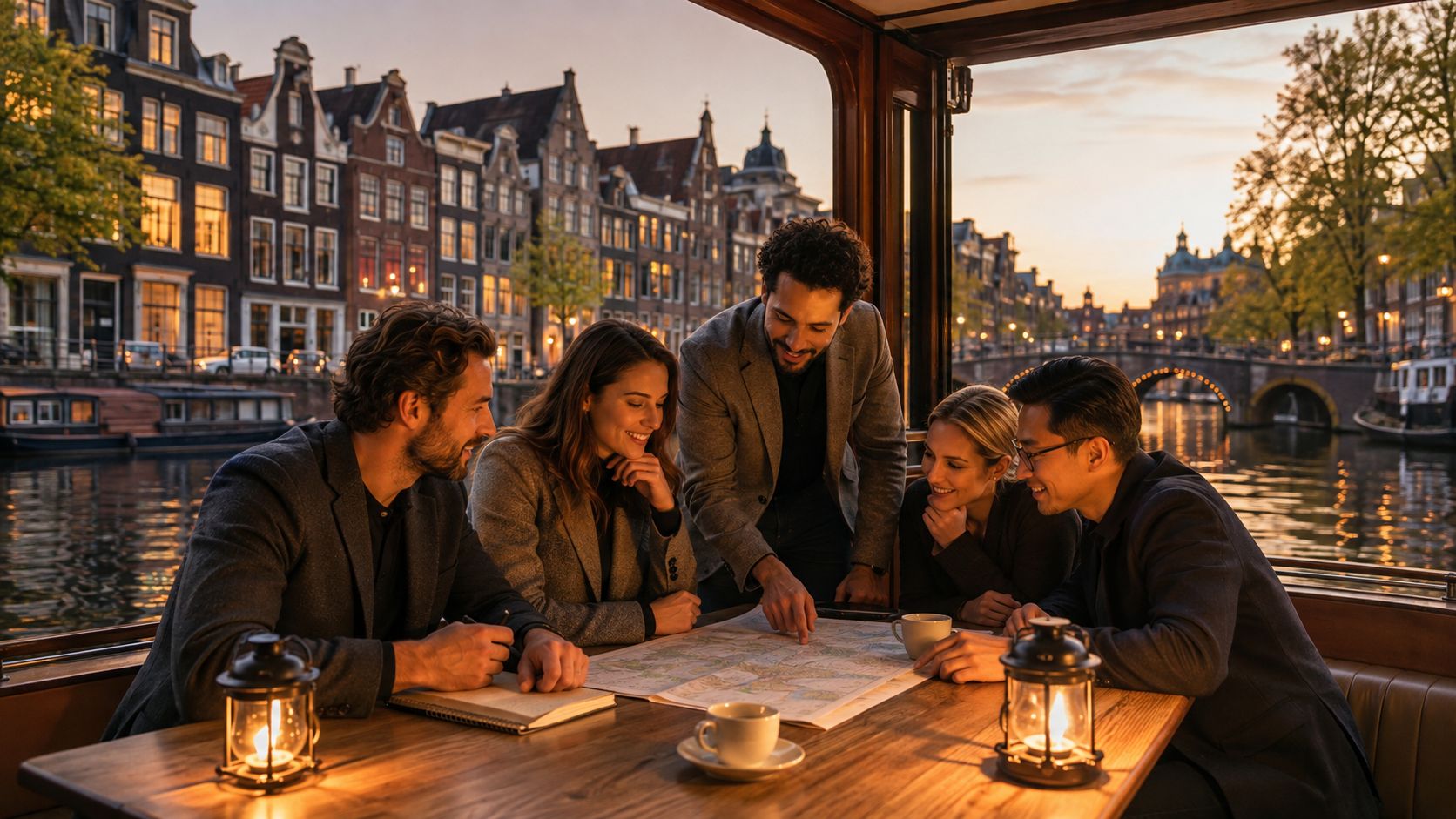
You've got the group chat open, the flight is booked, and someone has already asked if the plan includes “something on a boat, something with drinks, and maybe a club at the end.” That's a normal Amsterdam briefing. The city rewards planners who think in districts, timings, and group behavior, not just in activity names.
Amsterdam's group scene is dense and very manageable, but it's also regulated in ways that catch visitors off guard. Dance events can require permits even on boats or in non-hospitality spaces, pub crawls have practical group-size limits, and nightlife age rules can vary by venue or event. For anyone arranging team building Amsterdam style nights, the key task is matching the format to the group, the mood, and the logistics.
| Format | Typical Duration | Best Group Size | Hosted? |
|---|---|---|---|
| Hosted pub crawl | Evening | Small to medium groups | Yes |
| Private canal cruise | About one hour or longer depending on package | Small to mid-size private groups | Yes |
| Shared canal cruise | Short evening slot | Mixed groups and shorter stays | Usually yes |
| Workshop-based activity | Half day to full day | Flexible, from compact teams to larger groups | Often yes |
| Daytime landmarks | A few hours | Any size | Usually self-directed |
A good planner starts by deciding what the night needs to do. Bond a new team, reward a sales department, keep a mixed-nationality group together, or give a stag group a big finish. Those goals lead to different choices, and Amsterdam makes more sense once the district, pace, and age range are clear.
For a practical planning checklist, a step-by-step event plan for 2026 is useful as a framework, especially when the group's timing is tight and the itinerary has to work on the first try.
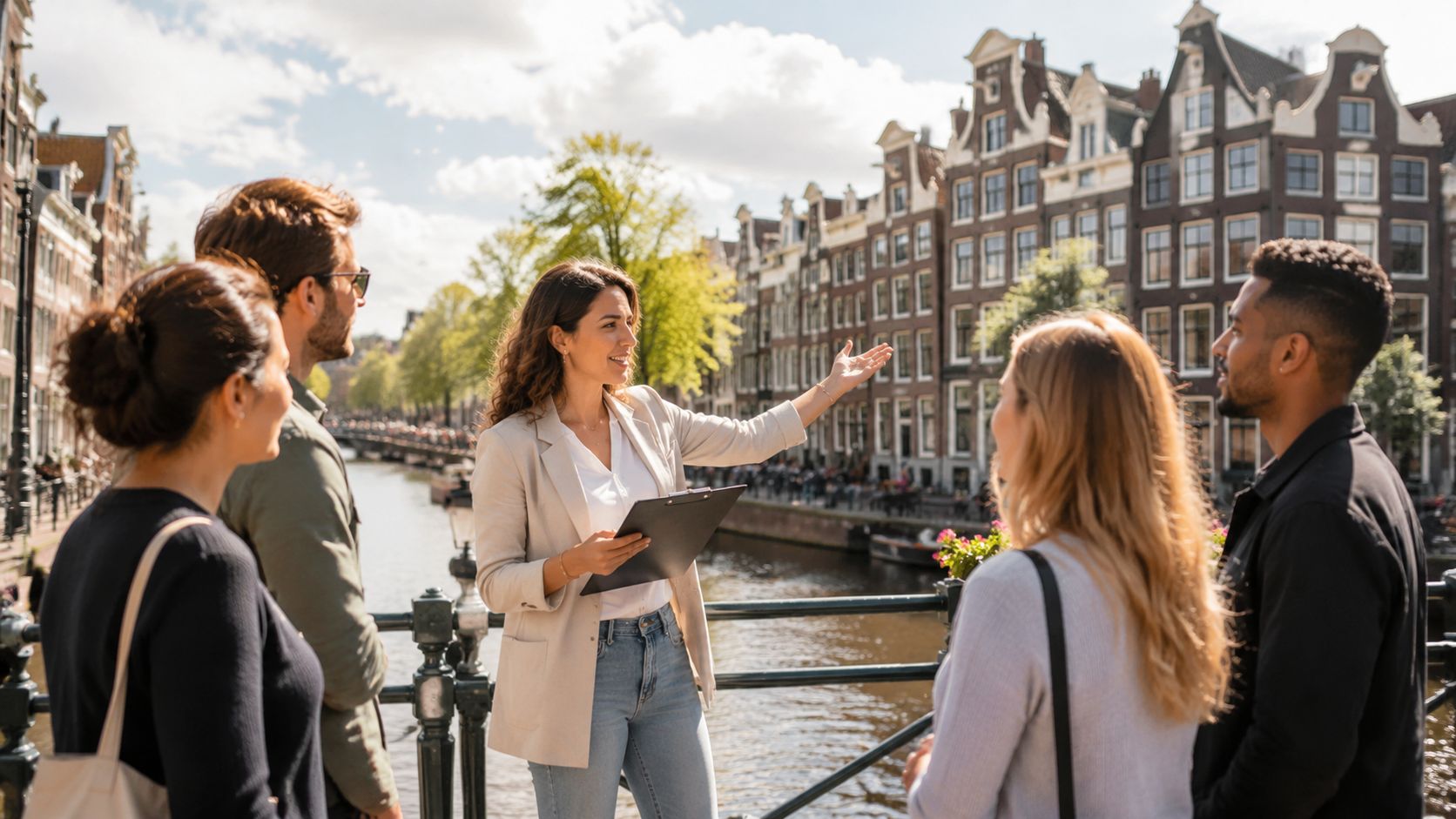
Table of Contents
- Planning Team Building in Amsterdam
- Main Activity Types for Amsterdam Group Events
- Pub Crawls Versus Canal Cruises
- Booking Logistics and Local Rules
- Itineraries for Different Group Types
- What Team Building Actually Costs in Amsterdam
- Common Planning Mistakes and How to Avoid Them
- Choosing the Right Option and Next Steps
Planning Team Building in Amsterdam
A planner often arrives with a group that has only one free evening, one dinner reservation, and a few people who want nightlife while others want something calmer. That's the point where Amsterdam either feels easy or chaotic. The city is compact enough to work well, but only if the plan respects how people move between streets, boats, and venues.
Think in districts, not in generic activities
The practical advantage of Amsterdam is density. Groups can switch from drinks to walking to a canal setting without losing the whole night to transport, which is why the city handles corporate and social groups so well. That density also means the wrong route can feel cramped or noisy fast, especially when everyone has different energy levels.
Practical rule: choose the district first, then choose the activity. The district shapes the mood, the walking time, and the amount of friction at the door.
Another thing that catches visiting planners is how formal nightlife can become once the group gets bigger or more animated. Dance events can require permits under local rules, including when they happen on boats or in buildings that are not operating as normal hospitality venues, so the “it's just a group night” assumption can be misleading. The smart move is to treat the booking like an event, not a casual bar hop.
That framing matters even more for mixed groups. A corporate team may need a calmer start, a stag group may want higher tempo, and a short-stay visitor may need everything to happen in one compact route. Amsterdam can handle all three, but not with the same structure.
Build around the group, not the brochure
A useful decision set is simple. Group size tells you whether a hosted format is safer. Hours tell you whether you need a contained boat or a route-based crawl. Vibe tells you whether people need icebreaking, celebration, or something more relaxed. Age range matters because venue policies aren't uniform. Budget matters because Amsterdam's pricing ladder makes bundled coordination much more sensible once the group stops being tiny.
For planners comparing options, escape rooms and cooking classes for teams are worth looking at as alternatives or add-ons when the goal is collaboration rather than nightlife alone. In Amsterdam, the best outcomes often come from pairing a daytime anchor with an evening format that fits the group's pace.
Main Activity Types for Amsterdam Group Events
Amsterdam group events usually fall into a few buckets, and they behave differently once the night starts. The mistake is treating them as interchangeable because the booking page looks simple. Hosted formats reduce friction. Self-directed formats give more freedom. That difference affects punctuality, group balance, and how quickly people settle in.
Hosted routes and contained cruises
Hosted pub crawls work well when the group wants movement, introductions, and a clear social structure. They suit visitors who do not know the city, because the guide handles the route and keeps people together. They also fit stag groups, mixed friend circles, and short-stay visitors who want one reliable night without much planning on the fly.
Private canal cruises suit groups that want a contained setting and less walking. They make sense when weather, dress code, or mobility are concerns. A private boat also gives the planner more control over the tone of the evening, which helps for celebrations that need a cleaner finish than a bar crawl. If the group wants a nightlife route with a clear local frame, the Red Light District pub crawl fits the same hosted logic.
Shared formats and daytime anchors
Shared canal cruises work for groups that want a lighter social layer and do not need a fully private setup. They are easier to drop into a short itinerary and can work as an icebreaker before dinner or as a late afternoon warm-up. Daytime landmarks sit in a different lane, because they give the group breathing room between the louder parts of the trip.
Workshop formats sit outside nightlife, but they often improve the whole program because they give the group a shared task. For corporate teams, that can work better than pushing straight into evening drinks. For mixed groups, it can lower social friction before the first round. In a canal-side loft or a private dining room, even a simple hands-on session can do the job of getting strangers to speak to each other without forcing the night too early.
For planners comparing broader team formats, escape rooms and cooking classes for teams are useful when collaboration matters more than a party atmosphere. The better choice depends on whether the group needs energy, structure, or a softer social ramp.
| Format | Typical Duration | Best Group Size | Hosted? |
|---|---|---|---|
| Hosted pub crawl | Evening | Small to medium | Yes |
| Private canal cruise | About one hour or longer depending on package | Small private groups | Yes |
| Shared canal cruise | Short slot | Mixed groups | Usually yes |
| Workshop activity | Half day or more | Flexible | Often yes |
| Daytime landmarks | A few hours | Any size | No |
Pub Crawls Versus Canal Cruises
Pub crawls and canal cruises are the two formats most planners consider first, but they solve different problems. A crawl is about momentum, interaction, and energy across multiple stops. A cruise is about control, comfort, and keeping the group together without constant movement through the streets.
Pace and social dynamic
Pub crawls work well when the group is happy to walk, mingle, and absorb the city as it goes. They're naturally good for mixing people who don't know each other yet, because the movement between venues creates easy conversation and avoids the awkwardness of everyone staring at the same table for two hours. They also fit groups that want a livelier finish.
A canal cruise is calmer by design. People settle in faster, the setting feels more private, and the group can hear each other. That makes cruises better for conversations, milestones, and mixed groups that include people with different nightlife energy. Weather also matters less on water than on foot, which is one reason cruise bookings often feel safer for planners who want fewer moving parts.
A lot of groups do best by combining both, a lighter daytime or early-evening cruise, then a crawl or club finish once the group is warmed up.
Who each format fits
Crawls fit groups that want noise, motion, and a host who keeps the night moving. They're especially strong for bachelor-style groups and teams that need a social reset after a long work period. Cruises fit groups that want a premium-feeling setting without having to manage tables, taxis, or venue changes.
The best comparison is not “which is better,” it's “which one carries the evening better.” A crawl carries energy. A cruise carries conversation. If the group wants both, the itinerary should reflect that instead of forcing one format to do both jobs.
For a contained private option, the private booze cruise is the kind of format that suits celebration groups looking for a more controlled setting. It's the cleaner choice when the priority is keeping the whole party together without relying on street-level logistics.
Booking Logistics and Local Rules
A group can have the right activity and still run into trouble if the booking details are loose. In Amsterdam, the cleaner approach is to settle the rules before anyone sends a deposit. Mixed ages, international guests, and a route that crosses more than one venue all create small decision points that need a clear answer up front.
Confirm the rules before the deposit
Pub crawls need a hard headcount, because Amsterdam guidance caps them at 20 people. That limit sounds generous until partners, late arrivals, or a last-minute guest add up. If the night depends on everyone staying together, the final number has to be fixed early.
Age rules need the same attention. Local nightlife guidance says most venues run as 18+, but some set higher entry bars such as 21+ or 25+. For corporate groups or mixed-age celebrations, that can decide whether the full group gets in, or whether part of the party ends up waiting outside.
Don't assume street drinking works like a festival
Public alcohol is banned in most central streets, and public cannabis smoking is banned in the Red Light District. The night still works, but only if the route and group behavior fit the city's rules. Groups that treat the centre like an open party zone usually hit friction fast.
Water has its own limits. Licensed boats can serve alcohol, but the skipper must stay under the legal alcohol limit of 0.5 on the water (canal boating navigation rules). That is why a private cruise is a managed hospitality setup, not an informal drink session with a driver.
If late-night movement or group conduct is part of the brief, practical guidance on Amsterdam safety helps planners think through it without adding unnecessary drama. The practical checklist is simple, confirm age policy, route rules, permit needs, and cancellation terms before paying anything.
Itineraries for Different Group Types
A good Amsterdam itinerary feels obvious once it's built, but that's because the parts were matched properly. A bad one usually tries to make every person happy at the same time, which is how groups end up rushed, overbooked, or split. The cleaner approach is to design the day around the group's actual scenario.
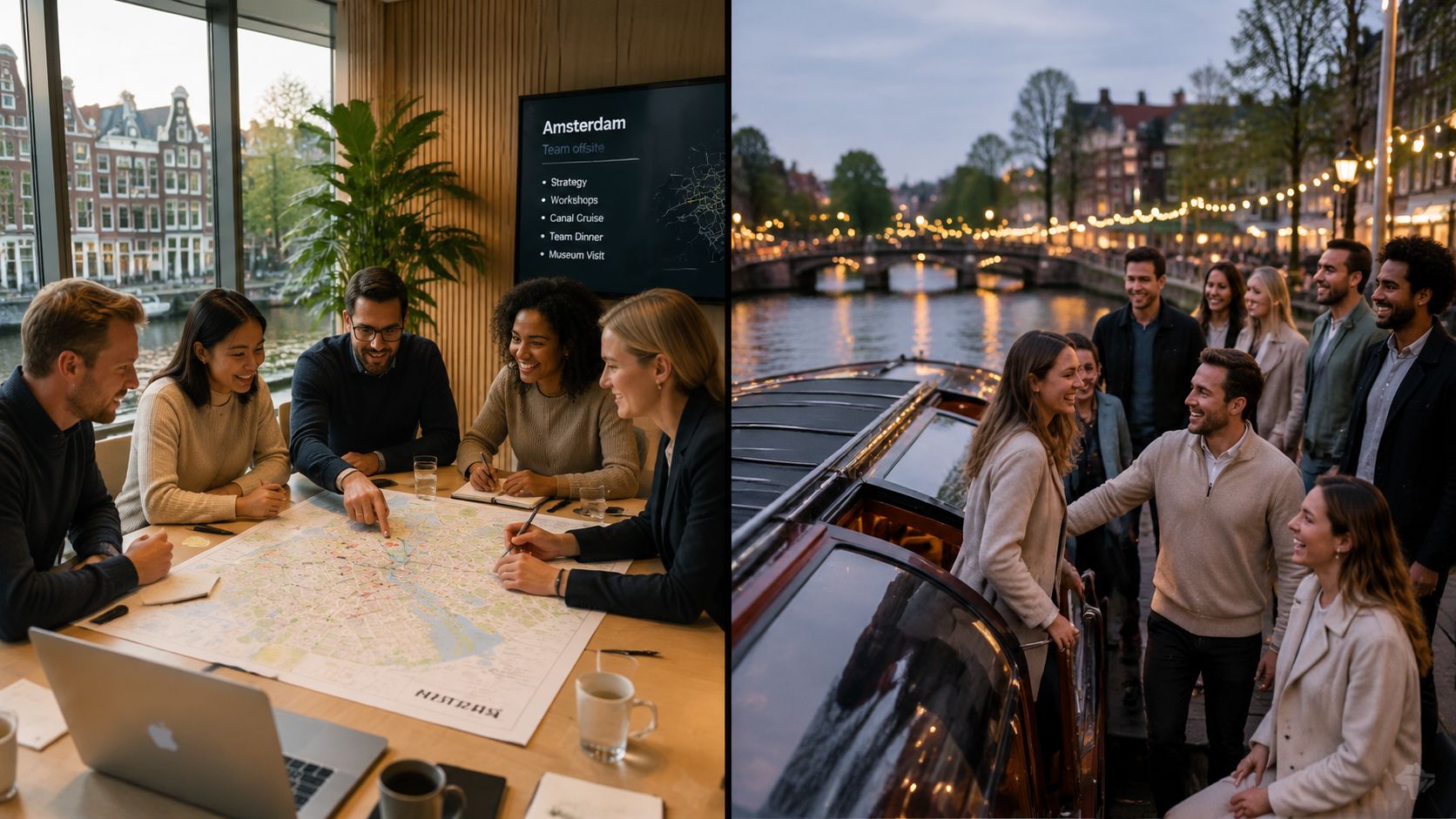
Corporate team of 20 to 40 on a two-day program
For a corporate group, the daytime anchor should lower social friction rather than raise it. A structured workshop or a guided city walk gives the team something shared to talk about before dinner. The evening then works best as a private boat or a hosted social route, because both formats let people relax without the chaos of self-navigation.
This kind of program works because it avoids forcing a work team straight into a high-energy nightlife setting. People who want a quieter evening can stay engaged, and people who want a stronger finish still get one. The itinerary should feel deliberate, not random.
Stag or hen group of 8 to 15 on one big night
A stag or hen group usually needs a sharper contrast between day and night. A late lunch, some free time, and then a hosted pub crawl create the right ramp because the group arrives ready rather than exhausted. A private or shared cruise can also work if the mood is more celebratory than rowdy.
The common mistake here is overpacking the night. Once the group starts trying to add too many stops, the energy drops. One strong hosted format is usually better than three weak ones.
Mixed-nationality backpacker group on a short stay
For a mixed group with different language comfort levels and limited time, a shared cruise or a hosted crawl is usually the easiest entry point. Both formats remove the awkwardness of choosing venues in an unfamiliar city. Daytime can stay loose, with landmarks or neighborhood wandering before the evening starts.
That combination works because nobody has to lead the group alone. The city can be enjoyed socially without turning into a planning exercise every hour.
Private celebration group wanting a contained premium experience
A private celebration group needs privacy, comfort, and predictable movement. A private canal cruise followed by a dinner or a single late venue works better than a scattered route, because it keeps the group together and preserves the mood. This is the right choice when the group values conversation and a polished finish more than bar-to-bar variety.
Ultimate Party Amsterdam can fit naturally into that kind of plan with hosted crawls, canal booze cruises, and concierge-style coordination for private arrangements. For planners who want one point of contact instead of managing multiple bookings, that kind of setup is often the simplest route.
What Team Building Actually Costs in Amsterdam
Amsterdam has a real pricing ladder, and it tells planners a lot about what the market supports. Independent event-market guidance puts half-day local programs at €75 to 150 per person, full-day multi-element programs at €200 to 400 per person, multi-day events with accommodation at €400 to 800 per person, and premium experiences above €1,000 per person (event-market guidance). That spread reflects more than activity length, it reflects facilitation, logistics, and how much the operator has to absorb for the group.
What moves the price
A hosted pub crawl costs differently from a self-directed night because the operator is managing venue flow, door handling, and group rhythm. A private cruise costs differently again because the boat is reserved for one party and the structure is more controlled. Bundled experiences get pricier when drinks, entry, and coordination are folded in, but they also reduce the mess of paying separately on the night.
The practical takeaway is simple, bundling drinks and entry usually beats trying to piece everything together at the door.
A premium concierge arrangement sits at the top because it solves for complexity, not just entertainment. That kind of booking suits groups that need timing, privacy, and a cleaner guest experience across multiple moving parts. It's less about a single activity and more about removing planning stress.
Translate the tiers into Amsterdam reality
A hosted crawl night usually fits the lower to mid part of the ladder because the format is focused and social. A private cruise with drinks sits higher because it adds exclusivity and a more polished setting. A bundled two-night pass or a larger custom weekend naturally moves upward because the coordination expands across more time and more touchpoints.
The best value is rarely the cheapest-looking line item. It's the format that reduces last-minute friction and keeps the group moving without confusion.
Common Planning Mistakes and How to Avoid Them
The most common error is treating Amsterdam like a city where any night plan will work if the drinks are good enough. That's not how it behaves. The city rewards structure, and it punishes vague assumptions.
The recurring mistakes
One mistake is overloading a single night with too many stops. A team that starts with dinner, then a bar crawl, then a club, then a late boat option usually ends up losing half the group by the middle. Another mistake is ignoring the 20-person cap on pub crawls and assuming the headcount can be solved later.
Planners also get caught by the idea that there is one citywide age rule. There isn't. Venue policies vary, so a group that includes younger and older adults needs every booking checked in advance. Public drinking rules are another frequent miss, especially for groups that expect to wander central streets with open containers.
The better way to plan
Travel time matters more than first-time visitors expect, even in a compact city. Two venues that look close on a map can still break the rhythm if the group is dressed for nightlife and moving in bad weather. That's why route design matters as much as the venue list.
The bigger planning mistake is conceptual. Amsterdam team building works best when the organizer starts with the outcome, not the activity menu. Bonding, onboarding, celebration, and morale recovery all point to different formats. A shopping list of nightlife ideas is easy to assemble, but it's a weak way to design a group night.
Choosing the Right Option and Next Steps
High-energy social nights usually point to a hosted pub crawl. Contained celebrations point to a private boat. Relaxed icebreakers point to a shared cruise. Fully bespoke programs need concierge-style coordination. A quick check on age policy, cancellation terms, and route rules before booking prevents most surprises.
For groups that want a direct booking path, the relevant options are the hosted crawls, canal cruise formats, and private arrangements already built for Amsterdam nights. If the plan needs to be social, practical, and easy to hand to colleagues, the next step is to match the scenario to the format, then confirm the details before the deposit is sent.
If the group needs a hosted crawl, a private canal cruise, or a more customized night out, Ultimate Party Amsterdam has Amsterdam-based options built around nightlife, group flow, and simple coordination. For planners who want the city handled without guesswork, that's the place to start.
🍻
Experience it Yourself
Skip the planning — join Amsterdam's biggest pub crawl and get 6 bars, free drinks and VIP club entry for €20.