You've checked into a hotel near Dam Square, it's Friday evening, and the group is ready for a famous Amsterdam night. By 9 PM, the route toward De Wallen is crowded, several venues are full, and nobody agrees on where to go next. Amsterdam looks compact on a map, but that doesn't mean its nightlife works well as an unplanned walk from bar to bar.
Touring in Amsterdam now requires more than a list of popular streets. Visitor demand, district rules, boat restrictions, venue capacity, and late-night transport all shape the night. The most reliable approach is to decide what kind of evening the group wants, reserve the parts that matter, and keep a realistic route home.
Table of Contents
- Why Amsterdam Nightlife Demands a Real Plan
- The Two Nightlife Districts Every Visitor Should Know
- Combining Daytime Sightseeing with Evening Plans
- Pub Crawls Versus Canal Cruises for Your Group
- Sample Itineraries by Traveler Type
- New Rules and Capacity Limits Changing Amsterdam Nights
- Getting Home Safely After Midnight
- Your Amsterdam Nightlife Planning Checklist
Why Amsterdam Nightlife Demands a Real Plan
Amsterdam's visitor economy is already operating at a huge scale. In 2024, the city recorded an estimated 14 million unique day visitors and 10 million overnight visitors, producing about 23 million overnight stays. The municipality's 2025 forecast ranged from 23.0 million to 24.6 million overnight stays, while the average stay length in 2024 was about 2.36 nights. The city also counted 12,636 tourism-sector establishments and 76,629 tourism jobs, showing how closely visitor demand is tied to daily life in Amsterdam. These figures come from the municipality's tourism dossier.
That scale changes the odds of a spontaneous night. A small group might still find a bar without preparation, but a larger group can be refused at the door, split across venues, or lose valuable time walking between full locations. The mistake isn't choosing the wrong bar. It's assuming that every central bar can absorb another group at the same moment.
The difference between wandering and touring
A visitor who wings it often starts too late, drinks too early, and treats the Red Light District as one large open-air venue. A visitor with a plan usually chooses a base district, schedules one anchor experience, eats before the busiest period, and agrees on a meeting point before anyone gets separated.
That approach matters because Amsterdam's night economy is substantial. City research estimates that visitors spend about €1.25 billion annually during stays connected with night culture, with roughly €63 million in local prosperity gain and about €49 million in state tax revenue. The same Amsterdam night vision document reports more than 3 million unique non-local nightlife visitors. Crowded streets and busy venues aren't unusual exceptions. They're part of the operating environment.
Practical rule: A successful night out is built around movement, timing, and capacity, not just destination names.
For solo travelers, a hosted pub crawl can remove the awkwardness of entering unfamiliar venues alone. For celebration groups, a canal cruise can provide a fixed starting point before the group disperses into bars. Neither format eliminates the need for judgment, but both can reduce the number of decisions made while tired, separated, or already drinking.
The Two Nightlife Districts Every Visitor Should Know
Amsterdam's central nightlife has two main personalities. De Wallen, commonly called the Red Light District, is dense, visually intense, and heavily oriented toward international visitors. Leidseplein and Rembrandtplein offer a broader mix of dance bars, live music, cocktail-led venues, and late-evening restaurants, with a crowd that often feels less concentrated than De Wallen.
A useful overview of the city's nightlife zones is available in this guide to Amsterdam nightlife areas. The important point isn't that one district is universally better. The right choice depends on group composition, noise tolerance, walking preferences, and how much structure the evening needs.
De Wallen suits intensity, but not careless group movement
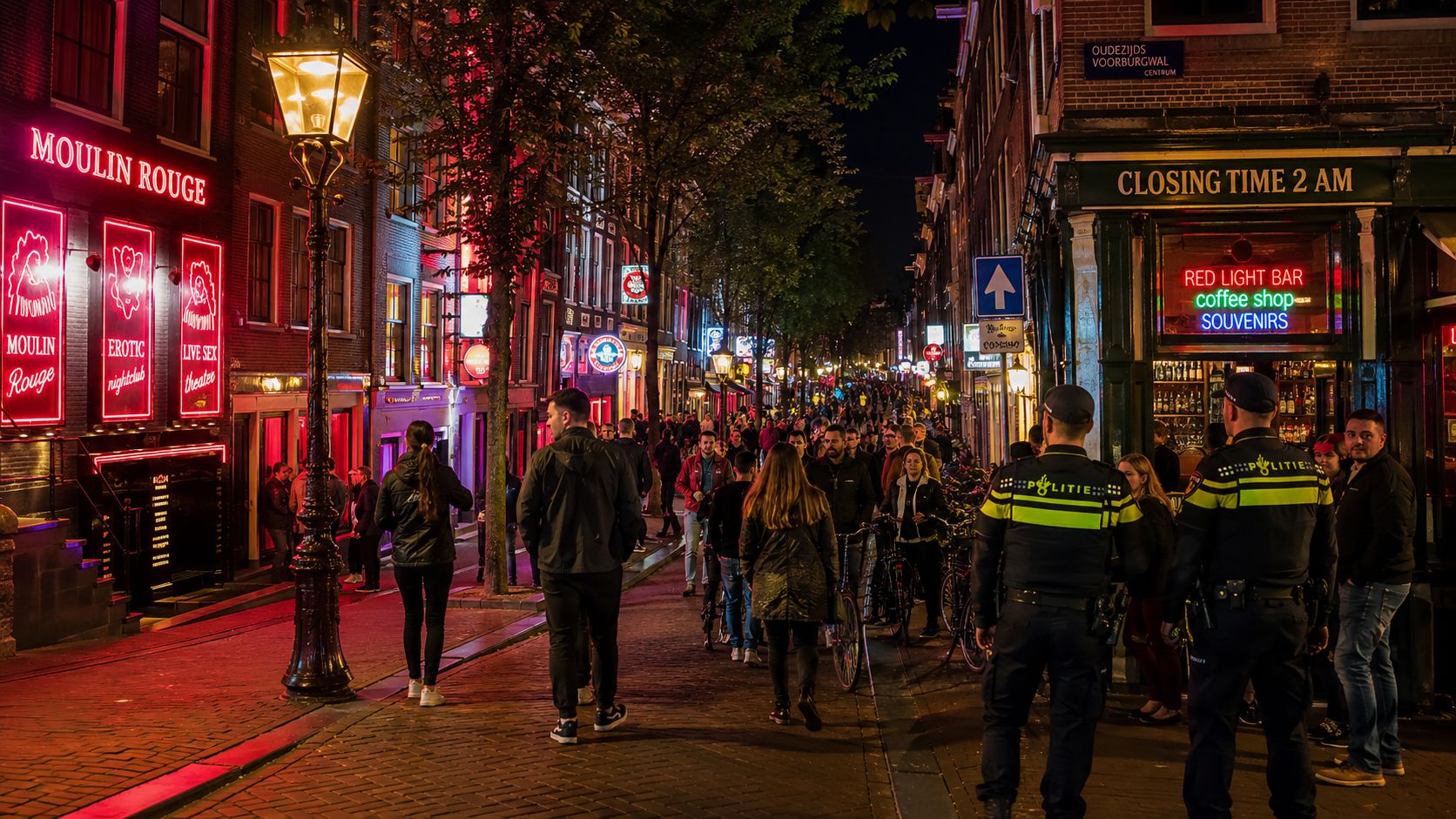
The Red Light District includes the Oudezijds Voorburgwal and Oudezijds Achterburgwal canals, with narrow streets connecting bars, adult venues, cafés, and busy pedestrian routes. Bachelor and hen groups often gravitate there because the atmosphere is immediate and unmistakably Amsterdam. Solo travelers can also find it socially accessible, especially when joining an organized group.
The trade-off is congestion and regulation. Large groups should avoid blocking doorways, photographing sex workers, or assuming that a paid walking activity can operate informally. The district rewards short, purposeful movements. It punishes loud, disorganized groups that treat every street as a private party space.
Leidseplein and Rembrandtplein offer easier variety
Leidseplein sits near the western edge of the central nightlife area, close to major cultural attractions and a concentration of bars and dance venues. Rembrandtplein, farther east, works well for visitors who want a lively square with multiple directions for a second venue. Both areas can suit friends, students, couples, and smaller groups who prefer more choice between dancing, drinks, and music.
| Factor | Red Light District, De Wallen | Leidseplein and Rembrandtplein |
|---|---|---|
| Atmosphere | Dense, highly visible, and intense | Broad nightlife mix around major squares |
| Typical appeal | International groups and curious first-time visitors | Dance bars, live music, cocktails, and varied evenings |
| Main challenge | Crowding, narrow streets, and stricter guided-group rules | Venues may still fill, especially at popular times |
| Best planning style | Short route with clear group behavior | Choose a square as a base and pivot locally |
| Suitable for | High-energy groups and hosted walking experiences | Mixed groups seeking flexibility |
Couples who want a calmer evening may prefer drinks away from the most crowded De Wallen routes. Groups that want a social, guided format should choose the district that matches the experience rather than trying to cover every central square in one night.
Combining Daytime Sightseeing with Evening Plans
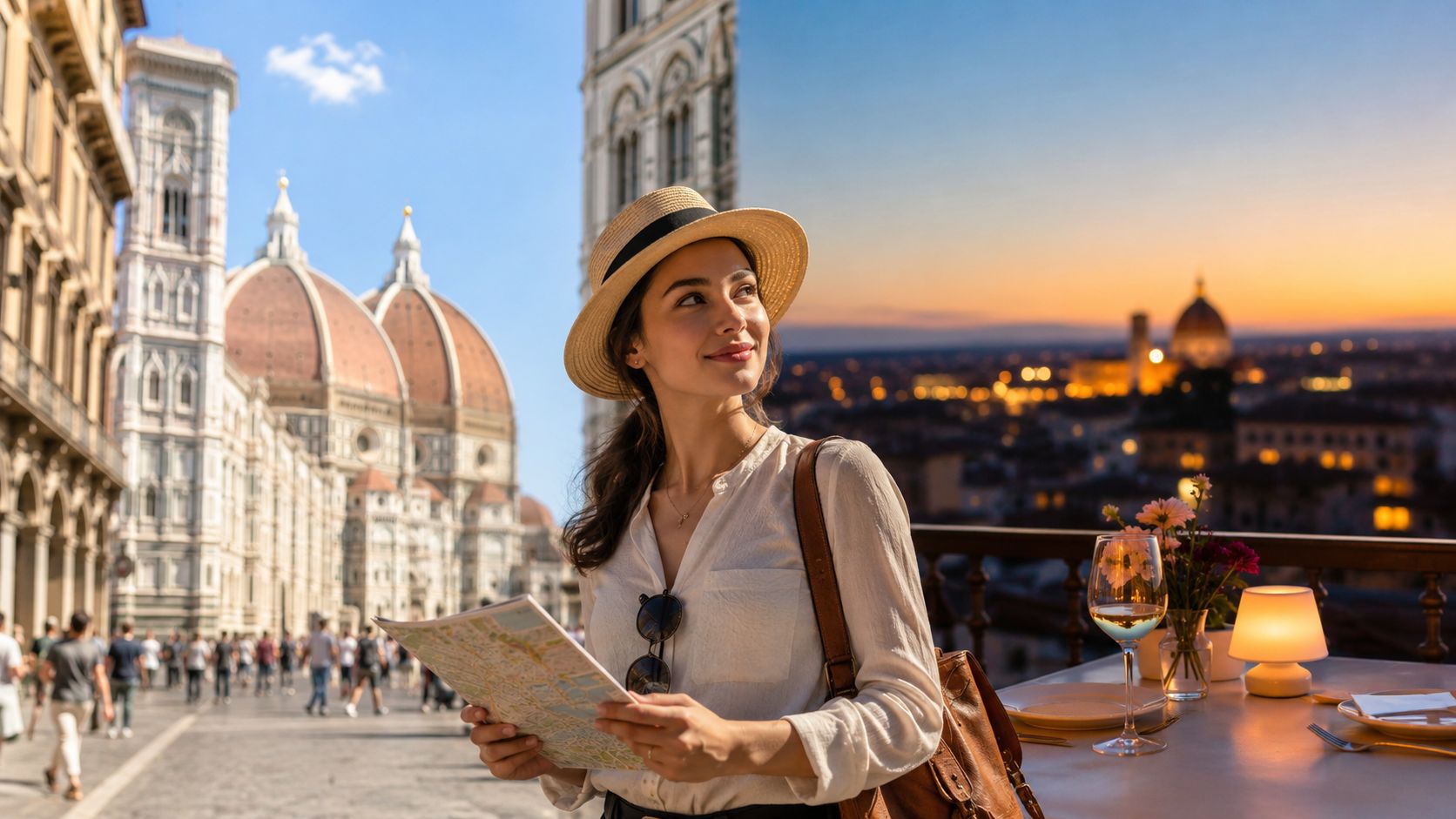
A strong Amsterdam itinerary protects the evening before nightlife begins. Museum visits, canal walks, shopping, and long bike rides all consume more energy than visitors expect, especially when rain, cobblestones, and crowded bridges slow the pace.
Build a reset window into the day
Museums commonly close in the late afternoon, which creates a useful transition. Instead of moving directly from sightseeing into drinks, visitors should return to the accommodation, charge phones, change shoes, check transport, and eat properly.
A realistic structure looks like this:
- Morning or early afternoon: Schedule the major museum or historical attraction.
- Mid-afternoon: Walk through a nearby district or take a scenic canal route.
- Late afternoon: Stop sightseeing before fatigue becomes obvious.
- Early evening: Eat a substantial meal near the first nightlife district.
- Later evening: Start the reserved cruise, crawl, or venue plan with energy intact.
The timing of a canal experience matters. A daytime sightseeing cruise is primarily about architecture and views. An evening party cruise serves a different purpose, with a seated social setting before bars or clubs. Booking both on the same day can work, but only if the group leaves enough space to rest and eat.
Coffee shop visits also need restraint. Starting the day with a long visit and then adding alcohol several hours later can make energy levels unpredictable. Groups should avoid treating an early afternoon start as the beginning of the party if they want to remain engaged late at night.
The day-to-night Amsterdam experience guide offers a useful framework for connecting sightseeing with evening activities. The practical lesson is simple: the night should begin after dinner, not when the first daytime attraction opens.
Pub Crawls Versus Canal Cruises for Your Group
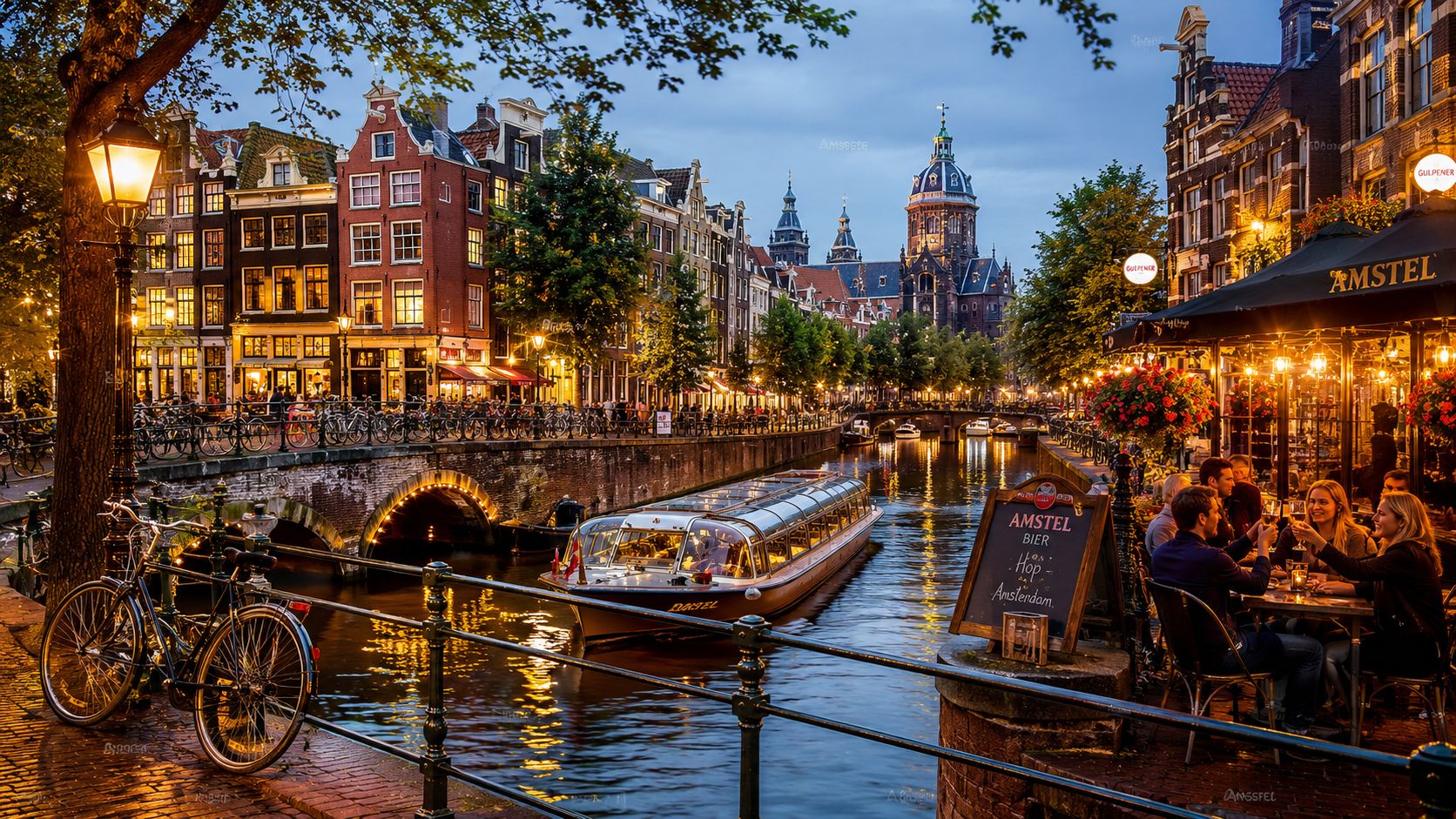
A pub crawl and a canal cruise solve different problems. A pub crawl helps people meet, move through several nightlife venues, and avoid making every door decision alone. A canal cruise gives a group a fixed, seated experience with Amsterdam's architecture around them, making it easier to talk and stay together at the start of the night.
Ultimate Party Amsterdam offers a shared booze cruise on an electric boat. That type of experience can suit groups that want a social canal setting before deciding whether to continue into bars. The choice should still be based on the group's energy and practical needs, not on the assumption that one format works for everyone.
| Factor | Pub Crawl | Canal Cruise |
|---|---|---|
| Social dynamic | Strong for meeting other travelers | Better for keeping an existing group together |
| Physical demand | Requires walking and standing | Primarily seated during the cruise |
| Route | Moves between nightlife venues | Follows a planned canal route |
| Best fit | Solo travelers, friends, and social groups | Couples, celebration groups, and visitors wanting scenery |
| Main risk | Group separation or venue capacity | Weather, vessel rules, and limited route flexibility |
| After the experience | Continue near the final venue or choose another district | Continue to a planned bar area or return to accommodation |
What works for different group types
Solo travelers often benefit from a crawl because the hosted structure creates introductions and removes the pressure of approaching a venue alone. Small friend groups can choose either option, depending on whether they prefer dancing and movement or conversation and views.
Larger celebration groups usually need more coordination. A cruise creates a clear meeting point and gives everyone a shared beginning, while a crawl requires tighter discipline around arrival times, identification, and regrouping. A group that wants both can schedule a cruise first and a later bar plan, but should leave enough time for disembarking, walking, and any entry requirements.
Amsterdam's canal rules also create a safety distinction that groups must respect. Passengers may drink, but the person operating the boat may not drink alcohol. Official guidance limits pleasure craft to 12 passengers plus a skipper, as explained in the city's safe boating guidance. Visitors should confirm the vessel's permitted capacity and avoid treating the skipper as part of the drinking group.
Sample Itineraries by Traveler Type
Good touring in Amsterdam uses one central idea per night. A group can see a great deal, but it can't give full attention to a museum, a long dinner, a cruise, several bars, and a club while also moving carelessly through crowded streets.
Solo travelers and small social groups
A balanced social evening could run as follows:
- Late afternoon: Visit the Rijksmuseum or the Anne Frank House, with tickets arranged before arrival.
- Early evening: Eat near Leidseplein so the group doesn't cross the city immediately before the nightlife activity.
- Later evening: Join a hosted pub crawl or begin a prearranged bar route.
- After the hosted portion: Continue at a nearby late venue only if the group still has energy and everyone remains together.
- Return plan: Check the night bus route before leaving the final venue, then use a licensed taxi if the route doesn't serve the accommodation.
The backup is deliberately simple. If the chosen district is too crowded, the group should stop trying to force entry and move to a preselected venue area outside the most congested streets. Solo visitors should keep the accommodation address in their phone and agree on a meeting point that isn't directly outside a busy club.
Couples seeking a quieter evening
Couples can make the canal setting the centerpiece:
- Afternoon: Walk through Vondelpark and nearby streets without turning the day into a race.
- Early evening: Reserve dinner near a canal or close to the intended cruise departure.
- Later evening: Take a private or small-group canal cruise.
- Afterward: Choose a quieter cocktail-led bar or return to the accommodation while the evening still feels relaxed.
A weather backup should be decided before departure. If rain or wind makes the cruise unattractive, the couple can replace it with a long dinner and an indoor bar route rather than making rushed choices at the last moment.
Large groups celebrating together
Large groups need the most advance coordination:
- Daytime: Choose one shared activity, such as a bike experience or brewery visit, and leave recovery time afterward.
- Early evening: Reserve a group dinner and confirm the venue's rules for late arrival.
- Later evening: Use a reserved canal cruise with drinks as the shared anchor.
- Late night: Arrange a pre-booked table or entry plan at a suitable late venue.
- Contingency: Split into smaller pairs only after agreeing on a meeting place and a fixed regrouping time.
The critical detail is not cramming more activities into the schedule. It's preventing one late person, missing reservation, or full venue from disrupting the entire group.
New Rules and Capacity Limits Changing Amsterdam Nights
Amsterdam's nightlife policy is evolving under pressure from visitor demand, resident concerns, and the need to manage public space. The municipality's night economy policy includes €1 million for 2023 to 2026, plus an additional €1.2 million for developing new nightlife talent, according to reporting on the city's nightlife strategy. At the same time, tourism forecasts continue to place overnight stays at a very high level, creating tension between demand and the capacity of central districts. The relationship between tourism volume and nightlife pressure is outlined in this report on Amsterdam's overnight stays.
Visitors should also understand that canal touring is no longer a matter of choosing any boat. Since 1 April 2025, the central emission-free zone permits pleasure craft using electric, hydrogen, or manual propulsion with a valid vignette. Hybrid boats may operate there only in electric mode, as stated in the city's emission-free boating rules.
Rules that affect group formats
The Red Light District has concrete limits for guided groups. A municipal and legal summary states that a permit is required for guided tours involving groups larger than four people, the maximum group size is 20 people, and tours must finish by 23:00. These conditions are especially important for hosted crawls and large social outings, as documented in this summary of pub-crawl guidance.
King's Day creates a separate boating environment. Boats up to 10 metres may sail the canals, the maximum speed is 6 km/h, and amplified music isn't permitted if it can be heard 10 metres away. Flat-bottomed boats and pontoons aren't allowed within the Singel canals, while boats longer than 10 metres are excluded from several named canals under the King's Day boating rules.
Other reported controls include a recreational boating permit cap of 550, a 12-person limit for unlicensed recreational boats, and a night restriction from 11 p.m. to 7 a.m. These details are summarized in reporting on Amsterdam's updated boating rules. Groups should check vessel, passenger, and departure details before assuming a late private cruise is possible.
Getting Home Safely After Midnight
Late transport deserves the same attention as the venue plan. Regular trams generally stop around 00:30, while night buses operate hourly until approximately 06:00 to 07:30. Some lines run every 30 minutes on Fridays and Saturdays, according to this independent Amsterdam night transport guide.
That schedule creates a common failure point. A group leaves a venue, misses the next connection, and then starts walking without checking the route to the accommodation. Canal bridges, unfamiliar streets, and scattered meeting points make that decision harder when people are tired or drinking.
A practical route home
Before the night starts, each visitor should save the accommodation address offline and identify the nearest night-bus stop. Groups staying in De Pijp, Oud-West, or Jordaan may be able to walk part of the way from the center, but the safest route depends on lighting, weather, group cohesion, and how impaired anyone feels.
- Stay together: Don't let the most confident walker decide that everyone should split.
- Use official stops: Check the route display or transport information rather than following strangers offering rides.
- Choose a licensed taxi: Use a marked taxi rank or a verified booking channel, and avoid unlicensed drivers approaching tourists.
- Skip late cycling after drinking: A bicycle may look convenient, but intoxication, tram tracks, bridges, and busy bike lanes create avoidable risk.
Late-night habit: The return route should be agreed while everyone is sober enough to remember it.
Visitors should also confirm how the accommodation handles late entry. A locked entrance, separate key, or reception procedure can turn a straightforward journey into a problem after midnight. One person should carry the address and booking details, while the group keeps a fixed fallback meeting point if phones lose battery or people become separated.
Your Amsterdam Nightlife Planning Checklist
A useful checklist divides decisions by timing rather than trying to solve everything on the day.
Two weeks before arrival
- Choose the district: Decide whether De Wallen, Leidseplein, Rembrandtplein, or a less central area fits the group.
- Reserve the anchor: Book the canal cruise, pub crawl, dinner, or other fixed activity first.
- Check group rules: Confirm passenger limits, guided-tour requirements, and any district-specific restrictions.
One week before
- Confirm the route: Check the departure point, walking time, venue policy, and late transport options.
- Prepare payment: International visitors should review fees, exchange conditions, and practical features before they choose a debit card for abroad.
- Set meeting points: Choose a clear location away from narrow doorways and busy entrances.
- Verify entry requirements: Check current opening information, holiday changes, and identification rules directly with each venue or organizer.
On the day
- Protect energy: Finish major sightseeing early enough to rest, eat, and change.
- Charge devices: Carry a charged phone and keep the accommodation address available offline.
- Pack identification: Bars and clubs can require valid ID, so visitors shouldn't rely on a photograph unless the venue confirms it.
During the night
- Pivot early: If a district is too crowded, move before the group becomes tired and frustrated.
- Keep the group visible: Use a buddy system and agree on a fixed regrouping time.
- Respect local rules: Follow boating, photography, noise, and guided-group requirements.
- Protect the return: Check the night route before leaving the final venue and use licensed transport when walking no longer makes sense.
Ultimate Party Amsterdam has operated in Amsterdam nightlife since 2005, offering hosted pub crawls, canal booze cruises, and group-planning support for visitors who want a structured night rather than improvised venue-hopping. Visit Ultimate Party Amsterdam to review the available experiences and choose a format that fits the group, district, and timing.
🍻
Experience it Yourself
Skip the planning — join Amsterdam's biggest pub crawl and get 6 bars, free drinks and VIP club entry for €20.