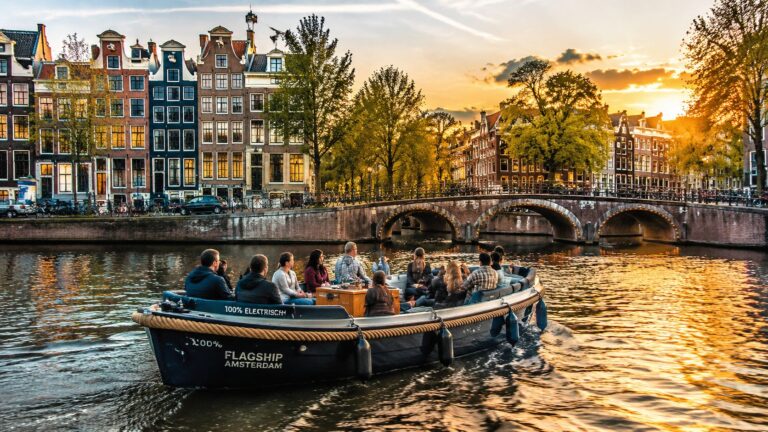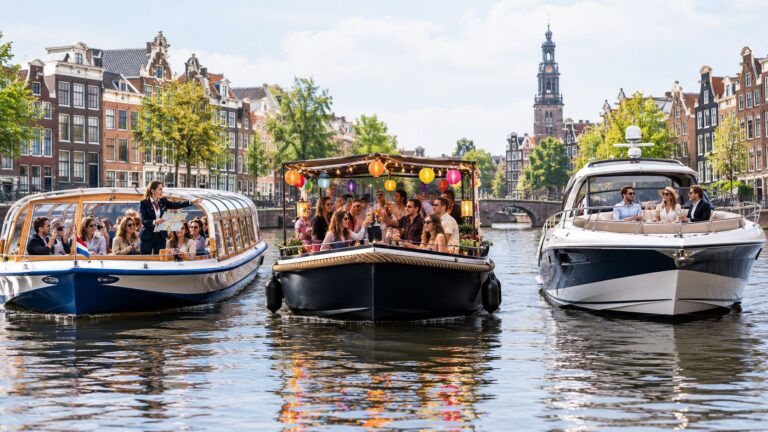
A department arrives in Amsterdam with mixed expectations. Some colleagues want a lively evening, others would rather avoid forced personal questions, and a few are already wondering how much alcohol the plan involves. A stag or hen group can face the same tension, especially when confident partygoers and quieter friends share the itinerary.
The strongest team building activities for trust don't rely on noise or novelty alone. They match the group's actual challenge, provide enough structure for people to participate comfortably, and give everyone a meaningful role. Research on virtual teams also points toward visual communication, repeated shared challenges, vulnerability-based exercises, and structured feedback as stronger trust mechanisms than generic games or one-off icebreakers, particularly when teams work across locations and time zones (Frontiers in Psychology research).
The seven ideas below cover guided Amsterdam experiences, transparent costs, reviews, operating history, communication, safety, and host-led social facilitation. Before booking, check group size, timing, accessibility, indoor or outdoor conditions, alcohol boundaries, and whether the format is hosted or an unstructured night out. Teams can also use practical teamwork ideas from Closer Innovation Labs to connect the event with everyday collaboration.
Table of Contents
- 1. Guided Group Experiences with Known Routes
- 2. Transparent All-Inclusive Pricing
- 3. Verified Customer Reviews and Ratings from Real Participants
- 4. Long Operational History and Established Local Presence
- 5. Clear Communication and Responsive Customer Support
- 6. Safety Protocols and Clear Liability Practices
- 7. Personal Connections and Host-Led Social Facilitation
- Team-Building Trust: 7-Point Comparison
- Choose the Trust Challenge, Then Book the Right Format
1. Guided Group Experiences with Known Routes
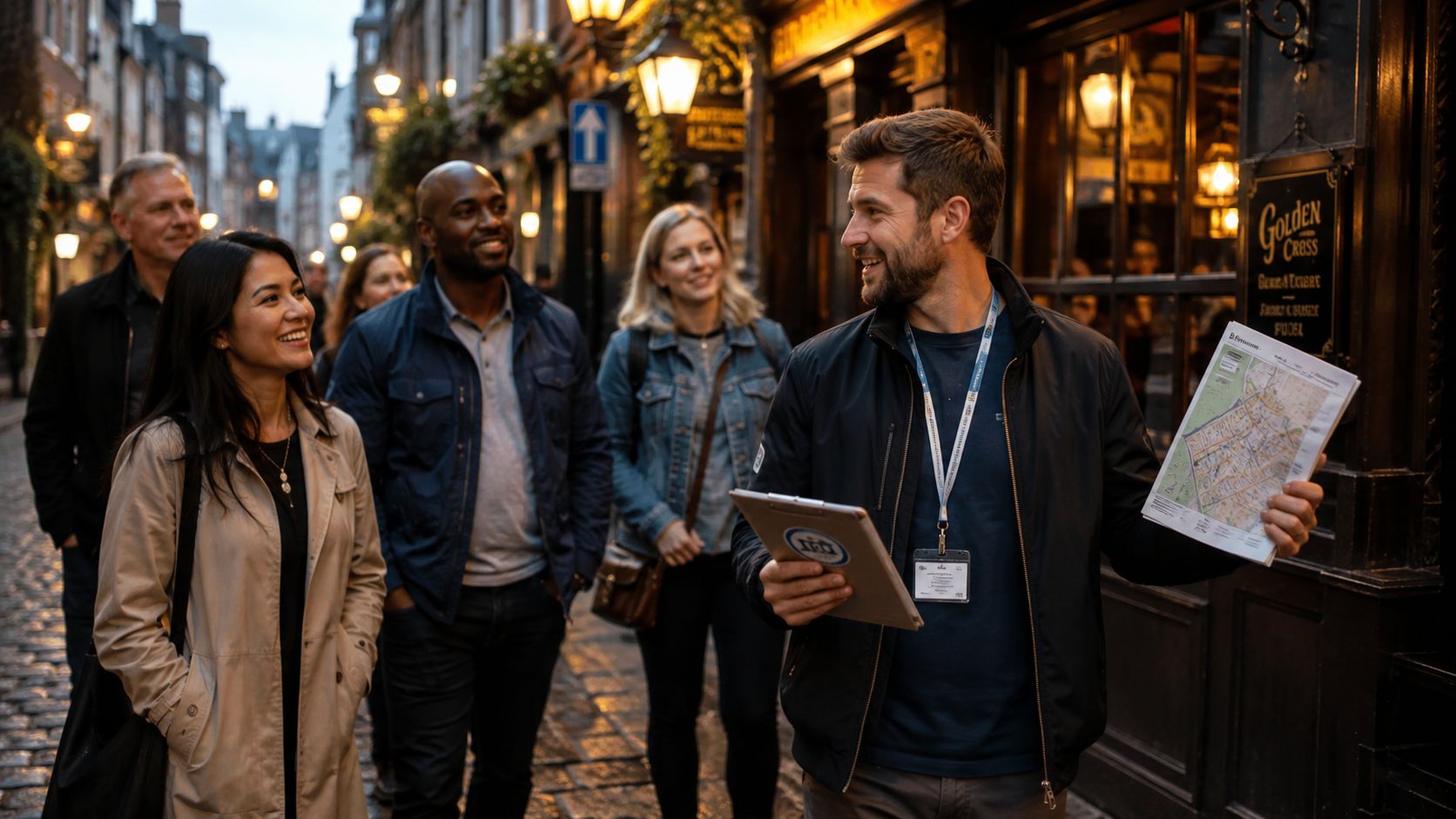
A guided route solves a basic trust problem first: nobody has to guess where the group should go next. In Amsterdam, that matters after dark, when unfamiliar streets, venue queues, changing group energy, and different walking speeds can quickly split a party.
A professional host gives the evening a clear rhythm. Participants know where the group is heading, who handles transitions, and whom to approach if someone feels uncomfortable or needs a slower pace. That structure suits a corporate team that wants social connection without asking one manager to manage every detail. It also helps a stag or hen group keep the celebration moving without leaving the organiser responsible for navigation.
What to check before booking
Trust begins with transparency. A route that names its stops in advance gives the organiser something concrete to assess, while reviews that mention the individual host reveal more than a general star score. Questions about meeting arrangements, neighbourhood familiarity, accessibility, contingency plans, and non-drinking participation also show whether the operator understands the group rather than treating every booking identically.
Practical rule: A hosted route should reduce uncertainty, not conceal it. Ask what participants will know before departure and who will make decisions during the evening.
A guided Amsterdam pub crawl can work well when the challenge is coordination and accountability. It won't automatically repair poor workplace relationships, but it can create a shared experience where people communicate, move together, and rely on a clear point of contact.
2. Transparent All-Inclusive Pricing
Shared budgeting often exposes trust problems faster than the activity itself. One person books the venue, another pays for transport, and several participants discover unexpected entry or drink costs halfway through the night. The group then spends its energy settling money rather than enjoying the experience.
Clear pricing removes that friction. The organiser should be able to explain which drinks, venue charges, entries, transport elements, and optional extras are included, without relying on vague phrases such as “VIP” or “all-inclusive.” For corporate teams, that makes approval and expense planning easier. For stag and hen groups, it prevents one person from carrying surprise costs for everyone else.
A practical Amsterdam comparison starts with total spend, not the headline price. The organiser can list what an equivalent evening would require if each participant paid separately, then compare that with the package terms. The Amsterdam nightlife on a budget guide can help groups think through cost control before choosing a format.
Make the financial agreement visible
The organiser should confirm:
- Included items: Ask whether drinks, cover charges, queue arrangements, and venue access are part of the stated price.
- Group conditions: Check minimum numbers, booking changes, cancellation terms, and what happens if someone drops out.
- Payment responsibility: Decide whether the group pays together or whether each participant settles individually.
- Alcohol alternatives: Confirm whether soft drinks or non-alcoholic participation can be accommodated without making one person feel singled out.
A canal cruise or hosted crawl can support trust when everyone understands the financial boundaries before arriving. It can damage trust when “included” means something different to the organiser and the participants.
3. Verified Customer Reviews and Ratings from Real Participants
A review is useful when it describes what happened. “Great night” tells an organiser very little. A detailed account of the meeting process, host behaviour, venue transitions, communication, accessibility, and value gives the group material for a better decision.
Recent reviews deserve the closest attention because nightlife operations can change. A new host, different route, altered venue policy, or revised cancellation process may make older praise less relevant. Consistent themes matter more than one isolated complaint, but repeated comments about disorganisation or unclear instructions should influence the booking decision.
Read reviews for trust signals
A corporate organiser should look for comments about whether the host kept the group together, explained the plan, included quieter participants, and responded calmly when plans changed. A stag or hen organiser may prioritise whether the experience handled mixed personalities, maintained energy, and avoided making the guest of honour feel uncomfortable.
Thoughtful responses to criticism also matter. An operator doesn't need to agree with every review, but a clear explanation or practical response signals that feedback reaches a real person. Defensive or generic replies give less confidence, particularly when the group is booking an important celebration.
The rating itself should never replace due diligence. Review dates, repeated themes, staff references, and details about the actual experience all matter. When a group uses this approach, reviews become a risk-assessment tool rather than a popularity contest.
Reviews should answer one question: can this operator deliver the kind of group experience this party actually needs?
That question is more useful than searching for a perfect score. Trust grows when expectations match delivery, and reviews help the organiser set those expectations before anyone reaches the first venue.
4. Long Operational History and Established Local Presence
An established local operator gives organisers more context, but longevity does not guarantee a suitable booking. Its value appears in the details the company can explain today: current routes, venue relationships, group expectations, communication procedures, and responses to changing conditions.
Amsterdam nightlife shifts as venues adjust their policies, crowds change, and transport arrangements affect timing. Local experience can help an organiser choose a neighbourhood and schedule transitions more realistically, especially when international visitors are unfamiliar with the city. That practical knowledge supports trust because the group can assess the plan before committing.
Ultimate Party Amsterdam has operated in Amsterdam nightlife since its founding in 2006. The relevant question for a buyer is how clearly the operator documents its present services and how consistently it supports groups now.
History should support present-day verification
An organiser can check four areas:
- Current route information: Does the operator describe the districts, meeting arrangements, and experience format clearly?
- Operational continuity: Do recent booking details and participant feedback match the services currently offered?
- Local relationships: Can the operator explain venue expectations and group conduct without promising outcomes it cannot control?
- Leadership and support: Is there a named contact who can answer group questions before the event?
For a corporate team, this history can reduce the uncertainty of organising in an unfamiliar city. It also helps an organiser select a format that supports the group's specific trust challenge. A team working on communication may need clear host coordination, while a group dealing with inclusion may need evidence that the experience can accommodate different personalities and comfort levels.
For a stag or hen party, local continuity helps separate a hosted plan from a self-organised night where every decision remains with the group. The trade-off is straightforward: a longer presence may provide useful local knowledge, but the organiser still needs to verify what is currently offered and how the group will be handled.
History gives questions context. A trustworthy operator should explain its present routes, relationships, and group practices rather than relying only on how long it has existed.
5. Clear Communication and Responsive Customer Support
Communication is the most direct test of reliability before an activity begins. An organiser who receives precise answers about meeting arrangements, timing, accessibility, group needs, and alcohol-free options can plan with confidence. An organiser who receives vague replies is being asked to accept uncertainty before the group has even arrived.
For a corporate team, communication may involve an invoice process, a single booking contact, dietary or mobility considerations, and participants joining from different countries. A stag or hen group may need to coordinate late arrivals, a guest of honour's preferences, and a clear meeting point that everyone can find.
Test the support before committing
Send a realistic question rather than a simple request for availability. Ask how the experience handles a mixed group, what happens if someone doesn't drink, and which details will appear in the confirmation. The quality and clarity of the answer reveal more than a polished booking page.
A useful confirmation should identify the exact meeting arrangement, timing, contact method, and any relevant preparation. Group organisers should also know how to reach support if a participant becomes separated or the group needs clarification on the night. WhatsApp can be especially practical for last-minute coordination, but the organiser should confirm which channel is actively monitored.
Good support makes the plan easier to explain to everyone else.
Language matters too. International groups need instructions that are clear enough for participants who may not share the organiser's first language. Responsive support won't create trust on its own, but it demonstrates the reliable behaviour that trust depends on.
6. Safety Protocols and Clear Liability Practices
A trust-building activity should acknowledge risk without turning the event into a lecture. Amsterdam groups may be walking at night, consuming alcohol, boarding a boat, crossing busy streets, or sharing venues with strangers. Clear boundaries help participants make informed choices and help organisers respond consistently.
Responsible nightlife planning includes more than checking whether an activity sounds entertaining. Participants should understand cancellation terms, meeting arrangements, conduct expectations, refusal-of-service policies, and what support exists if someone becomes too intoxicated. For water-based experiences, organisers should ask about the boat, safety briefing, emergency procedures, and how staff manage behaviour onboard.
The Amsterdam Red Light District safety guide offers useful context for groups considering an evening in that area. It shouldn't replace direct questions to the operator, particularly when the group includes people with mobility needs, medical concerns, or different alcohol preferences.
Ask direct questions
- Staff capability: Ask how hosts manage separation, intoxication, emergencies, and participant welfare.
- Group management: Confirm how the operator keeps track of the group during movement between locations.
- Water safety: For cruises, ask how safety information is delivered and how the boat is maintained.
- Personal boundaries: Check how staff handle unwanted attention, refusal of service, or behaviour that makes others uncomfortable.
- Liability terms: Read the booking conditions instead of assuming that every risk is covered.
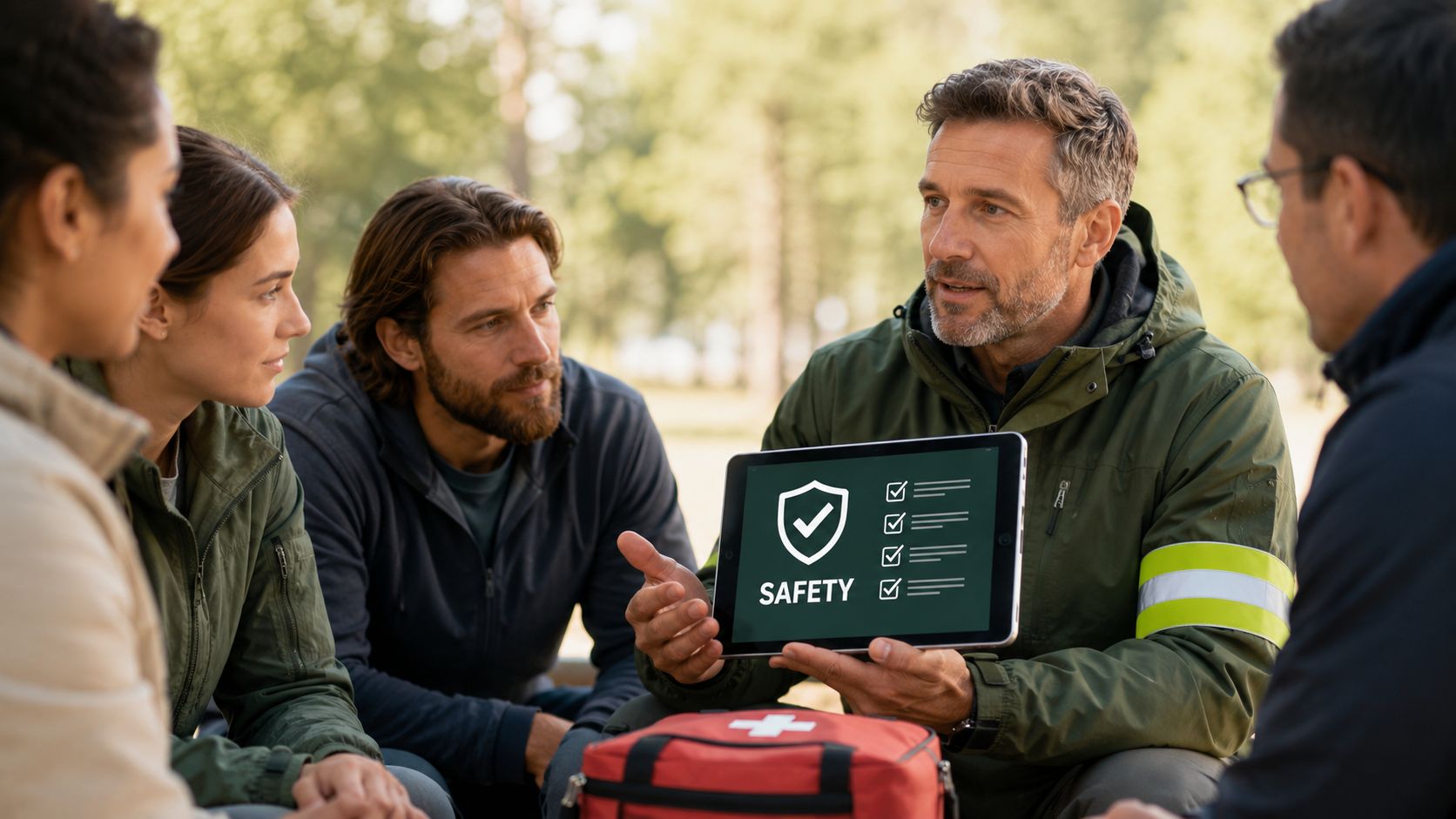
For corporate groups, these questions protect inclusion and professional standards. For stag and hen groups, they help the organiser set expectations before alcohol changes the group dynamic. Safety doesn't reduce fun. It gives participants the confidence to take part without feeling that the organiser has ignored foreseeable problems.
7. Personal Connections and Host-Led Social Facilitation
Some groups don't need another activity. They need help speaking to people outside their usual circle. A capable host can make that happen by introducing participants, remembering names, noticing who has been left out, and adjusting the pace when the group's energy changes.
This matters for corporate teams with hierarchy concerns. Junior employees may not feel comfortable interrupting senior colleagues, while international participants may hesitate to join a fast-moving conversation. A host who creates smaller introductions and gives people easy entry points can support inclusion without demanding personal disclosure.
Stag and hen groups have a different version of the same challenge. Friends may arrive from separate parts of the guest list and meet for the first time in Amsterdam. A host-led format can create shared conversation without forcing everyone into an embarrassing performance or an emotionally intense exercise.
Choose facilitation over a rigid script
The strongest host is present enough to read the group, not recite instructions. Reviews that mention warmth, engagement, and inclusion are valuable because they show how the operator's people behave in practice. Organisers can also ask whether the host can slow down, adjust transitions, or address a concern without waiting for several layers of approval.
Wharton's guidance on the Fast Friends exercise reinforces the need for voluntary participation, confidentiality, and awareness of hierarchy. Peer-level pairings may feel safer in some groups, and shorter versions may not create the same space for meaningful conversation as a fuller 45-minute format (Wharton's guidance on connecting virtual team members). The same principle applies to nightlife. Participation should be encouraged, not coerced.
Groups can also use tips for making friends on a pub crawl to help quieter participants join conversations naturally. Social facilitation works when the host creates openings and participants retain control over their boundaries.
Team-Building Trust: 7-Point Comparison
| Item | Implementation complexity | Resource requirements | Expected outcomes | Ideal use cases | Key advantages |
|---|---|---|---|---|---|
| Guided Group Experiences with Known Routes | Moderate, route planning & host coordination | Trained hosts, venue agreements, logistics support | Predictable, safe, consistent group flow | Solo travelers, first-time visitors, groups wanting structure | Accountability, vetted routes, real-time problem handling |
| Transparent All-Inclusive Pricing | Low–Moderate, pricing design and vendor deals | Financial planning, vendor pre-payments, payment systems | Budget certainty, fewer disputes, simpler decisions | Groups budgeting trips, cost-conscious travelers | Eliminates surprise costs, simplifies group payments |
| Verified Customer Reviews and Ratings from Real Participants | Low, solicit and manage reviews | Review platform presence, reputation management team | Social proof, informed booking decisions | Cautious travelers, research-oriented customers | Independent validation, large-sample credibility |
| Long Operational History and Established Local Presence | High, requires years of sustained operation | Time, staff continuity, long-term venue relationships | Stability, institutional knowledge, reduced closure risk | Risk-averse groups, corporate events, advance bookings | Reputation, strong venue partnerships, problem-solving history |
| Clear Communication and Responsive Customer Support | Moderate, staffing and processes required | Multi-channel support, CRM tools, trained staff | Reduced pre-booking anxiety, faster issue resolution | International visitors, large or complex group bookings | Accessibility, real-time support, clear expectations |
| Safety Protocols and Clear Liability Practices | Moderate–High, legal and operational work | Insurance, documented protocols, staff safety training | Lower operational risk, clearer expectations, legal protection | Vulnerable participants, corporate events, water activities | Risk mitigation, compliance, participant confidence |
| Personal Connections and Host-Led Social Facilitation | Moderate, host training and selection | Skilled hosts, training programs, small-group facilitation | Stronger social bonds, higher satisfaction, safer feel | Solo travelers seeking community, milestone celebrations | Enhanced engagement, better retention, early issue detection |
Choose the Trust Challenge, Then Book the Right Format
The right activity depends on the trust problem beneath the booking. If the group struggles with navigation, timing, or accountability, a guided route gives everyone a shared structure and a clear point of contact. If shared budgeting causes friction, transparent pricing matters more than adding another feature to the itinerary.
When the operator is unfamiliar, reviews and operating history help the organiser assess delivery risk. Specific recent comments about hosts, communication, venue transitions, and group treatment are more useful than a rating viewed in isolation. A longer local presence can add context, but it should still be checked against current service information.
Responsive support becomes especially important when the group has complicated logistics. Corporate teams may need a single contact, clear confirmation details, accessibility discussions, and non-drinking options. Stag and hen organisers may need help coordinating a guest of honour, late arrivals, mixed energy levels, and preferences that shouldn't be shared publicly with the whole group.
Safety checks should happen before the booking is final. Confirm meeting arrangements, timing, inclusions, cancellation terms, alcohol boundaries, service refusal policies, and how the operator handles separated or uncomfortable participants. Anyone planning a cruise should also ask about the boat, safety briefing, and emergency process. A responsible alcohol plan should always include space for soft drinks, pacing, and participants who choose not to drink.
Host-led facilitation is the best fit when the main objective is social connection. It gives strangers or colleagues natural reasons to speak, while leaving personal disclosure voluntary. A hosted Amsterdam night can therefore work as a social trust activity, provided the group understands that a pub crawl or canal cruise supports connection rather than replacing ongoing workplace habits or honest feedback.
Ultimate Party Amsterdam offers guided pub crawls in Amsterdam, shared and private canal booze cruises, and concierge support for private arrangements. Groups can explore those formats when a hosted night fits their challenge, then confirm the precise schedule, inclusions, meeting details, cancellation terms, and non-drinking arrangements before booking.
Ultimate Party Amsterdam provides hosted pub crawls, shared and private canal booze cruises, and concierge support for groups planning a more personalized Amsterdam night. Visit Ultimate Party Amsterdam to compare formats and start planning an experience with clear arrangements and a suitable level of guidance.
🍻
Experience it Yourself
Skip the planning — join Amsterdam's biggest pub crawl and get 6 bars, free drinks and VIP club entry for €20.