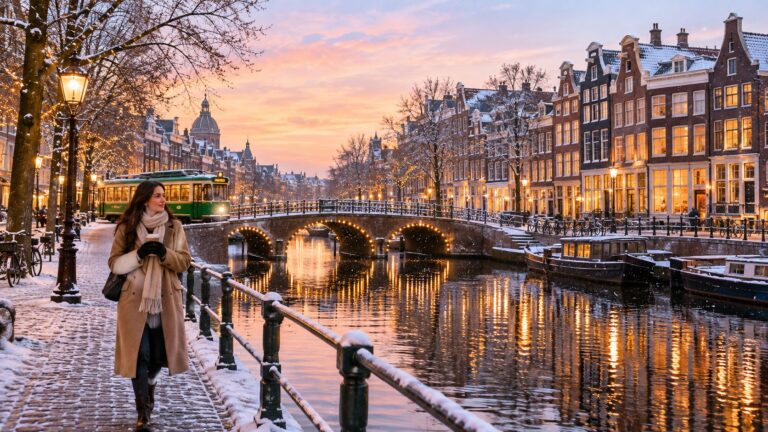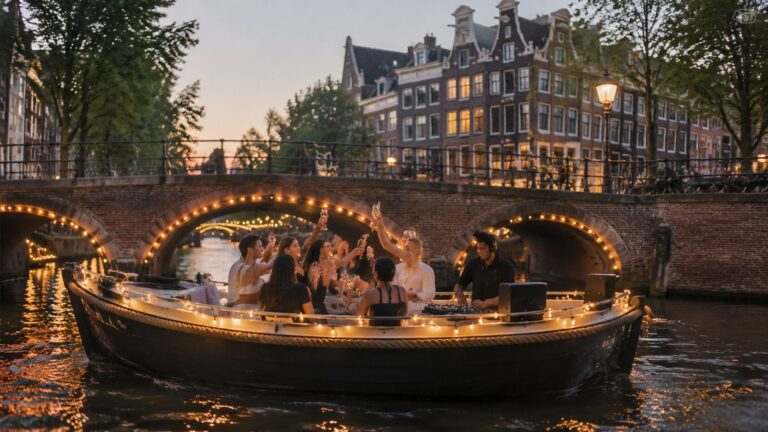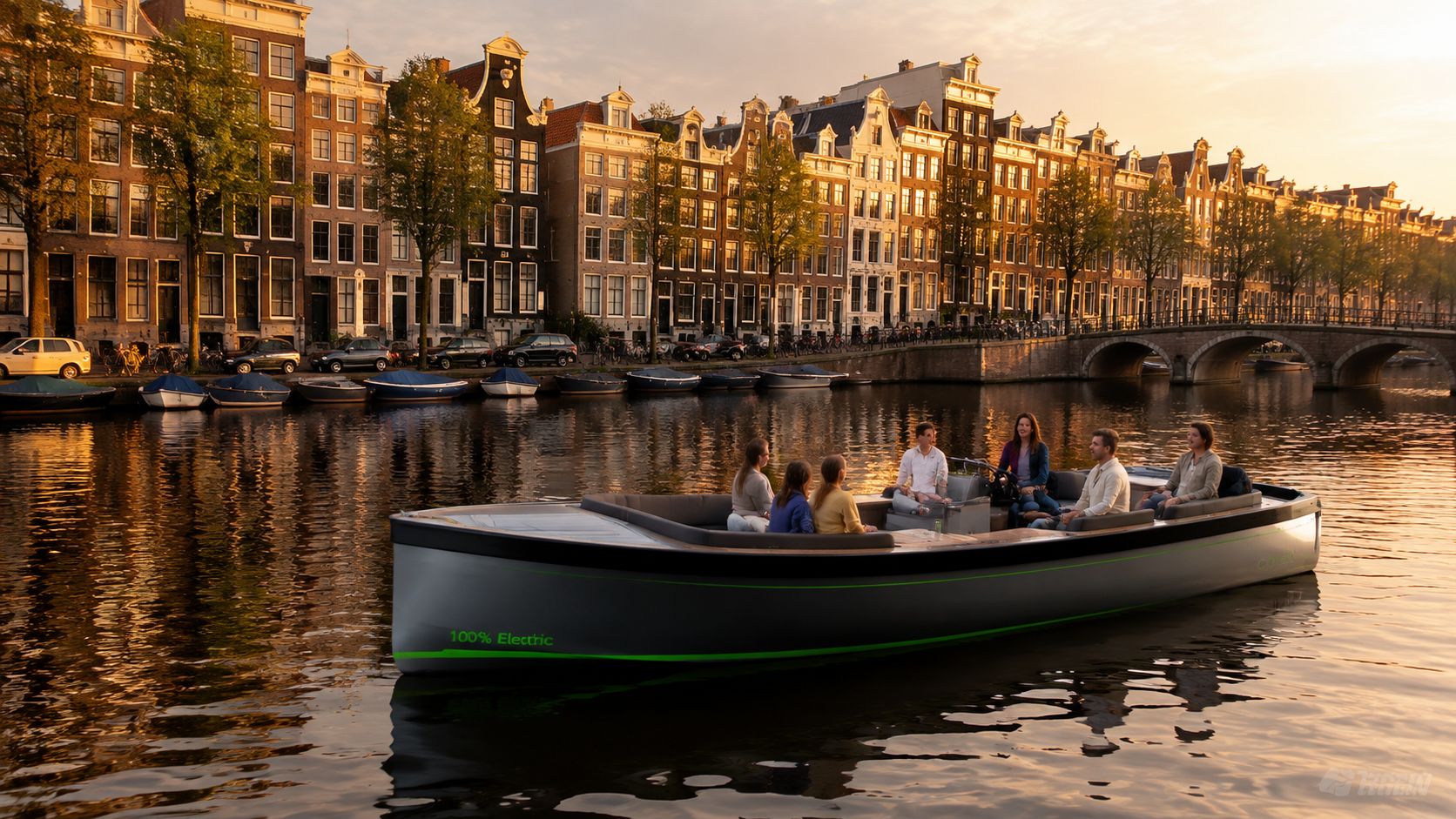
A Friday night canal cruise can go one of two ways in Amsterdam. One boat rumbles through the water, passengers lean in to hear each other, and the whole deck gets a whiff of exhaust as it passes the narrow brick-lined banks. The other slips by almost without a sound, the conversation stays inside the boat, and the city's lights, bridges, and waterfront windows do most of the talking.
That contrast is why electric boat benefits matter so much here. On Amsterdam's canals, quiet is not a luxury feature, it changes the whole use case for nightlife groups, private celebrations, and short sightseeing runs. It also fits the city's long relationship with electric propulsion, which goes back to the first recorded electric-boat trip in September 1838 on the Neva River, when Moritz Hermann Jacobi's vessel carried 14 passengers ETHW history of electric boats. By the 1893 Chicago World's Fair, 55 electric launches were already ferrying attendees, which shows that the category's core strengths, quiet operation and practical short-range use, were recognized long before today's battery systems matured ETHW history of electric boats.
Table of Contents
- Why Electric Boats Are Changing Amsterdam Canal Cruises
- How Electric Boat Propulsion Actually Works
- The Impact of Noise Reduction on the Water
- What Passengers Notice on an Electric Booze Cruise
- Environmental Benefits Beyond Zero Tailpipe Emissions
- Why Electric Boats Fit Amsterdam Nightlife Routes
- How to Choose the Right Electric Canal Cruise
Why Electric Boats Are Changing Amsterdam Canal Cruises
A boat leaving the Prinsengracht on a busy night can either blend into the canal or dominate it. A combustion boat tends to announce itself first, with engine noise, vibration, and the smell that hangs around tight waterfront streets. A well-run electric boat does something different, it keeps the focus on the people onboard and the city outside, which is exactly why electric boat benefits have become so visible in Amsterdam's cruise scene.
What changes for guests and operators
The shift isn't abstract. Independent studies of small tourist boats show electric propulsion can cut underwater noise by about 25 dB at low speed, while another comparison found a 43 dB lower broadband source level at 4 knots for the electric vessel, with lower noise across the full tested 4 to 20 knots range underwater noise study, comparative study. That matters on the canals because sound reflects off brick facades and narrow waterways, so a loud boat doesn't just affect passengers, it spreads into the street-level environment too.
Practical rule: on a canal route, the quieter boat usually feels more premium before anyone notices the technical reason.
For operators, that silence changes the product. A booze cruise becomes easier to host when guests can talk without competing with engine drone. A private tour feels more polished when the boat glides instead of rattling. Even short routes gain a different atmosphere, because the city's own sounds, bridge mechanisms, street music, church bells, and water movement, can stay part of the experience instead of being buried under mechanical noise.
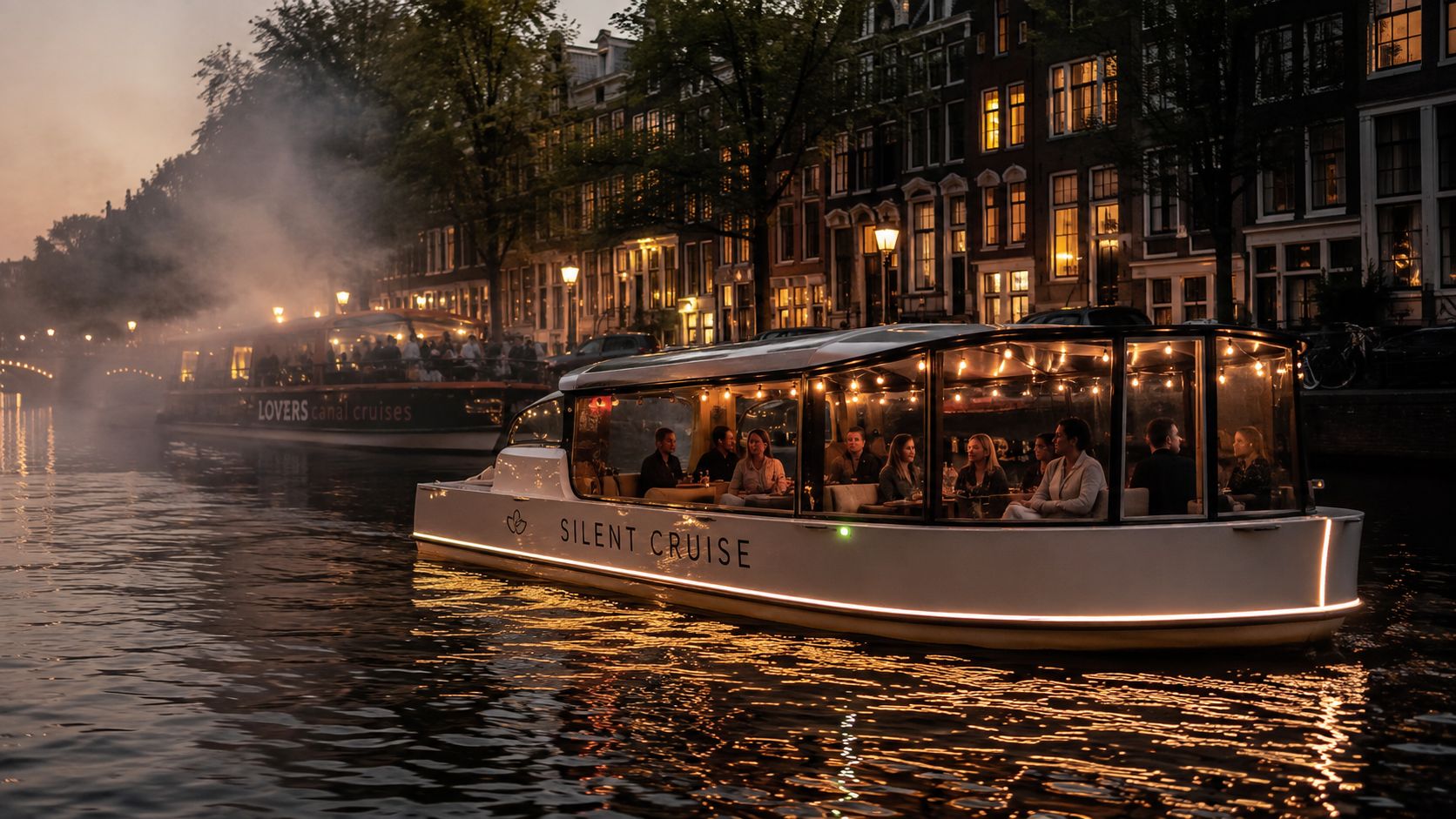
How Electric Boat Propulsion Actually Works
An electric canal boat is simpler than many guests expect. A battery bank stores energy, a controller regulates how much power the motor gets, and the electric motor turns that energy into rotation for the propeller. The closest everyday comparison is a cordless drill doing useful work, instead of a gas generator doing the same job through combustion, exhaust, and vibration.
What's inside, and what's missing
The useful part of that simplicity is what the system leaves out. There's no combustion chamber, no fuel injectors, no exhaust system, and no oil-change routine in the same sense as a fuel-driven setup. That means fewer hot, noisy, smell-heavy parts sitting under the deck while guests are trying to enjoy the ride.
Electric motors also deliver instant torque from zero RPM, which helps in Amsterdam's tight canal geometry. A skipper easing past a bridge opening or lining up for a docking maneuver gets immediate response instead of a laggy engine note, and that makes low-speed control feel cleaner.
A quiet boat isn't only about comfort. In tight waters, quiet propulsion usually comes with more precise handling at the speeds that matter most.
Range concerns are real on some vessels, but they're less dramatic on short cruise routes because batteries can be sized to the trip. A two-to-four-hour operating profile is a normal planning frame for many leisure boats, and the practical question becomes how well the system is matched to the route, not whether electricity can move a boat at all. That distinction matters in Amsterdam, where canal work is usually about predictable loops, short turns, and repeatable departures rather than open-water endurance.
The Impact of Noise Reduction on the Water
Noise reduction is the benefit passengers notice first, and residents appreciate longest. A canal cruise through central Amsterdam runs between buildings, under bridges, and past homes where people live close to the waterline. Every engine note gets shaped by the city's architecture, so even a modest drop in noise can change how the whole route feels.
What quieter really means in practice
Field measurements on small tourist boats found electric propulsion lowered underwater noise by roughly 20 to 25 dB compared with internal combustion boats at low and mid speeds. A canal-based test recorded average airborne sound levels of 69.1 dB for the electric vessel versus 82.1 dB for the combustion boat. Another peer-reviewed comparison found the electric vessel 43 dB quieter at 4 knots comparative study. In acoustic terms, that is enough to change the atmosphere on board.
| Measurement Point | Diesel Boat (dB) | Electric Boat (dB) | Real-World Equivalent |
|---|---|---|---|
| Airborne sound in a canal test | 82.1 | 69.1 | Conversation becomes easier without raising voices |
| Underwater noise at low speed | Higher baseline | about 20 to 25 dB lower | Less disturbance for the waterway environment |
| Broadband source level at 4 knots | Higher baseline | 43 dB lower | Noticeably calmer around the boat |
For nightlife groups, the effect is immediate. People stop leaning toward each other. Music can stay at a reasonable volume. The captain's commentary does not have to fight the engine.
For operators, there is a second payoff. A quieter boat reduces friction on residential routes after dark, where engine noise carries farther than crews often expect. It also makes the onboard experience feel less like transport and more like part of the evening itself, which matters when guests want to talk, laugh, and hear each other over the water.
What Passengers Notice on an Electric Booze Cruise
The first few minutes onboard tell the story. There's no diesel smell when people board, no vibration running through benches and drink rails, and no need to shout over the engine when the boat pulls away. The mood shifts fast from transport mode to social mode, which is why groups often describe the trip as feeling more like a floating lounge than a noisy barge.
Comfort shows up in small details
The benefits aren't just sensory, they're practical. Drinks stay steadier on the table because the boat isn't thrumming underneath them. Friends can hear each other from across the deck. The host or skipper can give useful route commentary without turning every sentence into a performance.
That change becomes obvious in the places people remember. Passing under the Magere Brug feels more cinematic when the engine isn't dominating the moment. Drifting near the Anne Frank House has a different tone when the city can be heard instead of drowned out. The silence doesn't make the cruise less social, it makes the social part easier.
For a group looking at a shared evening on the water, a quieter boat also changes dynamics. People settle in faster, conversation starts earlier, and nobody has to wait until the engine noise settles before asking a question. A shared electric format like the Shared Booze Cruise fits that style especially well because the social energy doesn't get split between the music and the machinery.
The best electric cruise isn't the one that feels futuristic. It's the one where the boat disappears into the background and the group takes over the evening.
Environmental Benefits Beyond Zero Tailpipe Emissions
Electric boats start with a clear local benefit, zero tailpipe emissions while operating. In Amsterdam, that matters on busy canal routes where boats run on fixed loops and can be charged from a central depot instead of being refueled on the fly.
The cleaner story is operational, not just symbolic
A Nature study modeling battery-electric ships found that retrofitting U.S. domestic vessels under a decarbonized grid could cut maritime greenhouse-gas emissions by up to 73% below 2022 levels by 2035, while lifecycle reductions ranged from 34% to 73% depending on scenario Nature study. A TNO study on canal boats estimated that a fully battery-electric driveline can reduce CO2 emissions by 60% or more, depending on whether electricity is fossil-based or renewable, and it estimated average propulsion energy use at 15.6 kWh per sailing hour TNO study.
| Metric | Diesel Boat | Electric Boat |
|---|---|---|
| Operating emissions | Combustion-based exhaust at the point of use | Zero tailpipe emissions while underway |
| Climate outcome | Higher direct fuel burn | 34% to 73% lifecycle reduction in the Nature study, depending on scenario Nature study |
| Water contamination risk | Fuel leaks and oil drips are part of the operating picture | No onboard fuel combustion, so that specific leakage risk drops |
| Noise pollution | Higher | Lower, which also helps urban wildlife |
That is the practical value for canal operators and guests. Electric operation removes the dirtiest local impacts from the waterway itself. Crew members avoid exhaust exposure on long shifts. Residents along the canal get less noise, and wildlife faces fewer direct fuel-related pollutants in an already enclosed urban system.
Why Electric Boats Fit Amsterdam Nightlife Routes
Amsterdam nightlife cruises suit electric propulsion because the route pattern is predictable. Evening trips here are usually short, fixed, and circular, so a skipper can plan battery use with real margin. That is a different job from open-water charter work, where range anxiety and charging logistics are harder to manage.
Predictable routes reward electric design
Canal navigation also works in favor of electric systems. Boats spend time waiting at bridges, easing through speed-limited zones, and cruising at modest pace. An electric motor uses nothing while idling and responds cleanly during the stop-start rhythm that defines the city center. That makes it a practical fit for booze cruises, dinner charters, and private evening loops.
There is a maintenance trade-off, though. A battery-based setup eliminates engine oil changes and exhaust-system servicing, while routine electrical checks, propeller shaft seals, and periodic servicing still remain part of the job. That matters for operators who run every night, because the gain is less routine engine work, not zero upkeep.
A ferry life-cycle assessment found that battery-based propulsion has higher upfront capital cost but lower operational cost, and when emissions are monetized the fuel-based system can cost more than three times as much overall ferry life-cycle assessment. For a route that repeats night after night, lower routine complexity matters more than top speed.
A private electric charter like the Private Booze Cruise fits this logic well, because group timing, fixed departure points, and a controlled onboard setup all line up with what electric boats do best. For guests who want the evening to continue beyond the water, Amsterdam nightlife beyond the bars shows how the cruise can fit into the rest of the night. The payoff is practical, less noise, less fuss, and fewer reasons to interrupt the evening.
How to Choose the Right Electric Canal Cruise
The right electric cruise shows its difference before the boat even leaves the dock. In Amsterdam nightlife, that usually means cleaner boarding, less engine noise, and a setup that lets people talk without raising their voices. Look for clear language about silent propulsion, zero-emission cruising, or an operator that states the boat is electric.
What to ask before booking
A few practical questions separate a decent listing from one that will suit the night.
- Route Fit: Ask whether the cruise stays in the central canal ring or runs farther out toward the IJ. Battery capacity and onboard comfort can feel very different on those two types of trip.
- Comfort Setup: Check for covered seating or heating if your group is sailing outside summer, especially on a late evening when the air cools fast.
- Group Format: Confirm whether the boat is built for a shared crowd or a private booking. A hen party, a birthday group, and a quieter dinner charter all need a different onboard rhythm.
- Nightlife Details: For a booze cruise, ask about music playback, drinks service, and how much conversation the motor noise allows. On a good electric boat, the soundtrack should stay in the background.
- Review Signals: Read for comments about noise, cleanliness, and whether the atmosphere felt relaxed rather than crowded or rushed.
A private option such as Private Booze Cruise fits this thinking well, because the route, the timing, and the guest mix can be matched to the night instead of forcing the night to fit the boat. That matters most on evenings where the cruise is one part of a larger celebration.
The practical payoff is simple. A good electric cruise keeps the canal view, the group conversation, and the evening pace intact. That is the value, less fuss on the water and fewer reasons for the night to lose its rhythm.
🍻
Experience it Yourself
Skip the planning — join Amsterdam's biggest pub crawl and get 6 bars, free drinks and VIP club entry for €20.