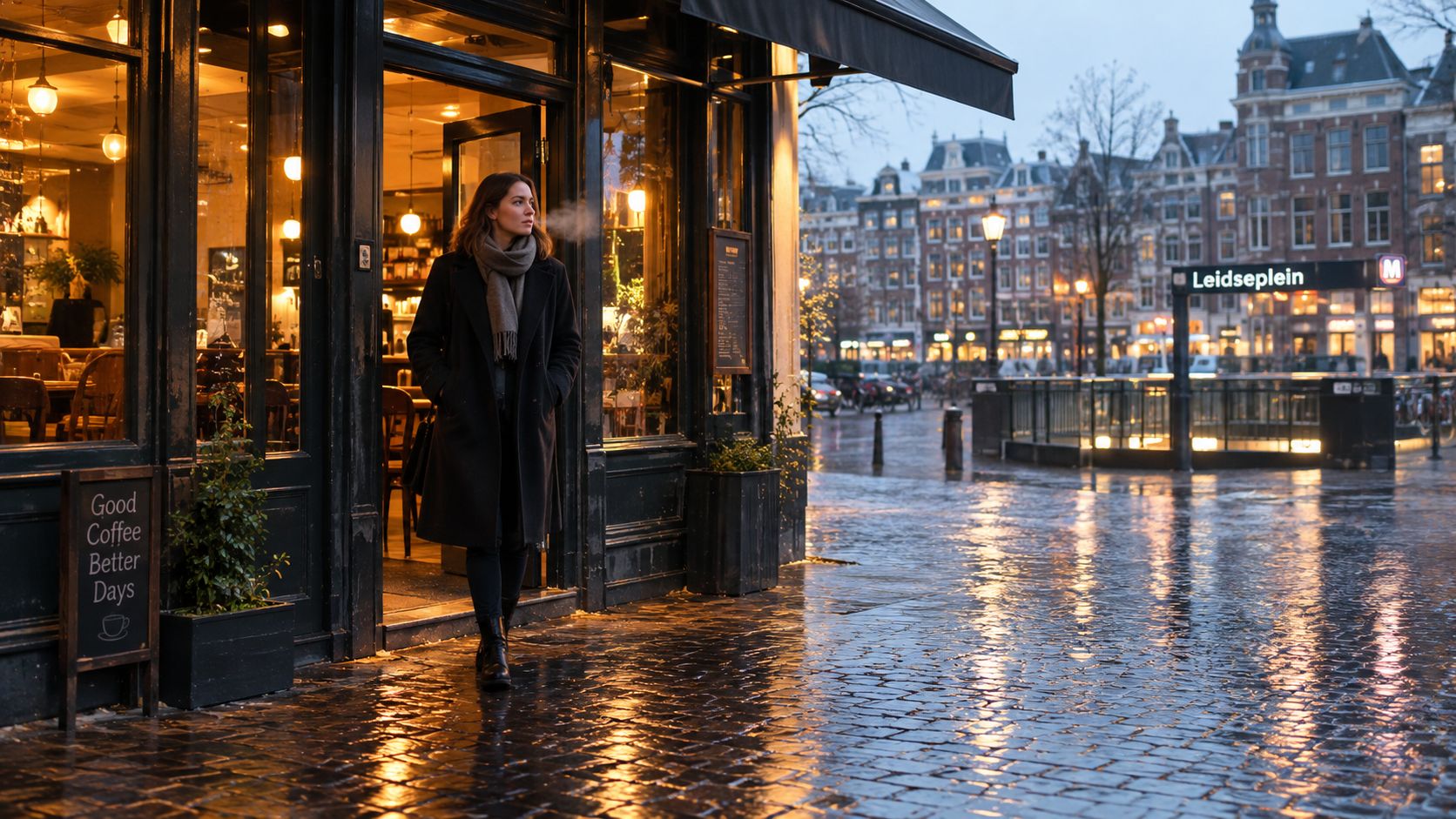
You step out of a heated café near Leidseplein at 4:40 p.m., expecting a little winter atmosphere. Instead, damp darkness has already settled over the street. Your hands feel cold before you reach the tram stop, the canal air cuts through your coat, and the warm room behind you suddenly feels like another climate.
That's Holland in winter. The cold usually isn't dramatic, but it's persistent. Visitors who plan for a postcard covered in snow often find a city shaped more by rain, wind, short daylight, and the constant movement between overheated interiors and exposed streets. The reward is a different Amsterdam, one with glowing canals, intimate cafés, indoor culture, and nightlife that begins earlier than it does in summer.
Table of Contents
- What Winter in Holland Actually Feels Like
- Weather and Daylight You Should Plan Around
- A Real Winter Day From Morning to Last Call
- Winter Events and Things to Do
- What to Pack for Holland in Winter
- Getting Around Amsterdam in the Cold
- Nightlife, Group Activities, and Staying Safe After Dark
- Common Winter Trip Mistakes and How to Avoid Them
What Winter in Holland Actually Feels Like
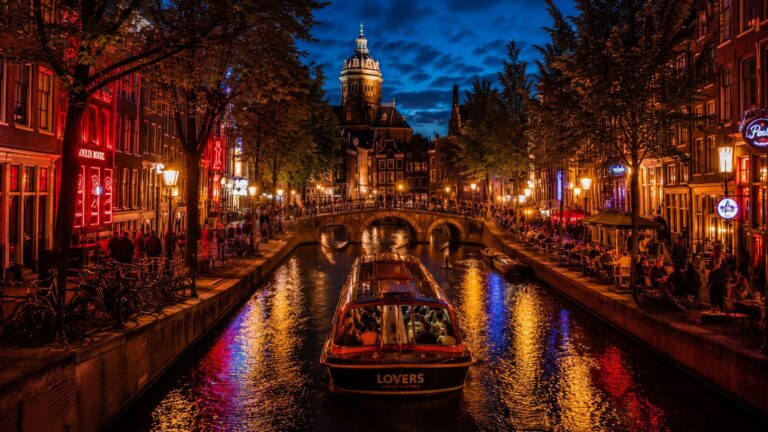
A winter evening in Amsterdam starts earlier than many visitors expect. By late afternoon, bicycle lights are already visible, wet cobbles reflect the streetlamps, and a sharp breeze moves along the canals. Winter temperatures in the Netherlands are generally moderate by European standards, with daytime highs near 7°C and nighttime lows around 1.3°C. From December through February, precipitation totals roughly 206.4 millimetres. (Dutch winter weather overview)
The temperature alone does not describe the experience. A dry 3°C afternoon can feel manageable, while damp air, wind, and a late-night queue beside the water can make the same reading feel much harsher. Canal-side streets expose visitors to moving air, while cafés, museums, bars, and restaurants often feel intensely warm by comparison. Coats come off, scarves loosen, then everything goes back on before the next stop.
The city changes rhythm
Amsterdam has only 7 hours 41 minutes of daylight around December 21–22, rising to about 10 hours 48 minutes by late February. Cloud cover remains high in winter, with overcast or mostly cloudy conditions present roughly 61% to 66% of the time. (Amsterdam daylight and cloud conditions)
Plan around that reduced flexibility. Long outdoor socialising becomes uncomfortable, dinner often works better earlier, and groups should reach the centre before the coldest part of the evening. Summer visitors can wander between bars for hours. In winter, shorter transitions and a clear indoor route make the night easier to manage.
Winter changes the order of a night out. Start with the outdoor sights while there is still usable daylight, then move through cafés, restaurants, bars, or other heated venues as darkness sets in. Build in somewhere warm between activities instead of treating every walk as a quick connection.
Practical rule: Treat winter weather as a planning constraint, not an inconvenience that can be ignored.
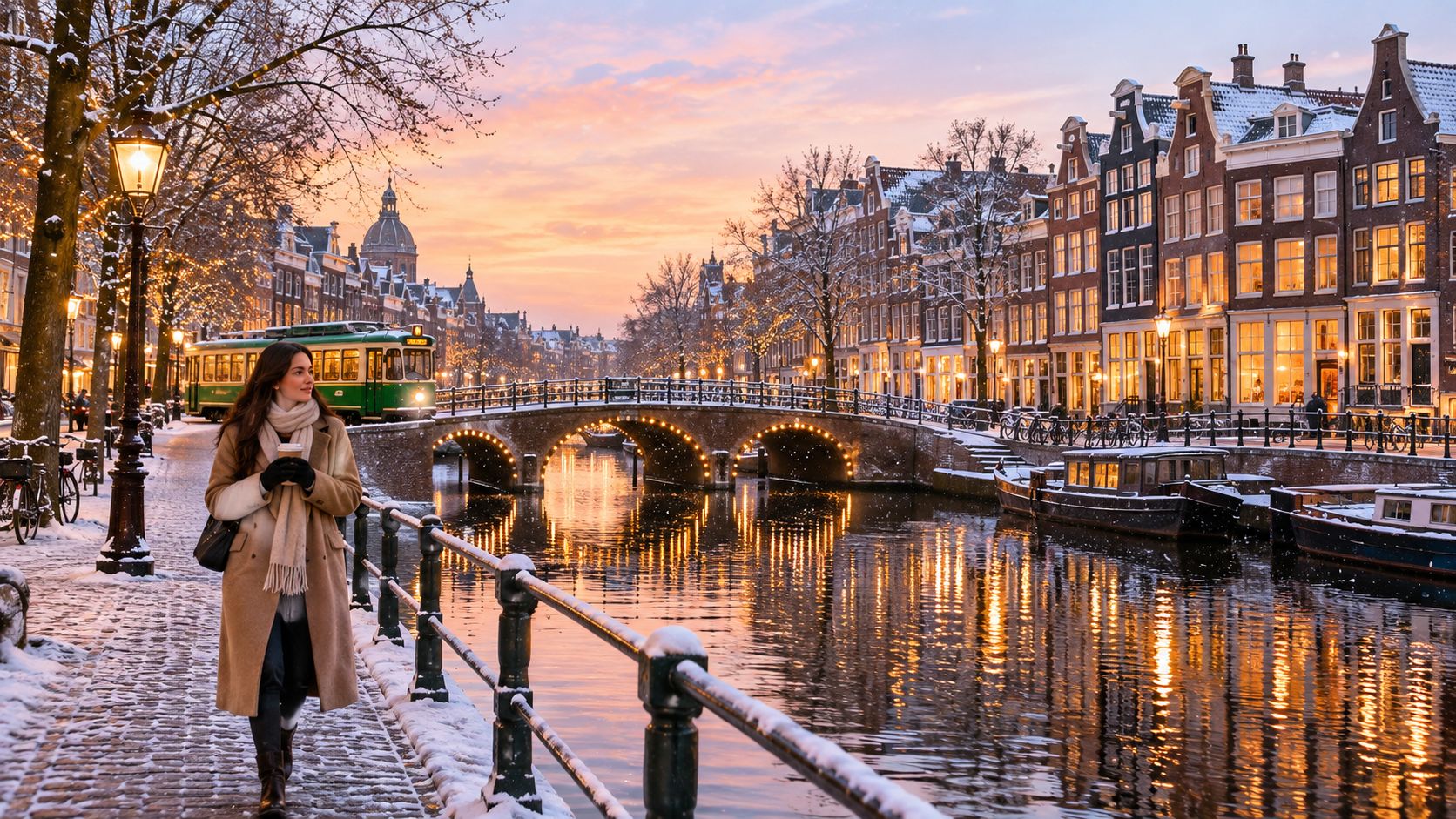
Dutch winter history explains why ice remains part of the country's visual identity. During the Little Ice Age, average Dutch temperatures were nearly 2°C colder than today, and frozen canals and rivers supported skating as part of daily transport and culture. Sustained snow is now unusual. At De Bilt, average snow-cover days declined from 23 days per year in 1961 to 3 days today, although occasional severe winters still create memorable exceptions. (Dutch winter traditions and changing snow cover)
Weather and Daylight You Should Plan Around
Winter in Amsterdam usually means damp cold rather than extreme cold. Typical highs are around 5°C to 7°C, while lows generally sit between 0°C and 2°C, with January usually the coldest part of the December to February period. (Amsterdam winter temperature guidance) A broader climate summary puts average winter temperatures near 3.7°C, with precipitation on roughly 12 days and about 2 hours of sunshine per day. (Amsterdam winter climate summary)
Plan for wet streets, drizzle, and wind before planning for snow. Snow can occur, but it should not determine the whole itinerary. Areas near the IJ and the North Sea can feel exposed after sunset, while sheltered streets in the historic centre may feel more comfortable. Waterproof footwear and a layer that blocks wind matter more than packing for a rare snow day.
Holland winter conditions by month
| Month | Avg High (°C) | Avg Low (°C) | Daylight Hours | Sunset (approx.) |
|---|---|---|---|---|
| December | 5–7 | 0–2 | About 8 | Around 4:30 p.m. |
| January | 5–7 | 0–2 | About 8–9.5 | Late afternoon |
| February | 5–7 | 0–2 | About 9.5–10.8 | Approaching 6 p.m. |
Use the table to set expectations, not to predict a particular week. Mild spells happen, yet a mild afternoon does not make an evening canal cruise, outdoor queue, or long walk comfortable once wind and moisture arrive. Keep outdoor plans flexible and make sure indoor stops are nearby.
Daylight controls the itinerary
December has approximately 7 hours 45 minutes of daylight, with sunset around 4:30 p.m. January gradually offers about 8 to 9.5 hours, while February reaches roughly 9.5 to 11 hours. (Amsterdam winter daylight patterns) A separate seasonal guide records the increase from about 7 hours 49 minutes in December to 8 hours 19 minutes in January and 9 hours 51 minutes in February. (Amsterdam seasonal winter planning)
Use the brighter part of the day for canal views, neighbourhood walks, and outdoor photographs. Darkness is not a problem to solve. It changes the order of the trip, making museums, dinner, bars, and other indoor plans more practical from late afternoon onward. Groups that schedule every outdoor stop late in the day often lose daylight first, then spend the coldest hours deciding where to go.
A Real Winter Day From Morning to Last Call
A workable winter day begins without trying to imitate a June itinerary. At 8 a.m., breakfast at the hotel or a nearby café gives a group time to warm up before heading outside. By late morning, the canal belt is bright enough for a proper walk, photographs, and a slower look at the bridges and narrow houses.
The important decision is not to stretch that walk indefinitely. Once hands become cold and the pavement turns wet, the group should move indoors rather than treating discomfort as part of the sightseeing experience. Lunch around 1 p.m. creates a useful reset, especially for visitors who plan to stay out after midnight.
Afternoon light, then an early evening
An indoor attraction belongs in the early afternoon. A museum or gallery provides warmth, toilets, and a fixed period of shelter, which makes it more useful operationally than an unstructured wander. A golden-hour photograph can follow, but it needs realistic expectations. Around December, the sun drops behind the canal houses soon after the late afternoon light appears.
A visitor itinerary with practical timing ideas is outlined in this Amsterdam day-to-night experience guide. The underlying principle is simple, outdoor movement first, indoor recovery next, then evening plans close to the centre.
Dinner before the nightlife rush
Dinner around 6 or 6:30 p.m. works better in winter than leaving food until late. Guests are warmer, less rushed, and less likely to begin the night already tired from standing outside. A brown café can then provide a comfortable pre-nightlife stop, with the group moving into bars while the city is fully dark.
Nightlife also starts earlier than many summer visitors expect. Groups that arrive at venues around 10 p.m. can find the atmosphere building, while those who wait until midnight may spend more time navigating queues and transport. The final journey deserves equal attention. Last calls, reduced late-night services, and the distance back to accommodation should be decided before the group leaves dinner, not after everyone is tired and cold.
Winter Events and Things to Do
Winter activities in Amsterdam work best when they fit the group's energy and tolerance for damp, dark streets. A short day changes the order of the evening. Schedule the outdoor highlight while people still have energy, then use an indoor venue or meal to reset before nightlife.
Match the activity to the group
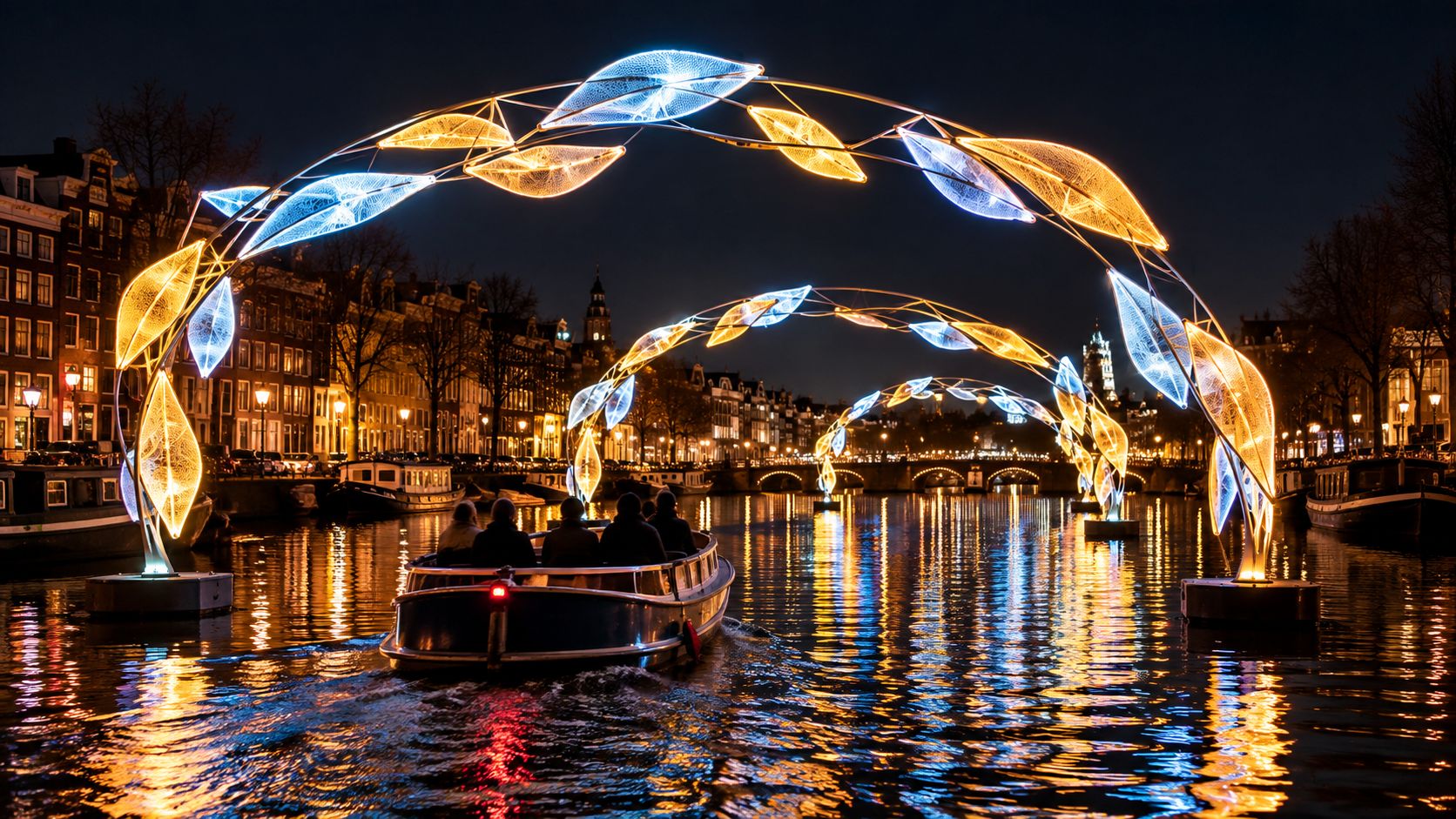
The Amsterdam Light Festival suits visitors who want darkness to shape the experience. A canal boat provides a seated view and limits walking on wet streets. A walking route gives more control over pauses and photographs. Both options still require warm layers, but the lighting becomes the reason to go out rather than a problem to overcome.
Ice skating needs more careful planning. Temporary rinks, including the Museumplein option, work for a playful daytime or early-evening activity. Jaap Eden offers another skating setting beyond the busiest central streets. Canal skating is a bonus, not a dependable itinerary item. Dutch ice traditions remain strong, but naturally frozen waterways should not be treated as a normal winter certainty.
Sinterklaas activity begins with arrivals in mid-November and can continue into early December. Visitors travelling near the start of winter may therefore find seasonal events before Christmas programming takes over. Christmas markets around Museumplein and smaller neighbourhood locations suit groups that enjoy browsing, snacks, and brief outdoor stops. They are less suitable as the day's only activity in wet, exposed weather.
Build around an indoor anchor
The Rijksmuseum, Anne Frank House, and Foam photography museum give a group a fixed, heated block of time. They are especially useful on rainy days, when several outdoor stops would mean repeated exposure and slow movement. Check reservations and current access arrangements before travelling. Winter demand still requires planning.
New Year brings louder streets and Dutch firework traditions, with crowds and movement that can feel unpredictable. Accommodation returns need more thought than on an ordinary bar night. Couples and small groups may manage with a flexible plan, while larger groups should agree on a meeting point and route before going out.
A practical winter schedule usually has one major event, one indoor base, and one evening plan. Skating, a market, a museum, a long canal walk, and nightlife can all sound appealing, but forcing them into one short day creates queues, cold exposure, and rushed decisions. Choose fewer stops and give the night an earlier starting point.
What to Pack for Holland in Winter
Packing for Amsterdam means preparing for wet surfaces and repeated transitions, not an expedition into severe cold. A fashionable coat alone often fails because damp air and wind find the gaps, especially during a canal-side walk or an outdoor queue.
Prioritise protection first
- Waterproof outer shell: A rain-resistant coat keeps drizzle from soaking the insulating layers underneath. A hood is useful when wind makes an umbrella awkward.
- Insulated layers: A warm mid-layer gives more flexibility than one very heavy jacket. Indoor heating can make a thick coat uncomfortable, so removable layers matter.
- Thermal base layer: Visitors from warmer climates may appreciate thermal leggings or a close-fitting long-sleeve layer, particularly for late-night movement.
- Warm footwear with grip: Canal-side cobbles become slippery when wet, and smooth soles offer little confidence on steps or pavements.
- Hat, gloves, and scarf: These are small items with a large effect once the temperature drops after sunset. Gloves also make phone use less unpleasant while checking directions.
Pack for the transitions
A compact umbrella helps during ordinary rain, although strong wind can make it less practical than a hood. A refillable water bottle, power adapter, and small daypack keep the group moving without returning to the hotel for every change of layer. Spare socks deserve attention too, since wet feet can end an evening faster than a cold face.
Visitors trying to avoid a bulky suitcase can use this guide to save space in your carry-on, particularly when packing items that need to serve both daytime sightseeing and nightlife.

Choose warmth over appearance
Amsterdam nightlife is casual enough for practical clothing. Guests can remove a coat indoors, but they can't make cold feet or wet sleeves disappear once the group is outside. Locals generally choose warmth because they know the city is experienced in short intervals, with frequent movement between heated rooms.
Getting Around Amsterdam in the Cold
Winter transport should minimise exposure between stops. GVB trams and metros are usually the practical backbone for central movement, while contactless payment or an appropriate OV-chipkaart arrangement gives visitors a way to board without handling cash at every stage. Current fares, routes, and payment rules should be checked before departure because operating details can change.
Walking still works well in the centre, especially between a dinner reservation and a nearby bar. The experience changes by route. Streets protected by buildings feel easier than exposed canal stretches, and a short direct walk is more comfortable than a scenic detour when rain is moving sideways.
Make late-night decisions early
Weekend late-night tram frequency can be reduced, so groups shouldn't assume a daytime route will run at the same pace after closing time. Taxi and ride-hailing services can cover short hops, while water taxis may suit particular journeys when operating and available. Heavy rain or snow can slow the entire network, including connections to Schiphol, so airport transfers need extra margin rather than a tightly timed final connection.
Cycling remains part of Amsterdam's identity, but winter paths can become slick after freezing rain. Inexperienced riders should think carefully before renting a bike, especially after dark or following drinks. This guide to bike rental in Amsterdam can help visitors assess whether cycling fits their confidence and itinerary.
Groups staying outside the centre should confirm the final tram, metro, or train before beginning a night out. If the return depends on a connection that stops early, the group needs a taxi budget, a pre-booked ride, or a clear decision to finish closer to the accommodation.
Nightlife, Group Activities, and Staying Safe After Dark
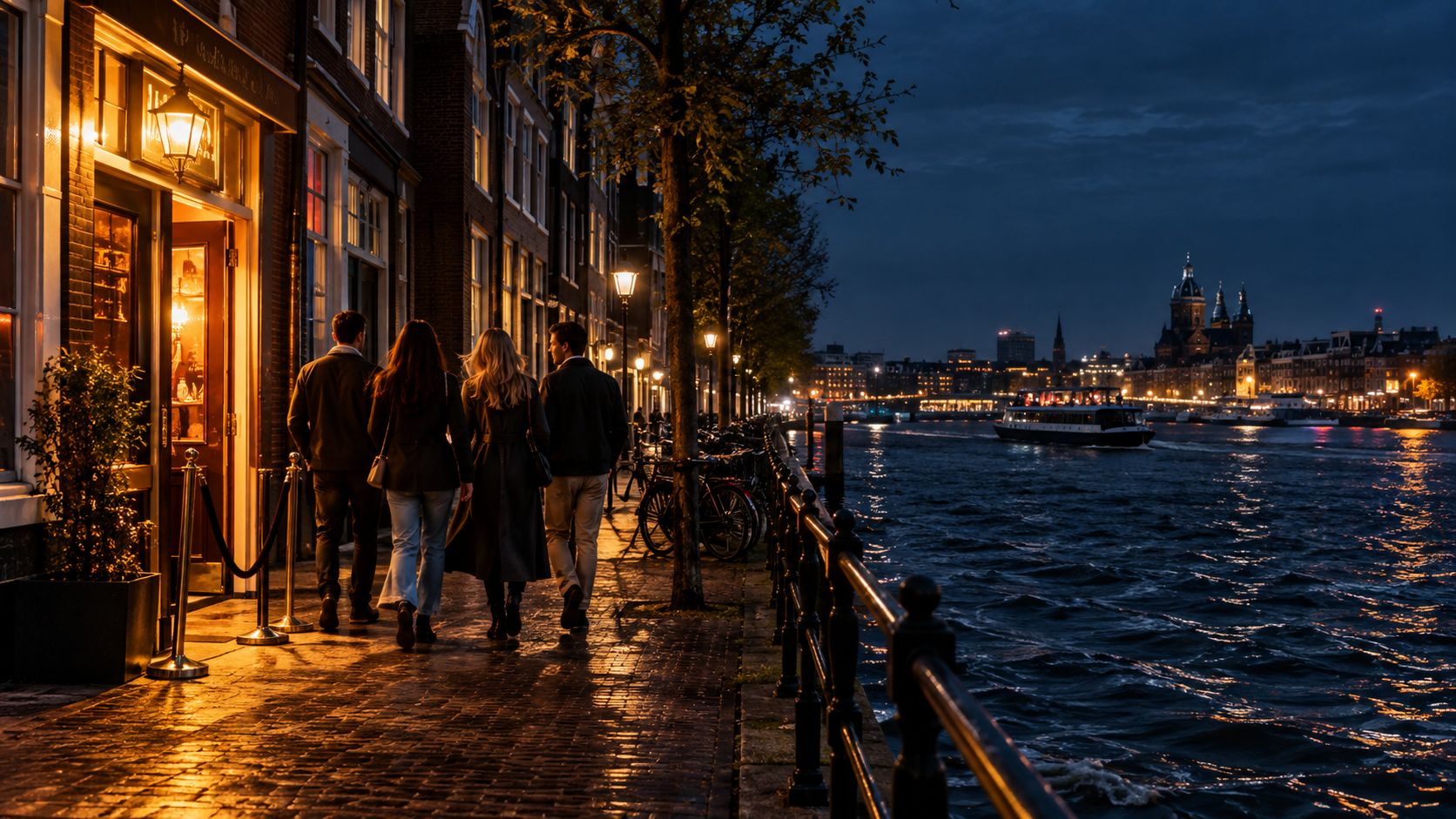
Winter nightlife works best when the group treats warmth as part of the route. Venues can begin filling around 10 p.m., and queues may form by 22:00, so arriving earlier helps guests avoid standing outside at the point when the wind feels sharpest. After a late finish, the exposed air around the IJ and canal edges can feel much colder than the evening forecast suggests.
Different formats suit different groups. A casual pub crawl works for visitors who want social movement with regular indoor stops. A club night suits groups that prefer one main destination and fewer transitions. A canal-party format, including a winter harbour cruise where the operator confirms suitable seasonal arrangements, can work for groups that want the city's lights without spending the whole evening walking.
Ultimate Party Amsterdam offers guided pub crawls in the Red Light District and Leidseplein, shared and private canal booze cruises, and concierge coordination for private nightlife arrangements. The useful question isn't whether one format sounds exciting, but whether it matches the group's tolerance for outdoor movement, preferred pace, and return journey.
Reduce exposure between venues
Walking from a central club to a distant venue may look easy on a map, but the calculation changes after midnight. The distance between locations such as Paradiso and De School matters more when guests are tired, underdressed, or carrying phones with cold-drained batteries. Short tram rides or a planned taxi are often more sensible than crossing the full canal belt on foot after closing.
Keep phones charged for ride-hailing apps, since cab lines can move slowly at 4 a.m. Pre-booking return transport on Friday and Saturday is sensible for groups with a fixed accommodation location. Freezing rain can leave step thresholds and cobbles deceptively slick, so guests should slow down rather than rushing between doors.
Practical guidance on proven night safety techniques is useful for any unfamiliar city, particularly when darkness arrives early and visibility drops in wet weather. Visitors can also review Amsterdam safety guidance before travelling, then agree on a meeting point and buddy system before the first drink.
Winter-night habit: Nobody should be left outside alone while the rest of the group negotiates the next venue or transport.
An honest party host explains what the experience includes, what it doesn't include, where the group meets, how the route works, and what happens if weather disrupts part of the plan. Clear communication is more valuable than inflated promises, especially when winter makes every delay more uncomfortable.
Common Winter Trip Mistakes and How to Avoid Them
Winter visitors usually run into the same avoidable problems. The fixes are straightforward:
- Packing only a fashion jacket: Add a waterproof outer layer, warm footwear, gloves, and a scarf. Damp cold exposes weak clothing quickly.
- Planning a summer itinerary: Move outdoor walks and photographs earlier, then use museums, cafés, and indoor attractions after the light fades.
- Booking a harbour cruise without checking winter operations: Confirm the operator's December or January schedule before committing to a date.
- Assuming the canals will freeze: Treat canal skating as a bonus, not a foundation. Use a confirmed rink if skating is important.
- Wearing smooth-soled shoes: Choose grip for wet cobbles, steps, and possible freezing rain.
- Ignoring seasonal price differences: Accommodation around Dam Square can vary around Sinterklaas and New Year, so check dates before finalising the stay.
- Leaving transport until the end of the night: Check late services, arrange a return option, and give outer-district accommodation extra attention.
The pre-departure checklist is short: pack layers, prepare a practical payment and transport plan, check event schedules, and book key nightlife or cruise slots before arrival. Holland in winter rewards visitors who accept the early darkness and build the trip around it.
For a winter visit shaped around warm indoor stops and an earlier start, Ultimate Party Amsterdam offers guided Red Light District and Leidseplein pub crawls, shared or private canal booze cruises, and concierge support for group arrangements. Choose the format that fits the group, confirm the seasonal details, and let the evening begin before the cold becomes the main event.
🍻
Experience it Yourself
Skip the planning — join Amsterdam's biggest pub crawl and get 6 bars, free drinks and VIP club entry for €20.