You've got a group chat full of people asking the same question: should everyone book a seat on a friendship canal cruise in Amsterdam, or should the group hire a boat privately? The answer depends less on the promise of drinks and music than on how people will interact once the boat leaves the dock.
A social cruise can be an easy way for solo visitors, couples, and small groups to meet without committing to a full night out together. It can also become an awkward floating room if the seating, passenger rules, route, or host aren't suited to the group. Amsterdam's waterways reward realistic planning, especially now that propulsion rules, passenger limits, and low-speed navigation shape what operators can offer.
Table of Contents
- What a Friendship Canal Cruise in Amsterdam Actually Is
- How Solo Travelers and Groups Actually Meet on the Boat
- Shared Boats vs Private Boats vs Large Charters
- Amsterdam Boat Rules That Change Your Cruise Plans
- How to Pick the Right Cruise for Your Group
- Real Scenarios from a Night on the Water
- Etiquette, Safety and a Quick Pre-Book Checklist
- Timing, Weather and Accessibility Questions Answered
What a Friendship Canal Cruise in Amsterdam Actually Is
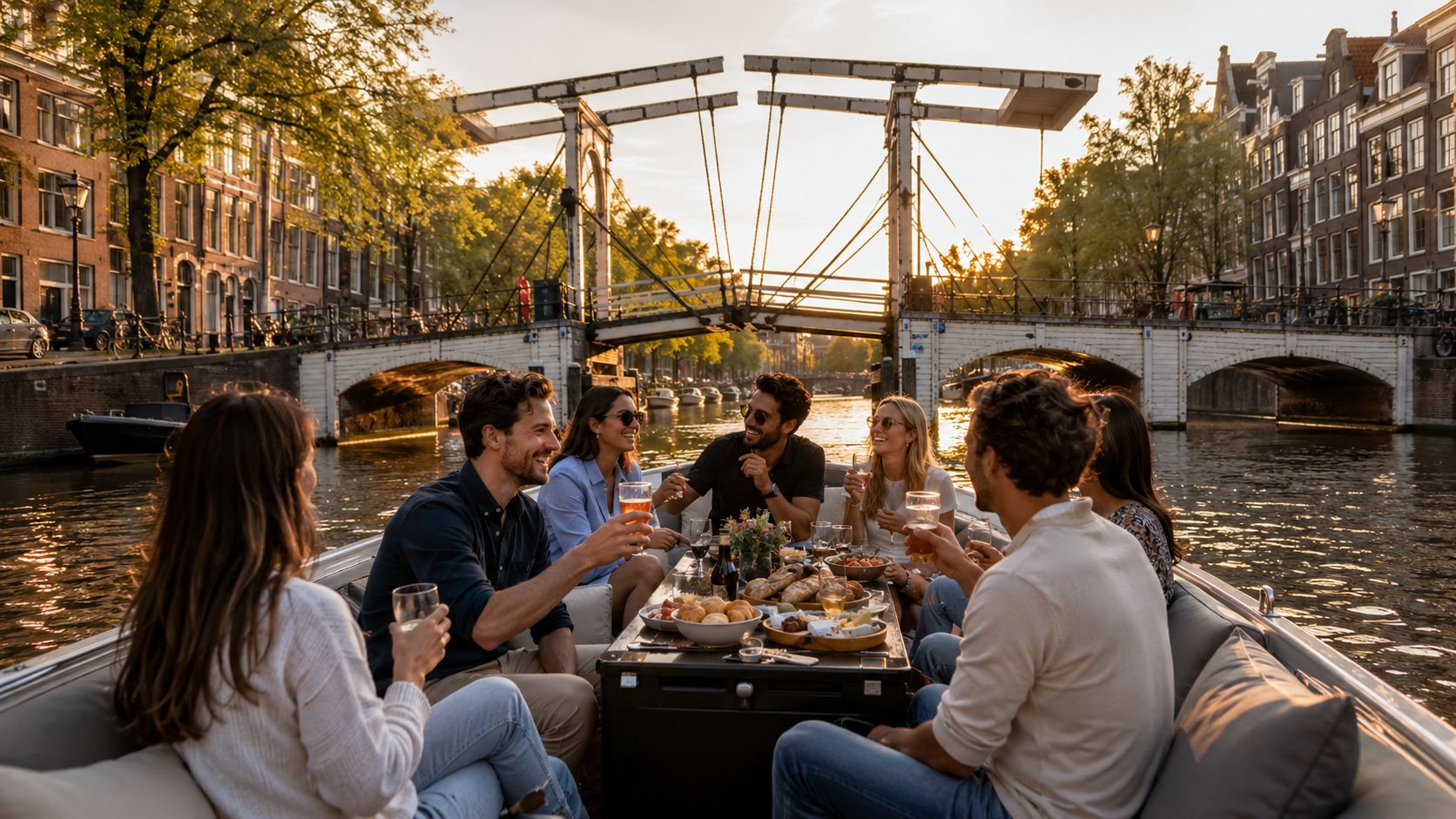
Twelve people step onto a small electric saloon boat. A few know each other, several have arrived alone, and the rest are traveling in pairs. The boat moves past the Magere Brug while the host pours wine, points out the changing view, and gives everyone a reason to speak to someone outside their own booking.
That's the useful distinction. A friendship canal cruise in Amsterdam isn't a sightseeing trip with drinks added. It's a hosted social boat experience where solo travelers and small groups share seating, conversation, and the route. Guests may book individual places or join a partial bench instead of reserving the entire vessel.
The social format
The best version has a relaxed pace, shared seating, and a host who keeps conversation moving without turning the trip into a forced performance. The route may include the Amstel, the Jordaan area, and central canal views, but the landmarks support the social experience rather than replacing it.
A conventional sightseeing cruise generally prioritizes a quiet ride and recorded or live commentary. A party boat puts more emphasis on volume, dancing, and a larger crowd. A friendship cruise sits between those formats. It's intimate enough for introductions, but structured enough that a solo traveler doesn't have to break into an established group alone.
Amsterdam's central canal network became a zero-emission zone for pleasure boats on 1 April 2025, covering the area within and including the Singelgracht. Only electric, hydrogen, or manually propelled boats are permitted there, according to the city's zero-emission canal guidance. Electric propulsion is therefore a practical requirement for inner-city operations, not merely a premium feature.
Who usually enjoys it
The format suits solo visitors who want a social evening without joining a loud party, small friend groups that want a low-effort activity, and mixed groups where couples and singles can comfortably share a boat. It also works for travelers who want nightlife afterward but prefer to start with conversation rather than a crowded bar.
Operators should explain the expected social mix clearly. If a listing doesn't say whether the boat is designed for solo bookings, couples, or closed groups, the booking page hasn't answered the question that matters most.
How Solo Travelers and Groups Actually Meet on the Boat
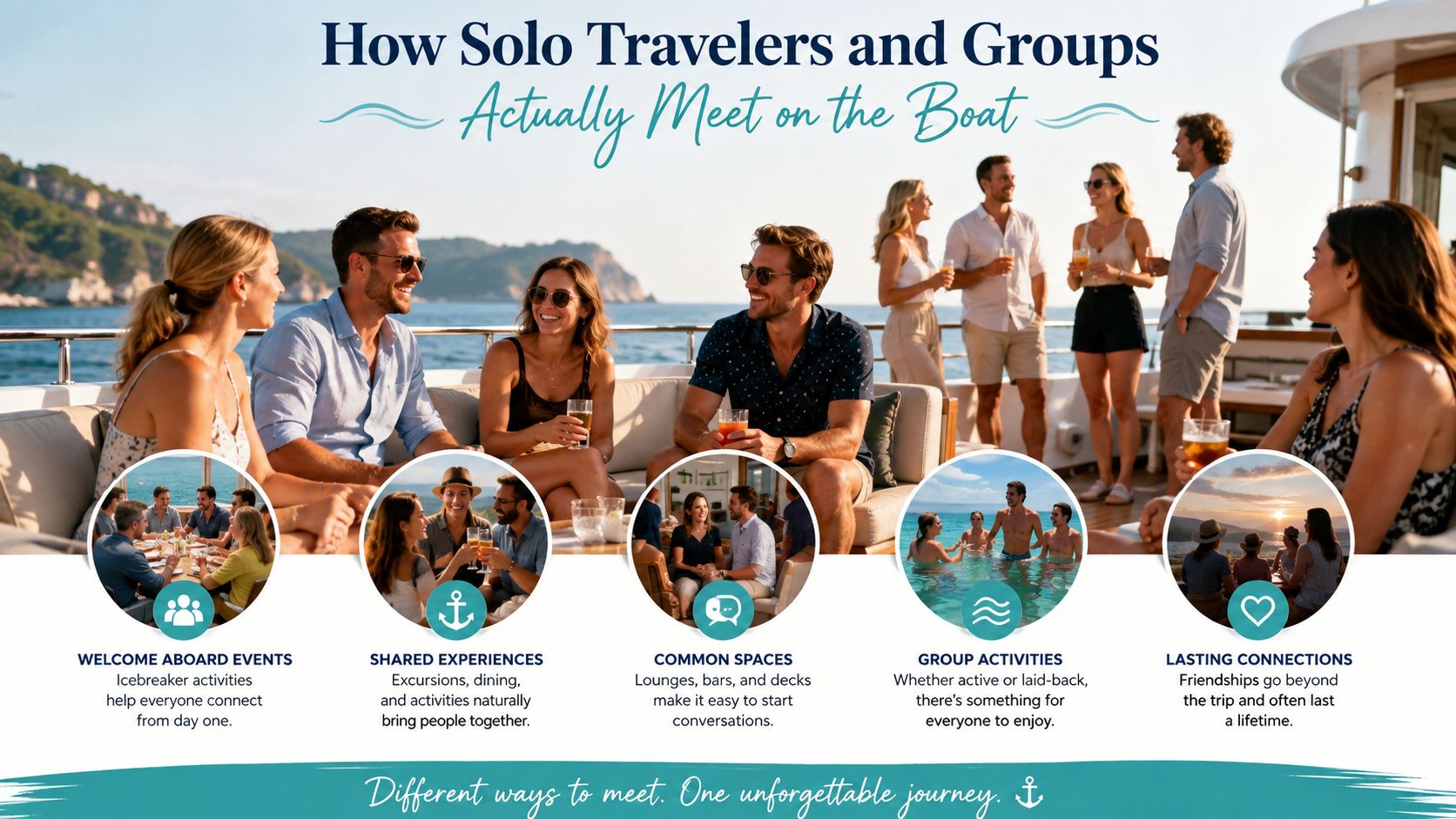
A social cruise works because the operator manages small moments that remove awkwardness. Boarding alone can feel uncomfortable, but being greeted by name, placed beside another new arrival, and given an immediate question to answer changes the mood before the boat has cleared the dock.
The process usually starts before departure. Guests receive a meeting point and an arrival time, then the host organizes the boarding so people enter in pairs or small clusters rather than forming one anxious queue. Once everyone is seated, short introductions work better than a long speech. A name, where someone has traveled from, and what they want from the evening gives the group enough information to start talking.
What hosts do that works
Small bench seating is more social than forward-facing rows. A clear center path helps guests move without climbing over strangers, while shared snacks or a coordinated toast create natural reasons to turn toward another bench.
Good hosts also use the route as a conversation tool. A canal landmark can prompt a quick question, a music request can involve the whole boat, and a planned seat rotation can stop one group from becoming isolated at the back. The point isn't to run an exhausting schedule. It's to give people a gentle push at the moments when conversation might otherwise stall.
Solo travelers who want more practical advice before booking can also read these tips for making friends on a pub crawl. The same principle applies on the water: social contact becomes easier when the host provides a clear starting point.
Practical rule: A host should introduce people by name and context, not simply tell everyone to “mingle.”
What makes the format fail
Rows of isolated seats, headphones, and a guide who spends the entire journey lecturing all work against the purpose of a friendship cruise. A boat can be visually attractive and still feel socially empty if guests never receive a reason to speak.
The final few minutes matter too. A clear end point, realistic disembarkation instructions, and an optional suggestion for continuing the evening help prevent the group from scattering immediately. That doesn't mean every passenger wants a bar afterward. It means the operator understands that the cruise is part of a night, not always the entire plan.
Shared Boats vs Private Boats vs Large Charters
A shared boat, private boat, and large charter create three different social settings on Amsterdam's canals. Shared cruises mix separate bookings, private boats keep one group together, and large charters prioritize event logistics over close conversation.
| Format | Group Size | Vibe | Typical Inclusions | Best For |
|---|---|---|---|---|
| Shared boat | Varies by vessel and license | Social and mixed | Hosted route, shared seating, unlimited beer, wine, and soft drinks on a 60-minute electric boat | Solo travelers, pairs, and small groups wanting to meet others |
| Private boat | Planned around one booking | Controlled and personal | Private route, selected music or drinks where offered, skipper | Friends, couples, and small celebrations |
| Large charter | Larger licensed vessels | Event-focused and louder | Group transport, organized entertainment, catering or drinks depending on the arrangement | Big celebrations, corporate groups, and formal events |
Shared boats
A shared cruise gives solo travelers the clearest chance to meet strangers because the social mix is part of the booking. It also suits pairs and small groups that want company without paying to fill a whole vessel. On a small Amsterdam boat, people usually start talking during boarding, drink service, or a pause near a landmark, rather than during a formal introduction.
A typical 60-minute shared cruise through the Herengracht and Prinsengracht follows the operator's route and playlist. A birthday group cannot assume it can request a private detour past a particular landmark, change the music for the entire boat, or choose who sits nearby. That limited control is also what brings separate groups together.
Readers comparing shared options can review the shared booze cruise from Ultimate Party Amsterdam and verify the current route, duration, inclusions, and boarding details before booking.
Private boats
A private cruise gives one booking control over the group dynamic. Friends can stay together, set the tone, and avoid leaving the evening's atmosphere to a mixed passenger list. That works well for a celebration where privacy matters more than meeting new people.
The booking party also carries more responsibility. Confirm the capacity, boarding point, drinks, music, route, and weather terms before paying. Readers considering that format can review the private booze cruise option from Ultimate Party Amsterdam and verify the current details before booking.
Large charters
Large charters are built for scale, not intimate mixing. A larger licensed vessel may provide more space and event equipment, while a solo passenger can still become one person in a crowd rather than part of a conversation.
Choose the format according to the group. Solo or paired travelers generally suit a shared boat. A small closed group usually gains more from privacy. A large celebration needs a licensed charter that can handle its passenger count and event requirements. Electric boats are now the normal choice for inner-city social cruises, so propulsion is usually a compliance baseline rather than a special feature.
Amsterdam Boat Rules That Change Your Cruise Plans
Amsterdam's rules can change the shape of a booking before anyone boards. The first question for a group is whether the vessel is licensed for its advertised passenger count, especially when the booking involves more than a small private party.
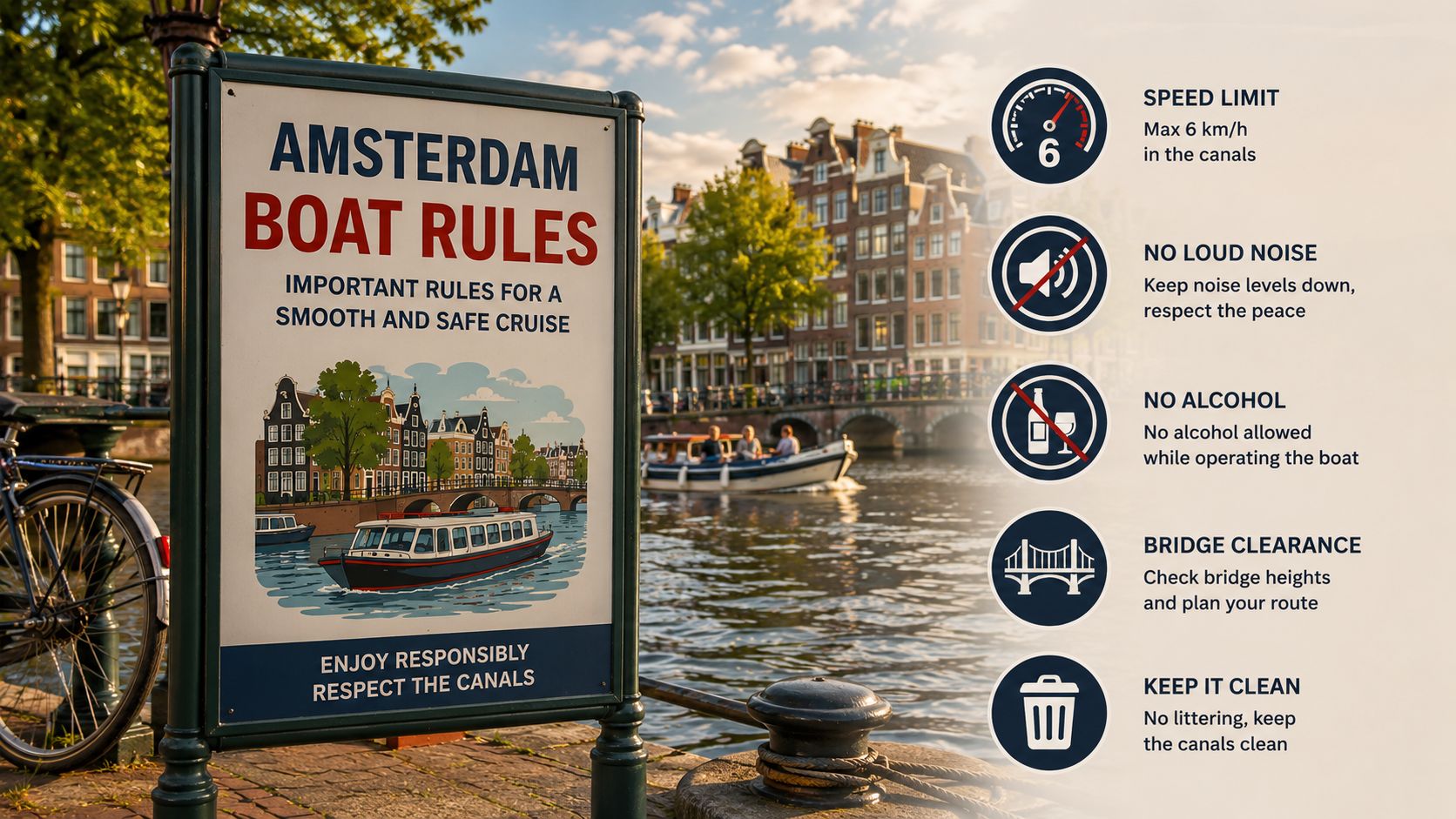
Most inner-city boats now face a practical limit of 12 passengers plus 1 skipper, while licensed passenger-transport vessels can be exempt from that limit, as described in recent coverage of Amsterdam's passenger rules and enforcement. That distinction matters for groups of 13 or more. A generic promise that “the boat fits everyone” isn't enough. The operator needs to explain whether the vessel is privately chartered, commercially licensed, or subject to route-specific restrictions.
Why electric boats are now standard
The central zero-emission rule favors electric, hydrogen, and manually propelled boats within the regulated canal area. Operators running social cruises through the inner canals therefore need propulsion that complies with the zone, regardless of whether the booking is marketed as sightseeing, a booze cruise, or a friendship experience. The official Amsterdam canal guidance explains the zone and permitted propulsion types.
Speed also limits ambition. Boats are capped at 6 kilometres per hour in the canals, according to Amsterdam's boating guidance. A two-hour booking can provide a generous experience, but it can't cover the city as if the boat were traveling on open water.
The same guidance states that two-stroke outboard motors older than 2007 aren't permitted in Amsterdam waters, except on certain main waterways such as the Amstel or Kostverloren routes. Route, vessel, and propulsion should be confirmed together, not treated as separate details.
How to Pick the Right Cruise for Your Group
The right booking starts with the group, not the boat photograph. A cruise that suits two solo travelers may frustrate a closed friend group, while a private charter can feel unnecessary when the whole point is meeting new people.
| Format | Best Group Size | Duration | Drinks Included | Cancellation Flexibility |
|---|---|---|---|---|
| Shared social cruise | Solo travelers, pairs, and small mixed groups | Confirm the advertised sailing time | Check whether drinks are included or purchased separately | Check the operator's written terms |
| Private cruise | One small group that wants privacy | Confirm the route and sailing time | Confirm the bar, drinks, and outside-drink rules | Confirm weather, cancellation, and rescheduling terms |
| Large charter | Larger organized groups | Confirm the event schedule and boarding window | Confirm catering, drinks, and service arrangements | Agree terms before paying a deposit |
Five details worth checking
Group size comes first. Small groups often interact more easily when everyone can hear the host and reach the shared seating. Larger parties should ask whether they'll be split across vessels or placed on a licensed boat designed for their number.
Route changes the mood. Central heritage canals provide landmark views and a compact city atmosphere. The Amstel side can feel more open and relaxed. The route should match the reason for booking, especially if the group wants conversation rather than constant sightseeing commentary.
Duration affects the night. A shorter cruise can work as a pre-drinks activity, while a longer booking allows more time for introductions and a slower pace. Neither is automatically better. The departure time and the group's later plans matter more than an impressive-sounding itinerary.
Drinks need precise wording. “Drinks available” can mean an included selection, a cash bar, a pre-ordered package, or permission to bring something aboard. Confirm what's included, how it's served, and whether glass containers are permitted.
Cancellation terms protect the plan. Ask what happens if weather affects sailing, if the operator changes the route, or if the booking can't proceed. Those terms should be readable before payment, not explained at the dock.
A shared boat makes sense when meeting strangers is part of the appeal. A private booking is more suitable when privacy, music control, and group consistency matter. Readers comparing that option can inspect the private booze cruise details before sending questions to the operator.
Real Scenarios from a Night on the Water
The same canal boat can produce three completely different evenings. The outcome depends on what the group tells the operator before arrival, not only on the route printed on the booking page.
The stag group
A groom and nine friends may want a loud playlist, pre-arranged drinks, and enough flexibility to avoid turning a late dinner into a missed departure. That group should tell the operator the occasion, the preferred energy level, and whether everyone expects to remain together.
The skipper still controls the safe operation of the boat. Singing and joking can fit the atmosphere, but standing while underway, blocking movement, or distracting the crew can turn a celebration into a problem. The useful message before payment is direct: confirm the passenger count, boarding time, drink arrangement, route, and whether the boat is private or shared.
The hen group
A smaller group may want a calmer trip through the central canal belt, themed decorations, and a host who can run a simple mixer rather than a loud party game. The request should be made in practical terms. Ask what decoration is allowed, whether it must be supplied in advance, and whether the host facilitates interaction.
A quieter route doesn't mean a silent boat. It means the group can hear one another, take photographs, and enjoy the architecture without competing with a full event setup.
The solo traveler
A solo guest on a shared boat needs a different kind of support. The host can place that person beside other open travelers, introduce them through a question, and avoid seating the entire boat according to booking order.
The traveler should ask whether the cruise accepts solo bookings, whether seating is assigned, and whether the experience is hosted or shared transport. A single ticket doesn't guarantee instant friendship. It does create a better chance when the operator has designed the seating and introductions intentionally.
Before paying, describe the group honestly. “Celebration” can mean a relaxed toast or a high-energy party, and operators need to know which one is arriving.
Etiquette, Safety and a Quick Pre-Book Checklist
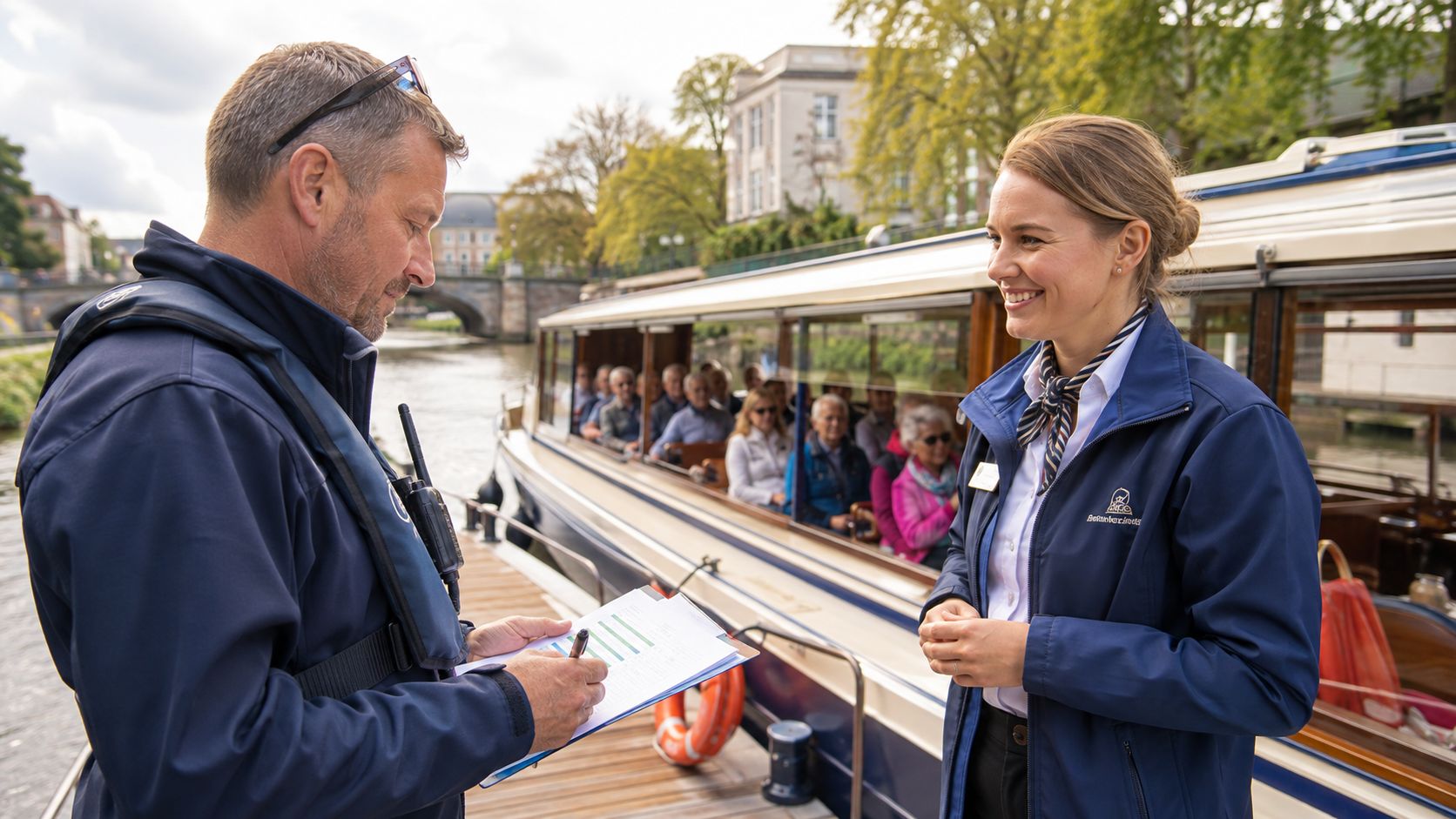
A responsible operator checks the passenger count, briefs the host, and identifies a clear contact for questions before departure. Those tasks sound administrative, but they protect the social atmosphere too. When nobody knows who is responsible for late arrivals, missing guests, or last-minute changes, the host starts the cruise already solving avoidable problems.
Drinks also require more care on water than on land. Spills can make a deck slippery, and standing while the boat is moving can affect balance and obstruct the skipper's view. Guests should stay seated or follow crew instructions while underway, keep bags out of walkways, and treat the boat as a working vessel rather than a private living room.
Signs a listing needs more questions
A vague passenger limit is a warning. So is a meeting point that appears only after payment, or an operator that doesn't make its licensing and cancellation terms clear. A polished photograph can't answer whether the boat is legal for the advertised group or whether the route works under current canal restrictions.
The group should save the operator's number and agree on one latecomer policy before the evening starts. Nobody should expect a moving boat to wait indefinitely at a narrow dock.
Pre-book checklist
- Confirm capacity: Ask whether the stated number includes the skipper and whether the vessel is licensed for the whole group.
- Confirm the dock: Save the exact departure address, arrival time, and instructions for finding the jetty.
- Check cancellation terms: Ask how weather, route changes, and operator cancellations are handled.
- Set a late-arrival plan: Choose a nearby meeting point rather than asking the boat to delay departure.
- Share one contact number: Make sure the organizer and guests can reach the operator.
- Agree an end time: Plan the next venue and transport before people disembark.
Timing, Weather and Accessibility Questions Answered
Departure time changes the social character of a cruise. Earlier evening sailings generally give people more room to talk and take in the canals, while later departures often attract guests looking for a louder party atmosphere. Sunset trips can be especially appealing, but the group should choose based on its preferred energy rather than assuming every evening cruise feels the same.
Weather planning needs equally clear expectations. Covered boats can be more dependable in light rain, while open boats are more exposed to wind and sudden changes. A 2026 Amsterdam cruise guide notes that covered or heated cruises commonly operate year-round, while open boats may be canceled in storms or strong winds, and that dog-friendly and wheelchair-accessible options aren't universal. The Amsterdam canal cruise guidance for visitors is useful for checking those practical differences before booking.
Accessibility should be discussed with the operator in concrete language. Ask about the step from quay to deck, the width of the entrance, toilet arrangements, and whether a wheelchair can remain on board. “Accessible” can mean a low boarding step on one vessel and assistance with a narrow transfer on another, so the exact boat matters.
The same applies to luggage, mobility aids, and guests who may need to sit near an exit. A good booking conversation identifies those needs before payment, then confirms them again on the day. That gives the crew time to prepare and prevents an avoidable surprise at the jetty.
Ultimate Party Amsterdam offers a shared electric booze cruise for travelers who want a hosted canal experience with unlimited beer, wine, and soft drinks, as well as a private electric option for groups seeking more control. Visit Ultimate Party Amsterdam to compare the cruise formats and plan a social Amsterdam night around the group's preferred level of privacy and energy.
🍻
Experience it Yourself
Skip the planning — join Amsterdam's biggest pub crawl and get 6 bars, free drinks and VIP club entry for €20.


