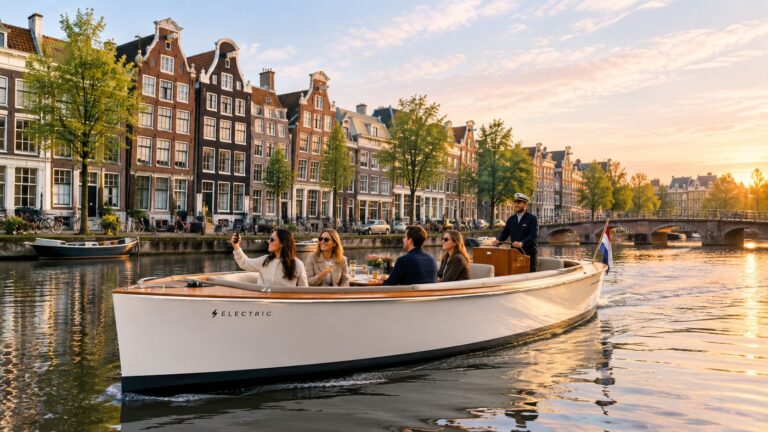
You've booked a Saturday night in Amsterdam, gathered the group chat, and now everyone wants to know the same thing: is an open bar cruise a proper night out or just a short sightseeing trip with drinks? The answer depends on the boat, the drinks list, the departure point, and what's planned after the final canal view.
Amsterdam's canal cruises work best when they're treated as one part of a wider evening. A well-timed boat ride can break the ice before a pub crawl, give a stag or hen group a shared starting point, or offer a relaxed middle section before the night moves towards bars and clubs. The guide below focuses on what happens, what the ticket normally covers, and how to connect the cruise with the rest of the night.
Table of Contents
- Picture Your Night on an Amsterdam Canal
- What an Open Bar Cruise Actually Means
- What's Included and What's Not
- Shared Versus Private Canal Cruises
- What the Evening Really Feels Like
- Drinking Rules and Responsible Service on the Canals
- Booking, Pricing and Cancellation Tips
- Pairing Your Cruise With the Rest of the Night
Picture Your Night on an Amsterdam Canal
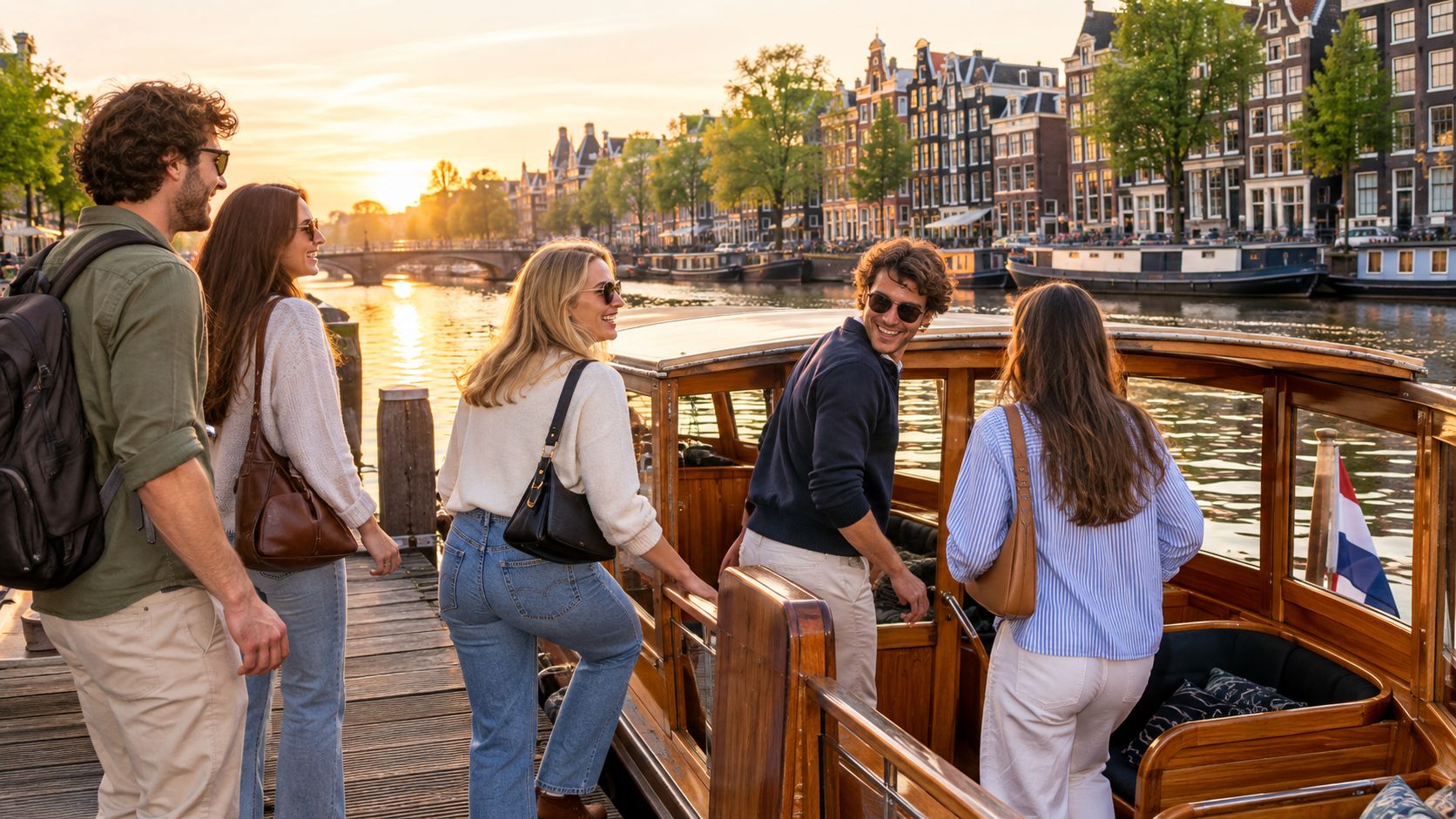
A group of friends meets near a central pier as the light fades behind the canal houses. The boat is lower than expected, boarding is quick, and the first practical questions arrive before everyone has found a seat. How long is the ride? Is wine available, or is it only beer? Does the boat return to the same place? What happens after the cruise?
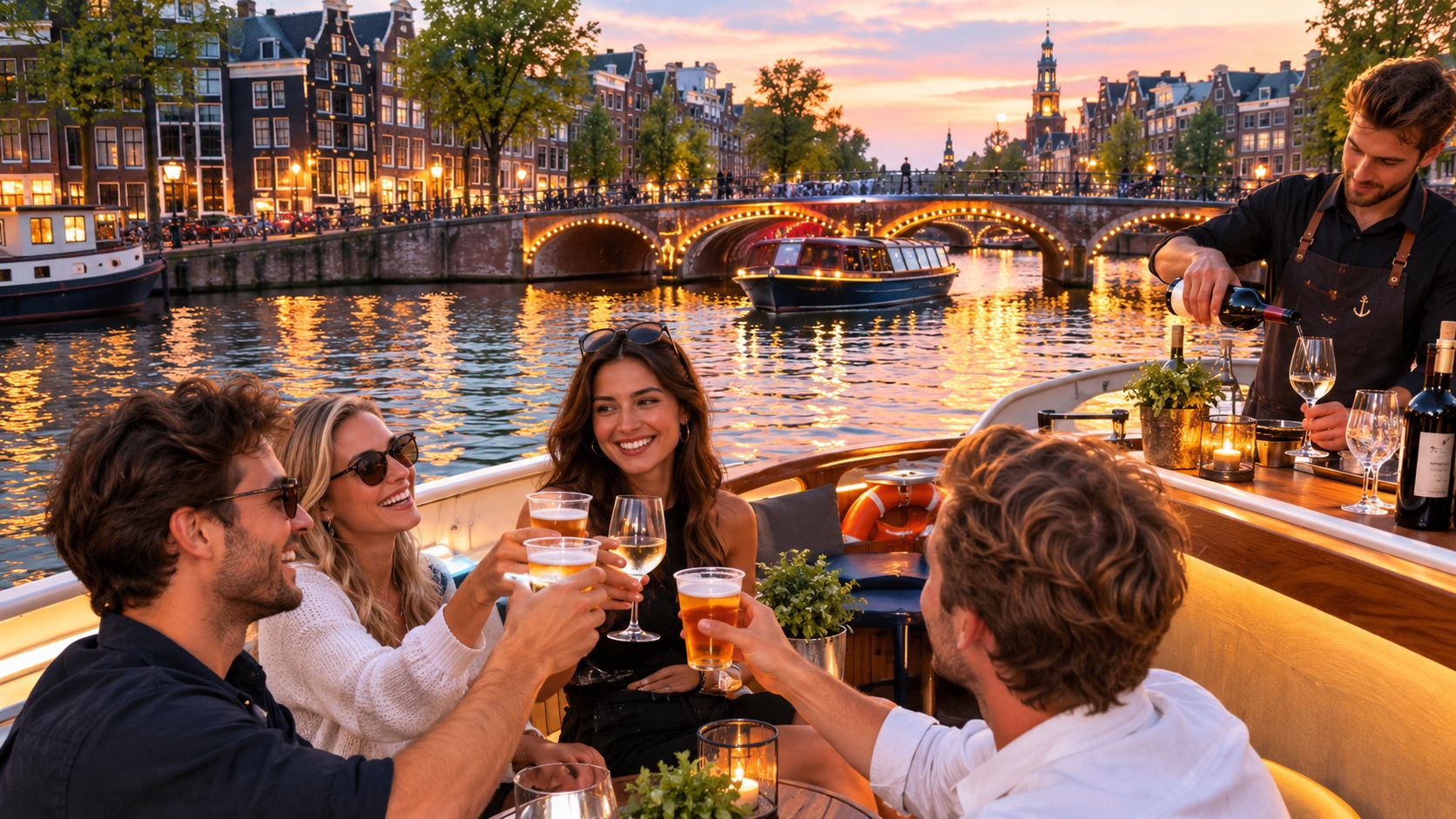
As the engine starts, the atmosphere settles. The boat hums beneath the conversation, bridge lights appear across the water, and glasses begin clinking as the skipper announces the route. The experience feels social rather than formal. Guests usually spend as much time talking with their own group as they do watching the Prinsengracht houses, passing boats, and illuminated bridges.
The important distinction is that an Amsterdam canal cruise isn't usually an all-night floating club. It's a compact experience with a defined departure, a controlled drinks menu, and a return point that needs to fit the rest of the itinerary. The strongest bookings leave enough time for the group to disembark, find the next venue, and avoid turning a pleasant cruise into a rushed transfer.
Practical rule: The cruise should anchor the evening, not carry the entire responsibility for it.
A first-timer often judges the ticket by the phrase “unlimited drinks,” but the better questions are more specific. Which drinks are included? Is the boat shared or private? Is the music designed for conversation or dancing? Does the route return to the original pier? Are pub reservations, club entry, or transport arranged separately?
Those details shape the night more than the headline wording. A shared boat can be ideal for travellers who want an easy social setting, while a private charter suits groups that need their own guest list, playlist, and timing. Either way, the smoothest night continues after the boat reaches the dock.
What an Open Bar Cruise Actually Means
An open bar cruise is a boat trip where the ticket includes unlimited drinks from a fixed menu for the stated duration. In Amsterdam, that generally means beer, house wine, and soft drinks rather than an unrestricted cocktail bar. The operator controls what's poured, how service works, and when the bar closes.
That format differs from an ocean-cruise beverage package. Large ship packages may apply across several days and cover a wider selection of spirits, cocktails, wine, beer, and soft drinks, depending on the package rules. A canal cruise is shorter and more focused. Amsterdam operators commonly promote shared cruises with unlimited beer, wine, and soft drinks during a 60-minute trip, while some commercial vessels carry 50 to 150 or more passengers, according to the industry material cited in this cruise beverage overview.
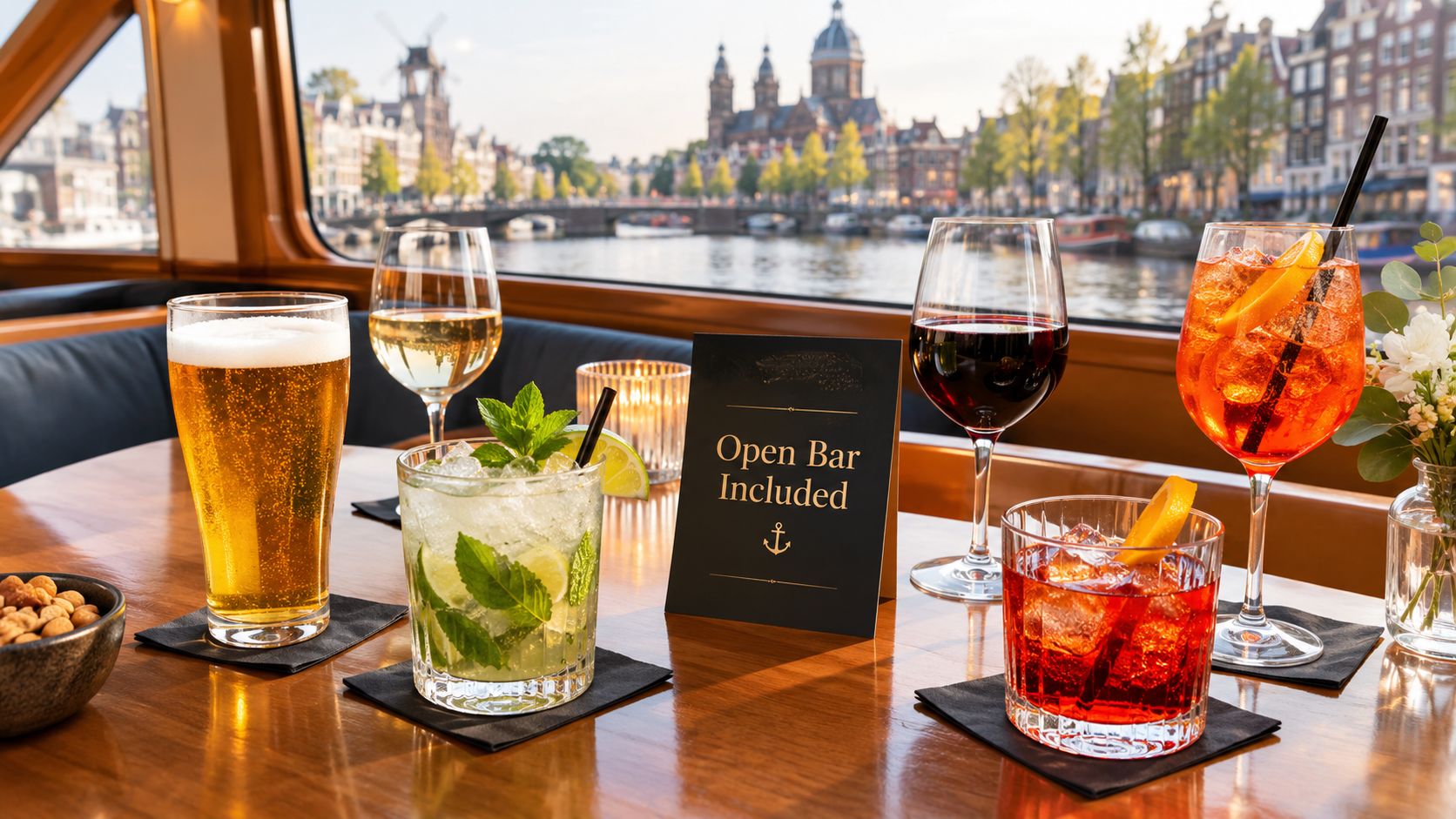
The boat type changes the experience
The term can describe two different products:
- Shared public cruises: Guests book individual seats and travel with other visitors. The route and departure time are fixed, which keeps the experience simple and social.
- Private charters: One group books the boat. The operator can discuss timing, music, catering, route preferences, and drinks upgrades within the vessel's licence and operating limits.
Licensed boats also operate under safety and alcohol rules. Amsterdam guidance says passengers may drink on private boats where the operator allows it, while the skipper must remain sober. The exact onboard policy remains operator-specific, so “open bar” doesn't mean guests can bring additional alcohol or ignore crew instructions.
Central boarding points can sit near major visitor areas such as Centraal Station, Leidseplein, and the Anne Frank House area, but the exact pier should always be checked on the booking confirmation. A few minutes of walking can matter when a group is carrying bags, arriving from dinner, or connecting with a hosted nightlife experience.
What's Included and What's Not
A standard Amsterdam open bar cruise ticket usually covers the boat ride and a defined selection of drinks. Many offers are built around a 60-minute journey, although some experiences run longer. The central canal belt is normally the visual focus, with guests staying onboard while the crew serves from the included menu.
The practical mistake is treating “open bar” as a synonym for “everything behind the bar.” It usually isn't. Beer, house wine, and soft drinks are the dependable inclusions. Premium spirits, cocktails, Champagne, food, snacks, hotel pickup, and post-cruise club entry normally require a separate arrangement or aren't offered at all.
Compare the ticket line by line
| Usually Included | Usually Not Included |
|---|---|
| Canal cruise for the advertised duration | Premium spirits |
| Unlimited beer from the house selection | Cocktails made to order |
| House wine | Champagne or premium sparkling wine |
| Soft drinks | Food and substantial snacks |
| Boarding at the stated pier | Hotel pickup |
| Crew service and the published route | Entry to a venue after docking |
| A shared or private boat, depending on the booking | Drinks outside the listed menu |
A low headline price paired with “unlimited cocktails” deserves careful reading. The phrase may refer to a restricted spirit selection, a house pour, or a narrow definition of what counts as a cocktail. The only reliable method is to check the drinks list before payment rather than assuming the bar operates like a nightclub.
Private boats offer more flexibility. A group can often request catering, snacks, or an upgraded drinks menu, with the final arrangement confirmed by quote. Shared boats usually follow the published list closely because the crew is serving several groups at once and needs a consistent service flow.
The same principle applies to the welcome drink. Some operators include a first pour as guests board, while others begin service after departure. That distinction doesn't make one offer good or bad, but it should be clear before the group arrives at the pier.
Shared Versus Private Canal Cruises
The choice between a shared and private open bar cruise changes the mood before the first drink is served. Shared boats bring mixed groups together, while private charters give one booking control over the guest list and the onboard atmosphere.
Shared cruises typically carry 20 to 60 passengers and follow a fixed 60-minute loop, with drinks included at roughly €25 to €45 per person, according to the commercial planning assumptions for this format. Private charters often run for 90 minutes to 2 hours, with whole-boat pricing starting around €450 to €700, while drinks may be added separately or selected by tier. These figures are planning ranges, not universal tariffs, so the written quote remains decisive.
| Factor | Shared Cruise | Private Cruise |
|---|---|---|
| Group format | Mixed passengers | One private guest list |
| Pricing model | Per person | Flat boat rate, often with drink options added |
| Atmosphere | Social and informal | Controlled and group-specific |
| Route | Fixed operating route | More discussion around timing and route |
| Music | Operator-controlled | Playlist can usually be discussed |
| Best for | Couples, small groups, solo travellers | Celebrations, stag and hen groups, corporate parties |
| Timing | Published departure | More control over boarding time |
Match the boat to the group
A shared cruise makes sense when the group wants a straightforward booking and doesn't need exclusive space. It also suits visitors who enjoy meeting other travellers and want the boat to function as a social warm-up.
Private becomes more practical when the guest list is larger, the group needs a particular departure time, or the evening depends on a playlist and coordinated movement. It's especially useful for stag and hen parties, birthdays, corporate groups over 10 people, and groups that want to connect the boat with reserved venues.
A private boat costs more to organise, but it can cost less in coordination when one person is responsible for a large group.
The shared booze cruise option suits guests looking for a one-hour canal experience with unlimited beer, wine, and soft drinks on a shared electric boat. A private booking is better when boarding time needs to line up with a pub crawl handover, dinner reservation, or later venue.
What the Evening Really Feels Like
The evening usually starts before departure, not when the boat leaves. Guests need to find the pier, check the booking details, and arrive with enough time for the crew to organise boarding. A central dock near Centraal Station, Leidseplein, or the Anne Frank House area can be convenient, but the route from the group's previous stop still needs planning.
Boarding and the first pour
Boarding commonly begins 10 to 15 minutes before departure, based on the operating format described for these cruises. The crew checks names, confirms the group, counts the available glasses, and explains which drinks are included. Once the boat moves away from the pier, the first beer, wine, or soft drink is usually poured within the opening part of the journey.
The boat's design affects the mood. Enclosed saloons protect guests from changing weather and keep the group together, but they also mean the experience is more conversational than club-like. Music is generally kept at a level that allows people to talk, rather than running as a full dance-floor soundtrack.
The route provides the atmosphere. The canal belt, Skinny Bridge, houseboats, and lit façades create movement outside the windows while the group settles into its own conversation. Guests who expect a nightclub on water may find the pace too calm. Guests who want a scenic social start to the night usually appreciate the balance.
The final stretch
Around the final part of the trip, the crew signals that service is coming to an end. The boat returns to its original dock roughly 10 minutes later, keeping the total experience close to 60 minutes for the standard format.
That return point matters. The group may need to walk to a pub, meet a guide, order a taxi, or reach a club queue. A cruise that ends in the right place at the right time feels effortless. The same cruise can feel badly organised if nobody knows where the group goes next.
After-docking advice: Treat the final drink as part of the handover. Bags, toilets, directions, and the next meeting point should be settled before the boat returns.
Drinking Rules and Responsible Service on the Canals
Alcohol service on Amsterdam canals is controlled hospitality, not a free-for-all. The Netherlands sets the legal drinking age at 18, and operator policies commonly require age checks before serving alcohol. Guests who look young should bring a passport or accepted EU identity document, because a photo on a phone may not be accepted.
The skipper's role is separate from the guests' drinking experience. Amsterdam boating guidance states that the skipper must remain sober, and the operator remains responsible for safe navigation and onboard conduct. The Amsterdam navigation rules also identify a skipper blood alcohol limit of 0.5, while warning that nuisance behaviour and an impaired skipper can create fines and insurance complications.
Operator policy comes first
There isn't one universal passenger drinking policy for every boat. A neutral Amsterdam boating guide explains that private boat operators often decide whether guests may bring their own alcohol, so a private hire policy cannot automatically be applied to a licensed open bar cruise. Guests should check the booking terms before arriving with bottles or cans.
Licensed open bar cruises generally provide the drinks themselves. Staff can refuse service to someone who is visibly intoxicated or behaving aggressively. That isn't a minor technicality. The crew has to protect the other passengers, the vessel, and the operating licence.
Standard menus also tend to focus on beer, wine, and soft drinks. Spirits and cocktails may be unavailable or treated as an upgrade, depending on the boat and licence. Guests should ask whether sparkling wine, mixed drinks, and non-alcoholic options are included rather than relying on the words “open bar.”
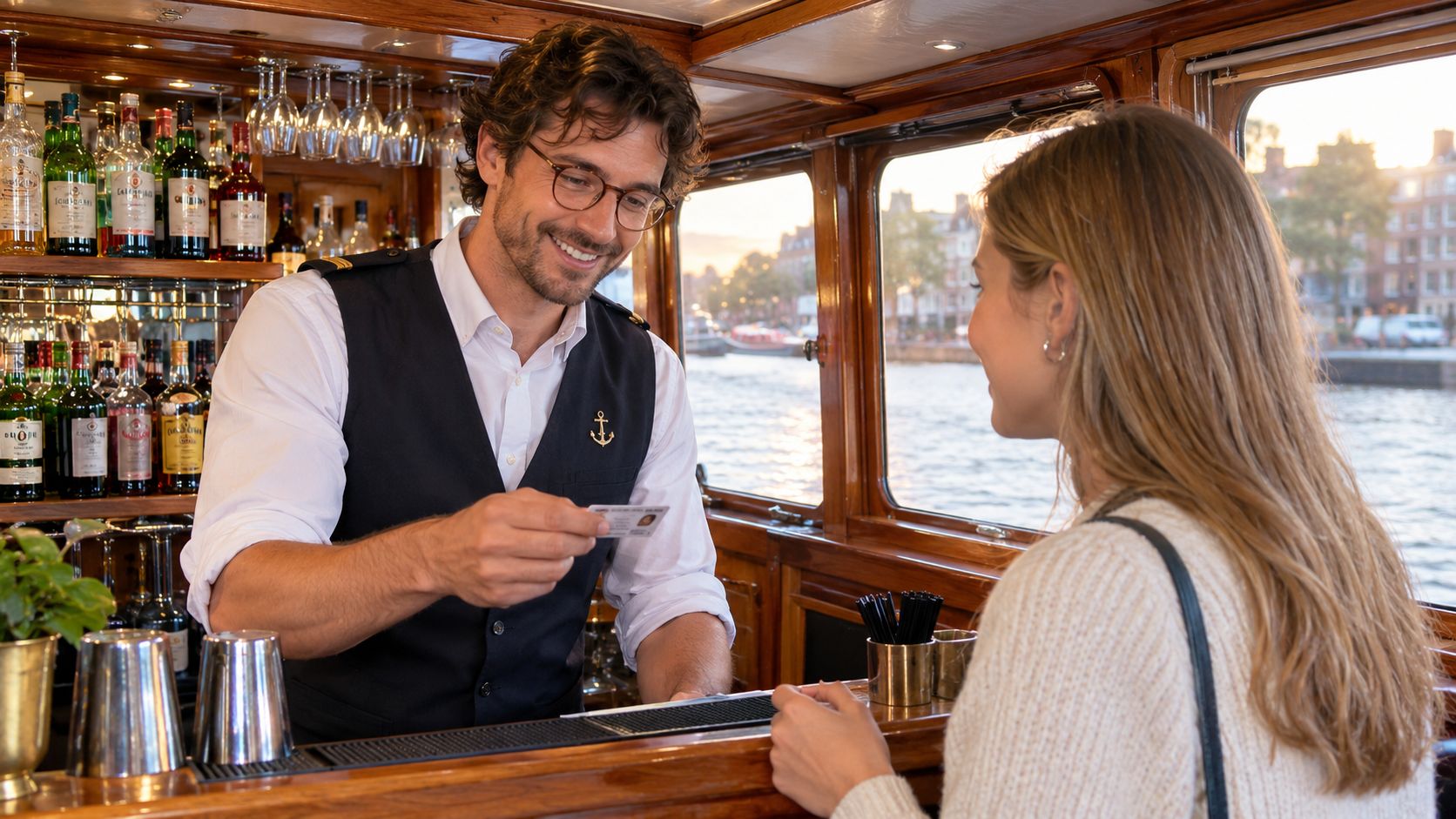
Amsterdam's wider public-space rules matter too. The city states that guided tours in the centre may not include alcohol or drugs, groups over 15 aren't permitted for those tours, and core-area tours must finish by 10 pm, as set out on the city's tour rules page. A boat booking doesn't remove the need for sensible behaviour before or after docking.
Booking, Pricing and Cancellation Tips
The safest booking process starts with the operational details, not the promotional photograph. Summer weekends can fill ahead of time, while quieter weekday departures may remain available closer to the date. Groups should still check early because the ideal departure time is often more important than finding any available boat.
Before paying, confirm:
- Departure pier: Ask for the exact meeting point, not only the neighbourhood.
- Boarding time: Separate the time guests must arrive from the actual time on the water.
- Drinks list: Check whether the package covers beer, wine, soft drinks, sparkling wine, spirits, or cocktails.
- Boat format: Confirm whether the booking is shared or exclusive.
- Group threshold: Ask when a private upgrade becomes more practical than individual seats.
- Weather policy: Covered boats can operate in rain, but the cancellation and rescheduling terms still need to be clear.
Do the group maths
Shared bookings are normally priced per person. Private charters use a whole-boat rate, so the calculation changes as the guest list grows. A private option can begin to make more sense from roughly 12 to 15 guests, but the result depends on the boat, date, duration, and drink arrangement.
Cancellation terms vary by operator. Some Amsterdam experiences use a 72-hour full-refund window, a 50% refund inside 48 hours, and no refund within 24 hours. Those terms aren't universal, so guests should read the exact booking conditions before submitting payment.
A well-designed booking form reduces avoidable mistakes by collecting the group date, headcount, departure preference, and special requests in one place. Groups arranging several moving parts may also benefit from these Orbit AI booking tips, particularly when several people need to review the same details before payment.
For an exclusive format, the private booze cruise gives the organiser a clearer starting point for discussing the boat, timing, and open Dutch bar. Bundling the cruise with the rest of the night can also avoid a second set of meeting instructions and a poorly timed walk between venues.
Pairing Your Cruise With the Rest of the Night
A canal cruise works better as part of an itinerary than as an isolated 60 to 90-minute activity. The right order depends on the group's energy, the booking time, and whether the night has a fixed club or dinner reservation.
Three formats work particularly well:
- Pub crawl first: The group starts with hosted drinks and venue changes, then uses the canal cruise as a slower shared finish. This suits visitors who want the main social momentum early and a scenic wind-down later.
- Cruise first: The boat breaks the ice while everyone is still fresh. After docking, the group continues towards bars or a club, with the cruise acting as a scheduled opening rather than the whole night.
- Private concierge route: A larger celebration combines a private boat with dinner, bars, transport, and later entry. The organiser gets one coordinated timeline instead of asking every guest to navigate separate confirmations.
The operational advantage of combining experiences is simple. A team that manages both a pub crawl and a canal cruise can coordinate the guide, boarding instructions, walking time, and handover point. A standalone cruise booking can still be enjoyable, but the group remains responsible for building the rest of the evening around it.
Route planning matters because Amsterdam nightlife is spread across distinct areas. The Amsterdam nightlife areas guide helps groups choose whether to continue around Leidseplein, the Red Light District, or another central zone after docking. The best plan leaves breathing room for queues, toilets, photos, and the inevitable guest who needs to retrieve a jacket.
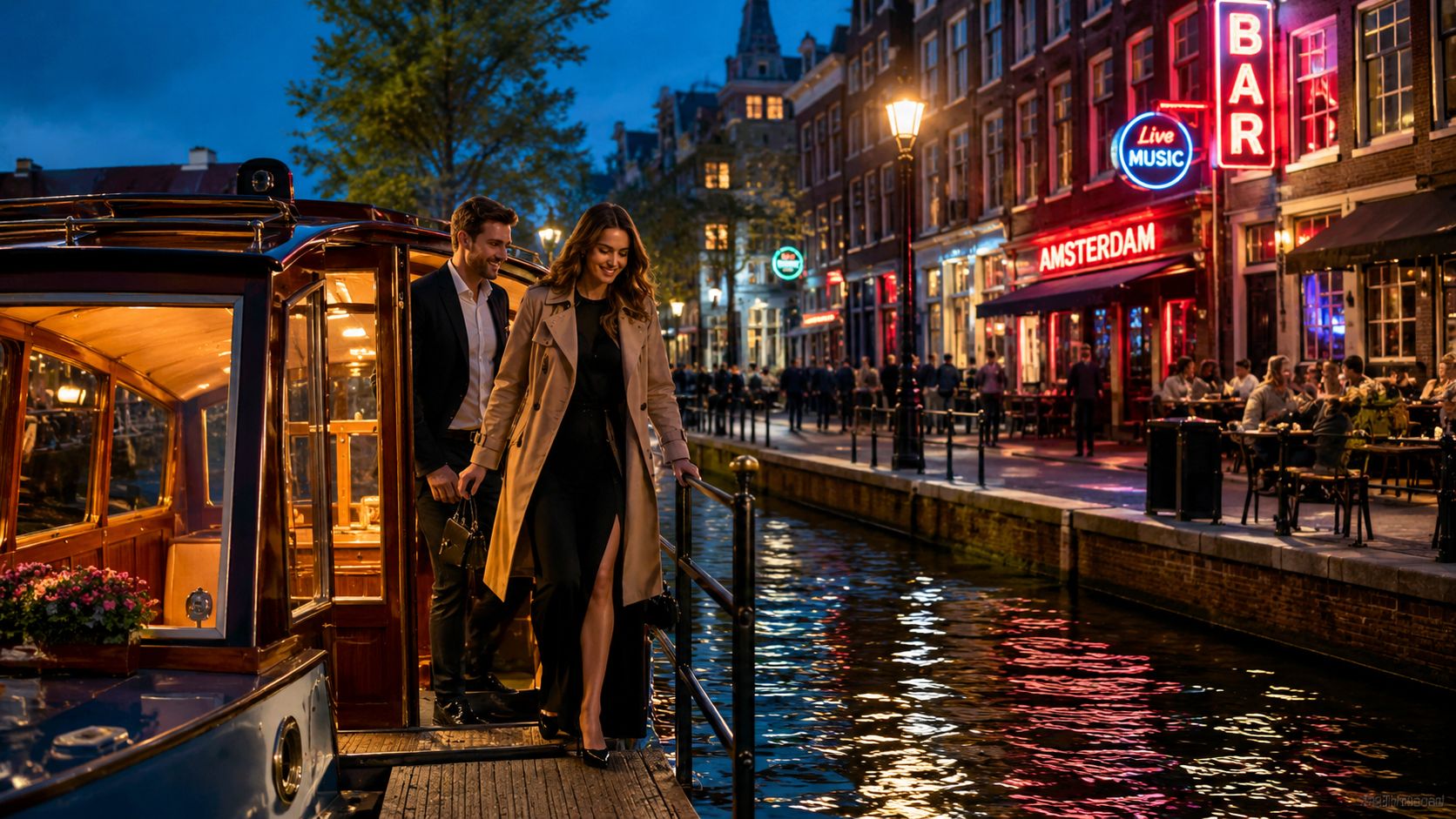
For visitors who want the cruise to connect cleanly with the rest of the night, one coordinated booking contact is usually easier than separate reservations. It keeps the boat from becoming a disconnected tourist stop and turns it into a timed part of the Amsterdam night out.
Ultimate Party Amsterdam offers shared and private canal booze cruises with drinks included, alongside guided Amsterdam pub crawls and nightlife planning for groups. Visit Ultimate Party Amsterdam to match the cruise format with the rest of the evening and organise the timing before the group reaches the pier.
🍻
Experience it Yourself
Skip the planning — join Amsterdam's biggest pub crawl and get 6 bars, free drinks and VIP club entry for €20.