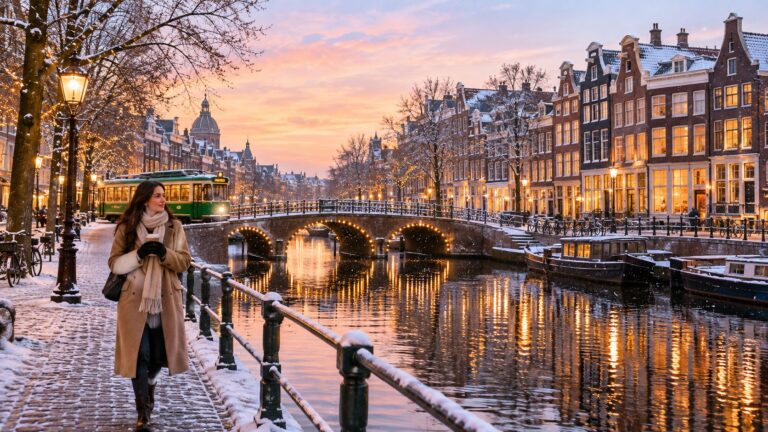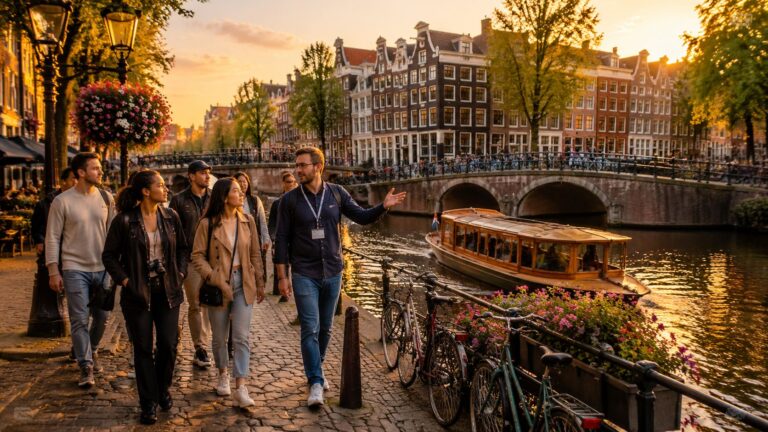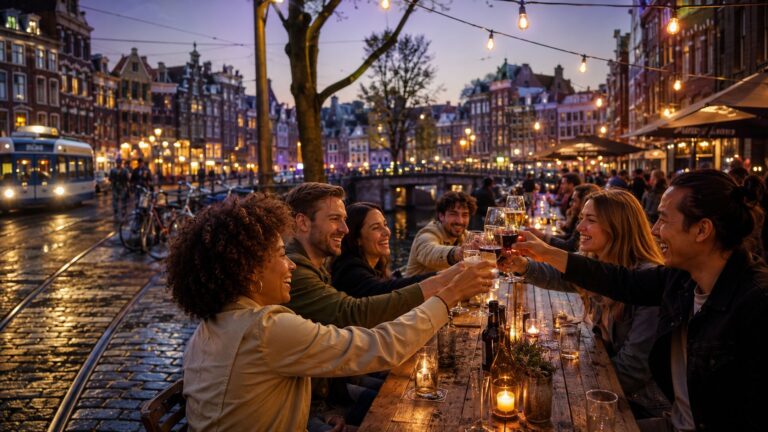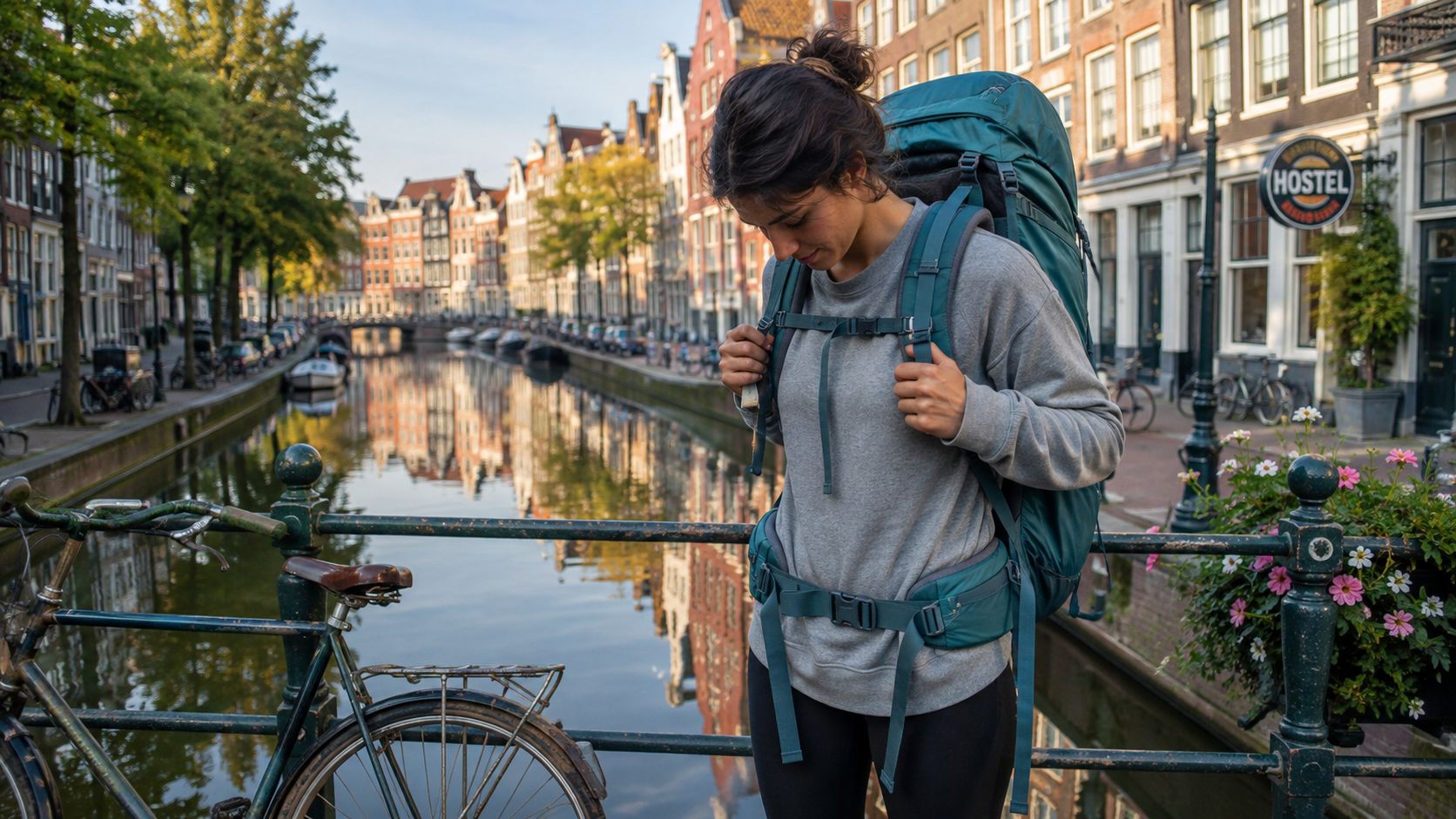
You've just landed with a backpack that feels too heavy, a hostel confirmation on your phone, and a first evening in Amsterdam that's already slipping away while you stand in a station or tram stop trying to figure out where the city starts and the airport stress ends. That's normal. Backpacking Amsterdam works best when the first 72 hours are treated like a system, not a loose collection of “see how it goes” plans, because the city rewards people who sort sleep, movement, and nightlife early, and punishes people who improvise every step.
The good news is that Amsterdam is built for budget travel in a way that's bigger and more serious than many visitors expect. The bad news is that the city's density, demand, and nightlife rules can make a short stay feel expensive and messy if the basics aren't handled on arrival. This guide focuses on what matters on the ground, where to sleep without burning daylight, how to move after midnight, how to avoid avoidable mistakes in nightlife districts, and how to fit two solid nights into a short trip without ending up stranded, overcharged, or exhausted.
Table of Contents
- Landing in Amsterdam as a Backpacker
- How Big Amsterdam's Hostel Market Really Is
- First-Night Decisions Every Backpacker Has to Make
- Reading Amsterdam's Neighborhoods at Street Level
- Getting Around Amsterdam After Midnight
- Red Light District Rules Visitors Should Know
- Planning Two Strong Nights in a Three-Day Stay
- Common Backpacking Mistakes and a Short-Stay Recap
Landing in Amsterdam as a Backpacker
The most common first-night scene is simple. A backpacker lands tired, drags a bag through Schiphol, checks a hostel address on a phone, then realizes the city's canal layout makes “just walk there” a poor plan when it's dark and the luggage is awkward. The evening disappears fast if the arrival routine hasn't been thought through before the flight even touches down. Packing lighter helps more than people expect, especially if the bag has to move through stations, stairs, and shared dorms, so it's worth planning to lighten your backpacking pack before arrival instead of carrying extra weight through the first night.
Amsterdam is a city where the first night can still be useful. A clean arrival means a bed, a quick wash, a place to lock valuables, and one clear decision about whether the evening becomes an easy dinner and early sleep or a late start in a nightlife district. The city's budget-travel rhythm also means that hostel guests are not a fringe audience here, they're part of the system, so the most practical choices are the ones that reduce friction rather than chase a perfect “cheap” option.
Practical rule: the first night in Amsterdam should be about removing uncertainty, not collecting stories for later.
That means one thing for the hostel, one thing for transport, and one thing for the evening. If those are settled, the rest of the stay stops feeling like a logistics puzzle. If they aren't, the trip turns into a series of tiny delays that eat the short stay alive.
How Big Amsterdam's Hostel Market Really Is
Amsterdam's hostel market is large enough to shape how backpackers should plan, not just where they sleep. One study of the market reported 35 hostels generating 1,249,885 overnight stays worth €35,224,418, while also noting that hostel guests spent an average of €18.60 on shopping source. For anyone arriving on a tight schedule, that means hostels are part of the city's travel engine, not a fringe budget option.
The wider city numbers back that up. By December 2023, Amsterdam had 523 accommodation establishments, and the city's hospitality market later recovered to 9.3 million visitors in 2024, up 4.9% from 2023 and above 2019 levels. Independent hostel-market reporting also found that Amsterdam led peer European hostel markets in 2019 with the highest ADR at €35.31 per bed and the highest RevPAB at €28.14 source. Those figures point to a market where beds are used heavily and priced accordingly.
For a cleaner way to compare options before booking, check our guide to Amsterdam hostels.
Amsterdam Hostel Market Snapshot
| Indicator | Value | Year |
|---|---|---|
| Hostels in the market | 35 | Study reported |
| Overnight stays | 1,249,885 | Study reported |
| Overnight stay value | €35,224,418 | Study reported |
| Average shopping spend by hostel guests | €18.60 | Study reported |
| Accommodation establishments | 523 | December 2023 |
| Visitors | 9.3 million | 2024 |
| Visitor change | +4.9% | 2024 vs 2023 |
| Highest ADR per bed | €35.31 | 2019 |
| Highest RevPAB | €28.14 | 2019 |
The practical takeaway is blunt. Amsterdam's budget beds sit in a high-demand market, not a bargain bin. Backpackers usually do better when they book earlier than they think they need to, especially if the stay overlaps busy periods or nightlife-heavy weekends. The market rewards planning because low-cost inventory is limited relative to demand.
First-Night Decisions Every Backpacker Has to Make
The first real decision is the bed, because Amsterdam's municipal tourist tax adds cost in a way that many budget travelers underestimate. The city applies a 12.5% municipal tourist tax on the accommodation price excluding VAT and the tax itself, and the rule covers hotels, hostels, B&Bs, short-stay units, and other paid overnight stays by non-residents source. For a backpacker, that means the true price of a dorm bed is always a little higher than the headline rate, and the longer the stay, the more the levy compounds.
A smart arrival routine starts before check-in. The hostel should have clear luggage storage, a lockable dorm setup, and a way to handle late arrival without confusion. Lockers matter because shared rooms are still shared rooms, and the valuable rule is simple, put passport, phone, card, and any camera or laptop away the moment the bed is assigned. If the room feels chaotic, keep the stay efficient by treating the dorm as a base, not a living room.
What to do the moment the bag hits the floor
Check the bed details first. Confirm the dorm type, the locker setup, and whether the hostel expects a late arrival notice. In a city this busy, a smooth check-in saves more time than trying to negotiate on the spot.
Sort transport before wandering. Amsterdam's public transport is straightforward once the ticket choice matches the trip length, but it's clumsy if a tired traveler tries to figure it out after dark. Keep a working card or phone payment method ready, because the easiest route is always the one already loaded.
Use cash only when it makes sense. ATMs are the better fallback than juggling money exchanges, and a small backup of cash can still help when a place or situation doesn't run smoothly on card.
Move with the street layout in mind. Bikes are not a side detail here. Crossing into bike lanes while distracted is one of the fastest ways to turn a smooth night into a stressful one.
Arrival habit that saves time: don't make the hostel, the transport pass, and the evening plan three separate problems. Bundle them into one decision before leaving the airport.
That routine sounds basic because it is, and basics matter in Amsterdam. The city is excellent for backpackers who keep arrival friction low, and surprisingly expensive in time if the first night becomes a scavenger hunt.
Reading Amsterdam's Neighborhoods at Street Level
Centrum is where many short-stay backpackers want to be, because it gives immediate access to canals, bars, late walks, and the kind of busy city energy that makes a short visit feel full. The trade-off is obvious on the street. Central areas are convenient, but they're also where noise, foot traffic, and late-night movement are most concentrated, so a bed near the action isn't automatically a good bed for sleep.
Jordaan feels calmer and more residential, with easy canal walking and a more relaxed evening pace. That makes it a strong fit for visitors who want to come home from a night out and get a good sleep. De Pijp and Oud-West are useful for people who want food, bars, and easy access without being right in the thick of the most crowded lanes, while Plantage tends to suit travelers who prefer a quieter base with good movement options rather than a party-first location.
The eastern docklands and newer waterfront areas can make sense for some backpackers, especially if quiet matters more than immediate nightlife access. They're not ideal for someone who wants to stumble home from a bar crawl in minutes. They are useful for visitors who care about room quality, calmer streets, and a broader city feel after dark.
Useful shortcut: if the plan includes late nights, don't book only for daytime sightseeing convenience. Book for the way the neighborhood feels at 02:00.
The best hostel cluster is the one that matches the night, not the postcard. A traveler who wants canal walks and a reasonable sleep schedule will do better outside the most crowded nightlife strips. A traveler who wants to join bars, clubs, and late social energy will usually prefer a base that cuts walking time after midnight, even if the room is less scenic.
Getting Around Amsterdam After Midnight
A backpacker's worst night in Amsterdam usually starts with a simple mistake. The room is booked, the bars are open, and nobody has checked how they are getting back after the trams thin out. Amsterdam's late movement is straightforward once you know the rules. GVB runs night buses across the city, and the night bus product allows unlimited travel for 1.5 hours on all GVB night buses source. Night bus coverage spans the late window, which is the stretch most travelers need after a bar, club, or canal cruise source.
The trade-off is simple. If the plan is daytime wandering with one quiet evening, a day ticket or basic tap-in approach may be enough. If the stay includes nights out, a late-night ticket keeps the return trip from turning into a taxi hunt. Bikes work well in daylight, but they are a poor choice for anyone who is drinking, tired, or still learning the city's traffic rhythm.
The movement rule after midnight
Walk when the distance is short. Amsterdam's center is compact, and a short walk often beats waiting around for transport.
Use the night bus for longer hops. It exists for the hours when normal service is thin, and it is a better answer than assuming a daytime tram will still be running.
Leave the bike for the next day. Late-night judgment and Amsterdam traffic do not mix well, especially after a few drinks.
Plan the hostel return before the first drink. If you are staying near the nightlife areas, check your route home before the night gets noisy, and if you need a map for how different districts behave after dark, this Amsterdam nightlife areas guide helps set the right expectations.
A night out feels better when the exit is already handled. The backpacker who knows the return option can stay longer, move at an easy pace, and stop watching the clock. That is what makes Amsterdam's late transport network useful on night one.
Red Light District Rules Visitors Should Know
The Red Light District is a managed nightlife area, and backpackers get into trouble when they treat it like a free-for-all. Public drinking is banned in designated areas, cannabis smoking is also banned on the street in De Wallen, and photography or filming of sex workers is forbidden source. These rules are enforced. Visitors notice quickly when they cross them.
That control does not make the area hostile. It makes the streets more predictable. Safety guides note that the Red Light District and Leidseplein are among the city's most watched nightlife zones, with visible policing and a strong focus on avoiding public drunkenness, loud behavior, and street disorder source. Backpackers can enjoy the district, but only if they keep their behavior measured and respect the setting.
If you want the practical question of whether the area is safe, this Red Light District safety guide gives the right context for first-time visitors.
What visitors usually get wrong
First-timers often expect performance and chaos. The street runs on boundaries instead. Keep drinks inside bars, keep cameras down, and move on when you have seen enough. People who do that rarely have problems.
Stay obvious, calm, and brief when crossing sensitive stretches. If the night is mainly about bars, use the district as a route, not a hangout spot. That keeps attention low and the evening focused on the reason you came out in the first place.
Planning Two Strong Nights in a Three-Day Stay
A short Amsterdam stay works best when it isn't overloaded. One night can be for a pub crawl in the Red Light District or around Leidseplein, and another can be for a canal cruise that starts the evening more gently and leaves enough energy for a later bar stop. That sequencing matters because a backpacker on a three-day trip usually doesn't need one giant blowout, they need two nights that feel distinct and don't waste the middle of the trip.
Guided nightlife formats fit the backpacker use case well. Ultimate Party Amsterdam, active since 2006, runs nightly hosted crawls in the Red Light District and Leidseplein, plus shared and private canal booze cruises. The practical advantage is simple, the route, the venue changes, and the transaction clutter are handled in advance, so the night stays social instead of becoming a series of small decisions.
A short-stay pacing model that actually works
Start with the night that needs the least energy. A canal cruise can work well early in the stay because it gives the group a social warm-up without committing the whole evening to one bar. The next night can then be the higher-energy crawl, which makes sense when the traveler already knows the city layout and can relax into the late movement. A 2 Night Pub Crawl Pass is a sensible fit for this kind of short stay because it covers two different nights instead of forcing the whole trip into one oversized evening.
Practical takeaway: the best backpacker nightlife plan in Amsterdam is usually one softer night, one fuller night, and one easy exit route back to the hostel.
Backpackers usually get more out of that structure than from trying to do everything at once. It leaves room for sleep, food, and the random daytime moments that make a short trip feel like a real trip. It also reduces the classic mistake of spending the first night too hard, then losing the second one entirely.
Common Backpacking Mistakes and a Short-Stay Recap
The recurring mistakes are easy to spot. Travelers book centrally without checking whether the room will let them sleep, ignore the tourist tax until checkout, wander into the Red Light District as if rules don't apply, and build the whole trip around one giant night instead of pacing two. Each of those mistakes makes Amsterdam more expensive, more tiring, and less fun than it needs to be.
The better pattern is straightforward. Pick a hostel for both location and sleep quality, not just the lowest number. Plan the late return before the first drink, because Amsterdam after midnight is manageable when the transport choice is already clear. Then decide whether the trip is about one high-energy nightlife night or a pair of better-paced evenings that leave time to recover.
For travelers who want the same kind of trip logic in a very different destination, these Costa Rica backpacking itineraries show how a short stay changes the way transport, timing, and sleeping bases should be planned. Amsterdam works on the same principle, a short trip needs fewer ambitions and tighter decisions.
The short-stay recommendation is simple. Sleep close enough to move easily, keep transport predictable after midnight, respect the district rules, and build the nightlife around two good nights rather than one chaotic one. That is the version of backpacking Amsterdam that works.
If the goal is to turn a short Amsterdam stay into two strong nights instead of one messy one, Ultimate Party Amsterdam handles the pieces that usually slow backpackers down, guided pub crawls, canal booze cruises, and group-friendly nightlife planning. Visit Ultimate Party Amsterdam to see the options and decide which night format fits the trip.
🍻
Experience it Yourself
Skip the planning — join Amsterdam's biggest pub crawl and get 6 bars, free drinks and VIP club entry for €20.