A mixed group of international visitors has just checked into an Amsterdam apartment. The room is compact, everyone has different comfort levels, and there's only a short window before heading into the city's nightlife. A game that works brilliantly in a large living room can feel awkward around a small coffee table, while a drinking challenge that suits close friends may put quieter guests under pressure.
The best bar games for home depend on group size, available equipment, table space, pacing, and the mood the group wants. Structured competition calls for a different choice than relaxed conversation. Non-alcoholic drinks, water, and a clear pass option also keep the evening welcoming. For broader event-planning ideas, this party rental guide for corporate events offers useful context on matching activities to a venue and audience.
Table of Contents
- 1. Beer Pong Tournament
- 2. Kings Cup
- 3. Flip Cup Relay Racing
- 4. Never Have I Ever
- 5. Quarters
- 6. Most Likely To
- 7. Shot Roulette
- Top 7 Home Bar Games Comparison
- Match the Game to the Night You Want
1. Beer Pong Tournament
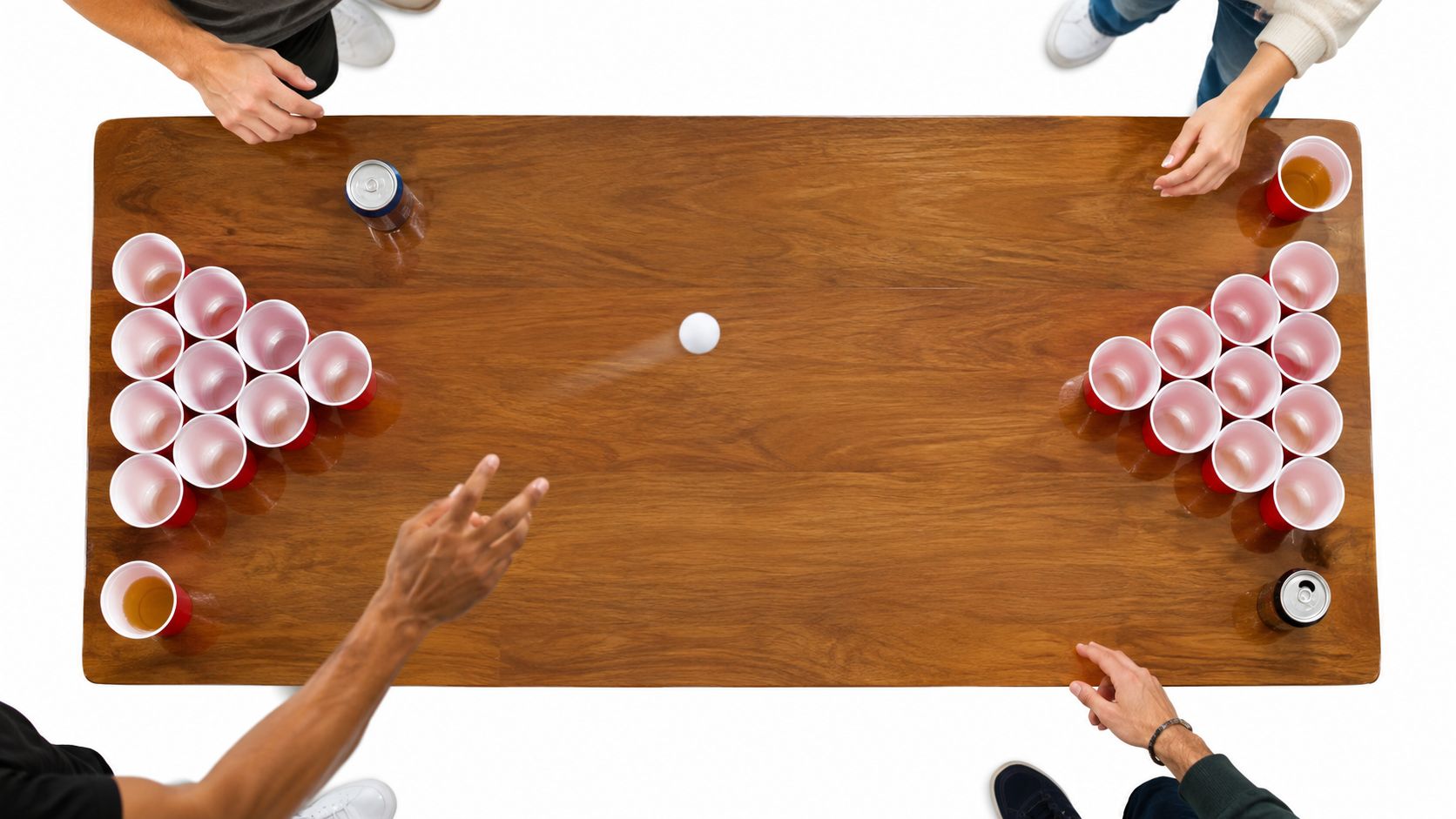
For groups arriving at an Amsterdam apartment with energy to burn, beer pong offers clear teams, visible competition, and natural spectator moments. Two sides throw ping-pong balls toward cups arranged in triangles. A successful shot removes a cup, and the first team to clear the opposing side wins. The format makes rotation straightforward, although eliminated players may spend more time watching than talking.
Space is the main trade-off. Set up a stable table with washable cups, spare balls, and a clear floor area free from lamps, fragile objects, and busy walkways. A compact home can accommodate the game if the table sits away from walls and guests have room to throw safely. Spare balls disappear quickly, so browse table tennis supplies before the party.
Alternating throws, cup removal, and elimination provide an easy base for international visitors. Agree on house rules before the first round, especially re-racks, bounce shots, and rollback procedures. Written rules prevent pauses and arguments once the tournament gathers momentum.
Practical rule: Use water cups for warm-up throws. For the competitive round, offer alcoholic and alcohol-free options, and let players choose without pressure.
A brief introduction to local Amsterdam beers can give the game a local connection without making alcohol the measure of participation. Water and soft drinks should remain available throughout.
For several teams, use a simple bracket or winner-stays rotation. A bracket rewards players who want a defined tournament, while winner-stays keeps the table active and gives waiting teams a clear next match. This game suits medium-sized groups with enough floor space and guests who enjoy skill and cheering. Choose another format if conversation is the priority, the room is narrow, or throws could cross a walkway.
2. Kings Cup
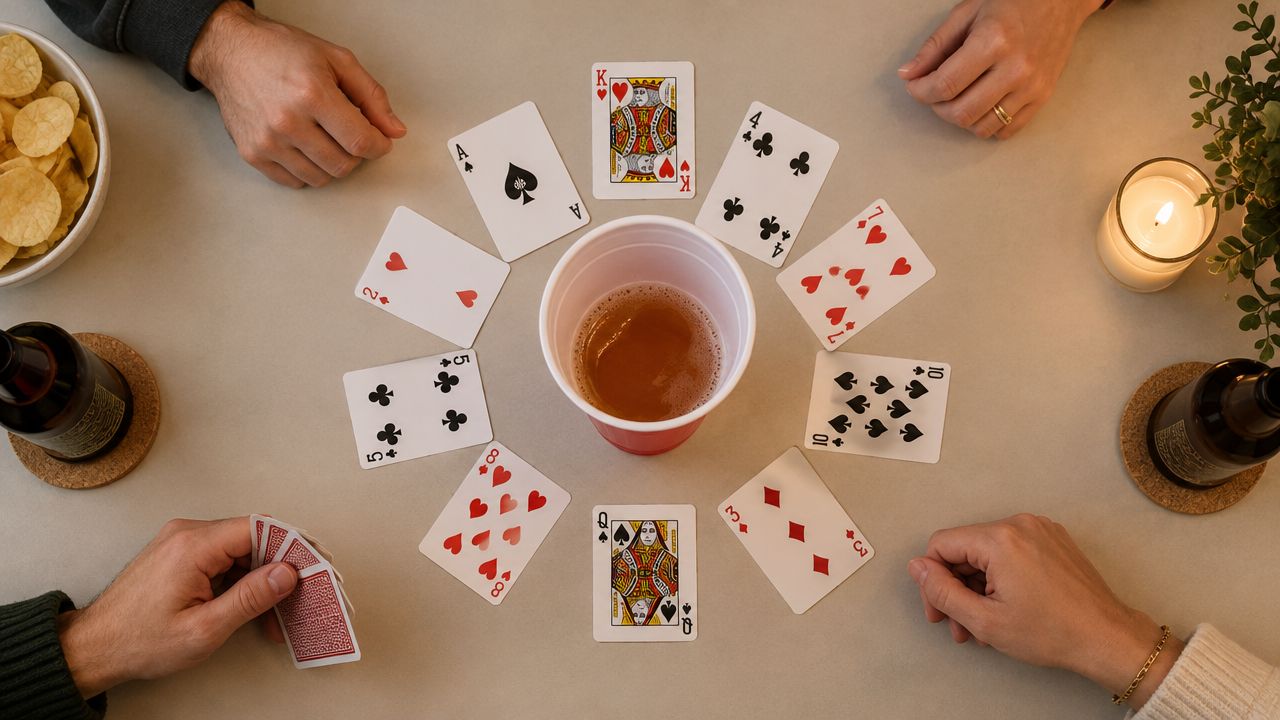
Kings Cup suits groups that want flexible interaction with minimal equipment and enough room for everyone to sit in a circle. Use a deck of cards, one central cup, cards spread face-down, and a drink for each player. The rules can stay familiar or follow a theme built around Amsterdam travel, hostel stories, or the evening's plans.
Its main advantage is adaptability. Players take turns, so the game works in a living room or shared apartment without a large playing surface. It also fits pre-party groups planning a themed night. For timing ideas, see this guide to planning the perfect Amsterdam bachelorette party.
Write rules down as they develop. Several Kings can create overlapping conditions, and unclear enforcement quickly slows the group. Assign one person to explain each new rule, track active rules, and announce when a rule ends. That role keeps the game moving without making one player responsible for drinking more.
A “drink” should mean a normal sip unless the group agrees otherwise. Water, soft drinks, and alcohol-free options should remain available throughout. A no-penalty pass also gives guests control over their participation, which helps keep the game social and avoids pressure to drink quickly.
Keep the circle manageable
Large gatherings work better as two circles than as one crowded game. Start with familiar rules, then introduce custom Kings once everyone understands the pace. This approach gives new players a clear entry point and leaves room for conversation between draws.
Kings Cup suits mixed groups that enjoy storytelling and light attention. Choose another game for guests who dislike being singled out or dealing with changing rules. Avoid rules involving unwanted contact, pressure to reveal private information, or rapid drinking. Agree on those boundaries before the first card is drawn.
3. Flip Cup Relay Racing
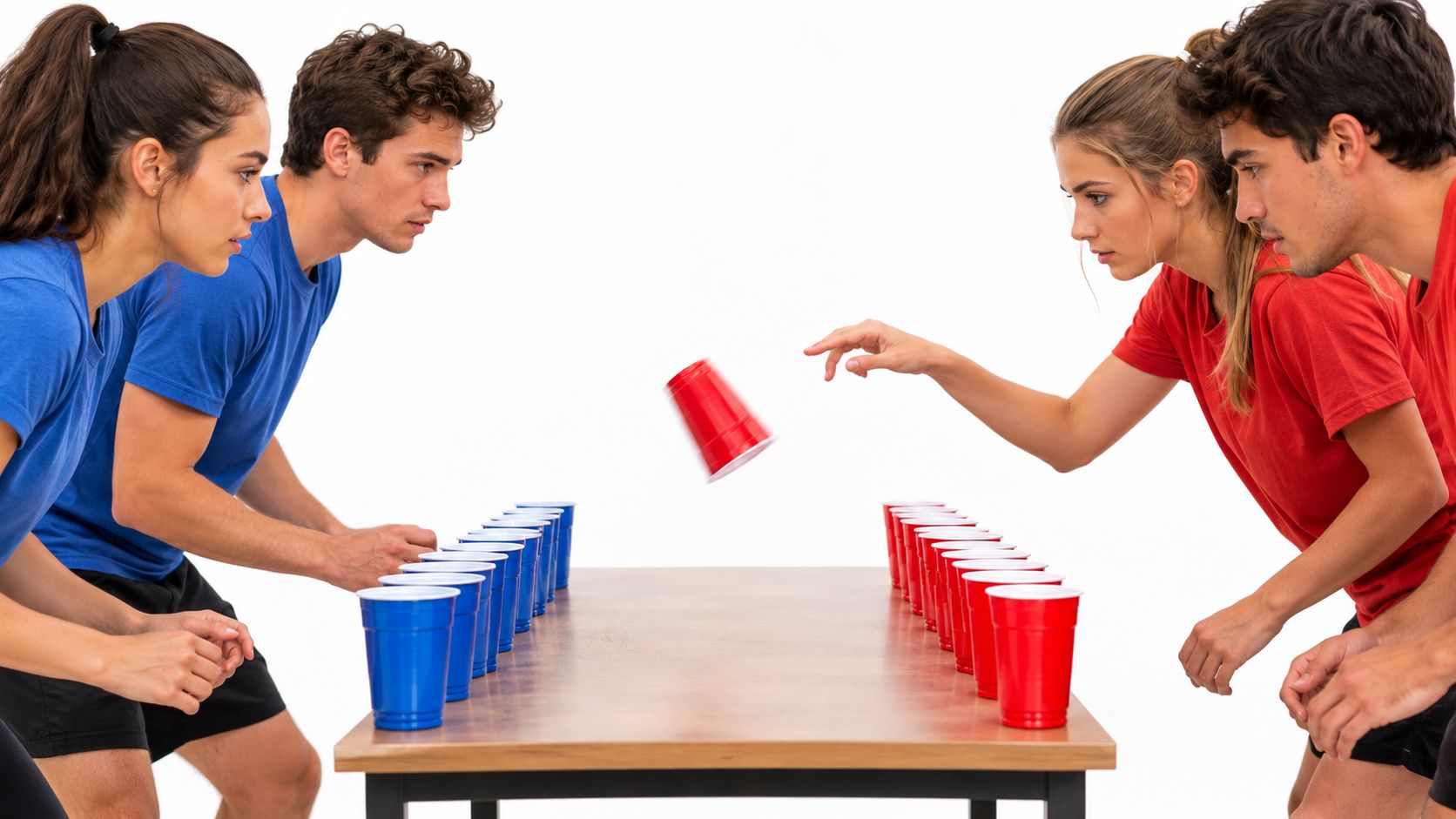
When the group wants to stand, cheer, and move, Flip Cup turns a simple table into a fast team relay. Players line up on opposing sides, drink from a plastic cup, then flip it upside down from the table edge before the next teammate starts. The first team to finish wins.
Its appeal is easy to understand: momentum changes quickly, spectators have a clear reason to shout, and the rules take little time to explain. The trade-off is physical space. Spills are more likely around hard floors, low furniture, and nearby breakable objects, so move valuables before play begins.
Use the same fill level for every cup. Lightweight plastic cups usually flip more consistently, while a short practice round helps new players learn the wrist movement without slowing the first proper game.
The safest setup is an action zone with clear space around the table, not a narrow passage between sofas.
Keep alcohol optional. Water, soft drinks, and low-alcohol alternatives suit early rounds, especially if the group plans to continue into Amsterdam nightlife. The challenge should reward timing and teamwork, not rapid drinking.
Build a relay that doesn't drag
Run a few consecutive rounds instead of creating a long tournament bracket. Keep the next teams ready, but let anyone sit out or switch roles without explanation. A winner-stays format adds energy, though rotating players prevents one fast team from dominating and gives less confident guests a fair chance.
Noise and movement make Flip Cup a poor choice for quiet flats with sensitive neighbours. It also asks more of guests who have just arrived from travel than a seated game does. For celebration groups planning a high-energy weekend, ideas for why Amsterdam is the best destination for stag parties in the world can help with pacing before heading out.
Choose Flip Cup when the room can handle movement and the group enjoys friendly competition. In a compact or quieter home, use a calmer game instead.
4. Never Have I Ever
Never Have I Ever is the best fit for international groups that need conversation more than competition. A player states something they haven't done, and anyone who has done it takes a sip or uses a non-alcoholic alternative. The value comes after the response, when someone explains the story behind a travel mishap, unusual job, or cultural experience.
No equipment is needed, and the group can play from sofas, dining chairs, or a circle on the floor. That makes it especially useful in a compact Amsterdam apartment where a full-size table game isn't practical. It also works as an opening activity because people can join without learning a rulebook.
Start with low-pressure prompts. Travel experiences, food discoveries, transport mistakes, and unusual destinations create useful conversation without making new acquaintances disclose anything sensitive. The group should agree that anyone can pass without a penalty.
Use prompts that invite stories
The strongest prompts don't end after someone drinks. They open a short story that others can respond to. Rotate question responsibility so one confident guest doesn't control the entire evening, and let players suggest categories that suit the group.
- Travel experiences: Ask about missed trains, unexpected destinations, or foods tried abroad.
- Amsterdam moments: Use prompts about cycling, canals, museums, or getting directions wrong.
- Personal boundaries: Allow a clean pass whenever a question feels uncomfortable.
The game can lose momentum if every prompt is too personal or if players treat drinking as the only response. Water, soft drinks, and simple hand signals keep participation broad. Never Have I Ever suits guests who want to meet one another before going out, but it won't satisfy a group looking for a winner, a bracket, or a physical challenge.

5. Quarters
Quarters rewards a small group that enjoys precision, repetition, and visible skill improvement. Each player tries to bounce a coin off a table and into a glass. A successful shot lets the player nominate someone else to drink, while a miss gives the thrower the consequence under the agreed house rules.
The equipment list is short, but the playing surface matters. A coin behaves differently on wood, glass, and textured tables, and the height and position of the glass can change the difficulty. Test the setup before starting, then keep the glass in the same place so the challenge remains consistent.
Two or three practice throws give new players a fair introduction. Consistent coins also help. Lightweight and heavy coins can create noticeably different bounce patterns, which makes the result feel random rather than skill-based.
A good Quarters round should feel difficult but learnable. If nobody can land a shot, change the surface or distance before blaming the players.
The game works best early in the evening, while hand-eye coordination is still sharp. A “hot hand” variation lets a successful player continue until missing, which creates a small streak narrative without needing a full tournament structure.
Quarters isn't ideal for a loud party where guests keep moving between rooms. It needs attention and a clear view of the glass. It also shouldn't be used with fragile drinking vessels or in a setting where spilled drinks could damage electronics. For a seated group that wants a compact skill game, it offers more repeat value than its simple setup suggests.
6. Most Likely To
Most Likely To is designed for playful group consensus and easy conversation. One person presents a prompt, such as “Most Likely to Get Lost in Amsterdam,” and everyone points at the person they think fits. The player receiving the most votes takes a sip or chooses an alcohol-free alternative.
The game needs no table, deck, or special equipment. It can run in a lounge, around a kitchen island, or while guests are waiting for food. That flexibility makes it a strong option for mixed groups where some people want to talk and others want a light structure to keep the evening moving.
Prompts should begin with neutral observations. Travel habits, personality quirks, and harmless party behaviour are safer starting points than appearance, relationships, money, or anything that could embarrass a guest. Participants should be allowed to veto a prompt without explaining why.
Make the prompts specific to the group
Generic prompts become repetitive quickly. International visitors usually respond better to questions grounded in the trip:
- Travel habits: Who is most likely to miss a meeting point or pack too much?
- Amsterdam situations: Who is most likely to bike without lights or misunderstand directions?
- Group dynamics: Who is most likely to make friends with strangers or organise the next stop?
Letting guests suggest prompts increases buy-in and gives quieter players a route into the game. The host should also watch whether the same person is being singled out repeatedly. A group-wide category, such as “most likely to plan tomorrow's breakfast,” can reset the tone.
Most Likely To works when the group enjoys teasing that stays affectionate. It doesn't work when players barely know one another and the prompts become personal too soon. Compared with Never Have I Ever, it creates more group reaction and less individual storytelling. That makes it a better choice for a room that already has some shared energy.
7. Shot Roulette
Shot Roulette belongs at the bottom of the ranking because randomness can create excitement, but it also removes control. A spinner, die, or card deck selects a player, a drink, or a challenge. The physical randomizer creates suspense, yet the format can become uncomfortable if consequences are unclear or alcohol tolerance varies widely.
The host should define every option before the first spin. A result might involve taking a small drink, nominating someone, completing a harmless challenge, or choosing a partner. Non-alcoholic alternatives should appear on the same list, not be added as an afterthought.
Protect the group from uneven pressure
Random selection feels fair only when everyone understands the consequences. A mercy round can give each participant one pass, while a clear veto rule lets anyone step away from an option that doesn't suit them. International groups need particular care because drinking habits and tolerance differ widely.
A physical spinner or die should produce a clear and visible result. DIY versions can work, but unclear markings and inconsistent outcomes make players question the game. Avoid mystery ingredients, forced chugging, or challenges involving unsafe movement.
Shot Roulette is better for a close group that has already agreed on a playful random format than for a first activity with strangers. It also has limited conversation value compared with question games. If the group has an early start, a canal booking, or a planned pub crawl, a lighter version with soft drinks and challenges may preserve the suspense without overwhelming the night.
Top 7 Home Bar Games Comparison
| Title | Implementation complexity | Resource requirements | Expected outcomes | Ideal use cases | Key advantages |
|---|---|---|---|---|---|
| Beer Pong Tournament | Moderate, bracket management, rules | Table, ~20 cups, ping pong balls, drinks, space | Competitive, spectator-friendly, paced drinking | Home parties, tournaments, larger groups (4–12+) | Team bonding, scalable, high engagement |
| Kings Cup (Circle of Death) | Low, simple rules, customizable | 52-card deck, drinks, seating | Unpredictable humor, continuous group engagement | Mixed-size groups, pre-parties, casual indoor settings | Highly adaptable, inclusive, minimal setup |
| Flip Cup Relay Racing | Moderate, team setup and safety | 20–30 cups, table/counter, drinks, space | Fast-paced, athletic competition, energetic atmosphere | Energetic/athletic groups, backyard or bar settings (8–16) | Maintains energy, quick rounds, team coordination |
| Never Have I Ever (Question-Based Drinking) | Very low, turn-based prompts only | Drinks only | Personal storytelling, bonding, icebreaking | Small–medium groups, newcomers, early evening socials | Zero setup, conversation-driven, inclusive |
| Quarters (Coin Bouncing Challenge) | Low, simple mechanics, requires focus | Single coin, glass, drinks, flat table | Skill-based shots, short rapid rounds | Small/intimate groups (2–6), skill-focused play | Minimal equipment, clear win/loss, skill progression |
| Most Likely To (Superlatives Voting Game) | Very low, prompt generation | Drinks only, creative prompts | Humor, consensus-driven reactions, inside jokes | Larger/mixed-familiarity groups (6–15+) | Easy to customize, great icebreaker, low cognitive load |
| Shot Roulette (Spinner or Die-Based Challenge) | Low–Moderate, needs randomizer setup | Spinner/die or board, varied shots, drinks | Randomized shots, suspenseful fast pace | Groups seeking novelty and quick turns (4–10) | High suspense, tactile fun, minimal decision-making |
Match the Game to the Night You Want
The room should determine the game, not the other way around. Beer Pong suits structured team competition and a stable table. Kings Cup fits a flexible circle where rules can evolve. Flip Cup needs open space and works for groups that want movement, cheering, and fast rounds.
For conversation, Never Have I Ever gives international guests an easy way to share stories, while Most Likely To creates group reactions without requiring equipment. Quarters is the better option for a smaller gathering that wants a repeatable skill challenge. Shot Roulette should be reserved for groups where everyone is comfortable with a random format and has agreed on the consequences.
A practical hosting decision can follow four questions:
- What is the room like? Use low-equipment seated games in compact flats, and reserve throwing or relay games for spaces with clear movement zones.
- What does the group want? Competition, conversation, and spectacle are different objectives.
- How much time is available? Short pre-night windows favour games with quick setup and fast explanations.
- How will people participate safely? Offer water, alcohol-free drinks, and a no-penalty pass from the beginning.
Darts has remained a familiar pub activity from its long history in English-speaking markets, and one industry overview describes it as the most established bar game in those markets, with broad participation in the United States and United Kingdom. Its appeal comes partly from scaling from casual play to serious competition without demanding a large footprint, as explained in this overview of popular bar games. Pool and table shuffleboard have similarly deep pub traditions, but their equipment and floor requirements often make them poor choices for an apartment.
Home demand also favours games that are easy to store and replay. A 2026 survey summary reports that 65% of US adults enjoy board games, 28% play at least monthly, and 57% prefer a Saturday tabletop game at home over going out, according to board-game participation research. Another industry source says 40% of enthusiasts most often play at home, with an average session lasting 60 minutes and 15% of sessions reaching two hours or more, as reported in this board-game statistics guide. The practical lesson is simple: choose games that start quickly, survive mixed skill levels, and remain enjoyable after the first round.
For visitors planning a larger Amsterdam night out, a hosted experience can remove the route and timing burden after the apartment gathering. Ultimate Party Amsterdam offers guided pub crawls, canal booze cruises, and Nightlife Concierge support for groups that want local logistics handled through Ultimate Party Amsterdam's nightlife experiences.
Ultimate Party Amsterdam offers guided Amsterdam pub crawls, shared and private canal booze cruises, and Nightlife Concierge support for groups planning more than a home gathering. After choosing the right game for the room, visit Ultimate Party Amsterdam to explore options for organising the next part of the night.
🍻
Experience it Yourself
Skip the planning — join Amsterdam's biggest pub crawl and get 6 bars, free drinks and VIP club entry for €20.