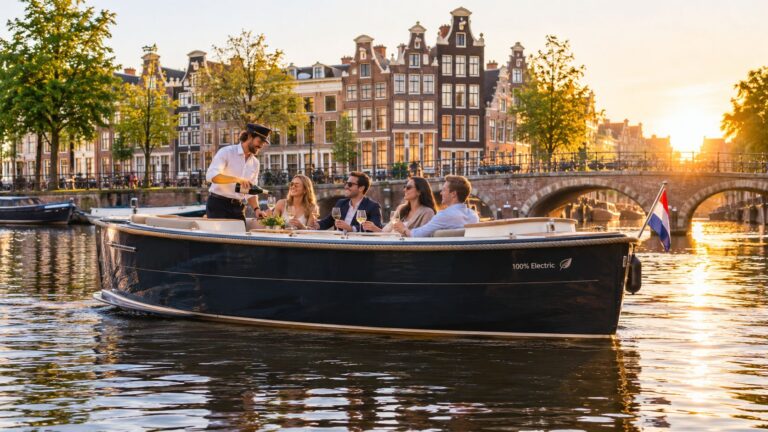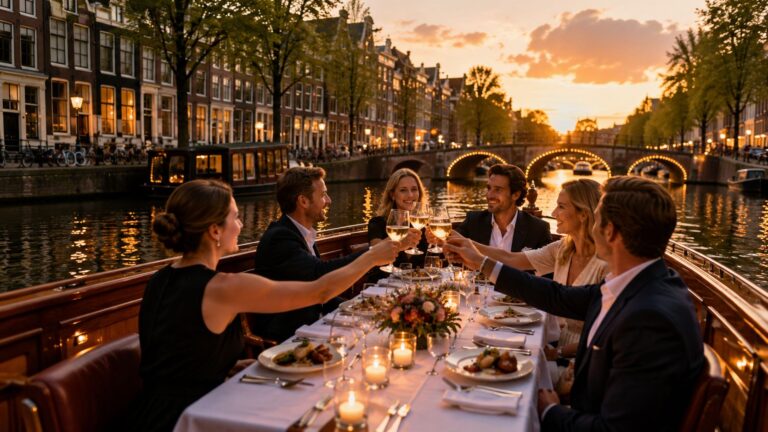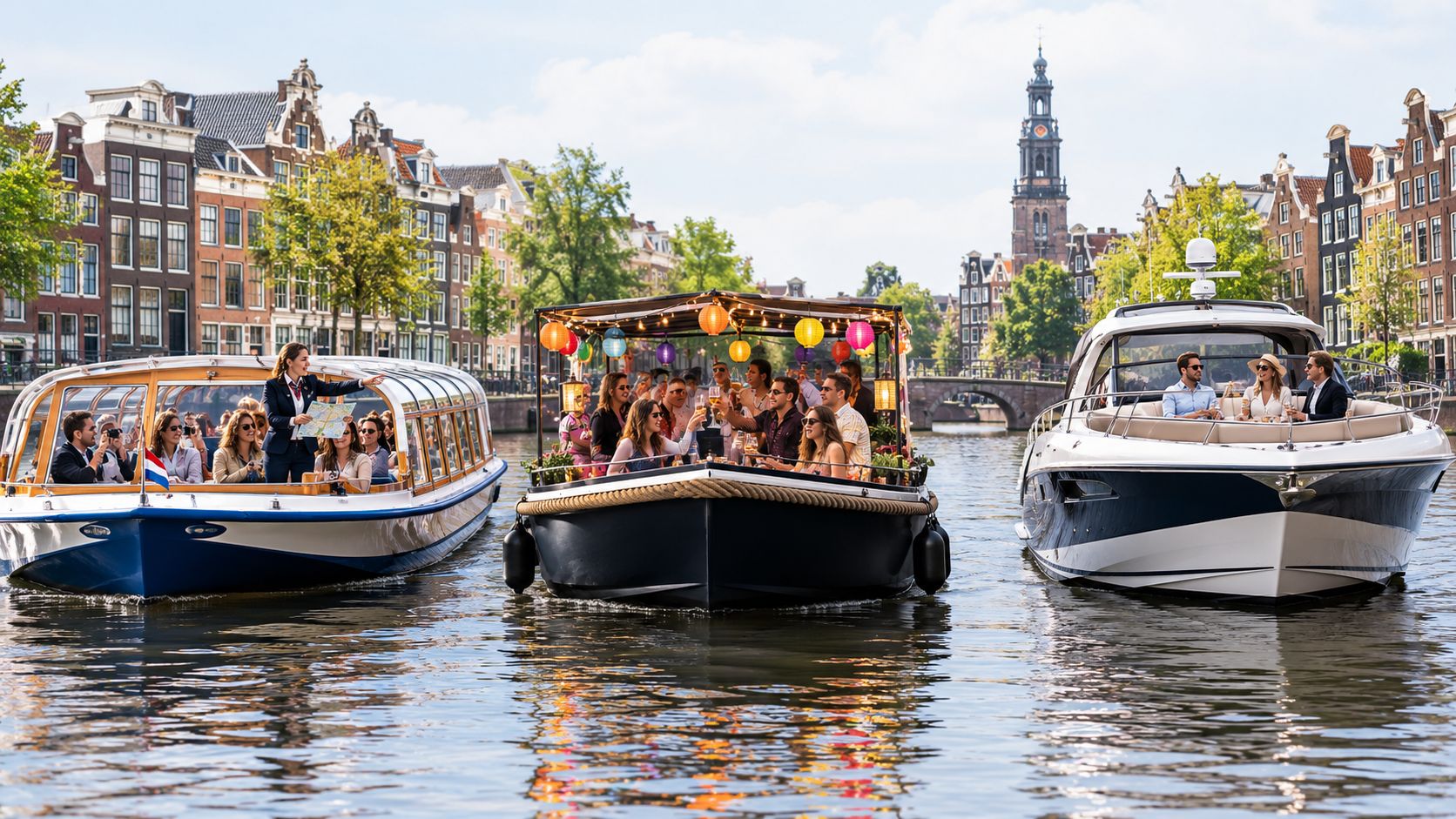
Amsterdam is the European capital of canal cruises, with over 3 million passengers using its waterways annually. That makes a cruise a must-do, but the right choice depends on whether the group wants landmarks, conversation, controlled drinking, or a proper party atmosphere.
A couple may be looking for a quiet sunset ride with historic façades sliding past the windows. A stag group may want an electric boat, a host, drinks, and enough energy to keep the evening moving. Both are city canal cruises, but booking them as if they're the same experience is how groups end up uncomfortable, underwhelmed, or separated before the night has started.
For international visitors, the sensible approach is to choose the cruise around group dynamics, alcohol pacing, shelter, sound levels, and control, not only around the route. Amsterdam's canals are spectacular, but a beautiful view won't rescue a badly matched boat.
Table of Contents
- Why Amsterdam Is the Capital of Canal Cruises
- Sightseeing, Booze Cruises, and Private Charters Explained
- Key Factors for Choosing Your Perfect Cruise
- Planning the Ultimate Amsterdam Night Out
- Debunking Common Booking Myths
- Your Next Steps in Amsterdam
Why Amsterdam Is the Capital of Canal Cruises
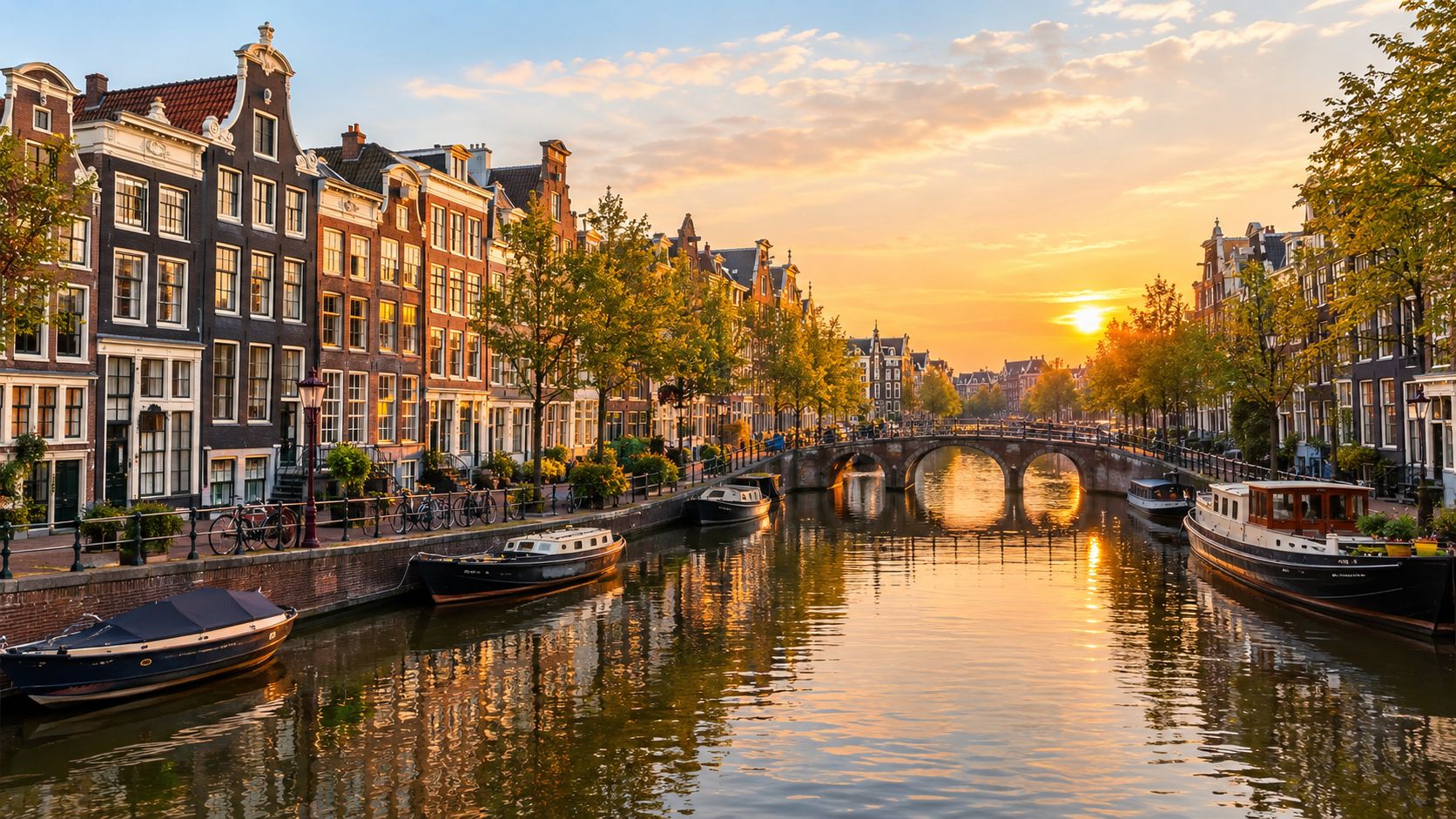
Amsterdam's canal culture works because the waterways are both historic scenery and functioning urban corridors. The city's principal concentric canals began construction in 1612, and the major expansion was completed roughly 50 years later. During the seventeenth century, Amsterdam's population grew from about 50,000 to approximately 200,000, a fourfold rise that accompanied its development into a major European trading city. Those figures and the canal belt's original roles in expansion, water management, transport, and defense are documented in Amsterdam's city facts and figures.
That history changes the feel of a cruise. Passengers aren't just moving between photo opportunities. They're travelling through infrastructure created during the Dutch Golden Age, past canal houses, bridges, and waterways that helped shape the city's commercial identity. A quiet sightseeing boat uses that setting for commentary and architecture. A lively group cruise uses the same setting for socialising, but the surroundings still give the experience its Amsterdam character.
Scale creates choice
Available city-focused figures indicate that approximately 200 tour boats carry more than 3 million passengers each year in Amsterdam, making canal cruising one of the Netherlands' most popular tourist experiences. The figure is an industry estimate rather than a precise official count, because it doesn't clarify whether it represents unique visitors, ticketed journeys, or repeat rides. Still, the scale explains why visitors encounter such a broad range of formats, from large covered sightseeing vessels to small hosted party boats.
A cruise also fits easily into different types of trip. Couples may prioritise quiet and views. Solo travellers often value a shared setting where meeting people happens naturally. Stag, hen, student, and corporate groups generally need clearer answers about seating, drinks, weather protection, toilets, and whether the boat is private or shared.
Practical rule: The canal route is only half the product. The other half is who shares the boat, how the drinks are served, and how the group is expected to behave on board.
Amsterdam's popularity creates plenty of choice, but it also creates a trap. The first available departure may have the right route and the wrong atmosphere. A better booking starts with the night the group wants, then selects the boat that can deliver it.
Sightseeing, Booze Cruises, and Private Charters Explained
The three main formats solve different problems. A sightseeing cruise prioritises information, a booze cruise prioritises social energy, and a private charter prioritises control. Marketing language can blur those differences, so the practical distinction matters more than labels such as premium, luxury, or exclusive.
| Experience Type | Primary Focus | Typical Duration | Best For |
|---|---|---|---|
| Sightseeing cruise | Architecture, history, and city views | Varies by operator | First-time visitors, couples, and travellers who want commentary |
| Shared booze cruise | Socialising, hosted atmosphere, and drinks | Varies by operator | Solo travellers, friends, and groups happy to meet other passengers |
| Private charter | Privacy, group control, and tailored atmosphere | Varies by charter | Celebrations, corporate groups, and friends who want the boat to themselves |
Sightseeing cruises
A standard sightseeing cruise is the cleanest choice for visitors who want to understand Amsterdam from the water. The focus normally falls on canal houses, bridges, urban history, and the changing perspective created by travelling below street level. Commentary may be live or recorded, and the atmosphere is usually more restrained.
That format works well early in a trip, particularly when the group is still orienting itself. It's also useful for mixed-age groups or travellers who want a calm activity before dinner. It isn't the best match for a group expecting loud music, rapid social interaction, or a nightlife-style host.
Shared booze cruises
A shared booze cruise sits between a tour and a bar. Passengers usually come for the views, but the main value is the shared social setting. A host or crew member can help the group interact, while an open or unlimited drinks policy changes the pace compared with buying each drink individually.
The format suits travellers who don't need complete control over the passenger list. It can be a strong fit for solo visitors, friends, and smaller groups that want an organised start to the night. Ultimate Party Amsterdam's shared booze cruise is one example of this category, offering a one-hour journey on a shared electric boat with unlimited beer, wine, and soft drinks.
The limitation is just as important as the benefit. Shared means shared. The group won't control every conversation, music preference, or passenger dynamic, so anyone wanting a tightly managed celebration should consider a private option.
Private charters
A private charter removes the uncertainty of a shared passenger list. The group controls the social environment, subject to the operator's rules, skipper's instructions, route restrictions, and safety requirements. That makes privacy valuable for milestone celebrations, corporate outings, and groups with a strong internal rhythm.
Private doesn't automatically mean louder or better. It means more control. A group can keep the mood relaxed, make conversation easier, and avoid forcing incompatible travellers into the same space. The trade-off is that the booking requires more attention to logistics, including departure details, weather planning, alcohol management, and the size of the vessel.
Key Factors for Choosing Your Perfect Cruise
The right cruise usually becomes obvious after the group answers three questions. Who is coming, how should alcohol be paced, and how much control does the group need? Price matters, but it shouldn't be the first filter. A cheap boat with poor shelter or the wrong atmosphere can cost the group more in frustration than it saves in cash.
Group size and social structure
A small group can fit comfortably into a shared experience without needing to fill a boat. A larger celebration may want privacy, a host who understands group movement, and enough room for people to sit, stand, and talk without blocking the crew.
Amsterdam's official boating guidance states that ordinary pleasure craft may carry no more than 12 passengers plus one skipper, while larger groups need a licensed passenger vessel with a skipper. The same guidance sets a maximum speed of 6 kilometres per hour on most city waterways, with 7.5 kilometres per hour permitted on specified stretches including Kostverlorenvaart, Oosterdok, Nieuwe Herengracht, and the Amstel towards Ouderkerk aan de Amstel. These limits are explained in Amsterdam's safe-boating guidance.
That isn't just regulatory detail. It affects whether a group can travel together, how long the route feels, and whether a small self-drive style boat is even appropriate.
Alcohol policy and pacing
“Unlimited” sounds simple, but groups should ask what it includes, how it's served, and whether soft drinks are available. An open Dutch bar can create a social atmosphere, but it also removes the friction that naturally slows individual purchases. The responsible choice is to pace drinks, eat beforehand, stay hydrated, and appoint someone in the group to notice when a friend needs a break.
À la carte service offers more control and may suit groups that want a quieter evening. An unlimited format fits groups that understand the policy and want the boat to function as a moving social venue. Neither model guarantees a good night if the group ignores its own limits.
Route and duration
Most canal cruises aren't transport services. They're contained experiences that start and finish at an agreed point, so the departure location matters when the cruise is part of a wider itinerary. A boat that finishes near the next activity is often more useful than one that offers a slightly different view but creates a long cross-city transfer.
Groups seeking privacy can consider a private booze cruise in Amsterdam, then confirm the vessel, route, drinks policy, boarding point, weather arrangements, and contingency process before paying. Those questions prevent the most common mismatch, a group expecting a private nightlife experience and receiving a generic shared sightseeing format.
Planning the Ultimate Amsterdam Night Out
A canal cruise works best as the centre of an evening, not as an isolated booking dropped into an already crowded schedule. The smoothest plans give the group time to arrive, find the boarding point, take the cruise, and move on without making everyone sprint through the city.
Build the evening around energy
An afternoon sightseeing cruise can introduce the city without consuming the group's social energy. Afterward, dinner creates a natural reset before a hosted nightlife activity. A shared booze cruise can also work as the first social event, especially for solo travellers or groups that want to meet other visitors before heading into bars.
A private charter suits a different rhythm. It can act as the main celebration or as a controlled finale after exploring central nightlife areas. The group should avoid stacking too many fixed-time activities around it, because a late dinner, a distant meeting point, and a strict boarding window leave little margin for delays.
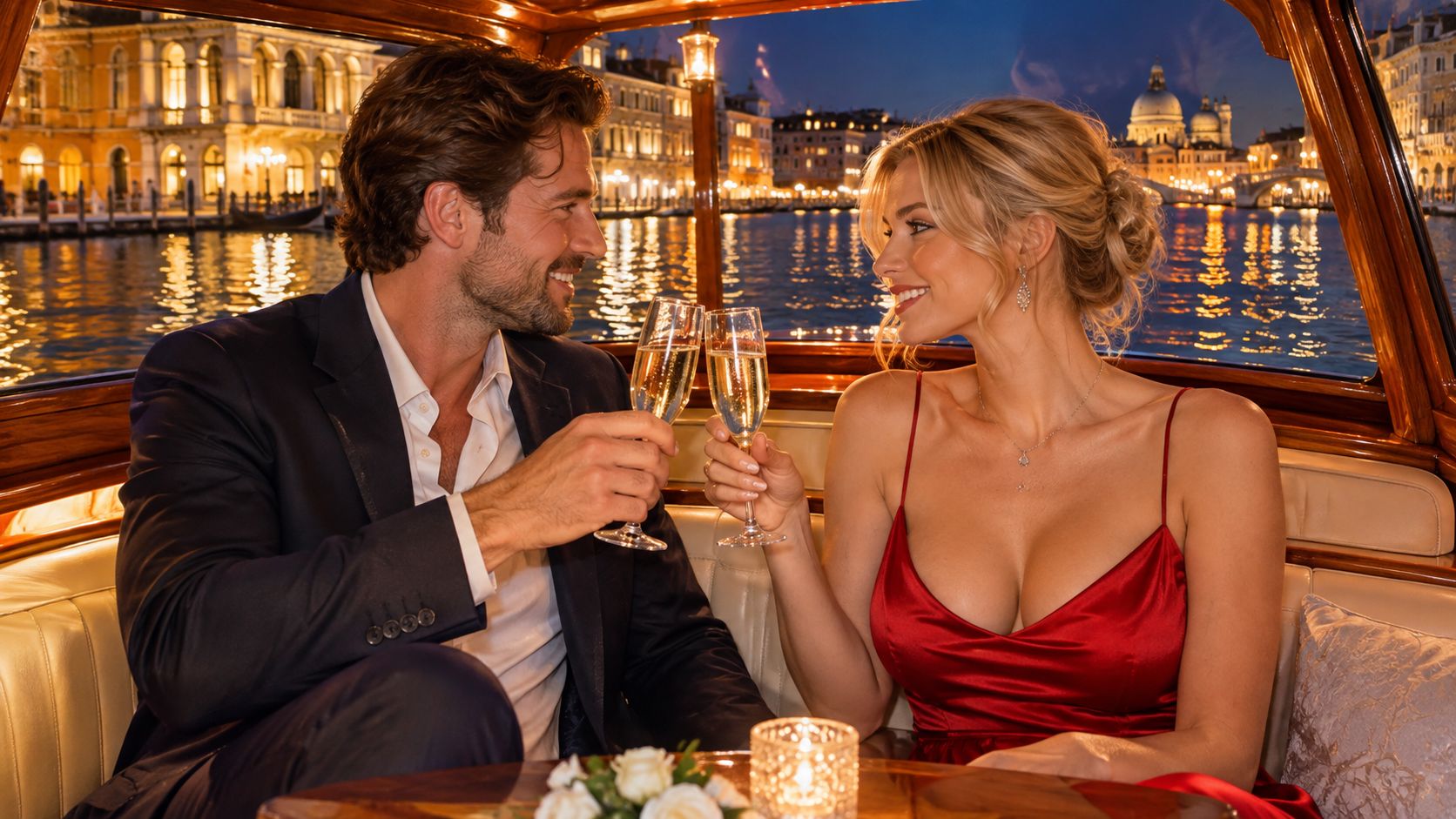
The same principle applies to couples planning a quieter evening. A private boat ride can feel more personal than a crowded venue, while a resource on whiskey tasting date ideas can help shape the rest of the night around conversation rather than constant venue changes.
Ask before booking
A responsible organiser doesn't rely on the product title. The booking conversation should answer practical questions that affect the experience:
- Is the boat shared or private? This determines the passenger dynamic and how much control the group has.
- What does the drinks policy mean in practice? Confirm the available drinks, service method, and whether non-alcoholic options are included.
- Is the boat electric, hybrid, or combustion-powered? Propulsion affects noise, vibration, and the atmosphere during hosted conversation.
- What happens in poor weather? Check shelter, clothing advice, cancellation terms, and any change-of-plan process.
- Where does the group board and finish? A central meeting point doesn't automatically mean the next venue is nearby.
- Can passengers hear the host? Commentary and group interaction become difficult when engine noise, music, or passenger volume takes over.
Amsterdam nightlife planning also includes food, venue timing, and transport between activities. A guide to Amsterdam nightlife beyond the bars can help groups think about late-night eating and entertainment instead of treating the cruise as the entire itinerary.
For groups with several moving parts, a nightlife concierge can coordinate private crawls, tables, event tickets, restaurant reservations, and transport. The value isn't glamour. It's having one communication channel when the group changes its mind, a venue runs late, or someone needs a simpler route home.
Debunking Common Booking Myths
The most expensive booking mistakes usually begin with a harmless assumption. Visitors assume every canal looks and feels the same, every cheap departure offers the same value, or a private boat is only for large celebrations. None of those assumptions survives close inspection.
Myth one, every route delivers the same experience
Canal routes vary in width, traffic, scenery, and the amount of room available for commentary. A busy stretch can create a lively urban view but make conversation harder. A quieter route may feel more relaxed and give passengers better access to the architecture without constant distraction.
The route also interacts with the group's purpose. A first-time visitor who wants context may value commentary and visibility. A group celebrating together may care more about seating, music, drinks, and whether everyone can hear one another.
Myth two, the cheapest cruise is automatically better value
A low price can be useful when the only goal is to see the canals. It becomes less useful when the group needs shelter, a host, comfortable seating, predictable drinks, or an atmosphere that supports conversation.
A basic value check should include:
- Included service: Identify whether drinks, commentary, hosting, or equipment are part of the booking.
- Comfort: Confirm seating, cover from rain, wind exposure, and access to facilities.
- Timing: Check whether the departure leaves enough time for dinner and the next activity.
- Group fit: Establish whether strangers share the boat and whether the atmosphere matches the celebration.
Myth three, private means impractical
Private charters aren't automatically the right choice for every group, but they solve problems that shared boats can't. Privacy can matter when the group has a specific celebration style, wants consistent music and conversation, or needs to avoid mixing with strangers. Shared cruises may offer better value for solo travellers and smaller groups that enjoy an open social environment.
Myth four, electric propulsion is only a marketing label
Electric propulsion has a practical sensory effect. A peer-reviewed comparison of small tourist boats found that an electric boat produced a considerable reduction in underwater noise compared with two internal-combustion vessels, particularly at low frequencies, as reported in the peer-reviewed acoustic comparison. Netherlands-focused nautical-tourism research also identifies silent navigation, low operating costs, zero pollutant emissions, and the absence of smoke and vibration as important advantages.
Amsterdam's regulatory direction makes the distinction more relevant. City-centre tour boats generally need to operate emission-free under requirements introduced in 2025, although some vessels with permits expiring in 2026 received transition arrangements. Reporting also describes approximately 600 passenger vessels, around 500 already electric, and planned charging expansion from 22 points to as many as 2,500 by 2030, figures discussed in coverage of Amsterdam's emission-free boating requirements.
For passengers, the point is simple. A quieter boat can make hosted interaction, conversation, and sightseeing more pleasant. Sustainability should be checked against the actual vessel and operating claim, not accepted because the booking page uses a green colour.
Your Next Steps in Amsterdam
The common mistake is booking the cruise first and trying to force the rest of the evening around it. The better approach is to decide what the group needs, then confirm the operational details before committing.
Match the format to the group
Solo travellers and small groups often benefit from a shared public cruise because the passenger mix creates opportunities to meet people without organising a private vessel. The booking should still confirm the drinks policy, host arrangements, boarding point, and expected atmosphere.
A celebration group should decide whether privacy is worth more than flexibility. If the group wants everyone together, has a specific mood, or needs a single point of coordination, a private charter may make sense. If the priority is meeting other travellers and keeping the evening informal, shared travel may be the more natural choice.
Treat alcohol as part of logistics
Unlimited drinks don't mean unlimited capacity. The strongest nightlife plans include food before boarding, a slower first drink, water between alcoholic drinks, and a clear agreement that nobody gets pressured to continue. A guest who becomes unwell can change the experience for everyone, especially on a boat where space and movement are limited.
The organiser should also check whether the group can hear safety instructions and whether the host has a clear way to manage problems. Responsible pacing isn't a restriction on fun. It protects the part of the night everyone actually came for.
Confirm the details that cause failures
Before arrival, the organiser should save the meeting point, boarding time, operator contact, cancellation policy, and route to the next venue. Large groups should allow extra time for gathering, because one missing person can delay the whole party.
European inland-waterway passenger tourism offers useful commercial context. In 2024, approximately 1.39 million passengers travelled on European rivers, up about 14% from 2023, while gross ticket revenue rose from €3.115 billion to €3.537 billion. North American travellers represented roughly 41% of passengers, and visitors from Germany, Austria, and Switzerland accounted for about 37% of European passengers, according to the European inland-waterway passenger tourism report. Those figures cover river cruising more broadly rather than short urban canal trips, but they reinforce the need for multilingual communication and early coordination in an international market.
A well-planned city canal cruise isn't just a sightseeing ticket or a drinking session. It's a timed social environment with real constraints around route, capacity, weather, sound, and alcohol. Groups that confirm those details early are far more likely to enjoy the views and the night that follows.
Ultimate Party Amsterdam offers shared canal booze cruises, private booze cruises, guided pub crawls, and nightlife concierge support for groups planning an evening in the city. Visit Ultimate Party Amsterdam to compare the available nightlife experiences and ask the team which cruise format fits the group's size, energy, and plans.
🍻
Experience it Yourself
Skip the planning — join Amsterdam's biggest pub crawl and get 6 bars, free drinks and VIP club entry for €20.