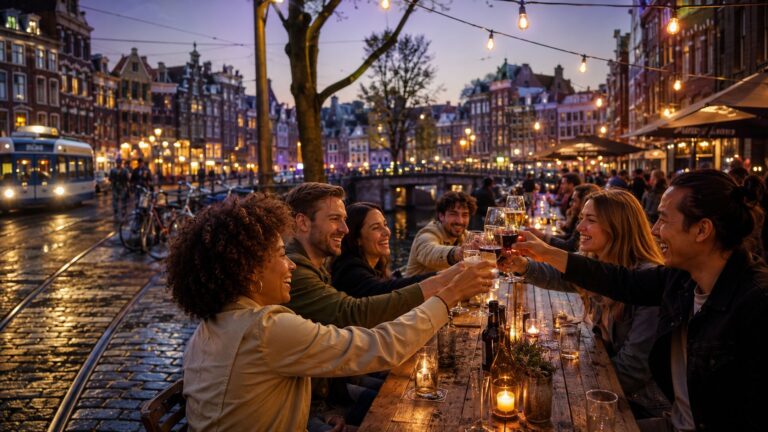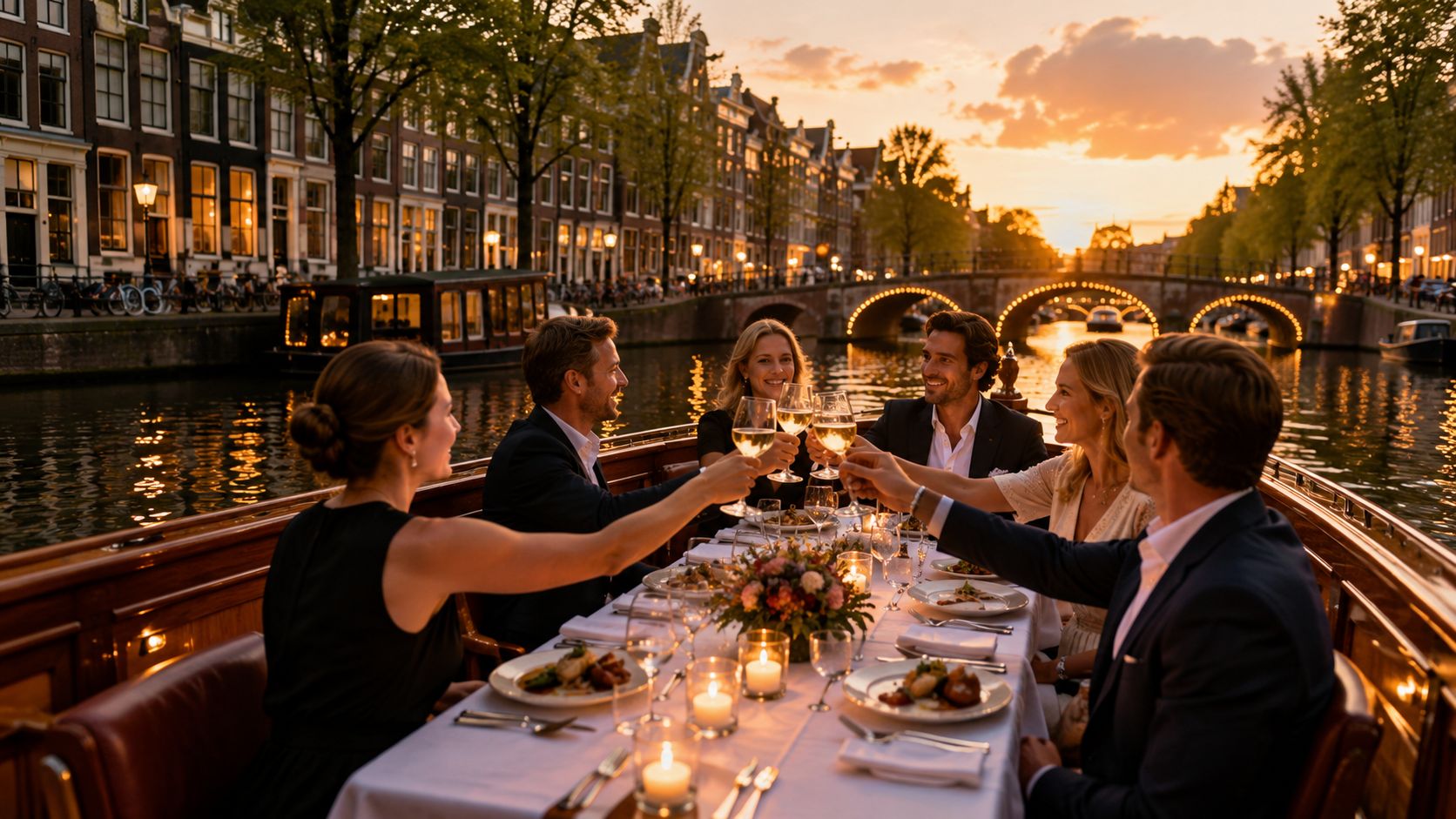
You've just arrived in Amsterdam with a group, the bags are dumped in the hotel, and everyone's already firing links into the chat. One person wants a quiet canal dinner cruise with wine and a proper table. Another wants something livelier, with drinks, music, and a boat that feels like the night starts before dinner ends. That's the choice, and around Amsterdam's canals in 2025, it matters more than most visitors think.
The canal system is not just pretty scenery. The Seventeenth-Century Canal Ring Area was inscribed on the UNESCO World Heritage List in 2010, the main canal construction dates from 1613 to 1660, and the original plan goes back to 1610. Amsterdam also has 165 canals totaling more than 100 km of waterways as noted by the city's canal heritage information, so this isn't a novelty ride. It's one of the city's main visitor experiences, and the format you choose changes the whole night.
For group planning, the question is simple. Do you want atmosphere and food, or do you want energy and flexibility? Amsterdam's 2025 boating rules, quieter canals, and zero-emission direction have pushed dinner cruises toward a more regulated, polished format. That's good news if the goal is a nice evening. It's not so good if the group wants a floating pre-party.
A practical planner's note helps here. If the group is coordinating venues, arrival times, or private arrangements, it's worth finding guides for venue operations early so the booking chain doesn't get messy. For hostel groups especially, it also helps to sort the sleeping arrangement before the night out with something like Amsterdam hostels, because canal departures and check-in times don't always play nicely together.
Table of Contents
- Arriving in Amsterdam With a Group and a Plan
- What a Canal Dinner Cruise Is in Amsterdam
- Canal Dinner Cruise vs Booze Cruise
- Amsterdam's 2025 Canal Rules and What They Mean for Your Cruise
- Shared Cruises vs Private Cruises Compared
- Booking, Pricing, and Dietary Tips That Actually Matter
- Which Canal Experience Fits Your Group Best
- Quick Answers Before You Book
Arriving in Amsterdam With a Group and a Plan
The scene repeats every weekend. A group steps off at Centraal, one friend has already opened five tabs, another is still answering “dinner cruise or booze cruise?” in the chat, and everybody wants a simple answer before the first round of drinks. That's exactly where most visitors get it wrong, because they treat a canal dinner cruise Amsterdam search like a menu question instead of a nightlife decision.
The honest split is this. A dinner cruise is for people who want a seated evening with a meal, conversation, and a calmer mood. A drinks-led boat is for groups that care more about movement, social energy, and the feeling that the night can keep going after the boat docks. Both have a place. They do not create the same kind of memory.
Practical rule: if the group starts talking about “nice views” first, dinner cruise probably fits. If they start talking about “getting the party going” first, a drinks boat is usually the better call.
Amsterdam's canal rules make the difference sharper, not softer. Boats move slowly, service is structured, and the city has leaned harder into regulated, low-emission boating. That means the old fantasy of a noisy, free-form dinner boat is less realistic now. The smarter booking is the one that matches the actual canal environment, not the one that sounds best in the group chat.
What follows is the straight read on the formats. The point isn't to sell one as superior. It's to help first-time visitors book the right night out without ending up on a boat that doesn't fit the group at all.
What a Canal Dinner Cruise Is in Amsterdam
A real canal dinner cruise in Amsterdam is a seated evening cruise with a fixed menu served on board. Independent guide material consistently places dinner cruises in the range of about 90 minutes to 2.5 hours, including higher-end listings around 2 hours 15 minutes to 2 hours 30 minutes as summarized in Amsterdam dinner cruise guidance. That timing matters. It is long enough to feel like a proper night out, but short enough that the evening stays focused.
The setup is simple. Guests sit at fixed tables, a small galley crew plates compact dishes, and the boat moves at a steady pace through the lit canals. That slower pace is the point. You are paying for a dining room on water, not a floating restaurant trying to turn into a party boat.
What the format really delivers
A good dinner cruise gives you three things other canal options usually do not. Table service. A controlled, quieter atmosphere. A route that feels romantic or scenic instead of loud and restless. Routes often run through the Jordaan and along the Amstel, because those stretches suit a calm evening meal better than a stop-and-start social run.
The meal itself stays compact for a reason. Boats have limited kitchen space, limited storage, and a service rhythm that has to work while the vessel glides under bridges. That pushes menus toward hot, neat dishes that can be plated cleanly and eaten without hassle. If you want a meal where the food is part of the evening, this format does that well. If you want energy first, it does not.
A few cruises add a welcome drink, wine pairings, or window seating. Those details matter more than the marketing copy. For a clearer sense of what pairing-driven evenings on board can look like, see the best food and drink pairings available on board. If a cruise does not clearly explain the table setup or the meal structure, it is not the kind of evening most visitors think they are booking.
Amsterdam's 2025 canal rules make this format even more structured. Service is orderly, boats move slowly, and low-emission operating rules shape what is realistic on the water. That is why a dinner cruise works best for couples, mixed-age groups, client dinners, and anyone who wants the canals to feel like a proper evening instead of a transport route.
Canal Dinner Cruise vs Booze Cruise
These two formats solve different problems, and Amsterdam visitors need to stop pretending they're interchangeable. A dinner cruise is built around seating, food, and a slower social rhythm. A booze cruise is built around drinks, movement, and group energy. One feels like a floating dining room. The other feels like a canal-side pre-game that never quite leaves the water.
A dinner cruise usually runs 2 to 2.5 hours and gives the group a fixed table, plated food, and moderate drinks service. A booze cruise, whether shared or private, is usually shorter and more direct, with an open-bar or BYOB style and a stronger emphasis on music and social flow. That shorter format is one reason it works so well for groups that don't want the evening to become a long sit-down event.
Canal Dinner Cruise vs Booze Cruise at a Glance
| Dimension | Canal Dinner Cruise | Booze Cruise (Shared or Private) |
|---|---|---|
| Atmosphere | Calm, seated, dinner-focused | Loud, social, drinks-forward |
| Duration | Usually 2 to 2.5 hours | Usually 60 to 90 minutes |
| Format | Fixed table, plated meal, waiter service | Shared or private boat, open bar or BYOB style |
| Best fit | Couples, client dinners, mixed-age groups | Friend groups, stag and hen parties, celebrations |
| Main trade-off | Less energy, more structure | Less dining, more party momentum |
The right choice depends on what the night needs to become. If the group wants conversation, skyline views, and a meal that doesn't require a second reservation, the dinner cruise wins. If the group wants the boat itself to be part of the party, the booze cruise wins without question.
A hybrid middle ground exists too. Some operators now frame the night as a lighter meal with a fuller drinks package, which suits groups that want more than dinner but less than a full party charter.
For visitors who want the drinks-led side of the market, a shared booze cruise fits better than a formal dining boat. That's especially true when the group is large enough that some people would rather socialize than sit through a multi-course meal.
Amsterdam's 2025 Canal Rules and What They Mean for Your Cruise
Amsterdam's canal rules changed the feel of the evening before many visitors noticed. From 1 April 2025, the city's central canal zone allows only pleasure craft powered by electricity, hydrogen, or manual propulsion, with hybrids allowed only when running zero-emission according to the city's 2025 boating policy coverage. Another summary of the same policy says the historic zero-emission zone includes the Singelgracht and surrounding canals as described in the boating rules update. For dinner cruises, that means the technical baseline is no longer a nice bonus. It's the norm.
The other rule that matters is speed. Amsterdam boating guidance sets a maximum of 6 km/h on city waterways, with boats keeping right and giving way to vessels approaching from the right, and operators are not allowed to drink alcohol while steering as laid out in the city's boating rules. That speed cap shapes the whole experience. Boats don't rush. They can't. Service, route timing, and boarding windows all have to fit a slower canal rhythm.
Why the rules change the experience
The new rules favor quiet electric boats, more covered vessels, and fewer old-school, noisy saloon-style setups. That's good for dinner service and bad for anyone expecting a rowdy floating bar. It also means the evening feels more controlled at the dock, because operators have to think about compliance, boarding timing, and the correct boat type before the first guest steps aboard.
Amsterdam's broader canal environment also matters after dark. Independent city guidance notes the same 6 km/h speed limit, plus the right-of-way rules and alcohol restrictions for operators, which already make the canals a more disciplined space than a generic nightlife strip. The result is a night that suits polished dining or structured group fun better than chaos.
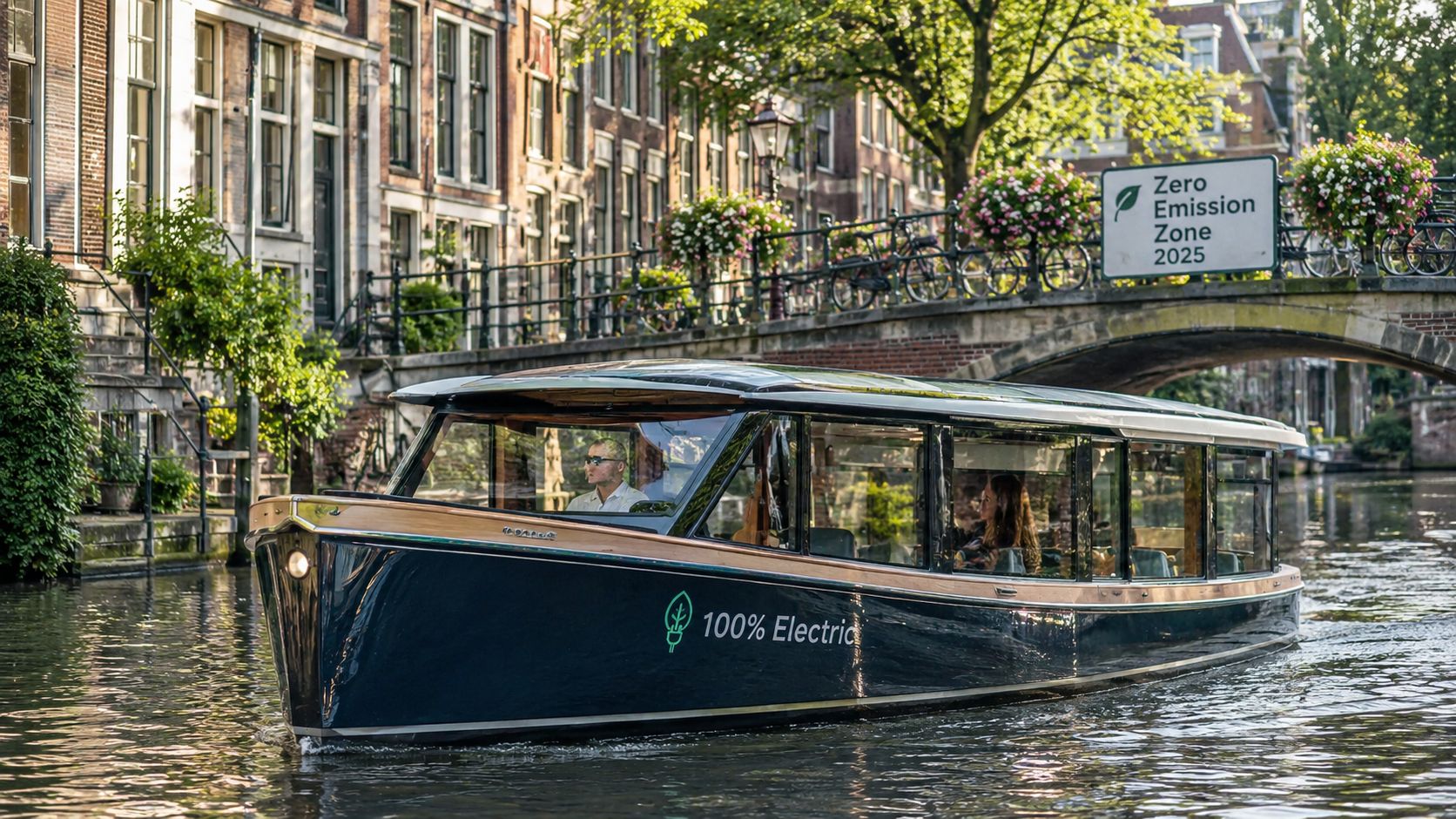
If a booking page sounds like a party boat but can't explain how the boat fits the zero-emission zone, the group should keep looking.
The smartest travelers check the boat type first and the menu second. In Amsterdam now, the boat itself is part of the product.
Shared Cruises vs Private Cruises Compared
The first booking decision isn't food. It's whether the group wants to share the boat with strangers or control the whole evening. That one choice affects price pressure, pacing, privacy, and how much personality the night can have. Shared cruises work well when the group is small or budget-conscious. Private cruises work when the group wants the boat to behave like a personal venue.
Shared dinner or drinks-led cruises generally sit in the €45 to €85 per person range for a set-menu dinner, and €35 to €55 for drinks-led formats. Private charters are a different animal, with a two-hour boat often running €600 to €1,800 for 8 to 35 guests, depending on setup and what the group adds on. Those numbers make the decision clearer than any sales pitch does.
Shared vs Private Canal Cruise at a Glance
| Feature | Shared Cruise | Private Cruise |
|---|---|---|
| Group feel | Mixed guests on board | Exclusive for one group |
| Booking style | Fixed departures | Flexible boarding and route planning |
| Typical use | Couples, solos, small groups | Stag and hen parties, birthdays, corporate groups |
| Cost structure | Lower cost per person | Higher total cost, often better for bigger groups |
| Customization | Limited | Stronger control over catering and route |
Shared cruises win when the group wants lower cost and less planning. Private cruises win when the group needs space to talk, room for custom catering, or a route that can be tuned to the occasion. That's especially true for milestone celebrations where a quiet table beside strangers would kill the mood.
The hidden cost on private boats is the one nobody likes to mention up front. Catering minimums, bartender fees, and drink upgrades can push the bill higher than the headline price suggests. If premium wine matters, the group should ask about it before the deposit is paid, not after the boat is already booked.
For a simple rule, use this. If the group is six people or fewer and wants an easy night, shared usually makes sense. If the event is personal, loud, or logistically awkward, private is worth the control.
Booking, Pricing, and Dietary Tips That Actually Matter
The easiest way to ruin a canal dinner cruise is to treat it like a casual walk-up dinner. It isn't. Bookings move faster in peak periods, and the operator needs enough time to set the boat, confirm the kitchen, and handle the route cleanly. A good habit is to lock everything in early and get the confirmation in writing, including the boat operator, departure pier, and final menu.
Dietary requests deserve attention before arrival, not at the dock. Vegan, gluten-free, halal, and severe allergy needs are all manageable only if the operator has time to prepare. The safest move is to message the boat 48 hours in advance and avoid any cruise that won't confirm ingredients clearly in writing. If the cruise can't say what the kitchen can and can't do, that's a red flag.
What to confirm before payment
- Departure Point: Check whether the boat leaves from Central Station, Stromerijweg, or another dock, because the meeting point changes the whole pre-dinner timing.
- Deposit Terms: Some bookings require full payment up front, while others ask for a deposit, so the cancellation risk should be clear before the group commits.
- Small Print: Weather rules, drink minimums, and pier-change surcharges can change the final cost.
- Group Size: Confirm the final headcount early, because tables, galley capacity, and charter limits are easier to adjust before the booking is set.
Payment method matters too. Paying by credit card gives the group more consumer protection if the booking goes sideways. For private crews, tipping around 5 to 10 percent is a sensible rule of thumb when the service has been solid and the night ran smoothly.
The last bit is simple but important. Wear non-slip shoes, not heels that fight wet decks. Arrive 15 minutes early so boarding checks don't eat into the evening. If the boat leaves after the city center gets busy, those minutes matter more than people expect.
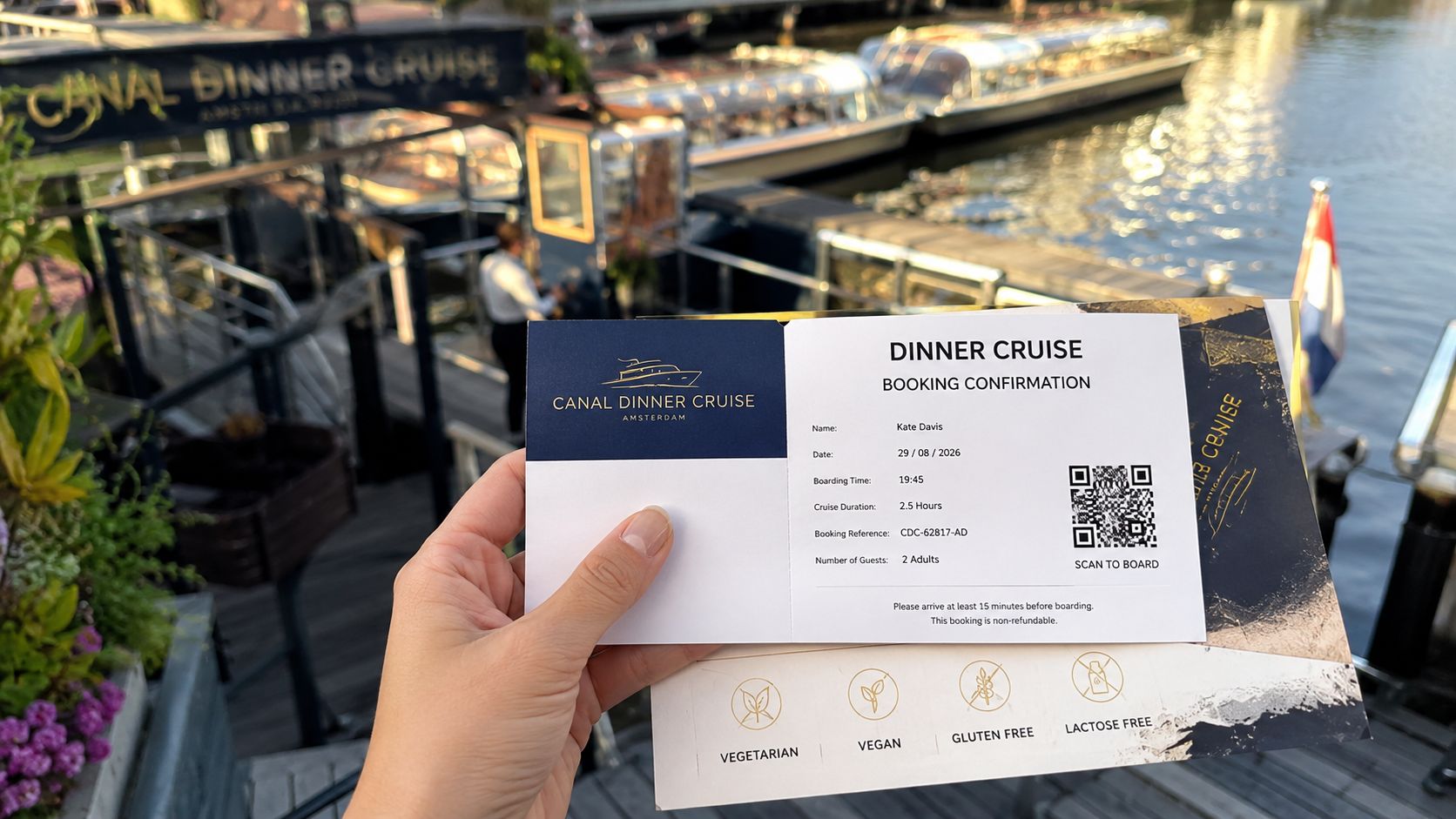
The group that shows up early, with dietary notes and the right pier address, usually has the smoothest night on the water.
Which Canal Experience Fits Your Group Best
A couple on a short city break should book the calmer dinner format, not a drinks boat. A candlelit table, a quieter route, and the kind of evening that feels like a proper date suit that trip better than any party setup. The early 18:00 slot is the smartest pick because the water is calmer, the light is better, and the night still leaves room for a late walk after dinner.
Stag and hen groups need the opposite. They should go private, keep the route flexible, and choose a drinks-led format with a sound system and enough space for the group to behave like a group. Shared dinner cruises rarely keep that kind of energy alive for long, and mixed strangers on board can flatten the mood fast.
Best Canal Cruise by Group Type
| Group Type | Best Format | Typical Duration | Trade-Off to Know |
|---|---|---|---|
| Couples | Dinner cruise | 2 to 2.5 hours | Higher price per head, quieter mood |
| Stag and hen parties | Private drinks boat | About 2 hours | Needs a bigger spend, but gives control |
| Friend groups of 6 to 10 | Shared booze cruise or private boat | 60 to 90 minutes, or longer if private | Shared is cheaper, private is easier to shape |
| Time-pressed travelers | Early dinner cruise | 18:00 to 20:00 departure window | Saves a separate restaurant booking |
Friend groups split the most. If the total spend is low enough, a shared booze cruise is the easy answer. If the budget creeps up and the group wants to talk without competing with strangers, the private option starts making more sense. That's where a flexible setup can beat a cheaper ticket.
The time-pressed traveler has the simplest decision. If there's only one free evening, a dinner cruise can cover dinner and sightseeing in one move. A late departure, though, is a bad fit for anyone hoping to continue into a pub crawl or club night afterward.
One useful option in that middle ground is a hosted nightlife boat experience, and Ultimate Party Amsterdam offers both pub-crawl style evenings and canal booze cruise formats for groups that care more about social energy than formal dining. That's the kind of booking that makes sense when the goal is to keep the group together instead of splitting up over dinner reservations.
Quick Answers Before You Book
Dress code is smart-casual, and that's the safe expectation for most decent dinner cruises. Jackets aren't required, but gym wear and football shirts can get turned away by upscale operators, and heels are a bad idea on a wet deck. If the boat looks polished, dress like the boat looks polished.
Weather matters less than people assume because many boats are covered and heated. Heavy rain can still close outdoor decks, so the pleasant-seeming choice is usually the boat that protects the whole group if the sky turns. That's one reason a clear seating plan matters more than pretty photos on the booking page.
Cancellation policies are usually stricter than hotel rooms, and many operators hold 50 to 100 percent of the booking if the group cancels inside 48 to 72 hours. Full payment or a 30 to 50 percent deposit is also common at confirmation, so the group should never book casually and hope for the best. The safer move is to read the cancellation window before the card is charged.
Combining a dinner cruise with nightlife works best when the departure is early, around 18:00 to 20:00, and the boat ends near De Pijp, Jordaan, Leidseplein, or Rembrandtplein. A late 21:00 dinner cruise usually kills the after-party plan because the group leaves the water too late to roll naturally into bars or clubs. Booking direct with the operator also tends to help with cancellation terms and dietary handling, which matters more than most first-timers realize.
If the group wants a proper Amsterdam night out, Ultimate Party Amsterdam can help with the part most visitors overcomplicate, the handoff between dinner, drinks, and nightlife. Visit Ultimate Party Amsterdam to look at canal booze cruise options and hosted group nights that fit the way Amsterdam works after dark.
🍻
Experience it Yourself
Skip the planning — join Amsterdam's biggest pub crawl and get 6 bars, free drinks and VIP club entry for €20.