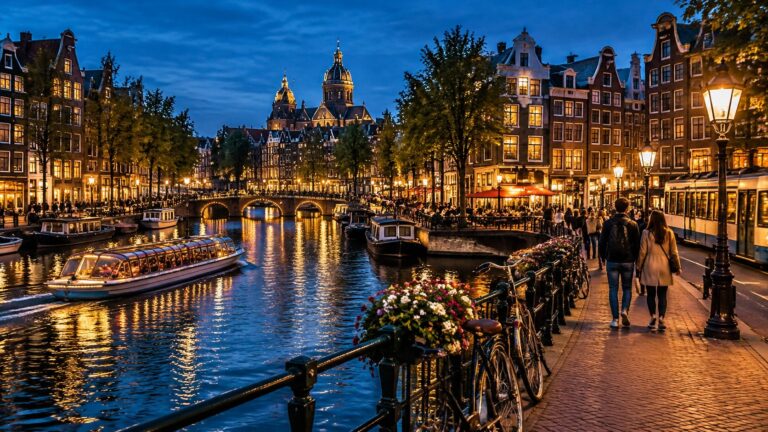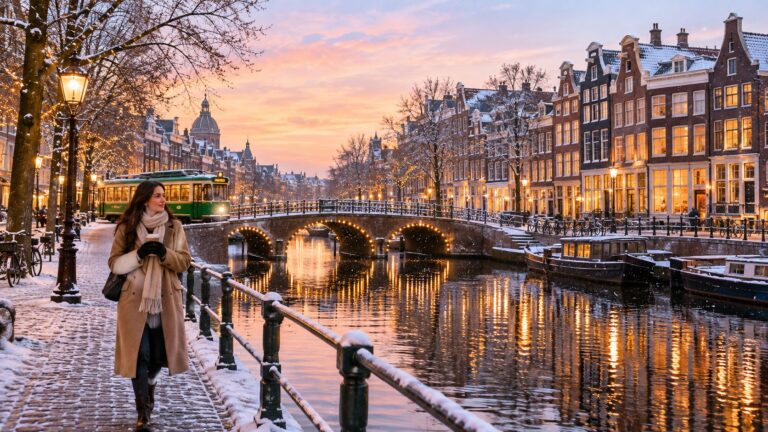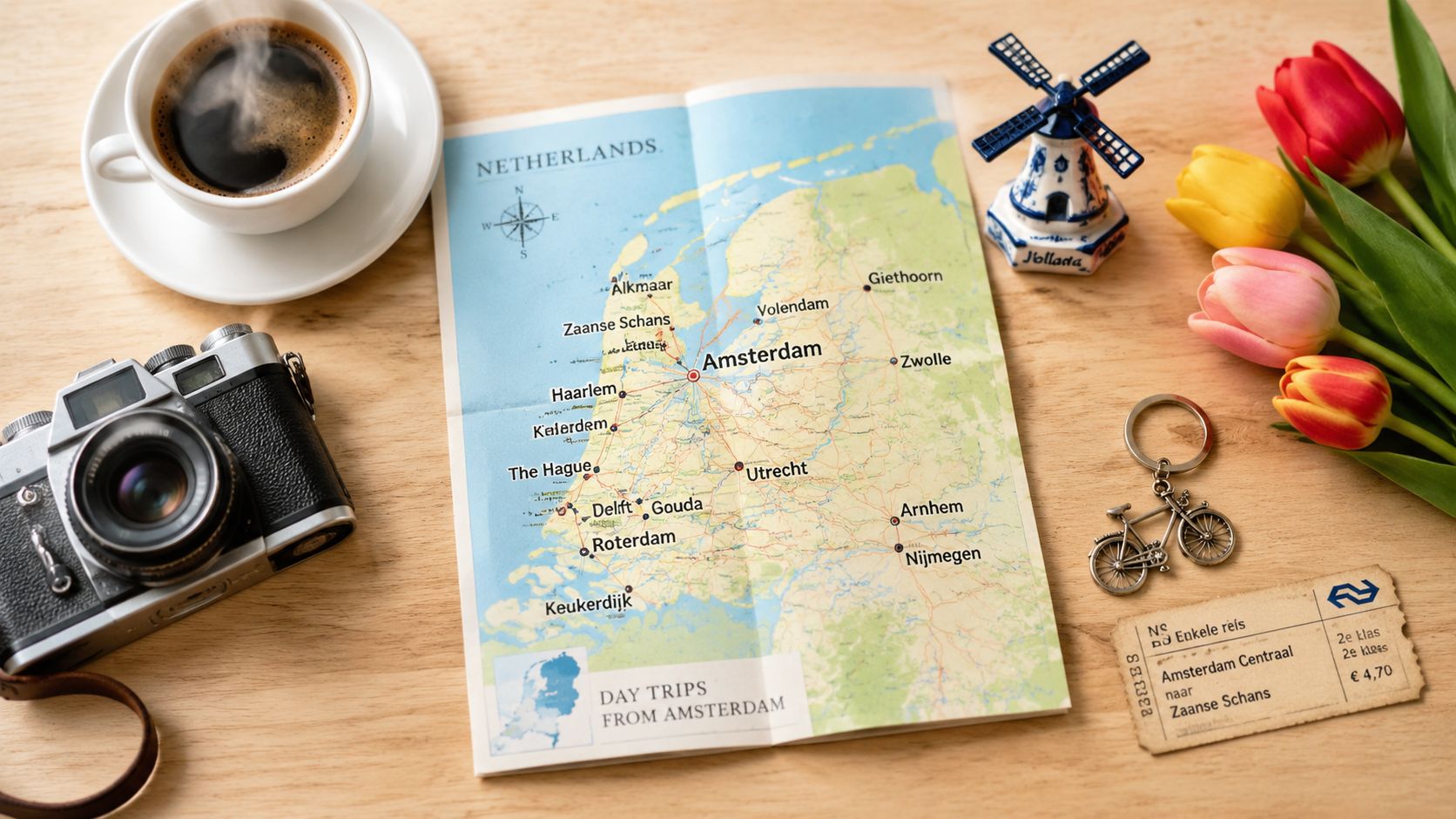
The best Amsterdam day trips aren't chosen from a random list of attractive villages. They depend on the season, the group's pace, mobility, budget, and whether everyone needs to be back in Amsterdam for dinner, a pub crawl, or a canal experience. A spring garden visit can be perfect for one group and a poor choice for travelers who want a flexible afternoon. A rural cycling route may suit active friends but frustrate a mixed-mobility party.
Amsterdam is unusually well suited to short excursions. In 2024, the city welcomed more than 14 million unique day visitors and nearly 27 million total day visits, averaging about 38,000 unique day visitors and roughly 74,000 day visits per day. That scale supports dense transport connections and a wide range of short-format experiences. (Amsterdam tourism statistics) The choices below are organized around real travel needs, from quick cultural escapes and seasonal highlights to active countryside routes, reflective history, flexible city exploration, and day-to-evening combinations.
Each destination is assessed through travel time, ideal duration, transport, cost guidance, highlights, drawbacks, and suitability. Schedules, admission rules, transport arrangements, and prices can change, so travelers should verify current information before booking.
Table of Contents
- 1. Zaanse Schans for historic windmills and Dutch village atmosphere
- 2. Marken Island for a slower waterfront escape
- 3. Kinderdijk for serious heritage photography
- 4. Keukenhof for a spring-only flower spectacle
- 5. Volendam and Edam for cheese and village food
- 6. A countryside cycling day for active travelers
- 7. Anne Frank House and Jewish heritage for reflective groups
- 8. A countryside canal cruise for low-effort exploration
- 9. Flexible Amsterdam exploration with bikes, canals, and markets
- 10. A half-day excursion followed by nightlife
- Top 10 Amsterdam Day Trips Compared
- Build a day that fits your group
1. Zaanse Schans for historic windmills and Dutch village atmosphere
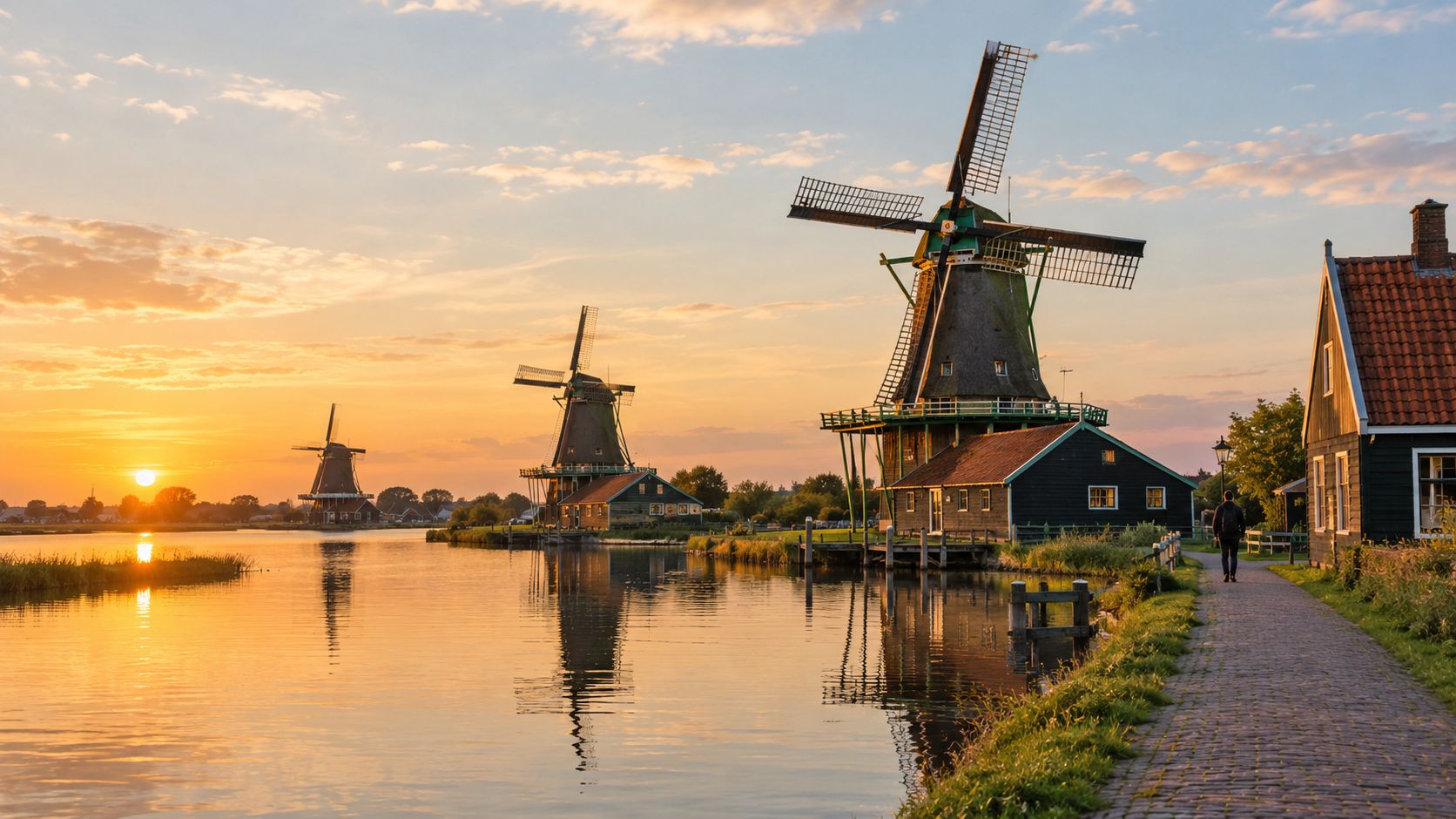
Zaanse Schans is the efficient cultural escape for groups that want unmistakable Dutch scenery without committing to a demanding full day. Located north of Amsterdam, the open-air heritage area brings together working windmills, traditional buildings, workshops, and waterfront paths. Cheese-making, clog carving, and other demonstrations give the visit more substance than a photo stop, although the setting can feel busy and visitor-focused at peak times.
A group arriving around 10 a.m. can spend three or four hours exploring the windmills and workshops, stop for lunch, and return to Amsterdam during the afternoon. That schedule leaves room to shower, rest, and prepare for an evening pub crawl. A stag group could use the morning visit as a low-pressure team activity before an evening Red Light District Pub Crawl.
What works and what doesn't
The site covers approximately 7 hectares, with uneven ground and plenty of walking. Comfortable shoes matter, especially for visitors who expect a quick stroll and discover that a thorough visit takes longer. Workshops often finish by the afternoon, so arriving late can mean seeing the buildings without catching the demonstrations.
Mid-week visits, particularly from Tuesday to Thursday, usually offer a calmer rhythm than weekends. Travelers should check the official site for temporary closures and special events before arranging group transport. A morning visit is more useful than an afternoon arrival if cheese and clog demonstrations are priorities.
Practical rule: Treat Zaanse Schans as a three-to-four-hour experience, not a rushed photo stop.
Volendam can be added for a longer cultural itinerary, with the villages connected by bus. That combination provides more variety, but it also increases coordination and walking. For nightlife-focused groups, Zaanse Schans alone is usually the smarter choice because it protects the afternoon recovery window.
2. Marken Island for a slower waterfront escape
Marken suits travelers who want traditional Dutch scenery at a gentler pace. The former fishing village has green wooden houses, narrow waterways, pedestrian-friendly lanes, and a harbor atmosphere that feels removed from Amsterdam's nightlife districts. It's a strong option for couples, slower-moving groups, and mixed-gender parties that want a quiet morning before an evening out.
The practical route is either by bus from Amsterdam or by ferry from Volendam. A group can spend two or three hours walking the village, visiting the harbor, and exploring the local heritage atmosphere before taking the ferry to Volendam for lunch. The ferry crossing takes about 35 minutes, so the combined itinerary feels like a small maritime journey rather than two disconnected stops.
Timing and weather matter
Marken is most enjoyable between 10 a.m. and 2 p.m., when the harbor has more activity and the group still has time to return comfortably. Summer ferry capacity can become limited, so advance tickets are sensible during busy periods. Waterproof jackets are useful in every season. The island sits at sea level and has little protection from wind, which can make a sunny forecast feel colder than expected.
The cheese factory should be visited early because closing times vary and may fall by late afternoon. Travelers should allow the full two to three hours rather than trying to squeeze Marken into a hurried schedule. A short visit can cover the harbor, village lanes, and waterfront, but rushing removes the quiet quality that makes the island worthwhile.
A couple could combine a Marken morning with an evening Shared Booze Cruise. A mixed group could return to Amsterdam by late afternoon and continue to a Leidseplein Pub Crawl without sacrificing preparation time. The main drawback is flexibility. Once ferry times and village connections are involved, the day becomes less spontaneous than an Amsterdam-only plan.
3. Kinderdijk for serious heritage photography
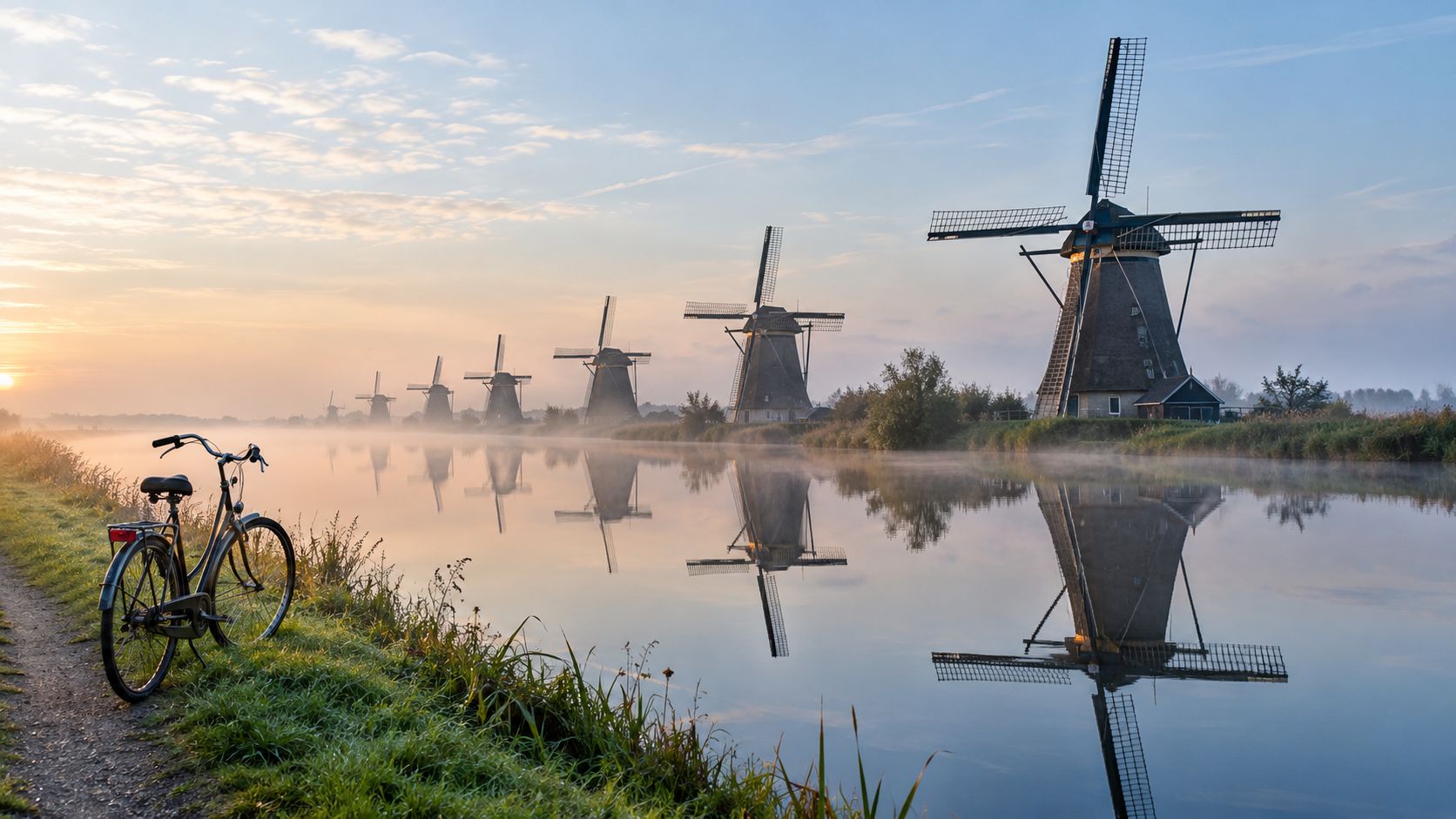
Kinderdijk is the choice for travelers who want the most concentrated windmill scenery and don't mind spending more of the day in transit. The UNESCO-listed site near Rotterdam preserves 19 functioning windmills along canals, creating a powerful setting for photography and Dutch water-management history. It offers greater visual impact than a quick village visit, but the journey makes it harder to combine with a relaxed Amsterdam evening.
The best plan for visual impact
A photography-focused group could leave Amsterdam at around 9 a.m., spend roughly four hours walking the paths and taking a boat tour, and return by late afternoon. A group that wants to justify the travel distance can combine Kinderdijk with Rotterdam, using the city for a second phase of architecture, food, or urban exploration.
Summer and school-holiday visits can feel heavily congested. A visit between mid-autumn and early spring generally offers a more manageable setting, although canal-side paths are exposed to wind and rain. Waterproof footwear and jackets aren't optional for travelers who plan to walk the full area.
Boat tours operate to fixed schedules and can fill during busy periods, so groups should verify the current timetable before building the day around one. Cycling the full circuit takes approximately 45 to 60 minutes, and renting bicycles can make the area easier to cover for an active group. That option isn't ideal for anyone with balance, stamina, or weather concerns.
Kinderdijk rewards patience. It doesn't work well as a rushed stop between several unrelated attractions.
An evening illumination visit may be possible during part of the year, but the current lighting schedule should be checked before planning around sunset. For a nightlife-focused short stay, Kinderdijk works best when the group values the destination itself more than maximum evening flexibility. Returning by late afternoon is possible with careful planning, but transport delays can reduce the recovery window.
4. Keukenhof for a spring-only flower spectacle
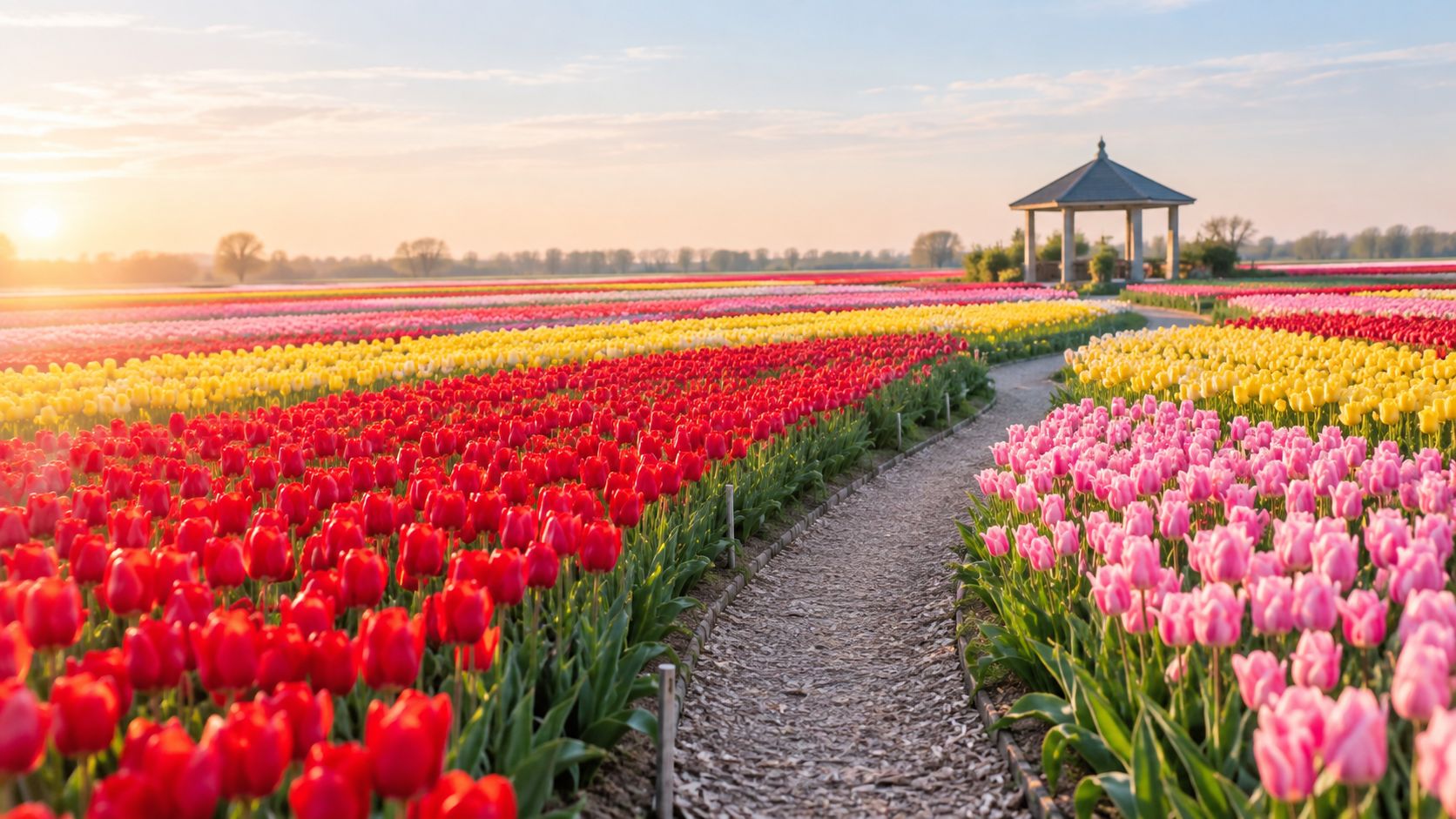
Keukenhof is the clear seasonal choice for travelers visiting during the spring opening period. The garden in Lisse is approximately 35 kilometres south of Amsterdam and operates only from late March to mid-May. Its themed gardens, flower displays, art, and seasonal atmosphere create an experience that can't be replicated outside the operating window.
The timing of the visit matters more than the distance. A group visiting Amsterdam in mid-April could spend the morning at Keukenhof for three to four hours, return for afternoon city exploration, and still have time to prepare for an evening Leidseplein Pub Crawl. A spring hen party could pair the garden with a private luxury Booze Cruise, creating a slower daytime experience before an organized night.
Protect the morning
Weekdays in mid-April are generally preferable to weekends and Easter holiday periods. Visitors should aim for the opening window, approximately 9 a.m. to 11 a.m., because afternoon congestion makes the paths harder to manage as a group. Timed-entry tickets should be purchased in advance. On busy days, arriving without a confirmed entry can leave travelers unable to enter when they want.
A proper visit requires four to five hours for travelers who want to explore the gardens without rushing. The estate is large, and walking can become tiring. Comfortable shoes, layered clothing, and a plan for changing spring weather will make a bigger difference than elaborate group coordination.
A shuttle bus can simplify the journey, but current availability and departure arrangements need checking before booking. Cycling is another option for groups comfortable on bikes, although the garden itself still involves substantial walking. Keukenhof is unsuitable for visitors outside the spring period, and it can be too crowded for groups that value spontaneity.
The return time matters for nightlife. A morning departure protects the afternoon, while a late start can turn a beautiful garden visit into a full-day commitment with little energy left for the evening.
5. Volendam and Edam for cheese and village food
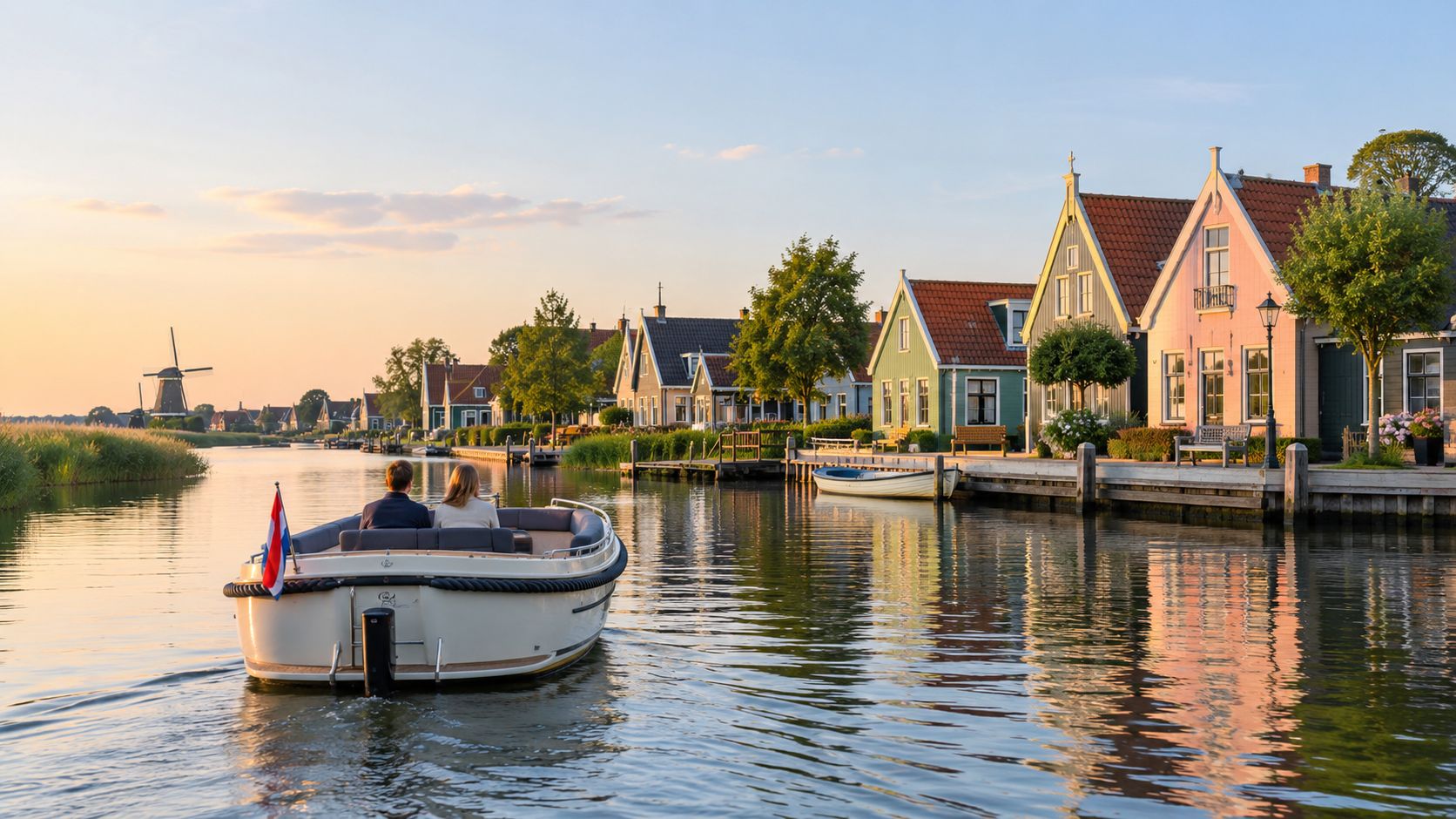
Volendam and Edam work well for groups that want food, harbor scenery, and traditional town architecture without the intensity of a major museum day. The neighboring villages can be explored by bus or bicycle, and their contrasting character gives the itinerary a useful rhythm. Edam offers preserved streets and cheese traditions, while Volendam adds a livelier waterfront with cafés and restaurants.
The strongest seasonal hook is Edam's summer Wednesday cheese market. Travelers who want that experience should arrive by about 10:30 a.m., because the market activity typically finishes around noon. A group can then spend time in Edam, continue to Volendam for lunch, walk the harbor, and return to Amsterdam during the afternoon.
A practical half-day schedule
A group departing around 9:30 a.m. could spend two hours in Edam, allow at least an hour and a half in Volendam, and aim to be back in Amsterdam by mid-afternoon. That leaves time to rest before an evening pub crawl. Waterfront restaurants should be reserved in advance for larger groups because walk-in seating becomes more difficult around lunchtime.
Cycling between the villages takes approximately one to one and a half hours, making the route suitable for active travelers who want more than a bus transfer. Groups with mixed fitness levels should use buses instead. Strong coastal winds can affect both cycling comfort and waterfront walks, so waterproof outer layers remain useful throughout the year.
Group-planning note: Volendam is easy to underestimate. Lunch, harbor photos, café time, and a cheese experience quickly fill the afternoon.
Traditional costume photography is available, but groups should arrange it ahead of time rather than assuming immediate availability. The villages are a good fit for food-oriented groups and stag parties seeking a distinctly Dutch lunch before a Red Light District Pub Crawl. They're less suitable for travelers who want deep museum interpretation or a quiet, uncrowded area during peak periods.
6. A countryside cycling day for active travelers
A cycling day changes the scale of Amsterdam day trips. Instead of moving between major visitor sites, the group travels through farmland, canals, villages, and open countryside at ground level. The experience is best for travelers who enjoy cycling, not for groups choosing bikes because cycling is associated with the Netherlands.
Organized countryside routes often cover approximately 30 to 40 kilometres, although a shorter route is a better starting point for mixed-ability parties. A fit group could depart around 8 a.m., complete a route of roughly 35 kilometres, return by early afternoon, and still have time for lunch, showers, and rest before nightlife. A mixed-fitness group should choose a guided route with support options and a lower distance.
Match the route to the weakest rider
Fitness assessment needs to happen before booking. A confident cyclist can make a long rural route look easy, while less experienced riders may struggle with wind, navigation, traffic, or saddle discomfort. Starting with a route of 25 to 30 kilometres gives the group a realistic challenge without turning the evening into a recovery exercise.
Bike quality also matters. Established rental options such as macBike, Bike City, and Swapfiets are named in the planning brief, but availability and suitability should be checked directly. Travelers can also review bike rental options in Amsterdam when arranging the practical side of the day.
- Use a guided route: This reduces navigation pressure for visitors unfamiliar with Dutch cycling infrastructure.
- Build in recovery time: A cycling day should include time for showers, food, and a change of clothes before nightlife.
- Dress for visibility: Bright clothing and helmets improve visibility, even though local cyclists may use different habits.
- Prefer quieter periods: Mid-week routes are easier for inexperienced groups than busy weekends.
A heavy cycling day can conflict with an active pub crawl. For groups that want both, a shorter route and an early return are more sensible than trying to maximize distance. Rain, wind, and navigation mistakes can turn an attractive plan into a tiring one, so a support vehicle or guide can be worth the added coordination.
7. Anne Frank House and Jewish heritage for reflective groups
Not every Amsterdam day trip needs to leave the city. The Anne Frank House and Jewish Heritage Museum form a powerful historical itinerary for groups that want context, reflection, and serious cultural engagement before an evening out. The Anne Frank House preserves the hidden annex where Anne Frank and her family hid during Nazi occupation, while the nearby Jewish Heritage Museum adds broader context about Jewish Amsterdam, ritual, culture, and resistance.
The Anne Frank House usually requires 1.5 to 2 hours for a meaningful visit. Groups should discuss expectations beforehand because the experience can affect people differently. Scheduling a loud or highly energetic activity immediately afterward is poor planning. Lunch, a quiet canal walk, or unstructured time gives the group room to process what it has seen.
Tickets and pacing
Timed-entry tickets should be arranged online at least two weeks in advance, according to the supplied planning guidance. Walk-up availability commonly disappears by mid-morning. An early visit around 10:30 or 11 a.m. provides a better chance of maintaining a reflective pace before the busiest part of the day.
Adding the Jewish Heritage Museum creates a combined visit of approximately three to four hours. That suits culturally curious groups willing to spend most of the day on history, but it may be too demanding for travelers who want a light sightseeing schedule. A guide can help groups with mixed levels of historical knowledge, although the museum experience should never be treated as a quick pre-party stop.
A group could visit the Anne Frank House in the morning, take a long lunch break, explore the canal ring, and attend an evening Red Light District Pub Crawl later. The key is emotional pacing. Nightlife can follow, but it shouldn't be positioned as a direct continuation of the museum visit.
8. A countryside canal cruise for low-effort exploration
A countryside canal cruise suits groups that want Dutch scenery without the physical demands of cycling or extensive walking. Routes can connect communities such as Edam and Marken, combining time on the water with village stops. The boat handles much of the logistics, which makes this format useful for mixed-mobility groups, couples, and travelers who want conversation rather than constant route management.
A half-day morning cruise might include approximately two hours on the boat and around an hour and a half exploring a village. Full-day versions can combine several stops and lunch, although the longer format leaves less flexibility for afternoon rest. Morning departures around 9:30 to 10 a.m. are preferable when groups want to return to Amsterdam before evening plans.
Check the small print
Cruise inclusions vary. Beverage policies, meals, village stops, and cabin access should be confirmed before booking because assumptions create friction once a group is on board. Open-air boats are enjoyable in good weather but can become uncomfortable in rain or wind. A covered cabin gives the group a better fallback when conditions change.
Allow at least 30 to 60 minutes per village stop. Shorter stops turn local communities into window views rather than places to experience. Travelers should wear layers even in summer because wind across the water can change the temperature quickly.
This option combines naturally with an evening Shared Booze Cruise, although the two experiences offer different moods. The countryside cruise is scenic and restorative, while an evening canal experience is more social. A mixed group can therefore enjoy daytime sightseeing without exhausting the members who don't want a physically active itinerary.
The principal drawback is dependence on fixed departure times. Travelers who prefer to stop spontaneously for lunch or change plans mid-route may find a self-guided city day more comfortable.
9. Flexible Amsterdam exploration with bikes, canals, and markets
Some groups don't need another destination. They need a flexible Amsterdam day that leaves room for different interests, late breakfasts, spontaneous discoveries, and a reliable evening schedule. A combination of canal-ring walking, bike rental, and market exploration can feel more personal than a tightly managed excursion.
The canal ring is particularly effective on foot because the historic streets, bridges, and neighborhood details reward slow movement. Bikes add reach, but groups should be honest about cycling confidence and establish meeting points before leaving. Albert Cuyp Market provides an easy lunch stop, while the Flower Market and specialist markets add variety for travelers who prefer local browsing to formal attractions.
Keep the flexibility under control
A group could rent bikes around 10 a.m., explore canal neighborhoods, reach Albert Cuyp Market for lunch, and return the bikes in the early afternoon. That creates a useful rest window before a pub crawl. Visitors should expect the market area to become busier during the day, so a clear meeting point prevents small splits from becoming a lost-group problem.
The best markets in Amsterdam can help travelers decide which areas fit their interests before leaving the accommodation. Market food and neighborhood cafés can keep the day informal, but the group should still agree on a spending limit because snacks, flowers, and small purchases accumulate quickly.
Traditional brown cafés offer a more local atmosphere than many establishments around the major sights, although travelers should avoid assuming every café is suited to a large group. A small party can move easily. A larger group needs more deliberate seating and meeting arrangements.
This plan is ideal for solo travelers, couples, and friends who dislike rigid schedules. It also protects evening energy better than a distant excursion. The trade-off is that the day requires more self-management. There is no single operator coordinating transport, timing, or regrouping.
10. A half-day excursion followed by nightlife
The strongest day-to-evening plan starts with restraint. A morning or early afternoon excursion should return to Amsterdam by 1 or 2 p.m. at the latest, leaving time for food, showers, rest, and changing before nightlife. This approach works particularly well for short-stay visitors who want cultural sightseeing without sacrificing a social evening.
A stag group could leave at 8:30 a.m. for Volendam and Edam, spend around three hours exploring, return after lunch, and prepare for an 8 p.m. Red Light District Pub Crawl. A spring group could visit Keukenhof for approximately three and a half hours, return for an afternoon break, and choose a Private Booze Cruise in the evening for a different energy level.
Coordinate the day before anyone leaves
Both the day activity and the evening experience should be arranged in advance during busy periods. The group needs one shared schedule, clear meeting points, and a contingency for transport delays. A preparation buffer of at least 90 minutes is sensible, particularly when accommodation facilities are limited or the group needs to return from outside Amsterdam.
The day activity should match the evening's energy. Cycling for most of the day before an active pub crawl can leave people tired and irritable. A village visit, museum, or relaxed cruise is easier to combine with social nightlife. A group considering a shared water-based evening can review the Shared Booze Cruise as one possible format, then confirm current availability and terms directly.
Ultimate Party Amsterdam's concierge service can help groups coordinate private arrangements and transport planning, but availability, inclusions, and pricing should be confirmed before booking. The most common mistake is filling every hour. A successful day-to-night itinerary has deliberate empty space.
Top 10 Amsterdam Day Trips Compared
| Destination / Strategy | Implementation complexity | Resource requirements | Expected outcomes | Ideal use cases | Key advantages |
|---|---|---|---|---|---|
| Zaanse Schans: Historic Windmills and Dutch Village Experience | Low, straightforward transport and site navigation | Tram/coach access, moderate walking, entry fees, check workshop times | Authentic cultural immersion, craft demos, scenic photography | Cultural travelers, mixed-interest groups, daytime bonding | Restored working windmills, walkable layout, year-round visual appeal |
| Marken Island: Traditional Fishing Village and Scenic Boat Approach | Moderate, ferry timing and seasonal links to consider | Ferry/bus, timed visits, waterproof clothing, limited indoor options | Quiet maritime atmosphere, authentic village scenes, good photos | Photographers, groups avoiding crowds, slow-paced exploration | Functional fishing village, distinctive wooden houses, compact walkability |
| Windmill at Kinderdijk: UNESCO Heritage and Photography Destination | Moderate, longer travel and tour scheduling | Train/bus or coach, boat tours or bike rental, museum tickets | Strong heritage interpretation, prolific photography opportunities | Photography-focused groups, heritage enthusiasts, Rotterdam combos | UNESCO-listed windmills, extensive cycling/walking paths, seasonal illumination |
| Tulip Season at Keukenhof Gardens: Spring Seasonal Immersion | Moderate–High, strict seasonality and timed-entry logistics | Shuttle/coach or coach, timed tickets, crowd management, 4–5 hrs | Spectacular seasonal visuals and curated garden experiences | Spring travelers and photographers (late Mar–mid May) | Massive floral displays, organized infrastructure for large groups |
| Volendam and Edam: Cheese, Traditional Dress, and Maritime Heritage | Low–Moderate, short travel but seasonal market timing | Bus/cycling, market/restaurant bookings, possible costume studios | Food-focused cultural immersion, cheese market interaction (seasonal) | Food-focused groups, half-day cultural excursions | Authentic working communities, cheese market events, good local dining value |
| Day Cycling Tour: Rural Routes and Canal-Side Villages | High, requires fitness, route planning and group pacing | Bike rental, helmets/gear, possible guide/support vehicle, fitness levels | Active countryside immersion, team bonding, flexible routes | Fit and active groups, teams seeking physical activity | True local transport experience, flexible routing, cost-effective vs. coach |
| Anne Frank House & Jewish Heritage Museum: Historical Immersion | High, advance timed bookings and capacity limits | Timed-entry tickets, small-group logistics, guided options for context | Deep historical education and reflective experience | Educational groups, history-focused visitors | Profound historical significance, central location, strong educational programs |
| Canal Cruise to Countryside Villages: Scenic Water Routes | Moderate, fixed schedules and seasonal availability | Boat tickets, possible meals, accessibility needs, advance booking | Relaxing scenic travel, village access with minimal exertion | Mixed-mobility groups, travelers prioritizing relaxation | Low physical demand, guided commentary, unique water-level perspectives |
| Amsterdam Day Variation: Bike Rental, Canal Walking, Markets | Low–Moderate, self-guided coordination and navigation | Bike rental or walking, minimal fees, local spending, route planning | Flexible, authentic urban discovery and market experiences | Flexible groups, budget travelers, solo visitors seeking spontaneity | High flexibility, low cost, strong local interaction opportunities |
| Combination Day-Evening Strategy: Half-Day + Pub Crawl/Booze Cruise | High, tight coordination, bookings for day and evening | Booked day trip + evening event, transport buffers, concierge coordination | Maximized single-day value combining culture and nightlife | Time-limited visitors (3–5 days), groups wanting full-day experiences | Efficient itinerary, energy-paced planning, centralized booking options |
Build a day that fits your group
The right Amsterdam day trip depends less on a universal ranking than on the group's actual priorities. Keukenhof is the natural choice for spring flower spectacle, but it only works during its seasonal opening period and demands early timing. Zaanse Schans offers a more efficient cultural escape, with windmills, workshops, and a clear route back to Amsterdam before evening plans. Volendam and Edam suit groups that want cheese, food, harbor scenery, and village atmosphere, while Marken provides a quieter waterfront pace for travelers who don't need a packed schedule.
Kinderdijk is worth the longer transport commitment when photography and serious Dutch heritage are central to the day. It is less suitable for groups that want maximum nightlife flexibility. Cycling offers the strongest countryside immersion for fit travelers, but the route should be designed around the least experienced rider rather than the most athletic member. A shorter route with recovery time is usually more enjoyable than an ambitious distance followed by an exhausted evening.
The Anne Frank House and Jewish Heritage Museum require a different kind of energy. They suit culturally curious groups willing to slow down, discuss what they have seen, and leave space for reflection. That experience shouldn't be treated as a quick attraction between drinks. For travelers who want flexibility, Amsterdam itself can provide a satisfying day through canal-ring walking, markets, cafés, and bike exploration without the risk of missed connections.
Timing is the common thread. Several classic destinations become very busy after approximately 10:30 a.m., particularly during spring and summer, according to independent Amsterdam travel guidance. Starting early doesn't guarantee a quiet visit, but it gives groups a better chance of seeing demonstrations, entering timed attractions, and returning before the busiest afternoon period. Travelers who want to protect a nightlife plan should choose a destination that gets them back by early afternoon.
Transport deserves equal attention. Amsterdam's regular trams, buses, and metro services generally stop around 00:30, after which 11 night buses serve the city until about 07:30. (Amsterdam night-bus information) That makes a late return possible within Amsterdam, but travelers shouldn't assume every regional connection runs conveniently after midnight. A day trip that ends late can interfere with dinner, preparation, and meeting times even when the evening transport technically works.
Amsterdam remains highly effective for compact sightseeing because the canal ring and historic center concentrate attractions in a walkable urban setting. The canal ring joined the UNESCO World Heritage List in 2010, and its canal system developed during the 17th-century Golden Age, when Amsterdam expanded as a global trading hub. (Amsterdam city context) That heritage explains why a single city day can combine a canal experience, a museum, and a neighborhood walk without a long transfer.
For groups that want help coordinating daytime plans with a pub crawl or canal experience, Ultimate Party Amsterdam offers guided nightlife formats and canal-based experiences, alongside concierge support for private arrangements. Travelers should explore the relevant experience details, confirm current availability, and leave enough time to rest before going out.
Ultimate Party Amsterdam helps visitors connect an Amsterdam day trip with guided pub crawls, shared and private canal booze cruises, and group nightlife planning. Visit Ultimate Party Amsterdam to explore the available experiences and coordinate a day-to-evening plan that fits the group's schedule.
🍻
Experience it Yourself
Skip the planning — join Amsterdam's biggest pub crawl and get 6 bars, free drinks and VIP club entry for €20.