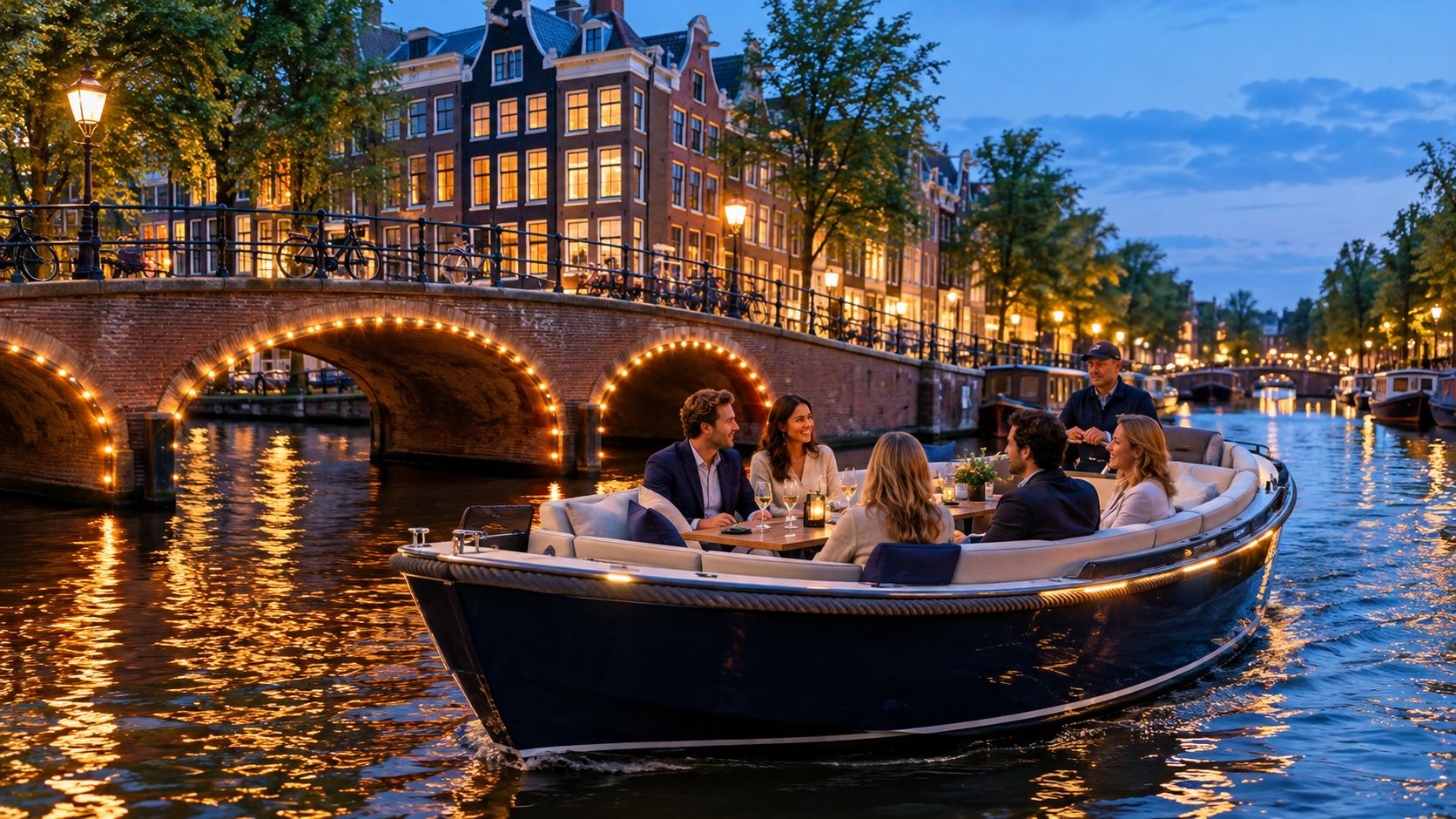
Bags are at the hotel, dinner is still undecided, and someone in the group is already asking what the plan is for tonight. That's the moment an Amsterdam evening canal tour earns its place. It gives the night a clear starting point, puts everyone in the same place at the same time, and turns sightseeing into a social hour before bars and clubs take over.
Table of Contents
- Why an Evening Canal Tour Belongs on Your Amsterdam Night
- The Amsterdam Canal Network You Are Actually Cruising On
- How Evening Cruises Actually Run Under Amsterdam Rules
- What a 60-Minute Evening Route and Onboard Experience Look Like
- Shared Booze Cruise vs Private Booze Cruise in Amsterdam
- Who Each Canal Format Is Really Built For
- Common Planning Mistakes on Amsterdam Evening Canal Tours
- Putting Together Your Amsterdam Evening
Why an Evening Canal Tour Belongs on Your Amsterdam Night
A typical first night starts loosely. A group meets at a canal-side bar, orders a round, checks maps, and debates neighborhoods while the light fades. Without an anchor, an hour disappears into indecision. With a cruise booked, that same group has a meeting point, a departure time, and a shared experience before the night splits into pubs, clubs, or a late dinner.
That structure matters most on a short stay. Visitors with only a couple of nights can't afford to treat sightseeing and nightlife as separate blocks. An Amsterdam evening canal tour combines them. The boat passes illuminated bridges and canal houses while the group settles in, talks properly, and gets a feel for the center from water level. It works as a bridge between a relaxed meal and a louder night, not as a replacement for either.
Who Gets the Most From That First Hour
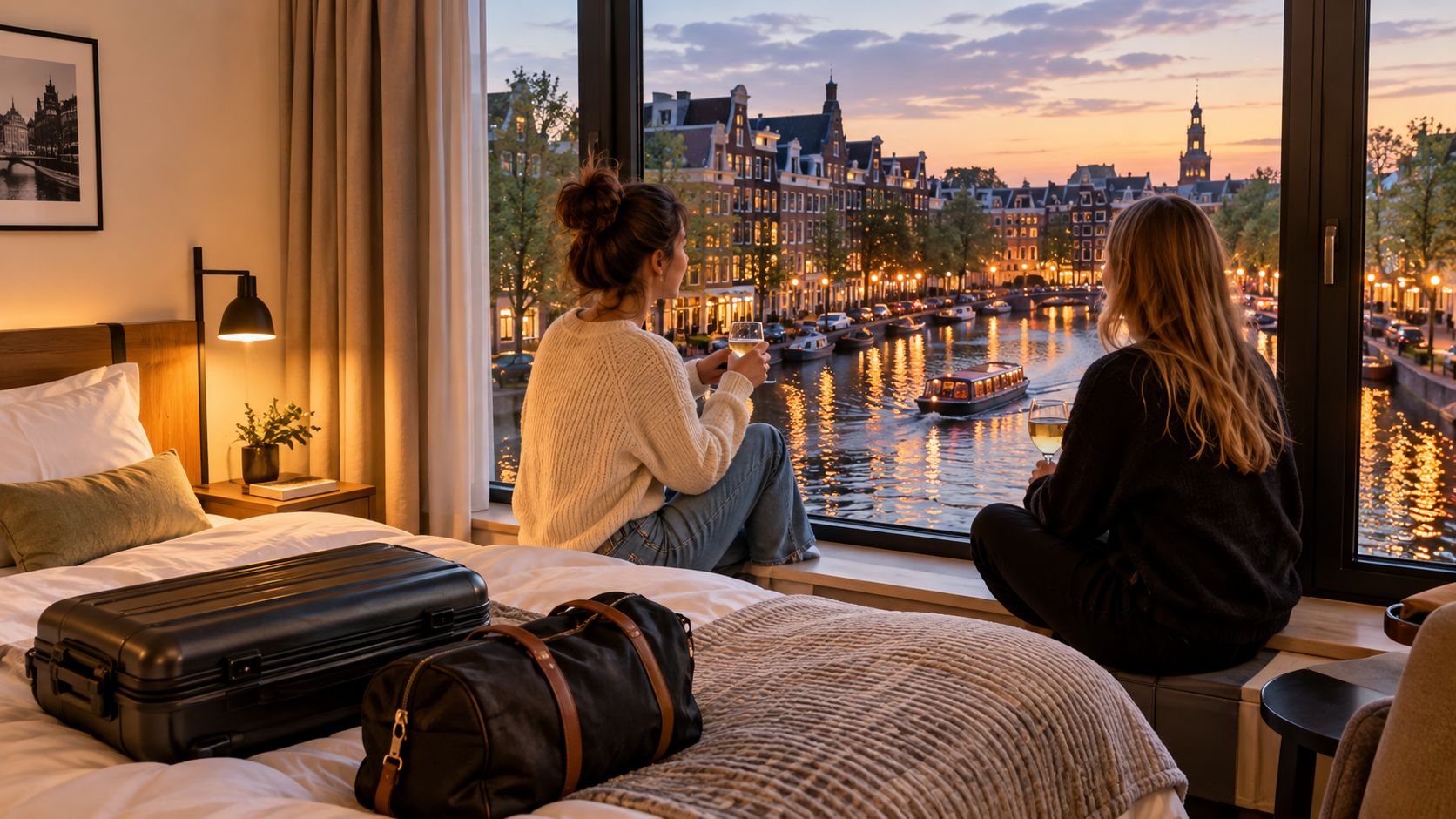
Solo travelers benefit for a different reason. Sitting alone at a bar can feel exposed, while a shared boat gives conversation a natural setting and a fixed end point. Small groups get the same low friction benefit. Nobody has to find their way, choose the next street, or keep the group together in busy nightlife areas during that first hour.
Practical rule: Put the cruise early in the evening, before heavy drinking starts. Boarding, seating, and conversation all work better when the group is still fresh.
Groups building a fuller itinerary can use the cruise as the daytime to nighttime handover, a pattern that fits well with ideas for moving from a daytime plan into a full Amsterdam night. The point isn't to tick off a tourist box. It's to start the night with momentum, a view of the city that can't be replicated from a pavement table, and a group that's already warmed up socially.
The Amsterdam Canal Network You Are Actually Cruising On
Amsterdam's canals aren't decorative channels built for boat tours. They're working infrastructure created for transport, drainage, defense, and urban expansion, and the scale explains why a short route still feels substantial. The city has approximately 165 canals with a combined length of about 100 kilometers, so an evening cruise samples a much larger historic waterway network rather than circling a single attraction.
From Medieval Ditches to a Planned Ring
The oldest stretches date to the medieval period, and later growth turned water management into city planning. The celebrated canal ring, the Grachtengordel, was developed during rapid expansion with principal planned works beginning in 1613. Its concentric design enclosed the older medieval center and created new land parcels, residential streets, and routes for moving people and goods.
That history is visible after dark. Lit canal houses show the narrow plots created by that expansion. Arched bridges mark where streets cross the water, and houseboats line edges that were once purely functional. From a boat, the logic of the plan becomes easier to read than it is on foot, where one street can look much like the next.
- Water level perspective: Facades, bridges, and moored boats line up in a way street level views don't reveal.
- Compact interpretation: A short loop can show several layers of the city's growth without long walks between districts.
- Recognized heritage: The canal ring area inside the Singelgracht carries UNESCO World Heritage status, which gives the scenery cultural weight beyond nightlife.
An evening route therefore isn't interchangeable scenery with drinks added. It's a moving introduction to a planned urban arrangement that's more than four centuries old. Groups that understand that context tend to look up from their phones more often, ask better questions, and remember specific bridges and bends instead of only remembering that the boat was fun.
How Evening Cruises Actually Run Under Amsterdam Rules
An evening departure looks relaxed from the quay, but it's run inside a tight set of navigation and environmental rules. Since 1 April 2025, Amsterdam has applied an emissions free zone for recreational vessels in the center, including the Singelgracht. Permitted craft in that zone include electric boats, hydrogen powered boats, rowing boats, and other human powered vessels, plus certain hybrids operating without emissions, while petrol and diesel boats rely on transitional arrangements where they apply.
That policy shapes booking choices directly. Central sightseeing and social routes pass through regulated water, so an electric boat isn't a marketing extra. It's aligned with where the city is heading and it brings a practical benefit on board. Low noise means a host doesn't have to shout over an engine and groups can talk without turning the cruise into a test of volume.
Speed, Lights, and the Sober Skipper
Speed is the second constraint. Route planning should treat the default ceiling of 6 km/h, with up to 7.5 km/h permitted only on specified waterways such as parts of the Amstel and Kostverlorenvaart, as the operating reality. That's a brisk walking pace. It feels unhurried, reduces wake around moored boats, and gives the skipper margin at bends and bridge approaches, but it also limits how much ground a short cruise can cover.
After dark, preparation matters just as much. Departure checks should include navigation lights rather than relying on street lighting reflected on the water. Skippers keep to the right, ease off early where wake or propeller suction could affect moored craft, and manage right of way around longer vessels. None of that is visible when it's done well, which is exactly the point.
A smooth evening cruise is rarely about speed or distance. It's about predictable timing, low wake, clear visibility, and a skipper who stays sober and in control.
Conduct rules complete the picture. Guidance stresses suitable lighting at dusk, no operating a boat under the influence of alcohol, and no nuisance from excessive shouting or music, as set out in canal guidance covering lighting, priority, and onboard behavior. Passengers can drink socially on a hosted cruise, but the boat itself is still a vehicle in mixed traffic. Operators that brief groups clearly before departure usually have fewer problems at bridges, fewer complaints from residents, and a calmer return to the dock.
What a 60-Minute Evening Route and Onboard Experience Look Like
Boarding sets the tone. A good crew gets passengers seated quickly, confirms where drinks are served, and gives a short briefing before lines are released. Late boarding eats into water time because the return slot still matters. Groups that arrive together, with tickets ready and one person handling questions, consistently get a cleaner start than groups that drift in one by one.
The Shape of the Route
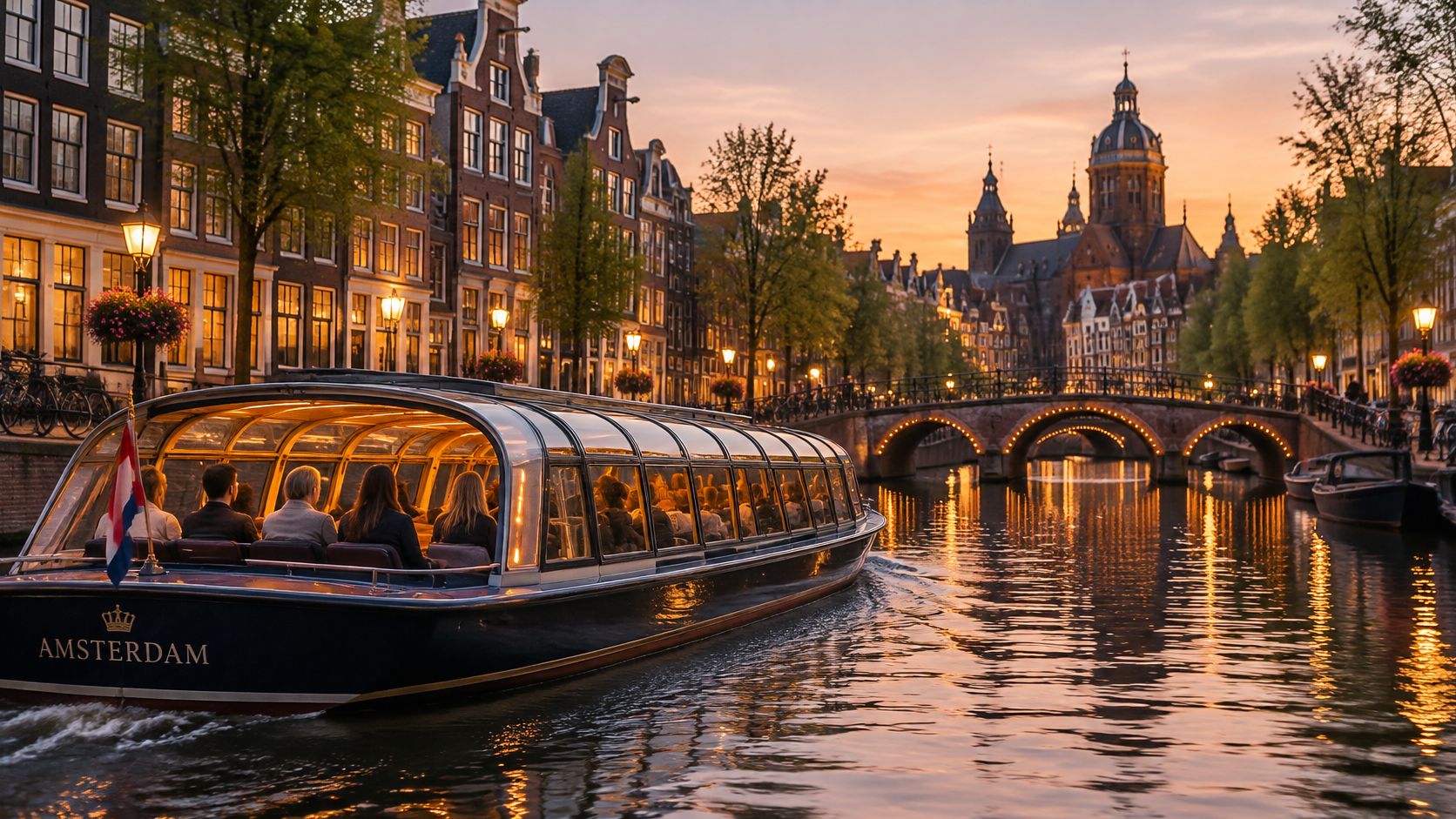
At canal speed, a compact loop of the canal ring makes more sense than racing toward outer waterways and rushing back. Defined turnaround points, buffer time at bridge approaches, and a route that keeps to well lit central water produce a relaxed hour. The skipper slows for bends, positions the boat so oncoming traffic can see it near bridges, and keeps to the right while larger commercial vessels take priority.
That pacing changes what passengers notice. There's time to watch reflections under bridges, spot houseboats, and see canal houses from below street level. A route that tried to cover too much water would feel hurried and would leave no margin for traffic at busy junctions. Less distance, handled calmly, usually delivers the better night.
What Is Actually on Board
On a social cruise, the key elements are a qualified skipper, a host or crew member managing drinks and the group, and seating arranged so people face each other rather than sitting in transport rows. Lighting should make faces visible without washing out the view outside. Music, where offered, needs restraint near residential stretches, because nuisance rules don't pause for a celebration.
- Standard evening cruise: Sightseeing first, with drinks as a supporting feature and a calmer tone.
- Booze cruise format: Drinks and social hosting move to the center, while the canal ring provides the setting.
- Private charter: The group controls the guest list and the mood within the skipper's safety and conduct limits.
Docking is part of the experience too. A clear finish, with the crew confirming belongings and pointing groups toward their next area, prevents the awkward drift that can kill momentum. The best hour on the water feels complete, not cut short, because boarding, route, service, and return were planned as one sequence.
Shared Booze Cruise vs Private Booze Cruise in Amsterdam
A stag group of twelve and two backpackers on their first night face the same fork: join other passengers or take the whole boat. Ultimate Party Amsterdam runs both formats on electric boats, and the difference comes down to control, social mix, and how much planning the group wants to hand over. Treating them as interchangeable leads to the wrong booking more often than price does.
Shared vs Private Booze Cruise at a Glance
| Format | Duration | Boat Type | Bar Setup | Best For |
|---|---|---|---|---|
| Shared Booze Cruise | One hour | Shared electric boat | Unlimited beer, wine, and soft drinks | Solo travelers, couples, and small groups |
| Private Booze Cruise | 60 minutes | Private luxury electric boat | Open Dutch bar | Stag and hen groups, birthdays, and corporate teams |
A shared cruise works when meeting other travelers is part of the appeal. Nobody has to fill a boat, coordinate a charter, or decide every detail. The trade-off is a fixed departure time and a mixed crowd, so the music and the mood have to suit strangers as well as friends. On a first night in Amsterdam, that mix usually helps more than it hurts.
A private cruise suits a group that already has its people and its occasion. The boat becomes a contained venue for speeches, photos, and running jokes that would die in front of strangers.
The trade-off is responsibility. The organizer gets everyone to the dock on time, and the group still answers to the skipper's brief on noise and movement.
Decision shortcut: Book shared for social discovery and simplicity. Book private when the guest list is the whole point and the group wants its own space.
Whichever format you pick, the canals stay a regulated waterway. Both boats run under the same speed cap, the same emissions rules, and the same conduct expectations once you leave the dock. The deciding question is simpler than most groups make it: does the night need new people, or a private hour together before everyone heads into the city?
Who Each Canal Format Is Really Built For
Group fit decides satisfaction more reliably than boat photos. Solo travelers and backpackers usually get the most from a shared format because the boat supplies instant company without a long commitment. Couples and friends on a city break sit in the same category when they want atmosphere and drinks without organizing a charter around a small headcount.
Matching the Boat to the Occasion
Stag and hen groups, birthday parties, and corporate teams lean private for practical reasons. They often have a schedule, a designated organizer, and moments that work better without strangers listening in. A private hour also makes coordination easier before a restaurant booking or a club plan, because the whole group boards and disembarks together.
Short stay visitors need a different calculation. With one or two nights, the cruise should connect to what follows rather than sit alone in the itinerary. Pairing the water hour with a Red Light District pub crawl or a Leidseplein pub crawl creates a complete night with hosted structure in both halves. That pairing suits visitors who don't know venues, don't want to queue blindly, and would rather spend energy socializing than navigating.
- Solo travelers: Shared boat, then a hosted crawl for continuity.
- Couples and small friendship groups: Shared boat for atmosphere without charter logistics.
- Stag, hen, birthday, and corporate groups: Private boat for control and privacy.
- Complex celebrations: A concierge style arrangement when restaurants, tables, tickets, or transport also need coordination.
The useful test is simple. If nobody in the group wants to be the planner, choose hosted and shared formats. If one person is already running the weekend, a private boat gives that person a contained hour where the plan holds. Either way, the cruise works best as the opening chapter of the night, not as an isolated booking that leaves the group asking what happens next.
Common Planning Mistakes on Amsterdam Evening Canal Tours
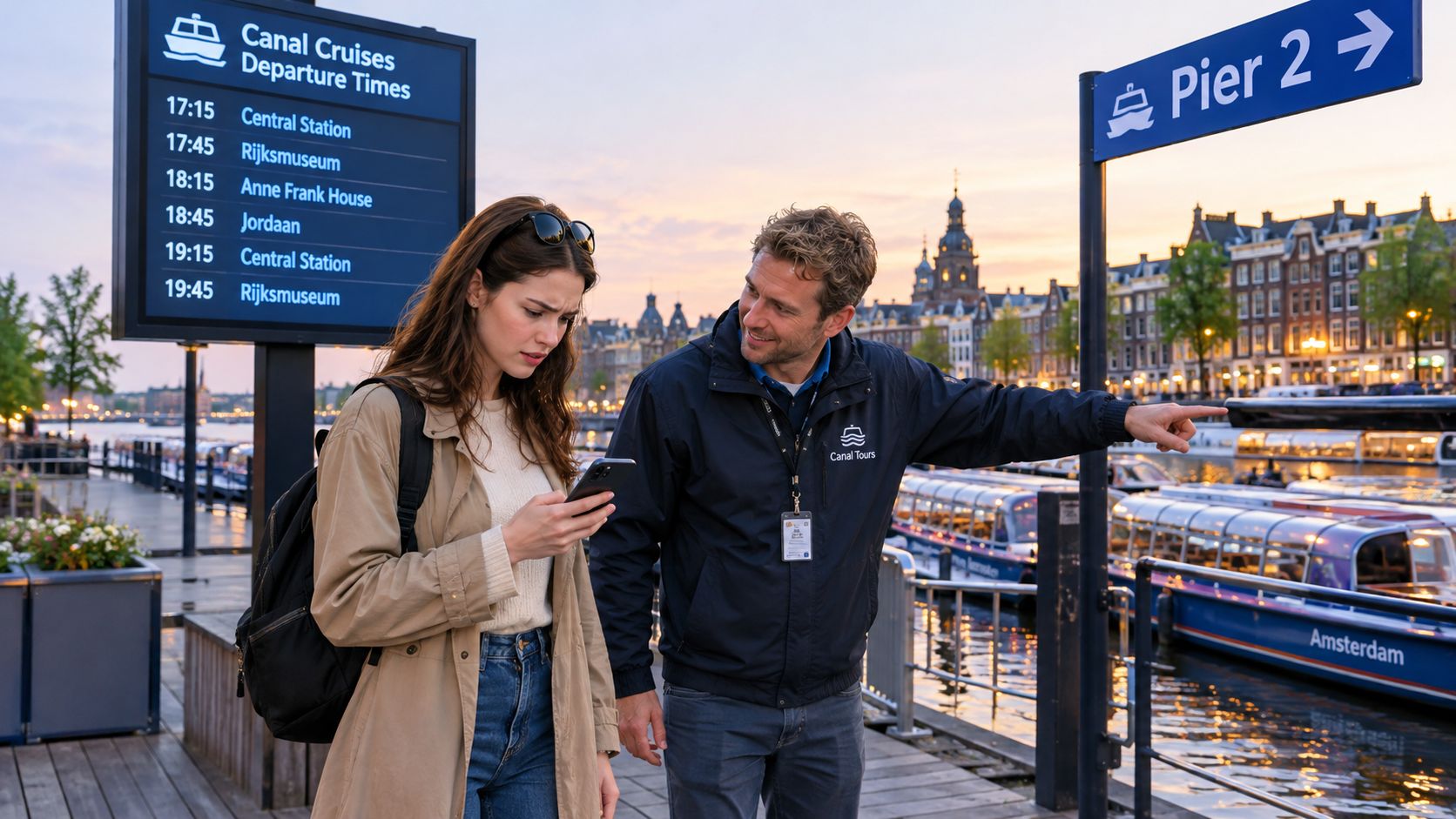
The most common mistake is assuming every operator runs late. Listings on the city's tourism platform show variation, including one canal cruise service operating daily from 10:00 to 22:00 and another listed from 11:00 to 20:00. Seasonal products add another catch, because some tickets face earlier cutoffs during festival periods. Groups should verify the exact departure for the selected date instead of trusting a generic evening label.
Choosing the cheapest boat without checking the basics causes the next set of problems. The boat should be electric for central routes, the skipper should be clearly in charge, and the booking should state what's served on board. Visitors comparing costs can still plan smartly with guidance on experiencing Amsterdam nightlife on a budget, but cheap stops being a saving when the route, timing, or bar setup doesn't match the group.
- Slow boarding: Arriving in fragments shrinks the useful hour.
- Wrong expectations: A hosted cruise isn't a bar crawl on water, and nuisance rules still apply.
- No onward plan: Disembarking without a next area wastes the group's momentum.
A short pre booking check prevents most disappointments: confirm departure time, boat type, drinks included, boarding location, and where the night goes after docking.
Putting Together Your Amsterdam Evening
A realistic evening keeps the geography simple. Dinner or a first drink near the center, the cruise in the middle of the evening, then one nightlife area instead of crossing the city repeatedly. That sequence respects how the water works: boats in the central canals hold to a 6 km/h limit, so an hour covers a short stretch and the value sits in the atmosphere rather than the mileage. Buffer for boarding goes on the front end, and the group steps back onto land while the night is still building.
Timing should follow the format. A shared cruise fits travelers who want a set departure and a social mix before joining a crawl or exploring independently. A private cruise suits an organized group that needs the boat to itself before a specific onward plan. Fully custom arrangements earn their cost only when the rest of the night also needs coordination, such as reservations, tables, or transport.
The docking point matters as much as the departure point.
Groups still choosing where to land should compare the main districts in a guide to Amsterdam nightlife areas and what each one suits before the boat gets booked. Decide the area first, then place the cruise directly before it. That single ordering choice turns an Amsterdam evening canal tour from a pleasant hour into the piece that holds the whole night together.
Book a shared or private electric booze cruise, add a Red Light District or Leidseplein pub crawl, or ask for concierge help with a larger celebration through Ultimate Party Amsterdam. Choose the format that fits the group, lock the departure time early, and start the Amsterdam night on the water with the rest of the plan already in place.
🍻
Experience it Yourself
Skip the planning — join Amsterdam's biggest pub crawl and get 6 bars, free drinks and VIP club entry for €20.