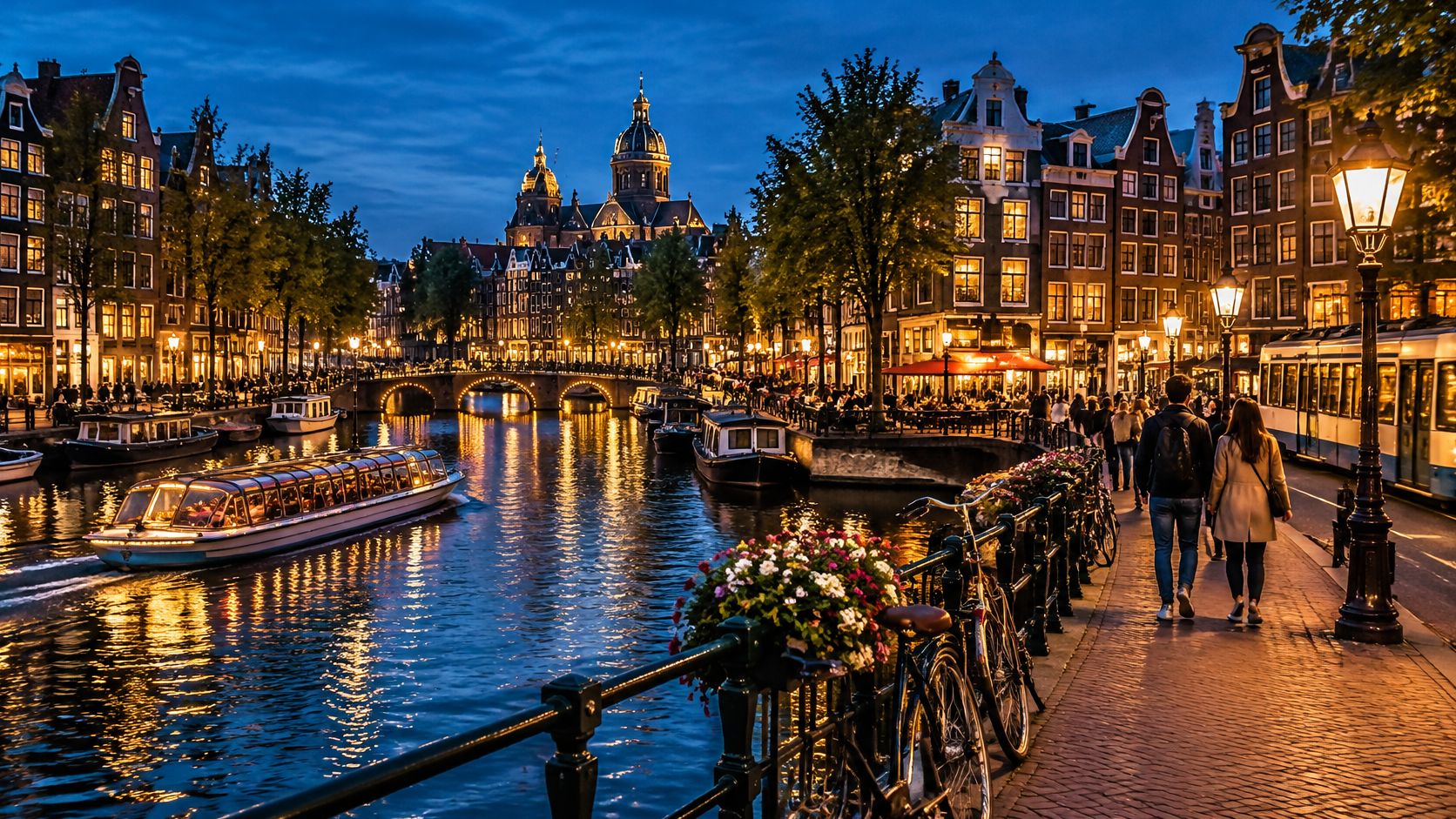
You step out of Amsterdam Centraal after dark and the city is already mid-evening. Trams move along the station front, canal bridges throw light on the water, and three crowds head in three different directions. One night can be a quiet terrace, a dense historic quarter, or a late club. It can also stall because a licence says the door is shut, or because an open can is illegal on that street.
Amsterdam night time is compact enough to walk and strict enough that wandering without a plan wastes the best hours. The useful questions are which district fits the mood, when that area closes, where a drink has to stay inside, how everyone gets home after midnight, and whether a host removes more friction than it adds.
Table of Contents
- Why Amsterdam Night Time Feels Different
- How Amsterdam Nightlife Became a City Institution
- Choosing Your Amsterdam Nightlife District
- Rules That Shape an Amsterdam Night Out
- Guided Pub Crawls and Canal Cruises Compared
- Staying Safe and Getting Home After Midnight
- Planning Your Amsterdam Night Time Step by Step
Why Amsterdam Night Time Feels Different
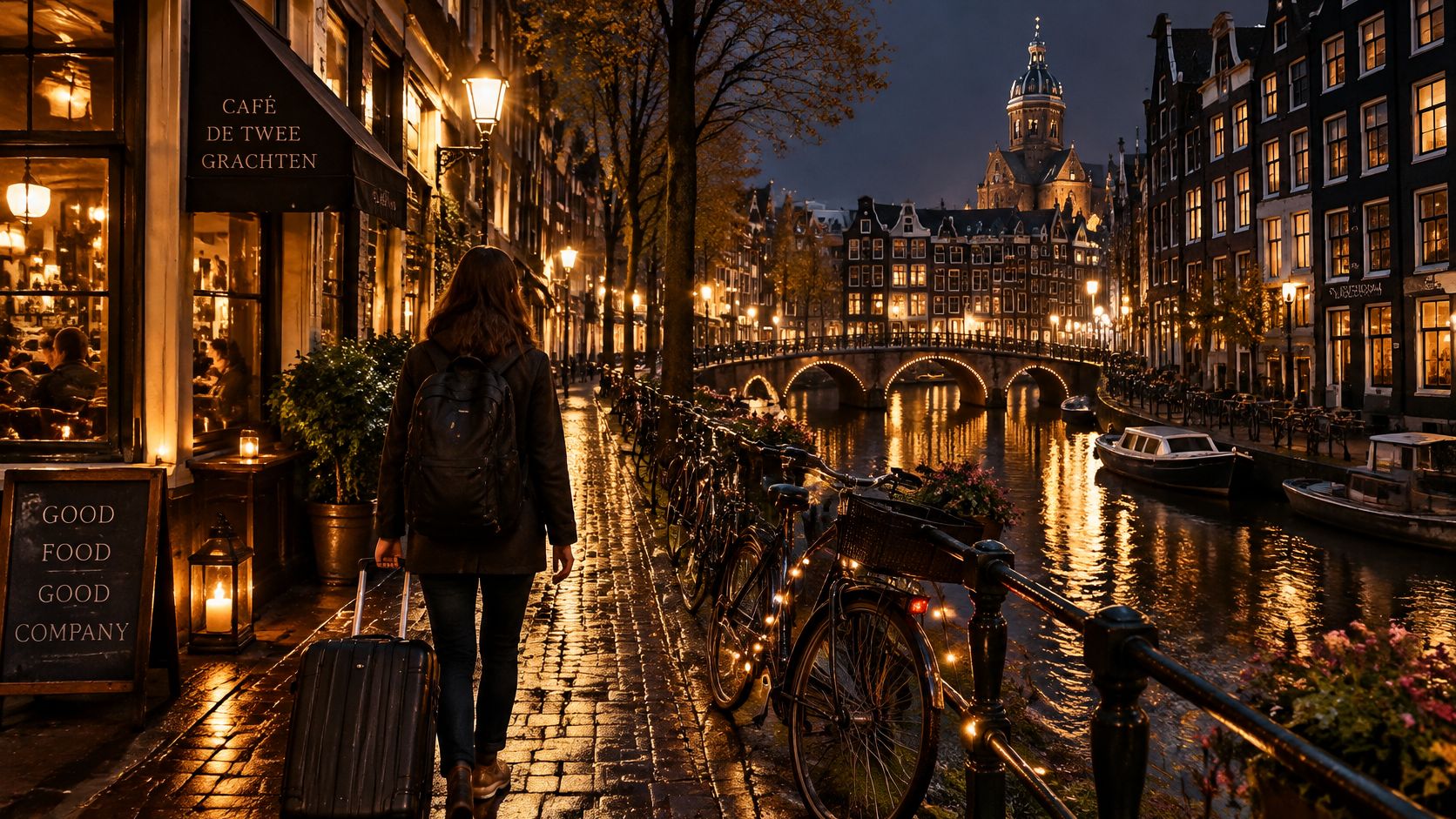
A first night often starts the same way. Bags are dropped, someone checks a map, and the group walks toward the brightest streets because they look obvious. Within twenty minutes the plan frays. One bar has a queue. Another has stopped admitting people. A friend wants to carry a beer between stops, and a sign at the corner says that bottle stays inside. Nobody agreed a meeting point if the group splits.
That friction is not bad luck. Amsterdam runs the night on zones and licences, not on one citywide closing hour. Ordinary bars, late venues, and clubs keep different clocks. The historic centre adds its own alcohol rules and, on the busiest streets, earlier weekend cut-offs. A workable night is a sequenced night: a base district, a last-entry time, a legal place to drink, and a way home that does not depend on a daytime tram.
What Usually Goes Wrong First
Walking without a last-entry time is the most common miss. A venue can look open from the street and still refuse new guests.
Treating every square as the same kind of night is the second. The historic centre, the dance-bar cluster, and the waterfront do not share a closing pattern or a crowd.
Leaving the ride home until the street is emptying is the third. Night buses and metros exist, but they are not the daytime tram network with the lights turned down.
Practical rule: Pick the district, the cut-off, and the meeting point before the first round, not after the group has split across two bridges.
The centre feels lively because so much night culture sits there, and it is managed because residents live above those same streets. Amsterdam's work on the visitor economy treats noise, public urination, and public drunkenness as problems of the hours after 22:00, which is why hosts, temporary closing limits, and extra cleaning show up in the Wallen, Rembrandtplein, and Leidseplein. A visitor who only collects bar names misses the part that decides whether the night works.
How Amsterdam Nightlife Became a City Institution
Night culture here is not a side street of the daytime city. Before the pandemic it already functioned as a large employment and visitor system, which is why later policy treated it as infrastructure rather than a loose set of bars.
An Atlas Research study of 2019 counted 541 night venues, including 38 nightclubs and 30 music venues. More than half of those venues sat in the city centre. The sector supported more than 5,000 jobs, reaching past performers and door staff into organisers and related services. Night culture drew an estimated 1.5 million visitors that year.
What the Money Actually Measured
Spending by visitors from outside the city was tied to an estimated €63 million in annual prosperity gains for Amsterdam. Broader visitor expenditure linked to night culture was estimated at €1.25 billion a year. Direct enjoyment by residents and visitors was valued at more than €22 million annually, with a further €22.9 million a year in option value, the value people place on having cultural amenities nearby.
Those figures explain the pressure a first-time visitor feels in the centre. The liveliest streets are also the ones carrying jobs, tourism, and neighbourhood life at the same hour. A plan that dumps a large group onto one square at closing time collides with that mix. A plan that moves people in smaller steps, and that knows when the centre thins out, fits the way the city is built.
Why 2021 Changed the Visitor's Job
Amsterdam formalised that view in 2021, as the first city in the Netherlands with a dedicated vision for night culture. The night-culture vision and its follow-through became an Implementation Agenda for 2023 to 2026 with 15 measures on space and regulation, sector representation, and financial support. The city allocated €1 million for implementation in that period, plus €1.2 million for a development programme aimed at young talent and people trying to organise or start nightlife businesses. Policy talk has included more 24-hour permits and raising the number of nights a business may extend its hours, from five to 12 times a year.
The same record notes that 56% of cultural venues and 65% of meeting places were concentrated in the city centre. That is the trade-off in one pair of shares. Central districts are the easiest nights to reach on foot, and they are the nights under the tightest crowd, noise, and licensing pressure. A smarter visit starts from that fact instead of treating regulation as a surprise at the door.
Choosing Your Amsterdam Nightlife District
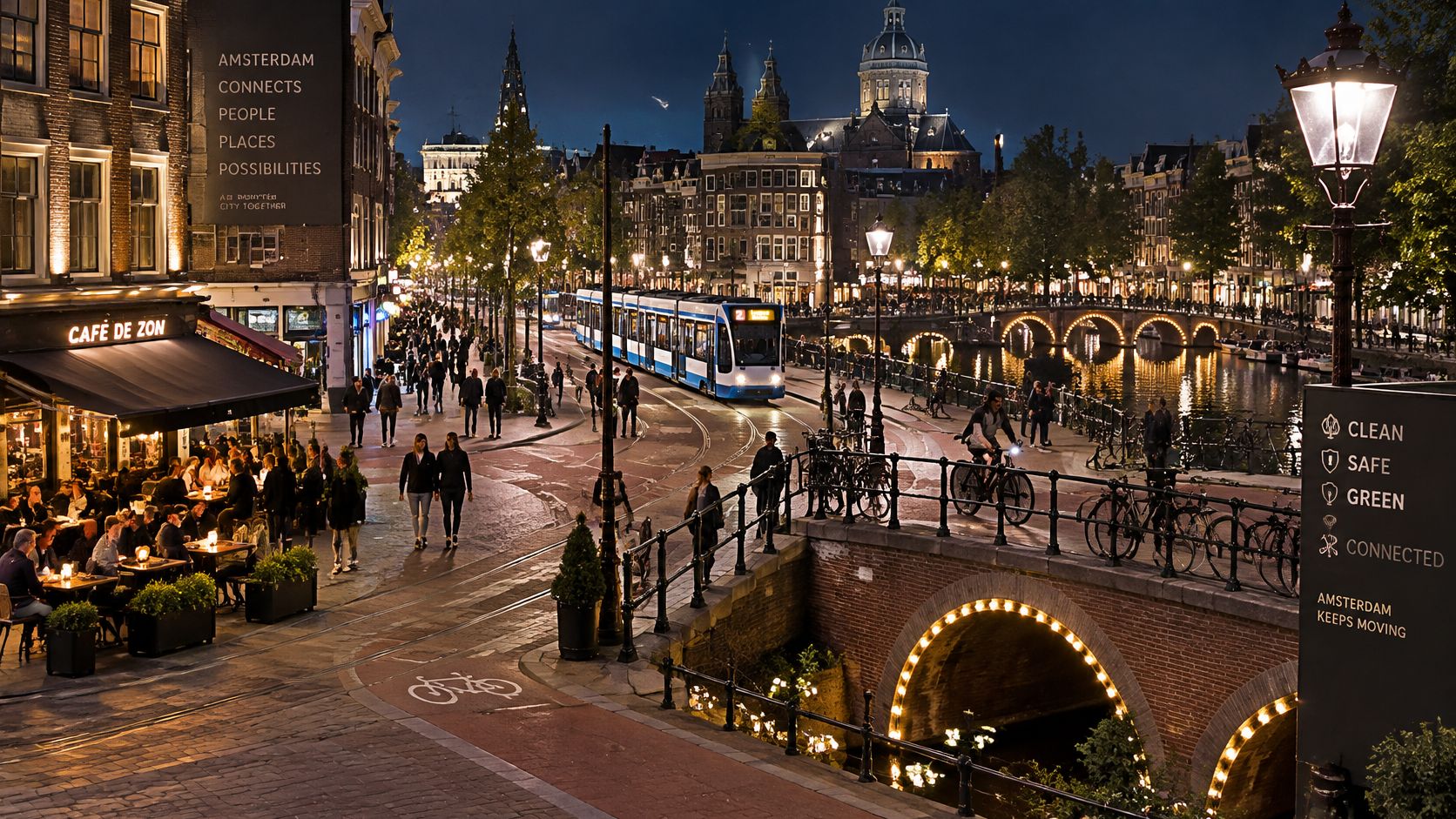
Three areas absorb most first-time nights: the Red Light District in De Wallen, Leidseplein, and the NDSM wharf across the IJ. They differ in density, in how late the doors stay useful, and in how the group gets back.
Red Light District
This is the dense historic centre, a short walk from Centraal, with neon, narrow streets, and a constant mix of residents, visitors, and people passing through. It suits a first night when the group wants atmosphere without a long transfer. It does not suit a plan built on staying out until club hours. Weekend bars and restaurants in the central area close earlier than many visitors expect, and new guests are cut off before the lights go out. The streets are also inside the historic no-alcohol zone, so a drink belongs on a licensed terrace, not in a hand on the bridge.
Leidseplein
Leidseplein is the dance-bar and club cluster. The square is busy, the surrounding streets hold later licences, and the night can run well past the centre's cut-off if the venues on the route are the late category. It fits groups that want dancing and a proper finale more than a wander through historic lanes. The trade-off is crowding at peak exit times, bicycle traffic around the square, and a longer walk or a night connection back toward Centraal. Pairing it with a look at how Amsterdam's nightlife areas differ saves a group from assuming one square's rules apply on the other side of the canal belt.
NDSM
NDSM is industrial waterfront: larger event spaces, fewer casual door-to-door bars, and a ferry instead of a five-minute walk. From Centraal, the purple F4 ferry reaches the wharf. The orange F7 from Pontsteiger takes about seven minutes. On weekend nights the black F5 night ferry runs continuously on a triangle linking Pontsteiger, Amsterdam Centraal, and NDSM, according to NDSM's own visitor directions. That ferry is a real late link for this area only. It is not a general night service for Leidseplein or the Wallen. NDSM works when the night is a specific event, not when the group wants to improvise three extra bars.
Amsterdam Nightlife Districts at a Glance
| District | Atmosphere | Closing Behaviour | Getting There and Back |
|---|---|---|---|
| Red Light District | Dense, historic, high foot traffic | Earliest weekend limits in the central streets | Walk from Centraal; keep the group off cycle lanes on the way out |
| Leidseplein | Dance bars and clubs around a busy square | Later licences are common, so the finale can run long | Tram or walk in; confirm a night bus or taxi point before the last venue |
| NDSM | Industrial wharf, event-led | Depends on the booked event, not on a bar-hop clock | F4 or F7 by day pattern; weekend nights use the F5 triangle |
Many visitors combine two districts, and that only works if the early district is the one with the early cut-off. Start in the Wallen, move toward Leidseplein before last admission in the centre, and do not bolt NDSM onto the same night unless the ferry time is already checked. Groups that care about what is in the glass, not only the postcode, can use the same habit they would use at home when they find quality craft beer pubs: read the room, order inside, and leave the street for walking.
Rules That Shape an Amsterdam Night Out
Closing time is a property of the licence, not of the neighbourhood slogan. A late-night plan that assumes every bar shares one hour will strand people outside a shuttered café while a club two streets away is still admitting guests.
Closing Times by Licence
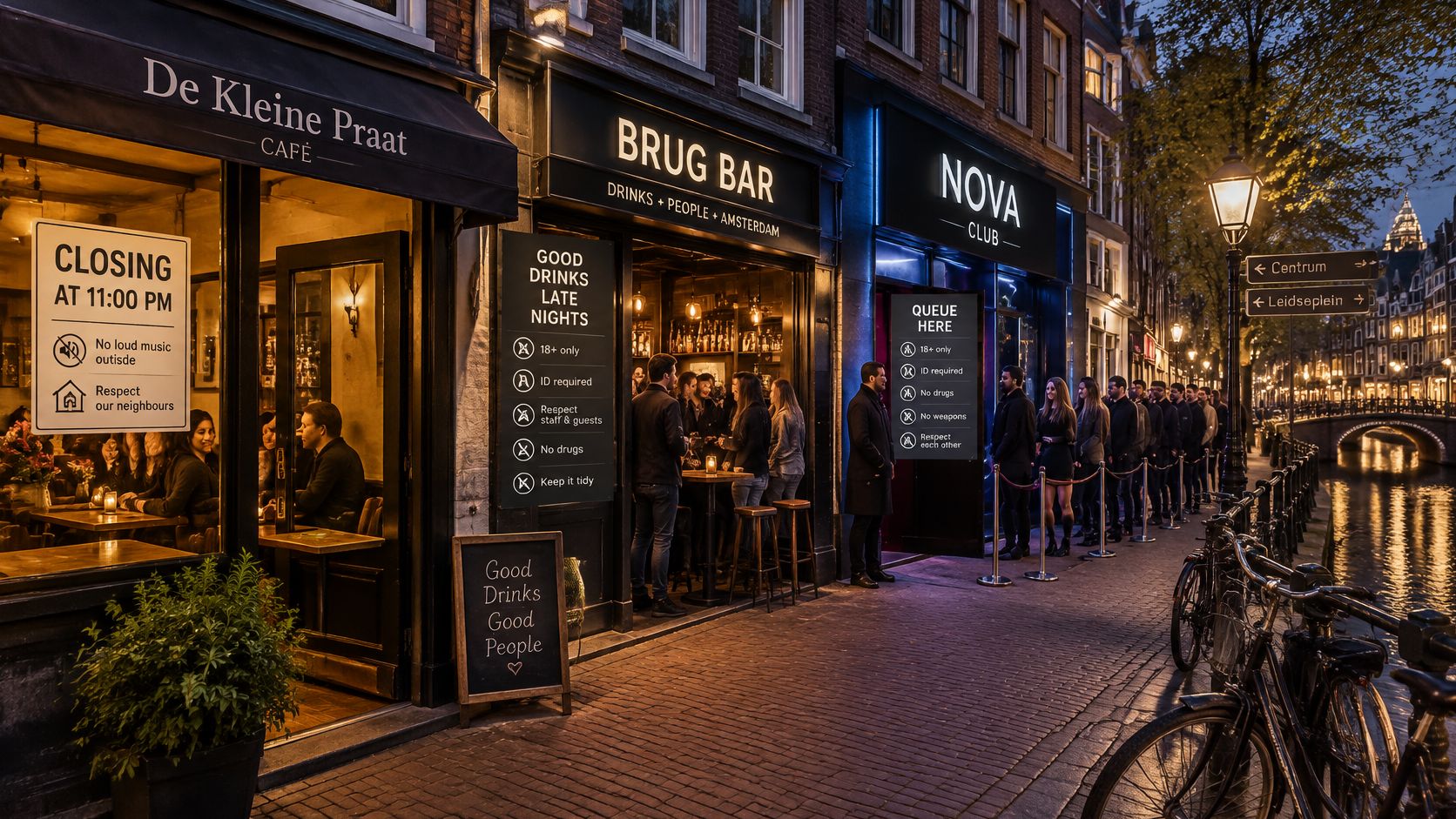
Amsterdam nightlife guidance on hours sorts the night like this.
- Ordinary cafés and bars close by 1:00 a.m. Sunday through Thursday and by 3:00 a.m. on Friday and Saturday.
- Designated late-night venues may run until 3:00 a.m. on weekdays and 4:00 a.m. at weekends.
- Nightclubs may stay open until 4:00 a.m. on weekdays and 5:00 a.m. at weekends.
Build the route backward from the venue type. If the group wants a weekday night past 1:00 a.m., the stops have to be late-licensed, not ordinary cafés that happen to look busy at 12:30.
The Red Light District Cut-Off
In the Red Light District, bars and restaurants in the central area must close at 2:00 a.m. on Friday and Saturday and must stop admitting new customers after 1:00 a.m. That restriction is stated as running until 1 April 2027. A group that arrives at 1:10 a.m. can find the street still lively and the door already shut to newcomers. The move that works is to be inside the last central venue before 1:00 a.m., or to leave the area for a later-licensed district before that cut-off. Waiting on the street to "see if they bend it" does not work.
No-Alcohol Zones
Public-alcohol rules are zone-based, not a single city ban. The municipality designates 42 no-alcohol zones, including the historic centre. There, drinking alcohol, or even carrying an open bottle, can, or glass, is prohibited. The zone rules put the historic centre between the IJ, Central Station, the Singel and Herengracht, extending toward Waterlooplein and the Oosterdok. That area includes the Red Light District, Dam Square, Damrak, and Nieuwmarkt.
Crossed-out-bottle signs mark the entrances. Drinks stay inside licensed venues or on their terraces. An open can on Damrak is not a grey area.
What does not work is buying a takeaway drink for the walk between bars in that zone, or finishing a beer on a bridge because the terrace felt crowded. What works is finishing the drink at the table, then walking. Outside the signed zones the rule changes, so the habit is to look for the sign rather than to guess from how busy the street feels.
Guided Pub Crawls and Canal Cruises Compared
Three formats cover most Amsterdam nights for visitors: an independent route, a hosted pub crawl, and a canal cruise. They solve different problems, and the wrong one wastes the short stay.
Going Out Alone
An independent night is the right call for a pair that already knows a venue, wants a long dinner first, or prefers to leave when the conversation fades. The friction is real for everyone else. Unfamiliar doors, separate cover charges, queues at the one club everyone named, and no shared plan when someone peels off. Meeting other travellers happens, but it is accidental. On a two-night city break, one bad queue can be the whole evening.
What a Hosted Crawl Changes
A hosted crawl replaces that improvisation with a fixed route, a person who knows which door is admitting guests, and a group that stays together between stops. Transactions move off the street: entries and a set of drinks are handled in the booking instead of at every bar.
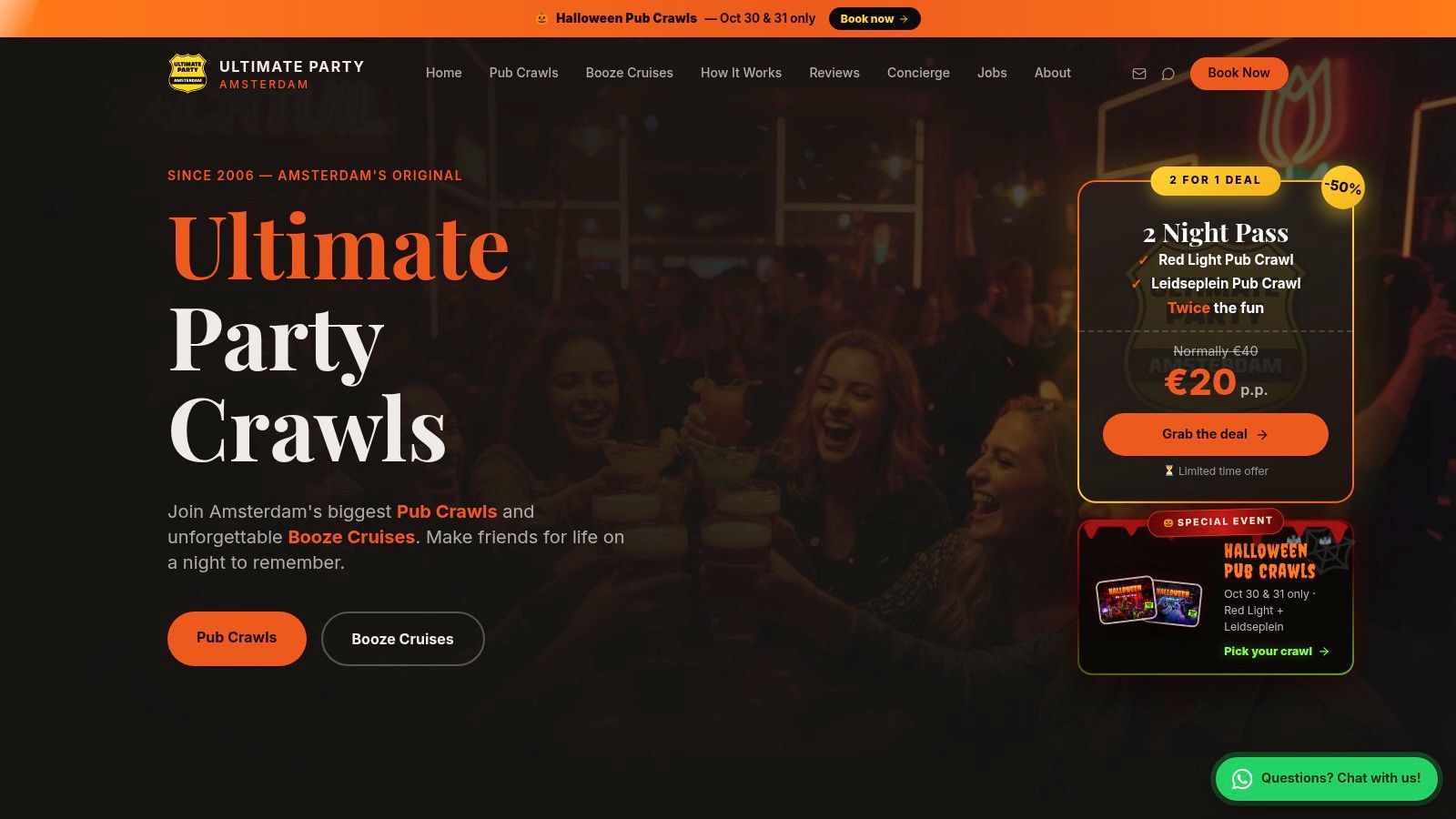
Ultimate Party Amsterdam, active in these districts since the mid-2000s, runs nightly Red Light District and Leidseplein pub crawls. Each route goes through six bars and clubs and includes six complimentary drinks or shots, venue cover charges, queue skipping, and drink discounts. The Wallen route uses bar games and ends in a club. The Leidseplein route focuses on dance bars and VIP entry at the closing club. A 2 Night Pub Crawl Pass bundles both routes for visitors who have two evenings and do not want to repeat the same streets. Pub crawls can be cancelled free of charge up to 24 hours before the night. That policy matters more than a glossy photo, because weather, a late flight, or a tired group is a normal Amsterdam problem.
Who it fits: solo travellers who want company without forcing it, student groups, and stag or hen parties that need one meeting point instead of twelve chat messages. Who should skip it: visitors who hate a set route, or anyone who wants a quiet terrace and an early night. The crawl does not remove personal responsibility. It does remove the hunt for the next legal, open door.
When the Boat Beats Another Bar
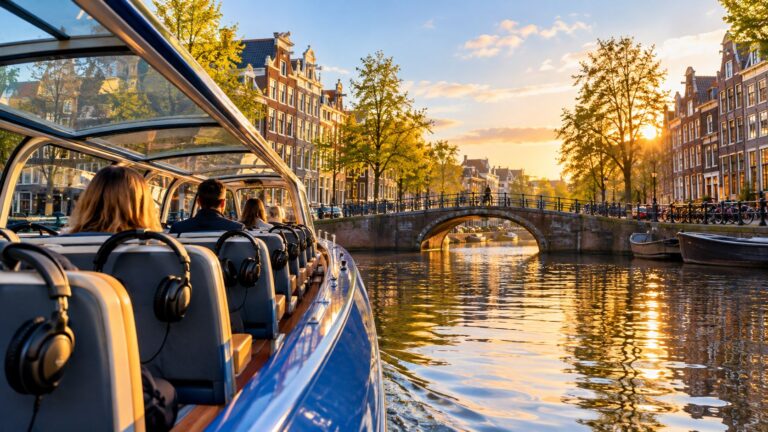
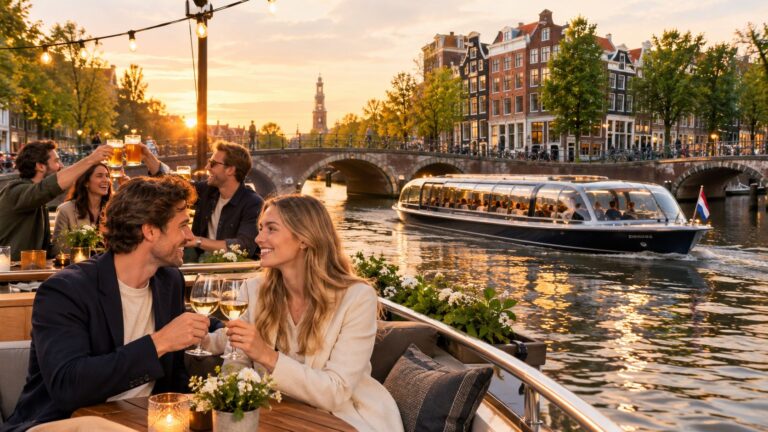
A canal cruise suits a group that wants one shared hour rather than six entrances. The shared booze cruise is a one-hour trip on an electric boat with unlimited beer, wine, and soft drinks. A private charter is 60 minutes on a luxury electric boat with an open Dutch bar, which is the cleaner option for a birthday or a team that does not want strangers in the photos. Electric boats keep the noise down on residential canals, which is the right trade against a louder party vessel in a city that already argues about night noise.
For private crawls, VIP tables, event tickets, restaurant reservations, and VIP transport, a nightlife concierge coordinates the pieces by email and WhatsApp. That is planning help, not a promise about every door in the city. Before booking any hosted night, check the date, the district, the cancellation window, and whether the group wants a social format. A cruise plus a late independent club can work. A crawl plus a same-night NDSM ferry usually does not, because the clocks fight each other.
Staying Safe and Getting Home After Midnight
Most trouble on an Amsterdam night is not inside the venue. It sits in the handoff from a private door to the street: the exit, the crossing, the canal edge, and the moment a large group tries to leave at once.
A TU Delft study of the nighttime economy found that safety strategies often focus on bars and clubs and neglect outdoor areas, where many incidents and perceived threats occur. Hosts earn their place in those outdoor minutes, not only at the bar. The same record describes crowd measures in busy nightlife areas: fewer bicycle conflicts, better taxi availability, less intrusive lighting, and longer closing spreads so departures do not hit the street in one wave. A reported evaluation associated those measures with a 20% decrease in alcohol-related violence and a 28% decrease in nuisance reports.
Moves That Reduce the Outdoor Risk
- Do not empty a large group at one time. Stagger the exit so the pavement and the cycle lane stay usable.
- Keep people off canal edges and out of cycle lanes. Those are the two places a cheerful group becomes a collision.
- Give meeting instructions discreetly. Shouting a rendezvous across a residential street is how a fun night becomes a nuisance call.
- Write down a simple incident habit before the night starts. Who holds the list of phone numbers, where the group reforms, and who walks an unwell friend to a staffed point.
A host on the pavement is most useful at the exit and the crossing, which is exactly when an independent group is looking at phones instead of at bikes.
The Ride After the Last Venue
GVB states that Amsterdam has five metro lines, 50, 51, 52, 53, and 54, and that buses also run at night. Availability still changes by route, stop, and night. Checking the specific night bus or metro before leaving beats assuming the daytime tram frequency is still there. "Everything is nearby" is true in distance and weak as a safety plan.
Official 2025 monitoring found perceived public-transport safety falling from an overall score of 7.4 to 6.6 at night, with only 50% of night travellers reporting that they felt safe. That drop matters for solo visitors, women, first-timers, and anyone unsteady on their feet. It does not mean the city is broadly unsafe after dark. It means the last mile needs a choice made while people are still sharp. A fuller read on street-level habits sits in this guide to whether Amsterdam feels safe at night.
If someone is separated or unwell, the group reforms at the agreed point, one sober person stays with them, and the rest do not scatter to "look around the block." A licensed taxi from a staffed rank beats a long walk along a canal when the person cannot walk straight. For Leidseplein and the Wallen, leave from a known corner, not from the middle of the crowd at the moment the doors open.
Planning Your Amsterdam Night Time Step by Step
Four decisions, in this order, beat a saved list of bar names.
- Pick the district for the mood and the clock. Wallen for a dense early night, Leidseplein when the finale should be late, NDSM only when the ferry is part of the plan.
- Apply the local rules before leaving the hotel. Licence category sets the hour. In the centre, weekend last admission and the 2:00 a.m. close arrive sooner than club hours elsewhere. Open drinks stay off the historic-centre streets.
- Choose the format. Independent if the group knows the doors. A hosted crawl if the value is the route, the entries, and staying together. A boat if one shared hour is enough.
- Lock the way home before the first drink. Night bus, metro, ferry, or taxi, plus a reunion point if someone fades.
Visitors who still want food or a show after the bars can scan late-night eats and entertainment beyond the bars so the night does not end in a closed kitchen. Hosting a room party before going out is a separate job: keep cocktail party menus and decor for the apartment, and keep the street for walking. For readers who want the route, the drinks, and the entry handled, nightly pub crawls and canal cruises can be booked directly, with free cancellation up to 24 hours on the crawls and concierge help by email and WhatsApp for private plans.
Ultimate Party Amsterdam runs nightly Red Light District and Leidseplein pub crawls, plus shared and private canal cruises, for visitors who want the route and the timing handled. Those nights follow the same constraints this guide covers: district clocks, legal drinks, and a planned way home. See the current routes and departure details at Ultimate Party Amsterdam.
🍻
Experience it Yourself
Skip the planning — join Amsterdam's biggest pub crawl and get 6 bars, free drinks and VIP club entry for €20.