You've just stepped off the tram at Centraal on a Saturday evening, and Amsterdam is already moving ahead without you. Groups are gathering near the canals, dinner tables are filling, and the first waves of visitors are drifting toward the same nightlife streets with no real plan. In Amsterdam nightlife Saturday, that gap between arriving and deciding is where the night usually goes wrong.
The city rewards people who understand timing, transport, and crowd flow. It punishes anyone who assumes a good night is just a matter of finding a bar and walking in. The Saturday scene is dense, international, and tightly managed, which means the right district, the right hour, and the right exit plan matter more than a long list of places to drink.
Table of Contents
- Why Saturday Night in Amsterdam Demands a Real Plan
- Choosing Between the Red Light District and Leidseplein
- A Realistic Saturday Evening Timeline From Dusk to Dawn
- Best Group Experiences for a Saturday Night Out
- Late-Night Transit and Safety Essentials
- Common Saturday Night Mistakes and How to Avoid Them
- Your Saturday Night Action Plan and Booking Tips
Why Saturday Night in Amsterdam Demands a Real Plan
Saturday night in Amsterdam doesn't feel casual for long. By early evening, the city's nightlife engine is already warm, and the late-night crowd hasn't even arrived yet. That matters because Amsterdam's night economy is built around a large, tourism-linked demand base, with more than 3 million unique visitors from outside Amsterdam coming specifically for nightlife each year and roughly €1.25 billion spent annually during those stays, according to the city's night culture paper and the linked study on nightlife value. The same source counted 541 night venues in 2019, including 38 nightclubs and 30 music venues. Amsterdam's night culture study
That scale creates a very specific Saturday problem. Everyone is aiming for the same few hours, the same handful of districts, and often the same stretch of streets. If a group arrives late, eats too slowly, or drifts without a meeting point, the night gets swallowed by queues, transit gaps, and door policy.
The night compresses fast
De Wallen, Amsterdam's most controlled nightlife district, shows how quickly footfall can change when policy shifts. Municipal cameras recorded 24% fewer visitors between midnight and 06.00 on weekends in May to August 2023 versus the same period in 2022, while crowding still peaked earlier, between 21.00 and 23.30. On Friday and Saturday evenings from 19.00 to 21.00, visitor numbers in 2023 were roughly the same as in 2022, and from 02.00 to 03.00 there were 30% fewer passers-by than the year before. Council information letter on De Wallen closing times
That pattern tells the story. Saturday nightlife isn't spread evenly across the night, it's concentrated in a narrow window when the district is full but still workable. Arrive too early and the energy feels flat. Arrive too late and the room is already packed, or the door has started turning people away.
Practical rule: Saturday in Amsterdam is won by people who arrive before the rush, not people who hope to outlast it.
A structured night also helps with the mundane parts that become painful after dark. Amsterdam's late-night mobility shifts from regular trams and metro to night bus service, and the city's noise rules shape where the party can breathe and where it gets squeezed indoors. That's why a good plan is less about chasing “the best bar” and more about understanding how the night flows.
Choosing Between the Red Light District and Leidseplein
Amsterdam's Saturday nightlife usually pulls people toward two main centers, and the wrong choice can waste the best part of the evening. The Red Light District, often called De Wallen, delivers the most concentrated, high-energy stretch of bars, neon, and late-night foot traffic. Leidseplein feels broader and a little more varied, with more live music, cocktail bars, and club options clustered around a different crowd rhythm.
What each district actually feels like
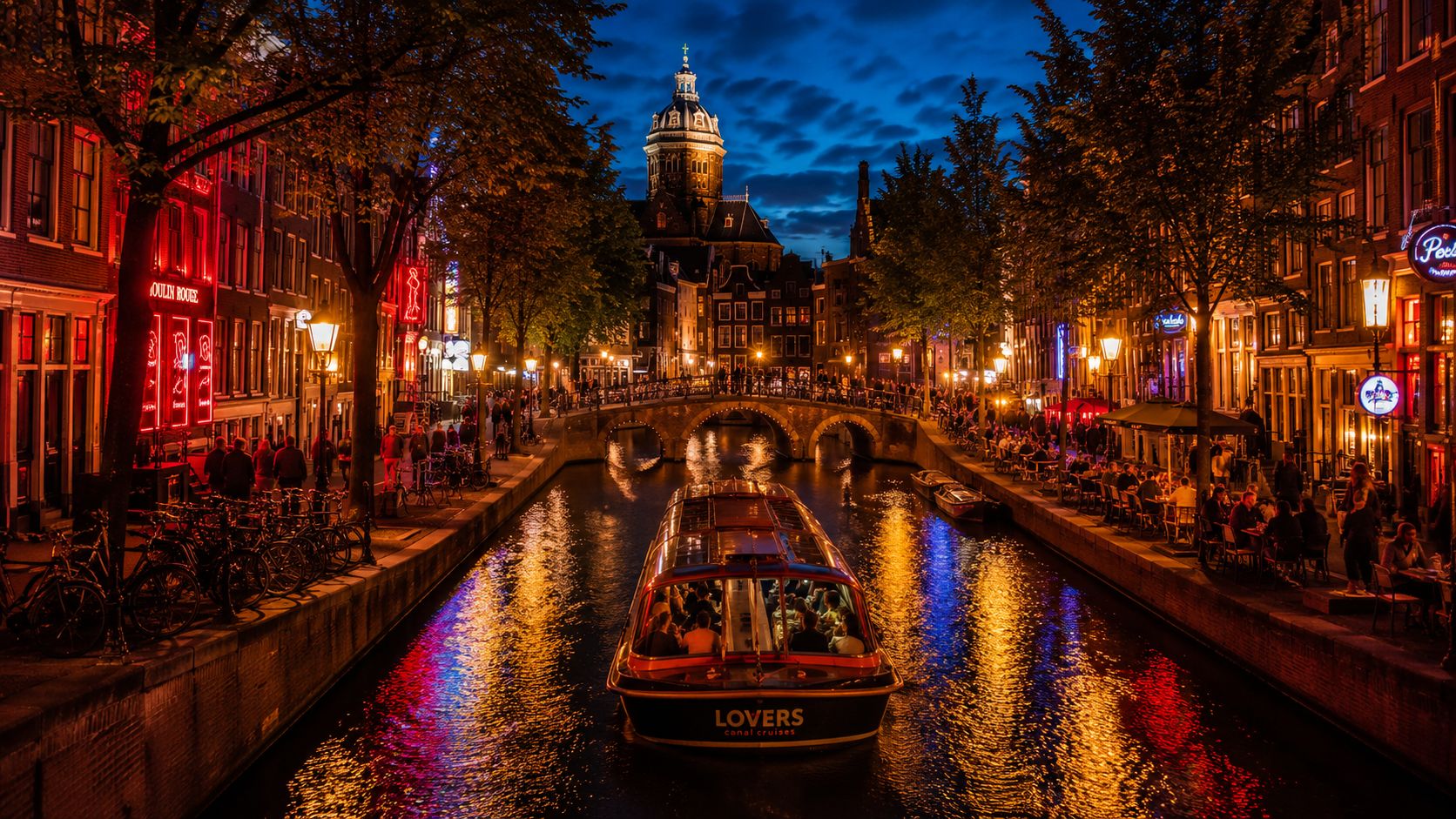
De Wallen tends to draw younger international visitors, stag and hen groups, and first-timers who want the full Amsterdam-after-dark experience in a compact area. Everything happens close together, so a group can move from one spot to the next without losing momentum. That density is a gift if the group wants spectacle and easy coordination, but it also means noise, congestion, and a lot of people making the same impulsive decisions at the same time.
Leidseplein suits groups that want a slightly less frantic pace and more flexibility. It's the better fit for people who want to mix drinks with live music, or for groups that don't want the whole night to revolve around one very specific kind of street atmosphere. For many travelers, it feels easier to manage once the night gets late because the district naturally supports a looser bar-to-club flow.
| Factor | Red Light District (De Wallen) | Leidseplein |
|---|---|---|
| Overall energy | Dense, loud, highly concentrated | Mixed, social, more flexible |
| Best for | First-time visitors, stag and hen groups, short-stay groups | Mixed friend groups, music fans, bar-hoppers |
| Venue style | Small bars, high foot traffic, close spacing | Live music, cocktail bars, clubs |
| Movement | Easy on foot within a tight area | Still walkable, but a little more spread out |
| Crowd feel | International, fast-moving, intense | Broader mix, less single-minded |
Good nights happen inside one district first. Cross-city wandering usually burns time and raises the odds that half the group gets separated.
Trying to use both districts in one Saturday often sounds smarter than it is. The move between them is usually where the night starts leaking time, especially once the streets get crowded and people begin to split for toilets, snacks, or “just one more drink.” A group that wants to hop should do it with a purpose, not as a vague option.
For people who want a hosted Leidseplein route, a Leidenplein crawl route is a practical way to stay inside one area without losing pace to indecision. That kind of structure matters more on Saturdays than on quieter nights because door pressure and congestion rise together.
A Realistic Saturday Evening Timeline From Dusk to Dawn
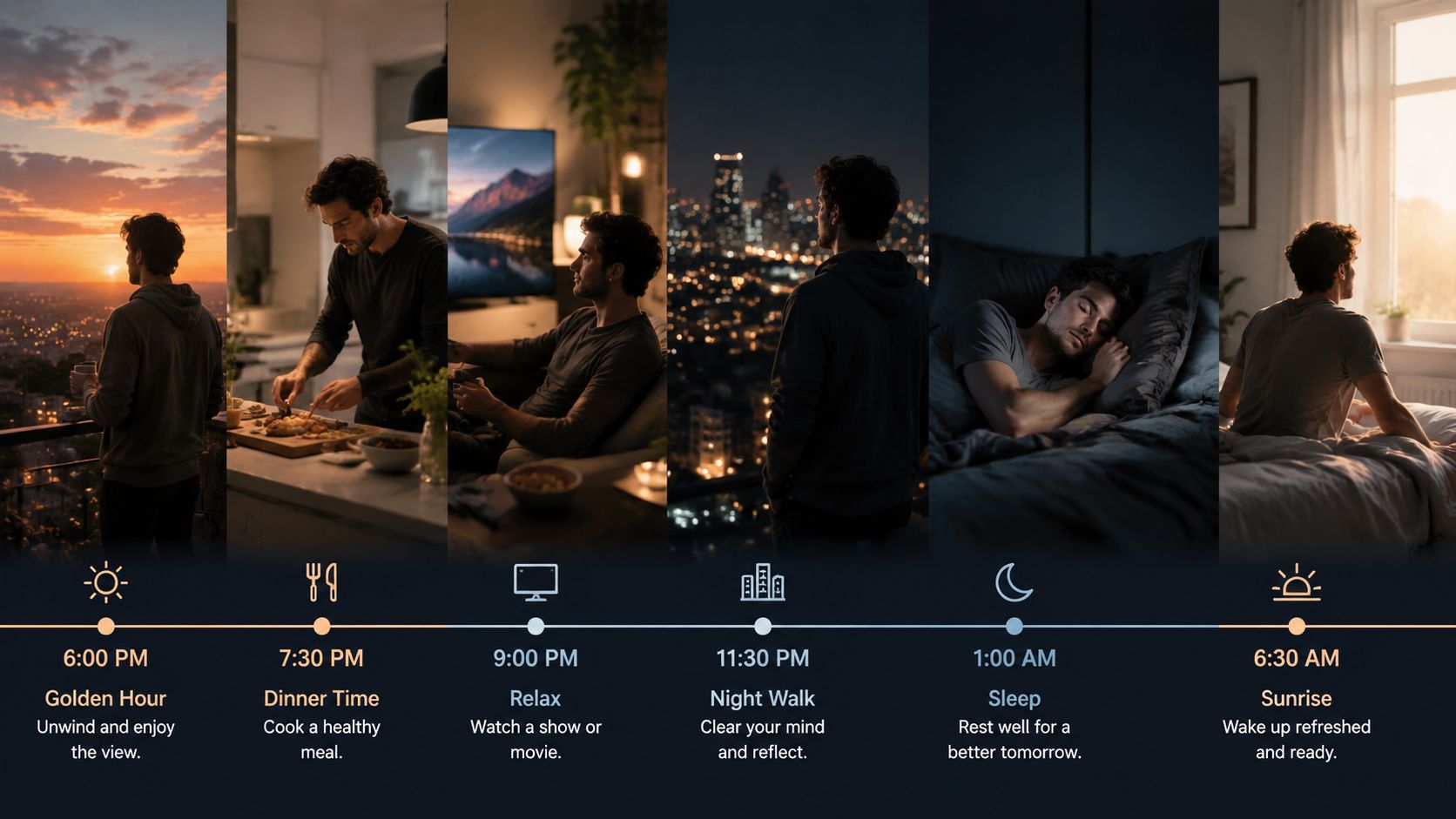
A Saturday night in Amsterdam works best when the first move happens before people feel rushed. By 6pm, the city is still flexible. Brown cafés have room, bartenders can still talk, and a group can set the pace instead of reacting to it.
6pm to 8pm, start early or pay for it later
This is the window for dinner, an initial drink, and deciding which district gets the night. It's the calmest part of the evening, and that calm is valuable because it gives a group time to settle payment, confirm the meeting point, and stop the first round from becoming the only round. Anyone sorting out splitting a bar tab fairly before the night starts will have a much smoother time once the group begins moving.
The main mistake here is treating dinner like a flexible afterthought. On a busy Saturday, late dining can collapse the whole schedule, because the later the meal starts, the more likely the next venue is already crowded by the time the group arrives. A group that wants clubbing later should eat early and keep the first stop efficient.
8pm to 10pm, the merge begins
This is the transition from “out for the evening” to “in the nightlife queue.” Dinner crowds merge with pre-club drinkers, and streets in both main districts begin to thicken. This is a good time to arrive at the first real nightlife stop, because the room is active but not yet at peak pressure.
A group that waits until the end of this window to make a decision usually loses control. Someone wants a second dinner stop, someone else needs a smoke, and suddenly the best venues are entering their busiest phase without the group being inside them.
10pm to midnight, the saturation point
This is the section of the night where patience gets expensive. Popular venues can feel fully loaded, and arriving after 11pm on a Saturday often means a long wait or no entry at all. The city's own nightlife guidance notes that parties can get busy around 03.00, and on weekender events they can run until 05.00 to 09.00, which is useful for late planning but not helpful if the group still hasn't committed to a first venue. Amsterdam's local nightlife guide
If the group wants a club, this is the hour to be moving toward it, not debating it.
Midnight to 2am, the handoff to late-night mode
This is when the night separates into two tracks. One track heads to clubs and late bars, the other starts looking for food, transport, or the easiest route home. Amsterdam's night buses on Friday and Saturday nights run from roughly 00.30 to 07.00, so the city is still moving, but no longer with the same frictionless ease of earlier in the evening. Amsterdam's local nightlife guide
2am to 4am, where bad planning shows
By this point, the crowd thins in some areas and intensifies in others. Night buses become the default for many travelers, and the city's transfer points feel slower because everyone is trying to leave at once. A group that already knows where it's sleeping will move cleanly. A group that still hasn't chosen a final area usually ends up standing in the wrong place, hungry and tired.
Best Group Experiences for a Saturday Night Out
Saturday is the easiest night to make a group plan work, because the city's social formats are already built around it. The two most practical structures are a hosted pub crawl and a canal booze cruise, and they serve different moods. One is about momentum on land, the other about starting the night in a contained, scenic way before heading out later.
Pub crawl or boat first
A pub crawl works well for solo travelers, small friend groups, and anyone who wants instant social structure without spending half the night deciding where to go next. The format usually keeps people inside a tight route, which is exactly what helps on a Saturday when queues and crowding can stall a group that tries to freestyle the whole evening. Ultimate Party Amsterdam runs hosted crawls in Amsterdam, including a Leidseplein Pub Crawl and a Red Light District route, so the basic model is straightforward, a guide, a sequence of venues, and less friction at the doors.
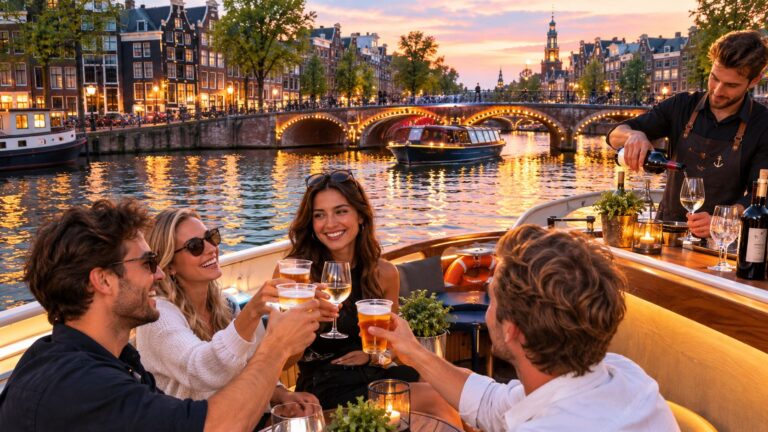
A booze cruise suits birthdays, bachelor parties, and friend groups that want a more controlled start. The canal setting gives the group time to get organized before street-level nightlife begins, which is especially useful when people arrive from different flights, hotels, or train times. It also keeps the group together at the exact moment when Saturday plans tend to fragment.
| Factor | Pub Crawl | Booze Cruise |
|---|---|---|
| Social feel | Fast, interactive, group-heavy | Contained, relaxed, celebratory |
| Best for | Solo travelers, mixed friend groups | Birthdays, bachelor and hen groups |
| Main advantage | Guided momentum and venue flow | Easy start, no street-level wandering |
| Main trade-off | Less control over each stop | Less immediate nightlife variety |
| Best use case | A night built around bars and clubs | A night that starts scenic and ends on land |
A shared canal option can also make sense when the group wants an easier first hour before committing to the club scene. Ultimate Party Amsterdam's shared booze cruise fits that style of night because it gives the group a fixed starting point instead of asking everyone to coordinate their own arrival.
Best fit test: if the group wants conversation and easy bonding, start on the water. If it wants volume, movement, and new people, start on foot.
The important part is matching the format to the group's energy. A loud, high-maintenance group without a clear plan usually benefits from a hosted crawl. A group celebrating something specific often prefers the cruise first, then land-based venues after.
Late-Night Transit and Safety Essentials
After midnight, Amsterdam changes pace. Regular trams and metro service give way to night buses on Saturdays, and the city gets much more sensitive to where people are standing once clubs start emptying out.
How to leave without getting stuck
The night bus service on Friday and Saturday runs roughly every 60 minutes on most lines, with some routes every 30 minutes, so missing one can turn a short exit into a long wait. The congestion around Centraal Station and the central nightlife districts is easy to predict. Set the homeward route before the last drink. Amsterdam night transport guide
Walking is often the simplest option if the accommodation is close and the route is well lit. Leidseplein works well for groups staying nearby, since the last stretch can be done on foot without taxis or a long wait. From the Red Light District, keep the route direct and stay off the canal edges if the group has been drinking.
Safety habits that matter
The late-night mistakes are usually practical. Phones get left on tables, groups split while looking for food, and tired visitors drift too close to canals after a few drinks. Busy central streets also attract pushy touts, which can distract a group that is already ready to spend.
Stay on the brightest streets, keep the next stop visible, and do not turn a short walk into a wandering search.
If you want a broader check on common risks before heading out, this Amsterdam safety guide is useful background. For the night itself, the main point is simpler: decide where you are going next before the crowd and noise take over.
Amsterdam also regulates nightlife tightly. Venues with extended opening hours can stay open until 03.00 on Friday and Saturday nights, and in some cases until 05.00, so closing times vary by permit rather than following one fixed rule. Amsterdam noise exemption policy That flexibility helps the night stay alive, but it also means groups should check the last move before the bar gets chaotic.
The drinking age is 18, and venues are required to check identification before serving alcohol. Keep ID ready on Saturday, especially if the group includes younger travelers or mixed ages. Amsterdam nightlife age information
Common Saturday Night Mistakes and How to Avoid Them
Most Saturday nights in Amsterdam don't fail because the city is hard to enjoy. They fail because visitors make the same avoidable errors and only notice once the night is already half gone. The good news is that these mistakes are predictable, which means they're easy to sidestep.
The five traps that ruin momentum
Arriving too late for clubs: Turning up after 11:30pm without a plan often means a queue, and sometimes no entry at all. The safer move is to arrive while the room is still filling, not after it has already turned selective.
Eating dinner too late: A late meal drags the rest of the night behind it. A group that eats after 9pm often finds itself choosing between a rushed meal and a missed first venue.
Assuming every bar closes late: Amsterdam's closing times vary sharply by venue type and permit, so a bar that feels lively at 1am may still shut much earlier than a nearby club. Checking the district's pattern before leaving the hotel avoids that surprise.
Letting the group split without a reunion point: Once people scatter for a smoke, a toilet break, or a different drink, the night gets harder to recover. One clear fallback point is far more useful than a vague “we'll find each other.”
Ignoring payment friction: Card use is common, but Saturday nights still move faster when the group carries some cash for small purchases or quick fixes. That matters most when the crowd is high and everyone is trying to leave at once.
What experienced hosts do differently
They front-load decisions. Dinner comes early, the first district gets chosen before the drinks start, and the final meeting point gets agreed before anyone disappears into the crowd. That sounds simple because it is simple, and Saturday night rewards simple plans.
A group that knows where it's going can spend the night enjoying Amsterdam instead of negotiating with it. The city's nightlife is entertaining, but it's also structured, and the structure is easiest to work with before midnight, not after.
Your Saturday Night Action Plan and Booking Tips
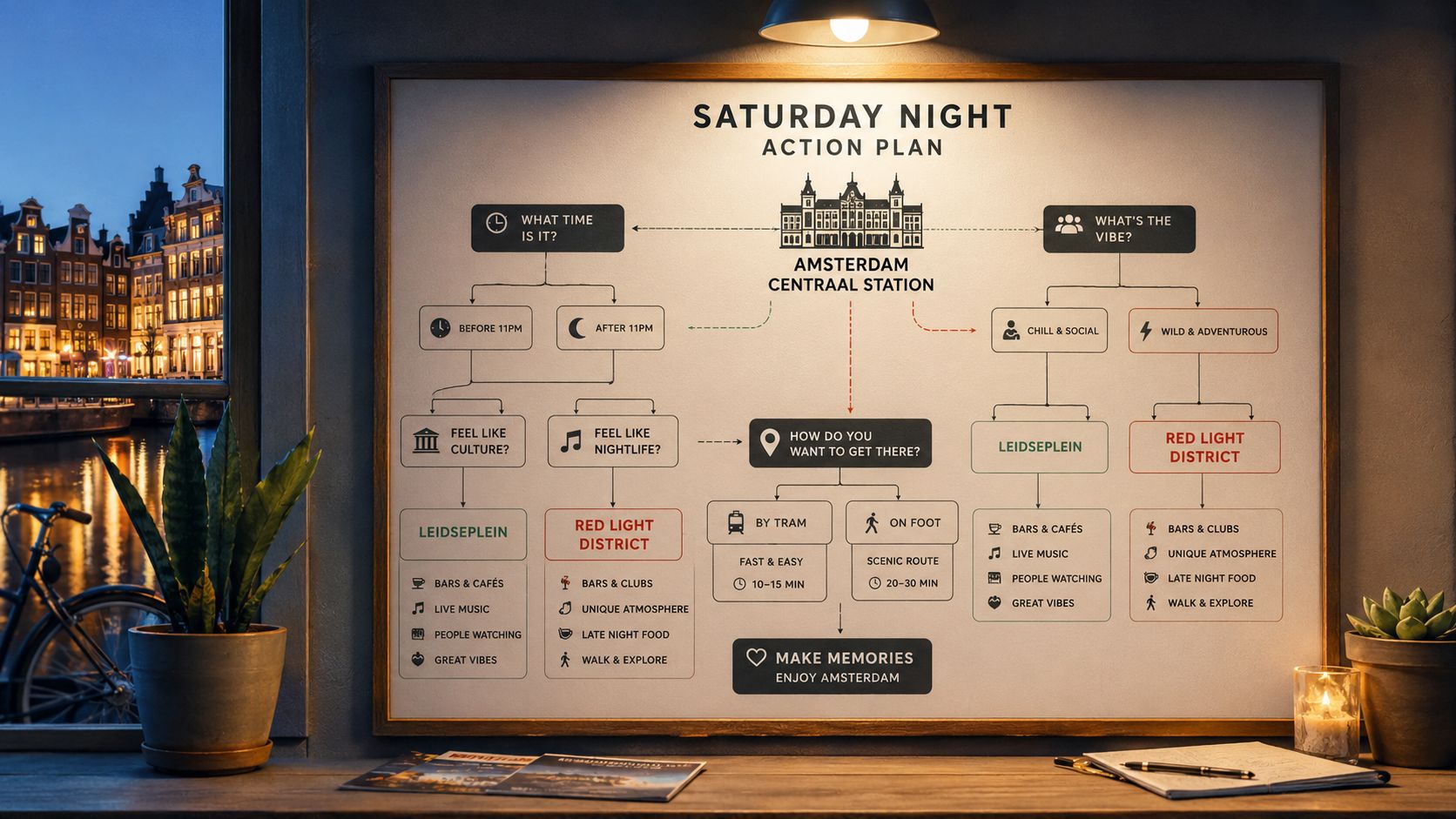
The fastest decision is the right one. If the group wants raw energy, neon, and a tight walking radius, commit to the Red Light District. If it wants live music, bar-hopping, and a slightly broader crowd mix, choose Leidseplein and stay there for the night.
A simple booking checklist
- Book pub crawls early: Saturday spots are easier to secure a few days ahead, especially for groups that want a hosted route and less door friction.
- Reserve boat slots ahead of time: Canal departures are most convenient when they're locked in before the weekend starts, because the easier time slots go first.
- Set the first venue by afternoon: A Saturday night works better when the group has a first stop before leaving the hotel.
- Save the accommodation address offline: Late at night, battery life and signal both become unreliable at the wrong moment.
- Load transit before midnight: Pre-load an OV-chipkaart or sort out the night-bus option before the last rush begins.
A practical Saturday flow looks like this. Leave the hotel around 6:30pm, eat early, reach the first district by 8pm, and make the next move before 10:30pm. After that, the city gets less forgiving, and the night rewards anyone who already knows where the final stop is.
For travelers who want a hosted route, a canal start, or help shaping a group night without wasting time on logistics, Ultimate Party Amsterdam arranges guided pub crawls, boat parties, and nightlife coordination in the city's busiest districts. That's the simplest way to turn a Saturday in Amsterdam from a loose idea into a night with actual momentum.
🍻
Experience it Yourself
Skip the planning — join Amsterdam's biggest pub crawl and get 6 bars, free drinks and VIP club entry for €20.