
You've got a group landing in Amsterdam with a short list that sounds simple on paper, then turns messy the second everyone starts texting. One person wants the Red Light District, another wants a canal cruise, somebody insists on a proper dinner first, and the person in charge is already hunting through tabs, maps, and reservation pages before the plane has even touched down. That's the moment a concierge service stops being an abstract luxury and starts looking like relief.

A good way to think about it is simple. A concierge takes the pile of moving parts, venues, transport, timing, tickets, and special requests, then turns them into one coordinated night. For anyone planning a multi-stop trip, the guide for multi-day tour operators is a useful reference point because it shows how much coordination sits behind a smooth guest experience. And if you're mapping an Amsterdam celebration specifically, the practical details in this guide to planning the perfect Amsterdam bachelorette party make the logistics problem very real.
Table of Contents
- A Friday Night That Needed a Concierge
- The Core Role of a Concierge Service
- Key Services a Nightlife Concierge Provides
- How Booking and Communication Actually Work
- Use Cases That Fit Amsterdam Group Travel
- Benefits That Make the Service Worth It
- Common Misconceptions and How to Book
A Friday Night That Needed a Concierge
The group landed at Amsterdam Centraal with one evening already half-decided and half-chaotic. They wanted a quick drink near the canal, a solid dinner, a bit of Red Light District energy, and one club where they wouldn't spend half the night standing in line wondering if they were in the right place. Nobody wanted to be the person translating venue rules, checking dress codes, or juggling five different booking confirmations while everyone else was already late.
That's the kind of booking where a concierge earns its keep. In hospitality and travel, the role is a single point of contact that handles reservations, transport, event access, and disruption recovery instead of making guests chase multiple vendors themselves. In practice, that matters because concierge requests often pile up fast, one industry source says concierges handle an average of 15 to 20 unique requests per day and the most common requests are restaurant reservations (78%), travel planning (65%), and event tickets (52%) (concierge industry statistics).
A nightlife night out in Amsterdam creates the same pressure in miniature. One person needs a table, another wants a boat, a third wants to know if the venue even takes groups, and the rest just want the night to flow. A concierge doesn't just hand over options, it reduces the number of decisions the group has to make while the clock is ticking.
If the night is a birthday, stag, or hen booking, the difference is even sharper because the planning no longer lives in one chat thread. The Ultimate Party Amsterdam private events page shows how much smoother a coordinated format can feel when the pieces are already bundled around the event itself.
Practical rule: if the plan involves more than one venue, one transport leg, or one group decision point, a concierge is usually doing more than a booking site can do.
The Core Role of a Concierge Service
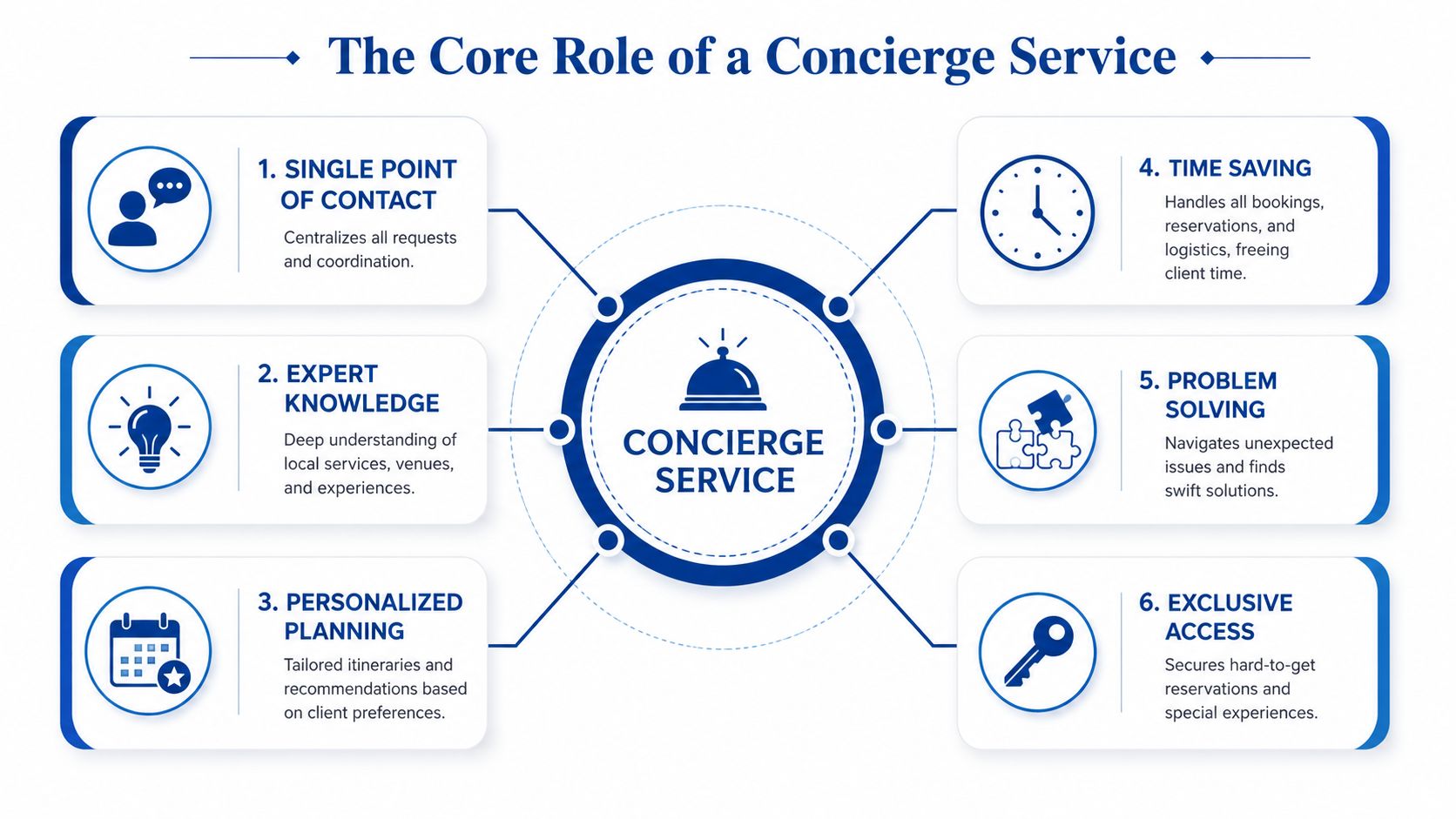
A concierge service is not just a recommendation engine. It is a high-touch orchestration layer that takes the first request, coordinates the moving parts, and stays accountable until the plan is delivered. In hotel and travel settings, that can mean securing sold-out reservations, arranging private transport, or recovering a night when a delay, cancellation, or venue change threatens the whole plan.
Why a single point of contact matters
The main job is ownership. A booking site gives you a confirmation. A concierge takes the confirmation, checks the details, talks to the venue or driver, and handles the part that usually breaks when a group's plans change at the last minute. That's also why the role feels different from DIY group chat planning, where everyone has information but nobody has responsibility.
In IT-oriented deployments, the same logic shows up in a more technical way, where concierge support is often built around the client's structure and can include on-site or hybrid staff embedded in the environment. That model is designed to reduce handoff latency and increase first-contact resolution because the support team already understands local workflows and systems (concierge IT support).
How it differs from generic booking tools
Booking tools are useful when the plan is fixed. They're weaker when the plan depends on judgment, timing, or recovery. A concierge can triage requests, coordinate vendors, and manage end-to-end fulfillment, which is why the service is often described as a human-led control point rather than a self-serve catalog.
For companies comparing service models, it helps to look at broader travel coordination frameworks too. If you need a business-facing example of organized travel support, this page on corporate travel solutions shows how structured coordination differs from simple booking.
What the buyer actually gets
Value isn't a mystery; it's accountability. One person owns the plan, one person hears about the change, and one person solves the problem. That's what makes concierge service useful for guests who don't want to coordinate suppliers, and for hosts who don't want to be on duty all night.
Key Services a Nightlife Concierge Provides
A nightlife concierge is basically the person who turns a wishlist into a route that works on the night. In Amsterdam, that often means fitting together bar stops, a dinner booking, a cruise, a table, and transport in a city where timing matters and groups can lose momentum fast.
Venue choices, tables, tickets, transport
The first layer is venue curation and route planning. For a Red Light District crawl, that might mean choosing bars that fit a group's energy, then spacing them so nobody spends the night wandering. For a Leidseplein night, it could mean selecting venues with the right music, crowd, and closing sequence. If you want a neighborhood-level view of where nights out usually cluster, the Amsterdam nightlife areas guide helps frame why route planning matters.
The next layer is access. That can mean VIP club entry, queue skipping, or a table booking so the group has a home base instead of hovering at the bar. For bigger nights, it can also mean event tickets or arranging the transport that gets people between venues without breaking the rhythm of the evening. The service is less about luxury as a label and more about removing friction where groups usually get stuck.
How one night gets assembled
A typical Amsterdam example might look like this:
- Dinner first. A restaurant reservation keeps the group from starting late or splitting up to find food.
- A cruise or pre-drink stop. A private canal boat or hosted bar stop creates a shared start point.
- The main club. A table or hosted entry prevents the night from dying at the door.
- Transport home. A driver or arranged pickup keeps the last leg simple.
That combination is why concierge work often overlaps with event planning. It's not a list of services dropped into a chat, it's a chain of decisions that all have to hold together.
When a concierge is doing the job well, the group doesn't keep asking who's handling what. The answers are already built into the plan.
The same idea applies whether the night is for friends, a birthday, or a corporate group. Ultimate Party Amsterdam also offers a concierge service for private arrangements, which is one example of how nightlife coordination can sit alongside crawls and cruises without forcing the host to manage each supplier separately.
How Booking and Communication Actually Work
Most first-time buyers assume concierge booking is complicated. In reality, it usually starts with a short message and a few key details. The good services make it easy to say what you want without turning the first contact into a project brief.
The normal flow from message to night out
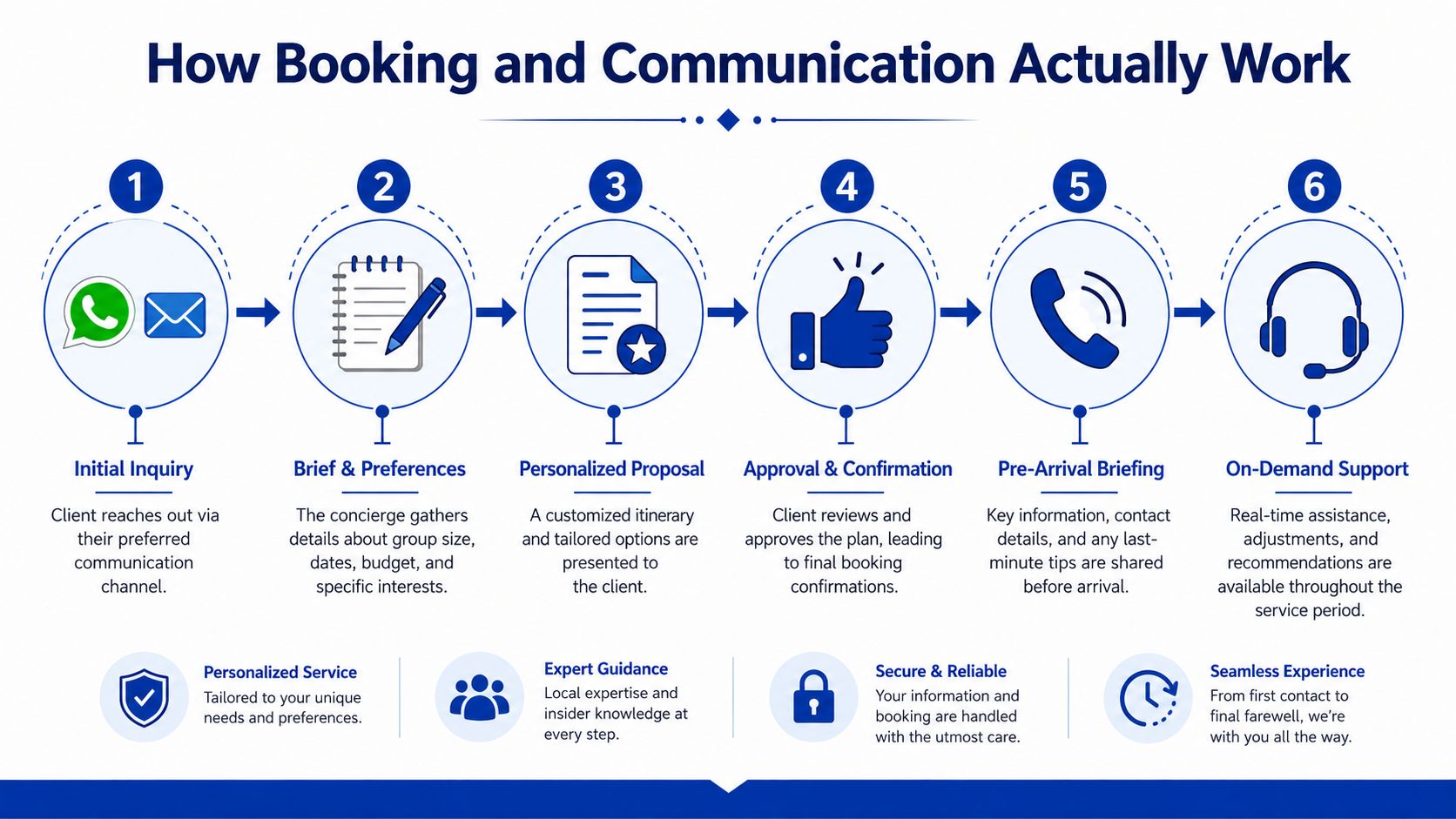
The first step is a simple inquiry through WhatsApp or email. The concierge asks for group size, dates, the kind of night you want, and anything that matters for logistics, like whether the group needs a private boat, a club table, or dinner before the main event. After that, you get options rather than a blank yes or no.
The important difference is that the proposal should already be customized. A generic reseller can send tickets. A concierge should be able to explain what fits the group, what doesn't, and what happens if the plan changes. That's especially useful for nightlife bookings where guest counts shift, arrival times move, or one part of the evening runs long.
What to look for before you pay
A real concierge feels human on both sides of the transaction. You want a live contact, clear pricing, and a way to adjust the plan without starting over. In technical service settings, concierge operations can even include monitoring interfaces, SSL certificates, logs, queues, and services, which shows how much of the work sits behind the scenes, not just in the booking message (concierge service center).
That kind of control is what gives the night stability. If the venue changes, the transport changes. If the headcount changes, the table plan changes. If something falls through, one contact absorbs the problem instead of sending everyone back into the group chat.
Use Cases That Fit Amsterdam Group Travel
Different groups need different kinds of help, and Amsterdam nightlife makes that obvious very quickly. A solo traveler wants a social night without planning every stop. A stag or hen group wants a fixed schedule and fewer moving parts. A couple or small friend group often wants one polished highlight rather than a packed itinerary. Corporate teams and birthday groups usually care about private space, timing, and a clean handoff between experiences.
Which format fits which group
For a short city break, a hosted crawl or bundled pass makes more sense than trying to book each venue separately. A group with only one or two nights to spare usually benefits from something structured, because the night has to work first time. That's where a 2 Night Pub Crawl Pass can make sense, since it covers more than one evening without asking the group to rebuild the plan from scratch.
For birthdays or private celebrations, a private canal format often fits better than a shared boat because the group wants control over the mood and the guest list. A private booking also makes the transition to dinner, tables, or club entry much cleaner. A shared experience can be fun, but it won't always match the timing or privacy needs of a celebration.
For larger groups, a concierge becomes the stitching layer between the parts. You might use one supplier for the cruise, another for the club table, and another for transport, but the concierge keeps the sequencing intact. That matters most when the group wants a social night without the usual split between the planner and everyone else.
Matching the service to the situation
The basic test is simple. If the night is flexible, self-booking is fine. If the night has pressure points, like guest count changes, venue access, or tight timing, concierge support starts to earn its place.
That's also where the difference between a recommendation and execution becomes visible. A list of options is useful. A plan that holds together when the group is late is more useful.
Benefits That Make the Service Worth It
The main benefit is not glamour, it's less friction. A concierge saves time before the night by narrowing the choices, and saves time during the night by preventing the usual pileup of small decisions that slow a group down. In Amsterdam, that often means fewer tabs open, fewer messages bouncing around, and fewer moments where the host is stuck negotiating while everyone else waits.
What groups usually notice first
The first thing people notice is that the night feels more predictable. Bundled bookings can make costs easier to understand, especially when cover charges, drink inclusions, or transport are already folded into the plan. The second thing is social flow. Hosted nights make it easier for people to stay together instead of drifting apart while trying to find the next venue.
Safety and peace of mind matter too. A known venue list and a single contact create a clearer path if a plan changes, a guest count shifts, or a venue closes. That's especially useful in busy nightlife areas where queue skipping or table access changes the pace of the whole evening.
Good concierge service isn't about making the night more complicated. It's about making the night harder to break.
There's also a practical side that gets overlooked. If a group is only in Amsterdam for a short stay, the value of a smooth night goes up because there's less room to recover from mistakes. One missed reservation in a short trip can waste the best part of the itinerary, and concierge support helps reduce that risk.
That's why the service is worth it for people who care about execution, not just ideas. If the goal is to have one strong night out without playing trip manager, concierge service is doing real work.
Common Misconceptions and How to Book
A concierge isn't just a middleman adding markup. A booking site can sell access, but it usually won't take responsibility when the details change. The whole point of concierge service is that one person owns the night from first message to last call.
It's also not the same as asking a group chat to handle it. Group chats are great for opinions and terrible for accountability. Someone still has to confirm the table, check arrival timing, and solve problems when the plan shifts.
The simplest way to book is to decide the night you want, send the group size and preferences by WhatsApp or email, review the options, then confirm and pay. Keep the contact handy for changes, because that's where the service earns its name. If you want a nightlife partner that can handle crawls, cruises, tables, tickets, and private arrangements in Amsterdam, Ultimate Party Amsterdam offers those booking paths in one place.
Published via Outrank app
🍻
Experience it Yourself
Skip the planning — join Amsterdam's biggest pub crawl and get 6 bars, free drinks and VIP club entry for €20.