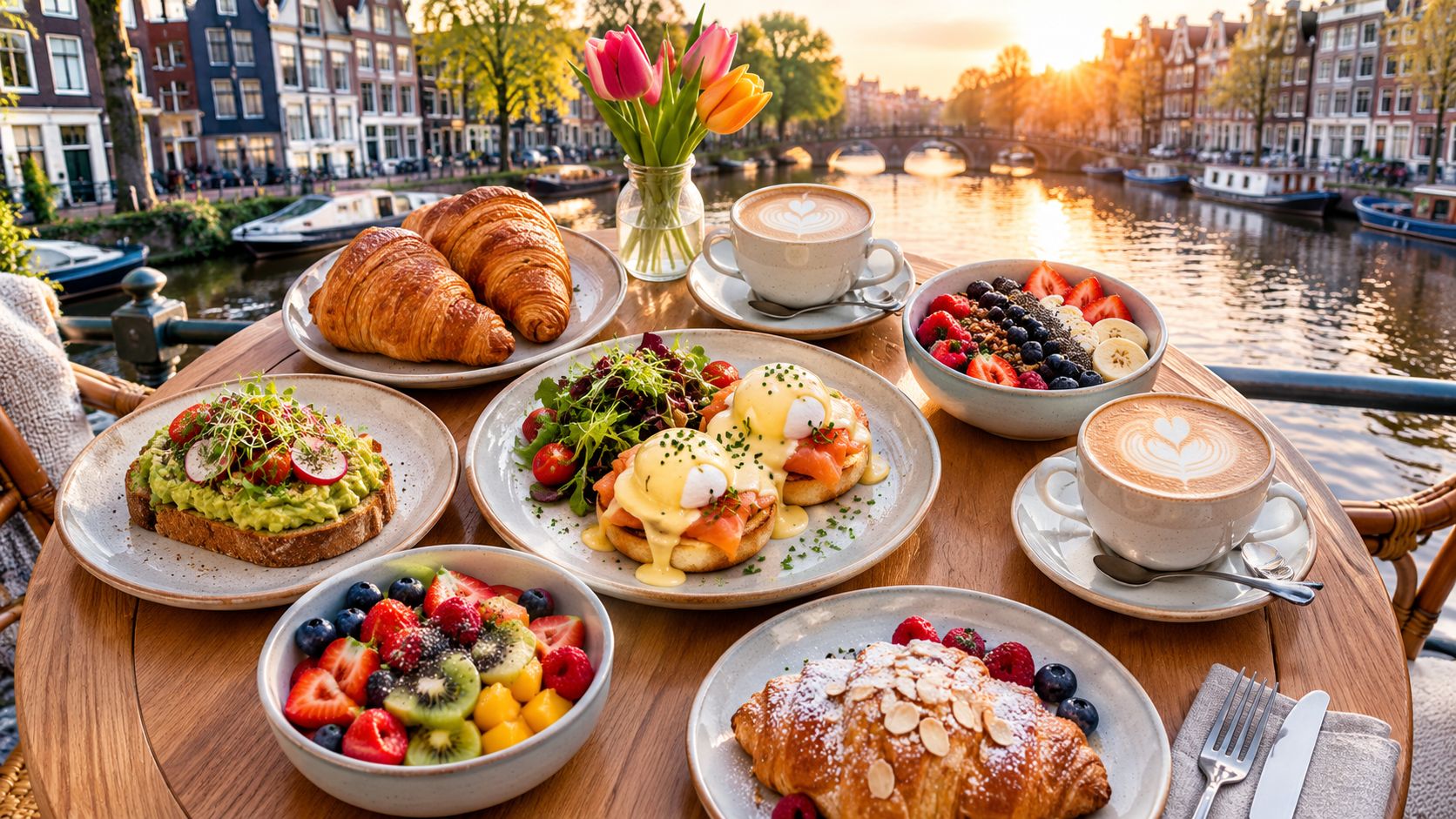
A group has one free morning in Amsterdam, a limited budget, and a full afternoon and evening ahead. Some members want eggs and coffee, others want something indulgent, and nobody wants to cross the city twice before sightseeing or a night out. Choosing brunch before choosing the route makes the day easier.
Amsterdam has a substantial brunch market. As of 5 September 2026, the city had at least 299 verified café-and-brunch restaurants, including 31 specifically categorized as brunch venues. A total of 275 venues opened on Sundays, while 289 priced venues listed an average price of about €13 per person. The figures come from the Amsterdam café and brunch venue dataset, which also shows that cafés and eetcafés dominate the market.
That variety makes a practical guide useful, but it also creates an important boundary for brand content. Brunches in Amsterdam can be assessed by cuisine, atmosphere, likely spend, reservation pressure, neighborhood, and suitability for solo diners or groups. Ultimate Party Amsterdam can be considered separately when the itinerary later includes a pub crawl or canal booze cruise. The sections below clarify the most accurate way to handle those subjects without presenting daytime restaurants as Ultimate Party Amsterdam products.
Table of Contents
- 1. Summary of the response
- 2. The core problem
- 3. Brunch venues are outside the business scope
- 4. Authenticity and the requested voice
- 5. Forced relevance would undermine trust
- 6. A better nightlife-aligned pivot
- 7. A post-crawl breakfast guide
- 8. Brunch research as separate editorial content
- 9. Recommended next steps
- 10. The decision for the business
- 10-Point Comparison: Brunches in Amsterdam
- Turn the choice into a trustworthy brief
1. Summary of the response
A group with one free morning and a museum booking at 13:00 needs a quick answer: can the venue take bookings, and is it close enough to avoid a costly detour? That practical test should shape the guide, not another broad list. The ten options should help visitors choose a route that fits their schedule, appetite, budget, and group.
Three editorial routes make sense. A late-night eats guide serves visitors planning food around an evening out, including groups deciding where to eat before or after a nightlife activity. A post-crawl breakfast guide serves people who want a practical recovery meal after a pub crawl or canal booze cruise, with timing and convenience taking priority. A standalone brunch research article serves readers choosing a daytime venue independently, with verified menus, opening times, booking rules, prices, neighborhoods, and group suitability.
The same research standard applies to every route. Recommendations require current venue information, while Ultimate Party Amsterdam should not appear to run or endorse a complete brunch portfolio without supporting business information.
Practical rule: Publish a venue recommendation under the brand that can verify it, not automatically under the brand that attracts the reader.
For Ultimate Party Amsterdam, separate brunch research from confirmed nightlife services. That keeps the article useful for international visitors and protects the brand's credibility.
2. The core problem
The subject and the business scope don't naturally match. Brunch is a daytime dining decision, while Ultimate Party Amsterdam's confirmed role is centered on nightlife experiences, including guided pub crawls, canal booze cruises, and private event coordination.
That doesn't make brunch irrelevant to the audience. Groups often plan meals around a night out, and a post-party breakfast can be a sensible part of a short city break. The distinction matters because relevance isn't the same as ownership. A nightlife brand can discuss how brunch fits around an evening itinerary, but it shouldn't imply that every restaurant in a brunch list belongs to its product range.
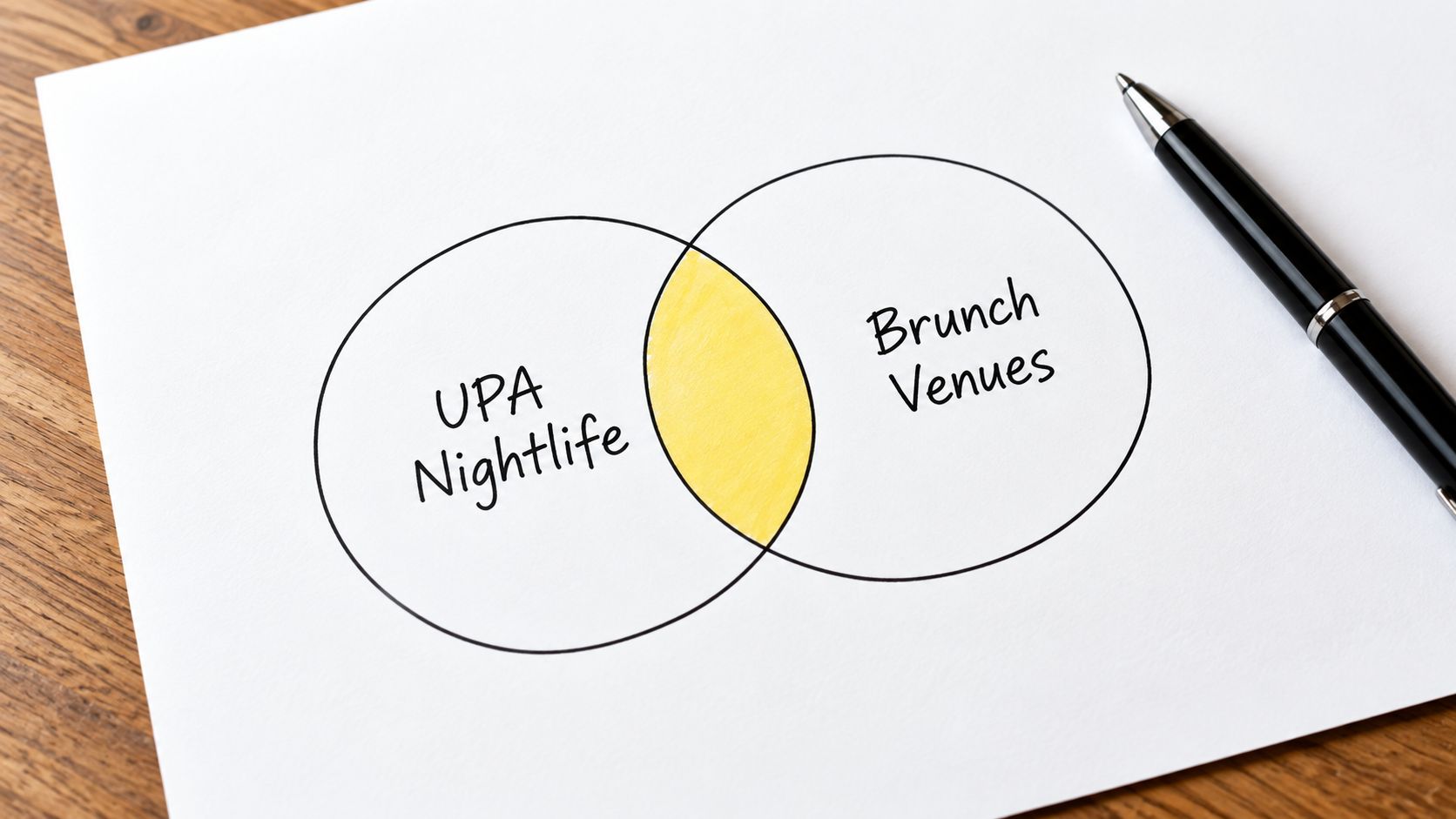
A visitor searching for brunches in Amsterdam wants dependable information. That includes whether a place takes bookings, whether a group can sit together, whether the menu is suitable for different diets, and whether the location works before a canal walk or museum booking. Those details need venue-level verification rather than broad nightlife knowledge.
A brand-safe article can still be useful by giving the reader a planning framework. It can explain when a standalone brunch guide is appropriate, when a post-crawl breakfast article makes more sense, and when Ultimate Party Amsterdam should be mentioned only as the later nightlife component of the itinerary.
3. Brunch venues are outside the business scope
Ultimate Party Amsterdam's verified services are nightlife-focused. The supplied business information identifies pub crawls in the Red Light District and Leidseplein, shared and private canal booze cruises, and a nightlife concierge service. It doesn't identify brunch packages, a network of brunch venues, or a restaurant brand operated by Ultimate Party Amsterdam.
That boundary should remain visible in the article. Presenting Mook Pancakes, G's, Greenwoods, or any other café as an Ultimate Party Amsterdam product would turn a useful recommendation into an unsupported commercial claim. Those venues can be discussed in neutral editorial research when their menus and current policies are checked separately.
The brand can still serve the same traveler at a different point in the day. A group might book brunch independently, spend the afternoon exploring, and later join a nightlife experience. The connection is practical itinerary planning, not a claim that the brunch venue and nightlife operator are the same business.
For readers preparing for a late evening, these practical Amsterdam pub crawl survival tips can sit beside a neutral breakfast recommendation. The link supports nightlife preparation without changing the factual status of the brunch venue.
4. Authenticity and the requested voice
A nightlife expert can give strong advice about pacing an evening, choosing between central districts, coordinating a group, and allowing enough time for transport. That expertise doesn't automatically establish authority over every daytime restaurant in Amsterdam.
An authentic voice should reflect what the brand actually knows. For Ultimate Party Amsterdam, that means practical guidance about group movement, nightlife timing, hosted experiences, booking coordination, and the transition from daytime plans into the evening. A brunch list requires a different kind of authority, based on current menus, service patterns, reservations, dietary information, and venue-level checks.
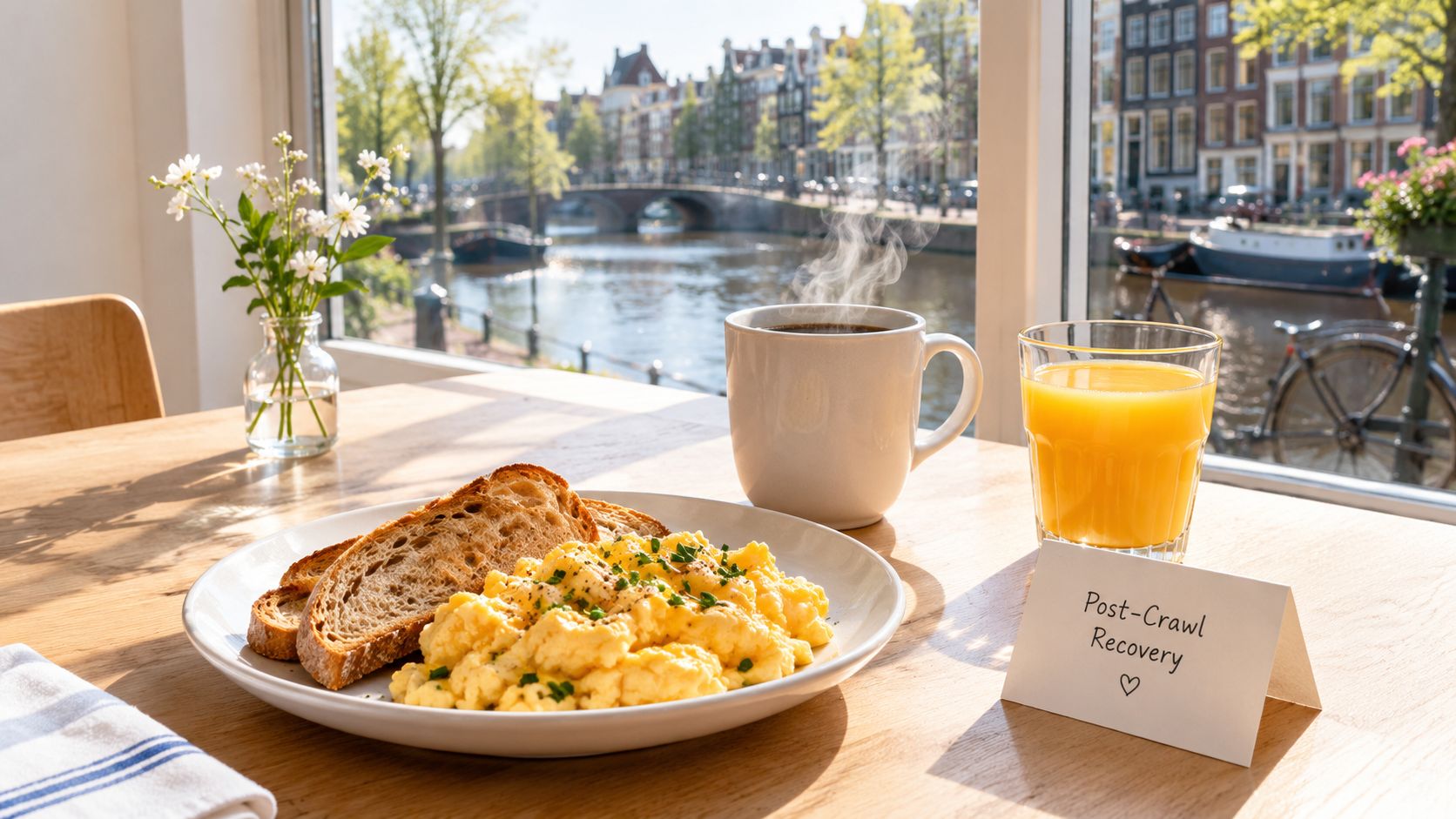
The most credible tone would acknowledge that distinction rather than hide it. A nightlife guide might say that a group should leave enough time between brunch and an evening booking. It might explain why a large party should confirm restaurant policies before committing to a celebratory meal. It shouldn't describe a brunch menu, price, or opening time unless that detail has been verified from the venue or a reliable current source.
That approach also improves the visitor experience. International travelers need clear boundaries, especially when several companies and restaurants appear in the same itinerary. Honest positioning is more useful than forced expertise.
5. Forced relevance would undermine trust
Brunch can connect naturally to nightlife, but only in specific situations. A group recovering from a late evening may want a substantial breakfast. A bachelorette party may plan a daytime meal before an evening activity. A short-stay visitor may need to combine food, sightseeing, and nightlife without unnecessary travel.
Those scenarios support an editorial bridge. They don't support claiming that Ultimate Party Amsterdam provides brunch reservations, brunch menus, restaurant discounts, or bundled brunch-and-party packages unless verified business information confirms those services.
Amsterdam's demand makes the distinction especially important. Dutch consumer research recorded nearly two-thirds of consumers visiting a coffee or lunch venue during the prior year, with about 65 million visits from 9.6 million visitors and 76% of orders consumed on-site, according to independent Dutch coffee and lunch venue research. The same source reports that 44% of coffee-and-lunch customers were aged 18 to 34, a relevant audience for city breaks and social travel.
Those figures describe a real daytime hospitality category, not a nightlife product. A trustworthy article should use them to explain why brunch deserves its own research and planning treatment, while keeping Ultimate Party Amsterdam's role clear.
6. A better nightlife-aligned pivot
A late-night food guide would fit Ultimate Party Amsterdam's verified expertise more directly. Instead of attempting to rank brunch restaurants, the article could help visitors decide what to eat after a pub crawl, canal cruise, or evening in Amsterdam's central nightlife districts.
The strongest version would organize food choices by practical need. One section could address fast, filling options after several hours out. Another could cover lighter recovery food. A third could explain how groups should handle different appetites, dietary requirements, and travel times when the evening finishes at different points across the city.
The article could also pair food planning with route planning. Visitors often underestimate the time needed to regroup, find a table, and move between districts. A useful guide would explain that a late-night meal should be selected for location and reliability, not just for an attractive menu description.
The relevant internal resource is Amsterdam nightlife beyond the bars, with late-night eats and entertainment. It allows the brand to connect food planning with nightlife without presenting unrelated brunch venues as Ultimate Party Amsterdam services.
That pivot would also serve the existing audience more precisely. Solo travelers could find practical recovery advice. Groups could plan a shared stop after a hosted experience. Couples and friends could build a fuller evening without confusing a restaurant recommendation with an Ultimate Party Amsterdam booking.
7. A post-crawl breakfast guide
A second option would keep brunch in the subject while framing it as recovery food after a late night. That angle is narrower than a general list of brunches in Amsterdam, but it fits the audience's actual travel situation.
The guide could compare a heavy breakfast with a lighter café meal, explain why group members should agree on timing before splitting up, and show how breakfast fits around hotel checkout, museum bookings, canal walks, or onward travel. It could also separate venues that suit a quiet recovery from those better suited to a social daytime celebration.
A post-crawl article should avoid unsupported promises. It shouldn't claim that a venue opens early, accepts large groups, guarantees immediate seating, or serves a particular recovery menu unless those details are current and documented. The same applies to claims about proximity. Amsterdam's compact appearance can be misleading when a group is tired, carrying luggage, or moving between neighborhoods.
The natural internal reference is the guide to Amsterdam hangover cures. It gives the nightlife brand a legitimate context for discussing brunch as a possible next-day activity, without suggesting that Ultimate Party Amsterdam owns or operates the restaurants mentioned in separate research.
This format would work especially well for travelers whose main question is not “Which brunch is best?” but “What should the group do the morning after going out?”
8. Brunch research as separate editorial content
A neutral, well-sourced brunch article can stand alone. Present it as separate editorial research, not as a catalogue of Ultimate Party Amsterdam products or official restaurant partners.
Build the article around ten visitor decisions: cuisine and atmosphere, likely spend, reservation pressure, neighborhood plans, and whether a venue suits a group, solo diner, or pre- or post-nightlife itinerary. Each entry should explain its fit plainly. Globally influenced menus may appeal to adventurous eaters, while familiar brunch plates help international visitors choose quickly. A set menu, relaxed café, or location near a planned walk serves a different need.
Use the same evidence standard throughout. Every verified entry should state the cuisine, a signature dish, price band, booking policy, neighborhood, and group limit. A venue entry might confirm all those details through current research. If any point cannot be verified, omit it rather than present an assumption as fact.
Amsterdam's brunch culture developed from a traditional bread-and-toppings breakfast toward internationally influenced menus, including an early Antipodean café influence. For background context, a guide to Amsterdam breakfast and brunch culture can support that history, but it should not replace current venue verification.
Keep the research clearly independent. Mention Ultimate Party Amsterdam only to distinguish its nightlife content from separately researched restaurant recommendations.
9. Recommended next steps
The content direction should be chosen before venue research begins. Each route has a different search intent, evidence requirement, and conversion path.
A nightlife-aligned late-night food article offers the clearest brand relevance. It can support readers already planning an evening and link naturally to verified pub crawls, booze cruises, and concierge arrangements. It should focus on practical night-out decisions rather than broad daytime restaurant discovery.
A post-crawl breakfast guide creates a bridge between the two subjects. It keeps brunch relevant for the audience, but defines the use case clearly. That format is suitable when the intended reader has already spent the night out or is considering how to structure the morning after.
Standalone brunch research is the correct choice when venue recommendations are the primary goal. It should use independent sourcing and avoid implying that the listed cafés are part of Ultimate Party Amsterdam's offering. A separate marketing resource such as how to drive footfall with creators may support a food-business audience, but it doesn't establish restaurant facts for this article.
The decision should be recorded as one of three briefs, with scope, tone, length, target keyword, internal links, and evidence requirements confirmed before drafting.
10. The decision for the business
The most useful direction depends on the commercial goal. If the goal is direct visibility for Ultimate Party Amsterdam's existing nightlife services, the late-night eats pivot is the cleanest option. It speaks to visitors already thinking about an evening and gives the brand a credible role in their planning.
If the goal is to capture morning-after searches from people who have been out in Amsterdam, the post-crawl breakfast angle is more focused. It can discuss brunch as a recovery or regrouping activity, while directing readers toward nightlife content where the connection is genuine.
If the goal is to win the broad search term for brunches in Amsterdam, the content should be produced as independent, sourced editorial research. That version can compare venues by cuisine, atmosphere, price, booking pressure, neighborhood, and group size without attaching unsupported business claims to a nightlife operator.
A clear brief should answer four practical questions:
- Primary intent: Is the reader looking for general brunch inspiration, next-day recovery food, or a meal before nightlife?
- Brand role: Is Ultimate Party Amsterdam the service provider, an itinerary resource, or not part of the brunch article?
- Evidence standard: Which venues, menus, prices, opening times, and booking rules have been verified?
- Conversion path: Should the article lead to nightlife bookings, a related informational page, or no product call to action?
The answer can be as simple as selecting A for late-night food, B for post-crawl breakfast, or C for neutral brunch research. That decision prevents the article from promising more than the business offers.
10-Point Comparison: Brunches in Amsterdam
| Item | Implementation complexity | Resource requirements | Expected outcomes | Ideal use cases | Key advantages |
|---|---|---|---|---|---|
| Summary of response | Low | Minimal (review of prompt & response) | Clear, concise scope conflict summary | Internal alignment and quick briefing | Rapid understanding of the issue |
| Core problem | Low | Minimal (verify brand services) | Identifies mismatch between ask and brand scope | Risk assessment and editorial gating | Clarifies factual constraints |
| Issue 1, Brunch venues are outside business scope | Low | Low (site/content verification) | Prevents brand misattribution and inaccuracies | Compliance with brand facts and guidelines | Protects brand reputation |
| Issue 2, Authenticity vs. requested voice | Low | Low (tone guidance) | Highlights voice–subject mismatch | Deciding appropriate tone and voice | Maintains authenticity and prevents fabrication |
| Issue 3, Forced relevance would undermine trust | Low | Low (examples/evidence) | Warns of potential credibility loss | Content strategy and trust-risk evaluation | Emphasizes long-term user trust |
| Alternative 1, Best Late-Night Eats | Medium | Local venue research, copywriting, route mapping | Nightlife-aligned content that serves UPA audience | Engaging post-party readers and pub-crawl participants | Brand-aligned, high utility to customers |
| Alternative 2, Post-Crawl Breakfast Spots | Medium | Venue hours, proximity data, short interviews | Practical recovery guides tied to UPA events | Post-event guidance and cross-promotion | Directly relevant to UPA services |
| Alternative 3, Standalone brunch research | Medium | Sourcing, citations, external attribution | Accurate third-party brunch list not attributed to UPA | When brunch content is required but must be independent | Delivers required info while avoiding brand misuse |
| Recommended next steps | Low–Medium | Stakeholder decision, scope, tone, SEO inputs | Clear direction for content creation and compliance | Project kickoff and scope confirmation | Actionable options and prioritized paths |
| Question for you | Low | Minimal (client response) | Stakeholder choice that enables next actions | Finalizing direction, tone, deadlines | Fast decision point to proceed with production |
Turn the choice into a trustworthy brief
The central editorial decision is straightforward. Brunches in Amsterdam should be covered as a standalone food topic when the primary goal is to recommend venues. The article then needs current, venue-specific research and a neutral presentation that doesn't imply ownership, partnership, or service availability without proof.
The nightlife pivot belongs inside the verified Ultimate Party Amsterdam context. A late-night food guide can speak directly to visitors planning an evening, especially groups that need practical help with movement, timing, and the transition from one activity to the next. It can mention pub crawls and canal booze cruises because those are confirmed nightlife experiences, while keeping restaurant recommendations separate unless they are independently verified.
The post-crawl breakfast angle offers the most useful bridge between daytime dining and nightlife. It gives readers a specific reason to search for brunch after a late evening. It also creates room for practical advice about recovery, group coordination, hotel checkout, sightseeing, and the risk of assuming that a large group can walk into any popular venue without checking first.
A simple decision rule keeps the content focused:
- Choose the nightlife pivot when direct brand relevance is the priority.
- Choose the post-crawl breakfast angle when brunch should support an evening or morning-after itinerary.
- Choose standalone brunch research when venue recommendations are the main search objective.
The business details also need a final verification pass. The supplied information describes Ultimate Party Amsterdam as an Amsterdam nightlife events operator specializing in guided pub crawls and canal booze cruises. It states that the company was founded in 2006 and provides details about Red Light District and Leidseplein crawls, shared and private cruises, concierge coordination, inclusions, and booking policies. Any article should use only the details that remain current and approved for publication.
The drafting brief should then confirm the target keyword, audience, word count, heading structure, internal links, external citations, image requirements, and desired conversion action. If the page will mention restaurants, the source list should also identify who verified their menus, prices, opening times, and reservation rules. That process protects both search value and reader trust.
For readers interested in planning the nightlife portion separately, Ultimate Party Amsterdam remains a relevant option for guided pub crawls and canal booze cruises. A neutral brunch article can point toward that later itinerary step only when the connection is useful and clearly described.
Ultimate Party Amsterdam offers guided pub crawls and canal booze cruises for visitors planning the evening after a daytime meal. Readers can explore the available experiences and arrange the nightlife part of an Amsterdam itinerary through Ultimate Party Amsterdam.
🍻
Experience it Yourself
Skip the planning — join Amsterdam's biggest pub crawl and get 6 bars, free drinks and VIP club entry for €20.


