Dinner is finished, the group chat is filling with club names, and nobody has checked whether the tickets match tonight's event. Someone wants techno, someone wants familiar songs, and the accommodation is farther away than it looked on the map. That's the moment when clubbing in Amsterdam needs a little planning rather than another recommendation.
A good night connects the music, the door policy, the venue's closing time and the journey home. For international visitors, those practical details matter just as much as the dance floor. Choosing them together prevents the familiar outcome of spending the evening walking between places that don't suit the group.
Table of Contents
- Well-Known Amsterdam Clubs and Who Each One Suits
- Districts, Closing Times and When to Arrive
- 18+ ID, Door Policies and Dress Codes
- What a Night Out in Amsterdam Really Costs
- Getting Home Safely After a Late Night Out
- Choose Your Night and Book the Easiest Way In
Well-Known Amsterdam Clubs and Who Each One Suits
| Venue | Known for | Best for | Typical entry |
|---|---|---|---|
| Paradiso | Concerts and club nights in a former church | Readers wanting live music and dance | Concert ticket or club-night ticket |
| Melkweg | Live music and club nights in a former milk factory | Relaxed, arts-style nights | Event ticket plus admission conditions |
| Escape | Large mainstream dance club | Big-room nights with mixed music | Night ticket, subject to door policy |
| Jimmy Woo | R&B, hip-hop and commercial party nights | Groups wanting a lively bar-club night | Event listing and published dress code |
| Shelter | Techno and house | Dedicated electronic music fans | Lineup-led ticket and admission policy |
A famous room is only the start of the plan. Admission terms, the event's finishing time and the last workable route home should be checked as one decision, because each venue type changes how early the group needs to commit.
Concert Venues With Dancing
A group that wants the evening to open with a band and finish on a dance floor should look at Paradiso. The former-church setting gives the night a strong sense of occasion, and the practical split is between a concert ticket and a club-night ticket. If the plan depends on staying after the performance, the programme has to allow that handover before anyone promises the group an easy night.
The common Melkweg mistake is assuming one building means one kind of crowd. Its former milk-factory rooms can suit friends whose tastes run wider than a single electronic genre, but the chosen event still sets the pace, the door conditions and the likely finish. Read the ticket for admission terms as carefully as for the artist name.
For visitors comparing nearby options, the Leidseplein bars and clubs guide helps narrow the area before committing to an evening's route. Staying within a manageable district leaves more time for music and less for negotiating the next move.
Mainstream Dance Floors or Electronic Focus
Arriving late for a big DJ set is where Escape can punish a loose plan. Its large mainstream dance-floor format fits friends who want a recognisable nightclub atmosphere and mixed music, yet the promoter and programme still decide whether the room feels commercial, harder or somewhere between. Mixed tastes are a reason to choose the specific night carefully and leave enough margin for the queue.
Jimmy Woo, near Leidseplein, belongs on the shortlist for R&B, hip-hop and commercial party nights. It works better for a lively bar-club evening than for a dedicated techno session, and dress expectations should be settled before leaving so a good fit does not become a wasted trip.
House and techno fans get a clearer signal from Shelter. Let the lineup drive that choice, then organise transport and admission around it. A group that wants constant singalong tracks will usually have a better night elsewhere, even if the club's name is familiar.
Practical rule: Pick the music first, then confirm the door policy, closing time and last train or taxi plan.
Districts, Closing Times and When to Arrive
| Venue type | Weekday closing | Weekend closing |
|---|---|---|
| Nightclubs and clubs | 4:00 AM | 5:00 AM |
| Late-night venues around Leidseplein and Rembrandtplein | 3:00 AM | 4:00 AM |
| Historic centre bars and restaurants | Confirm the venue's licensed hours | 2:00 AM on Friday and Saturday; no new guests after 1:00 AM |
These limits come from the City of Amsterdam's visitor guidance. The historic-centre row is the one that catches groups out. A group reaching a bar door at 1:15 AM on a Saturday finds admission already closed, even though the venue inside runs until 2:00 AM. A nightclub at the same hour can still take guests well toward its 5:00 AM weekend finish, so the district decision is really a decision about which closing band the evening ends in.
Each venue type changes the plan. The later permitted finish makes nightclubs and clubs the right anchor for a night built around dancing. Late-night venues around Leidseplein and Rembrandtplein can deliver a lively bar atmosphere on a shorter clock. Historic-centre bars and restaurants stack an admission cutoff on top of a closing hour, which means beating the posted closing time is not the same as getting in.
A permitted closing time isn't a promise that a particular event runs until then. Operators work within venue-specific licences, and the listing may show an earlier finish or a separate final-entry condition. Read a ticket for its admission terms as carefully as for its music.
Choose a District That Fits the Evening
Leidseplein works for visitors who want dance bars, music venues and a lively square within the same general area. Rembrandtplein suits a plan centred on busy bars and a large-club atmosphere. Either approach becomes less convenient when the group keeps switching districts in search of an undefined better option.
The Red Light District provides a lively social start, and it works best when a named club sits at the end of the route. A late club finish needs an actual club selected in advance, whatever the district's reputation.
Say a group enjoys its current bar and delays every decision until staff begin closing. Ticket availability, final admission and transport all become urgent at the same moment. The fix is simple: pick the destination venue by 9:30 PM and check the event listing for its final-entry time before the first round.
Build the Evening Around Arrival, Not Just Closing
For a hypothetical evening, a workable schedule is:
- Around 8:00 PM: Dinner or an early drink, with the final venue already shortlisted.
- About 8:00 to 11:00 PM: Bar hopping within a manageable area, allowing time for conversation.
- Around midnight: Club arrival, subject to the event's advertised opening and final-entry conditions.
Bars cover the earlier social part of the evening; clubs generally fill later, often after midnight. That doesn't mean every visitor should arrive late. An earlier ticket condition, a must-see opening DJ or anticipated queues can all justify getting there sooner.
The useful distinction is between a busier dance floor and a safer admission plan. Waiting for the room to fill improves the atmosphere. Waiting past an admission deadline ends the night outside.
All-Night Licences Are an Exception
According to All Day Music's account of club licensing, 17 locations held 24-hour licences in April 2023, all outside the historic centre, with each licence lasting three years and renewable once for another three years. Licences lapse and change hands, so anyone planning around an all-night venue should confirm the programme on the specific date rather than rely on a past count.
The common mistake is assuming a club with extended permission is automatically open all night on a chosen date. The listing for that date is what settles it.
Amsterdam also restricts temporary opening-hours and noise exemptions to the building rather than its terrace, according to the municipality's noise-exemption guidance. Late indoor activity therefore gives no permission to keep a noisy gathering outside.
A late finish needs an actual club on the plan. Have that club chosen before the evening's final move becomes a scramble.
18+ ID, Door Policies and Dress Codes
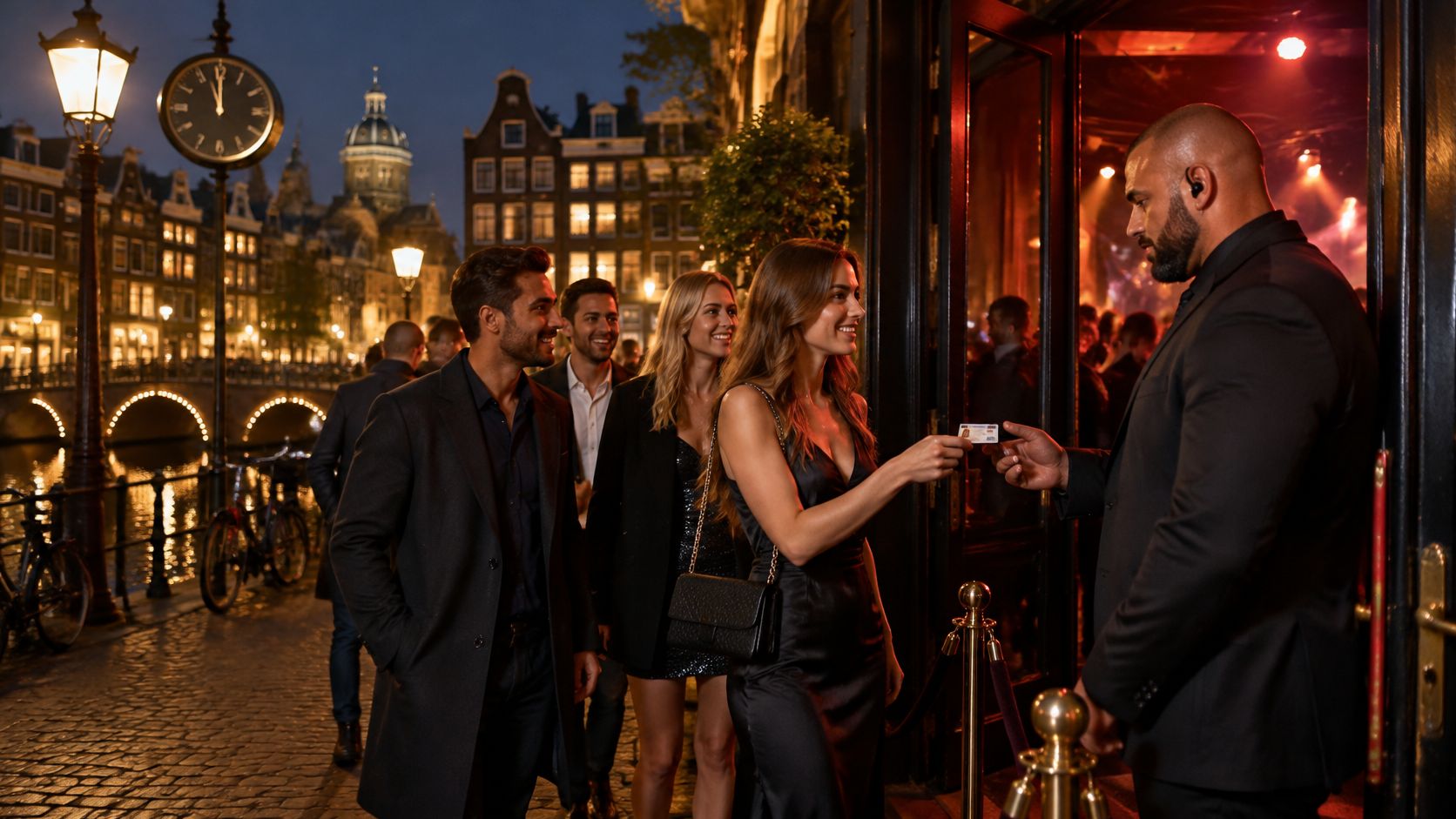
Treat 18+ admission and valid ID as firm requirements. Bring the original passport. Photocopies and phone photos are commonly refused, and some events set a higher minimum age that the listing will state. Check that listing before buying a ticket, not at the door.
An entry ticket doesn't remove the need to meet admission conditions. Intoxication, inappropriate clothing or disruptive group behaviour can still lead to refusal. Read the published policy before leaving the accommodation, and I'd keep a screenshot of the ticket conditions on the phone too, because door staff move quickly and debates at the rope rarely end in the visitor's favour.
Dress for the Specific Venue
Smart casual is a practical default for venues with a dress policy. Clean, presentable clothing and comfortable footwear serve better than dressing for an imagined VIP experience. Sportswear and very casual footwear are choices to avoid unless the event explicitly welcomes them.
For a concrete example of how specific one venue's rules can be, the Pure nightclub dress-code guide lays out a single club's expectations in detail. Read it as one venue's standard rather than a citywide uniform.
Group behaviour matters alongside clothing. Arriving together helps; blocking the entrance while arguing about tickets does not. Have booking details ready, and ask about re-entry before anyone steps out for food, fresh air or a forgotten item, because policies on leaving and returning vary by event.
Fair Rules and Social Comfort
The City of Amsterdam's night-culture programme identifies safety and representation as priorities. A stricter door policy can protect a particular atmosphere, but restrictions still need to be fair and transparent. Dress and conduct rules are not a justification for discrimination.
Before booking, check the event page for three things: a published conduct policy, a named contact or staff-response statement for reporting problems, and accessibility details such as step-free entry. If a venue's page shows none of these, that absence is itself information. The same check applies at LGBTQ+ venues: read the stated door policy before booking, and expect hosts to enforce the community purpose of the space.
For background on how entrance management is meant to operate, the GM GROUP Services crowd control guide offers useful context on the door team's role. It doesn't replace an Amsterdam venue's own admission rules.
If unwanted attention occurs, step away, rejoin trusted companions and speak to staff. Escalating a confrontation on a crowded dance floor rarely helps.
Run through three things before leaving:
- Valid ID: An original document the venue accepts.
- Bank card: Available for purchases without relying on someone else's payment.
- Charged phone: With the ticket, accommodation address and group contact details accessible.
What a Night Out in Amsterdam Really Costs
| Option | Entry | Drinks | Best for |
|---|---|---|---|
| Independent club night | Check the event listing for the admission price | Paid at the bar | Readers who already know the venue |
| Red Light District pub crawl | €20 per person, club entry included | Free shots and drink discounts across 6 bars | First-time visitors and solo travellers |
| Leidseplein pub crawl, Thursday to Saturday | €20 per person, club entry included | Free drinks and a VIP club finale | Groups out Thursday to Saturday |
Independent door prices change by night and venue. The event listing is the right place to confirm the actual charge and any ticket conditions. Budget a flexible amount for entry and drinks instead of relying on a general Amsterdam average.
The bar tab is the biggest discretionary variable. A group can agree on the same entry budget and still spend very different amounts once rounds, preferred drinks and extra stops enter the picture. Personal tabs keep the peace: nobody should assume everyone wants to drink or spend at the same pace.
What Is Fixed and What Remains Flexible
The crawl options make the admission cost known in advance and include the stated drinks or shots. All-in covers the venue entry fees and those specified inclusions. Extra rounds after the free drinks, and the journey home, are paid separately, though guests get drink discounts at the partner venues to soften the first part. There are no additional cover charges on the crawl itself.
The Red Light District crawl runs every night. The Leidseplein option runs Thursday to Saturday only, so it doesn't fit a Sunday or Monday trip. Both crawls finish at Rembrandtplein, which keeps the club finale and the journey home in one compact area.
The trade-off is straightforward. An independent night gives control over a specific lineup, while a guided crawl handles the venue selection and adds a ready-made social setting.
For wider cost planning, the guide to experiencing Amsterdam nightlife on a budget helps frame the evening beyond the ticket purchase. Budget for the full night, not just the entry fee.
Budget Beyond the Door
The common omissions are practical:
- Extra drinks: Included drinks don't cover every later order.
- The ride home: Keep a transport allowance separate from spending money, so the last decision of the night is already paid for.
- Payment backup: A small amount of cash helps if a venue prefers it, while card acceptance should still be checked.
A working budget formula is entry, plus drinks, plus the ride home.
For a mixed-budget group, agreeing on the spending approach beforehand is more useful than comparing totals afterwards. Nobody should have to explain at the bar that the next round or another paid stop has pushed the evening beyond their budget.
Getting Home Safely After a Late Night Out
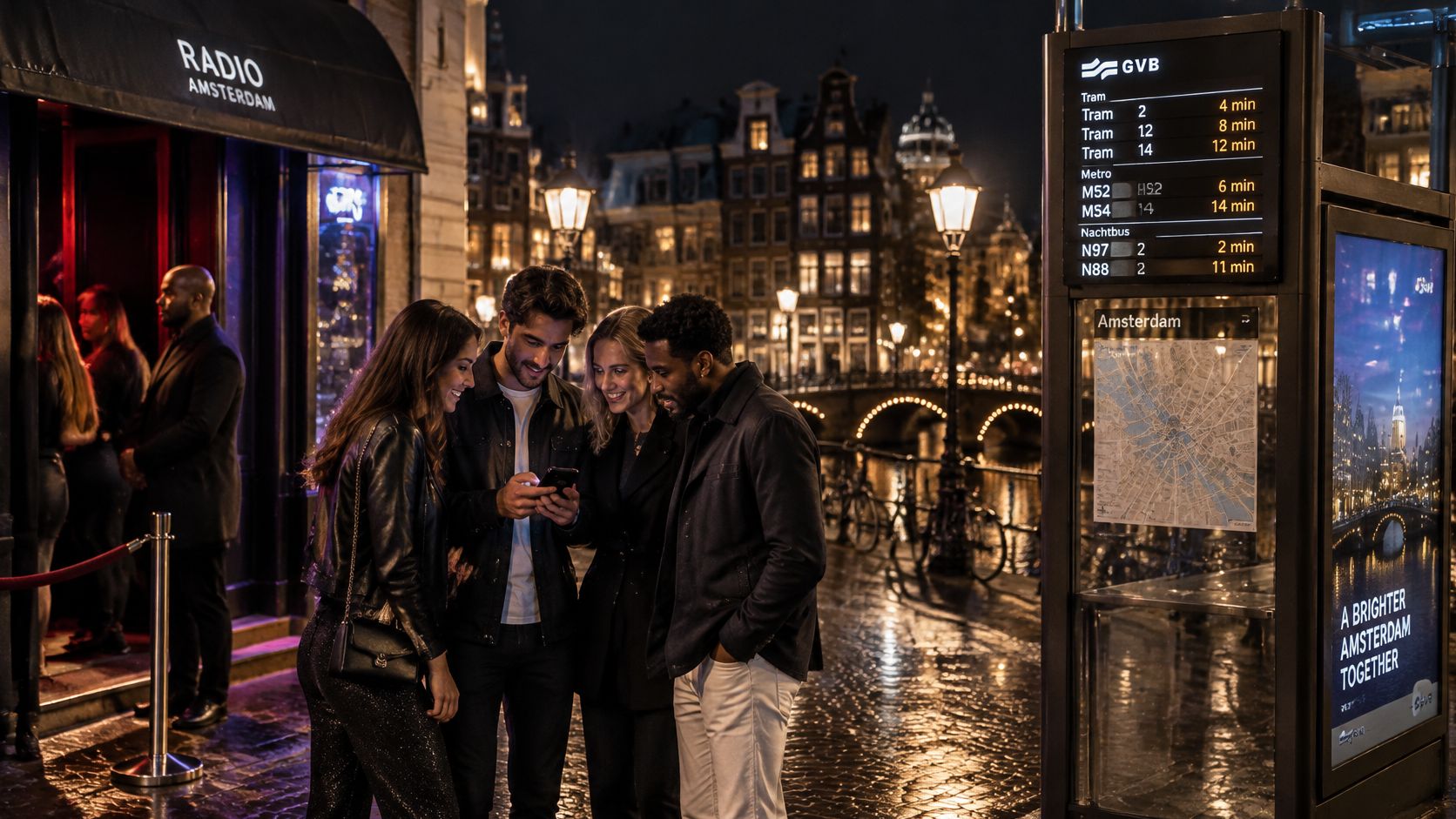
Decide the return journey before the first drink, because the decision only gets harder at closing time. GVB's regular trams and metros don't run through the night, so once they stop, the night bus is the public-transport option and a licensed taxi is the fallback. Check the GVB night-service timetable for the specific route home: the service that matters is the last one reaching your area, and a later departure somewhere else on the network won't help.
The venue type sets which choice is realistic. A night that ends in a bar district around regular closing can still catch late services, while a club that finishes near dawn leaves the night bus or a taxi as the realistic options. Work through the decision in this order:
- Walk only on a short, busy route: If the walk takes under 15 minutes along streets with open venues, walk it; anything longer or quieter calls for a taxi.
- Take a licensed taxi after drinking: Particularly when fatigue or alcohol makes a longer walk or navigation unreliable.
- Use the night bus for longer journeys: Confirm the boarding stop, the direction and the walk from the arrival stop to the door before boarding.
Don't Make Cycling the Default
Amsterdam's bike-friendly reputation doesn't make cycling after drinking a sensible fallback. Tram tracks, bridges, traffic and canal edges all demand attention and balance, and a ride that felt easy in daylight becomes a poor choice after a club night.
The municipal night-culture framework treats nighttime public transport as part of nightlife accessibility. For visitors, that means checking the ride home belongs to planning the evening itself, alongside the ticket and the venue, rather than a chore left until closing.
If the Group Splits
Agree on a regroup point before entering a crowded venue, somewhere specific like the cloakroom exit or a named bar inside, rather than a vague area near the door. If a friend goes missing, that point is where everyone meets; call or message them and ask venue staff for help rather than scattering the group in different directions. Someone who is unwell shouldn't be sent home alone.
Save the accommodation's full address in a map app before leaving it, including the postcode and entrance details where needed. The last stretch from a night-bus stop deserves the same attention as the main journey, because unfamiliar street names look similar in the dark.
If the route can't be confirmed, take a licensed taxi.
Choose Your Night and Book the Easiest Way In
A night built around a favourite DJ starts on that event's ticket page. A night built around company and a ready-made route is where a hosted pub crawl earns its place, and for a first Amsterdam evening with a structured route it is one practical option. The cost section already covered what a single ticket buys; the question here is whether the format fits the trip. Someone travelling specifically for an artist should book that event directly, because a hosted route handles the social and planning side of the evening rather than the music programme.
Match the Plan to the Travel Dates
Work through the booking in this order:
- Choose the night. Thursday to Saturday opens up hosted routes around Leidseplein's dance bars. A midweek trip narrows the choice to options that run every night.
- Choose the starting district. The Red Light District suits bar-hopping and games leading into a club finish, while Leidseplein suits a lively-square start and dance bars before the finale. Both hosted routes end at Rembrandtplein, so one journey-home plan covers whichever side of the centre the evening begins on.
- Confirm the meeting arrangements. Hosted groups gather at a fixed meeting point within a set arrival window and move on together. Check the booking confirmation for the exact location and time, because the group will not wait along the route for latecomers.
Travellers with two free evenings can take a different district each night rather than squeezing both into one. The only real constraint is matching each date to that route's operating days.
Check the Practical Terms Before Paying
Ultimate Party Amsterdam offers nightlife experiences every night and has run pub crawls and booze cruises in Amsterdam since 2006. All events are 18+ with valid ID required, and pub crawls can be cancelled free of charge up to 24 hours before the start. A group organiser should confirm everyone can meet those terms before anyone pays: a friend without valid ID, or a plan that changes inside the cancellation window, quickly becomes the organiser's problem.
The decisions themselves take minutes once the format is clear. A settled plan leaves spontaneity where it belongs, in the conversation, the music and the people, rather than in negotiations at a club door.
Ultimate Party Amsterdam offers hosted pub crawls with included club entry, alongside canal booze cruises for a different kind of social evening. Visit Ultimate Party Amsterdam to explore the options, choose the Red Light District pub crawl for a hosted night ending in a club, or pick the Leidseplein pub crawl for a Thursday to Saturday dance-bar route.
🍻
Experience it Yourself
Skip the planning — join our Leidseplein crawl: 5 stops, 5 free drinks and VIP club entry for €20.