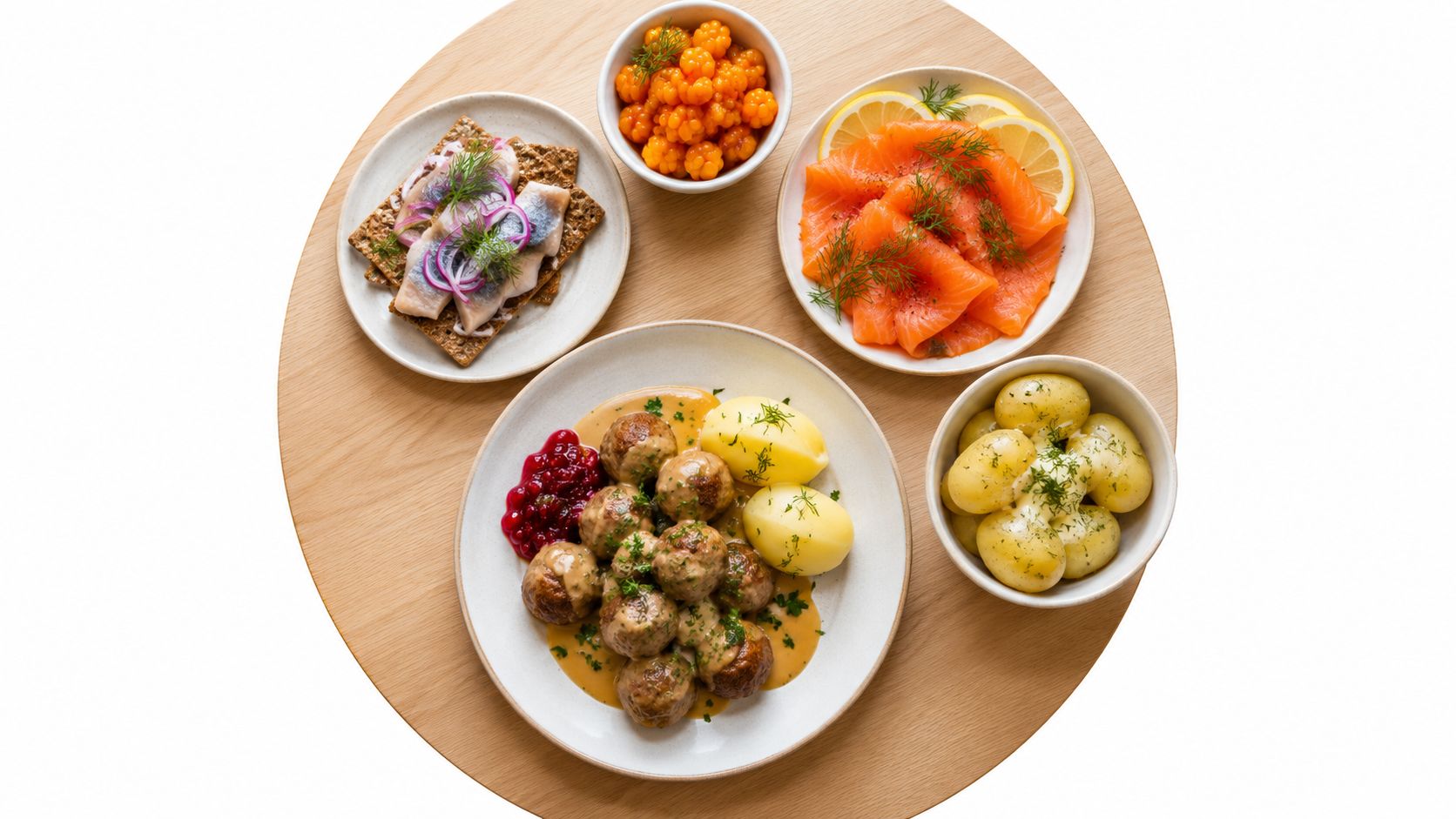
Sweden has no officially designated national dish, but Swedish meatballs are widely treated as the country's de facto national food. That answer is convenient, familiar, and incomplete.
The usual advice sends visitors straight to köttbullar with potatoes, brown cream sauce, lingonberry jam, and pickled cucumber. It's a satisfying plate, but it doesn't explain why preservation, coastlines, forests, regional traditions, and cultural exchange matter just as much to Swedish food identity. For anyone planning a food-focused trip, the better question isn't just which dish represents Sweden. It's what makes food feel Swedish in the first place.
Table of Contents
- The Truth About Sweden's National Food
- How Climate and Preservation Shaped Swedish Cuisine
- The History Behind Swedish Meatballs
- Regional Swedish Dishes Worth Seeking Out
- Where and When to Experience Swedish Food
- The Health and Sustainability Debate
- What Makes Swedish Food Truly Swedish
The Truth About Sweden's National Food
Sweden has no government-designated national dish. Swedish meatballs, or köttbullar, nevertheless hold the country's de facto culinary status, usually accompanied by potatoes, brown cream sauce, lingonberry jam, and pickled cucumber. That informal designation is widely recognized, but it shouldn't be mistaken for a legal or official title, as explained in this overview of Sweden's national dish and its cultural meaning.
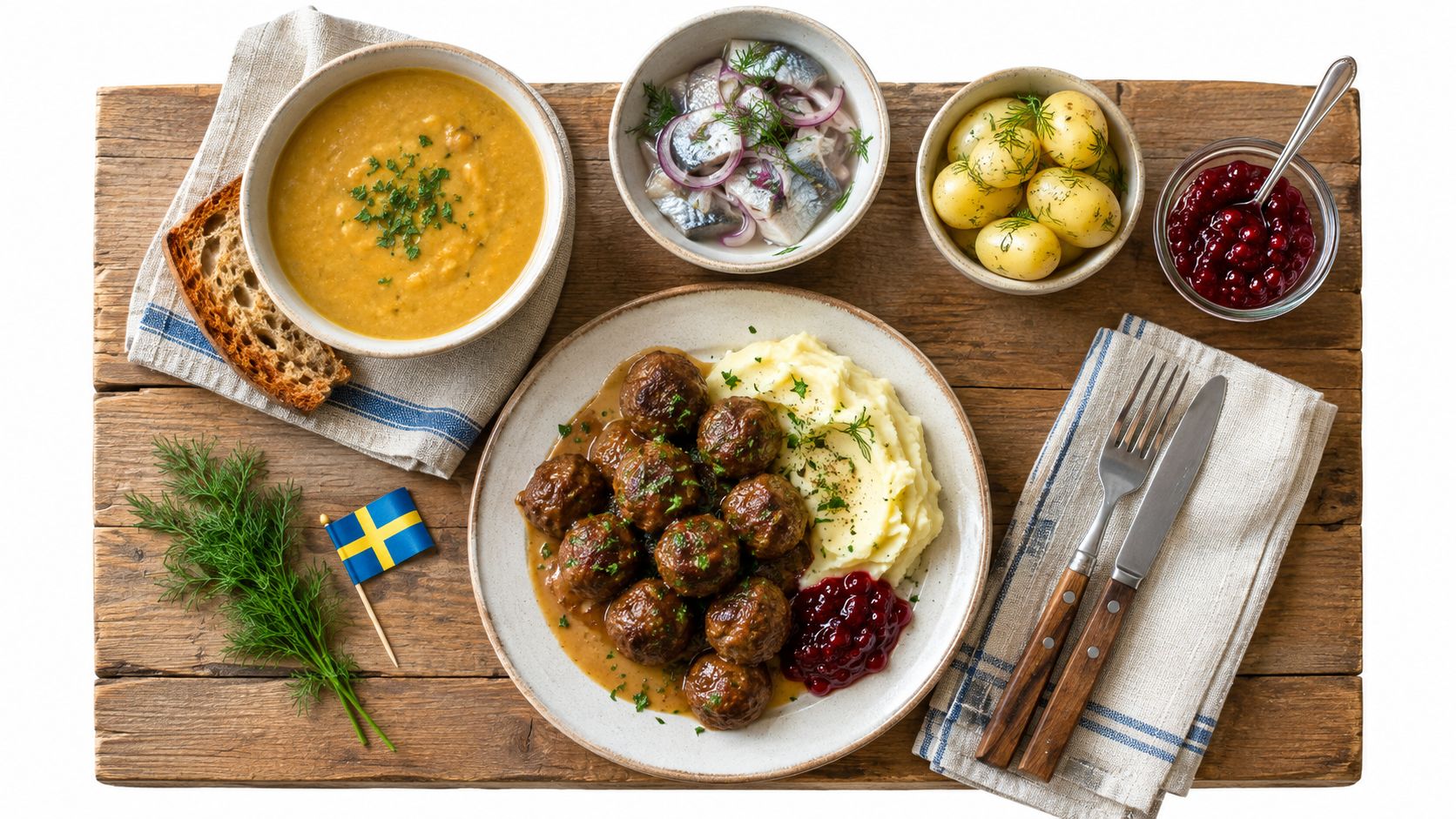
Why did meatballs win that cultural contest? They combine familiar home cooking with a clear visual identity. Ground meat, onion, egg, breadcrumbs soaked in milk, and a browned exterior create a compact, practical dish. The accompaniments add the contrast that makes the plate memorable, rich sauce, soft potatoes, sharp pickles, and sweet-acidic berries.
The dish also reflects husmanskost, Sweden's tradition of filling, economical home-style food. It became broadly popular during the mid-19th century, when mechanical meat grinders made minced meat easier for households to process, while its documented culinary history reaches back further. Swedish cookbook author Cajsa Warg used the term köttbulle in a recipe published in 1755, according to the documented history of Swedish meatballs.
Yet global recognition can narrow the picture. Pickled herring, crispbread, gravlax, root vegetables, cloudberries, aged cheese, and seasonal seafood reveal a cuisine built around storage and local resources. Meatballs are the most recognizable symbol, but Swedish food culture is broader than one plate.
Practical rule: Treat köttbullar as Sweden's signature food experience, not as proof that every Swedish tradition leads back to meatballs.
How Climate and Preservation Shaped Swedish Cuisine
Long before modern restaurants shaped visitors' expectations, Swedish households had to make food last. A cold climate, limited growing seasons, long winters, extensive forests, and productive coastlines all encouraged techniques that preserved food beyond the moment of harvest or catch.
Salting, smoking, drying, fermenting, and pickling were practiced as early as the Viking period, helping households store fish, meat, vegetables, and dairy through winter. These methods weren't decorative culinary choices. They were practical responses to seasonal scarcity, and they left a lasting mark on Swedish flavors.
The pantry before the restaurant
Bread and porridge remained important staples for more than 1,000 years, while milk, cheese, pork, fish, and game supplied much of the population's protein. Root vegetables such as onions, turnips, and rutabagas grew reliably and stored well. A meal based on durable ingredients could feed a household when fresh produce was limited.
The potato changed that pattern. It entered Swedish cuisine around 1720 and gradually replaced older root vegetables as the country's most important base crop, a shift documented in Sweden's food-culture history. Potatoes later became a natural partner for meatballs, herring, cured fish, and other foods that benefit from a mild, filling starch.
Fish preservation also shaped communities. Salting and curing supported trade and influenced settlement patterns in coastal areas, where access to the sea affected both livelihoods and daily meals. That history still appears on contemporary tables through crispbread, pickled herring, gravlax, fermented dairy, potatoes, and the Christmas julbord buffet.
| Food tradition | Practical purpose | Cultural expression |
|---|---|---|
| Pickling and salting | Extending the life of fish and vegetables | Herring at festive meals |
| Drying and smoking | Preserving meat, fish, and dairy | Pantry foods suited to winter |
| Root-crop cooking | Using dependable, storable produce | Potatoes and traditional dumplings |
| Fermentation | Transforming and preserving seasonal ingredients | Fermented fish and dairy |
That background makes Swedish cuisine less about minimalist presentation than about intelligent use of available resources. The modern image may emphasize clean design and simple flavors, but the underlying food culture is resourceful, seasonal, and shaped by necessity.
The History Behind Swedish Meatballs
Swedish meatballs are famous partly because they fit an easy national story. The history is less tidy. A popular version says King Charles XII brought the recipe back from the Ottoman Empire, yet that link remains disputed, and earlier references in Sweden complicate the claim.
References to frikadeller appear in Swedish writing as early as 1650, before the king's Ottoman exile. The term köttbullar also appears in an 18th-century source without a documented tie to Charles XII. That record suggests exchange, adaptation, and local naming mattered more than any single origin story.
A localized tradition, not a sealed-off invention
Swedish meatballs make more sense as a local version of a broader food tradition. Meatballs existed across Europe, but Sweden gave them a recognizable identity through household practice, common ingredients, and the way they are served at the table.
Cajsa Warg's 1755 recipe offers an early documented use of the Swedish term. The dish became easier for ordinary households to prepare in the mid-19th century, when mechanical meat grinders made minced meat more practical in home kitchens. Ground beef and pork, eggs, milk-soaked breadcrumbs, and onion suited a style of cooking shaped by thrift, familiarity, and ingredients many families already knew how to use.
The plate matters as much as the meatball. Brown cream sauce brings richness. Potatoes provide ballast. Lingonberries add sweetness and acidity, and pickled cucumber sharpens the whole combination. Together, those elements create the flavor balance many diners now read as distinctly Swedish.
That balance also explains why the dish can travel while still changing form. A recipe such as egg noodles and meatballs is useful as a comparison point, because the shift in starch and serving style shows how much the classic Swedish version depends on its usual accompaniments.
Its international reputation grew during the 20th century through Swedish restaurants and food retailers. That visibility turned köttbullar into one of the country's most recognizable exports, but it also flattened the story. A dish can become globally familiar without representing the whole of a national cuisine.
The strongest conclusion is the least absolute. Swedish meatballs have clear Swedish identity, but not because they appeared in isolation. They took shape through adaptation, local taste, and domestic tradition, which is often how national dishes emerge in the first place.
Regional Swedish Dishes Worth Seeking Out
Sweden looks less uniform on the plate than many visitors expect. Meatballs may dominate souvenir menus, but regional cooking tells a broader story, one shaped by coastlines, forests, island farms, and older methods of keeping food edible through long winters. Herring, cured salmon, potato dumplings, berries, crispbread, and assertive dairy products often say more about place than any single famous dish.
Northern and coastal traditions
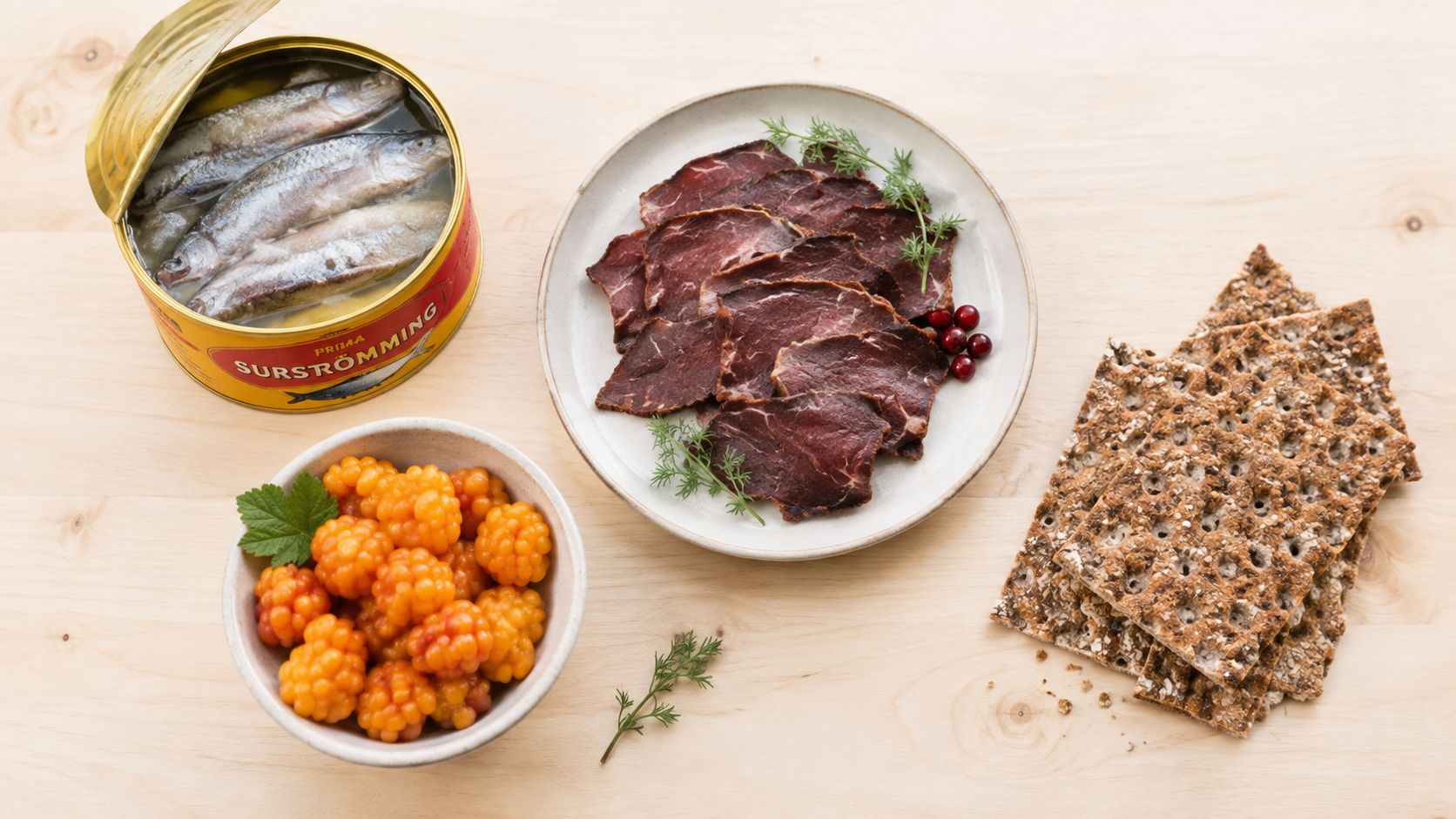
Surströmming is fermented Baltic herring, and its reputation often arrives before its history. The fish is cleaned and placed in strong brine for approximately two days, until the blood has been removed. It then moves into weaker brine, where fermentation continues for six to eight weeks, creating the powerful smell that has made it notorious far beyond Sweden.
Some diners treat it as a test of courage. Others see it as a serious regional food tied to northern Sweden and to preservation practices that mattered long before curiosity-driven tasting videos existed. Flatbread, onion, and sometimes schnapps commonly accompany it, and the meal makes more sense in that setting than as an isolated dare.
Gravlax offers a quieter expression of the same preserved-seafood tradition. Thin slices of cured salmon with mustard and dill connect restaurant dining to older techniques for handling fish before refrigeration became routine. Pickled herring belongs in that conversation too, especially at festive meals where several versions may appear side by side.
Forests, farms, and island kitchens
Kroppkakor, the potato dumplings associated especially with Öland and southern Sweden, show how regional dishes can be filling without being flashy. They are usually stuffed with pork and onion, then served with lingonberries, melted butter, or sour cream. In practical terms, potatoes do not sit beside the meal here. They are the meal's framework.
Cloudberries point in another direction, toward the north and the forest. Their tartness suits desserts and preserves, and their scarcity helps explain why they carry a certain prestige. Västerbottensost, a sharp aged cheese, adds another regional marker for travelers interested in Swedish dairy traditions.
Berries also complicate the standard story of Swedish food. For a closer look at how Nordic summers and preserved fruit meet, the Lello Journal's guide to wild blueberry preserves offers useful context. Taken together, these dishes suggest that Swedish cuisine is less a single national template than a collection of local habits, ingredients, and preservation traditions.
Where and When to Experience Swedish Food
The best Swedish food experience depends on timing. Some dishes belong to ordinary lunches, while others appear during celebrations or seasonal gatherings. A visitor who understands that distinction will order with more confidence and avoid treating every traditional food as an everyday staple.
Follow the calendar
Crayfish parties are associated with August and combine seasonal seafood with communal dining. Julbord, the Christmas buffet, brings together multiple preserved, baked, and cooked foods in December. Herring appears in several festive contexts, while fika turns coffee and baked goods into a social pause rather than a hurried snack.
Markets, farm shops, seasonal festivals, and traditional restaurants can all offer useful entry points. A smörgåsbord-style meal provides breadth, while a focused regional restaurant may explain one ingredient or preparation in greater depth. Local menus are often more revealing than restaurants that reduce Swedish food to a single tourist-friendly plate.
Order with context
Menu language can seem intimidating, but several terms quickly become useful:
- Köttbullar means Swedish meatballs.
- Sill refers to herring, often pickled.
- Gravad lax means cured salmon.
- Knäckebröd is crispbread.
- Lingonsylt is lingonberry preserve.
- Kroppkakor are potato dumplings.
Ask whether a dish is part of a seasonal menu, an everyday lunch, or a celebratory spread. That answer often tells more about its cultural role than the ingredient list.
The same approach works when planning food-led activities in Amsterdam. Visitors can use a guide to the best markets in Amsterdam to find settings where local ingredients, informal eating, and group exploration naturally overlap. Markets aren't replicas of Swedish food culture, but they encourage the same useful habit, tasting beyond the obvious signature dish.
Dining etiquette is generally relaxed. Sharing several plates, trying unfamiliar preparations, and asking about regional origins can make a meal more rewarding. The strongest food itinerary leaves room for both a famous classic and something that the group didn't recognize before arriving.
The Health and Sustainability Debate
Swedish food gets sold as wholesome almost by default. The reality is harder to package. A cuisine built on preserved fish, dairy, meat, bread, berries, and seasonal produce can look balanced in one setting and heavy in another, depending on what gets celebrated, how often it is eaten, and what modern consumers expect from a healthy diet.
Recent environmental reporting on Sweden points to that tension. Roughly 40% of Swedes consume a diet considered unhealthy, and food consumption accounts for about one-third of household consumption-based greenhouse-gas emissions, as outlined in an assessment of Sweden's environmental and consumption challenges. Those figures do not prove that Swedish food is uniquely problematic. They do challenge the easy assumption that a country associated with forests, clean water, and orderly living must also eat in a uniformly healthy or low-impact way.
Tradition under pressure
Official nutrition advice has begun to reflect that shift. Sweden's 2023 Nordic nutrition guidance brought environmental impact into the discussion alongside nutrients and eating habits. That changes the terms of the debate. A plate can be traditional, satisfying, and culturally familiar, while still raising questions about sourcing, frequency, and portion size.
The retail picture adds another layer. Grocery sales reached SEK 430 billion in 2025, up 7.1% year over year. Spending on fish, seafood, vegetables, root vegetables, legumes, and cereals showed stronger volume growth than some more indulgent categories, according to the same European Environment Agency country overview. Yet organic products still represented about 3.9% of grocery sales in 2024. Sweden's reputation for environmental awareness is real, but reputation and everyday buying habits do not always line up neatly.
For visitors, that does not mean turning dinner into a moral test.
It means reading Swedish food with more care than travel clichés allow. Meatballs, cream sauces, pastries, and celebratory spreads all belong to the story, but so do seasonal vegetables, modest portions, rye breads, legumes, and older habits of using ingredients carefully. Even alternatives that sound lighter, such as seafood or dairy-based dishes, carry their own sustainability questions.
The same applies to drinking culture. A useful parallel appears in this guide to local Amsterdam beers, where regional identity becomes more interesting when approached with curiosity and moderation rather than simple consumption. Swedish cuisine invites the same approach. Respect the tradition, then consider how today's health and environmental expectations reshape it.
What Makes Swedish Food Truly Swedish
Swedish food is best understood as a method of living with place. Preservation, seasonality, economical ingredients, communal meals, and regional variation connect foods that otherwise seem unrelated. Meatballs sit within that framework, but they don't define its entire boundary.
Köttbullar became iconic because they translate well across borders. Their shape is familiar, the ingredients are approachable, and the classic accompaniments create a memorable balance. Yet the disputed Charles XII story shows why culinary identity needs nuance. A dish can become culturally Swedish without being an isolated invention that emerged from nowhere.
Other foods expose the deeper pattern. Surströmming records a northern preservation tradition. Gravlax reflects the relationship between fishing and curing. Kroppkakor show how the potato became central to practical cooking. Cloudberries and aged cheese point toward forests, farms, and local production. Crispbread and pickled herring connect daily eating with storage techniques developed for difficult seasons.
Swedish food feels most distinctive when visitors look for the relationship between ingredient, season, and occasion.
That perspective also changes how travelers plan. A meatball meal can be a good introduction, but a broader itinerary should include a market, a seasonal buffet, a bakery pause, or a regional specialty. The aim isn't to reject the famous dish. It's to place it in the context that made it meaningful.
The same curiosity can shape an Amsterdam evening built around food and drink. This guide to a foodie's night out in Amsterdam can help groups think beyond a checklist and match local flavors with the kind of social experience they want.
Ultimate Party Amsterdam offers guided pub crawls, canal booze cruises, and private nightlife planning for groups exploring Amsterdam together. Visitors who appreciate Swedish food's balance of shared traditions and local discovery can visit Ultimate Party Amsterdam to plan a social night that combines Amsterdam's drinks, neighborhoods, and group-friendly atmosphere.
🍻
Experience it Yourself
Skip the planning — join Amsterdam's biggest pub crawl and get 6 bars, free drinks and VIP club entry for €20.