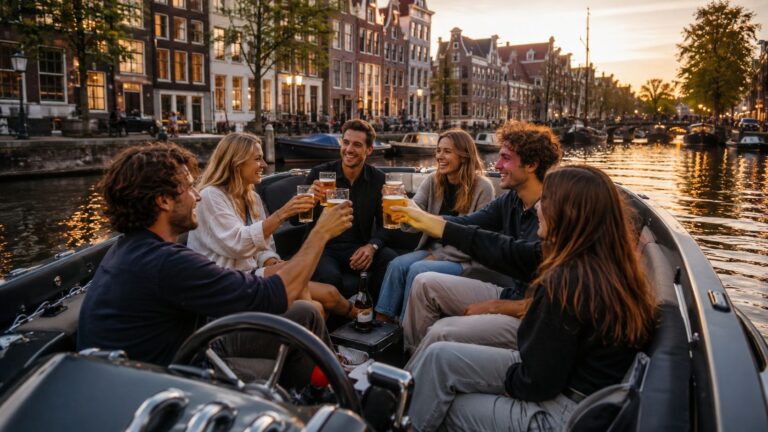
A lot of Amsterdam group nights start the same way. Eight friends land in the city, everyone wants one big night out, and the plan sounds simple until the group reaches a busy club door. Half the group wants to get in fast, two people are already tired of standing, one person wants somewhere to leave a jacket, and nobody wants to lose the group inside a packed room.
That's the moment when VIP Table Service starts to make sense.
For many visitors, the idea sounds bigger or more mysterious than it really is. Some expect red ropes and celebrity treatment. Others assume it's only for huge spenders. In reality, VIP Table Service is usually a practical nightclub product. It gives a group a reserved base, a defined spend, and a simpler way to handle drinks in a crowded venue. That matters in Amsterdam, where nights often move quickly and group coordination can fall apart faster than expected.
Amsterdam also isn't Las Vegas or New York. Local venues have their own door policies, their own pacing, and their own social norms. A table can help a group stay together, but it doesn't cancel common-sense planning. Group makeup, arrival timing, ID, and expectations still matter.
Since 2005, teams working in Amsterdam nightlife and group planning have seen the same questions come up again and again. What does a table include? Is the quoted amount the bill? Is it worth it for a smaller group? What happens if the group also wants a canal cruise or pub crawl earlier in the night?
This guide answers those questions in plain language. It breaks down what VIP Table Service means, how the minimum-spend model works, what costs people often miss, and when a table is a smart move for an Amsterdam night out.
Table of Contents
- Introduction to VIP Table Service in Amsterdam Nightlife
- What VIP Table Service Really Means and How It Works
- What Is Typically Included and What Is Not
- How Much VIP Table Service Costs and How to Budget Per Person
- How to Book VIP Table Service Without Common Mistakes
- VIP Tables Versus Other Amsterdam Nightlife Experiences
- Planning Your VIP Night With Ultimate Party Amsterdam
Introduction to VIP Table Service in Amsterdam Nightlife
A common Amsterdam scenario looks like this. A stag group has dinner near the center, heads toward nightlife around midnight, and suddenly the evening gets messy. The line is longer than expected, the bar area is shoulder to shoulder, and the group splits within twenty minutes because some people want drinks while others want to dance.
That's one reason VIP Table Service became such a strong part of nightlife economics. One market report projects the global nightclub VIP hospitality market at $4.2 billion in 2025, rising to $6.8 billion by 2034, with table reservations accounting for 32.5% of the market, or about $1.37 billion in 2025. The same report says VIP packaging often delivers 3 to 8 times the cost of general admission, with $300 to $1,000+ per person per event and average table reservations of $1,500 to $5,000 depending on venue tier and timing. That's why clubs treat tables as a separate business model, not just a luxury extra, as outlined in this nightclub VIP hospitality market report.
Why groups look at tables in Amsterdam
In practical terms, a table solves three group problems:
- Staying together: A reserved area gives the group a meeting point when the room gets busy.
- Reducing bar friction: Drinks are handled through the table instead of repeated trips to a packed bar.
- Adding structure: The group knows where to arrive, what the spend target is, and how the night will run.
Amsterdam visitors usually look at tables for birthdays, stag and hen weekends, reunion trips, and short city breaks where nobody wants to waste the best night of the trip on queues and confusion.
Practical rule: A table makes the most sense when the group values convenience, a fixed base inside the club, and a smoother shared experience more than the lowest possible cost.
Why Amsterdam needs a different explanation
A lot of online advice about VIP Table Service is written for American club markets. That can confuse visitors planning a Dutch night out. Amsterdam groups often combine a club with canals, bars, or dinner, and local entry decisions can depend as much on timing and group mix as on money.
So the useful question isn't “Is a VIP table glamorous?” The useful question is whether it fits the group's size, budget, and style of night.
What VIP Table Service Really Means and How It Works
At its simplest, VIP Table Service means a group reserves space inside a nightclub and agrees to spend a minimum amount on drinks and related items. It's closer to reserving a restaurant table with a spending floor than paying an upgraded ticket price.

From reserved seating to bottle service
Historically, the idea didn't start as the polished product people know now. One nightlife history source traces an early form of VIP culture to Pacha, founded in 1973, where a small section was reserved for friends and special guests. It also notes that prime VIP tables later began commanding minimum spends in the thousands of euros as the concept expanded, especially through the growth of modern bottle-service culture in places such as Ibiza. In large club markets today, table minimums can range from about $550 to more than $10,000 in Las Vegas and around $100 to $1,000+ per person in New York City, as described in this history of VIP culture and bottle service.
That history matters because it explains the shift. What began as informal exclusivity became a standard nightlife product with pricing rules, service workflows, and limited inventory.
The modern minimum-spend model
Here's the key point many first-time bookers miss. The club usually isn't charging a flat fee just to sit down. The club is reserving a piece of floor space and expecting the group to spend a set minimum on bottles, mixers, and add-ons.
A simple way to understand it:
- The group reserves the table
- The venue sets a minimum spend
- That minimum is used on the table order
- Extra taxes or service charges may sit on top of it
That's why “table price” can be a misleading phrase. In most cases, the product is a spend commitment attached to space.
A VIP table is usually a spending agreement first, and a seating benefit second.
Why tables are limited
Clubs can't sell unlimited tables, even when demand is strong. Each table needs floor space, security awareness, stock handling, and staff time. One operational guide notes that a single table can generate around 15 server requests per night, with each request taking about 3 to 4 minutes, which adds up to roughly 45 to 60 minutes of service time per table per evening. That helps explain why venues often cap VIP inventory and use dedicated runners or dispense workflows, as explained in this guide to bottle-service staffing and runners.
Terms that confuse first-time buyers
A few phrases come up often:
- Minimum spend means the amount the group must spend through the table.
- Bottle service usually refers to spirits or champagne served to the table with mixers and setup.
- Host fee can refer to a handling or service layer in some markets, but it isn't universal and should always be confirmed in writing.
- VIP entry may mean a faster or managed entry process, but it doesn't erase venue rules.
That last point matters. A table improves the night when the booking is clear, the group is well matched to the venue, and nobody assumes things that were never included.
What Is Typically Included and What Is Not
A VIP table offer often looks simple on a message or booking page. The confusion starts when groups assume every venue package means the same thing. It doesn't.
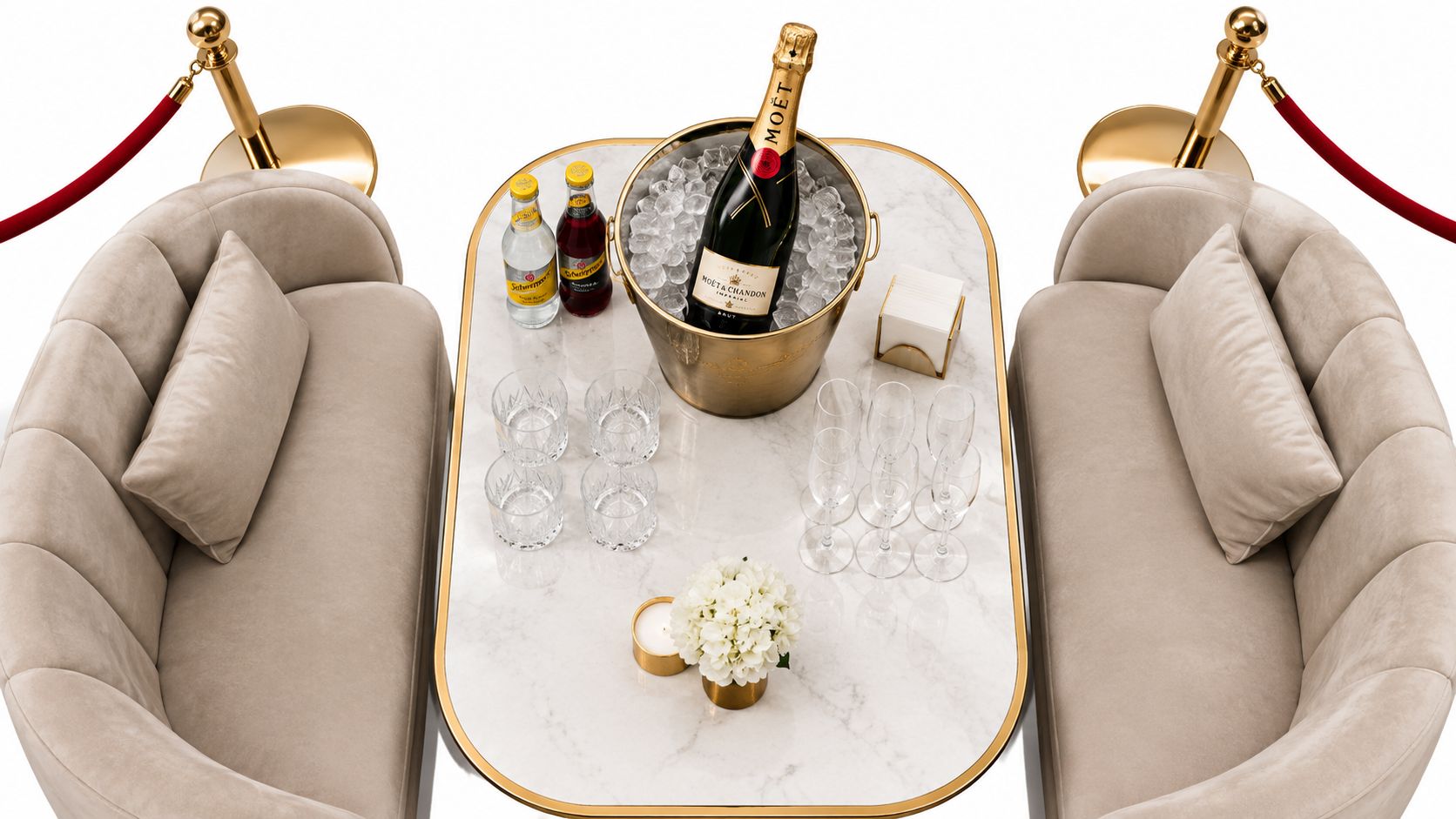
What's usually included
Most table reservations include a core set of practical benefits:
- Reserved space inside the club: This is the main value. The group gets a fixed place to sit, stand, regroup, and keep drinks.
- Access to order against the minimum: The committed spend is typically used on bottles, mixers, and selected add-ons.
- Table-side service: A server, host, or runner handles drinks rather than sending the group to the main bar.
- Some form of managed arrival: Depending on the venue, that may mean a hosted check-in, a guest list process, or a separate queue flow.
What often isn't included
People get caught out.
- Unlimited drinks: A minimum spend is not an all-you-can-drink package.
- Blanket entry for any group setup: Amsterdam nightlife guidance warns that large groups of men are one of the most common reasons people get turned away, and it advises arriving in small, preferably mixed groups. The same guidance says valid ID is checked and smoking is banned indoors in cafés, bars, and clubs, as noted in this Amsterdam nightlife guide.
- A guarantee that every extra person fits comfortably: A table has a practical capacity, even if the venue wording sounds broad.
- A clear final bill from the headline figure alone: Many offers show only the spend floor, not the total payable amount.
Why two similar offers can feel very different
A table with the same quoted minimum can produce a very different night depending on:
- Location in the room
- How many guests the venue expects at that table
- How service is handled
- Whether cover charges are already included
- What counts toward the minimum and what does not
One venue may give the group a usable home base near the energy of the room. Another may place the group at a side position with tighter seating and more limited service flow. On paper, both can look similar.
Groups should compare the written details, not just the headline minimum.
Questions worth asking before paying
Instead of asking “What's the cheapest table?”, a smarter checklist is:
- How many people is the table designed for?
- What exactly counts toward the minimum?
- Are entry charges included or separate?
- Is there an automatic service charge, venue fee, or gratuity?
- What happens if part of the group arrives late?
- Does the venue have any restrictions on group composition or dress?
That kind of clarity prevents most disappointments. The best bookings aren't the flashiest ones. They're the ones where the group knows exactly what is and isn't part of the deal.
How Much VIP Table Service Costs and How to Budget Per Person
Most confusion around VIP Table Service comes from one mistake. People budget for the quoted minimum and forget the rest of the bill.
A major nightlife guide explains that VIP Table Service is usually sold as a minimum-spend reservation, not a flat admission fee, and that automatic service charges and taxes commonly add roughly 25% to 30% on top. In practice, a quoted $1,500 minimum can settle near $1,900 before any extra cash tip, as outlined in this guide to VIP table minimums and added charges.
The number on the offer isn't the finish line
Another nightlife pricing guide notes the same wider problem. Quoted minimums often exclude tax, gratuity, and sometimes separate service or administrative fees, with typical final-cost uplifts around 20% to 35% beyond the minimum in major nightlife markets. That's one reason smaller groups often overpay on tables they don't fully use, according to this breakdown of bottle-service final cost add-ons.
That doesn't mean a table is poor value. It means the group should budget from the all-in figure, not the teaser figure.
VIP Table Cost Scenarios by Group Size
The examples below are planning examples built from the verified cost mechanics above. They show how to think, not what a specific Amsterdam club will charge.
| Group Size and Scenario | Quoted Minimum | Estimated Total with Fees | Per Person Estimate |
|---|---|---|---|
| 4 people, smaller group, quoted minimum similar to an entry-level table | $1,500 | about $1,800 to $1,950 | about $450 to $487.50 |
| 6 people, same quoted minimum shared more efficiently | $1,500 | about $1,800 to $1,950 | about $300 to $325 |
| 8 people, same quoted minimum spread across a fuller table | $1,500 | about $1,800 to $1,950 | about $225 to $243.75 |
| 10 people, larger celebration at a mid-range quoted minimum | $5,000 | about $6,000 to $6,500 | about $600 to $650 |
What the table shows
The pattern is simple. The bigger the group, the easier it is to spread the fixed commitment. For four people, a table can become expensive very quickly unless the group already planned to spend at that level. For eight or ten, the same model can feel much more reasonable because the cost is shared across more people.
That's why group composition matters as much as headline price. A table tends to work best when the group wants a table experience, not just faster entry.
Budgeting rule: Start with the minimum, then add the likely fee layer, then divide by the real number of paying guests.
When a table isn't the efficient choice
Some visitors don't need one. If the group wants to move between multiple venues, meet other travelers, and keep the spend lower, a hosted nightlife format can make more sense than locking money into one club table. For readers weighing lower-cost options, this guide to experiencing Amsterdam's nightlife on a budget is a useful comparison point.
A table usually makes sense when the group wants one venue to be the center of the night. It makes less sense when the night is about flexibility, venue-hopping, or keeping every person's cost under tighter control.
A better way to split the bill
Groups avoid tension when they settle three points early:
- Confirm the paying headcount
- Agree whether everyone splits equally or heavier drinkers cover more
- Leave room for extras ordered late in the night
That sounds basic, but it prevents the classic end-of-night argument where two people barely drank and still get asked to cover a full VIP-style split.
How to Book VIP Table Service Without Common Mistakes
Booking a table well isn't complicated. Most problems come from vague messages, late decisions, or a group that treats the reservation casually until door time.

Confirm the booking details in writing
The cleanest reservations always pin down the same basics:
- Venue and date
- Expected arrival time
- Final guest count
- Quoted minimum spend
- What charges sit on top
- What happens if the group arrives late
- Which contact person handles the night
A short written summary solves a lot. It gives the group one version of the truth, which matters once drinks start and memories get selective.
Plan for Amsterdam door reality
A table helps, but it doesn't place the group above house rules. Small, balanced groups usually move more smoothly than large all-male groups. Everyone should carry valid ID, arrive tidy, and keep the entrance interaction calm and straightforward.
This is especially important for stag and hen groups. Door teams often react to behavior before they react to spending.
The booking gets the group onto the venue's radar. The door still decides whether the group looks manageable.
Watch the timeline if the night includes canals or a crawl
Amsterdam groups often combine a table with another activity earlier in the evening. That's where logistics matter.
For canal-based plans, one guide to Amsterdam's 2026 canal rules states that boats inside the canal ring have a maximum speed of 7.5 km/h, the skipper is subject to a 0.2‰ BAC alcohol limit, and passengers may drink freely. The same guide notes fines for swimming or jumping from the boat (€95), throwing waste into the water (€150 per offence), and playing music above 85 dB at 25 metres, as detailed in this summary of Amsterdam canal rules and fines.
Another Amsterdam water-activity guide notes that small electric boats may be rented self-drive without a licence, but the driver must be over 18, amplified music isn't allowed on open boats, with a cited fine of around €140, and the skipper must stay sober, according to this overview of Amsterdam boat rental rules.
Those rules matter if a group is trying to squeeze too much into one evening. A delayed cruise can create a late club arrival. A self-drive plan only works if someone stays sober enough to drive legally.
Don't ignore cancellation terms
For group planning, cancellation policy matters almost as much as price. One Amsterdam pub-crawl style product uses a common rule of free cancellation up to 24 hours before the scheduled start, after which the booking becomes non-refundable and changes aren't accepted, as shown in this example of Amsterdam nightlife cancellation terms.
That kind of timing is worth checking on any nightlife booking, especially when flights, dinner plans, and group arrivals are still shifting.
VIP Tables Versus Other Amsterdam Nightlife Experiences
A table is only one way to build a strong night. In Amsterdam, the smarter question is usually which format fits the group's energy, budget, and social style.
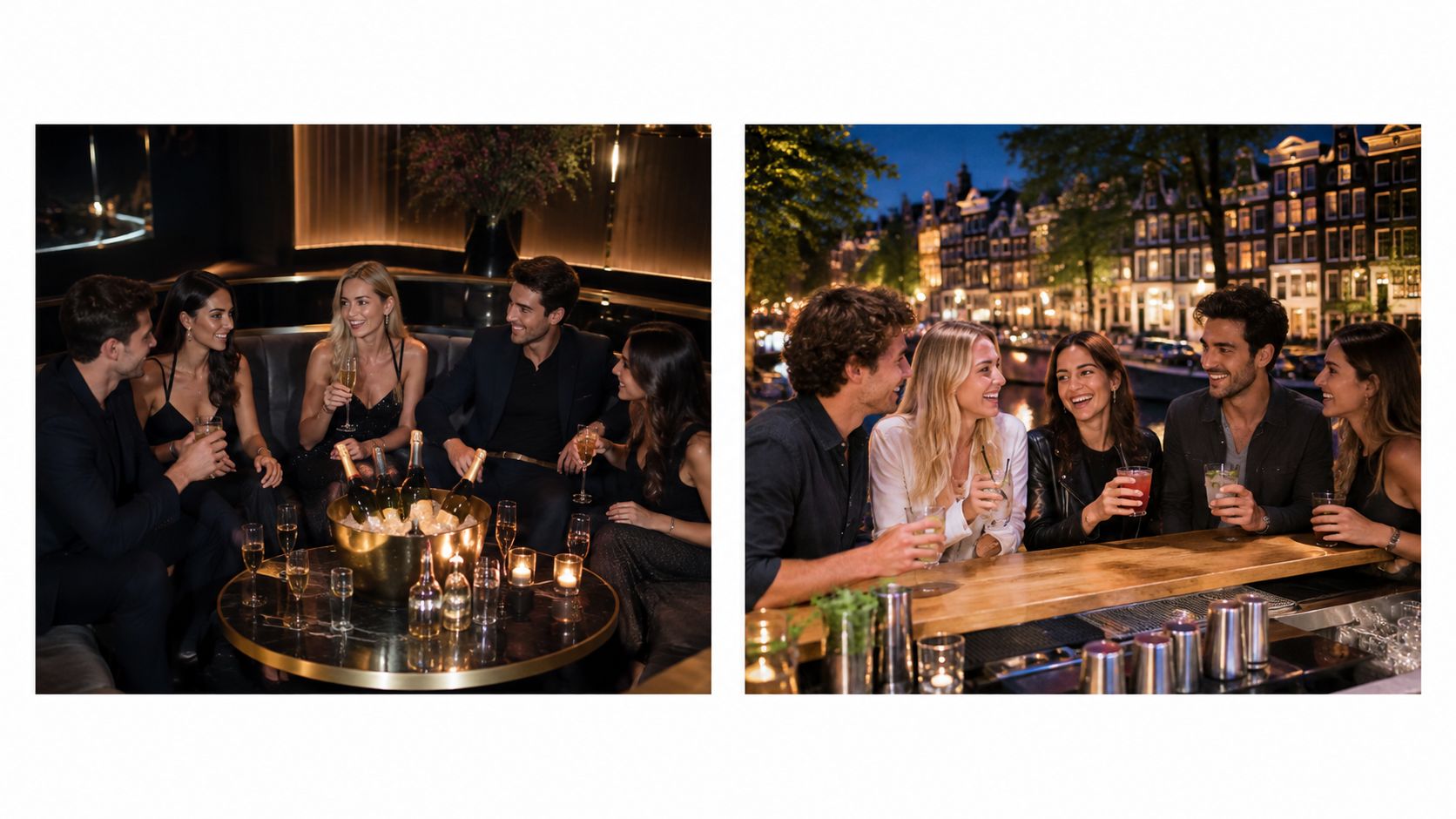
When a VIP table is the right tool
A club table suits groups that want one venue to be the centerpiece. That often means a birthday group, a stag or hen party focused on a late-night club, or friends who care more about having their own base than meeting lots of new people.
The upside is control. The group has one space, one spend plan, and one anchor point inside the venue.
When a hosted pub crawl fits better
A pub crawl suits a different mood. It works well for solo travelers, smaller friend groups, and mixed groups who want movement, variety, and an easier social atmosphere. Instead of paying for one fixed club base, the group gets a route, hosts, and multiple venues in one night.
That's also useful for visitors still deciding which district matches their style. This guide to Amsterdam nightlife areas helps clarify whether the group is better matched to a crawl-heavy area, a dance-bar zone, or a club-focused plan.
When a canal experience wins
A canal booze cruise is often the better opening move for groups that want conversation first and club energy later. It suits birthdays, reunion groups, and city-break visitors who want an Amsterdam feeling in the night rather than only a club-room experience.
One practical option in this category is a concierge-style approach that coordinates moving parts in one place. Ultimate Party Amsterdam offers guided pub crawls, canal booze cruises, and nightlife concierge coordination including VIP tables, event tickets, restaurant reservations, and transport, which makes it relevant for groups trying to combine formats without juggling separate bookings.
A table gives the group a base inside one venue. A crawl gives the group movement. A canal night gives the group atmosphere and shared time before the club decision even starts.
The best nights often combine formats well. For example, a group might begin on the canals, move into bars, then finish with a table only if the final venue really fits the group size and budget.
Planning Your VIP Night With Ultimate Party Amsterdam
Good VIP Table Service planning comes down to fit. The group should check four things before booking. Group size, realistic budget, whether the group wants to stay in one venue, and how much certainty matters compared with flexibility.
That decision gets easier when the night is viewed as a whole rather than as one isolated booking. Some groups want a club table as the main event. Others will get more value from a hosted pub crawl, a canal cruise, or a combination where the club comes later and with clearer expectations. The key is matching the format to the group, not forcing every celebration into the same template.
For visitors who want one point of contact for the moving parts, Ultimate Party Amsterdam can coordinate nightlife elements such as VIP tables, tickets, restaurant reservations, and transport, alongside the company's guided pub crawls and canal cruise options. That's useful for international groups that don't want separate conversations with multiple venues while also managing arrival times, guest numbers, and shifting plans.
The practical side matters too. Amsterdam nights run more smoothly when bookings are confirmed in writing, cancellation terms are checked early, and the group has one clear timeline from dinner to final club entry. For pub crawls, a common planning advantage is free cancellation up to 24 hours before the start, which helps when travel plans are still settling.
A good VIP night doesn't start at the table. It starts with realistic planning.
Ultimate Party Amsterdam offers nightly pub crawls, canal booze cruises, and concierge help for groups that also want VIP Table Service arranged properly. For visitors who want one plan instead of scattered bookings, Ultimate Party Amsterdam is a practical place to sort the route, the timings, and the right nightlife format for the group.
🍻
Experience it Yourself
Skip the planning — join Amsterdam's biggest pub crawl and get 6 bars, free drinks and VIP club entry for €20.