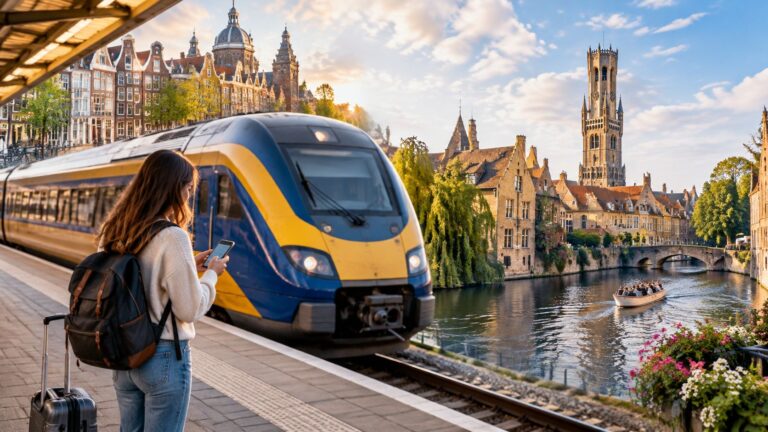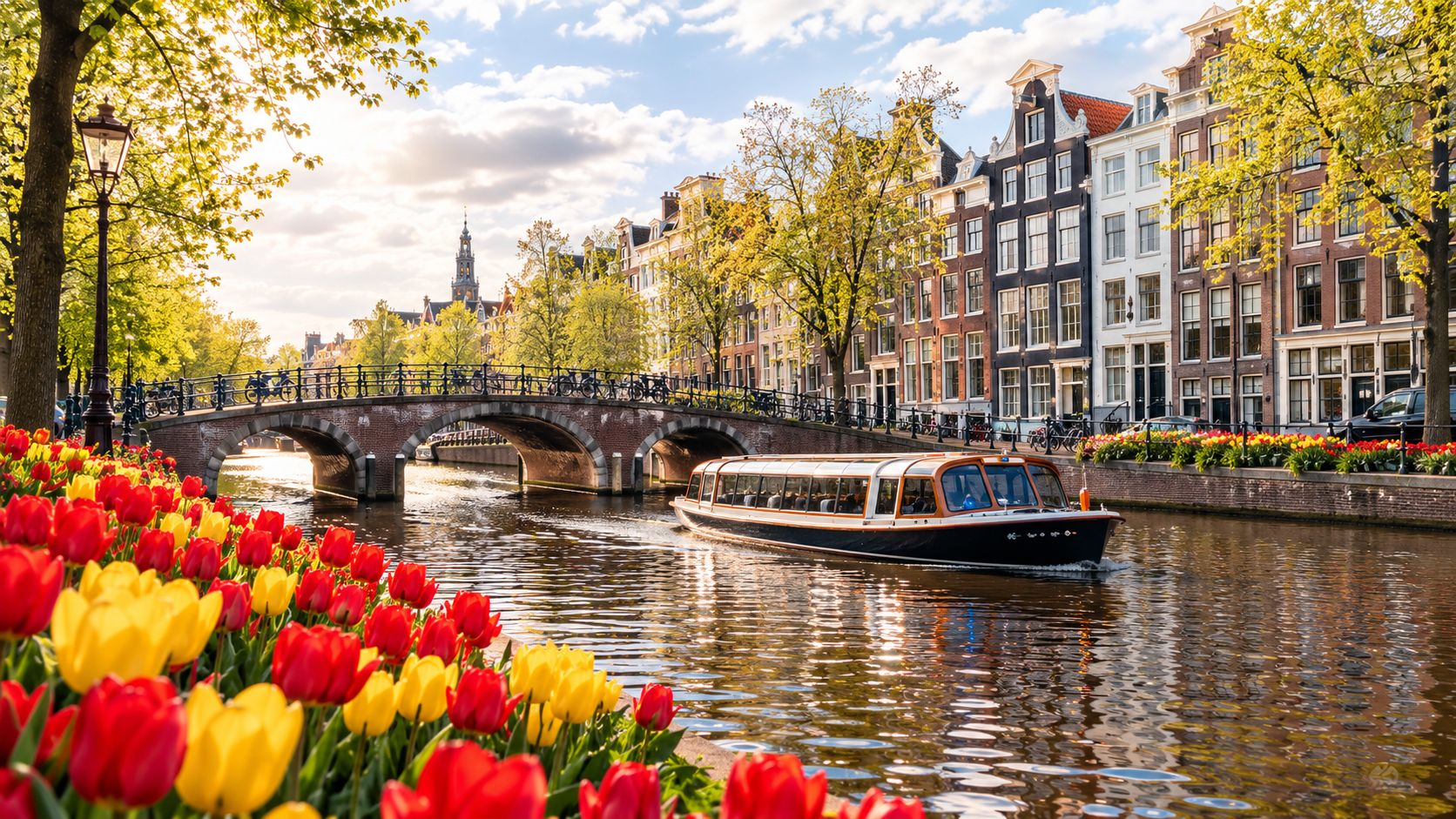
A group of six steps off the train at Amsterdam Centraal in mid-April expecting golden tulip weather. Instead, grey skies sit over the IJ, the wind cuts through light jackets, queues gather around canal-side attractions, and King's Day is only two days away. The city is beautiful, but it isn't behaving like a postcard.
That gap matters when a spring trip includes fixed-time activities. A flower excursion can run late, a canal boat can feel colder than the temperature suggests, and an evening plan that looked easy online can become awkward once crowds, rain and transport diversions enter the picture. Visitors comparing seasonal city breaks may also find useful planning context in this French Riviera 2026 travel guide, but Amsterdam needs its own weather and crowd strategy.
Table of Contents
- Why Spring in Amsterdam Feels Different From the Brochure
- Amsterdam Spring Weather by Month
- Tulip Fields and Keukenhof Day Trips
- King's Day and Peak Weekend Crowds
- Canal Cruises in the Spring Zero-Emission Zone
- Pub Crawls Versus Booze Cruises for Groups
- A Realistic Three-Day Springtime in Amsterdam Itinerary
- Packing, Booking, and Common Spring Mistakes
Why Spring in Amsterdam Feels Different From the Brochure
Springtime in Amsterdam is not one uniform travel season. March, April and May create different conditions for walking, sightseeing, outdoor dining and nightlife, while tulip demand and public events can change the character of a weekend almost overnight.
Keukenhof is a major reason the Amsterdam region attracts international spring visitors. The gardens in Lisse, roughly 30 kilometres southwest of central Amsterdam, welcomed more than 1.4 million visitors between 21 March and 12 May 2024, with guests arriving from more than 100 countries. Visitors from the Netherlands represented 20% of the total, according to Keukenhof's official background information. That concentration creates a reliable pattern, daytime flower trips followed by busy central streets and evening entertainment.
The arrival problem groups underestimate
A mid-April group may have enough daylight for a museum, canal walk and dinner, but not necessarily enough energy for all three before a late-night activity. The cool wind off the water makes an open boat feel sharper than a sheltered street, and wet cobblestones turn a short walk between venues into a slower, less comfortable transfer.
Late sunsets help sightseeing, but they can also blur the boundary between afternoon and evening. A group may still be taking photographs in the Jordaan when a timed cruise, dinner reservation or hosted nightlife plan is due to start. A realistic itinerary leaves space for delays instead of treating every hour as available.
Practical rule: Spring plans work best when one weather-dependent activity is paired with one reliable indoor or hosted evening option.
Why April needs more caution
April often combines the strongest tulip interest with rising visitor pressure and a fixed national celebration. King's Day takes place on 27 April every year and is a national holiday, so groups arriving around that date should expect public-space access, transport and evening arrangements to require more planning. The official city guidance explains the date and holiday context in its King's Day information.
The useful question isn't whether spring is worth visiting. It is whether a group's chosen activities match the conditions on that particular date. March favors flexible indoor evenings. April rewards early reservations and weather backups. May offers more comfortable outdoor possibilities, but the later light can push dinner and nightlife later than some visitors expect.
Amsterdam Spring Weather by Month
Amsterdam's spring weather improves gradually, but it doesn't become reliably warm on a fixed schedule. Long-term climate summaries put the average high at 10.4°C in March, 13.5°C in April and 16.9°C in May, while average lows rise from 3.7°C to 6.7°C and then 10.2°C. The same summary records roughly 16 rainy days in March, 14 in April and 13 in May, as detailed by this Amsterdam spring weather overview.
The figures translate directly into planning decisions. March needs waterproof layers and short outdoor sections. April can support a flower day and a terrace if the forecast cooperates, but a rain plan remains essential. May is the easiest month for longer outdoor use, though evenings beside exposed water can still feel cool.
| Month | Avg High / Low (°C) | Rainy Days | Sunset, mid-month | What It Means |
|---|---|---|---|---|
| March | 10.4 / 3.7 | About 16 | Later daylight than winter, but exact time varies by date | Pack waterproof outerwear, plan indoor breaks and avoid relying on an exposed late-night boat |
| April | 13.5 / 6.7 | About 14 | Noticeably later evenings | Use layers, schedule flower trips early and keep a rain alternative for fixed-time activities |
| May | 16.9 / 10.2 | About 13 | Daylight can last until after 21:00, according to seasonal daylight guidance | Outdoor dinners and later cruises become more practical, but wind and showers still matter |
Clothing should follow the activity
A waterproof jacket is more useful than a heavy coat for most spring days because it handles showers without making indoor movement uncomfortable. Comfortable shoes matter for museum districts, bridges and uneven paving, while a light warm layer protects against wind on the IJ and open canal sections.
March visitors should avoid building a whole evening around outdoor terraces. April groups can start outside and move indoors when the weather turns. May travelers have more flexibility, but short sleeves in the afternoon don't guarantee a comfortable ride after sunset.
Rain doesn't automatically cancel a nightlife plan. It changes the best format. A hosted pub crawl can remain workable because the route has movement and indoor stops, while a canal cruise needs careful timing, warm layers and a boarding location that doesn't add an unnecessary exposed wait. Groups needing more indoor ideas can use this guide to rainy-day activities in Amsterdam.
Tulip Fields and Keukenhof Day Trips
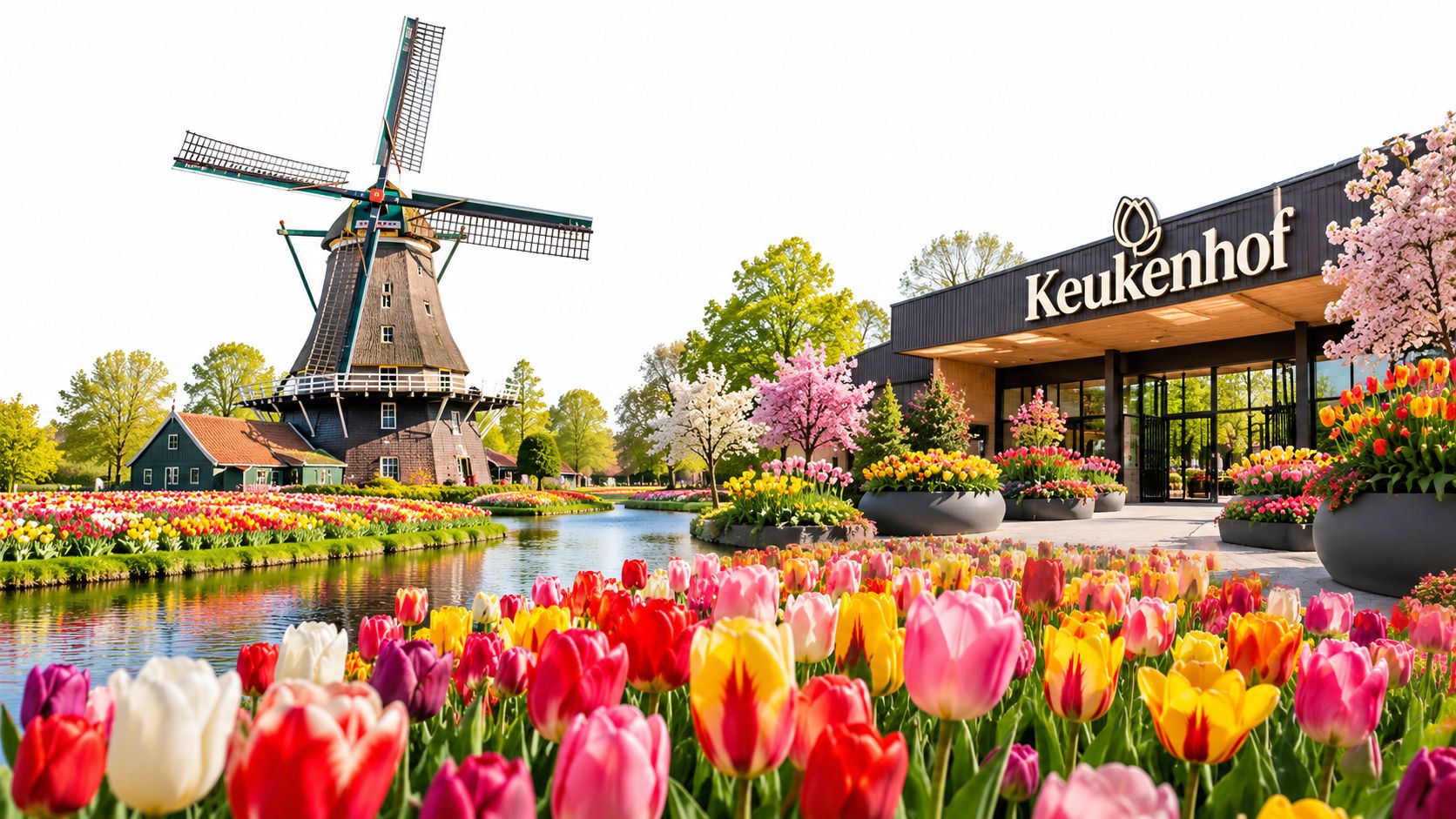
A tulip day works best when the group treats it as the main daytime event rather than an add-on squeezed between several reservations. Keukenhof's annual opening window is short. For the 2027 season, the official listing gives Thursday 18 March through Sunday 9 May, so date-sensitive travelers should verify the relevant year before arranging transport, as shown by I amsterdam's Keukenhof listing.
A practical flower-day sequence
Check the opening dates first. The gardens aren't a year-round attraction, and a late spring itinerary may fall outside the operating window. Bloom timing can also vary, so the middle of the season is a sensible planning target when the flowers are the priority.
Choose transport before the morning of travel. Groups can plan the journey to Lisse from Schiphol or central Amsterdam using the direct bus connection or a combined transport and entry ticket. Leaving the route undecided creates avoidable delays, especially when several people need to move together.
Start early enough to preserve the evening. A morning arrival leaves time for the gardens and surrounding flower areas without forcing a rushed return. The group can then come back toward Amsterdam, eat in the Jordaan or De Pijp and decide whether energy levels suit a canal activity.
Separate garden viewing from field cycling. Keukenhof provides a curated garden experience. A bike route around Lisse offers a different view of working flower fields and needs more time, weather tolerance and attention to local signs. Fields are agricultural property, so visitors should stay on permitted paths and never enter planted rows for photographs.
Protect the evening from the day trip
A flower excursion can be visually intense and physically tiring. Returning to Amsterdam around late afternoon gives a group time to eat, change clothes and check the weather before committing to a boat or nightlife plan. A late return followed by an immediate fixed booking is a common source of stress.
King's Day weekend deserves special care because transport, public space and reservations can become less predictable. If the dates overlap, groups should either embrace the holiday as the central event or place the flower day on another date. When flowering runs later than expected, the gardens may still be worthwhile, but expectations should shift from perfect field photography to a broader garden and city experience.
King's Day and Peak Weekend Crowds
King's Day is the single pressure point in many spring Amsterdam itineraries. It falls on 27 April, and the holiday creates a citywide celebration rather than an ordinary nightlife weekend. Orange clothing, crowded public areas, street activity and transport changes can make spontaneous group movement difficult.
Spring demand also varies sharply by date. Amsterdam accommodation visitation reached 9.5 million guests in 2025, and April is identified as especially popular because tulip season, King's Day and museum demand overlap. Event-heavy April 2025 hotel-market data recorded approximately 85% occupancy and an average daily rate of €210.87, according to Amsterdam tourism and hotel-market data.
| Metric | Ordinary April Weekend | Peak Tulip Weekend, mid-April | King's Day Weekend, 27 April |
|---|---|---|---|
| Crowd pressure | Variable, generally easier to manage | High around flower attractions and central routes | Citywide and event-driven |
| Accommodation pressure | Depends on dates and location | Higher near popular areas and timed attractions | Especially difficult for central stays |
| Planning style | Some flexibility remains | Reserve key activities early | Treat transport, accommodation and evening plans as fixed logistics |
| Best approach | Mix indoor and outdoor plans | Start flower activities early | Either plan around the celebration or avoid the date |
Booking decisions that survive the pressure
Groups should lock accommodation and timed attractions before the itinerary becomes crowded with fixed commitments. A stay farther from the canal centre may reduce accommodation pressure, but the trade-off is longer transfers when trams divert or streets close. Saving money on the room can become less attractive if every evening loses time to transport.
King's Day can still be enjoyable when the group accepts that it isn't a normal sightseeing day. Central routes may be slower, side streets may close and spontaneous restaurant or nightlife decisions may fail. A smaller, clearly communicated meeting plan works better than asking six or more people to regroup at an uncertain street corner.
The costliest mistake is treating 27 April as interchangeable with any other April Saturday. It isn't. Groups that want quiet museum time, easy restaurant access and a predictable canal departure should choose different dates. Groups that want the national celebration should reserve the core plans early and keep the rest of the day deliberately light.
Canal Cruises in the Spring Zero-Emission Zone
Amsterdam's central canal area became a zero-emission zone on 1 April 2025. Within the area inside and including the Singelgracht, pleasure boats must use electric, hydrogen or manual propulsion, while hybrid vessels may enter when operating with zero emissions. The city describes the policy as a move toward quieter and cleaner canal traffic in its official zero-emission canal guidance.
For visitors, the rule is more than an engine specification. It can affect which boats are available, where a group boards and how a route moves through the historic centre. A booking confirmation should clearly identify the departure point and propulsion type, especially when a group has selected a route because of its central canals.
Match the cruise to the light
Early spring and late spring produce different canal experiences. March and early April can give an afternoon cruise a soft, bright-water feel without requiring a late bedtime. By May, daylight can remain until after 21:00, which is useful for groups wanting a later outdoor plan, though a “night cruise” may begin before darkness is complete. That daylight detail is documented in the seasonal weather guidance linked earlier.
A practical choice looks like this:
- Short cruise: Suitable when the boat is one element of a wider evening and the group has dinner or nightlife reservations afterward.
- Longer cruise: Better when the canal is the main social activity and the group wants less movement between locations.
- Evening booze cruise: Best when the group wants a contained plan, but spring layers remain necessary on the water.
Duration and vessel capacity should come from the actual booking terms rather than assumptions. A compact private boat may suit a smaller group, while a larger party needs a vessel and boarding arrangement that can handle everyone comfortably. Walk-up planning is risky for groups around popular flower weekends or holidays, because suitable departures may not align with dinner and nightlife timing.
Canal safety needs equal attention. RIVM found fecal contamination in several Amsterdam waterways and detected eight investigated potential pathogens, including Campylobacter, Salmonella, Cryptosporidium, Giardia and norovirus, in its microbiological assessment. Guests shouldn't drink canal water or treat it as recreational water, and operators should provide stable handholds, non-slip boarding areas, clear briefings and a response plan for accidental contact.
Pub Crawls Versus Booze Cruises for Groups
For a group of friends deciding between a pub crawl and a canal booze cruise, the central question is whether the evening should keep moving or stay in one contained setting. Both formats can work in spring, but they solve different planning problems.
| Consideration | Pub crawl | Canal booze cruise |
|---|---|---|
| Movement | Walking between indoor venues | One fixed boarding point and boat route |
| Weather exposure | Short periods outdoors, with wet paving as the main nuisance | Wind, rain and temperature matter throughout the ride |
| Social rhythm | Suits groups who enjoy meeting other travelers and changing atmosphere | Suits groups wanting music, drinks and a shared plan without street navigation |
| Area preference | Works well around central nightlife districts such as De Pijp or Leidseplein | Works well when canals are the main part of the evening |
| Main trade-off | The group must keep moving and regroup in busy streets | The group has less flexibility once the boat departs |
When a pub crawl makes more sense
A crawl is a practical choice for groups that want several venues, hosted direction and interaction with other travelers. It can suit a wet April night because most of the evening happens indoors, although comfortable shoes and a rain layer still matter between stops. It also gives a group more variety than a single venue, but everyone needs to follow the meeting instructions and stay aware of the route.
Groups should review practical tips for surviving an Amsterdam pub crawl before choosing this format. The advice is especially useful for friends who have different walking speeds, drinking habits or expectations about how late the night should run.

When a booze cruise fits better
A cruise suits groups that want the activity itself to be the evening's anchor. There's no need to decide which venue comes next, and the canal setting gives a birthday, friends' weekend or group celebration a shared visual experience. The weakness is weather exposure, particularly during a cold April front or on a windy route.
Combining both formats can work across separate nights. Trying to complete a full crawl and a substantial cruise on the same evening often creates fatigue, missed meeting times and an unhappy group. One social format per night usually leaves enough energy for dinner, transport and an unplanned stop.
A Realistic Three-Day Springtime in Amsterdam Itinerary
A workable three-day plan doesn't fill every gap. It gives the weather room to change, keeps the most demanding day separate from the biggest nightlife commitment and avoids sending a tired group straight from the flower fields onto a fixed departure.
For broader planning inspiration, groups can also review these Amsterdam itinerary ideas for their trip, then adjust the schedule around weather, events and the chosen nightlife format.
Day one, city orientation and a gentle first night
Start with the Jordaan, nearby canals and a relaxed lunch. A late-afternoon canal cruise can introduce the city without using the group's best energy before the first evening. In March or a cold April spell, the cruise should be moved earlier while there's more usable daylight and less exposure after dark.
Keep the first night low-key. A hosted pub crawl can provide structure for a group still learning the city, but the itinerary should leave enough time for food and regrouping. A late arrival or delayed train is a reason to simplify the evening, not to force every planned stop.
Day two, flowers followed by a reset
Treat Keukenhof and Lisse as the main event. An early departure helps protect the afternoon, while a return to Amsterdam around late afternoon creates a buffer for showers, tired legs and changing clothes. Dinner in De Pijp can follow, with the evening left open for a quieter bar, live music or an early night.
This is the day most likely to expose poor planning. A flower visit followed immediately by a long walking route and a late party leaves no margin for transport delays or weather. Groups wanting to cycle should make that the focus rather than adding several unrelated attractions.
Day three, museums, park time and evening water
Book a timed museum slot in the morning, choosing one major museum rather than trying to rush through several. If the weather is dry, Vondelpark can provide a slower afternoon. If rain arrives, the park becomes the first element to remove.
A canal booze cruise works well toward sunset in May, when longer daylight gives the water a brighter atmosphere before the city lights take over. In March or April, an earlier departure may be more comfortable. Groups planning to cycle should check the route and conditions in advance, and can use this guide to bike rental in Amsterdam for practical preparation.
Easter dates and King's Day override this sequence. Around a major holiday, the museum, flower and nightlife order may need to shift, with transport buffers added between every fixed booking.
Packing, Booking, and Common Spring Mistakes
Spring packing in Amsterdam should support movement between indoor and outdoor settings. A small rain jacket, one warm evening layer, comfortable walking shoes and a light scarf for wind on the IJ cover more situations than a bulky coat designed for consistently cold weather.

A practical booking checklist
- Confirm date-sensitive attractions: Check the relevant Keukenhof season before building a full-day flower itinerary.
- Reserve timed entries early: Peak tulip weekends and holiday periods leave less room for spontaneous museum or transport decisions.
- Protect group transport: Confirm the exact canal boarding point, especially inside the zero-emission zone, and make sure every traveler has the meeting details.
- Keep accommodation flexible around King's Day: Non-refundable stays should wait until the dates and group commitment are settled.
- Match nightlife to the forecast: A cold, wet evening favors indoor movement, while a mild May night can support a longer outdoor plan.
- Use one realistic anchor per day: A major flower visit, museum booking or cruise should not compete with several other fixed activities.
The most expensive mistakes usually come from mismatched expectations. A late-May flower trip can miss the strongest bulb displays, a cheaper stay outside the central area can consume valuable daylight through longer transfers, and an evening boat during a cold April front can feel like endurance rather than entertainment. Some groups also assume the zero-emission policy only changes engines, when the departure point, route and timing can matter just as much.
Springtime in Amsterdam rewards travelers who plan by month and activity rather than by season label. A flexible rain plan, early attention to holiday dates and a nightlife choice suited to the group's energy will do more than packing for an imagined warm spring.
Ultimate Party Amsterdam helps groups choose between guided Amsterdam pub crawls, shared canal booze cruises and private group arrangements when spring weather and crowd pressure make nightlife planning complicated. Visit Ultimate Party Amsterdam to review the available experiences and choose a practical evening plan for the dates, group and conditions.
🍻
Experience it Yourself
Skip the planning — join Amsterdam's biggest pub crawl and get 6 bars, free drinks and VIP club entry for €20.