You've just arrived in Amsterdam with a group, everyone wants a good night out, and nobody wants to spend the evening arguing over which bar comes next. That's the practical reason organized crawls exist. Instead of leaving one person to study maps, negotiate entry, and keep counting heads, a hosted route gives the group a meeting point, a planned sequence of venues, and staff who manage the movement between them.
The important distinction is that a bar crawl isn't wandering through the Red Light District or Leidseplein and stopping whenever a doorway looks busy. It's a coordinated nightlife experience, and the quality of the night depends on pacing, venue capacity, communication, and sensible drinking.
Table of Contents
- The Basics of an Organized Pub Crawl
- How a Typical Night Unfolds
- What Is Included in the Experience
- Safety Protocols and Group Management
- Organized Crawl vs. Independent Exploration
- Planning Your Amsterdam Night Out
The Basics of an Organized Pub Crawl
A casual bar hop starts with friends making decisions as they go. An organized pub crawl starts with an event operator, a defined route, participating licensed venues, and a group expected to move together. In practical terms, the ticket normally gets a traveler into the event system, while hosts handle the route and explain what happens at each stop.
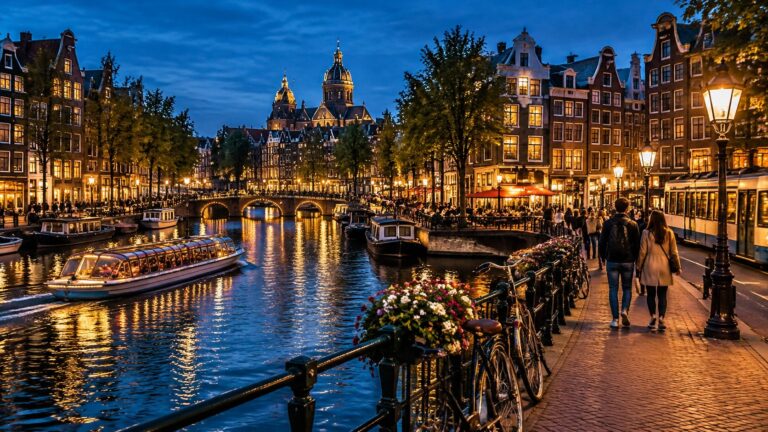
That structure matters in Amsterdam. Streets can be crowded, venues may have their own entry policies, and a group that pauses too long outside one bar can quickly split into smaller groups. On a hosted Red Light District pub crawl in Amsterdam, the point isn't merely to visit several venues. The point is to remove the repeated decisions that make independent nightlife tiring.
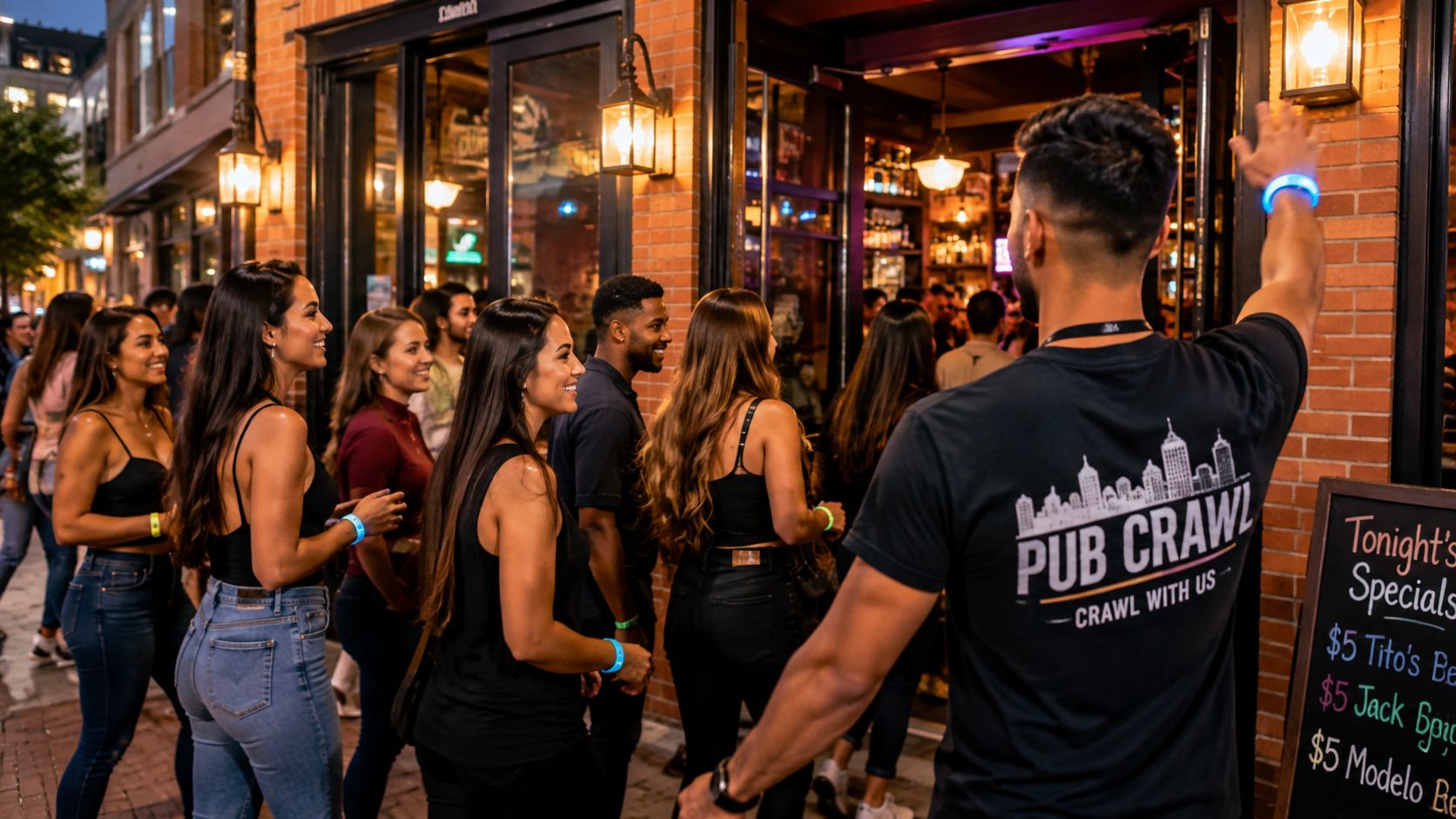
Guided movement versus free wandering
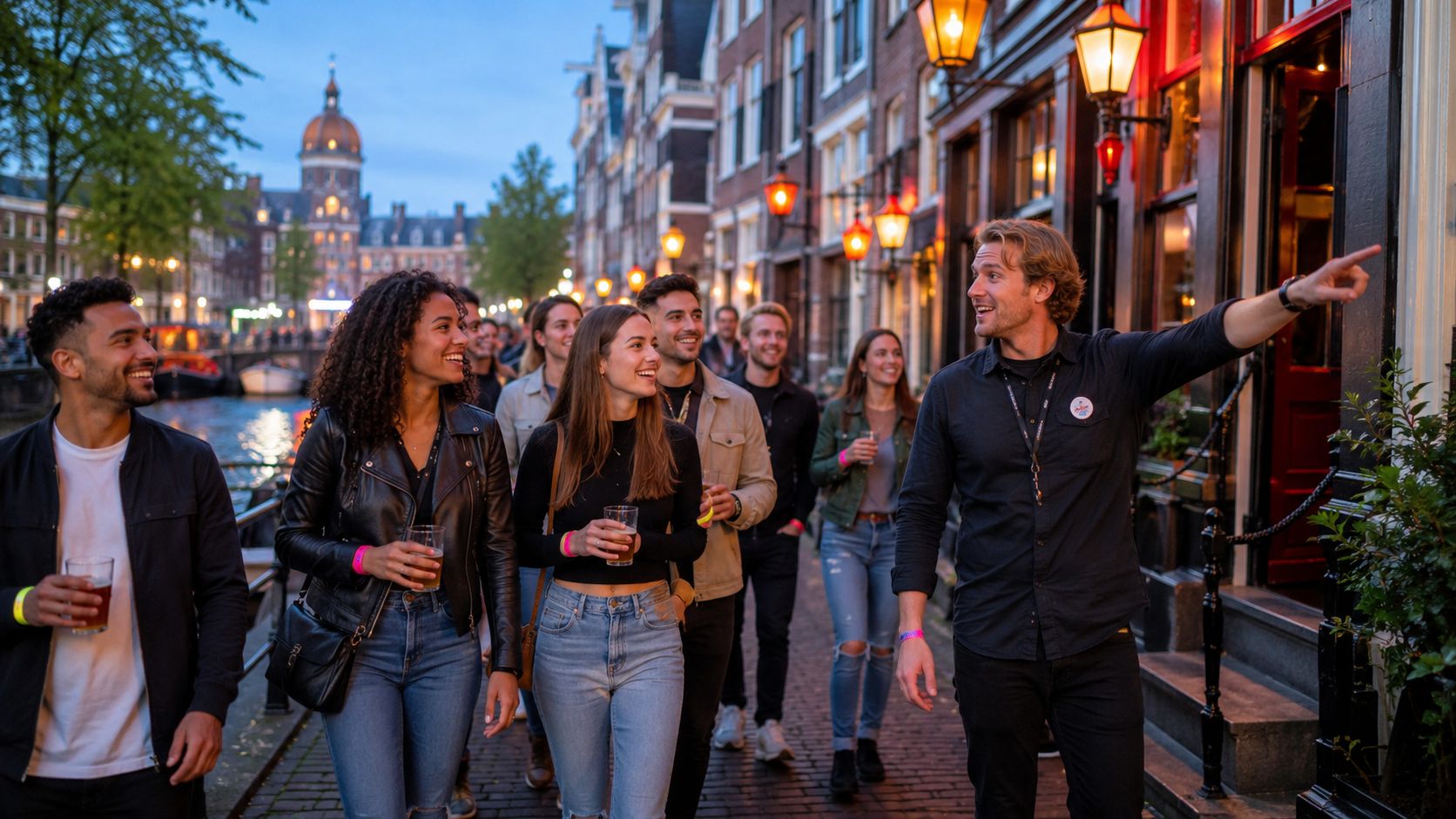
A hosted crawl usually works as a guided circuit. Participants check in, receive an identifying wristband or digital token, and follow staff to the next location. The organizer coordinates with venues, while the traveler can concentrate on meeting people and enjoying the evening.
A self-guided group carries the full operational load:
- Route planning: Someone chooses suitable venues and checks walking distances.
- Entry management: The group deals with queues, door policies, and cover charges.
- Timing: Friends must decide when to leave, often while different people want different things.
- Headcounts: The group has to notice when someone has stayed behind or gone ahead.
Neither format is automatically right for everyone. Independent exploration gives complete freedom, but it also creates more opportunities for delays and confusion. A commercial crawl is more structured because moving a group between licensed premises is the core service, not an accidental result of meeting friends for drinks. Some legal definitions describe a pub crawl as organized commercial movement between licensed premises, and some jurisdictions use organized transport involving 50 or more people as evidence of a crawl, as outlined in Rhode Island's statutory definition.
Practical rule: A crawl works best when travelers treat the route as a shared schedule, not as six unrelated bar visits.
How a Typical Night Unfolds
The simplest way to understand how bar crawls work is to follow the evening in order. A professional Amsterdam crawl usually has a clear starting location, a check-in window, several timed venue stops, and a final destination where the group can continue without immediately having to plan the next move.
Check-in sets the rhythm
Participants arrive at the meeting venue and confirm their booking with event staff. The organizer may provide a wristband, stamp, or digital confirmation. This identifier helps participating venues recognize the group and helps hosts keep the event moving.
The kickoff is also where the host sets expectations. Travelers learn the route, the meeting procedure, and any practical rules about staying with the group. Some formats include a welcome drink or shot at the opening venue, but the exact inclusion depends on the event booked, so the ticket information should be checked rather than assumed.
A six-venue example
A typical six-venue route can look like this:
- Opening bar: Check-in, introductions, and the first included drink if the package specifies one.
- Second stop: The group leaves together once the host gives the departure signal.
- Third venue: Staff manage the entrance and direct participants to the agreed meeting area.
- Middle stop: This is a sensible point for water, food, and a slower pace.
- Fifth location: The host confirms that the group is accounted for before moving on.
- Closing club or lounge: The crawl finishes at the final venue, where the event may include arranged entry or a designated group area if stated in the booking details.
Stops are often planned around 30 to 45 minutes, although actual dwell time varies with queues, venue conditions, and the event schedule. The route should stay compact. Amsterdam is walkable in the central nightlife areas, but wet weather, bicycles, tram tracks, and crowded pavements can make a short transfer slower than expected.
Participants who want the mechanics and preparation advice in one place can use this practical guide on how to survive a pub crawl in Amsterdam. The useful habits are straightforward: eat before check-in, carry identification, keep a charged phone, and tell the host early if someone needs to leave.
The transfer is part of the event
The walk between venues isn't dead time. Hosts use it to regroup, answer questions, and prevent the party from stretching across several streets. A good organizer doesn't sprint, but doesn't allow the group to dissolve either.
Participants can usually leave before the final stop, but they shouldn't assume that leaving early creates a refund or preserves every inclusion. The booking terms determine what remains available after departure.
What Is Included in the Experience
The value of a paid crawl comes from reducing the small transactions and decisions that can interrupt a night. Instead of paying a separate entry charge at every location and repeatedly figuring out where the group goes next, the ticket may combine access, selected drinks, and host coordination.
A standard organized package can include six complimentary drinks or shots, venue cover charges, queue skipping, and drink discounts when those inclusions are listed by the operator. Ultimate Party Amsterdam describes those inclusions for its crawl experiences, but travelers should still read the specific booking page because packages can differ by route or date.
Core inclusions
The usual package has three practical layers:
- Entry coordination: The organizer arranges participation with the venues on the route, which can reduce the need to negotiate at each door.
- Selected drinks: Complimentary drinks or shots may be provided at participating stops. They're part of the event package, not a requirement to consume alcohol.
- Host support: Staff explain where to go, when to move, and how to reconnect with the group if someone falls behind.
This setup creates a smoother financial experience because the main event costs are known before the night begins. It doesn't mean every expense disappears. Food, extra drinks, transport outside the route, and personal purchases normally remain separate unless the booking explicitly says otherwise.
Add-ons need separate checking
Optional upgrades can include private transfers, premium beverage arrangements, or private group coordination. Those extras aren't automatically part of a standard ticket. A group arranging a birthday, stag event, or corporate evening should ask for the exact inclusions in writing, particularly if the plan involves reserved space, transport, or a specific final venue.
The trade-off is clear. Pre-arranged access reduces friction, but it also reduces spontaneity. A traveler can't always replace a scheduled stop with any bar that looks interesting, because the organizer has planned capacity and timing with particular venues.
The safest approach is to read the booking page for four details before paying:
- What drinks are included
- Which entry fees are covered
- Whether the route or final venue can change
- What happens if the participant leaves early
That short check prevents the most common misunderstanding, namely treating a structured ticket as an unlimited, free-choice night across every venue in the city.
Safety Protocols and Group Management
Safety on a crawl comes from operations, not from a slogan. Hosts need to know where the group is, venues need enough room to receive it, and participants need clear instructions for transfers. The strongest format uses continuous staff presence rather than checking in once and leaving travelers to manage the rest.
Research into commercial student pub crawls shows why pacing matters. In one UK study, the expected median alcohol consumption over a crawl was 15 units, with 13 units for women and 18 for men, and some participants recorded blood alcohol concentrations above the legal driving limit of 0.08% BAC. Follow-up findings reported 14% hurting themselves, 9% vomiting, 7% becoming involved in an argument, 2% engaging in anti-social behaviour, and 14% reporting sexual activity or being groped during the crawl, according to Drinkaware's research on alcohol use at student drinking events.
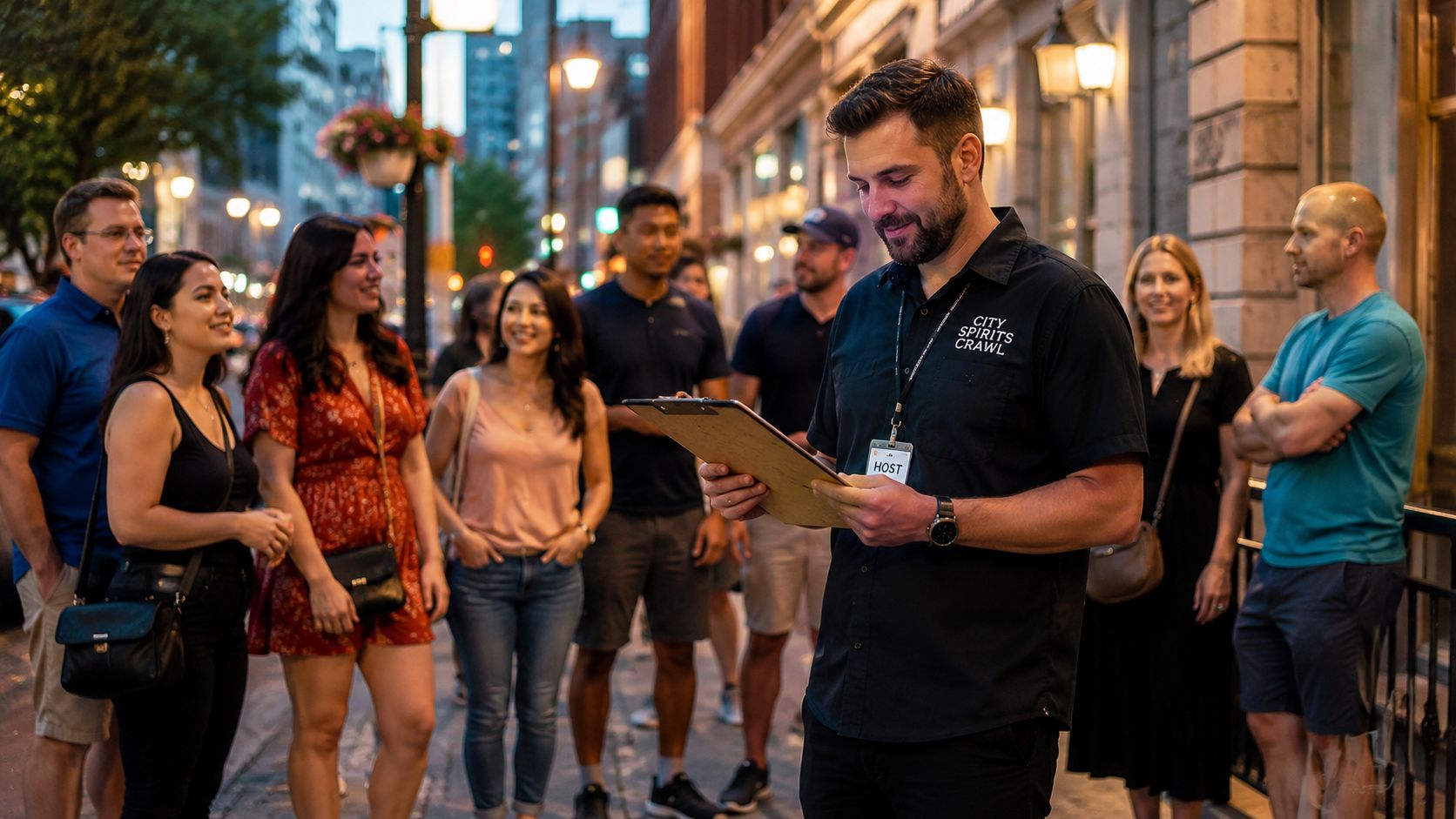
What hosts should control
A responsible team focuses on several pressure points:
- Entry condition: Hosts and venue staff should be able to refuse entry to someone who is dangerously intoxicated.
- Group size: Large crowds are harder to supervise, particularly during street transfers and door queues.
- Departure checks: Staff should give a clear meeting instruction before the group leaves each venue.
- Venue flow: The organizer should prevent everyone from clustering in one doorway or blocking a public pavement.
- Early support: Someone who feels unwell needs a clear way to alert staff and leave the route safely.
A study of 281 students across four commercial pub crawls found that 94.3% drank alcohol, 90.9% of drinkers had preloaded, median intake at interview was 10.0 UK units, and estimated total evening consumption exceeded 16 units. The median BAC at interview was 0.10%, with a range from 0.00% to 0.27%. The research linked higher BAC with not eating in the previous four hours, longer drinking time, and faster intake, as reported in the PubMed study on student pub crawls.
Pacing protects the whole group
The operational lesson is simple. A crawl shouldn't be designed as a race from drink to drink. Food before arrival, water during the evening, slower consumption, and a willingness to skip a drink all improve the group's ability to stay together.
Participants can also prepare individually. A charged phone, a written accommodation address, and a trusted contact help when someone becomes separated. Students or young travelers looking for additional personal-safety planning can review this resource on the best safety app for students, while general Amsterdam advice is available in this guide to whether Amsterdam is safe.
Organized Crawl vs. Independent Exploration
The choice depends on what the group values more, flexibility or reduced coordination. An organized crawl gives travelers a social structure, a route, host supervision, and a clearer idea of what the ticket covers. Independent exploration gives a small, confident group the freedom to stay longer, change districts, or stop drinking whenever it wants.
| Priority | Organized crawl | Independent exploration |
|---|---|---|
| Navigation | Hosts lead the route between participating venues | The group handles maps and directions |
| Cost control | Core inclusions are paid in advance | Each person manages separate tabs and entry costs |
| Social contact | Solo travelers meet others through the group format | Interaction depends on the group and venues |
| Flexibility | Timed stops create structure | The group can change plans immediately |
| Venue access | Entry arrangements may be part of the ticket | The group deals with queues and door policies |
A solo traveler often benefits from the hosted format because arriving alone doesn't mean spending the night alone. The same structure can help a large stag or hen group, where one missing person or one disputed venue choice can slow everyone down. Staff can't solve every group disagreement, but they remove much of the route planning.
A couple or small group of friends who already know Amsterdam may prefer to explore independently. They can choose a quiet brown café, stay for dinner, or move between neighborhoods at their own speed. That freedom comes with a cost in time and uncertainty, particularly on busy nights when entry conditions change.
Decision test: If the group wants a shared social experience with a planned sequence, book a crawl. If the group wants privacy and complete control over every stop, plan the night independently.
There's also a middle path. A group can join a hosted crawl for the structured part of the evening, then decide individually whether to continue after the final venue. That keeps the difficult early logistics simple without forcing everyone to follow the same plan for the entire night.
Planning Your Amsterdam Night Out
A good booking decision starts with the route, not the marketing language. Travelers should confirm the meeting location, the number of planned stops, included drinks, entry arrangements, cancellation terms, and the policy for valid identification. Government photo ID is commonly required at nightlife venues, and age policies can vary, including 18+ or 21+ requirements and challenge-25 checks, as described in official pub-crawl entry guidance.
The group should also eat before check-in, wear shoes suitable for walking, keep valuables secure, and decide in advance how anyone can return to the accommodation. Travelers considering alternative drinks or nightlife substances should verify local laws and venue rules rather than relying on an online finder, including resources that help people find THC drinks near you.
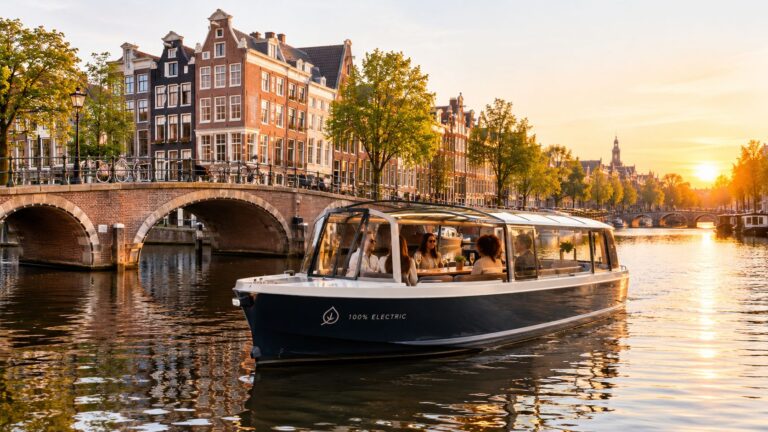
Amsterdam's nightlife is easier when someone else handles the route, venue communication, and transfer timing. Ultimate Party Amsterdam offers guided pub crawls in the Red Light District and Leidseplein, alongside canal booze cruises and private nightlife arrangements. The right option depends on whether the group wants a hosted crawl, a boat-based evening, or help coordinating a more private plan.
Ultimate Party Amsterdam organizes guided Amsterdam pub crawls, canal booze cruises, and private nightlife arrangements for travelers who want the logistics handled clearly. Visit Ultimate Party Amsterdam to review the available experiences and choose a route that fits the group's preferred pace.
🍻
Experience it Yourself
Skip the planning — join Amsterdam's biggest pub crawl and get 6 bars, free drinks and VIP club entry for €20.