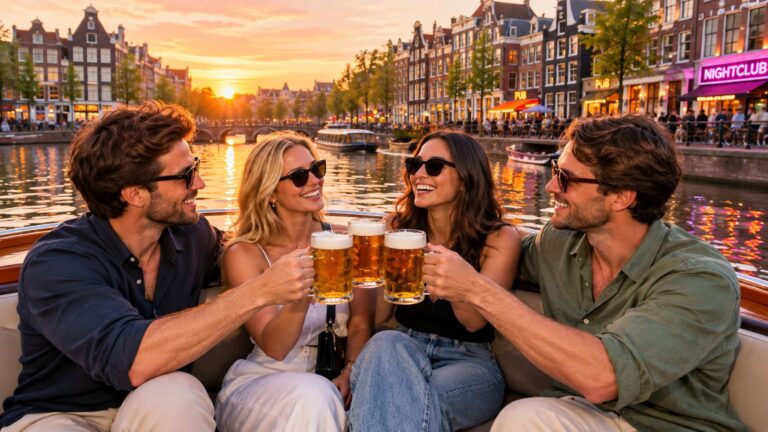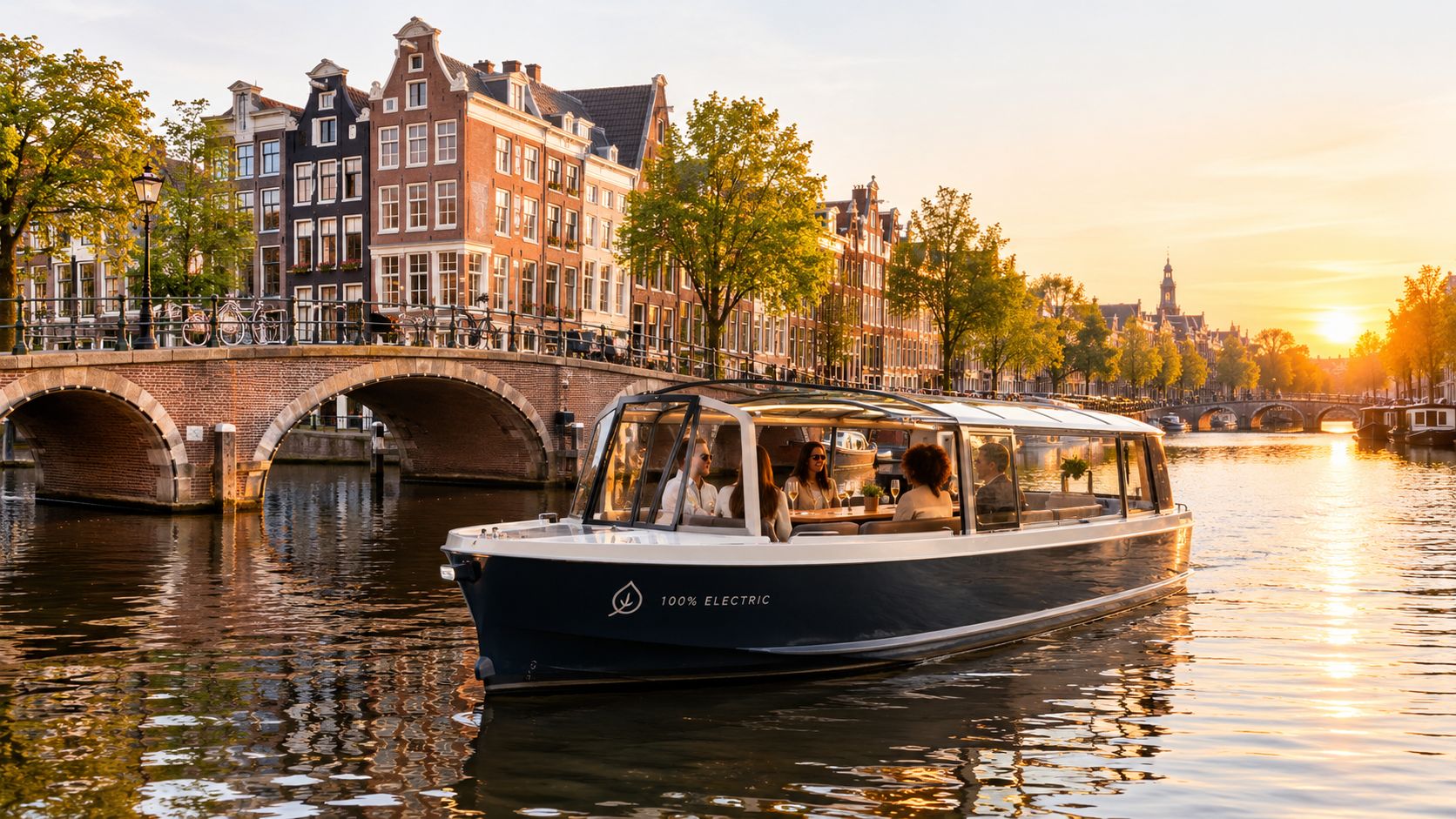
A lot of visitors start in the same place. They're standing near the water, seeing glass-roof boats pass under old bridges, and trying to work out one simple thing. Is a Dutch canal cruise just a tourist box to tick, or is it one of the smartest ways to experience Amsterdam?
The honest answer is that it depends on the kind of hour they want.
Some people want a quiet look at the canal houses. Some want drinks and conversation without the hassle of choosing a bar too early. Some are planning a birthday, a hen weekend, or a first evening in the city with a mixed group that doesn't want complicated logistics. On paper, these all sound like the same activity. On the water, they're completely different products.
That difference matters more now than many travel guides admit. Amsterdam's canals are a historic setting, but they're also a tightly managed operating environment. Boat type, passenger count, route flexibility, noise level, and emissions rules all shape what kind of cruise runs and what kind of experience guests get. That's why choosing well matters more than just booking the first pretty boat photo.
Table of Contents
- Introduction to Dutch Canal Cruises and What to Expect
- How Dutch Canal Cruises Work in Amsterdam
- Types of Dutch Canal Cruises Compared by Experience
- Pricing Models and What Is Included on Board
- Seasonal Differences and Electric Boats and City Rules
- How to Book Dutch Canal Cruises and On Board Etiquette
- Choosing the Right Dutch Canal Cruise for Your Trip
Introduction to Dutch Canal Cruises and What to Expect
A first canal cruise in Amsterdam usually starts with the wrong mental picture. Many visitors expect something halfway between a taxi ride and a museum audio tour. In reality, Dutch canal cruises in Amsterdam feel more like a moving viewpoint through a lived-in city, with a pace that's slow enough to notice details and social enough to change the mood of the group.
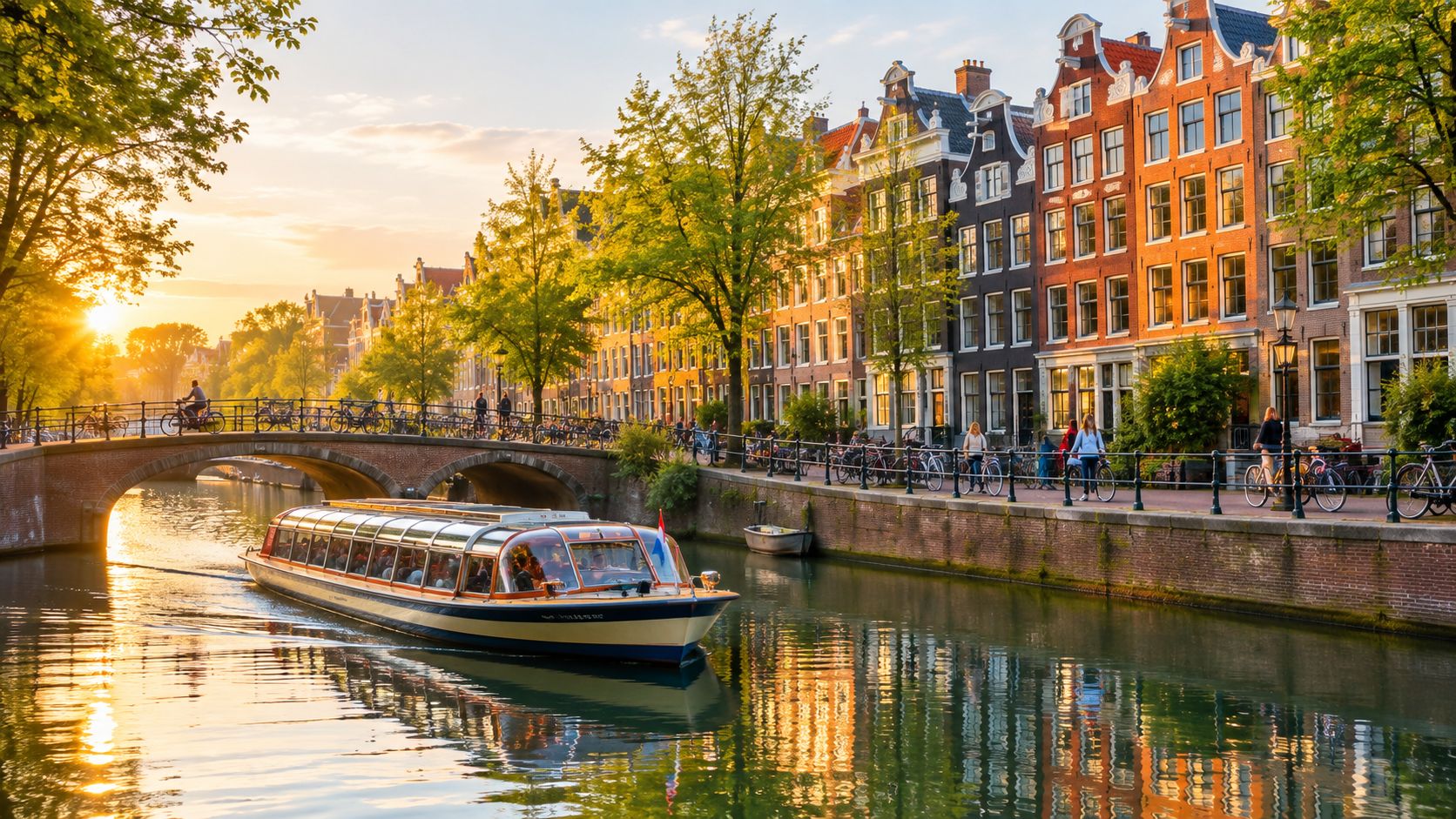
A typical hour on the water doesn't feel long. It usually passes quickly because the scenery keeps changing. One stretch feels quiet and residential, then the boat turns and suddenly there are busier bridges, waterside terraces, or a more social crowd on neighboring boats. That shift is part of the appeal.
What guests usually notice first
For couples, the draw is often the rhythm. There's no need to keep walking, no need to steer, and no pressure to fill every silence. For friends, the cruise works because everyone shares the same view and conversation stays easy. Solo travelers often like that a shared boat gives structure without forcing interaction every minute. Celebration groups usually care most about privacy, drinks, and whether the atmosphere is relaxed or lively.
Dutch canal cruises work best when the booking matches the occasion. A quiet sightseeing boat won't suddenly feel like a party, and a social drinks cruise won't feel like a private romantic tour.
There's also a common misconception that every boat experience is basically the same. It isn't. A covered sightseeing cruise, an open social cruise, and a private charter can all leave from nearby quays and deliver completely different evenings.
What a canal cruise is, and what it isn't
It helps to think in practical terms:
- It is a city experience from the water. Guests see Amsterdam's streets, bridges, and canal houses from the angle they were designed to be seen from.
- It isn't unlimited freedom of movement. The route depends on the boat, canal traffic, bridge height, and city rules.
- It is often social, even on non-party boats. People tend to talk more easily when nobody's checking maps or walking pace.
- It isn't always interchangeable with nightlife. Some cruises are a calm pre-dinner plan. Others are better as the first part of a night out.
That's why smart booking starts with use case, not just photos.
How Dutch Canal Cruises Work in Amsterdam
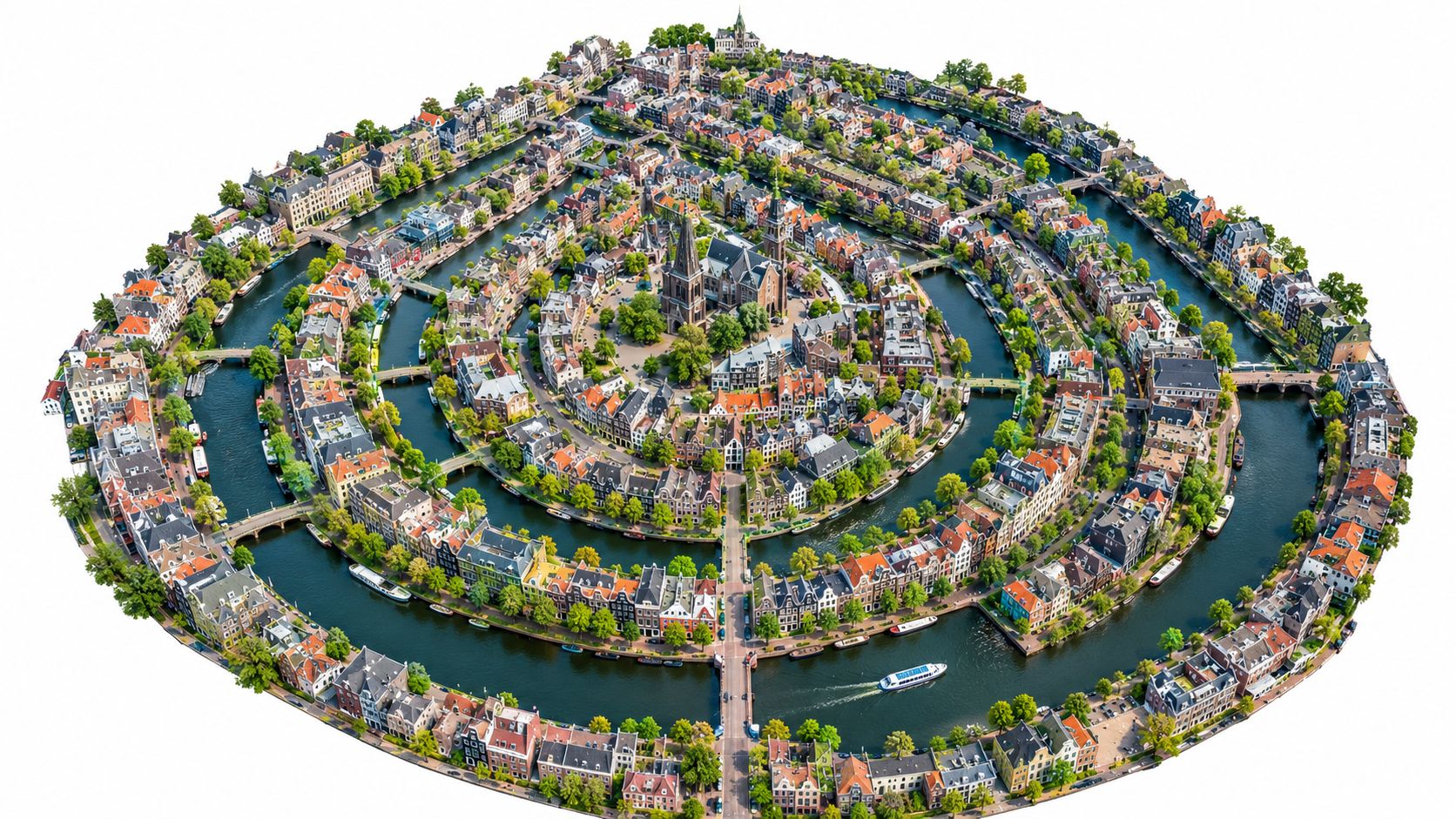
Amsterdam's canal cruises make more sense once the city itself makes sense. The waterways weren't added later as decoration. The canal belt was planned as part of the city's structure, and that's a big reason cruising here feels coherent instead of random.
The historical backbone is the Seventeenth-Century Canal Ring Area inside the Singelgracht, which was inscribed on the UNESCO World Heritage List in 2010. Much of the core canal belt was built between 1613 and 1660, and the protected area covers about 650 hectares. Amsterdam's wider canal network includes roughly 165 canals and about 100 kilometers of waterways, which is why boats can move through a dense historic setting rather than one short scenic strip, as explained in the Amsterdam canal ring UNESCO overview.
The four canals most visitors keep hearing about
Most cruise conversations circle around four names: Singel, Herengracht, Keizersgracht, and Prinsengracht. A useful way to picture them is as rings and connectors in a compact old center. Boats don't just glide in a straight line. They weave through a pattern that was designed centuries ago and still shapes the visitor experience today.
That's why one route can feel grand and open, while another feels tucked into a narrower corridor of bridges and house fronts. The city layout does most of the storytelling before any host says a word.
Why some boats can go places others can't
Many travelers get confused. They assume route choice is mostly a business decision. Often, it's a geometry decision.
Amsterdam canal cruise vessels are operationally defined as passenger vessels under 25 meters in length on the waterline, and that size matters for access and maneuvering. Many city bridges have less than two meters of clearance, according to the Amsterdam boating guidance summarized here. That means the constraint isn't only length. It's height.
Practical rule: A taller boat may offer more enclosure or comfort, but a lower-profile boat often gets better route flexibility in the center.
A glass roof, canopy frame, flag, or even passengers standing at the wrong moment can affect clearance management. That's why purpose-built canal boats often look flatter and sleeker than first-time visitors expect.
What this means during a real cruise
The easiest way to understand Amsterdam routing is to compare it to walking through an old neighborhood full of narrow side streets. A small, agile vehicle can take more shortcuts. A bigger one may need the broader route.
For guests, that can affect:
- How intimate the route feels
- Whether the boat enters narrower canals
- How often the skipper needs to think ahead about traffic and bridge clearance
- Whether comfort features reduce routing options
Dutch canal cruises aren't just scenic because Amsterdam is pretty. They're scenic because the city's old design, low bridges, and compact waterways force boats into a close-up relationship with the city.
Types of Dutch Canal Cruises Compared by Experience
Most booking mistakes happen because travelers shop by boat photo instead of by mood. The better question is simple. What kind of hour should this be?
A couple on a weekend break usually doesn't want the same thing as a stag group on its first night. A solo traveler trying to meet people usually shouldn't book a silent, closed sightseeing boat and expect a social experience. And a birthday group that wants privacy needs to think about passenger limits early, not after flights are booked.
Dutch Canal Cruise Formats at a Glance
| Cruise Format | Typical Group Size | Atmosphere | Best For |
|---|---|---|---|
| Standard sightseeing cruise | Shared public group | Calm, observational, low interaction | First-time visitors, couples, families |
| Shared social or drinks cruise | Shared public group | Chatty, relaxed, more social energy | Friends, solo travelers, casual celebrations |
| Private charter | Private booked group | Flexible, controlled by the group's vibe | Birthdays, team outings, hen and stag groups |
| Evening or nightlife-oriented cruise | Shared or private | More festive, part of a wider night out | Groups starting a night out, social travelers |
The biggest differences aren't always obvious at checkout
A standard sightseeing cruise suits people who mainly want Amsterdam's architecture and don't need much interaction. It's straightforward and easy to understand. The mismatch happens when guests expect drinks, music, or group energy from a format built for passive sightseeing.
Shared social cruises sit in the middle. They're usually the easiest fit for travelers who want movement, conversation, and a lighter structure than a seated tour. For groups that want a social canal plan without having to organize every detail themselves, a shared booze cruise in Amsterdam is one example of that format.
Private charters solve a different problem. They're not only about luxury. They're often about control. The group controls who's on board, the tone stays consistent, and nobody has to hope they've ended up with the right crowd.
Why group size changes the feel so much
Amsterdam's rules are a major reason these formats diverge. Boats carrying more than 12 passengers plus 1 skipper aren't permitted within the canal belt unless they operate under the appropriate passenger transport framework, and that cap is described as enforced in the Amsterdam canal belt sailing rules summary.
That matters because intimacy on the water is often a legal and operational issue, not just a style choice. Smaller craft feel personal partly because the city rules push them in that direction.
A boat advertised to a small group can feel genuinely small in Amsterdam. That's one reason many canal experiences feel more personal than visitors expect.
Quick matching by use case
- For a romantic plan: choose sightseeing or a quieter private setup.
- For meeting people: choose a shared social format.
- For a celebration: private charter is usually the cleaner fit.
- For a first night out: an evening drinks cruise can work well as a soft start before bars or clubs.
The wrong canal cruise rarely fails because the boat was bad. It fails because the booking didn't match the reason for going.
Pricing Models and What Is Included on Board
Two canal cruises can leave from nearby quays, last about an hour, and still work on completely different pricing logic.
That catches visitors all the time. One ticket is priced like a seat on a route. The other is priced like a hosted small-group experience, or like a private room that happens to float. In Amsterdam, that difference matters more now because operators are working inside tighter permit rules, small-boat limits, and a shift toward compliant electric fleets. A cheap-looking fare can be poor value if it leaves out the part you needed. An expensive-looking fare can make sense if it already covers the group setup, drinks, and the kind of boat the city now allows in the center.
What the headline price usually covers
On a basic sightseeing cruise, the ticket usually covers one thing clearly: your place on board for a set route and set duration. Sometimes you also get an audio guide or a live skipper commentating lightly. Sometimes you do not.
What often sits outside the headline price is the part first-time visitors assume is included. Drinks may be extra. Blankets may be limited. A hosted social format may cost more because there is staff time involved, not just boat time. On private charters, the starting price often reflects access to the whole boat within a time slot, with add-ons layered on top.
The simplest way to read canal pricing is to separate it into three buckets:
- Seat price: you are buying a place on a shared departure
- Experience price: you are buying the seat plus hosting, drinks, or a social format
- Charter price: you are buying control of the boat for your own group
That structure explains why two listings with similar durations can sit far apart in price without either being overpriced.
What to check before you book
Use the product page like a boarding checklist. If one line is vague, ask before paying.
- Shared or private. This changes the whole price structure.
- Maximum passenger count. On Amsterdam canals, small numbers are often part of the legal operating setup, not just marketing language.
- Drinks policy. Included, available for purchase, or not allowed.
- Hosting level. Skipper only, light commentary, or a social host.
- Boat type. Covered saloon, open boat, or electric sloop.
- Pick-up point and waiting process. A lower ticket can mean more queueing and less flexibility.
- Taxes and surcharges. Check whether these are already folded into the fare.
That last point matters because visitors often compare only the first number they see.
Why private boats feel expensive, and sometimes are not
Private charter pricing looks high when you compare it against a single sightseeing ticket. It looks more reasonable when you compare it against buying eight or ten individual social tickets, then adding separate drinks, waiting in line, and hoping the atmosphere fits the occasion.
A private boat works like booking a table for the whole evening instead of buying individual bar entries. You are paying for control. The guest list is yours. The pace is yours. If the group wants a quiet cruise before dinner, that setup works. If the group wants a drinks-led start to a night out, that also works, provided the operator is licensed for that format and the onboard rules are clear.
This is also where Amsterdam's current operating reality shows up in the price. Boats in the center cannot just keep adding passengers to lower the per-person cost. Capacity, permit conditions, and vessel compliance put a ceiling on that. So small-boat pricing is often a reflection of legal limits and operating costs, not just branding.
What "included on board" usually means in practice
This phrase sounds obvious, but it is one of the most misunderstood parts of canal bookings.
Included on board can mean actual consumables, such as beer, wine, soft drinks, or snacks. It can also mean practical comfort items, such as cushions, a covered canopy, heating, or a toilet. On some boats, it means none of those things. It means you have a seat and access to the cruise.
Read those details carefully, especially for evening departures. At night, warmth, shelter, and the tone of the boat affect the hour just as much as the route does.
Booking check: If the listing does not clearly state what is included, assume the ticket covers the seat and the cruise only.
Price becomes easier to judge once you match it to your use case. A quiet scenic ride does not improve just because drinks are included. A social pre-night-out cruise can feel flat if the fare covers only transport and nothing else.
Seasonal Differences and Electric Boats and City Rules
A July evening and a January evening can feel like two different cities, even on the same canal route. In summer, guests usually notice the light first. In winter, they notice the wind, the cover, and whether the skipper can keep the ride comfortable for a full hour. That is why season, boat design, and city rules now need to be read together.
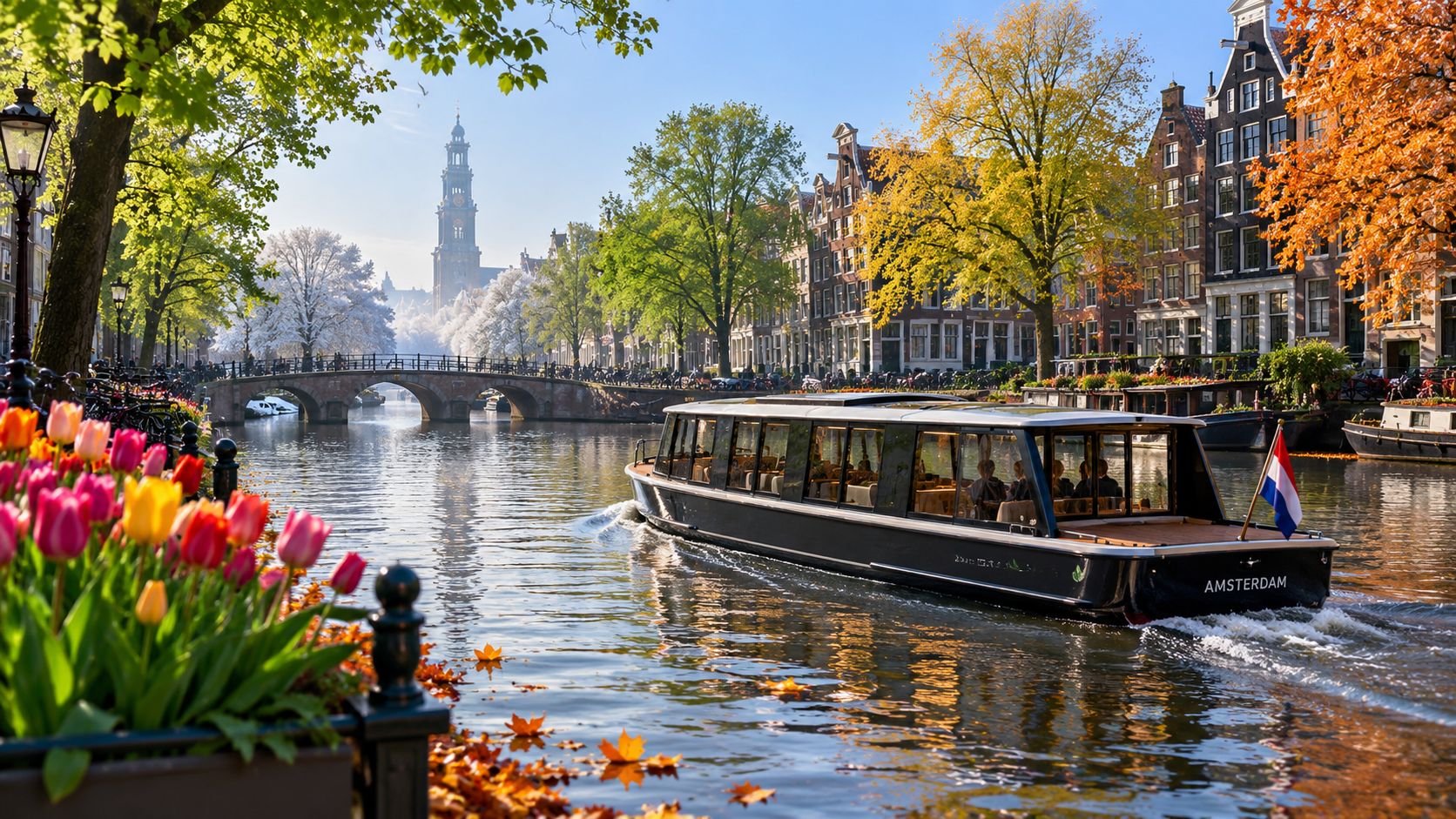
The practical difference is simple. Warm months reward open boats, later departures, and trips built around atmosphere. Cold months reward shelter, blankets, heating, and a cabin or canopy that does not trap damp air. Autumn often gives the nicest balance for guests who want the city to feel busy but not packed. The trees, lower sun, and calmer pace do a lot of the work.
Why electric boats matter more now
Amsterdam's inner waterways are under a zero-emission regime. From 1 April 2025, only electric, hydrogen, or rowing vessels are allowed there, according to the City of Amsterdam zero-emission canals update.
For guests, that changes the experience in ways you can feel on board. Electric boats are quieter at low speed, so conversation carries better and the cruise feels less mechanical. They also fit the city's direction of travel, which matters if you are booking ahead and want to avoid an operator whose setup may not suit central routes.
The easiest way to understand it is to treat the boat like a venue with transport rules attached. A pretty hull is not enough. The propulsion type now affects where the boat can legally sail in the center and how future-proof that booking is.
Speed, permits, and the smaller-boat reality
Cruising in central Amsterdam is controlled more tightly than many first-time visitors expect. Routes are slow, turns are narrow, and skippers cannot improvise freely once traffic builds. On top of that, the city has been limiting pressure on the water through permit policy and vessel rules.
That is part of the reason many private cruises you see now are on smaller boats, often with a 12 passengers plus skipper format. That setup is not just a style choice. It fits how a lot of operators legally structure trips in the center under current enforcement and permit conditions.
The wider permit picture also affects availability. Amsterdam introduced measures in 2024 to cap passenger-boat operating permits, and part of that implementation was later struck down by the Netherlands' highest administrative court on 25 September 2024. A moratorium on new operating permits is scheduled to remain in place until 1 April 2027, based on the city's earlier stated timeline, although future policy can still change.
On busy weekends, a sold-out boat often reflects city capacity limits and compliance rules, not a last-minute mistake by the guest.
How season changes the right choice
Use season as a filter, not just a backdrop.
- For clear photos and easy first-time sightseeing: daytime in spring or summer is usually the least complicated option.
- For a balanced atmosphere: early evening works well across much of the year, especially when you want both scenery and city lights.
- For social groups: confirm the boat suits quiet, low-speed cruising and that the format matches your plan.
- For colder months: prioritize cover, heating, and comfort over deck openness.
- For peak dates: book earlier than you think, especially if your group needs a private boat within the small-capacity format.
Amsterdam canal cruises still look romantic in photos. In practice, the better choice usually comes from matching the season to the boat, then checking whether that boat fits the city's zero-emission and permit reality.
How to Book Dutch Canal Cruises and On Board Etiquette
Booking a canal cruise goes smoothly when travelers treat it like a timed city activity, not a vague drop-in plan. Most problems come from small assumptions. People assume the departure point is obvious, the boarding window is flexible, the group can add one more person later, or the boat mood will somehow sort itself out on arrival.
What to check before paying
A good booking check is short and practical:
- Departure point: Amsterdam quay locations can sound familiar on a map but still be inconvenient in real life. Guests should check walking time from their hotel or dinner area.
- Boarding window: canal boats usually work to a strict boarding rhythm because the route timing is tight.
- Cancellation terms: flexibility matters more for short city breaks, especially when a group is organizing around flights.
- Boat format: shared, private, quiet sightseeing, or social drinks should be obvious before anyone confirms.
- Group count: if numbers are close to the allowed limit, confirm early rather than assuming the operator can squeeze in extras.
For travelers building a bigger night around the cruise, it also helps to plan the handoff to bars or clubs properly. A lot of first-time visitors underestimate walking times, weather shifts, and how quickly a well-planned evening gets messy once people split up. This is one reason practical nightlife prep matters, and this guide on how to survive a pub crawl in Amsterdam covers the same logic from the bar side.
What to bring and what to leave behind
Less is usually better on Amsterdam canal boats. Big luggage, bulky shopping bags, and too many layers create clutter fast, especially when boarding from a busy quay.
A simple approach works best:
- Bring a light outer layer. Even mild evenings can feel cooler on the water.
- Keep bags compact. Boarding is easier and the seating area stays more comfortable.
- Charge the phone in advance. Guests use it for tickets, photos, and finding the next stop afterward.
- Don't assume party rules apply everywhere. The city and the operator may be aiming for a quieter onboard atmosphere.
On-board etiquette is shaped by city rules
Amsterdam's boating culture is more controlled than many visitors expect. Official guidance says boats must keep to the right, give priority to vessels approaching from the right, and yield to professional vessels such as canal cruise operators and freight traffic. The same guidance also states that boats should signal direction clearly and maintain the 6 km/h speed limit, as noted in the official Amsterdam boating guidance.
Other local rules also shape the atmosphere. City canal guidance described in this Amsterdam canals guide for expats includes a ban on amplified music on rental boats and prohibits mooring to trees, bridge railings, lampposts, or other boats.
Quiet, predictable behavior is part of what makes Amsterdam canal cruising work in a dense residential center.
That's why the best guests arrive on time, follow boarding instructions, keep movement easy during low bridges, and respect that the canals are shared urban space, not a free-for-all party zone.
Choosing the Right Dutch Canal Cruise for Your Trip
The smartest way to choose Dutch canal cruises is to ignore the generic promise of “a lovely boat ride” and book for the actual job the cruise needs to do.
For solo travelers, shared social formats usually make the most sense because they remove awkward planning and make conversation easier. For couples, a quieter sightseeing cruise or a low-key private option usually fits better than a drinks-heavy group boat. For friends on a city break, the right choice depends on whether the cruise is the main event or the warm-up before nightlife. For stag and hen groups, private charters are often the cleanest option because the group controls the pace and doesn't have to fit into the mood of strangers.
Boat design and city rules matter too. Lower, purpose-built canal boats tend to have better route flexibility. Smaller legal capacities can create a more intimate feel, but they also mean larger groups should sort numbers early. Electric compliance is no longer a niche detail. It's part of booking responsibly in central Amsterdam.
For travelers who want a social, all-in format rather than a passive sightseeing ride, one factual option in this category is the private Amsterdam booze cruise. It's a 60-minute private canal charter on a luxury electric boat with an open Dutch bar, which makes it relevant for groups that want drinks and a defined onboard atmosphere rather than a standard tour.
The right cruise isn't the one with the nicest marketing photo. It's the one that matches the group, the mood, and the realities of Amsterdam's canals.
Ultimate Party Amsterdam runs guided nightlife experiences in the city, including nightly pub crawls and canal booze cruises built for travelers who want a more social hour on the water. Visitors planning a shared or private cruise as part of a bigger night out can browse current options and trip ideas at Ultimate Party Amsterdam.
🍻
Experience it Yourself
Skip the planning — join Amsterdam's biggest pub crawl and get 6 bars, free drinks and VIP club entry for €20.