A group arrives in Amsterdam with a free afternoon, four friends, several drink plans and one practical question: should they rent regular bicycles, book a canal cruise or try an Amsterdam canal bike? The answer depends less on the postcard view than on pace, balance, daylight and what happens after the activity.
A canal bike is a relaxed water experience, not a substitute for a city bicycle and not a drinks-led party boat. Used at the right time, it gives a small group a sociable way to see the canal belt. Used after heavy drinking or in a crowded evening slot, it creates avoidable problems.
Table of Contents
- What an Amsterdam Canal Bike Is
- How a Canal Bike Works on the Water
- Where to Rent a Canal Bike in Amsterdam
- Recommended Canal Bike Routes Through the Belt
- Canal Bike Safety and Local Rules You Should Know
- Canal Bike vs Regular Bike vs Canal Cruise
- From a Canal Bike to a Night Out in Amsterdam
What an Amsterdam Canal Bike Is
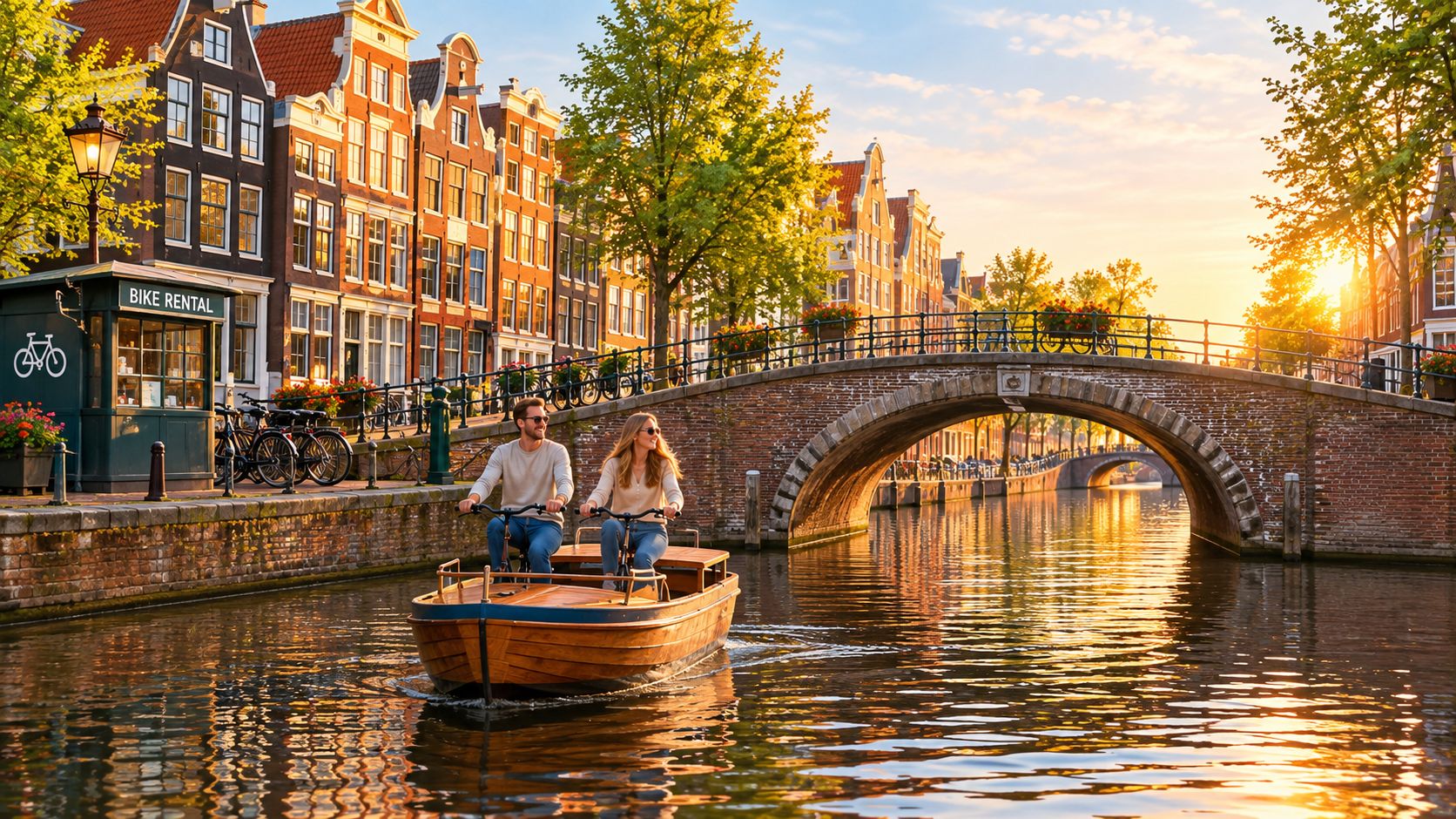
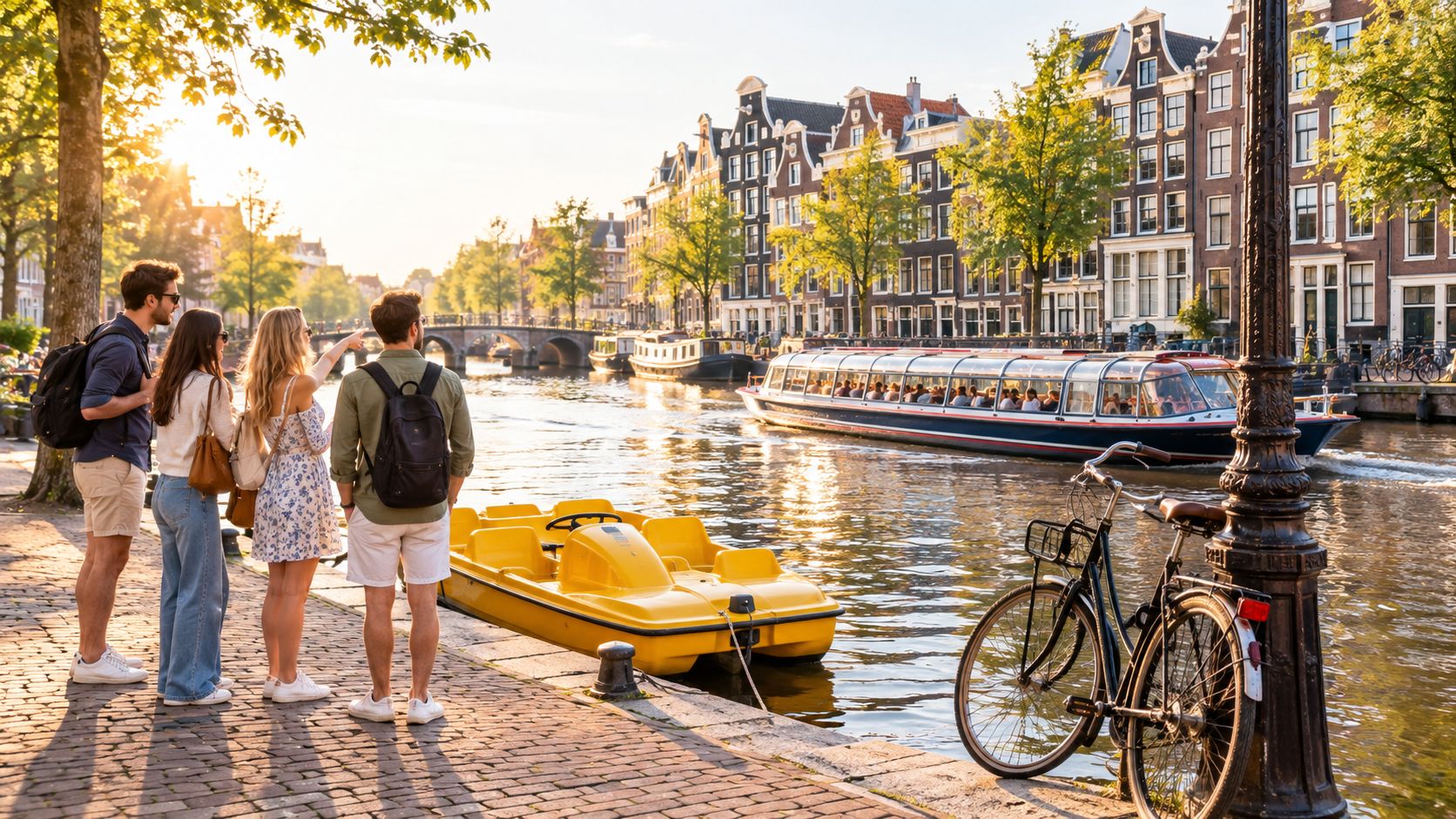
An Amsterdam canal bike is a small human-powered pedal boat, not a bicycle travelling beside the water. Passengers sit together in an open seating area and pedal to move the craft through the canal. The pace is unhurried, leaving room for conversation and views of canal houses, bridges and passing boats.
That setup gives the activity its own place between a regular bicycle and a conventional canal cruise. A bicycle covers more ground and puts each rider in Amsterdam's busy traffic. A cruise provides a seated view while a crew handles the route. On a canal bike, the group controls its speed and shares responsibility for steering, balance and awareness around other vessels.
Who gets the most from it
The format suits couples, families with older children and small groups who want a social sightseeing activity rather than a demanding ride. One operator says a canal bike accommodates up to four people and requires adult supervision for children under 12, since passenger position affects balance and steering (the operator's canal-bike guidance).
It is a good daytime choice for visitors who want to study bridges, houseboats and canal façades without committing to a long road route. Amsterdam's canal network gives a slow trip plenty to look at: it includes more than 100 kilometres of canals, around 90 islands and roughly 1,500 bridges. The principal canal ring dates from the 17th century and joined the UNESCO World Heritage List in 2010 (Amsterdam canal history and network details).
Capacity is limited, so a large party may need more than one craft. Anyone focused on covering serious distance should choose a regular bicycle. Anyone planning substantial drinking should leave the canal bike for another time. The practical sequence is daylight sightseeing first, nightlife later, with a hosted canal booze cruise better suited to a drinks-led evening.
Practical rule: Use the canal bike for shared sightseeing, not as a moving bar or a replacement for a road bicycle.
How a Canal Bike Works on the Water
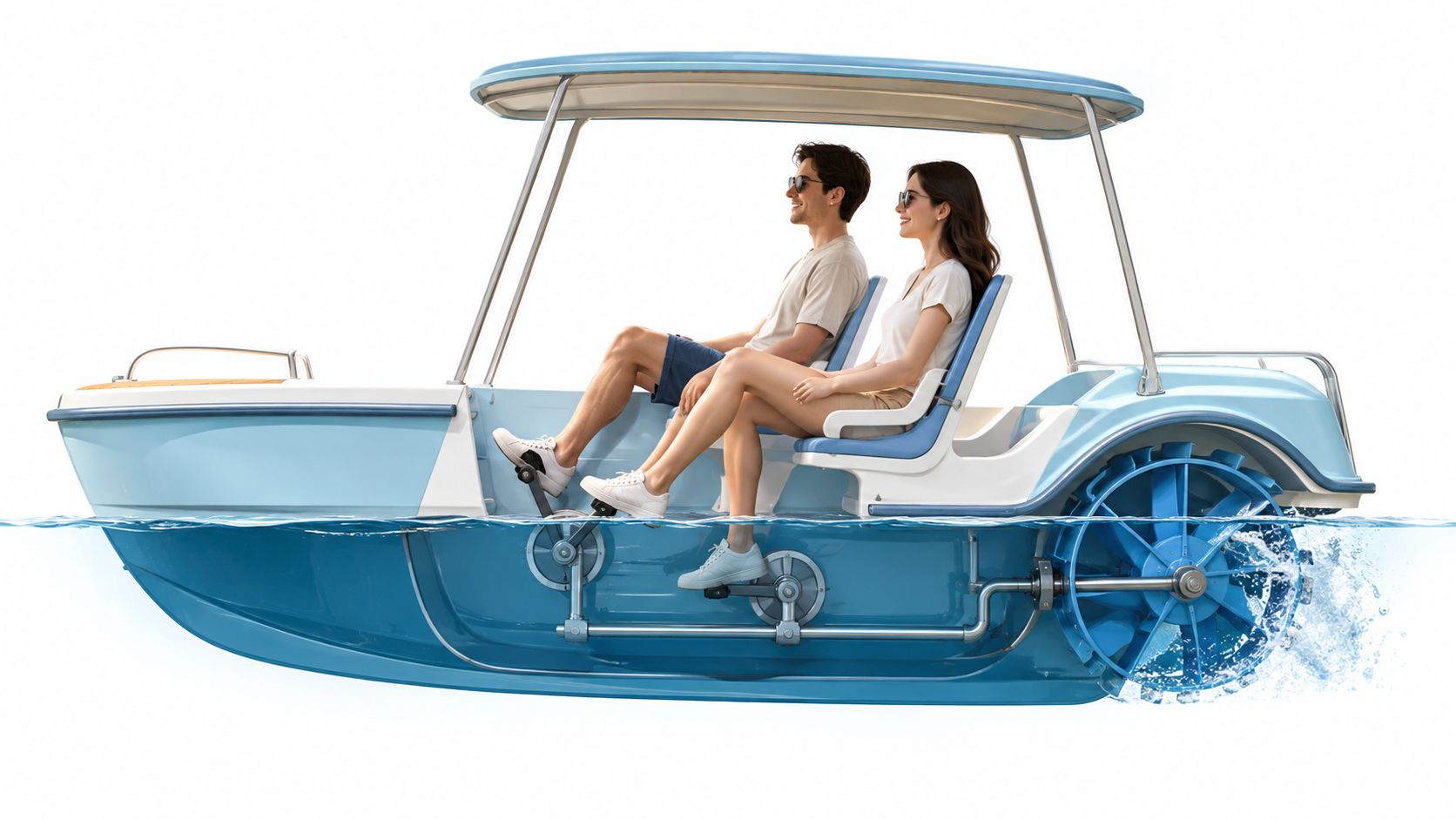
A canal bike moves like a compact pedal boat, with passengers seated around a shared platform and turning pedals to drive the craft forward. Depending on the design, the pedals power a paddle wheel or a similar mechanism below the hull. The result is a group activity with enough movement for a daytime sightseeing trip, but far less speed than a regular bicycle.
Its shallow hull fits Amsterdam's urban canals and low-clearance bridges. Steering still demands attention. The boat reacts gradually, so smooth corrections made early work better than sharp movements at the last moment, particularly near a moored houseboat or a larger vessel.
What passengers should expect
Passenger placement affects more than comfort. If one side carries noticeably more weight, the craft may sit unevenly and handle differently during a turn. As noted in the operator guidance cited earlier, distribution influences balance and steering, especially beneath bridges.
Give each person a clear job:
- One person watches the direction. That person should monitor the bow, bridge openings and surrounding boats instead of taking every photograph.
- Passengers pedal evenly. Similar effort keeps the boat moving predictably and reduces awkward corrections.
- Everyone stays seated while moving. Standing, leaning over the side or changing places near a quay can make a small mistake harder to control.
- The group slows before tight points. Bridges and moored boats reward early decisions rather than last-second steering.
A canal bike is close to a pedalo in operation, although the terms are often used loosely. It is not a rowboat, since passengers do not use oars or face backward to propel it. Compared with a small open electric cruiser, it requires physical effort and covers less ground, but the group takes part in the movement and usually has a quieter ride.
The pace is deliberately slow. A short canal stretch can take much longer than the same distance by regular bicycle because the group must turn carefully, share the water and avoid obstructing passing boats. That rhythm suits visitors who want to talk, photograph bridges and see the canal ring from water level. It becomes a poor fit for anyone trying to cover several districts in one booking.
For an evening plan, the practical choice is clear. Use the pedal boat while the group still wants to sightsee and talk. Choose a regular bike for distance, or a hosted canal booze cruise when drinking is the main purpose rather than a side detail.
Where to Rent a Canal Bike in Amsterdam
Canal-bike rental is concentrated around the central canal belt, with practical access near busy visitor areas, Leidseplein and major canal-cruise departure points. The exact departure location matters more than a broad neighbourhood label. A group should check the meeting point against its accommodation, lunch reservation and later plans before paying.
The booking process is usually simpler than arranging a hosted cruise, but the details vary by operator. Opening hours can change, particularly outside the main visitor season, so groups visiting in 2026 should verify the current schedule directly rather than relying on an old travel page.
What to check before paying
A short checklist prevents most booking surprises:
- Duration: Many rentals are organised around an hourly slot, but the available duration and return instructions should be confirmed.
- Availability: Online reservations give more certainty during busy periods. Walk-ins may work in quieter shoulder-season conditions, but they leave the group exposed to sold-out departures.
- Identification and deposits: Ask whether the operator requires an ID document, security deposit or card authorisation.
- Capacity: Confirm the number of passengers allowed on each craft, especially when a group includes children or larger adults.
- Drink policy: Never assume that drinks are permitted because the activity takes place near nightlife areas. The operator's rules control.
- Weather arrangements: Check whether the booking can be changed if rain or strong wind makes the outing unpleasant.
A useful starting point is Ultimate Party Amsterdam's Amsterdam bike rental information, but groups should still confirm the exact product, departure point and current conditions before booking.
Canal-bike rental and canal cruising are separate businesses, so rental availability often follows a daytime sightseeing pattern rather than an evening party schedule. That makes a canal bike a better fit for late morning or afternoon plans than for a night out.
Booking advice: Reserve ahead for summer weekends and popular dates. In shoulder season, a walk-in may be possible, but it shouldn't be treated as guaranteed.
Recommended Canal Bike Routes Through the Belt
The best canal-bike routes stay compact. A pedal boat is enjoyable when the group can look around without constantly worrying about a long return journey, and the central belt offers enough variety for a satisfying outing.
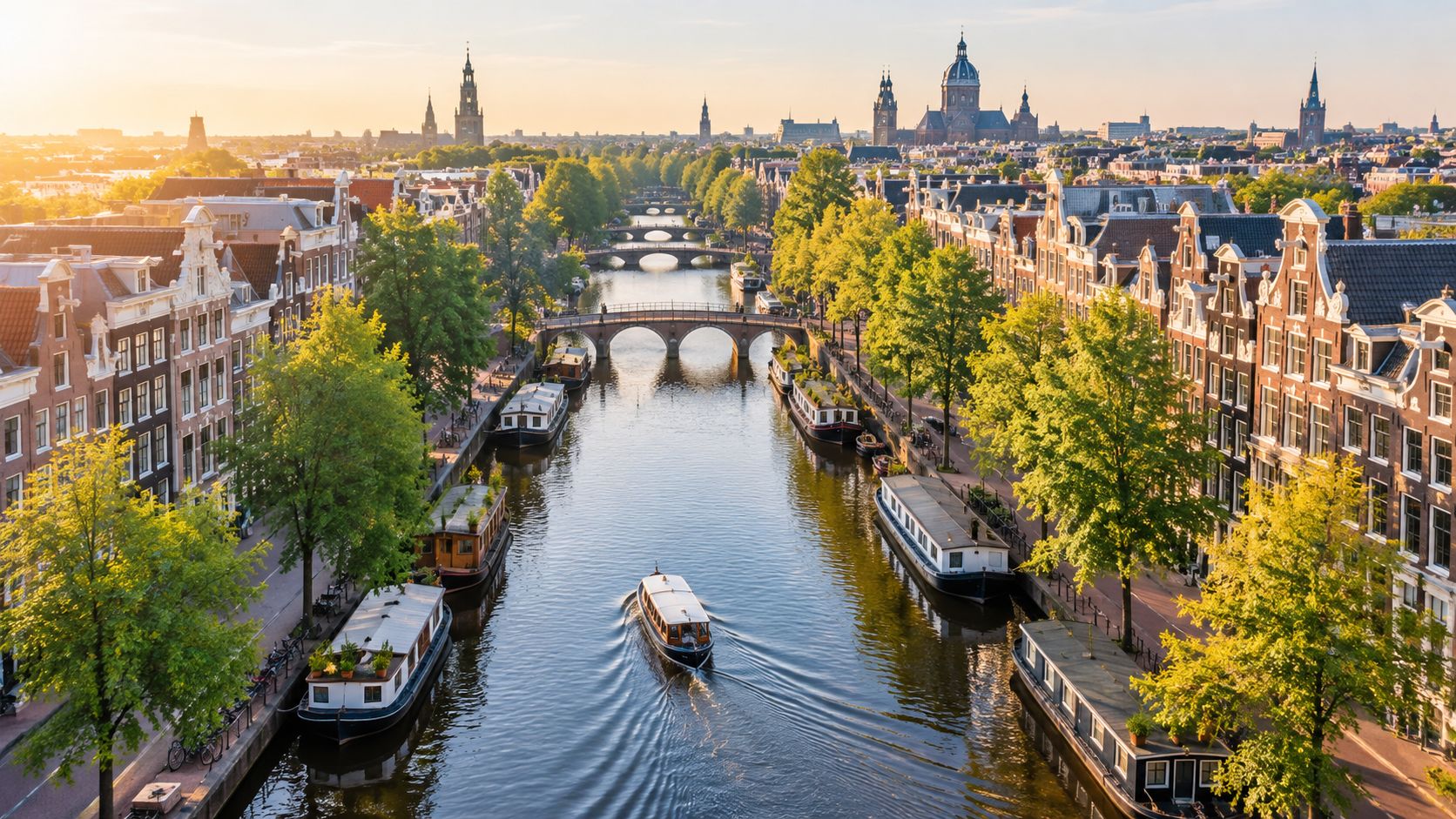
The classic choice follows parts of the Herengracht, Keizersgracht and Prinsengracht. The three canals form the principal historic ring, with bridges, narrow façades, houseboats and frequent changes in perspective. At a relaxed pedal pace, a central loop works well as an outing of roughly one to two hours, provided the operator's route and return point allow it.
The Jordaan and Prinsengracht combination feels more intimate. It gives the group attractive canal-side views and houseboat scenery, but bridge approaches can become awkward when pedestrians gather or passengers stop trying to photograph the same view. The group should choose a safe position before taking pictures rather than stopping in a narrow passage.
Choose the route by the group
The Amstel gives a more open-water feel and can suit a group with good daylight and enough time to manage a less enclosed stretch. Routes toward the Magere Brug can be visually rewarding, but the group should allow for more exposed conditions and shared traffic.
Amsterdam's cycling environment explains why the water can feel calmer than the road. The city has roughly 767 kilometres of bicycle paths and lanes, and around 490,000 residents make about 2 million kilometres of local bicycle trips each day (Amsterdam cycling figures). A canal bike removes the pressure of riding beside that traffic, but it doesn't remove the need to watch other boats.
| Route | Effort | Scenery | Best for |
|---|---|---|---|
| Central canal ring | Moderate, with repeated turns and bridge approaches | Historic façades, bridges and busy canal life | First-time visitors |
| Jordaan and Prinsengracht | Gentle to moderate, with tighter passages | Houseboats, quieter edges and neighbourhood views | Small groups wanting photos |
| Amstel toward Magere Brug | Moderate, with a more open feel | Wider water, bridges and changing city views | Good-weather daytime outings |
A canal bike isn't the right tool for Amsterdam-Noord, the polder or a long cross-city route. A regular bicycle or ferry makes more sense there. The central ring is the practical sweet spot, with compact routes that can fit into an afternoon without turning the activity into an endurance test.
Canal Bike Safety and Local Rules You Should Know
Calm-looking water creates false confidence. Amsterdam's canals have unfenced edges, narrow bridges, moored boats and commercial traffic operating in the same urban space. A pedal boat moves slowly, but slow movement doesn't remove the consequences of poor steering or a crowded landing point.
Amsterdam's official boating guidance sets a maximum speed of 7.5 km/h on waterways including the Kostverlorenvaart, Oosterdok, Nieuwe Herengracht and the Amstel toward Ouderkerk aan de Amstel (official safe-boating guidance). The same guidance requires a vignette or 24-hour docking permit when mooring and prohibits tying up to trees, bridge railings, lampposts or bicycle racks.
A canal bike should give way to larger vessels and avoid creating an obstruction near a bridge or quay. The driver or responsible passenger needs to look beyond the boat immediately ahead, because commercial craft may have less room to manoeuvre than a small pedal boat.
Why the water edge deserves respect
Waternet's canal-cleaning operation reportedly removes roughly 15,000 bicycles each year with a boat-mounted hydraulic claw, lifting them from the canal bed for recycling (report on Amsterdam's bike-recovery operation). That figure isn't an individual accident probability. It includes theft, vandalism and improper disposal, but it still shows that bicycles entering the water is a recurring infrastructure problem.
The same principle applies to visitors. Travel-safety guidance warns that intoxicated people have fallen into Amsterdam canals, so alcohol and an open pedal boat are a poor combination (canal-edge safety guidance). Passengers should stay seated, secure drinks and follow the host or operator during boarding and turns. If someone falls in, bystanders should call 112 and use available flotation equipment instead of entering the canal themselves.
For groups considering a later bicycle ride after dark, practical night-riding advice from Punk Ride's guide to cycling at night is useful background. Visitors should also review Amsterdam safety guidance for travellers before combining transport and nightlife.
The day-of rules
- Stay clear of the edge: Use designated racks and landing points, and keep a physical buffer from unfenced quays.
- Slow before bridges: Don't accelerate into a narrow opening or stop in the middle for a photograph.
- Keep the group compact: Passengers should remain seated and avoid sudden weight shifts.
- Respect larger boats: Give commercial traffic room and follow the operator's instructions.
- Don't improvise mooring: Never tie the craft to a tree, railing, lamppost or bicycle rack.
- Separate alcohol from pedalling: Save drinks for a hosted activity where someone else is responsible for navigation.
Canal Bike vs Regular Bike vs Canal Cruise
The booking decision becomes clearer when the group compares the whole experience rather than just the view. A canal bike provides shared control and a slow pace. A regular city bike provides range and independence. A hosted canal cruise removes most physical effort and makes the evening transition easier.
| Option | Effort | Group fit | Photo flexibility | Nightlife handoff |
|---|---|---|---|---|
| Canal bike | Light to moderate pedalling | Small groups | High, when stopped safely | Best before drinking |
| Regular bike | More demanding in traffic | Riders comfortable cycling locally | Flexible, but stopping needs care | Useful for distance, not ideal after alcohol |
| Hosted canal cruise | Minimal physical effort | Groups wanting shared seating | Good, with less route control | Easiest option for drinks-led plans |
A regular bicycle wins when the group wants to reach districts beyond the canal belt or combine sightseeing with independent stops. Amsterdam's major water crossings can involve substantial climbs. The Nescio Bridge is 780 metres long and 10 metres high, and its cycle path was widened from 4 metres to 8 metres in 2019 after overcrowding during school commutes (Nigtevecht and Nescio bridge design details). That kind of infrastructure is manageable for a confident rider, but it reinforces why a canal bike feels less strenuous for a compact sightseeing plan.
How to think about cost
For a 2026 booking, groups should compare a per-hour canal-bike rental with a regular bicycle's day rate and a hosted cruise's per-person price. Exact prices change by operator, date, weather demand and inclusions, so a reliable comparison uses the live booking page rather than an old guide.
A small group that wants conversation, daylight, photographs and permitted drinks may prefer the canal bike. A group covering serious distance should choose the regular bicycle. A group whose main priority is drinks, comfort and a clean move into nightlife should choose a hosted canal cruise.
From a Canal Bike to a Night Out in Amsterdam
The strongest combination for visitors with limited time is often a daytime canal bike, a break in the afternoon and a hosted evening activity. The pedal boat gives the group a shared sightseeing memory without using the same energy needed for a later night out.
The handoff needs to be deliberate. Alcohol and a pedal boat don't mix well, particularly around unfenced quays and busy bridges. The canal bike belongs in daylight, while drinks-led plans belong on a hosted canal booze cruise or a pub crawl where a host and crew handle the route.
Ultimate Party Amsterdam offers a shared one-hour canal booze cruise on an electric boat with unlimited beer, wine and soft drinks, as well as a private 60-minute charter on a luxury electric boat with an open Dutch bar. The company also runs Red Light District and Leidseplein pub crawls with included drinks, VIP entry and queue skipping, plus a Nightlife Concierge for private group arrangements. Its published business information states that the company has operated nightly since 2006 and that pub-crawl bookings include free cancellation up to 24 hours.
The practical sequence is simple:
- Daylight: Use the Amsterdam canal bike for a compact sightseeing route.
- Reset: Leave time to return the craft, eat and rest before nightlife.
- Evening: Choose a hosted cruise or pub crawl if drinking is central to the plan.
- Transport: Arrange the meeting point and route before the group starts drinking.
- Contingency: Keep a walking or taxi plan available if weather, fatigue or alcohol changes the schedule.
For a fuller itinerary, the day-to-night Amsterdam planning guide helps connect daytime sightseeing with an evening programme without treating every activity as interchangeable.
Ultimate Party Amsterdam can arrange shared and private canal booze cruises, Red Light District and Leidseplein pub crawls, and private group support through its Nightlife Concierge. Visit Ultimate Party Amsterdam to match the evening plan to the group's canal-bike schedule and book a hosted experience that keeps the daytime ride separate from the drinking part of the night.
🍻
Experience it Yourself
Skip the planning — join Amsterdam's biggest pub crawl and get 6 bars, free drinks and VIP club entry for €20.