The group chat has agreed on a boat party in Amsterdam, but the details aren't settled. Some guests want their own boat and music, others want the cheapest ticket, and nobody has checked where boarding happens. A good party boat rental starts with those practical questions, not the photograph of drinks on deck.
The workable choice has to fit the passengers, the booking terms and the canals themselves. Privacy matters, but so do licensing, weather cover, drinks service and the people living beside the route.
Table of Contents
- Party Boat Rental Types and Which Fits Your Group
- Capacity Limits, Licences and the 12-Person Rule
- Electric Boats and Neighborhood Impact
- Drink Policies and the True Cost of a Boat Party
- Timing, Boarding and Weather Mistakes to Avoid
- Compare the Options and Confirm Before You Pay
Party Boat Rental Types and Which Fits Your Group
The boat type decides headcount rules, drinks, timing and who controls the experience. Ultimate Party Amsterdam has offered pub crawls and booze cruises in Amsterdam since 2006, and the useful starting point for group planning is straightforward: choose the format before building the evening around it.
Party boat rental types compared
| Rental type | Best for | Typical drinks | Who controls the schedule |
|---|---|---|---|
| Shared canal booze cruise | Solo travelers, couples and mixed groups | Drinks package, check which drinks are included | Operator, shared with other guests |
| Private charter | Stag, hen and friend groups wanting their own boat | Package or separately purchased drinks, confirm the terms | The group, within operator rules |
| Licensed passenger vessel | Groups of 12 or more, corporate events | Contracted bar package or onboard purchases | Operator, with certified capacity and skipper |
| Pleasure craft with skipper | Small groups within the 12-passenger limit | Only drinks expressly permitted in the booking | Operator or hirer, with skipper on board |
These categories overlap. A private charter can also be a licensed passenger vessel, while a shared cruise describes the booking arrangement rather than the vessel's legal classification. The headcount bands require the checks set out below.
Prices, capacities and duration need an exact quote for the chosen date. A shared departure normally has a fixed advertised sailing period; a private booking has an agreed charter window. Neither format automatically includes extra boarding time, a flexible finish or an extension.
Match headcount first, then budget and privacy
The sensible reading order is group size, total budget, then privacy. Starting with a cheap ticket and trying to make the group fit afterwards can create problems with availability, passenger limits or the experience itself.
A shared cruise works when meeting other travelers is part of the appeal. The trade-off is that the deck, crew attention and departure schedule belong to everyone on board. A private charter removes unrelated passengers, but it doesn't remove the skipper's authority or local restrictions.
Practical rule: A group that would feel uncomfortable sharing its celebration with strangers should choose private rather than hoping a shared departure will feel exclusive.
Privacy also needs defining. Exclusive use of a boat doesn't automatically mean unrestricted music, a custom route, decorations, catering or permission to bring drinks. Each of those is a separate booking question.
Four groups, different priorities
Consider a hypothetical stag party of eight that wants its own boat, a fixed start time and control over the playlist. Private is the logical format, provided the operator approves the music arrangement. The organiser should distinguish between choosing songs and controlling the volume, because the latter remains subject to crew instructions and neighborhood rules.
A private booking also needs a clear agreement among the guests about payment. If someone drops out, the remaining group may still owe the contracted total. A low per-person estimate based on a full attendance list isn't useful unless everyone understands that commitment.
For two couples on a city break, a relaxed hour with other travelers may be more appealing than exclusive hire. Shared can be the lower-cost route because the couples are buying places rather than reserving the whole vessel. They should still check seating, shelter and the atmosphere described in the listing instead of assuming every booze cruise is equally lively.
A hen party with several non-drinkers needs to settle the drinks question before booking. Soft drinks, water and alcohol-free alternatives aren't interchangeable, and a package mentioning beer and wine says nothing by itself about mocktails or alcohol-free beer. The organiser can use this Amsterdam bachelorette party planning guide to keep the boat booking aligned with the rest of the celebration.
For a hypothetical corporate team of around twenty, vessel suitability comes before party styling. A licensed passenger vessel gives the organiser a clear starting point for checking the full team's accommodation, boarding arrangements and service requirements. The quote should address whether guests can sit comfortably and whether the layout works for conversation, not just whether everyone fits.
Check whether a party cruise is actually the right activity
Some groups want an active outing rather than a drinks-led experience. For that different format, PADL's resource for groups looking to plan a private paddling event is useful context, though it isn't evidence of Amsterdam availability or canal permissions.
That distinction matters for mixed groups. Guests expecting sightseeing, colleagues expecting a structured team activity and friends expecting a floating party may all interpret “boat rental” differently. The organiser should describe the intended atmosphere plainly before collecting payment.
The first question for any provider is therefore simple: how many other guests will be on board? The answer establishes whether the offer is private, shared with unrelated passengers or a group allocation within a larger departure.
Capacity Limits, Licences and the 12-Person Rule
A group of twelve can change which boat is lawful to book. Amsterdam's safe-boating guidance sets a limit of 12 passengers plus a skipper on pleasure craft. Groups of 12 or more must use a licensed passenger vessel with a skipper, and transporting passengers for payment requires an operating licence.
Listings can blur the difference between “people,” “guests” and “passengers.” Clarify whether the advertised total includes the skipper and any other crew. A boat listed for twelve guests may not have room for twelve guests plus crew within its permitted capacity.
Vessel type and checks by group size
| Group size | Vessel type required | What to verify |
|---|---|---|
| Under 12 passengers | Pleasure craft with skipper, within the 12-passenger limit | Whether the skipper counts toward the advertised total, and whether the paid trip is licensed |
| 12 or more passengers | Licensed passenger vessel with skipper | Operating licence and certified capacity in writing |
| Group larger than one boat allows | Several compliant vessels, each within its own limit | Separate boarding times and drink service per boat |
Capacity also affects comfort. Seating, deck space and the route to the boarding gate determine whether guests can move around easily. A drinks station or bags near an exit can make a boat feel cramped even when the headcount is permitted.
Flag mobility requirements before choosing a vessel. Boarding may involve a step or a change in level, so ask the operator to describe the specific boarding arrangement.
Get the operating details in writing
The booking confirmation should establish:
- Certified capacity: The passenger allowance for the vessel assigned, not a photograph of a similar boat.
- Crew headcount: Whether the advertised number includes the skipper or other crew.
- Operating licence: Confirmation that the paid passenger trip is covered.
- Departure maximum: The number of guests the operator will accept for that booking.
For a group split across boats, check each vessel's capacity and get a separate boarding time and service arrangement for each departure. Guests should not switch boats informally at the quay.
If the operator changes the vessel, confirm its capacity, seating and access again. Those details can differ from the original arrangement.
A quote without licence and capacity details is incomplete, even when the price and photographs look convincing.
Electric Boats and Neighborhood Impact
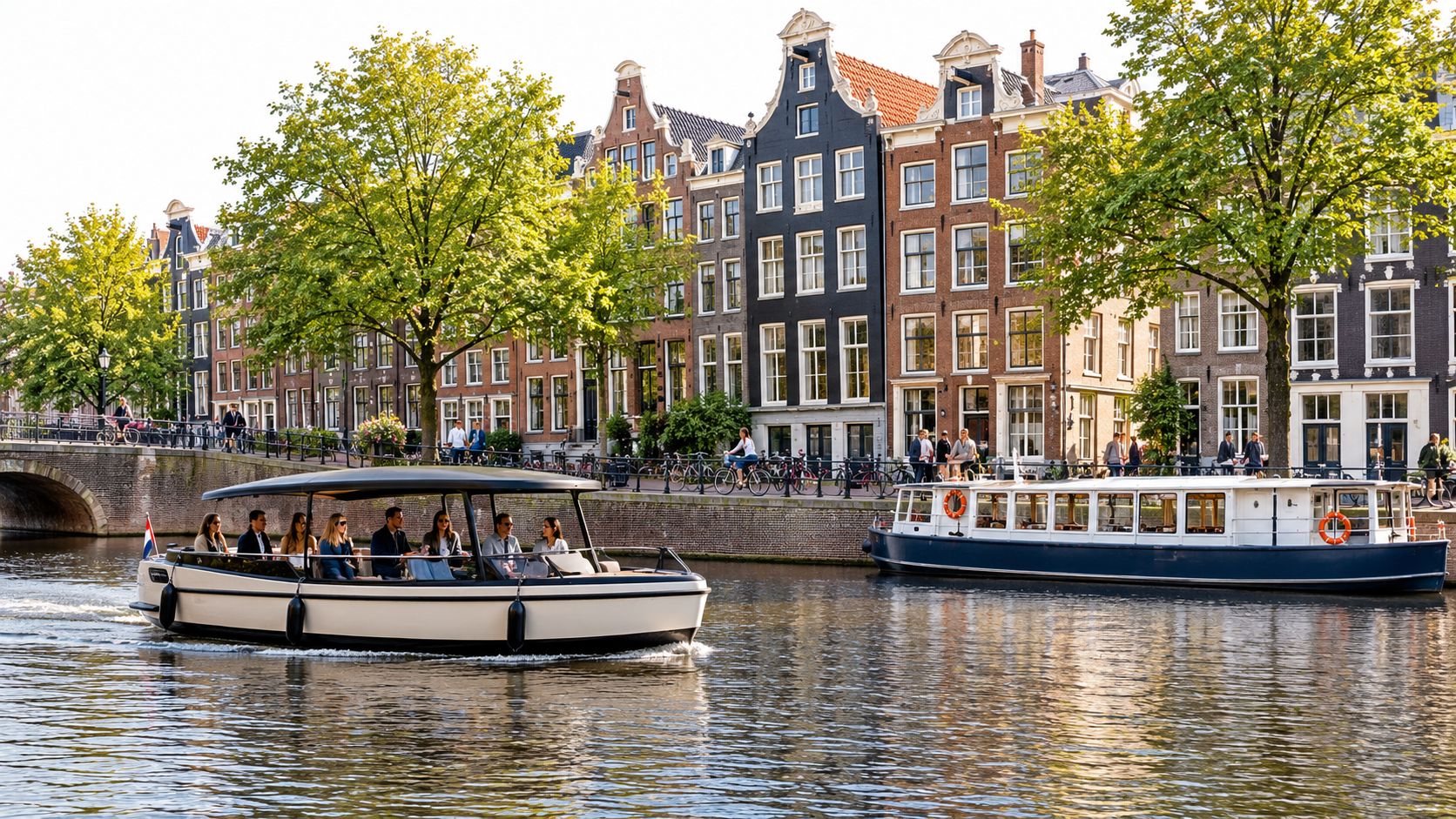
Amsterdam's emission-free zone rules for pleasure craft allow electric, hydrogen, rowing and emission-free hybrid boats in the inner waterways. Petrol and diesel boats generally need a transitional permit to enter, so propulsion affects whether a vessel can use the planned route.
An electric motor reduces local exhaust and engine noise. Passenger noise, litter and congestion at a quay still depend on how the group behaves and how the crew manages boarding.
Questions that separate specifics from slogans
Ask the operator for practical details:
- Propulsion throughout the route: Is the vessel fully electric for the whole booking, rather than merely described as having electric capability?
- Drinks and waste: Where are empty containers collected, and how are spills and rubbish handled?
- Amplified music: Is it permitted, and what volume policy does the skipper enforce?
- Noise near homes: How are guests briefed before entering residential canal stretches?
- Quays and moorings: How does the crew prevent blocked access, discarded cups and disorderly boarding?
Clear answers give the organiser rules to share with guests: where waste goes, whether music is allowed and how to behave on residential stretches.
At 1 a.m., a group singing beside homes can disturb residents even if its boat has a silent motor. Passenger conduct has an impact of its own.
Battery endurance is part of delivery
Battery capacity alone does not show whether a boat can complete a booking comfortably. Ask how the operator accounts for dock waiting, maneuvering, stop-start sightseeing and a return reserve, rather than just uninterrupted cruising.
An independent electric-boat field account published by EECA describes how low-speed operation and idling changed endurance compared with a trial run. A route-specific operating explanation is more useful than a headline battery specification.
For a proposed 60-minute cruise, confirm that the battery plan covers the full booked operation, including waiting and reserve. This is a booking scenario, not a universal endurance claim.
Choose an operator who can explain the route, vessel operation and passenger expectations. The canal impact depends on all three.
Drink Policies and the True Cost of a Boat Party
Ten guests budget from the per-person price and assume the bar covers the whole outing. Then they learn that drinks are included for only 60 minutes, or that some beverages cost extra. The advertised price may be accurate, yet the group's final bill can still exceed its budget.
For a private booking, divide the confirmed total cost by the confirmed number of paying guests. Check what the drinks package includes and when service begins and ends. A shared cruise and a private boat can have different drink terms, so compare the specific offers rather than relying on the phrase “unlimited drinks.”
Build a complete drinks and fees check
Before paying, record:
- Service period: When drinks start and stop, and whether boarding time counts.
- Included beverages: Which drinks are covered, and whether water, soda and non-alcoholic options are included.
- Serving arrangements: Whether the boat provides glassware or plastic cups, where guests collect drinks and whether outside drinks are allowed.
- Additional charges: Any service or cleaning fees, and whether crew tips are optional.
- Financial commitments: The deposit, any damage fees, cancellation terms and conditions for retaining money.
- Pricing unit: Whether the price is per person or per boat, and whether there is a minimum booking commitment.
For a wider evening budget, this guide to experiencing Amsterdam nightlife on a budget can help put the boat cost in context. Leave room for food, transport and the next venue.
For an event-planning comparison, the BeeHive Mobile Bar wedding setup guide covers bar arrangements separately from the venue. On a boat, the available space and crew workflow also shape how drinks are served.
Alcohol service on board remains subject to Dutch law. Crew can refuse service to a visibly intoxicated guest; an open-bar package does not guarantee continued service.
Budget check: Compare the total the group will pay, not just the lowest advertised price.
Make the confirmation usable on the night
Keep the agreed drink categories, service window and charges together in the booking confirmation. If you settle a detail by message after receiving the quote, ask for it to be added to the final written agreement.
The group leader should be able to check the terms quickly during the outing. Don't leave a key detail resting on someone's memory of a phone conversation.
Timing, Boarding and Weather Mistakes to Avoid
A boat can suit the group and still derail the evening if guests head to the wrong quay or treat the finish time as flexible. Plan the route to the boarding point and the walk after disembarking, then leave room for the group to move together.
Five mistakes and their fixes
Leaving date-sensitive bookings late. Weekends, King's Day and New Year's Eve can narrow the choice of departure times. Confirm the sailing before committing the rest of the evening to a fixed schedule.
Choosing a boarding point without checking the walk. A central address may still mean extra bridges or a longer walk from the hotel or station. Check the exact quay and pedestrian route, especially if guests have luggage or have been drinking.
Assuming the boat provides shelter. Confirm whether the specific vessel has covered seating. Cold rain and wind can change the outing, so check the weather policy and tell guests to bring jackets.
Forgetting the next meeting point. If the boat is followed by a bar crawl, agree on the onward route and a place to regroup. The disembarkation point matters more than the broad neighborhood named in an advertisement.
Having no alternative. Keep a backup activity in mind and understand the operator's procedure for cancellations or delays. A land-based plan is easier to use if everyone knows where to meet.
A practical evening timeline
As a planning routine, reconfirm the booking 48 hours before, share the written meeting point and aim to arrive ten minutes early. These are recommendations, not operator check-in rules; follow the arrival instructions in the booking.
For a hypothetical two-hour evening:
| Evening stage | Suggested allocation | Organiser's task |
|---|---|---|
| Boat experience | First hour | Keep the group together for boarding and disembarkation |
| Walk and regroup | Next twenty minutes | Follow the agreed route and count the group |
| Next stop | Remaining forty minutes | Allow time to settle in before another commitment |
This schedule only works if the confirmed cruise duration and walking route fit. Don't rely on instant disembarkation, a nearby taxi or every guest walking at the same pace. Build a 20-minute buffer before the next booking so a slow crossing or regrouping doesn't put the rest of the evening behind.
Compare the Options and Confirm Before You Pay
A stag group choosing between a shared cruise and a private boat is weighing two different totals: the per-person price and the cost of keeping the group together. The shared option costs less per person; a private booking gives the group its own boat and bar.
Two options for different evenings
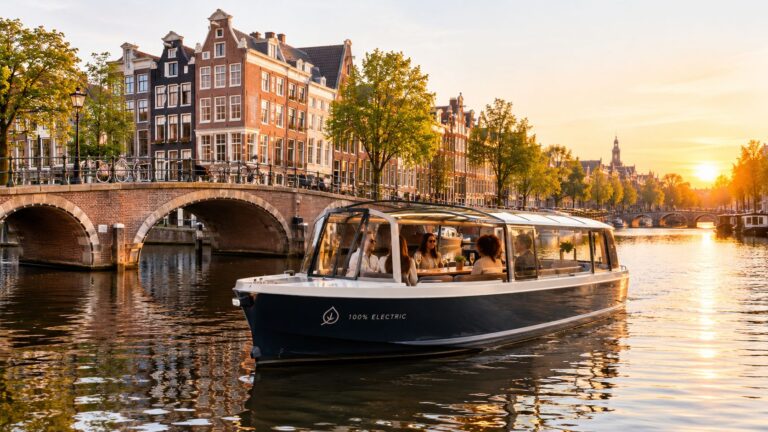
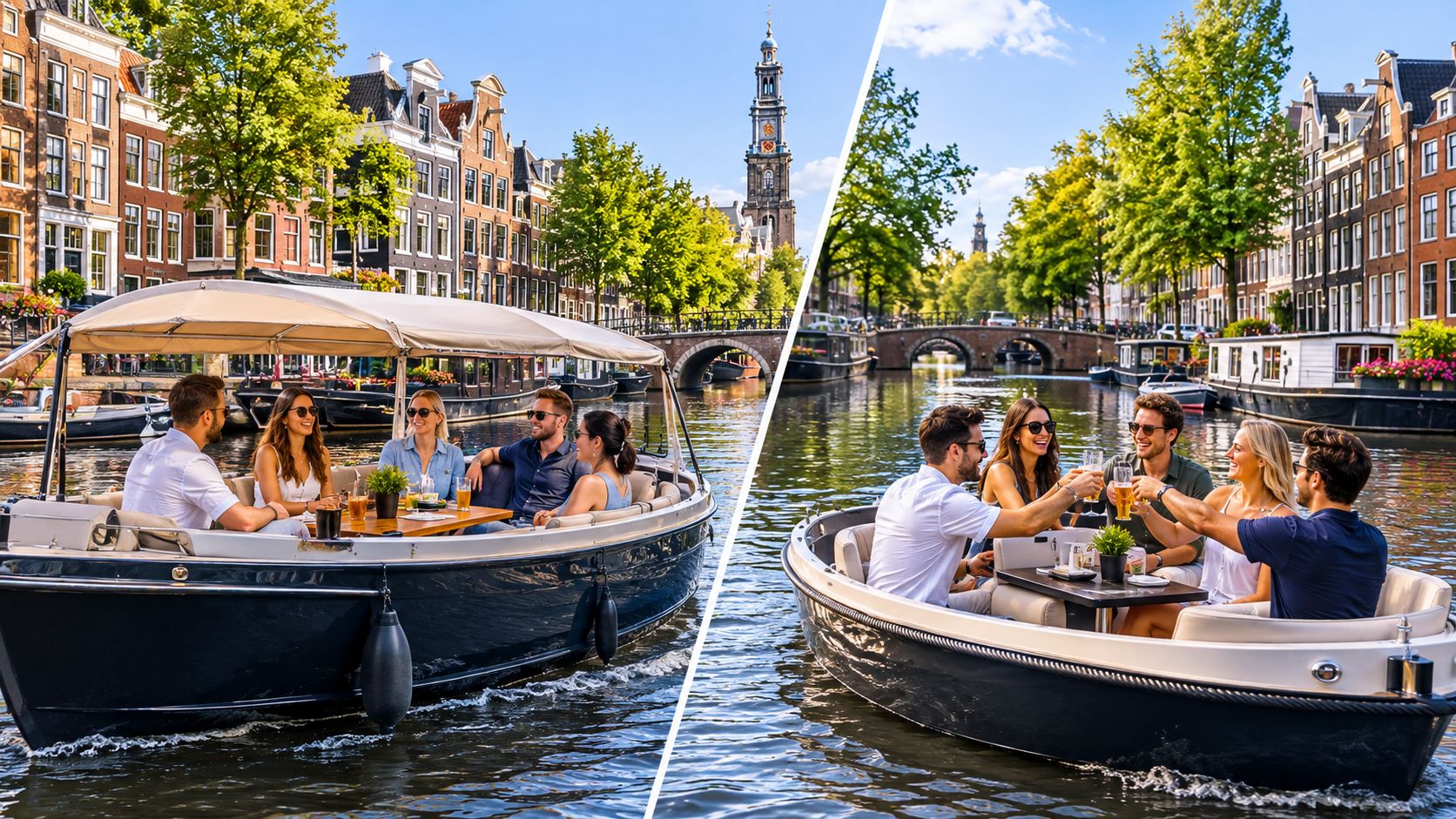
Ultimate Party Amsterdam's Private Booze Cruise is a fully private luxury electric boat with an open Dutch bar of unlimited beer, wine and soda for 60 minutes, at €52 per person. The Party on the Water shared booze cruise costs €33.05 per person and includes an hour of unlimited beer or wine. It is open to solo travelers, couples and groups.
For a worked comparison, take a hypothetical stag group of eight, with everyone paying their own way. Eight shared tickets total €264.40; eight private tickets total €416. The private option costs €151.60 more for the group, in return for a fully private boat and a wider drinks selection. Check the actual paying headcount before settling the split, since the group's preferred format matters as much as the headline price.
For the wider trip, this guide to planning an Amsterdam stag party can help put the boat booking in context.
Final sign-off before payment
Before paying, make sure the booking matches the group's agreed choice and that the written confirmation covers the date, total price and practical arrangements. Use the earlier sections' checks on capacity, licensing, drinks and timing to resolve any remaining questions.
Keep one checklist:
- Booking: date, shared or private format, and paying headcount.
- Total: agreed price and any charges stated in the confirmation.
- Plan: meeting point, arrival instructions and what happens if plans change.
Contact Ultimate Party Amsterdam to confirm availability and the booking terms. A pub crawl's cancellation policy should not be assumed to apply to a boat booking.
Ultimate Party Amsterdam offers shared and private canal booze cruises alongside guided pub crawls. Visit Ultimate Party Amsterdam with the preferred date, group size and cruise format to ask about availability and the complete booking terms.
🍻
Experience it Yourself
Skip the planning — join Amsterdam's biggest pub crawl and get 6 bars, free drinks and VIP club entry for €20.