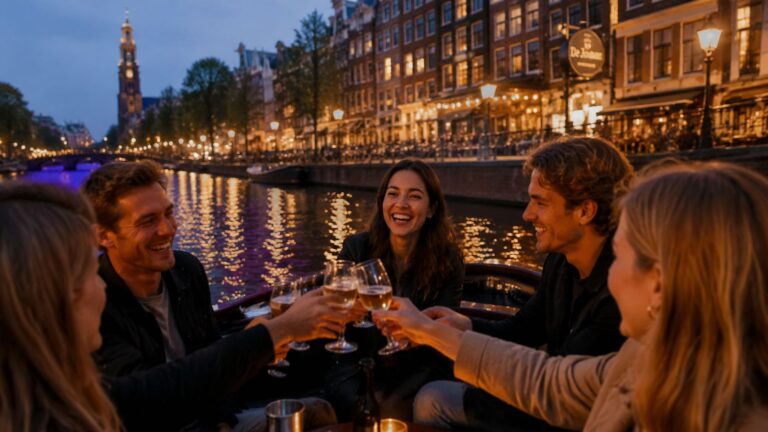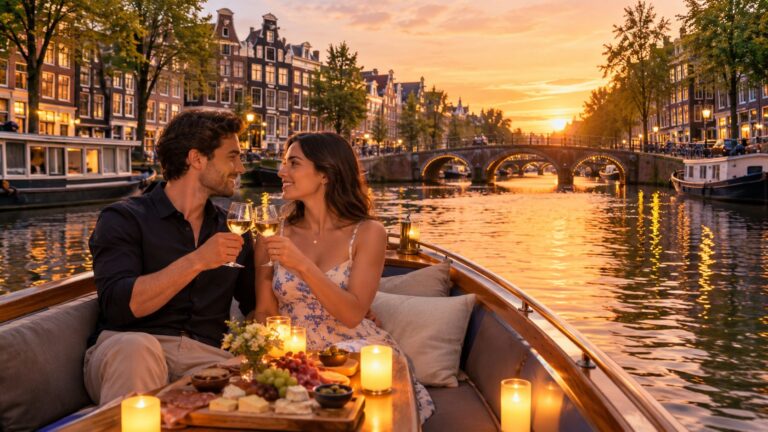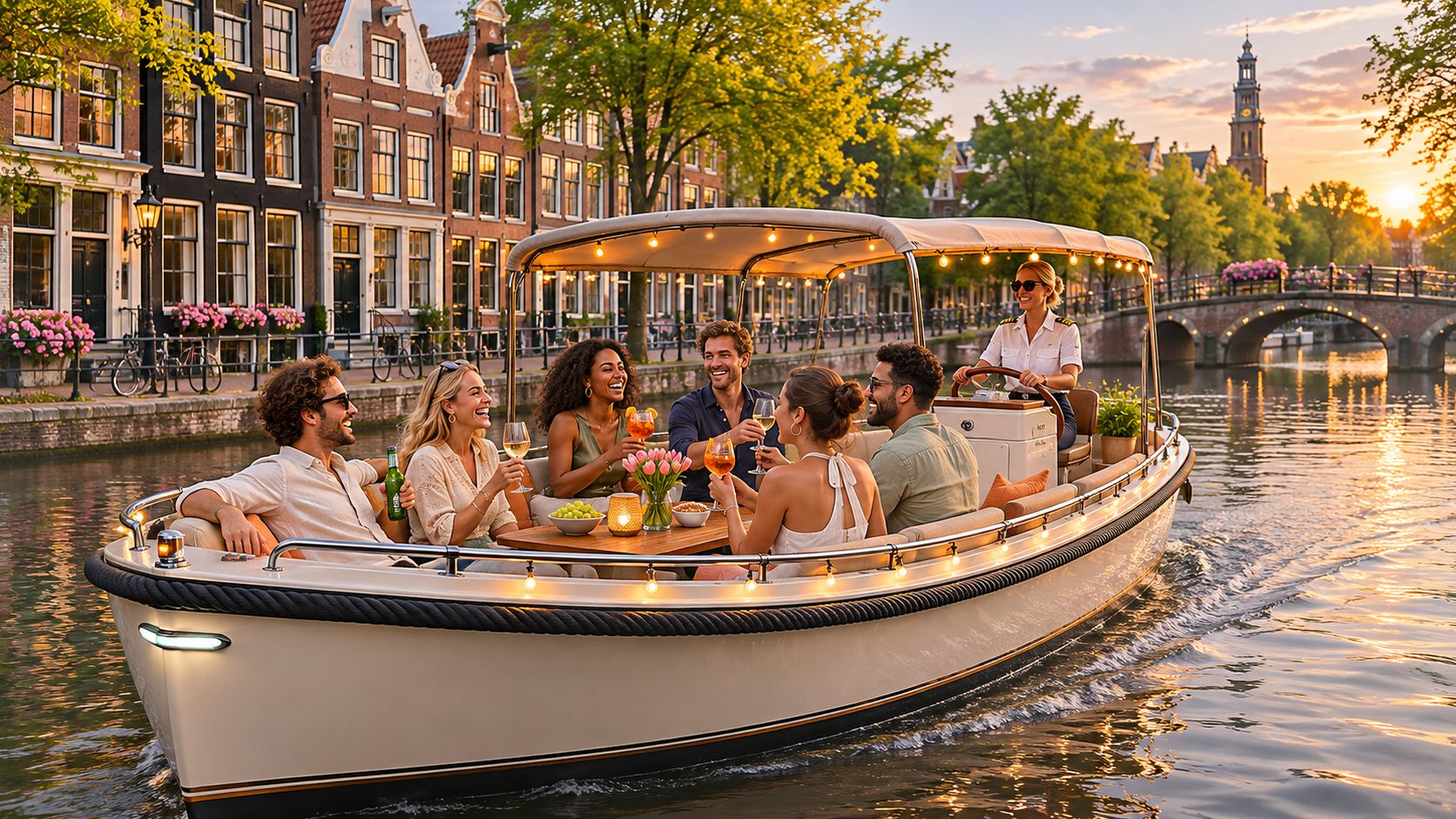
A party boat is a commercially operated boat hired for a group celebration, typically with drinks, music and a skipper or host on board. In Amsterdam that definition carries legal weight: the vessel's licence and the canals' own rules decide what a group can book.
Eleven friends land on a Friday. The group chat has four boat listings, all promising unlimited drinks. One quotes a price per person, another per boat, and a single line in the small print mentions a skipper. The deciding factors are concrete: what vessel shows up at the dock, how many people its licence covers, and whether the plan survives a canal that moves at walking pace, lined with houseboats and moored sloops. Groups above twelve passengers fall into a different licensing class entirely, and the city's emission-free requirements narrow the fleet further.
A party boat is a category of commercial passenger service. Once a group treats it that way, the rest of the booking decision falls into place quickly.
Table of Contents
- What Is a Party Boat?
- Party Boat Formats at a Glance
- The Onboard Experience from Boarding to Return
- Why Amsterdam Party Boats Play by Different Rules
- How to Check a Party Boat Is Licensed and Safe
- Planning Your Amsterdam Party Boat
What Is a Party Boat?
Two boats can sit moored at the same Amsterdam quay, both strung with lights, both boarding groups with drinks in hand, and still belong to different legal categories. One is a rental sloop: the group hired the hull, steers it themselves and carries full responsibility for the afternoon. The other is a commercial passenger vessel with a skipper, a certified capacity and a licence to carry paying guests. Only the second is a party boat in the sense a harbour master, an insurer or the city's enforcement officers would recognise.
That distinction hardens at twelve. Once a group reaches twelve passengers, Amsterdam requires a licensed passenger vessel with a professional skipper at the wheel, and the city's emission-free zone means the boats on that licence list run on electric power. The second rule shapes the feel of the evening: a licensed party boat here hums along the canal rather than roars, so the atmosphere comes from the speakers and the host, not the engine. A party boat is therefore a licensed passenger service before it is anything else. The music, the bar and the host sit on top of a regulated transport operation, and between them the passenger threshold and the emission rules decide which boat a group gets.
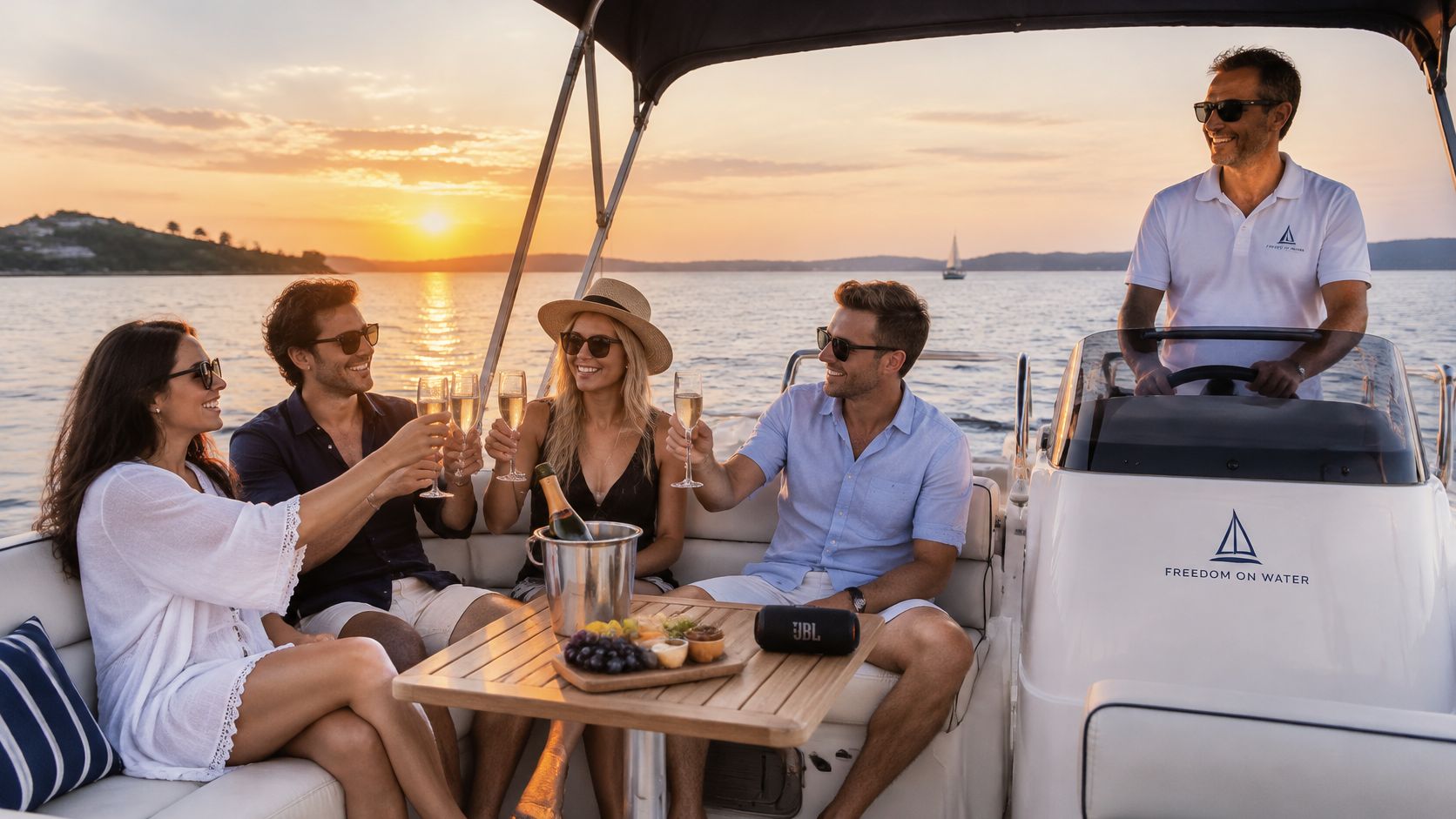
Three features do the defining work.
- Someone is paid to carry you. Paid carriage puts the boat under passenger-transport rules: a licensed operator, a certified capacity, safety equipment and liability cover standing behind every ticket. That is the weight behind a phrase that gets used loosely on booking pages.
- A booked group with a reason to be there. A stag or hen weekend, a birthday, a team outing, a night out that needs a fixed start point. The group is the customer, and the cruise exists because the group booked it.
- A social product rather than transport. Music, drinks and a host matter as much as the route. Remove them and you have a ferry.
The label covers more formats than the name suggests. Hosted shared cruises, private group charters and sightseeing boats with drinks served on board all sit inside the category; the common thread is the commercial operation and the social purpose, with the drinks list incidental to both. In the other direction, a private sloop with a speaker and a cool box stays a recreational hire however loud it gets, because nobody aboard is being paid to carry passengers.
The test is who holds the licence, who's at the wheel and how many passengers the vessel is certified to carry.
Canal cruising in Amsterdam is a mass habit rather than a niche, so a party boat here is an upgrade on an established, regulated trade instead of a grey-area stunt. Groups who want the water without the crowd go the other way entirely, and a sunset sail instead of a party boat is the format to weigh up when the brief is scenery and conversation.
Party Boat Formats at a Glance
Four formats turn up again and again once a group starts shopping around, and they differ far more than the marketing photos suggest.
| Format | Who books | Typical group | What defines it | Best for |
|---|---|---|---|---|
| Shared booze cruise | Individuals and small groups buying seats | Small mixed groups | Seats on a scheduled departure with an open drinks service and a host | Solo travellers, couples and small groups |
| Private charter | One group booking the whole boat | Often 10 or more guests (check the listing) | Whole boat for your group with control over timing, music and drinks, plus upgrades | Stag and hen parties, birthdays, corporate teams |
| Sightseeing cruise with bar | Scheduled passengers | Mixed-age groups | Guided canal route and commentary with drinks served on board | First-time visitors and mixed-age groups |
| Themed or silent-disco cruise | Scheduled ticket buyers | Event crowds | DJ, headphones or a dress code built around an event | Festival seasons and younger groups |
Group size decides first. A pair or a group of five can't fill a boat, so buying seats on a shared departure is both cheaper per head and the fastest way to meet other travellers. A group of twelve or more is buying privacy whether it realises it or not, and should be pricing the whole vessel rather than adding up seats.
Atmosphere decides second. Loud and social suits stag and hen groups who want a bar, a host and a soundtrack. Calm and scenic suits couples, mixed-age families and anyone who wants to hear the commentary. Both are legitimate, and choosing the wrong one is the most common reason a group ends up disappointed by an evening that was, technically, exactly as advertised.
Rule of thumb: if the group can't fill a boat, buy seats. If it can, buy the boat.
The same headcount logic shapes nights on land, where a group's size decides the vehicle, the route and the pace; Atlanta Party Ride's nightlife planning tips walk through that trade-off for groups planning a bar-hopping evening. On the water, the equivalent step is reading the minimum and maximum guest numbers on every listing before choosing between formats. A listing that won't state a minimum headcount is telling you something. To compare the canal options side by side, the Amsterdam canal tours overview sets out what each format includes.
The Onboard Experience from Boarding to Return
An hour on the water has a rhythm, and knowing it removes most of the guesswork about what the evening will feel like.
- Check-in and boarding. Arrive 10 to 15 minutes before departure with photo ID in hand. Expect an ID check at the gangway on any cruise that serves alcohol, and board in small batches as crew call groups, so the boat loads evenly against the dock.
- Safety briefing. The skipper or host points out where to sit, where the life jackets are stowed and the one rule that matters most: stay seated while the boat is moving.
- Departure and route. The boat pulls away at a glide, past moored houseboats, low bridges and canal houses, while the host starts the music and any icebreaker games.
- Drinks service. Drinks come from the bar included in the booking. On shared tickets that typically means unlimited beer or wine for the hour, while private charters run an open bar of beer, wine and soda and often add extras such as prosecco, pizza or snack platters, which is worth confirming rather than assuming.
- The middle stretch. The boat settles into its slow circuit and the format shows its character. Some groups turn it into a singalong with host-led games, others treat it as a floating bar with the best view in the city. The mood comes from the passengers far more than from the boat.
- Return. The boat comes back to the same dock it left from. Check the stated duration when booking so nobody is mid-conversation when the engine note changes.
If a listing leaves it unclear whether the bar is included or pay-per-drink, this explainer on whether drinks are free on a cruise covers how both models work in practice.
Sixty minutes turns out to be a well-judged length: enough for a slow canal loop, a couple of rounds at the bar and a round of photos, short enough that nobody starts watching the clock.
Three practical expectations are worth setting before the night. The water is cooler than the street, even in July, so a light layer earns its place. Vessel facilities vary, and covered seating, heating and an onboard toilet are things to ask about rather than assume. Conversation stays easy while the boat is underway, because licensed canal boats cruise at little more than a walking pace and there is no engine noise to shout over, which is precisely the appeal for a group that wants to talk as well as drink.
Why Amsterdam Party Boats Play by Different Rules
An Amsterdam party boat operates inside a set of canal rules that most visitors never read, and those rules shape the evening more than any drinks package does.
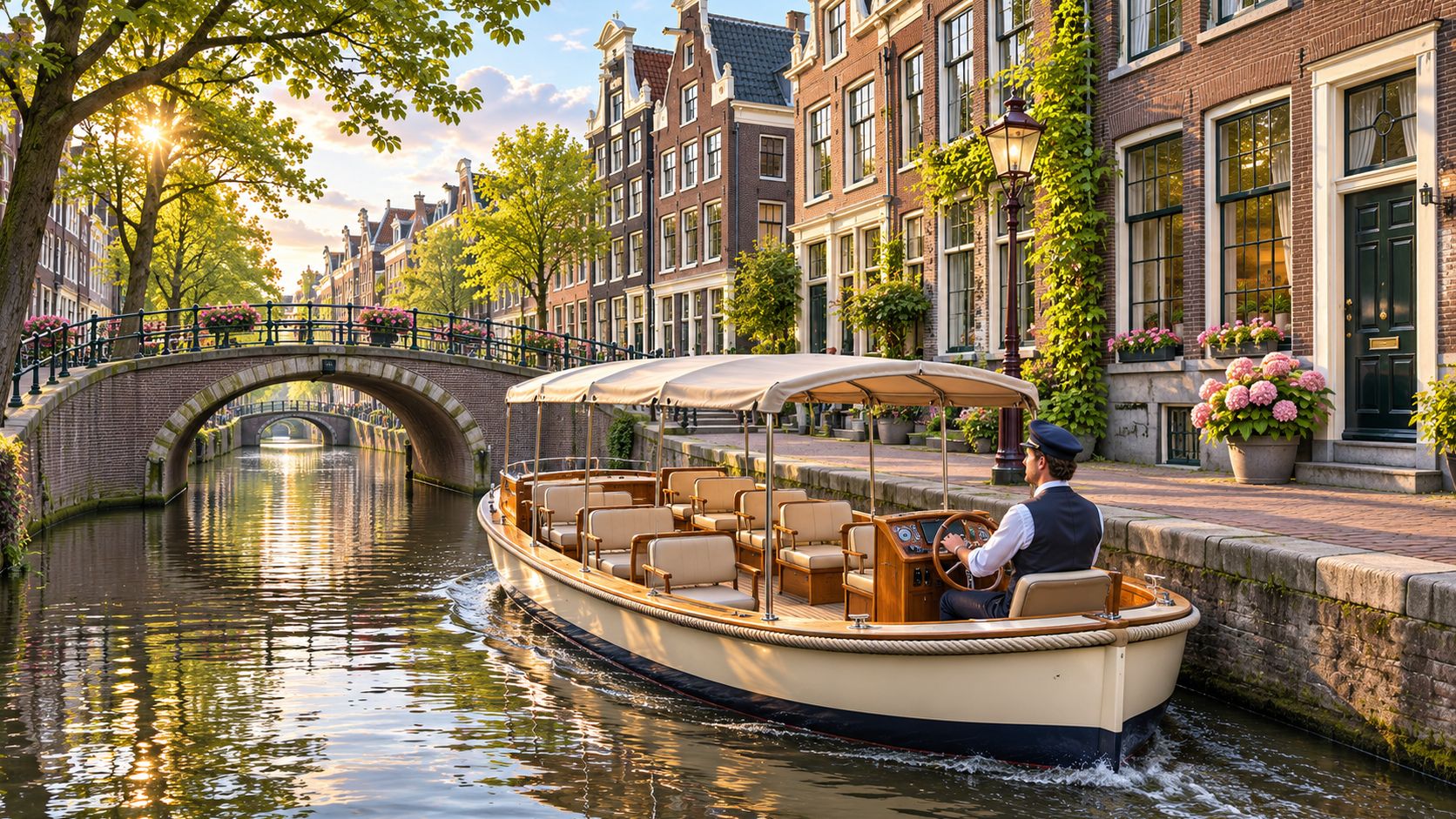
Start with speed and direction. The city limits ordinary canal speed to 6 km/h and requires vessels to keep right, as the City of Amsterdam's safe boating guidance sets out. Then comes the rule that decides which boat a group ends up on: groups of 12 or more passengers must use a licensed passenger vessel with a skipper rather than an ordinary pleasure craft. A small private group can sit inside pleasure-craft rules. A larger paid event has to move onto a professionally licensed boat with capacity and operating permissions suited to the route.
Carrying passengers for payment without an operating licence is prohibited, which makes commercial authorisation the dividing line between a legitimate party boat and someone with a boat and a payment app. Practically, a well-run operator should be able to state its vessel category, licensed passenger capacity, skipper provision, route constraints, duration, alcohol policy and emergency arrangements without hesitating.
Propulsion is now part of the definition too. Amsterdam's emission-free zone for pleasure craft permits electric, hydrogen and hybrid boats operating emission-free, along with rowing boats, and petrol and diesel pleasure craft have been steadily pushed out of the central canals. That's why the better canal boats in the city are electric: quieter, cleaner and compliant. The same city guidance warns against excessive noise and amplified music on the waterways, so a boat that markets itself as a floating club is promising something the neighbours and the rules don't support.
What that means at guest level, and it's all good news for the group:
- Capacity is enforced, so nobody is standing on a bench because the boat was oversold.
- The route and duration follow the operator's permit, which is why times are firm.
- The boat glides rather than speeds, so drinks don't end up in laps.
- Music sits under the conversation instead of replacing it.
Ask any operator directly whether the vessel is electric and whether it meets the emission-free rules before you pay. A vague answer to either question is information.
How to Check a Party Boat Is Licensed and Safe
Strip away the branding and a party boat is a passenger-transport service, with the paperwork that implies. Dutch passenger ships on inland waterways fall under rules covering operators, skippers, crew composition and rest periods, monitored by the Dutch Human Environment and Transport Inspectorate, and a passenger vessel may only carry passengers and set sail while holding a valid and correct Inland Navigation Certificate, as the Inspectorate's guidance on passenger vessel crews explains. Certification and crewing come with the service. In Amsterdam the paperwork matters twice over, because the city's twelve-passenger rule decides whether your group needs a licensed commercial vessel at all.
A five-point check before you pay
- Who is driving. Ask for the skipper by name, or at minimum written confirmation that a licensed skipper and crew are assigned to your departure.
- Your headcount against the licensed capacity. Get the maximum in writing and check the whole group fits inside it before money changes hands.
- Drinks poured by the licensed operator, through its own bar arrangement rather than an informal bring-your-own setup that shifts responsibility onto guests.
- A safety briefing before departure, covering seating, gangways and life jackets.
- Real contact details, terms and a cancellation policy published where you can read them before paying.
Red flags look the same from operator to operator: vague or unstated capacity, no skipper named anywhere, cash-only deals offered on the quay an hour before departure, no company name, no terms. Ask a direct question about the licence and listen to the reply. "Don't worry, we do this every weekend" is a fail. So is "we'll sort the paperwork on the day." An operator holding a certificate treats it as a selling point and answers in one sentence.
Answers that should come back in writing
Send the operator a short message before booking and see how they respond. Five questions do the job: is the boat licensed to carry paying passengers, what is the maximum capacity, is a skipper included, what is the alcohol policy, and what happens if it rains. That last one separates professionals from resellers, because a proper answer names the weather policy and says whether the boat is covered, so you know if a refund or a reschedule applies. Get the answers in a message rather than a phone call, so the terms sit in writing if the evening goes sideways.
Planning Your Amsterdam Party Boat
Most planning problems are logistics, not preferences. Once you know your headcount, three things decide how the evening runs: where the boat boards, when it leaves, and what its licence allows.
Start with the dock. Amsterdam's departure points are spread across different canals, so ask the operator for the exact quay, not just a departure time. A group that checks the map at 7pm strolls to the boat. A group that doesn't is jogging along the water at 7:25.
Then work backwards from sunset. Summer evenings in Amsterdam stay light late, and a 6pm departure can put the group back on the quay before the bridges are lit. A cruise that boards around 8pm catches the canals as the lights come on and lands everyone in the centre as the bars fill, which makes the boat the start of the night rather than the end of it.
The mistakes that cost groups the most
- Assuming any boat fits any group. Amsterdam's 12-passenger rule splits the fleet in two: above that threshold you board a licensed passenger vessel with a professional crew, below it a smaller private hire may do. Confirm your headcount against licensed capacity before paying.
- Booking late for a peak weekend. Friday and Saturday departures go first, and the covered electric boats that satisfy the canal rules are a smaller pool than the tour boats you see everywhere on the water.
- Scheduling the cruise as the finale. Boats keep to fixed routes and return times, so a cruise works better as the opening act, with a pub crawl or club planned afterwards.
- Expecting instant service at the bar. A shared boat at capacity means a queue for drinks; a private charter with only your group aboard means far less of one.
On the operator side, Ultimate Party Amsterdam has been running pub crawls and booze cruises in Amsterdam since 2006, and its boat options split by group type. The shared Party on the Water cruise at €33.05 per person puts you on a covered boat with an hour of unlimited beer or wine, open to solo travellers, couples and groups. The Private Booze Cruise at €52 per person gives your own group the whole luxury electric boat, with an open Dutch bar of unlimited beer, wine and soda for 60 minutes. Departure times, group options and current availability are on the Amsterdam canal boat rental page.
Ultimate Party Amsterdam has been building nights out in the city since 2006, and its canal cruises run on covered, 100% electric boats with a professional skipper and host aboard, which is exactly the direction the city's emission-free canal rules are pushing every operator. If your group wants the water and the streets in one trip, its pub crawls in the Red Light District and around Leidseplein pair naturally with a cruise earlier in the evening. Check the dates you're in town and book the format that matches your headcount at Ultimate Party Amsterdam.
🍻
Experience it Yourself
Make it your night — a private pub crawl with your own dedicated party host, 6 stops and 6 free shots for €30 p.p.